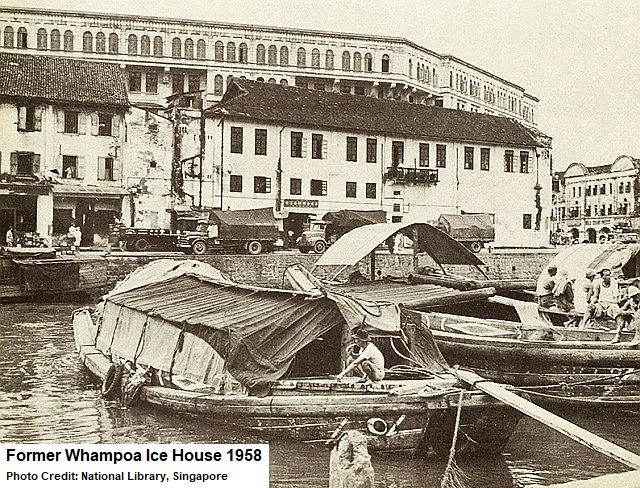
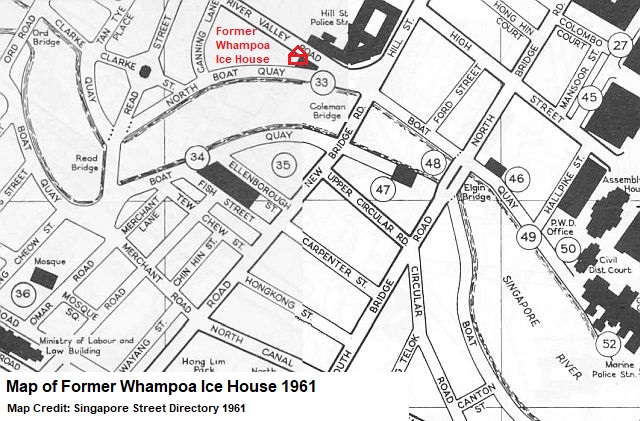
The old godown with Victorian wrought-iron balustrades was a landmark along the Singapore River for more than a century. It was the Whampoa Ice House, Singapore’s first ice house that opened in 1854. Hoo Ah Kay (1816-1880), better known as Whampoa, built the ice house on the parcel of land near the Coleman Bridge.
This site, at the junction of River Valley Road and Boat Quay, was given by the colonial government to Hoo Ah Kay in exchange for his 60 acres of nutmeg plantation at Tanglin, now a part of the Botanic Gardens.
Global Ice Trade
It was almost unimaginable today that Singapore once imported ice from the United States. In 1806, American businessman Frederick Tudor (1783-1864) acquired his first ice ship and loaded it with 130 tons of ice harvested from frozen lakes and rivers. The ice ship headed to Martinique in the eastern Caribbean Sea, but Tudor’s first venture ended in failure due to the locals’ low demand of ice. He was also ridiculed, as the people back then did not believe the ice could last throughout the many months of voyages at sea.
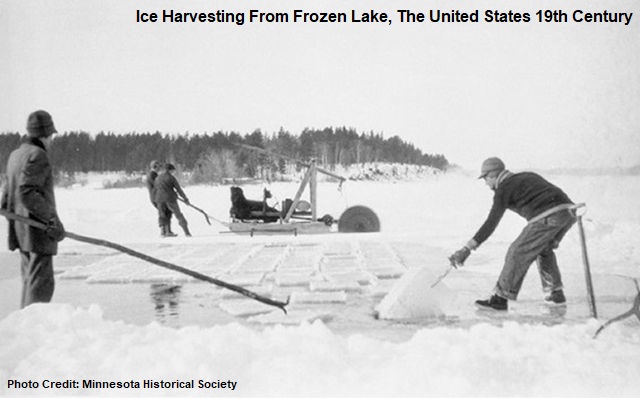
Frederick Tudor eventually succeeded by covering the blocks of ice with thick white pine sawdust that greatly reduced the rate of melting. Between the 1810s and 1830s, his ice was supplied and shipped to Cuba, India and Singapore. Tudor became known as the Ice King as he established a monopoly in the global ice trade.
The world demand for ice grew from 130 tons in 1806 to 146,000 tons in 1856. The demand only slowed down after the invention of the ice-making machine.
Whampoa Ice House
As a boy, Hoo Ah Kay arrived at Singapore from China with his father in the early 19th century. His father started a provision shop at Boat Quay selling beef, bread and vegetables. Hoo Ah Kay took over the business after his father’s death, and expanded it by winning contracts to supply provisions to the East India Company’s ships.
In the 1840s, Hoo Ah Kay entered a joint venture with Gilbert Angus (Angus Street was named after him), where they opened their firm Whampoa and Company at Telok Ayer Street. In 1854, Whampoa and Company established the Whampoa Ice House, stocking it with ice imported from The United States and selling them to the community.
The ice trade, however, did not work well for Hoo Ah Kay and Gilbert Angus, as they had overestimated the local ice consumption. Their investments were based on the forecast of an estimated 1,000 lbs (or about 454 kg) consumption of ice per day, but in the first two years of business, the company only managed to clock daily sales of 400 to 500 lbs (or about 181 to 227 kg) of ice.
After three years of losses, Hoo Ah Kay ended the joint venture in 1857. Whampoa Ice House was taken over by Tudor Ice, Frederick Tudor’s company, in 1861. Tudor Ice did not fare better either; it also incurred steep losses due to the low local demand and consumption of ice.
Local Ice Factories
The Singapore Ice Works opened at River Valley Road in 1861. While Tudor Ice failed, Singapore Ice Works succeeded by procuring an ice-making machine to locally make the ice for sale. This reduced the cost of ice to almost 40% cheaper as compared to imported ice. This attracted sufficient demands for the company to consistently make profits.
When Tudor Ice closed in 1865, Whampoa Ice House was sold to the Singapore Ice Works, where it remained as Singapore’s main ice factory until the 1880s.

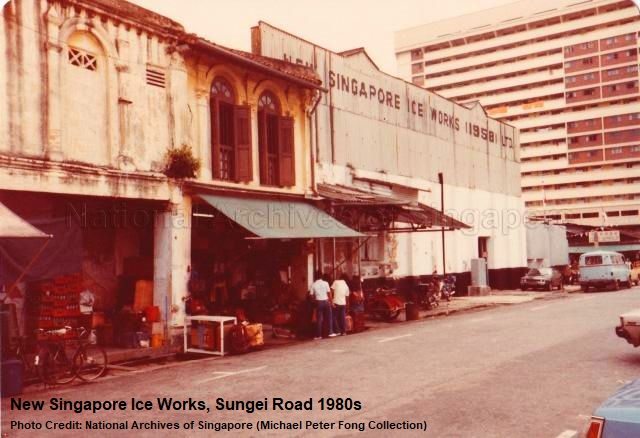
The Straits Ice Company and Singapore Distilled Water Ice Company (later renamed New Singapore Ice Works) opened in 1881 and 1890 respectively, adding competition to the ice making and supply industry. The consumers benefited from the resulting price wars.
Like Whampoa Ice House, the New Singapore Ice Works’ factory at Sungei Road had, over the decades, become a landmark so iconic that the local Chinese called the area “gek sng kio” or frosted bridge in Hokkien.
Ice became a necessity by the late 19th century, and with the establishment of Cold Storage Company in 1903, frozen meat, fruits and milk imported from other countries became readily available. In the late 1910s, Cold Storage also went into ice-making and emerged as one of the main ice manufacturers in Singapore.
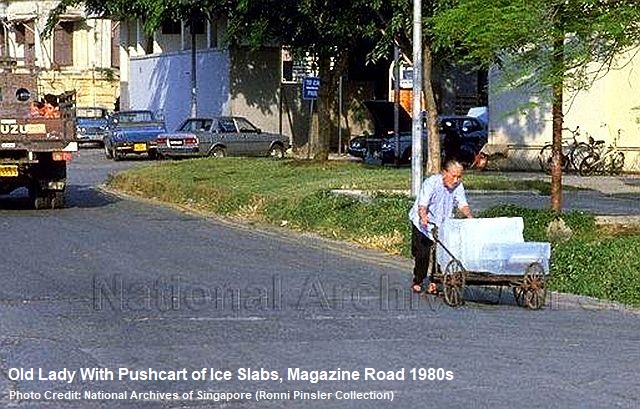
These major ice factories led to the rise of small-time ice sellers, who would buy large blocks of ice and cut them into smaller pieces to sell to consumers and other small businesses. The fifties and sixties were the golden eras for these ice sellers, before their number dwindled by the eighties, when fridges and freezers for homes and shops became common and affordable.
Demolition and Replica
As for the former Whampoa Ice House, it was used as a storage place for Tai Thong Rubber Works Ltd in the early 20th century. Eventually the building was torn down in March 1981 for the widening of River Valley Road.
Whampoa Ice House’s demolition ironically coincided with the Conservation Forum in the early eighties, a forum that was sponsored by the Singapore Institute of Planners and supported by an enthusiastic group of architects and town planners who focused on future developments and the possible plans in saving areas of old Singapore. the forum’s attendees were representatives from the Urban Redevelopment Board (URA), Singapore Tourist Promotion Board (STPB) and Preservation of Monuments Board.
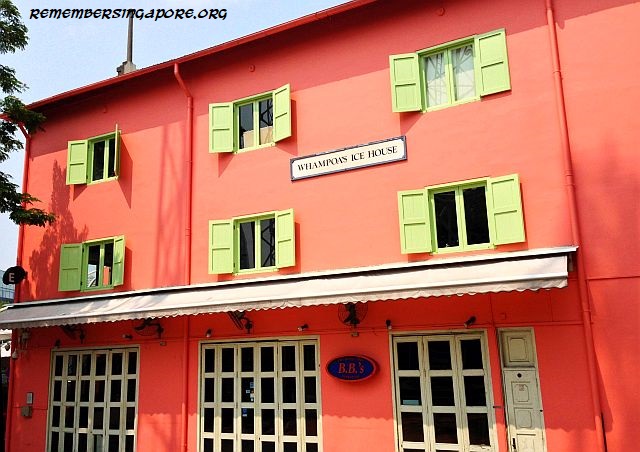
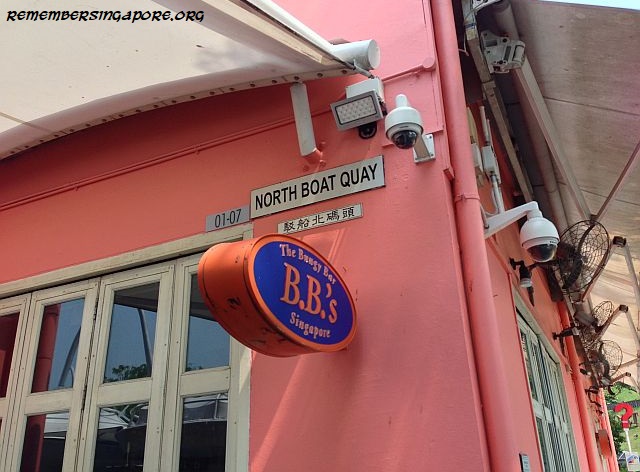
But by then, the century-old Whampoa Ice House, despite its significant architectural and heritage merit, had walked into history. Its former location now stands a replica of the Whampoa Ice House.
Published: 29 March 2025
Discover more from Remember Singapore
Subscribe to get the latest posts sent to your email.






 Remember Singapore
Wow imagine importing ice on ships from across the globe on months of journey and keeping it from melting! 🤔
Enjoyed reading the interesting write-up!
Came across a similar article too: https://biblioasia.nlb.gov.sg/vol-20/issue-2/jul-sep-2024/history-ice-making-singapore/