At a small forested slope inside Gillman Barracks, between Block 37 and 38, quietly lie two forgotten stone military insignia plaques that previously belonged to the Middlesex Regiment and Loyal Regiment, two of British’s infantry battalions stationed in Singapore in the 1930s (Read this 1929 article on how military insignias were designed).
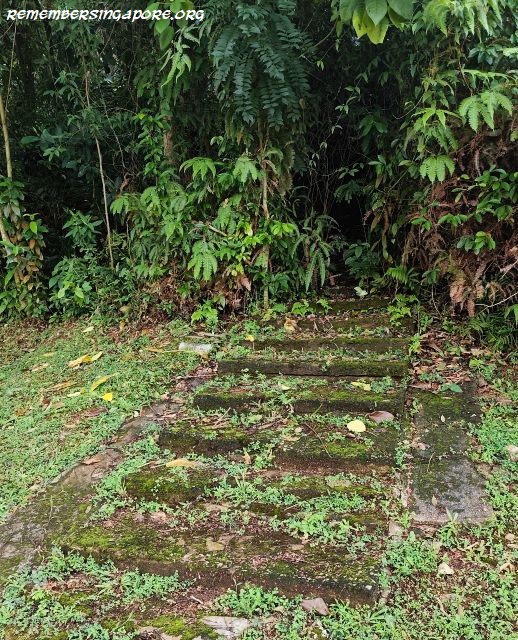
Situated at a hilly area between Alexandra Road and Telok Blangah Road, Gillman Barracks was designed with office blocks, married staff quarters, a swimming pool, and officers’ and sergeants’ messes, supported by several supply, transport and ordnance depots at the nearby Depot Road.
When it was completed in 1936, the camp served as the army headquarters for the accommodation of the 1st Battalion Middlesex Regiment, Singapore’s second battalion of infantry. The other battalion – the 1st Battalion Royal Inniskilling Fusiliers – was quartered at Tanglin Barracks.
Gillman Barracks’ Block 37 functioned as the medical centre until the sixties. Block 38, on the other hand, was an accommodation block for the Pioneers, an expedient force that provided skilled labour to the Royal Engineers, relieving them from some of their non-combatant duties. Block 38 later became a civilian canteen in the sixties.
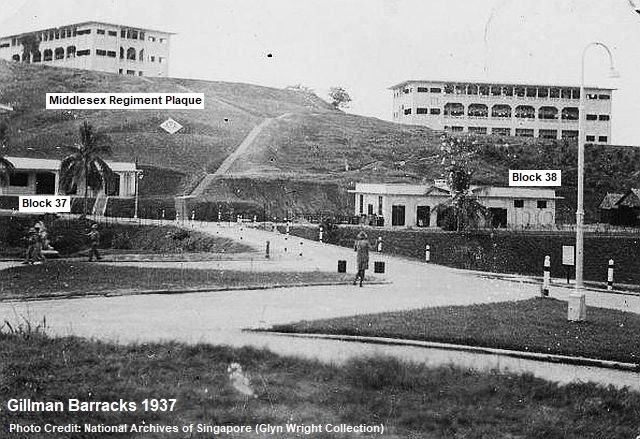
The Middlesex Regiment arrived at Singapore from Egypt in April 1936. Nicknamed “The Die-Hards”, the battalion possessed a rich heritage and legacy, with its roots dated back in 1755. The battalion, however, stayed at Gillman Barracks for only two years. By 1938, they had converted into a machine gun battalion and was redeployed to defend Hong Kong, British’s other Crown Colony.
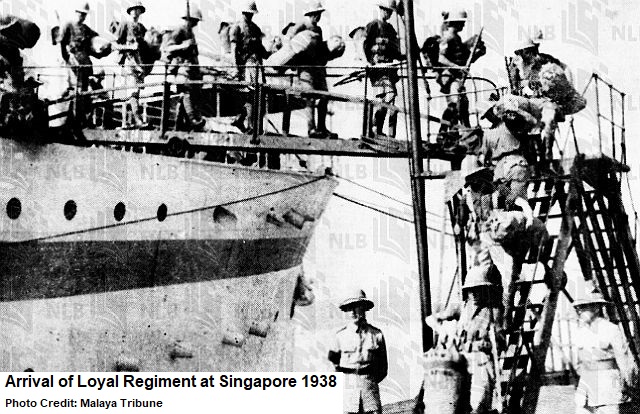
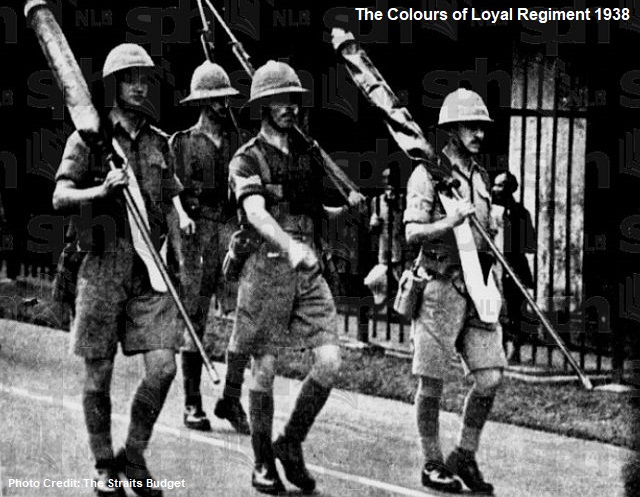
The Loyal Regiment arrived at Singapore from Shanghai, China in early 1938, and took over Gillman Barracks from the departed Middlesex Regiment. The Loyal Regiment was also established in the 18th century. Formed from the 47th Regiment that returned from Canada in 1782, the depleted ranks of the battalion was then filled with men from the county palatine of Lancashire. This made it become known as the “Lancashire Regiment” in the first century of its formation.
By the late 1930s, in the midst of rising global tensions, more British battalions were redeployed to Singapore. The 2nd Battalion Argyll and Sutherland Highlanders arrived from India in 1939 and was also assigned to station at Gillman Barracks. The other battalions – 4th Battalion 19th Hyderabad Regiment and 5th Battalion 2nd Punjab Regiment – were deployed at Tanglin and Selarang Barracks respectively.
In 1942, during the last three days before Singapore surrendered on 15 February, the Loyal Regiment courageously defended Gillman Barracks against waves of heavy Japanese attacks. It was at the Sergeant’s Mess that a wartime command post was set up by then-Commanding Officer Lieutenant-Colonel Mordaunt Elrington.
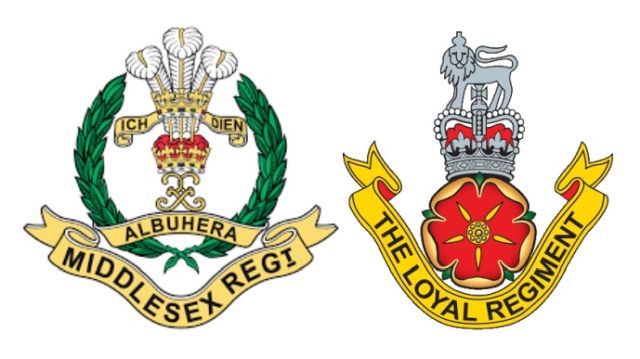
To commemorate the Loyal Regiment, a plaque was unveiled at the Sergeant’s Mess in 1958, where it bored the inscriptions of “Desperate fighting of all ranks of the 2nd. Battalion, the Loyal Regiment, against the Japanese, 13-15 February 1942.“
After the Second World War, Gillman Barracks came under the British Royal Engineers until the Singapore Armed Forces (SAF) took over it in 1971. The camp was then opened up to the public in the mid-nineties, first as a lifestyle enclave, and later a visual arts hub. The small hills and slopes, after many decades, had long been covered by thick vegetations, burying and hiding the forgotten military insignia plaques.

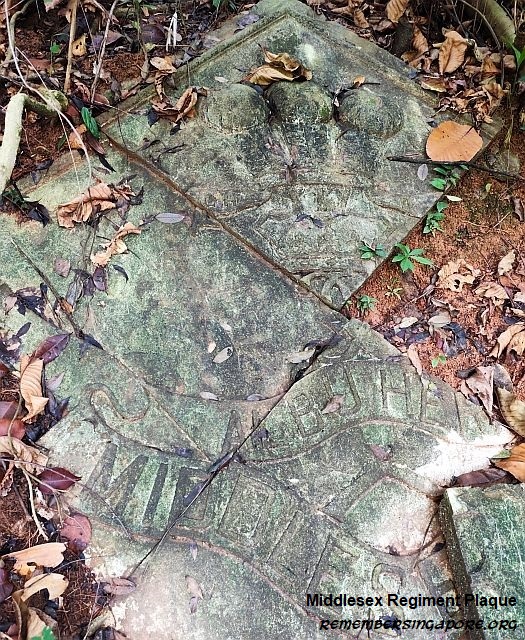
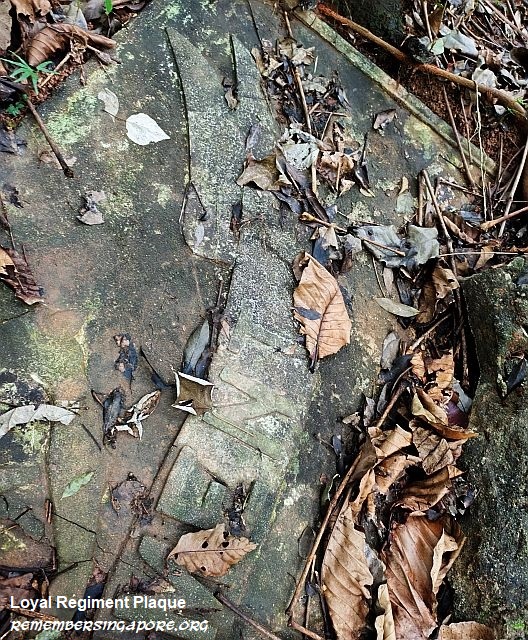
In 2024, the Singapore Government announced that it will be conducting feasibility studies for the Gillman Barracks area to be redeveloped into a new residential estate. Heritage and environmental impact assessments will be carried out. But for now, the future of the two historic insignia plaques remains uncertain.
Also read Army Camp, Lifestyle Enclave, Visual Arts Hub… Gillman Barracks’ Journey in the Past Decades.
Published: 30 January 2026
Discover more from Remember Singapore
Subscribe to get the latest posts sent to your email.






 Remember Singapore