Our Favourite Games of Yesteryears

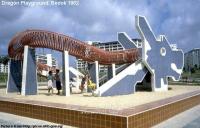
Large open spaces, some creativity, lots of stamina, and simple improvised materials using sticks, stones, tin cans. All these added to the recipe for games that provided hours of fun and joy for the kids of the past. Catching, police and thief game and hide-and-seek had ruled the playgrounds long before the electronic games conquered the kids’ world.
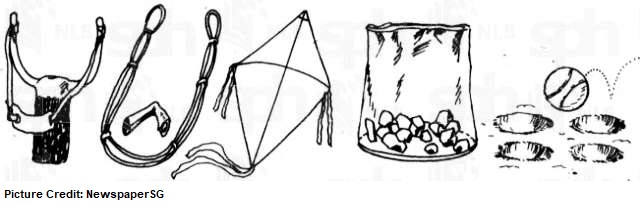
There were also the “lastic” wars. Popular among the boys who would arm themselves with elastic bands and multiple paper missiles, and take joy in aiming at each other. Sometimes, the targets were switched to wary cats or birds on the trees, or that poor old unsuspected bakut man who was peddling his feather dusters, brooms and other household items in the neighbourhood.
Girls, on the other hand, loved to play “long long“, a variation of hide-and-seek, where the hider attracted the seeker’s attention by shaking a cigarette tin filled with pebbles.

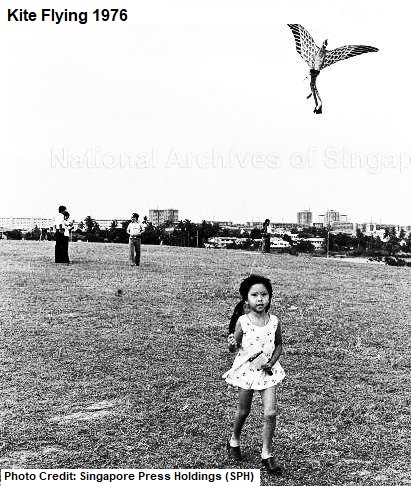
Soon, the kite season would come, and the kids would be busy making their layang-layang (kites in Malay). Some mischievous ones would use their mothers’ precious pestles and mortars to pound the glass into powder in order to make glass strings so that they could cut off their rivals’ kites.

What other games were popular in the sixties, seventies and eighties?

Gasing

Gasing was a top spinning game that was once extremely popular in Singapore and Malaysia, especially among the Malay communities. Typically made of hardwood, the spinning top, also called gasing, comes in different variations, sizes, weights and shapes – the most popular being the egg-shaped, heart-shaped and saucer-shaped.

The history of gasing goes back to the Malacca Sultanate (1400-1511), when it was said to be the favourite game among the rice farmers. In Singapore, kampongs used to play and compete against each other, but by the late seventies, the game’s popularity had begun to dwindle. In 1979, the Singapore Gasing Federation was established in a bid to revive the interest in this traditional game.
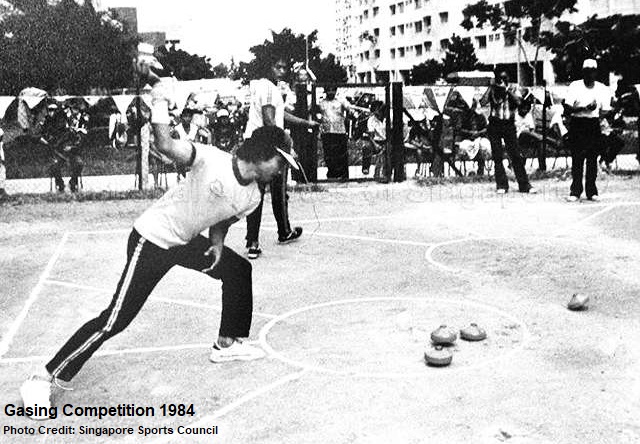
Gasing courts (different sizes of 5m by 5m and 9m by 9m) were built in new towns such as Clementi and Eunos, and championships were held in the eighties. In most competitions, gasing pangkah was played, where the player had to hit his opponent’s top and knock it out of the circle and stop it from spinning. Another type of challenge was gasing un – to keep the top spinning for as long as it could.
Horselegs

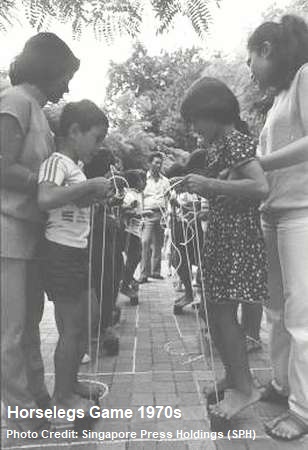
Known as kaki kuda or tapak kuda in Malay, the Horselegs game was played by challenging one’s balance while standing on empty tin cans.

This simple traditional game was once popular in the sixties and seventies among the kids, who would play in a rhythmic bout of dance with lip a-chanting and feet a-tapping. It gradually disappeared when the kampongs were replaced by the new towns and public flats after the late seventies.

In 1979, the Horselegs game was part of Singapore’s 46 traditional games exhibited in the National Museum Young People’s Gallery.

Bola Tin

The game of bola tin required two teams to play, namely the keepers and throwers. A stack of empty condensed milk tin cans, any quantity between 10 and 20, formed a pyramid at the centre between the two teams.

Behind a drawn line roughly ten steps away from the stack of tin cans, a thrower would try to knock them down with a ball. Each thrower was allowed with two tries. Once the stack of tin cans was hit, both teams would scramble for the ball.

The keepers would try to rebuild the pyramid, and, given the chance, throw the ball as far as they could. The throwers, if they had gotten the ball, would aim at any of the keepers, who would be disqualified once they were hit.

When the throwers succeeded in hitting all the keepers, they would win the game. On the other hand, the keepers would win if they finished rebuilding the pyramid before all of their members were forced out of the game.

Hantam Bola

Another bola game was the popular hantam bola typically played among the boys.

Literally means hitting or walloping with a ball in Malay, the game was similar to the modern Dodgeball. Usually played in a large field, the “thrower” would try to hit the others with a tennis ball, while the rest of the players would be running away and avoiding getting hit. The player who was hit would become the “thrower” himself.

The name hantam bola actually appeared much earlier, in the early 20th century, during cricket games, when a popular jingle “kaptan kita Tuan Berchie. Hantam bola banyak tinggi” was sang to applaud the skills of a famous cricketer.

The longevity of hantam bola lasted well into the nineties, when many primary and secondary students were seen playing the game in their school fields during recess periods.

Trivial: The “Court Martial” was an elaborated version of hantam bola. Armed with stones, each player would have to dig a small hole in the field, and then took turns to roll the tennis ball into the hole. If the ball fell into the hole, the thrower had to retrieve it and try to hit the others who would be running away.

Anyone who was hit would put a stone into the hole he had dug. Once it reached three stones, the losing player would be “court martialled”, where he had to stand still and let the other players hit him three times with the ball.

Bola Lubang

Bola lubang was another ball throwing game played by several players. Each player would have a hole dug in the ground. The first player would throw a ball, from a distance, towards the holes; if it entered one, he would quickly have to retrieve the ball and throw against the running player who “owned” that hole. If hit, that player would be out of the game. If missed, the next player would be the “thrower”.

Hopscotch

The children’s pavement game was said to have originated from the Roman Empire era, and became popular in England in the 17th century. After the Second World War, the game made a comeback in London, and its popularity soon spread to Malaya and Singapore.

Hopscotch was often called teng teng locally. The game was played by drawing nine numbered squares on the ground – either scratched out on dirt grounds or with a chalk on concrete floors – and using pebbles or stones to “reserve” the squares. Due to the airplane-like outline of the square diagram, it was also known as the Aeroplane game.
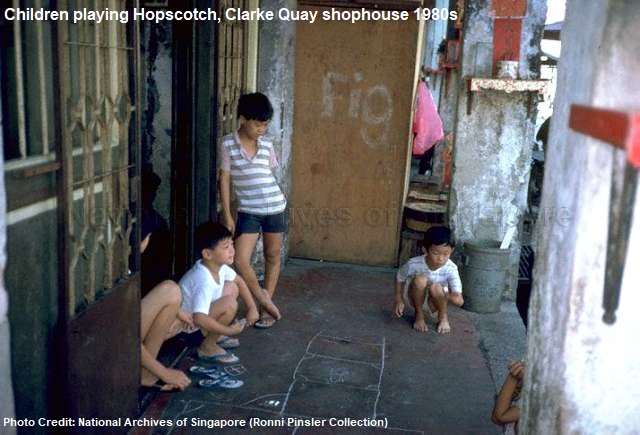
In the game, each player would have to hop, skip and turn around, throwing his or her stones onto the squares to “occupy” them. According to the rules, the players could not hop onto an “occupied” square or stepped onto the outlines of the diagram. At the ninth square, often in the shape of a semi circle instead, the player would have to turn around and pick up the stone without seeing it. The first player to complete the game would be the winner.
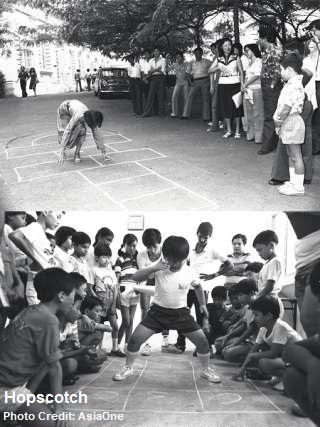
A more challenging version, called Snail Hopscotch, was also played by the local kids in the seventies. In this version, pebbles or stones were not used. The player would have to hop on one foot through the “snail” until he came to the centre semicircle marked “rest”, where he could place his two feet on the ground.

The player continued the game by hopping in the reverse direction out of the “snail”. Upon completion, he could write his initials on chosen square. In his next turn, he could rest in that square with two feet. However, for the other players, they had to hop over that “reserved” square. They would have to win their own squares.

Goli

Marbles, or goli, was one of the favourite games among the boys. One of the common ways to play marbles was to draw a circle on the dirt ground, where all the players’ marbles were placed in it, and a straight line drawn several steps away. Each player would then stand behind the line and use his marble to hit the group of marbles inside the circle. If the player hit the marbles, he could win and keep those that fall out of the circle.

The marbles came in different designs and sizes; the most popular ones were the transparent types. In the eighties, there were also the solid clay marbles and stainless steel ones (called tee zee in Hokkien), where the boys found joy in smashing their rivals’ marbles into pieces.
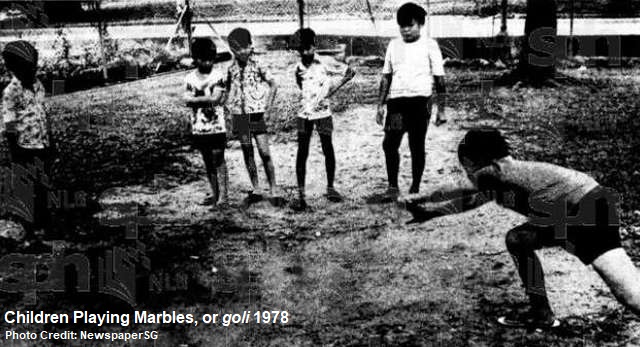
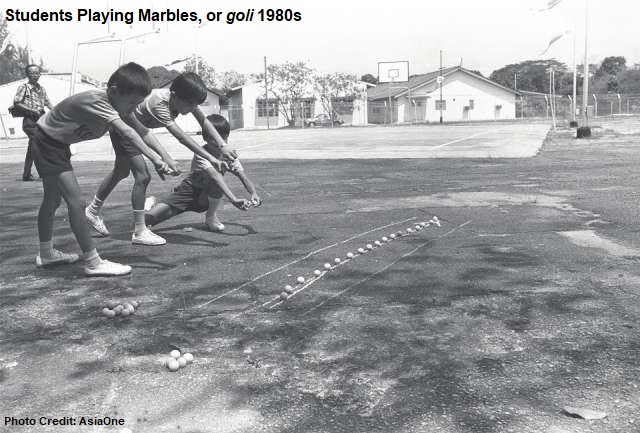
The goli game also came in different variations, some even involved gambling elements, in the later years. For example, instead of marbles, Panini stickers, coins or even dollar notes were placed as stakes in the drawn circle. The player who managed to hit them out of the circle with his marble would pocket the winnings.

Congkak

Congkak, or jongkak, was a traditional game usually played by two people, using tamarind seeds and a rectangular board that had a central partition, seven holes on each side and a receptacle at each end. The holes were known as “huts” and the receptacles were “storehouses”, where the players could fill with as many seeds as possible.
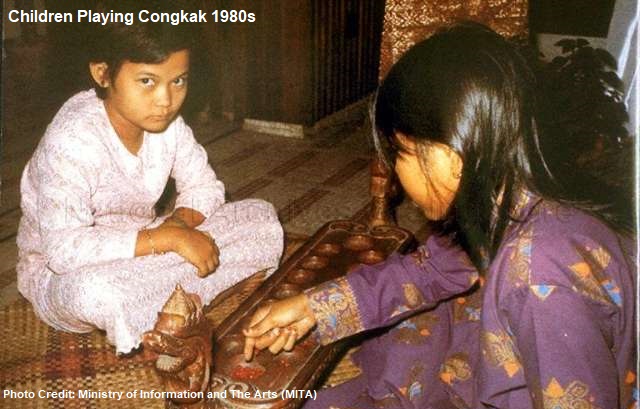
At the start of the game, the player would sit opposite of each other, where they each had seven “huts” and a “storehouse”. Each “hut” would be filled with seven tamarind seeds, while the “storehouse” was left empty.

The first player started the game by scooping the seeds from his extreme right “hut”, and deposited them, one in each “hut”, in a clockwise direction. The last seed would be dropped into his “storehouse”. Then he continued by scooping the seeds from any of his “huts” and dropped them in the same manner, including his opponent’s “huts”. During the game, he could deposit the seeds in his “storehouse” but bypassed his opponent’s “huts”.

The game carried on until his last seed was dropped into an empty “hut”. If so, he could take all the seeds from the opposite side of that empty “hut” and transferred them to his “storehouse”. It would then be the opponent’s turn to play.

During the game, any empty “huts” when the player’s turn was over would be considered a burnt “hut”. A crumpled piece of paper would be put inside, and no seeds could be deposited in it. At the end of the game, the player with the most seeds in his “storehouse” would be the winner.

Kaunda-Kaundi

The kaunda-kaundi was another old traditional Malay game. It was simply played using two hibiscus stems – one long and one short. The shorter stem would be placed, at an angle, on a piece of wood. Each player would use the long stem to hit the shorter stem twice – first to make it bounce up into the air, and again to hit it as far as he could.

Meanwhile, the opponent would try to catch the short stem before it landed on the ground. If he managed to do that, then the first player would lose. Otherwise, the winner would be the one who hit the short stem furthest.

Kuti-Kuti

Kuti-kuti was an old flipping game said to have been played by local kids since the 1940s. At the beginning, the game was played using circular discs. By the seventies and eighties, it had evolved into a flipping game using colourful plastic pieces in the shapes of different animals such as elephant, deer and fish.
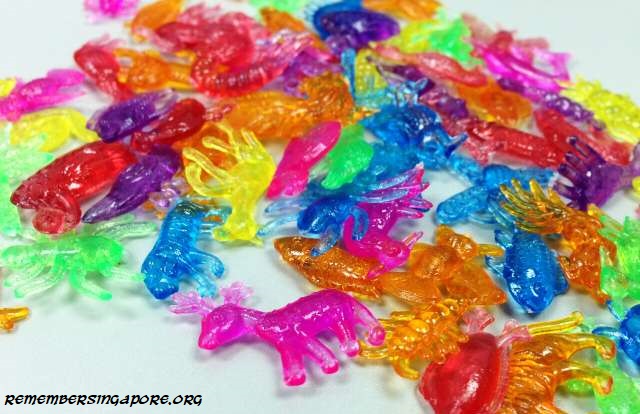
The rules for kuti-kuti were simple. The player would take turns to flip his plastic pieces over his opponent’s. If his piece landed on top of his opponent’s piece, he would win and claim it as his own. If not, the turn would be passed over to his opponent. The game ended when one party won all the pieces.

There were several variations of kuti-kuti, when players used bottle caps or erasers that were printed with flags of different nations.

Capteh

It would take good balance and quick reaction to play capteh. Using a shuttlecock or a band of feathers attached to a round rubber base, each player would have to kick the capteh as many times as he could, without it touching the ground.
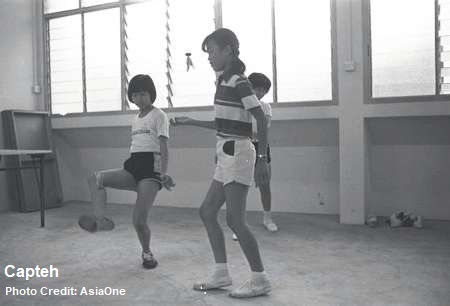
The player would be allowed to have his kicking foot touched the ground only once every kick. The one who had the most kicks would be the winner.

Capteh has been promoted and played recently in 2016 as one of the Sports Hub Community Play Day activities at the new National Stadium.

Encang Kuda

Also known as keleret, Encang kuda, or horseback in Malay, was a piggyback riding game in which two players played as “jockey” and “horse”. At the start of the game, both “jockey” and “horse” would throw their stones at a pre-drawn straight line on the ground. The one whose stone was nearer to the line got to ride the other player on the back.

The “horse” would then pick up the two stones and handed them to the “jockey”, who would throw one stone and let the “horse” throw the second. If the “horse” accepted the challenge and hit the stone, he would be the winner. If the “horse” rejected the challenge, the “jockey” would have to hit the stone himself. If he succeeded, the “horse” would need to continue piggyback him. The game ended if he missed, and restarted with a second round.

Five Stones

Played in many Asian countries, the five stones game, as its name implies, was played using five small pieces of granite pebbles. In Singapore, after the sixties, it was played using five small pyramid-shaped cloth bags filled with rice, sand or seeds.

Popular among the girls, two or more could play the five stones game. The game began with all the five stones on the ground. The first player would have to throw the first stone up in the air, pick up the second stone, and catch both with the same hand. Then she would throw the third stone up in the air and catch all three stones. This continued until she had all five stones in one hand.

The second round was slightly more challenging. The player would have to hold on to two stones after throwing one up. Similar rule applied to the difficult third round and fourth round, except that the player had to grip three and four stones respectively at one go.

There was another level where the player needed to throw a stone up and quickly exchange the stones in her hand and the ones lying on the ground. If, at any one time, the stone fell onto the ground without her catching it, it would be considered a miss for the first player, and the turn would be passed to the second player. Whoever could complete the sequence successfully win the game.

Zero Point
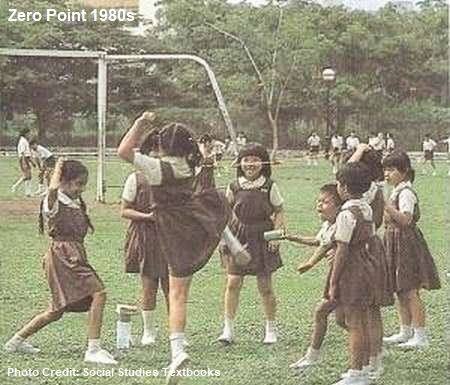
Zero point was another girls’ favourite game. The game typically involved skipping over the elastic rope that was made up of many rubber bands linked together.

At least three girls were needed to play the zero point – two holding the elastic rope on each end, and one carrying out the challenges. One of the common rules would be skipping over the rope held by the two girls at their knee, waist, shoulder and head levels.

The zero point game was particularly popular in schools in the eighties and nineties. While the boys played marbles or hantam bola on the field, the girls would play zero point along the corridors.

Hoop Wheeling

The hoop wheeling was a game played by competing teams or individual players.

Each player would be using a stick to push and roll an aluminum rim forward over a designated distance. The aluminum rim had a groove along its circumference that guide the stick.

If the aluminum rim fell along the way, the player had to stop and re-balance the rim with his stick to continue. The first player to reach the finishing line would win the game.

Hoop wheeling was often played in kampongs and later in schools during carnival events. Speed and a good sense of balance and control were keys in winning the game.

Galah Panjang

The popular traditional Malay game was typically played on a dirt field, where grid lines were drawn, or a badminton court. At least eight players – four attackers and four defenders – would be required to play galah panjang.

To start the game, the attacking players would have to be always within the boundary, where they could launch their offense individually or as a group, depending on their strategy. The leader of the defending team would guard the centre line whereas his members guarded each parallel line respectively.

The attackers would then try to breach the defensive lines without being touched by the defenders. He or she would be out of the game if touched. If at least one attacker managed to break through the defenders’ line, the attacking team would win the game, and the roles between the teams swapped.

Other Games
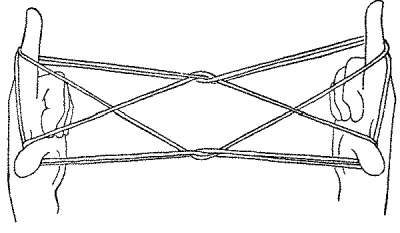
The other games played by the kids of the sixties, seventies and eighties included Broken Telephone, Rounders, Statues and Tick Tock (Tic Tac Toe).

The Cat’s Cradle string game, in particular, was popular in schools in the eighties.

Most of these traditional games had faded away by the eighties, due to the rapid disappearance of kampongs and the rise of electronic games in arcade and computers. In the early eighties, the People’s Association (PA) taught children at the community centres how to play the traditional games, and even held various game competitions at the national level.
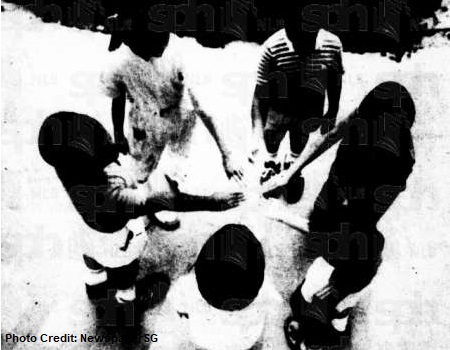
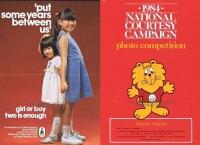
In 1984, the Singapore Broadcasting Corporation’s (SBC) Children and Educational Unit also launched a TV programme called O-Bay-Som (name inspired by the local children’s team selection orh-yah-beh-yah-som in a game) to introduce the traditional games to the new “Computer Age” generation.

The efforts, however, did little in stopping the traditional games from gradually fading away into history.

Trivia: While we had o-bay-som (literally means black and white in Hokkien. Players with palms facing down would be grouped together, the other team would be those with palms facing up) or lom-chiam-pas (similar to scissors-paper-stone) for team selection during a game, the Indonesian kids used the Elephant, Man and Ant. For the Thais, Mai San Mai Yao was preferred, where players picked sticks of different lengths to determine their teams.

How many of the traditional games do you remember?

Published: 27 January 2018
Posted in Cultural, Nostalgic | Tagged , , , , , , , , , , , , , , , , , , , , , , , , , , , , , , , , , , , , , , , , | 4 Comments

Sloane Court Hotel and other Former Hotels of Singapore

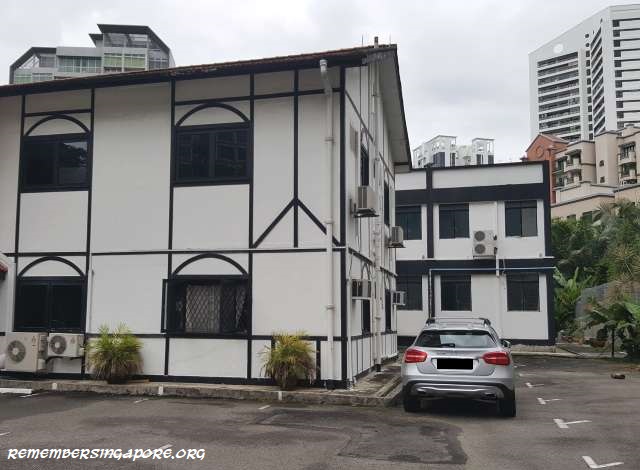
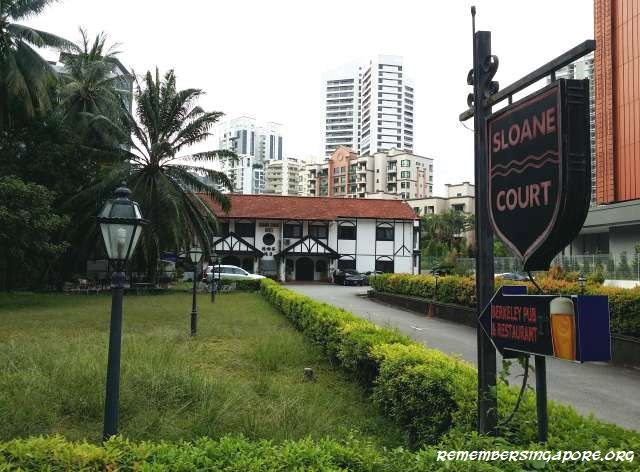
Located along Balmoral Road at the prime district 10 vicinity, Sloane Court Hotel became the latest hotel in Singapore to end its business. It was recently acquired by Tiong Seng Holdings and Ocean Sky International for $80 million; its site is expected to be developed into a 12-storey, 80-unit condominium.

The humble hotel, which began in 1962, was initially plain-looking, as it was used as a 26-room boarding house exclusively for British soldiers and their contractors. However, when the British armed forces pulled out of Singapore in the early seventies, the hotel had to open up to a bigger market for its business to survive.

Some of its guests in the seventies included Indonesian and Thai businessmen, and Japanese engineers, who were hired to come to Singapore to develop the Jurong industrial estate.

In the late seventies, the hotel’s Hainanese owners, a Chiam family, decided to give the hotel’s facade a facelift. They sought opinions from Stanley Foster, a family friend and Englishman who had opened a smokehouse named Fosters at the Cameron Highlands. The Chiams eventually chose the Tudor style due to its timeless and classic nature, and it became the iconic feature of the hotel until now.

Stanley Foster also helped the Chiam family in naming the new-look hotel Sloane Court. Inspired, the Chiams went on to open two more Tudor-style houses serving food and drinks – Pavilion and Tangle Inn – although both did not survive past the eighties.

Beside the Tudor-style colonial building, another attraction of Sloane Court Hotel was its Berkeley Restaurant, which served traditional Western cuisine in Hainanese style. Some of the restaurant’s best-known specialties were its English Porterhouse steak, Penang-style Inche Kabin chicken and English devilled chicken, which was cooked in mango chutney with a touch of white vinegar.

The caterers managing Berkeley Restaurant also owned other eateries in the eighties – the Captain’s Cabin at Serangoon Gardens and Balmoral Steak House at Holland Road.

The hotel was later renovated to expand to 32 rooms, and its old English charm continued to attract many guests, among them European tourists, especially the British, and Singaporeans who had studied or lived in Britain, well into nineties. Its relatively low room charges and short distance away from the booming Orchard Road shopping belt also played a big part in its positive occupancy rate.

Singapore’s first hotel was started as early as 1839, 20 years after the founding of Singapore. Opened by a British businessman called Gaston Dutronquoy, the hotel, known as London Hotel or Dutronquoy’s Hotel, was located between High Street and Coleman Street, and had rooms, restaurants, theatre and a photography studio.

The Colonial Hotels

Singapore experienced a tourism boom in the late 19th century and 20th century. Many hotels, particularly the luxury ones, were built during this period. Some have flourished till this day, such as the Raffles Hotel (since 1887) and Goodwood Park Hotel (since 1929), which have cemented their legacies as Singapore’s iconic landmarks.

Other colonial hotels did not survive as long, and many had their businesses wounded up after decades of operation. Some of the renowned examples were Adelphi Hotel (1850s-1973), Grand Hotel de l’Europe (1857-1932), Hotel de la Paix (1865-1914), Bellevue Hotel (1901-1951), Caledonian Hotel (1904-1910s), Hotel van Wijk (1905-1931) and the old Sea View Hotel (1906-1964).

Before its closure in 1973, Adelphi Hotel was the oldest hotel in Singapore, claiming a history that had spanned more than 120 years. Today, that honour belongs to the Raffles Hotel, which just celebrated its 130-year establishment in 2017.

There were hundreds of hotels, large and small, established in Singapore since the 19th century. Some were well remembered and had left their marks in the history, while many others were forgotten.

Below were some of the iconic ones that were demolished in the past 30 years (the list of former hotels is not in any order).

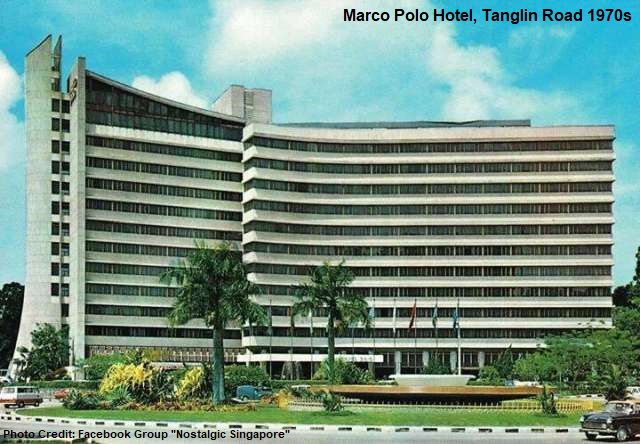
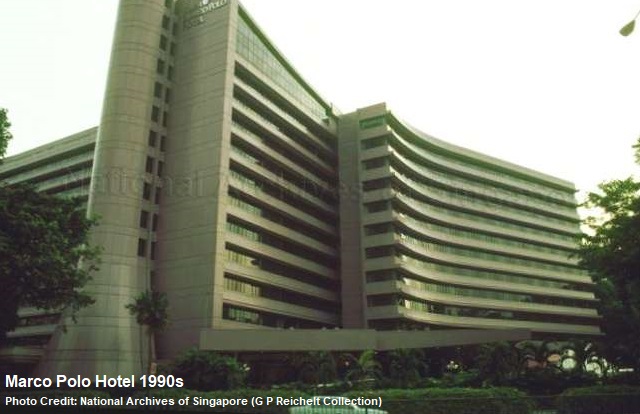
Marco Polo Hotel, Tanglin Road (1968-1999)

Located at the junction of Tanglin Road and Grange Road, Marco Polo Hotel, or officially Omni Marco Polo Hotel, was a famous 10-storey 300-room hotel landmark built in 1968. It was owned by the Goodwood Group, and was first known as Hotel Malaysia when it was completed.

Well-known for its luxurious furnishings and high quality services, the hotel, by the eighties, was voted as one of the best hotels in the world. It became a top choice hotel for many foreign leaders and international celebrities during their stays at Singapore.

Many locals as well as tourists would also remember the iconic fountain at Tanglin Circus that formed a picturesque scene with the hotel. The fountain was built and commissioned in 1966 by the Public Works Department (PWD), but was demolished a decade later in 1977.

In the mid-eighties, the ownership of the hotel changed hands and Hotel Malaysia was renamed Omni Marco Polo Hotel in 1989. The owners, however, had to fold up the hotel business in the late nineties after its finances were badly affected by the Asian Currency Crisis. In 1999, Marco Polo Hotel officially walked into history, when it was demolished and replaced by a luxury condominium named Grange Residences.

Katong Park Hotel, Meyer Road (1953-2002)

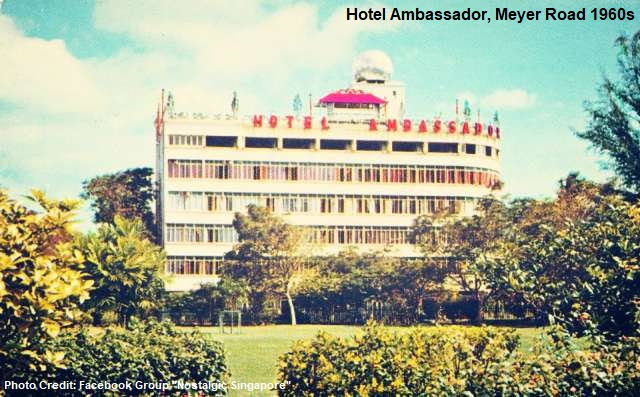
Opened in 1953, the former landmark at Katong Park had many names – Embassy Hotel, Hotel Ambassador, Duke Hotel, and eventually Katong Park Hotel – before it made way for a condominium in the early 2000s.

First called Embassy Hotel, the hotel was officially opened on 26 April 1953 as a modern building that had air-conditioned rooms and other modern facilities. Also boasting to be the largest hotel in British Malaya after the Second World War, it had splendid views of Katong Park and the seafront.

The following decades saw the hotel’s ownership changed hands several times, first in 1960 when it was rebranded as Hotel Ambassador. The hotel was badly affected by the Konfrontasi crisis in late 1963, when Indonesian saboteurs set off explosions at Katong Park, causing its windows to be shattered by the strong blasts.

In 1982, Hotel Ambassador was renamed again, this time as Duke Hotel. The hotel was then sold and reopened as Katong Park Hotel in 1992. Like Marco Polo Hotel, Katong Park Hotel was dragged down by the Asian Currency Crisis. Its operations ran into deficit, and had to call it a day in 1998. A condominium called View@Meyer was built at its site in 2006.

Copthorne Orchid Hotel, Dunearn Road (1969-2011)

The six-storey Copthorne Orchid Hotel was first started in 1969 as Orchid Inn by local magnate and chairman of Hong Leong Group Kwek Hong Png.
The hotel would later be renamed Novotel Orchid Inn before becoming part of the group’s Copthorne Orchid hotel chain in Singapore and Malaysia.

The hotel’s reddish facade was a once familiar sight along Dunearn Road. It had been frequently patronised by both local and foreign celebrities, and among the hotel’s long serving staff, the most popular topic was perhaps the marriage of Hong Kong star Chow Yun Fat and his Singaporean wife Jasmine Tan, who once worked at the hotel as a receptionist.

In 2011, Copthorne Orchid Hotel was closed after more than four decades of existence. It was subsequently demolished and replaced by a luxury freehold condominium called The Glyndebourne.

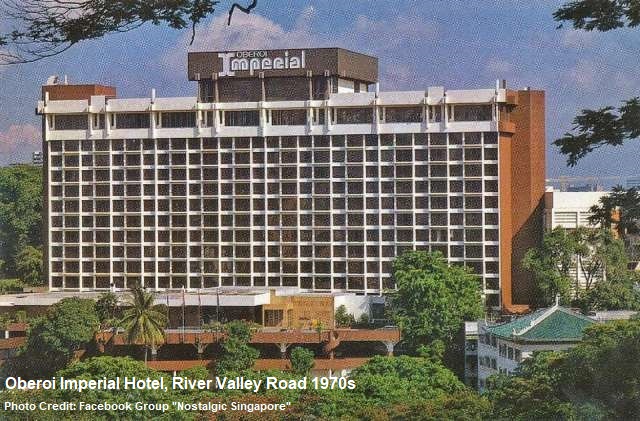
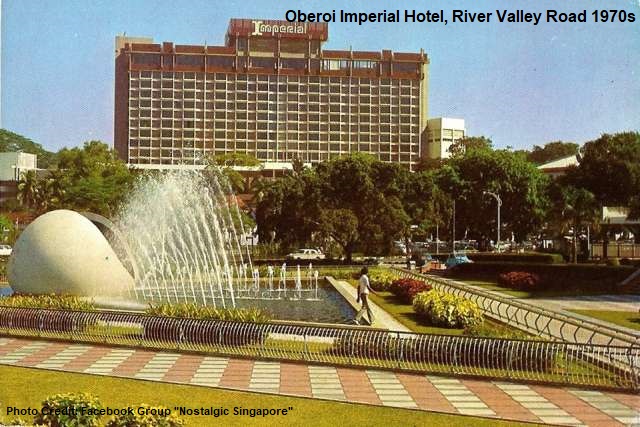
Oberoi Imperial Hotel, Jalan Rumbia (1971-1999)

Located at Jalan Rumbia, off River Valley Road, and just a short distance away from the iconic National Theatre, the former Oberoi Imperial Hotel started in the 1950s as a residential block to house the British military officers. It underwent extensive renovations in the late sixties and was converted into a luxury hotel that was officially opened in 1971.

The 13-storey hotel had more than 500 rooms, coffee houses, a swimming pool, lounge and three restaurants serving Chinese, Indian and international cuisine. Popular in the seventies and eighties, the hotel boasted a list of distinguished guests that included Tonga’s King Taufa’ahau Tupou IV.

The hotel was sold to the Hind Group in 1977 for about $37 million, and was renamed as Imperial Hotel. In the late nineties, the group announced plans to redevelop the hotel. By 1999, the hotel was demolished, and in its place, a new luxury condominium called The Imperial was erected in the early 2000s.

MayFair City Hotel, Armenian Street (1950-2000s)

The former Mayfair City Hotel (also known as Mayfair Hotel in its early days) was housed in two Art Deco-style shophouses at Armenian Street. The hotel was four-storey tall; its ground level was occupied by a restaurant, lounge and bar, while the second to fourth level were made up of 26 air-conditioned rooms that had two beds, bath tubs, teak furniture and radio relay speakers.

When the hotel was opened in 1950, it was fully booked by the Qantas Empire Airways-British Overseas Airways Corp (QEA-BOAC) to accommodate its crews. The hotel’s popularity peaked in the sixties, but by the seventies, it was no longer considered a luxury hotel. In 1971, its rooms ranged between $30 and $40 per night as compared to the $45 rate and above charged by other luxurious hotels.

In 1976, the hotel suffered from poor occupancy rate and had to close down, although its cocktail lounge and restaurant remained opened for business. Three years later, the hotel made a comeback under a new management team. The hotel then operated till the late-2000s. This time, it was shut down for good, and its premises was converted into a foreign worker dormitory. The shophouses were subsequently vacated in 2011 for renovation projects.

Great Southern Hotel, Eu Tong Sen Street (1936-1994)

The Great Southern Hotel, or popularly known as Nam Tin (Southern Sky in Cantonese), was a well-known landmark along Eu Tong Sen Street. Completed in 1936, the boutique hotel was the holder of many records, including the tallest building at Chinatown, and the first Chinese hotel to be equipped with a lift.

Housed in a building owned by Lum Chang Holdings, the Cantonese-themed Great Southern Hotel was largely catered to rich Chinese from China and Hong Kong. The elaborate hotel was six storeys tall, and featured shops at its ground level and a Chinese restaurant on its fourth floor. There was a tea house at its rooftop garden, and its fifth level was previously home to the famous Southern Cabaret nightclub.

The fifties and sixties were arguably the hotel’s golden era, when its popularity and high standards, particularly in its entertainment and services provided, earned a fine reputation as the “Raffles Hotel of Chinatown”.

In 1994, the Great Southern Hotel was converted into a department store called Yue Hwa Chinese Products, after the hotel was sold to Indonesia-born Hong Kong businessman Yu Kwok Chun (born 1951) for $25 million. The preservation of the hotel’s facade and unique features helped its owner win the Urban Redevelopment Authority’s (URA) Architectural Heritage Award in 1997.

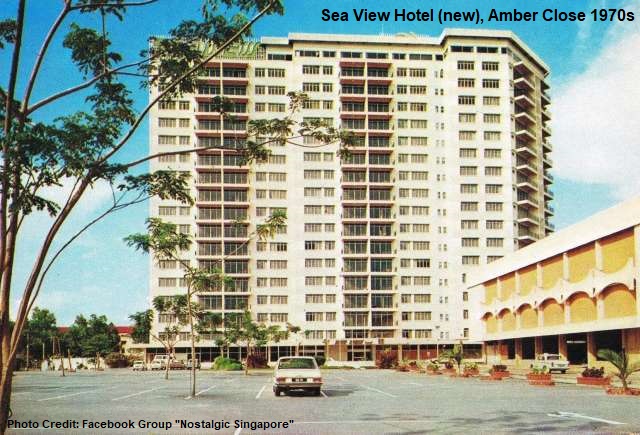
Sea View Hotel (new), Amber Close (1969-2003)

The old Sea View Hotel, a nearby hotel of the same name, was a famous hotel in the first half of the 20th century, being dubbed as Singapore’s leading hotels along with Adelphi Hotel and Raffles Hotel. The hotel, located off Meyer Road, ceased its operation in 1964.

The new 18-storey Sea View Hotel was opened at Amber Close five years later in 1969.

Some of the memorable features of the new Sea View Hotel, well remembered by its former guests and the Katong residents, was its coffee lounge serving delicious Western food dishes and the unobstructed view of East Coast, before the land reclamation, at its highest floors.

Sea View Hotel was eventually closed down in 2003. Amber Close was expunged, and the site was redeveloped into a condominium named The Seaview.

Boulevard Hotel, Cuscaden Road (1973-2000)

Located at Cuscaden Road, the hotel was known as Cuscaden House Hotel before it was bought over in 1973 by Khoo Teck Puat (1917-2004), a well-known local banker and hotelier, and, at one point, Singapore’s richest man.
The hotel was renamed Hotel Malaysia (there were two Hotel Malaysia in Singapore in the late seventies and early eighties) in 1975, and again to Boulevard Hotel in 1983 after a series of renovation works.

The Hong Leong Group bought the property for $410 million in 1997, and subsequently demolished the hotel in 2000 for the development of the Cuscaden Residences condominium.

Garden Hotel, Balmoral Road (1971-2009)

The Garden Hotel, designed like a courtyard with gardens and fitted with air-conditioned rooms and a large swimming pool, began its business in 1971 at a construction cost of $3 million. It was situated along Balmoral Road, just opposite of Sloane Court Hotel.

The hotel was bought over by the Chua family of the Cycle and Carriage in 1981, when they spent $25 million in an acquisition from Vun Lee Pte Ltd. In 1999, property developer City Development Ltd purchased the property for more than $100 million. The Garden Hotel continued to operate until 2009, when it was closed to make way for the development of luxury condominium Volari at Balmoral.

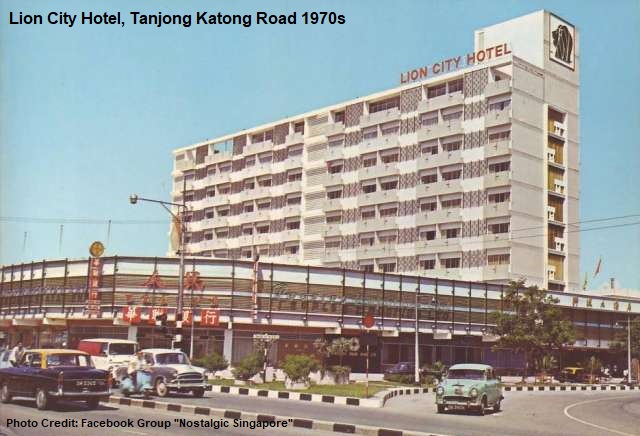
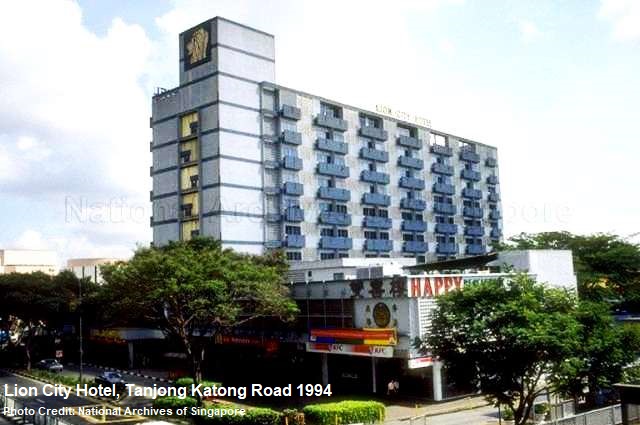
Lion City Hotel, Tanjong Katong Road (1968-2011)

Owned and operated by the family of Wee Thiam Siew, a local property tycoon, the 10-storey 166-room Lion City Hotel was opened at a cost of $4.2 million in 1968 at the junction of Tanjong Katong and Geylang Roads. The hotel caught up with the fast-growing tourism industry after Singapore’s independence, when there was a period of hotel shortage to meet the increasing demands.

On 2 August 1968, the Lion City Hotel had a grand opening officiated by Dr Goh Keng Swee, then-Minister for Finance. Modernly designed, the hotel, at its highest floor, offered a panoramic view of the city area. Its rates in the late sixties and early seventies stood at $30 and $40 per night for single room and double room respectively. A deluxe suit would cost $90.

In 2011, UOL Group bought Lion City Hotel and the adjoining former Hollywood Theatre, which had stopped screening movies since the nineties, for $313 million. Today, the site of the former hotel was occupied by OneKM Mall.

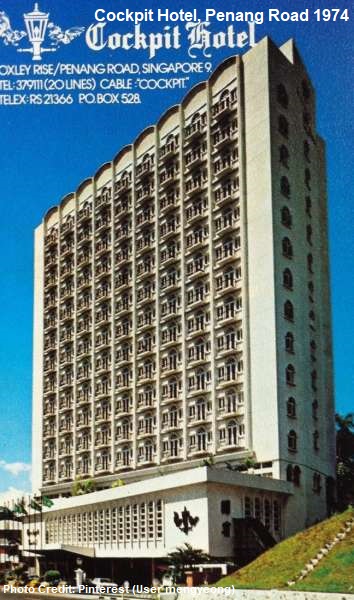
Cockpit Hotel, Penang Road (1972-1997)

Completed in 1972, the Cockpit Hotel was built at the former site of another luxury hotel called Hotel de L’Europe (not the same Hotel de L’Europe of the 19th and early 20th century).
The Hotel de L’Europe, established in 1947, became known as the Cockpit due to the frequent stays of the Dutch airline KLM crews and passengers.

Indonesian businessman Hoo Liong Thing started the new 13-storey 230-room Cockpit Hotel in 1972, but the hotel changed hands several times, first in 1980 and again in 1983.

It was sold a final time in 1996 to property developer Wing Tai, which ceased the hotel operation a year later. The building was then left vacated for a long period of time, leading to numerous paranormal stories about the “abandoned” hotel.

Today, a condominium called Visioncrest Residence stands at its site.

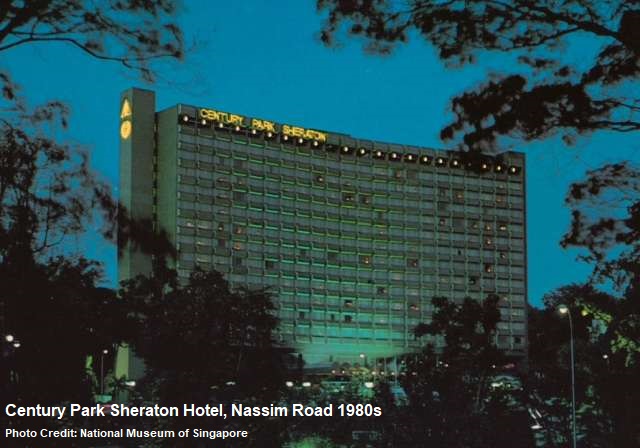
Century Park Sheraton Hotel, Nassim Road (1979-2004)

Located at Nassim Road, one of Singapore’s most expensive districts and near the Orchard Road shopping belt, the Century Park Sheraton Hotel was opened in 1979 as a luxury hotel.

The 465-room hotel was owned by the All Nippon Airways (ANA), which bought the property for $59 million in 1977 as part of the international Sheraton hotel chain. For years, the hotel was famous for its luxurious furnishings, Europa Ridley nightclub and the Cafe-in-the-Park coffee house.

Century Park Sheraton Hotel was renamed as ANA Hotel in 1990, and lasted until 2004. Capitaland, after its acquisition of the hotel, demolished and replaced it with Nassim Park Residences.

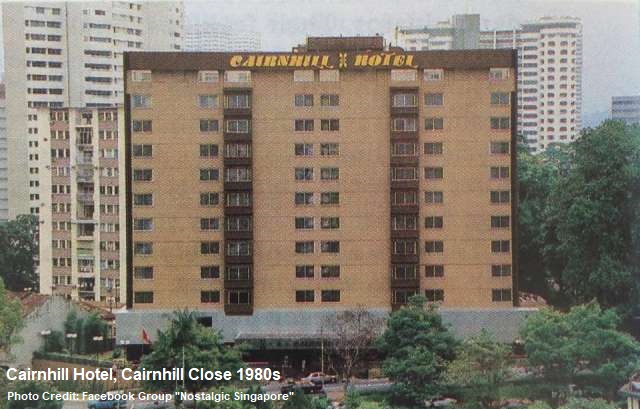
Cairnhill Hotel, Cairnhill Close (1979-1999)

Famous for its Coffee Garden and buffets in the eighties, the Cairnhill Hotel, at Cairnhill Close, began in the late sixties as Regency Hotel which was converted from a block of luxury flats. However, the construction of the hotel was incomplete due to financial issues, and remained so for the next decade.

It was not until 1979 when Tan Kim Hai, a Malaysian property developer, acquired the property and injected funds for the hotel to be fully built. Named Cairnhill Hotel, the newly-completed hotel was 11 storey tall and had more than 180 rooms.

Cairnhill Hotel was taken over by Wing Tai Holdings in 1996. It survived for another three years before the hotel was closed for good. The building was then torn down and replaced by a condominium named The Light at Cairnhill.

Singapura Forum Hotel, Orchard Road (1962-1985)

The $5.5 million Singapura Forum Hotel was one of the first hotels to be established at Orchard Road, and also the first hotel in Singapore to be managed by an international hotel chain – the Intercontinental Hotels group. The hotel, located at Orchard Road towards the Tanglin area, was opened in 1963, just one day after the formation of the Federation of Malaysia.

Forums and workshops by private organisations were regularly held at the eight-storey 200-room hotel, but the hotel’s profits in the early seventies were affected due to the intense competition with other new luxury hotels in the vicinity.

In 1972, Ng Teng Fong, a well-known property magnate, bought over the hotel. Initially wanted to demolish and replace it with shopping complexes, he instead sold it to a Dubai-based investment company in 1982 for $178 million.

Singapura Forum Hotel was eventually shut down in July 1983. It was replaced by Forum Galleria shopping and office complex that was opened in 1986. Even though they had long gone, the hotel’s popular Sentosa Restaurant and Pebbles Bar were still well-remembered by its former guests.

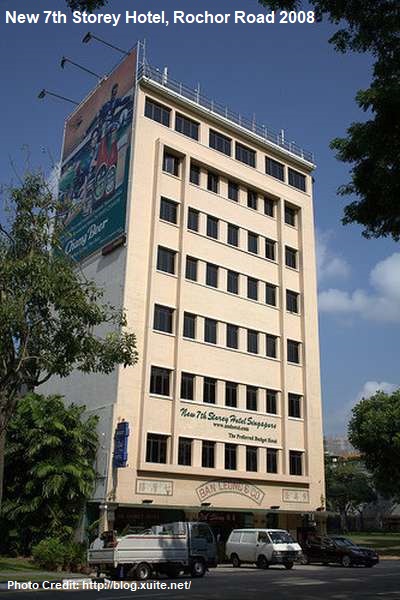
New 7th Storey Hotel, Rochor Road (1953-2008)

Despite its name, the New 7th Storey Hotel was actually nine storey tall. When it was completed in 1953, it was briefly the tallest building at the Rochor vicinity, and many taxi drivers and motorists used it as a landmark for their directions.
The New 7th Storey Hotel, founded by Wee Thiam Siew, began as a high end hotel, frequently patronised by European guests for stays in Singapore as well as British officers for tea parties.

But the hotel’s status declined by the late nineties, when it gradually became a budget hotel for backpackers.

In 2008, the half-century old New 7th Storey Hotel was demolished to make way for the new Downtown Line’s Bugis MRT Station.

Reborn Hotels – A New Lease of Life

Instead of demolition and redevelopment, some of the older hotels were sold, renovated and rebranded as new hotels. These include:

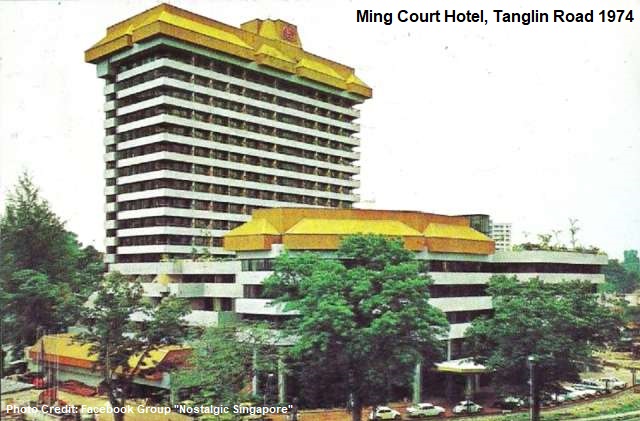
Ming Court Hotel (1970-1991), Tanglin Road, present-day Orchard Parade Hotel
Hotel New Hong Kong (1971-1979), Victoria Street, present-day Hotel Grand Pacific
Merlin Hotel (1971-1981), Beach Road, present-day Plaza Parkroyal Hotel
Apollo Hotel (1971-2004), Havelock Road, present-day Furama Riverfront Singapore
Paramount Hotel (1983-2010), Marine Parade Road, present-day Village Hotel Katong
Crown Prince Hotel (1984-2005), Orchard Road, present-day Grand Park Orchard
Dai-Ichi Hotel (1985-1999), Anson Road, present-day M Hotel

Published: 11 January 2018

Posted in General, Historic | Tagged , , , , , , , , , , , , , , , , , , , , , , , , , , , , , , , , , , , , , , , , , , , , , , , , , , , , , , , , , , , , , , , , , , , , , , , | 30 Comments

Changes in the City – Afro-Asia Building

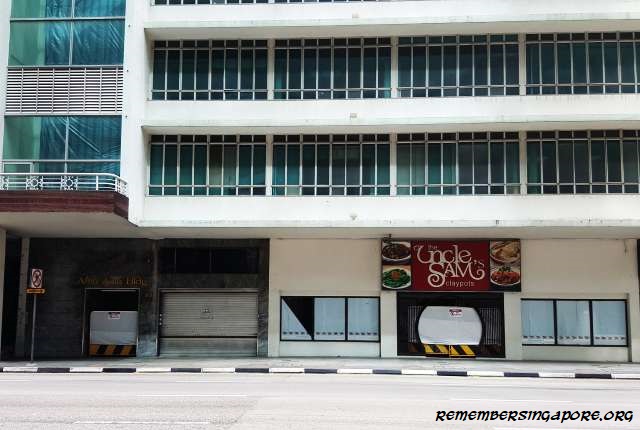
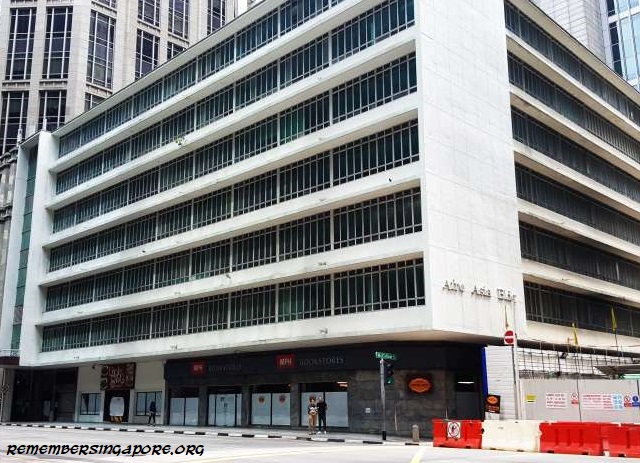
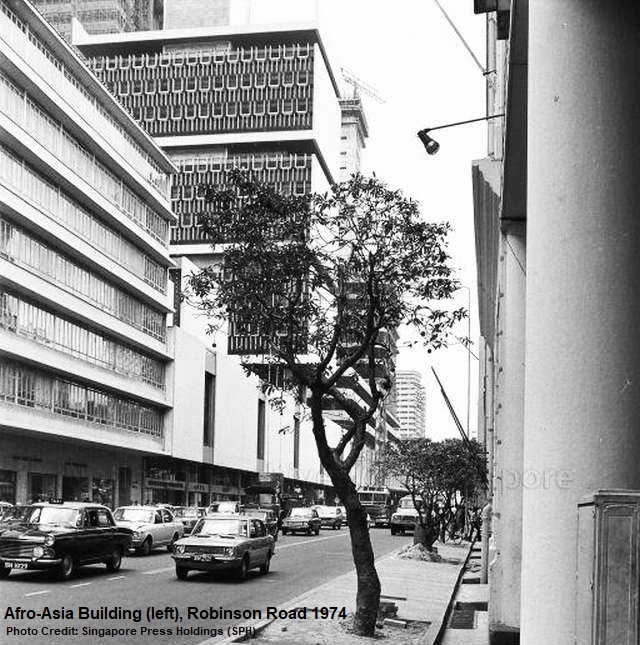
One of the oldest office buildings at the Central Business District (CBD), the Afro-Asia Building will be demolished and replaced by a new 19-storey tower that is expected to cost $320 million in construction. The current Afro-Asia Building, owned by Afro-Asia Shipping Company (AAS), was built in the 1950s.

The Afro-Asia Building was designed in typical post-war modernism with a heavy emphasis in reinforced concrete and glass. At seven storey tall, it towered over rows of shophouses and other buildings, most of them only three storey tall, along Robinson Road when it was completed in the fifties.

By the late seventies and early eighties, the CBD area experienced a property boom with Raffles Place “competing” with Shenton Way in the development of new office building projects. Within a few years, new skyscrapers such as the Raffles Tower, OUB (Overseas Union Bank) Centre, Chartered Bank Building and HSBC (Hong Kong & Shanghai Bank) Building were built.

In 1982, the office space rental at Raffles Place’s buildings and towers reached a high range of $80 to $100 per square metre. The office buildings located at the fringes of Shenton Way and Robinson Road, such as International Plaza and Afro-Asia Building, began to pale in comparison, as they charged at a lower range of $40 to $60 per square metre.

Several unions had made their headquarters at the Afro-Asia Building in the seventies and eighties, including Singapore Bank Employees’ Union and National Trades Union Congress (NTUC). Other tenants were largely made up of banks, shipping and trading companies.

One of the better known tenants of Afro-Asia Building was MPH Bookstores, opened at the first level of the building in 1976. The book publishing company has a long history – it was first established in Malacca and moved to Singapore in 1890. Initially known as the Methodist Publishing House, it changed its name in 1927 to Malaya Publishing House, and Malaysia Publishing House after 1963.

Affected by the redevelopment of its landlord, the bookstore’s Robinson Road branch was closed in March 2017. This was after the closure of its iconic century-old flagship store at Stamford Road in 2002.

There was also a restaurant beside MPH Bookstores. It was once occupied by Pizza Hut between the mid-eighties and nineties. One of the largest Pizza Hut outlets in Singapore then, the popular fast food restaurant, patronised by many office workers during the lunch times, had a 150-seating capacity that cost $600,000 in renovation, including a $40,000 conveyor-belt oven that churned out pizzas in half the time compared to other outlets.

Beside the Afro-Asia Building, other office buildings at Robinson Road that were built during or before the 1950s included the Sindo House, Ramayana Building, AIA (American International Assurance) Building, Denmark House and Finlayson House. Most of them had been demolished or redeveloped. The former Telecoms Building (later Ogilvy Centre; present-day Hotel So Sofitel Singapore), constructed in the 1920s, is currently one of the oldest buildings along Robinson Road.

Published: 17 December 2017

Posted in General | Tagged , , , , , , , , , | Leave a comment

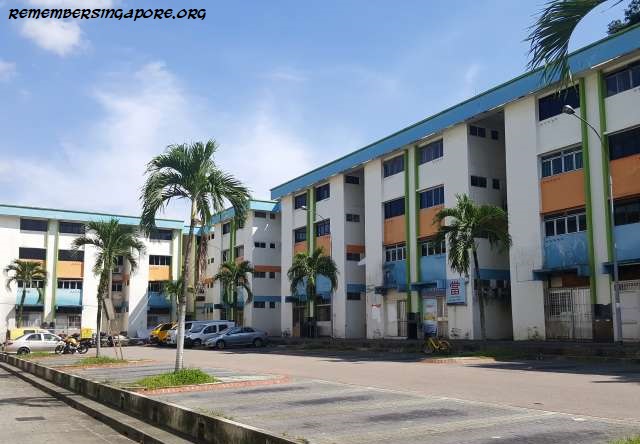
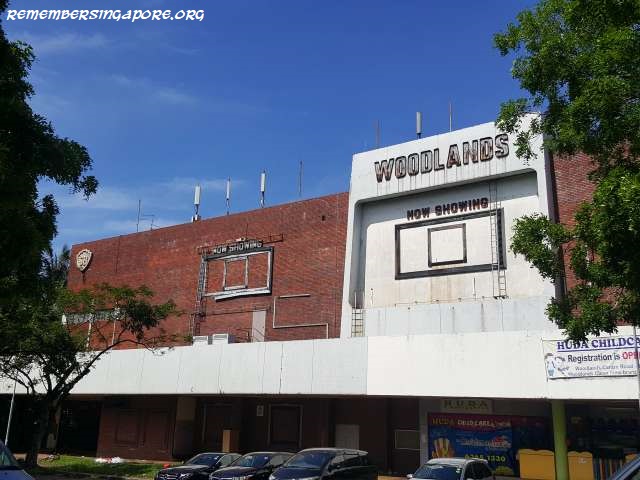
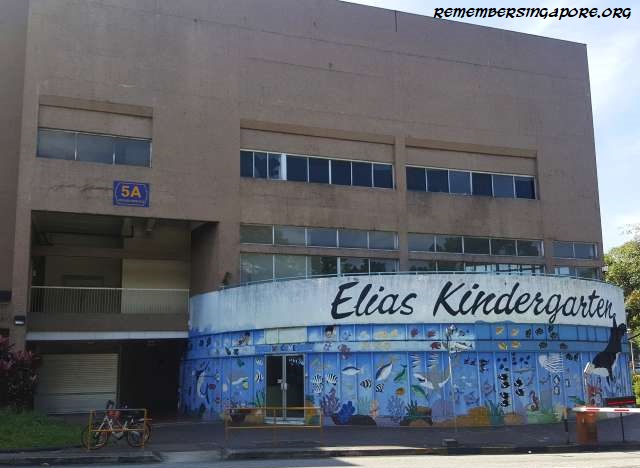
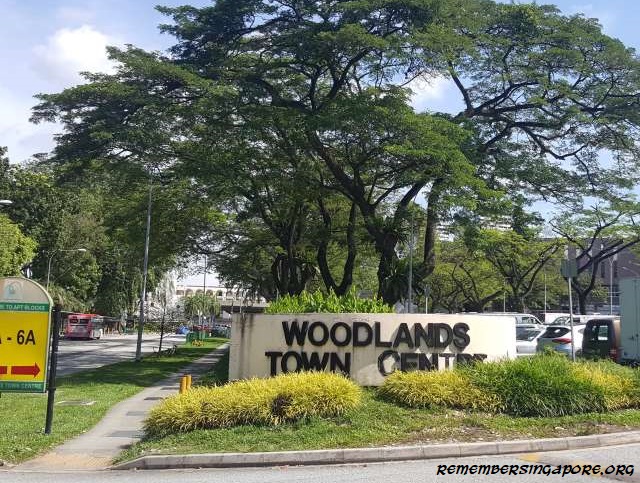
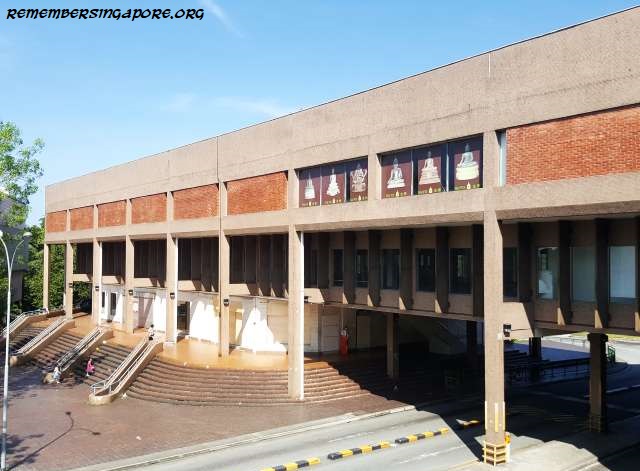
A Final Look at the Old Woodlands Town Centre

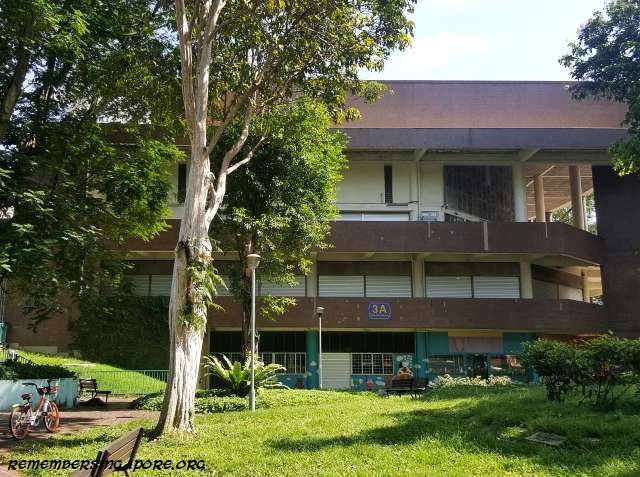
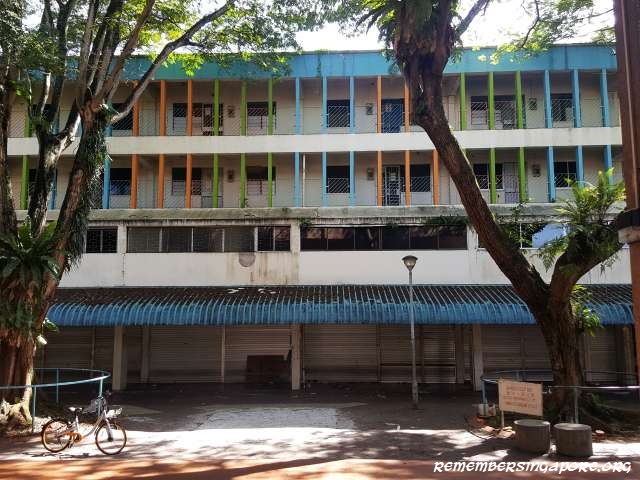
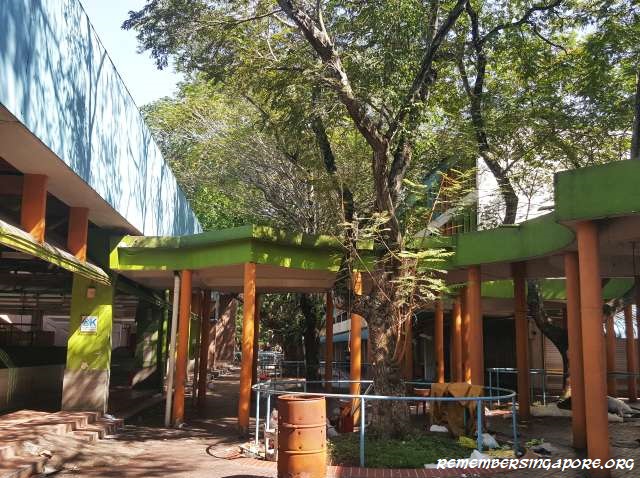
The Old Woodlands Town Centre was closed on 30 November 2017, after 37 years.

The small town centre, with six blocks of low-rise flats (1A-6A), was situated only 500m away from the causeway. Hence, for decades, the Old Woodlands Town Centre acted as the bustling transition town between Singapore and Malaysia, where its booming businesses such as the money exchangers, retail shops and eateries benefited from the large number of travellers and workers commuted daily between the two lands.

In the eighties, almost three-quarter of the shops’ regular customers were Malaysians. Dozens of large and small departmental stores and shops were established, one of which was the Welcome Department Store that sold a wide variety of products in men’s and women’s fashion, toys, houseware and electrical appliances. The biggest player was Emporium, while other smaller department stores included Aik Cheong Department Store and Yee Lian Department Store.

The history of Woodlands’ development began in the early seventies. In the 1970 HDB report, Woodlands was expected to be Singapore’s frontier town for the Malaysian visitors. By the mid-seventies, the Housing and Development Board (HDB) began planning for the building of the Woodlands Town Centre. A section of the dual-carriage Woodlands Road was converted in the late seventies into a single lane Woodlands Centre Road that formed a boundary loop around the new town centre.

The first phase of the Woodlands New Town construction was kicked off in the late seventies, but the progress was slow due to the low demand in its flats. The Woodlands New Town, however, was completed in 1980 at a construction cost of $10 million.

The new town centre was well-furnished and self-sufficient with rows of retail shops, coffeeshops, air-conditioned supermarket, cinemas, library and a HDB area office. The Woodlands branch of the Post Office Saving Bank (POSB) was also opened at the main Block 2. With the completion of the new town centre, HDB was hoping that it could prove to be an attraction for residents to move to Woodlands.

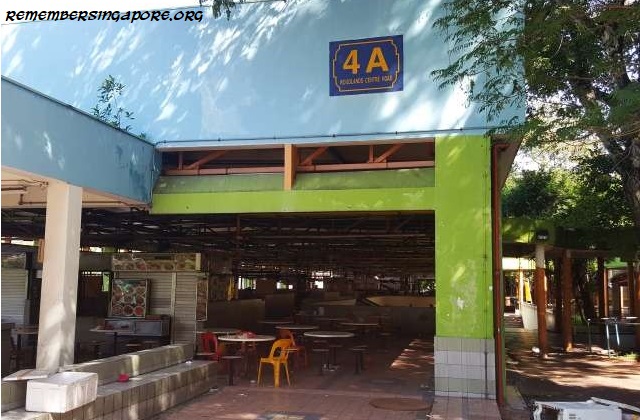
Other amenities were gradually added in the early eighties. The street hawkers were resettled at the town centre’s new hawker centre. In 1981, the Woodlands Bus Interchange at Woodlands Town Centre was completed. Designed with 17 berths, it provided, at the start, five bus services in 169, 178, 181, 204 and 208.

The bustling businesses at Woodlands Town Centre, however, had turned it into a magnet for all sorts of crimes. Snatch thefts and housebreaking were so rampant that some residents branded the place as a “black spot”. But the town centre was struck by its most serious case in 1984 when an arsonist burnt down two shophouses, causing the death of 10 people, many of them died of asphyxiation. It was the worst fire-related tragedy in Singapore since the 1972 fire at Robinson’s that claimed nine lives.

Beside the negative headlines of the crimes happening at the Woodlands Town Centre, its hawker centre was also subjected to constant criticisms. In 1987, the hawker centre was even dubbed as the “dirtiest in Singapore”. It took HDB and the Woodlands Town Centre Merchants’ Association a great deal of effort to educate the stallholders, cleaners and customers to improve the cleanliness of the hawker centre.

In 1988, the HDB, Ministry of the Environment and the Parks and Recreation Department even stop cleaning Woodland Town Centre for a day to demonstrate to its residents and visitors how bad the surroundings would be affected by inconsiderate littering.

The new Bukit Timah Expressway was opened in 1985, connecting the Woodlands Town Centre to the Pan-Island Expressway (PIE) and providing much needed convenience and accessibility to the northern residents of Singapore.

The same period also saw the completion of the Woodlands Town Garden, located opposite of the Woodlands Town Centre. The $8.5-million park was designed with ponds, Chinese pavilions, Malay-style huts, arch bridges, a watch tower and a floating restaurant. An underpass across the Woodlands Centre Road linked the 12.8-hectare park and Woodlands Town Centre together.

The Old Woodlands Town Centre was also a short distance away from Kampong Fatimah, previously one of the last kampongs in Singapore. In 1989, the residents of the idyllic kampong – with its wooden houses on stilts and crude plank bridges linking the houses together – had to be resettled, and its site was acquired by Singapore from the Malaysian government for the extension of the Woodlands Immigration Complex.

In 1992, with the opening of the new Woodlands Mass Rapid Transit (MRT) Line and underground bus interchange at Woodland Square, it became the new town centre for Woodlands. The “old” Woodlands Town Centre gradually lost its importance as the new town’s administrative centre. With minimal upgrading, the old town centre would largely remain the same for the next 25 years.

The fate of the old Woodlands Town Centre was finally sealed in the 2010s, when it was announced that its site would be acquired for redevelopment, as part of the extension project for the Woodlands Checkpoint to ease traffic congestion, improve lane clearance and enhance overall security. In 2012, the town centre’s blocks of low-rise flats were chosen under the Selective En-bloc Redevelopment Scheme, and by late November 2017, the residents and shopowners had vacated the place and the town centre closed.

Published: 09 December 2017

Posted in General | Tagged , , , , , , , , , , , , , , , , | Leave a comment

Singapore’s Street of Religious Harmony (Part 2) – Waterloo Street

One of Singapore’s oldest streets, Waterloo Street came into existence as early as the mid-19th century. It was originally known as Church Street, but there was a clash of names as there was another Church Street at Raffles Place. Hence, in 1858, the Municipal Council decided to change the name of the road to Waterloo Street to commemorate the famous Battle of Waterloo in 1815, in which the Duke of Wellington scored a decisive coalition victory over Napoleon Bonaparte’s French army.

Waterloo Street is located at the downtown area between Rochor Canal and the mouth of the Singapore River. In the past, the local Chinese called this area “soi po” (小坡), and, for convenient sake, named the parallel roads in the vicinity (North Bridge Road, Victoria Street, Queen Street, Waterloo Street, Bencoolen Street, Prinsep Street and Selegie Road) in numerical order. Waterloo Street was therefore also known as the fourth road, or “si beh lor” (四马路), in Hokkien.

Waterloo Street was once well-known for its Indian street hawkers. Some of the stalls were decades old, passed down by the hawkers’ fathers and grandfathers who had already operated there before the Second World War. However, the popular gourmet attraction that had many of the locals’ favourite Indian rojak, mee goreng, mee rebus and mee siam vanished in the late seventies when the street hawkers were relocated to the hawker centres at Boat Quay and Empress Place.

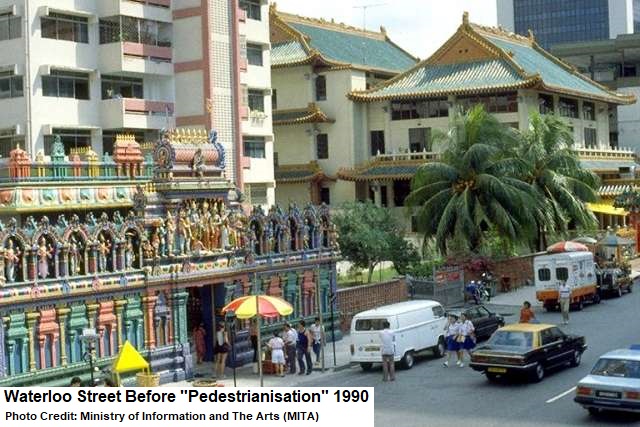
In 1997, a 100m-long section of Waterloo Street, in front of Sri Krishnan Temple and Kwan Im Thong Hood Cho Temple, was closed permanently for the conversion of the vehicular road to pedestrian walkways. They were part of a unique open-air and pedestrian-friendly Albert Mall, designed by the Urban Redevelopment Authority (URA).

Kwan Im Thong Hood Cho Temple (1884-Present)

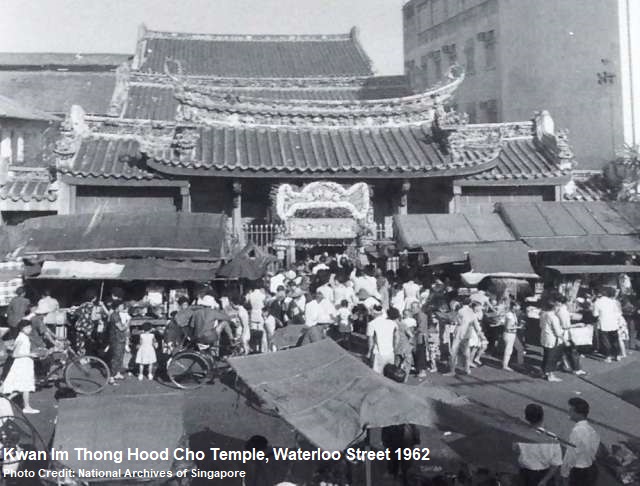
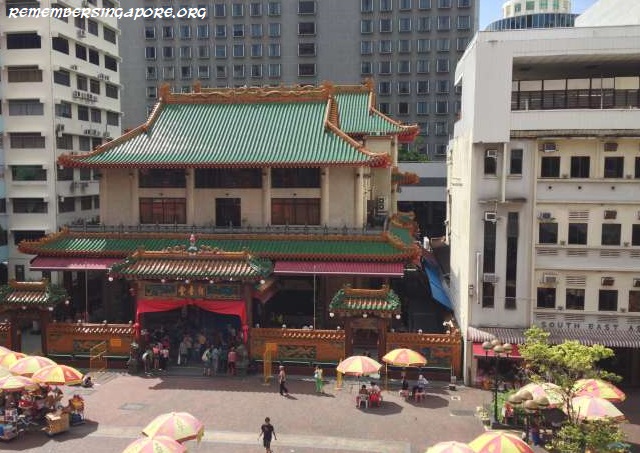
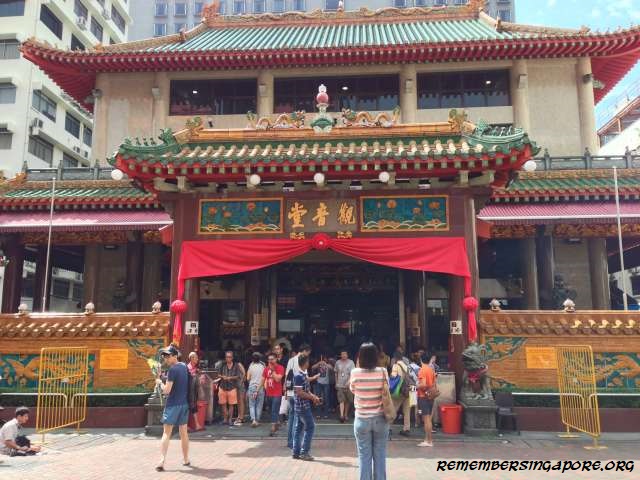
Currently there are four places of worship along the 550-long Waterloo Street, the most famous being the Kwan Im Thong Hood Cho Temple, or more popularly known as si beh lor guanyin beo. Currently one of Singapore’s oldest Buddhist temples, it started as a simple temple in 1884, built to dedicate to Kwan Im or Guan Yin, the Goddess of Mercy. Today, the temple also worships Shakyamuni Buddha and other Chinese deities.

Except for several minor upgrades, the temple remained largely the same for many decades, even surviving the air raids during the Second World War, when it provided refuge for many victims. Between the late seventies and 1982, a new temple building was constructed to replace the previous one that was almost 80 years old.

Kwan Im Thong Hood Cho Temple has always enjoyed a large following of devotees. Many visit the temple during the birthday of the Goddess of Mercy and other important religious dates in the lunar calendar. Chinese New Year is another period in which tens of thousands of devotees can be seen visiting the temple and offering prayers for an auspicious start to the new year.

Such is the popularity and influence of the Kwan Im Thong Hood Cho Temple that many shops dealing with religious goods have been established at the nearby Albert Centre and Cheng Yan Court. It is also common to see devotees buying lotus flowers, joss sticks and candles from the street florists or getting their divination lots analysed by the fortune tellers at the compound in front of the temple.

The design of Cheng Yan Court, the Housing and Development Board flats built in the eighties, is inspired by Kwan Im Thong Hood Cho Temple. The public housing, situated just in front of the temple, has incorporated typical Chinese temple’s architecture design in the motifs of its balcony railings and has similar jade-green tiled pitch roofs.

In 2001, Kwan Im Thong Hood Cho Temple was listed by the National Heritage Board as one of Singapore’s historic sites.

Sri Krishnan Temple (1870-Present)

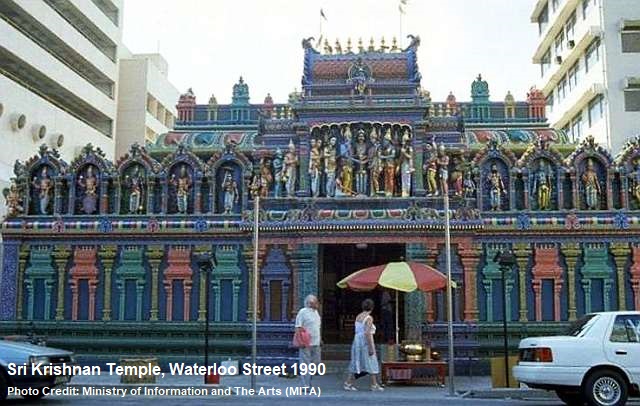
There was a large Hindu migrant community living at the Victoria and Albert Streets in the mid-19th century. It was said that in 1870, a rich devotee named Hanuman Beem Singh set up a statue of Krishna, the God of compassion and love in Hinduism, in a little shrine under a Banyan tree at Waterloo Street. The shrine eventually developed into a makeshift temple with a significant following, and Waterloo Street became known to the local Hindus as Krishnan kovil sadakku, or “street of Krishnan Temple”.

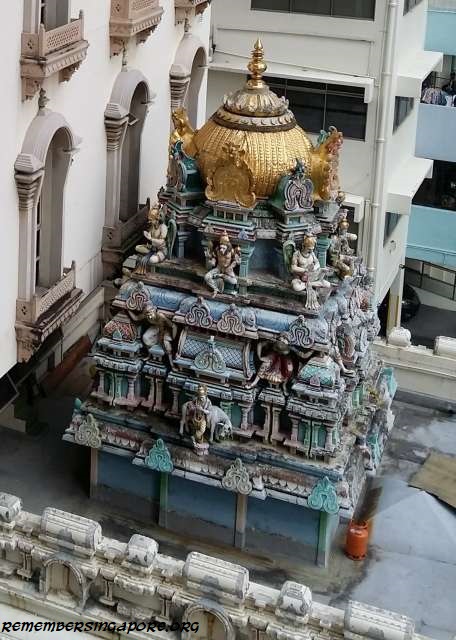
In 1880, Hanuman Beem Singh passed the management of Sri Krishnan Temple to his son Humna Somapah. The temple’s management was passed again in 1904, this time to Joognee Ammal, Humna Somapah’s niece. Joognee Ammal oversaw the construction of the main shrine building with a rising roof (Vimanam) and conducted the consecration ceremony (Maha Kumbabishegam) in 1933. The same year also saw the addition of the temple’s dome, which, at 8m tall, was the highest point of the temple.

Vayloo Pakirisamy Pillai (1894-1984), well-know local Indian businessman, philanthropist and community leader, took over the management of Sri Krishnan Temple in 1935 and expanded the temple with a main shrine building. A concrete roof was added in 1959, and another consecration ceremony was carried out.

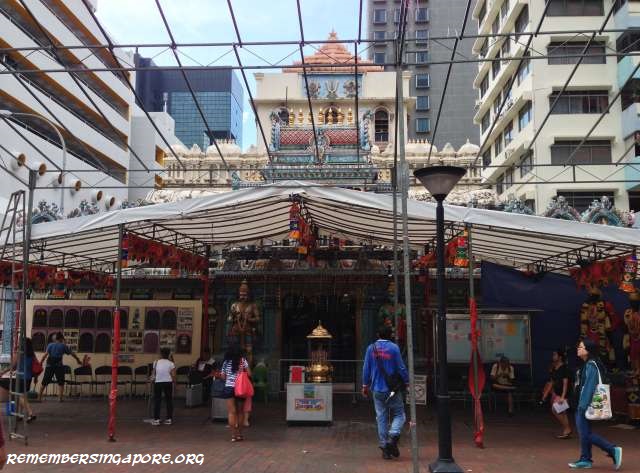
Sri Krishnan Temple was further renovated and expanded in the late eighties and 2000s, and two more consecration ceremonies were conducted in 1989 and 2002.

The temple, designed in classic South Indian style and the only Hindu temple dedicated to Lord Krishna, has become an important place of worship for the local Hindu community, especially during the celebrations of Deepavali and Krishna Jayanthi.

Sri Krishnan Temple was gazetted for conservation on 6 June 2014.

Church of Saints Peter & Paul (1870-Present)

Gazetted as a national monument on 10 February 2003, the Church of Saints Peter & Paul sits between Waterloo Street and Queen Street. It is, however, better known as the Queen Street Church.

The Church of Saints Peter & Paul was initiated by Father Pierre Paris to cater to the local Chinese and Indian Catholic followers. Named after St Peter and St Paul of Tarsus, the church building was completed in 1870 as the sister parish of the Cathedral of the Good Shepherd, located at the junction of Queen Street and Bras Basah Road.

In 1888, the Church of Our Lady of Lourdes was built to cater for the local Indian Catholics, and the Church of Saints Peter & Paul became exclusively for the Chinese Catholics.

In the following 100 years, the church underwent several major renovations and expansions, notably in 1891, 1910, 1969 and 2001. Today, it is Singapore’s second oldest Catholic church after the Cathedral of the Good Shepherd.

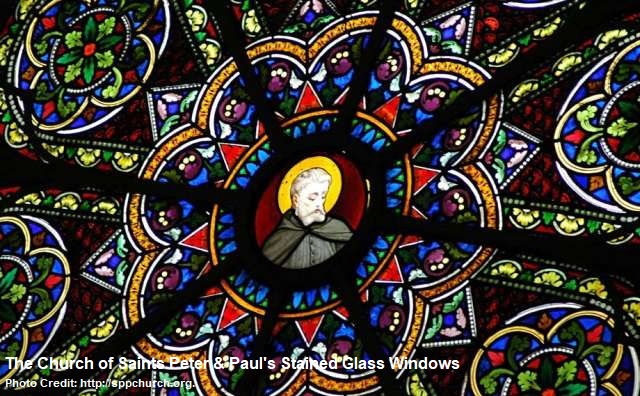
Designed in Gothic style that features both St Peter’s and St Paul’s statues, two of the church’s main attractions are its century-old stained-glass windows and bronze bells that were specially fabricated and imported from France and installed in 1869 as part of the church building.

Maghain Aboth Synagogue (1878-Present)

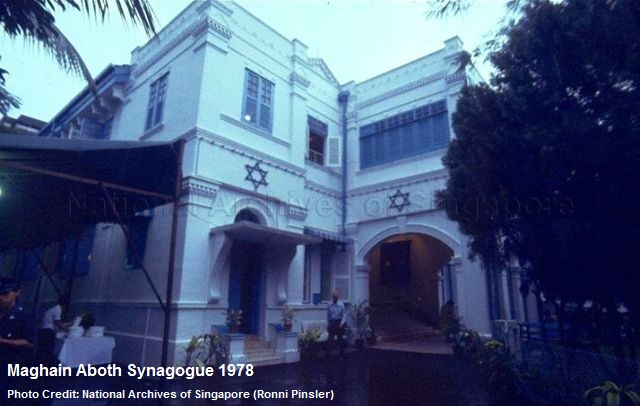
Another place of worship along Waterloo Street is the Maghain Aboth Synagogue, whose name means “Shield of our Fathers”. It is one of the two synagogues in Singapore – the other is the Chesed-El Synagogue located at Oxley Rise.

The oldest synagogue in Singapore as well as Southeast Asia, the Maghain Aboth Synagogue was built and consecrated in 1878 with the aid of Sir Manasseh Meyer (1846-1930), a wealthy and influential Jewish businessman and community leader.

Maghain Aboth Synagogue became an important religious and social centre for the local Jewish community since its completion. Over the years, it had underwent several renovations and restorations. The synagogue’s premises was expanded in 1924, and it was used as a gathering base for Jews to exchange news and information during the Second World War.
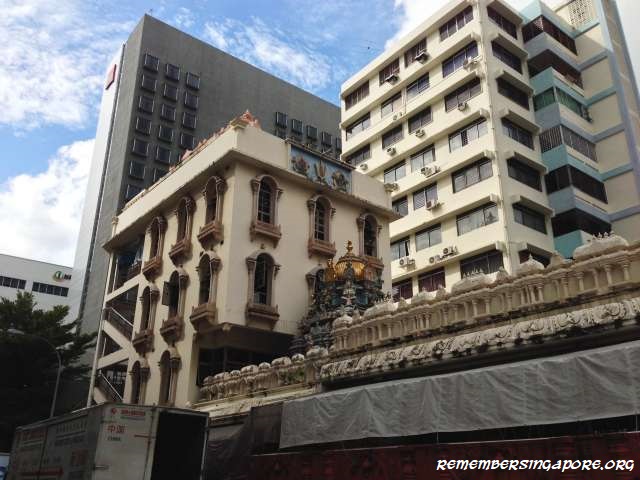
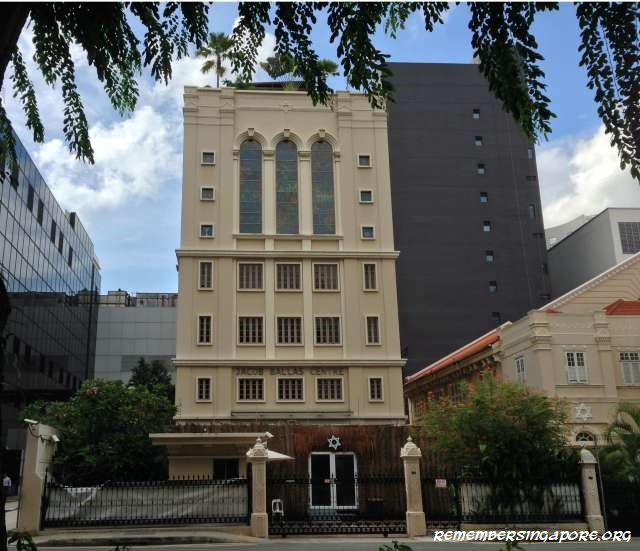
In 1998, Maghain Aboth Synagogue was gazetted as a national monument. The seven-storey Jacob Ballas Centre building is the synagogue’s latest addition, having completed in 2007.

Middle Road Church (1894-1930)

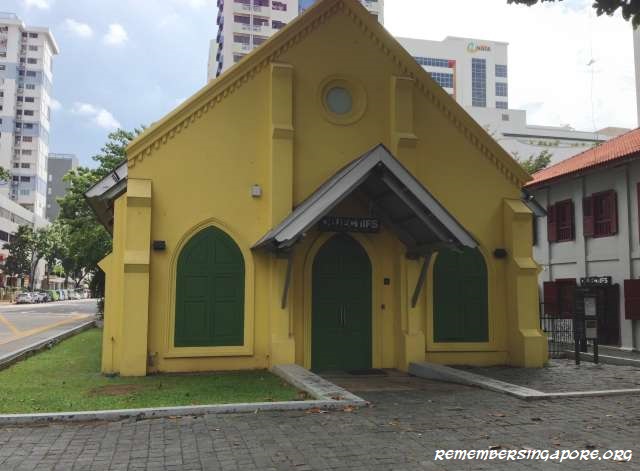
The Middle Road Church building was initially used as a Christian Institute, founded by a British army officer called Charles Phillips, to promote Christianity in Singapore. Built in 1872, the small wooden Gothic-style building first functioned as a Christian social centre for young men.

The building was later used by the Methodist missionaries, before it was converted into the Tamil Girls’ School (later Methodist Girls’ School) during the weekdays, and leased to the Foochow Chinese Mission for their Sunday worship services.

When it was inaugurated as the Middle Road Church in 1894, it became the first Methodist Church in Singapore for the Straits Chinese community, where its services were conducted in Baba Malay. British Methodist missionary William Girdlestone Shellabear(1862-1947) was appointed as the church’s first pastor.

By 1897, the church’s attendees had grown to almost 1,000, largely made up of children. A year later, the church bought over the building from the Methodist Girls’ School, and had it dedicated by the Bishop Warne of the Methodist Episcopal Church in 1901. By then, the church was popularly known as the Baba Malay Church or Middle Road Church.

In 1930, the church was relocated to Kampong Kapor, and the building was sold to local tycoon Eu Tong Sen (1877-1941). At its new premises, the church was renamed as Kampong Kapor Methodist Church.

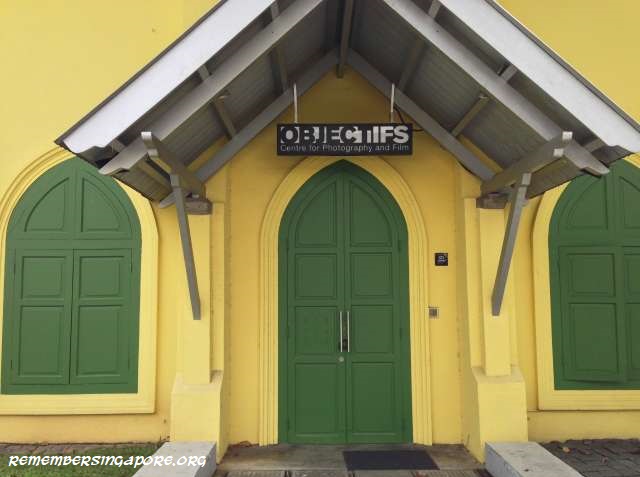
For the next few decades, the former Middle Road Church building was either left vacant or used for other purposes – for example, it was converted into a motor workshop in the eighties. Since the nineties, the former church building has been largely utilised as an art or exhibition centre. It was declared as a historic site by the National Heritage Board on 22 January 2000.

Other than the religious landmarks, Waterloo Street of today is also home to many art organisations, such as the Singapore Calligraphy Centre, Chinese Calligraphy Society of Singapore, The Theatre Practice (formerly YMS Art Centre) and Dance Ensemble Singapore. At the junction of Waterloo Street and Bras Basah Road also lies the national monument of the former St Joseph’s Institute (1867-1988), currently occupied by the Singapore Arts Museum.

Also read Singapore’s Street of Religious Harmony (Part I) – Telok Ayer Street.

Published: 25 November 2017

Posted in Cultural, Historic, Religious | Tagged , , , , , , , , , , , , , , , , , , , , , , , , , , , , , , , , , , , | 4 Comments

The Disappearance of the Historic Hallpike Street

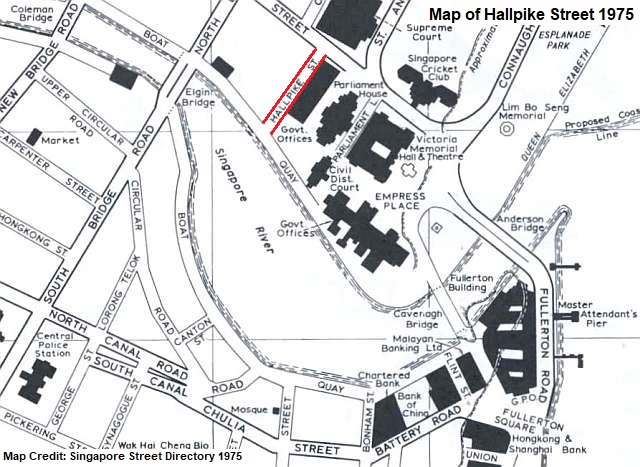
Hallpike Street was previously a little known road that once existed between High Street and North Boat Quay. But the road had a significant history that goes back to the 19th century. Located near to the recorded landing site of Sir Stamford Raffles, it was also once the premises of Hallpike Boatyard, a large boat-building company owned by an English blacksmith named Stephen Hallpike (1786-1844).

Besides his blacksmith and boat-building businesses, Stephen Hallpike and his wife Ellen Richardson also run a boarding house that provided food and lodging for paying guests. Singapore, by then, was a thriving port called by many Chinese junks, Bugis prahus and European clippers. In 1831, for instance, eighteen junks from Shanghai arrived at Singapore, bringing with them $200,000 worth of cargoes.

Stephen Hallpike went on to become a successful and well-reputed person within the European community in early Singapore. Some records shed light on his background, that he was a former inmate who had been convicted of larceny in England and was shipped to Singapore in 1819 along with 159 other convicts. Regardless of his past, Stephen Hallpike settled well in Singapore and lived till an age of 58. He died in 1844, and had his tombstone erected among those at the Fort Canning Cemetery.

Until the 1870s, the northern bank of the Singapore River was almost exclusive for boat-building and repair works. Many boatyards were building tongkangs, but it was at Hallpike Boatyard where Elizabeth, Singapore’s first ocean-going vessel, was constructed. The 194-ton sailing ship was launched in 1829, an incredible feat for the newly-established trading post then.

In 1848, Ranee was completed at Hallpike Boatyard. The 60-foot long vessel was the first ever steamship built in Singapore. It represented the advancement in technology, ahead of the growing global trades that boomed in the 1860s with the opening of the Suez Canal and the popularisation of steamships.

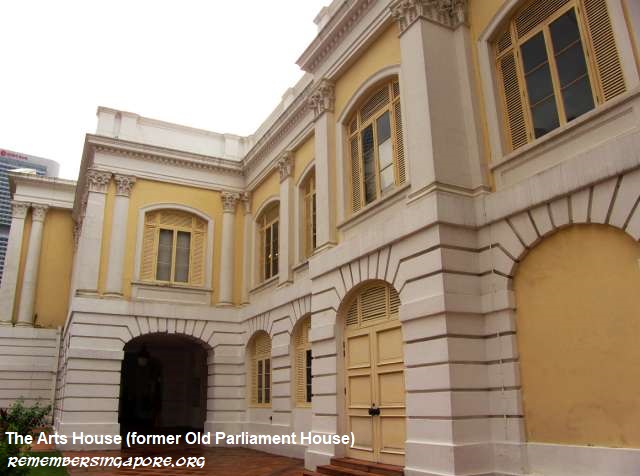
Hallpike Boatyard was located beside another important landmark, the old Parliament House. The double-storey colonial mansion was built in 1827, and served as the first courthouse until 1865. The building was bought by the colonial government in 1841 and continued to function as a courthouse and other administrative offices. The old Parliament House would later become the Supreme Court (1875), Legislative Assembly House (1954), Parliament of Singapore (1965) and The Arts House (2004).

Due to the proximity of the boatyard, the colonial authority tried to shut it down several times as the loud noises from the boatyard’s operations were daily distractions to the public offices in the vicinity.

Hallpike Street, which was later named after Stephen Hallpike, was likely to be built in the 1870s after the decline and closing down of the Hallpike Boatyard. Several rows of shophouses appeared at Hallpike Street by the early 1900s.

Many immigrants from China started gathering at Hallpike Street, but the shophouses were mainly occupied by wealthy merchants before the Second World War. The short road would be busily choked with cars and rickshaws scuttled past daily, throwing up thick clouds of dust. Hallpike Street did not become a proper asphalt road until 1956.

Development caught up with Hallpike Street in the seventies, when nine of its old pre-war shophouses, along with other shophouses in the city area, were acquired by the Singapore government in the urban renewal projects. There were about 50 residents living and working at the Hallpike Street shophouses. Before the acquisition, the shophouses were belonged to Lee Wah Bank, Cathay Finance and a Chinese businessman. Cathay Finance was the agent for the estate of the famous cinema magnate Dato Loke Wan Tho (1915-1964).

There were also many street vendors selling hawker food at Hallpike Street. When the redevelopment kicked off, the street hawkers had to be relocated to the Boat Quay Hawker Centre, built in 1973. The hawker centre was famous for its delicious local food along the not-so-pleasant Singapore River.

By the late eighties, the surrounding areas along the Singapore River had changed rapidly. Sections of the long North Boat Quay was converted into a wide pedestrian walkway, and the street signage of Hallpike Street was removed as it was connected directly to North Boat Quay.

By the early nineties, the street, its shophouses and even its name had disappeared and forgotten. It was noticed by some heritage enthusiasts then, as they wrote in to the newspapers and authority requesting for the reinstatement of the street name. It, however, did not change the fact that Hallpike Street had completely vanished in history.

Published: 27 October 2017

Updated: 21 October 2019

Posted in Historic | Tagged , , , , , , , , , , , , | 1 Comment

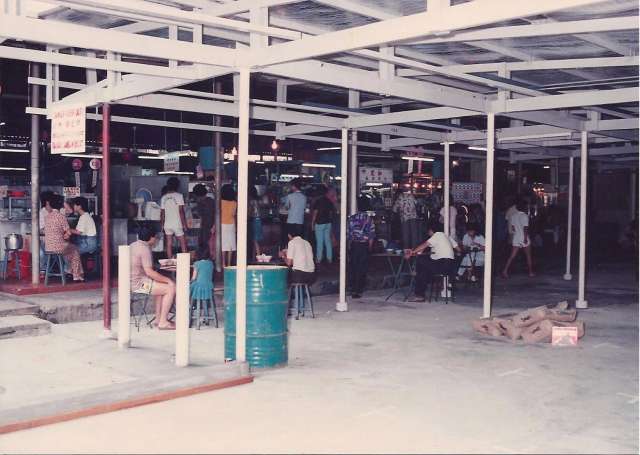
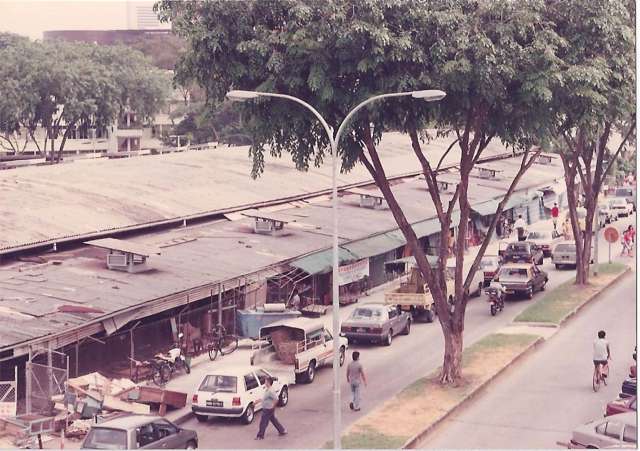
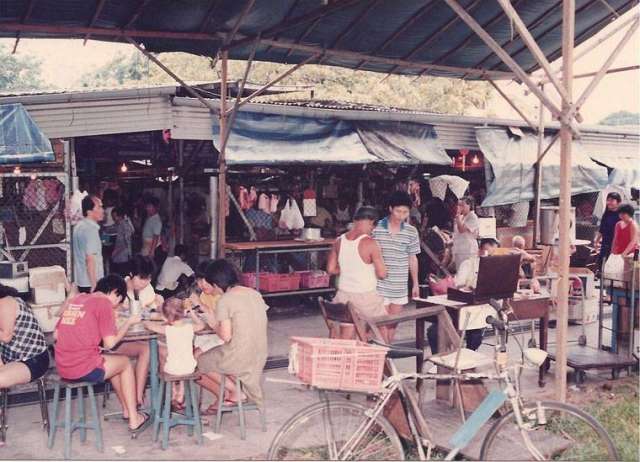
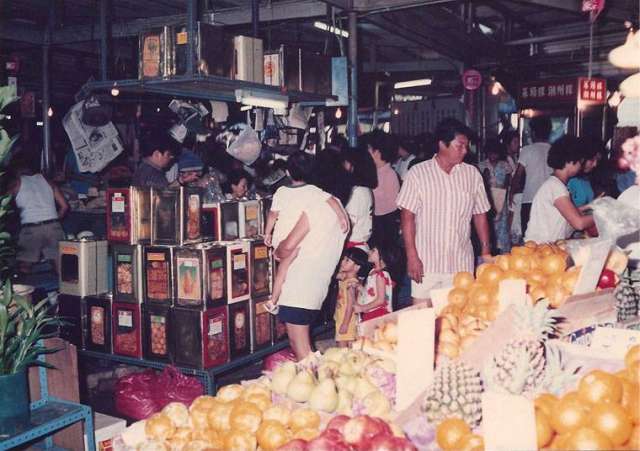
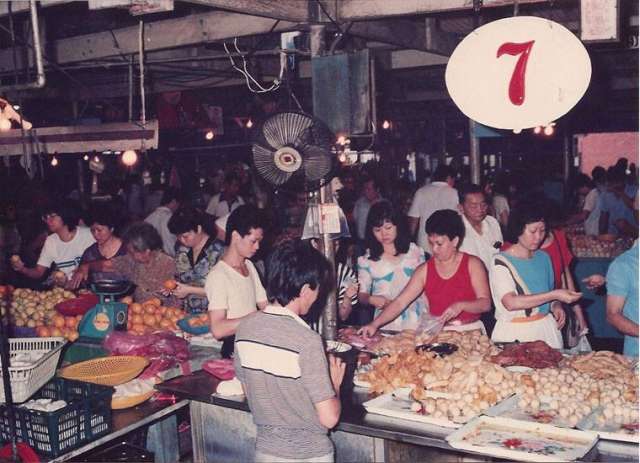
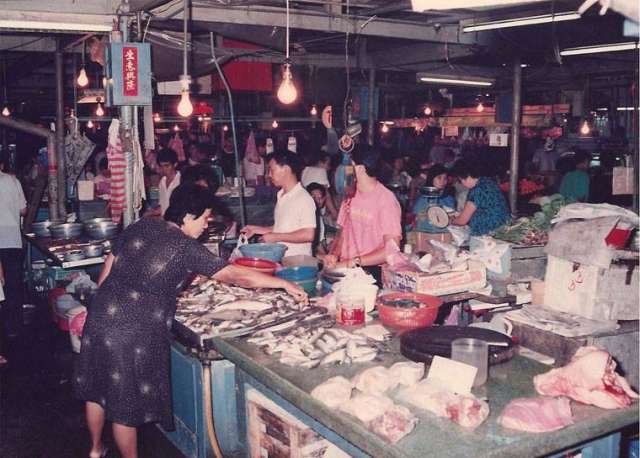
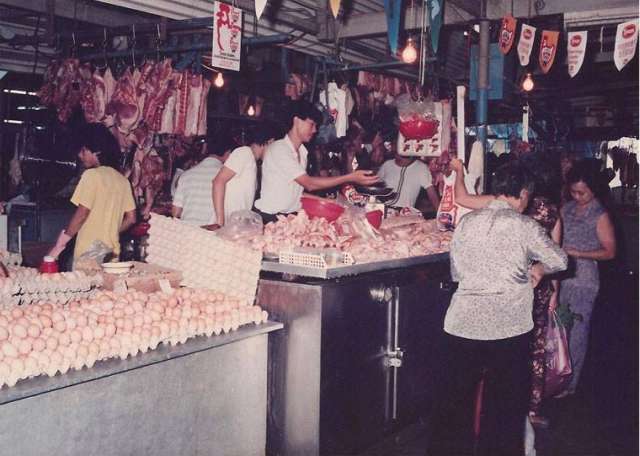
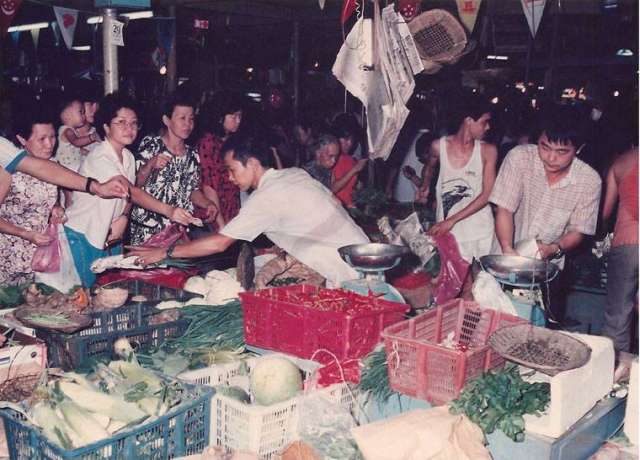
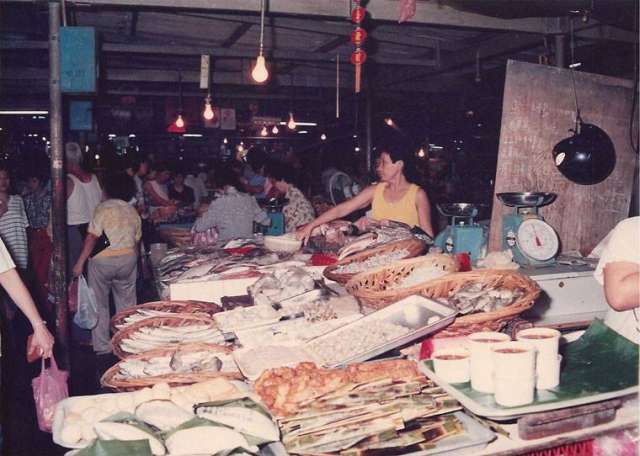
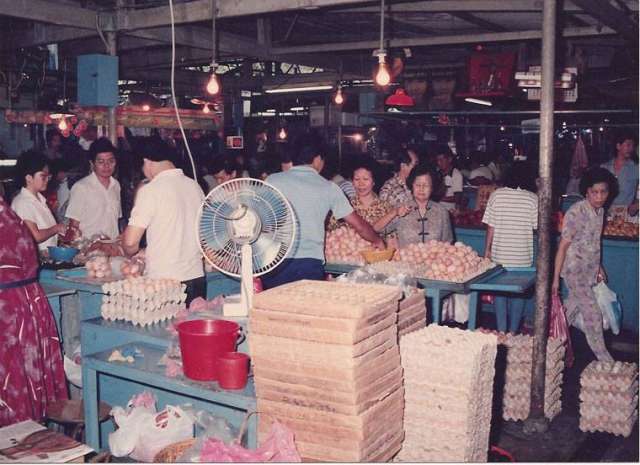
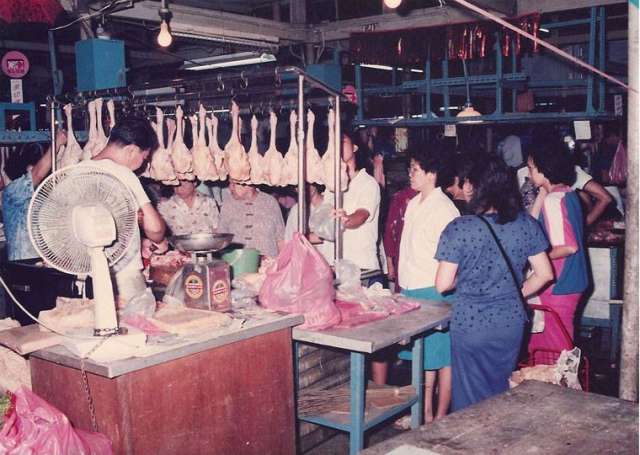
Nostalgic Coloured Photos of Former Seng Poh Road Market

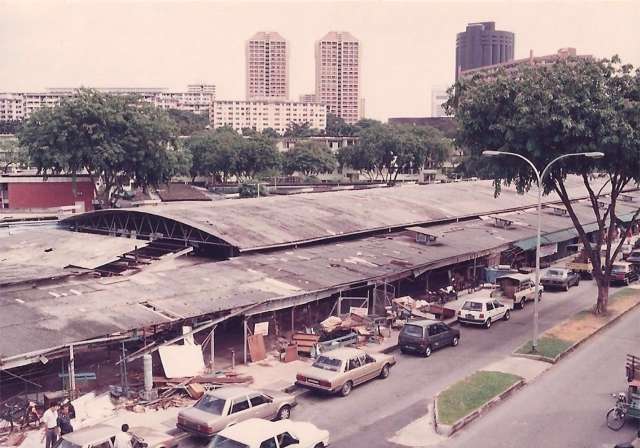
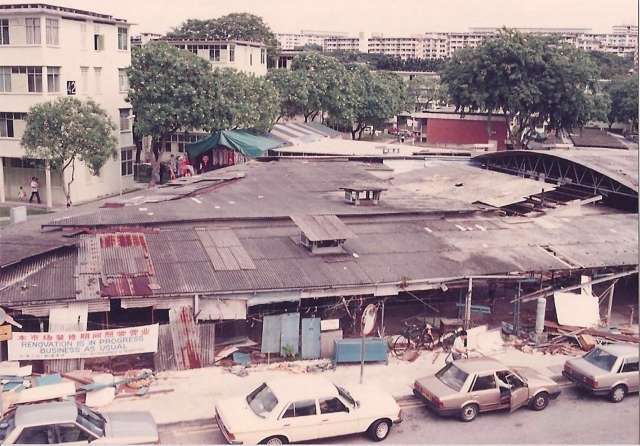
In the late 1940s, Tiong Bahru was recovering from the horrors of the Second World War. Jobs were scarce, so many turned to street hawking. A new market emerged at Tiong Bahru, converted from two old shophouses in the vicinity. As more street hawkers joined, the limited space resulted in many rifts and conflicts. The street hawkers soon decided to shift their stalls and pushcarts to the nearby spacious Seng Poh Road to continue their trades.

In 1950, the Municipal Commission approved the construction of the Seng Poh Road Market, a large simple wooden building with zinc roofs. When the new market was completed, more than 200 hawkers applied to sell poultry, fish, vegetable, fruits and cooked food. In 1951, the Municipal Commission declared the Seng Poh Road Market, and the equally popular Lim Tua Tow Road Market at Upper Serangoon Road, as the new public markets.

Except for some repairs and a replacement of the battered roof, Seng Poh Road Market remained largely unchanged, in the next 40 years, until the late eighties. In the early nineties, it was given a major cleaning up. The old market’s history, however, came to an end in 2004, when it was torn down for a complete redevelopment. Its hawkers were then relocated to a temporary spot at Kim Pong Road. After two years of redevelopment, a new Tiong Bahru Market and Food Centre was completed and opened in 2006.

Here is a trip down the memory lane of the former Seng Poh Road Market:

(All photos above are credited to Tiong Bahru Estate)

Published: 26 October 2017

Posted in Cultural, Nostalgic | Tagged , , , , , , , , , , , , | 1 Comment

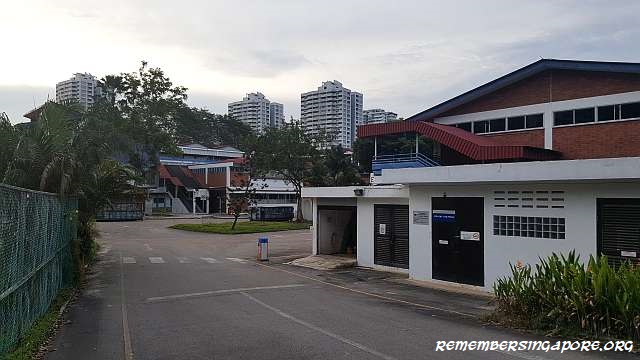
First Toa Payoh Secondary School No More

Although Toa Payoh was the second satellite town in Singapore after Queenstown, it was the first to be built solely by the Housing and Development Board (HDB).

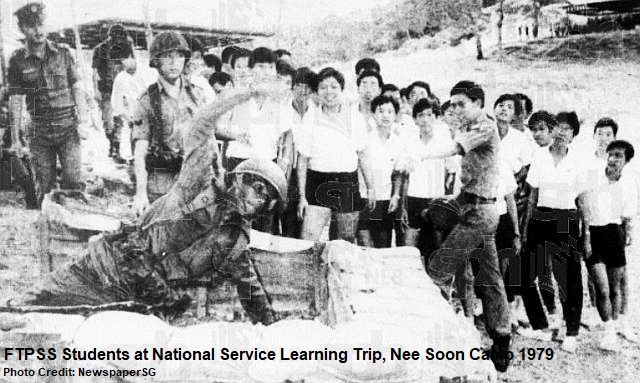
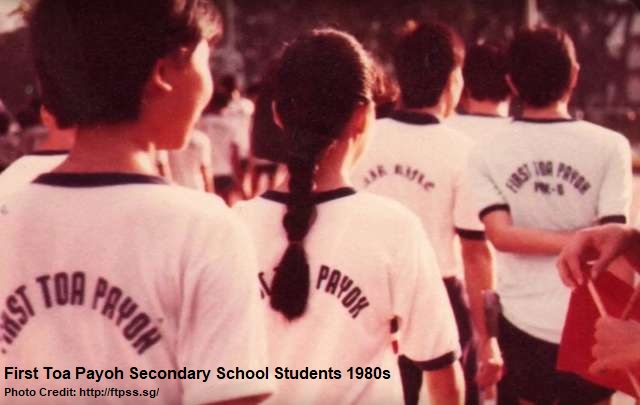
In 1968, First Toa Payoh Secondary School (FTPSS) became Toa Payoh’s first secondary school, located at Toa Payoh Lorong 1. Initially made up of students from the nearby Kim Keat Vocational School and Thomson Secondary School, FTPSS was officially opened in May 1969 by Eric Cheong Yuen Chee, Member of Parliament (MP) for Toa Payoh, as an English and Chinese fully-integrated school.

FTPSS was an active participant in the inter-district track and field, cross country, badminton, football and hockey tournaments in the seventies. In 1971, the secondary school also held the two-day Festival of Music and Dance, where as many as 49 schools in Singapore participated in the events of cultural and folk dances performed in artistic and coordinated moves.

In the seventies, the FTPSS campus was also one of the schools in Singapore used by the Adult Education Board (AEB) to conduct a series of skill-learning courses for the public, such as tailoring, interior designing, dressmaking, photography and copper tooling.

In 1980, FTPSS, along with Jurong Secondary School, became two of the nation’s many pre-university centres to offer 3-year commerce courses for students with acceptable GCE ‘O’ level results. Pre-universities, together with junior colleges and polytechnics, were part of Singapore’s educational system for students to further their studies after secondary education. The pre-university classes at FTPSS lasted until 1991, when the school adopted the single-session schedules.

FTPSS had been actively involved in the campaigns that emphasized on social contributions and environmental protection. In the late seventies, its students were encouraged to participate in the “Use Your Hands” campaigns, beach cleaning activities and old newspapers’ collection for charitable events.

The new millennium saw FTPSS underwent a series of mergers due to falling enrolment of students in the vicinity. In 2001, it merged with Thomson Secondary School and Pei Dao Secondary School.

Another merger followed three years later, as FTPSS merged with Upper Serangoon Secondary School in 2004. In the same year, the secondary school was relocated to a new campus at Toa Payoh East, where the site is now temporarily occupied by Pei Chun Public School. FTPSS had its last merger in 2016, this time with Bartley Secondary School at the latter’s campus at Jalan Bunga Rampai.

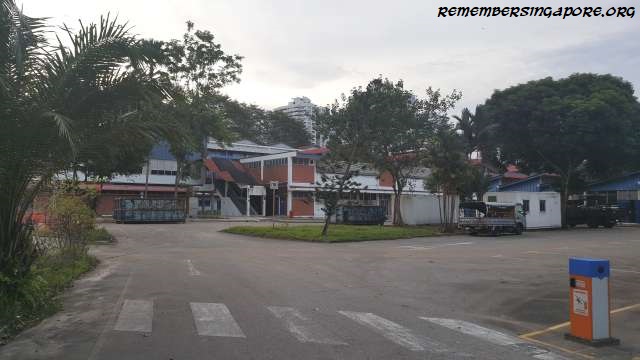
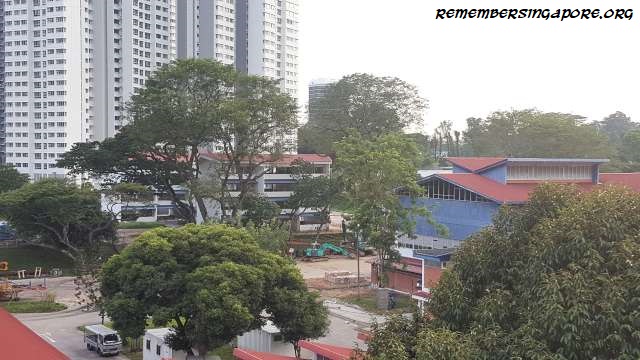
In September 2017, hoardings have been erected around the former premises of FTPSS, together with the old school buildings of First Toa Payoh Primary School (FTPPS), at Toa Payoh Lorong 1. Demolition has commenced and is expected to be completed by early 2018. Located beside FTPSS, FTPPS was also started in 1968, and was shifted to Toa Payoh Lorong 8 in 2002 after merging with Braddell, Westlake and San Shan Primary Schools.

Although the name First Toa Payoh Secondary School and its original school campus have officially walked into history, its 48-year history, legacy and spirit shall be continued to be well-remembered by its many generations of former students.

Published: 08 October 2017

Posted in General, Historic | Tagged , , , , , , , , , , | 8 Comments

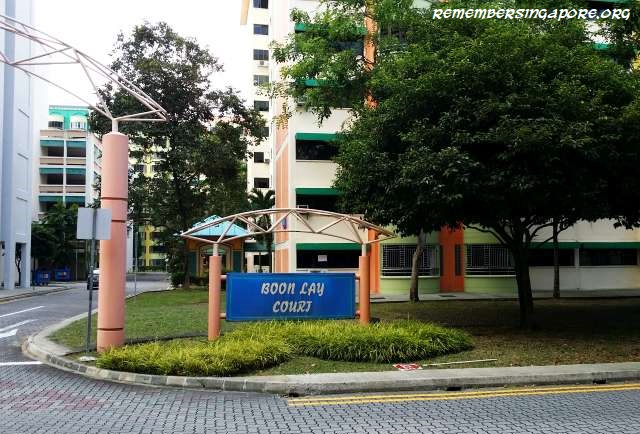
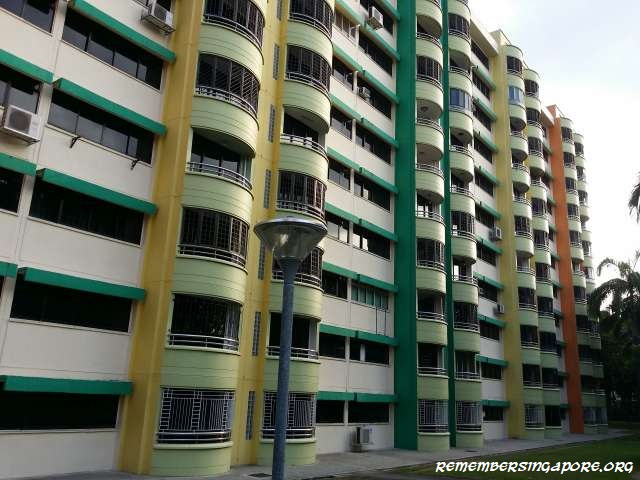
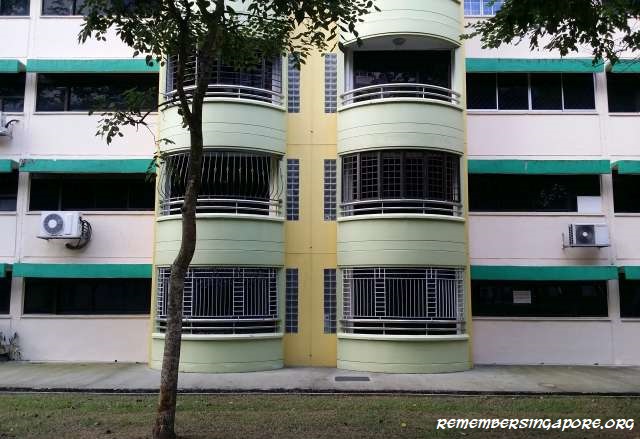
Boon Lay, JTC and the En-Bloc Flats

As part of the early industrial development of Jurong, small residential estates were built to accommodate the increasing workers’ population as well as the resettled farmers and fishermen from the Jurong and Tuas villages. Hence, by the mid-sixties and mid-seventies respectively, the housing projects of Taman Jurong and Boon Lay were launched.

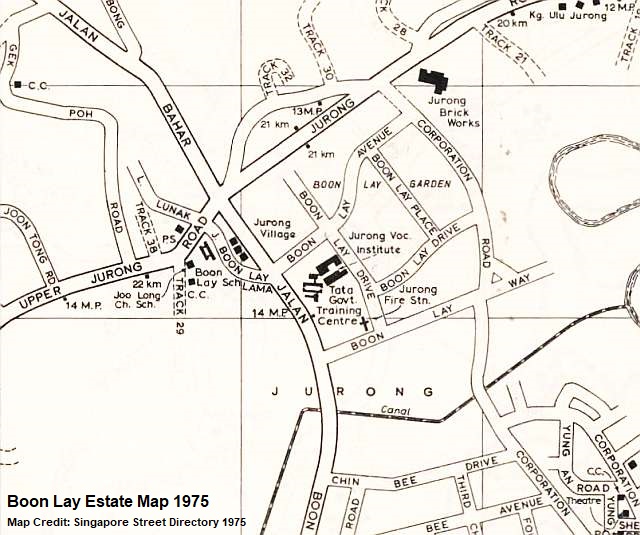
The Taman Jurong residential district was first developed by the Economic Development Board (EDB) and then by Jurong Town Corporation (JTC) between 1964 and 1975. The development of Boon Lay estate, on the other hand, began in 1969, when the villages were cleared and the tracks of Jurong Road expunged, replaced by the construction of new tarmac roads.

The Boon Lay estate, consisting of Boon Lay Drive, Boon Lay Place and Boon Lay Garden, was named after Chew Boon Lay (1851-1933), the Chinese pioneer who had owned huge gambier and pepper plantations in the Jurong vicinity in the late 19th century and early 20th century.

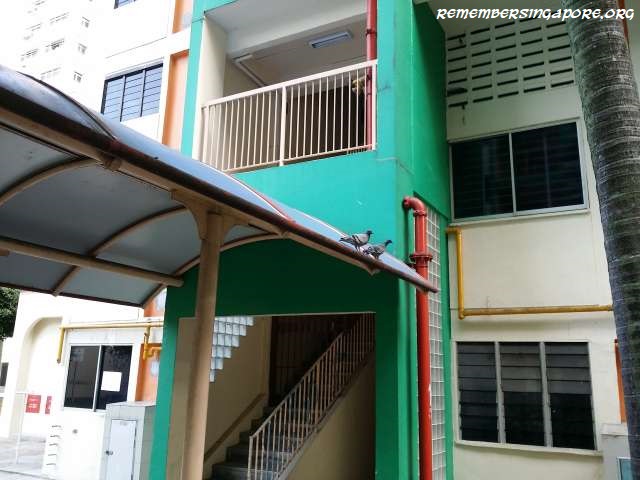
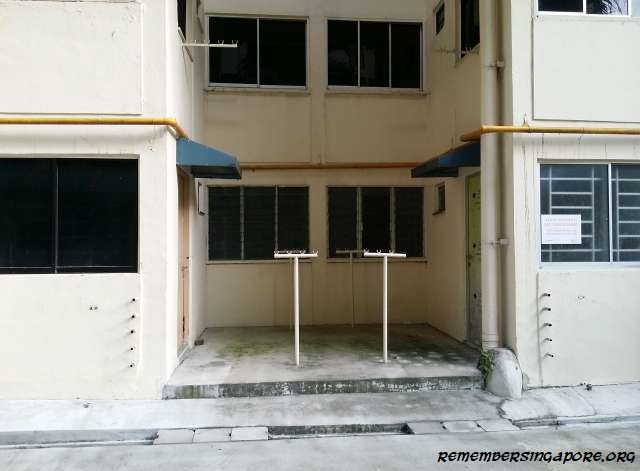
By the mid-seventies, the small housing estate was taking shape, with the network of roads completed, and new JTC flats ready for the workers at the nearby industries. The construction of JTC flats lasted until 1979. As many as 53 blocks were built, numbering from 161 to 220, and ranging from 10-storey to 15-storey and 20-storey tall. Simple public amenities were built too, such as a children’s playground with swings and see-saws, and mini football field, between Block 192 and 196.

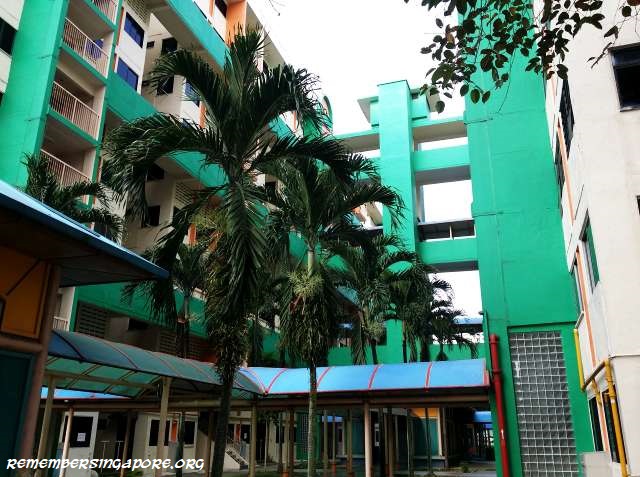
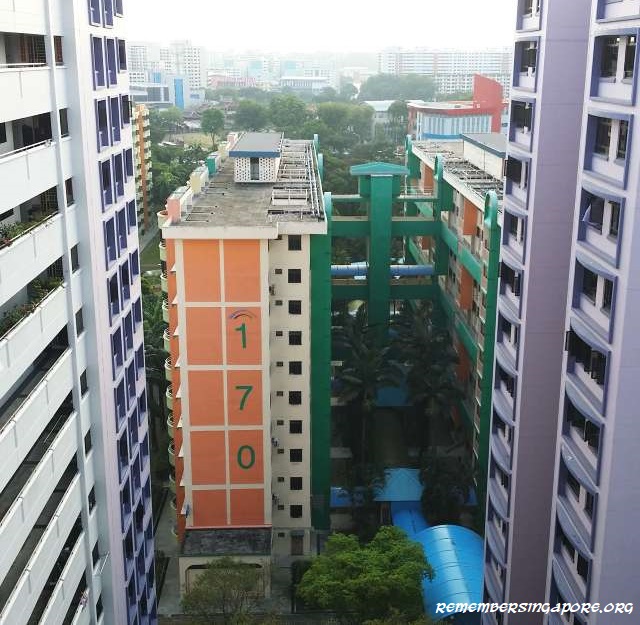
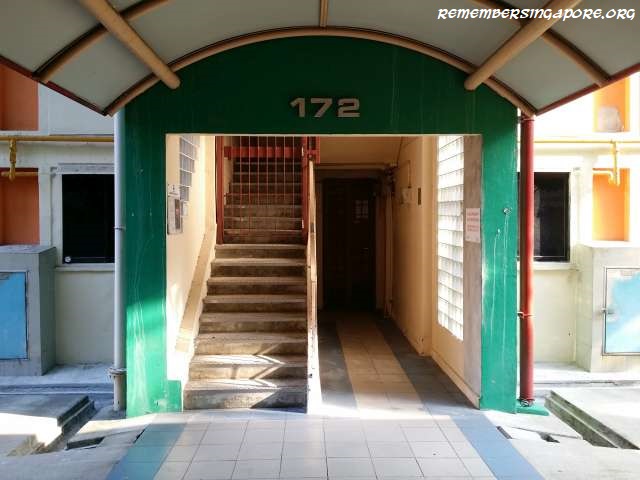
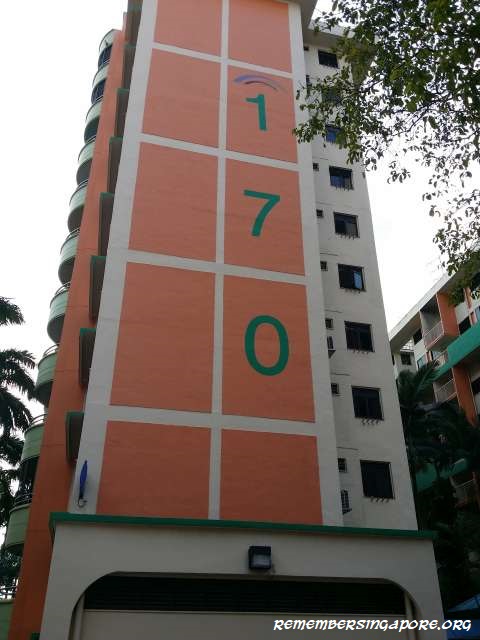
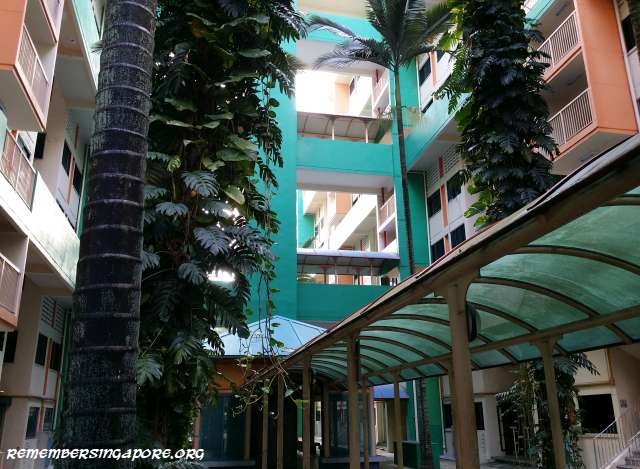
The blocks of 167 to 172 have designs similar to the former JTC flats at Yung Kuang Road, where two parallel blocks were served by a common lift system in between the blocks. From their top views, the blocks look like the letter “H”. There were other similarly designed flats at Boon Lay Drive (Block 161-166, 192-197), but most were demolished in the late eighties and early nineties.

Since the beginning of 2017, the 40-year-old Block 167-172 of Boon Lay Drive have been vacated. It was six years ago, in 2011, when the flats were selected in the Selective En-bloc Redevelopment Scheme (SERS).

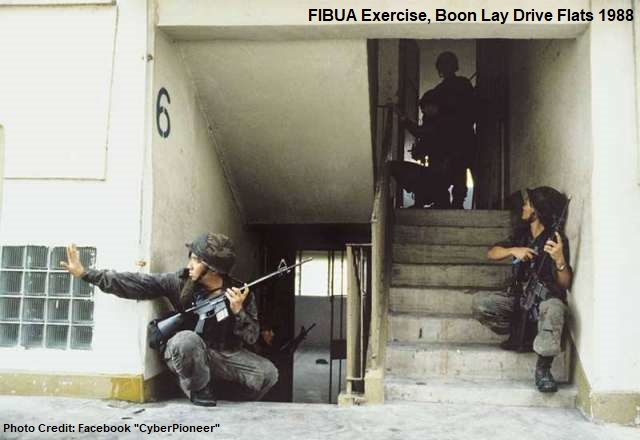
In 1988, six empty rental blocks at Boon Lay Drive, built in 1973, were used as Fighting in Built-Up Areas (FIBUA) for the Singapore Armed Forces (SAF) servicemen. The three-room flats had been awaiting for demolition by the Housing and Development Board (HDB). It was the first time SAF conducted their urban warfare training outside their designated facilities at Pasir Laba’s Basic Combat Training Centre and the FIBUA Village at Jalan Sarimbun.

The FIBUA exercise was carried out from Mondays to Saturdays and lasted for six months, where blanks and thunderflashes were constantly used. It was an unforgettable moment for the Boon Lay residents to experience the sounds of firing and explosives at their doorsteps.

Interesting Trivia

In 1989, after the FIBUA exercise had ended, Block 192, one of the six blocks scheduled to be demolished, could not be torn down despite the large amount of explosives used by HDB. Dubbed by the amused residents as the “invincible” block, Block 192 stubbornly stood for several months, before finally demolished using the conventional ball-and-crane method.

The balloting for the Boon Lay flats were carried out in different stages in the mid- and late-seventies. Block 198, 199 and 200, for example, were completed by the JTC in the mid-seventies. As many as 131 units, at $35,000 each, were offered in 1976 to the Jurong workers, with the balloting officiated by Ho Kah Leong, the former Member of Parliament (MP) for Jurong.

The ownership of the JTC flats was at first limited to the workers at Jurong. After 1977, the restriction was lifted and the units were subsequently put up for sale and rental to those working outside of the Jurong vicinity. In 1982, the management of the JTC flats at Boon Lay was handed over to HDB as the sole housing agency in Singapore.

The Boon Lay flats of the seventies had basic installations such as telephone lines, where the owners could request for new telephones to be fitted by the Telecommunication Authority of Singapore (TAS), a statutory board established in 1972 from the government’s Telecommunication Department.

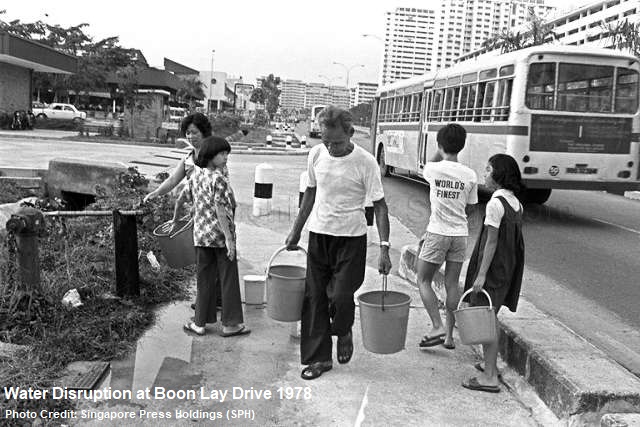
But the flats were not without issues. In 1977, residents living at 198 to 206 blocks of Boon Lay Drive made complaints of brownish and salty water flowing from their taps, which, after investigations by the Public Utilities Board (PUB), was due to corroded pipes and water storage tanks. For weeks, the residents had to make daily trips to the nearby refuse centre to collect water for their cooking and washing purposes.

Other than the frequent water disruptions, the Boon Lay residents also faced another headache in the mid-seventies, when construction activities, reclamation works as well as smoke from the nearby plywood factory and Jurong power station polluted the air badly and staining the residents’ furniture and clothes with grime. The situation only turned better after the Ministry of Environment’s Anti-Pollution Unit stepped in to monitor and limit the emission from the power station and factories.

The small housing estate was also plagued in the seventies and early eighties by burglaries, armed robberies and gangsterism. In the year 1980, there were as many as eleven murders at Boon Lay; the most shocking case being the attack of five Malaysian workers by an armed gang. The anti-crime police unit launched a major operation, rounding up dozens of suspected gangsters at the new Jurong Town Police Station.

The new police station, located at the junction of Boon Lay Drive and Corporation Road, was officially opened in 1980 by Goh Chok Tong, then-Minister for Trade and Industry, at a construction cost of $2.7 million. Serving as the new headquarters for the Rural West Division, it aimed to provide swift response and assistance to the Jurong vicinity that already had a 250,000-strong residential and working population in the early eighties.

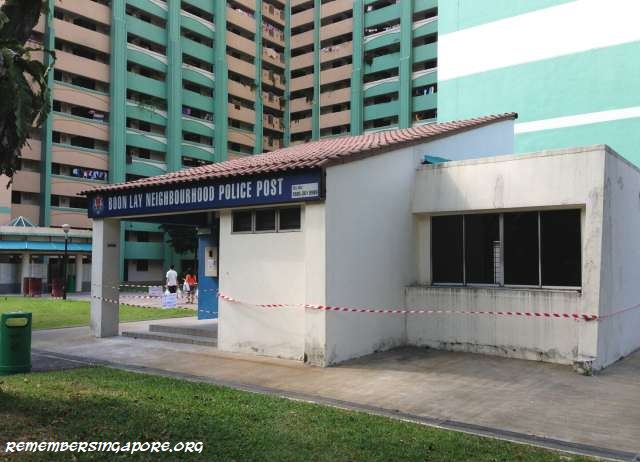
In 1986, the Boon Lay Neighbourhood Police Post (NPP) was set up at Boon Lay Place, first as a temporary post at a container cabin, and later at the permanent location at Block 210’s void deck. The purpose of NPPs was to tackle petty crimes and offences, such as thefts and conflicts, and carry out patrols and house visits.

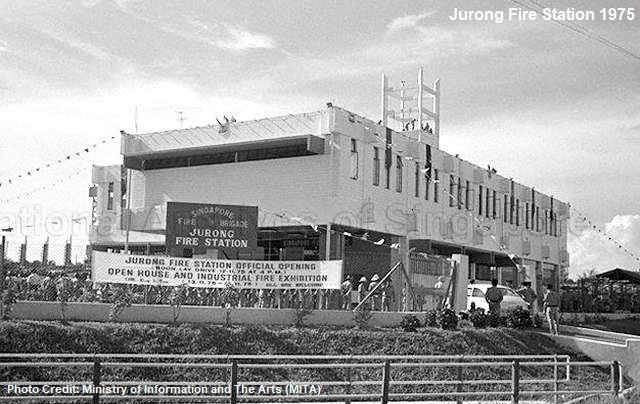
There was also the Jurong Fire Station, located at the corner of Boon Lay Drive. Officially opened in 1975 by Othman bin Wok, the then-Minister for Social Affairs, it had a grand opening ceremony made up of a firemen marching contingent, inspection of new equipment and facilities, and spectacular fire-fighting demonstrations.

Amenities and services for the Boon Lay residents would improve over the years. In 1978, the Singapore Bus Service (SBS) introduced new direct feeder services between the residential and industrial sectors at Boon Lay and Taman Jurong during the peak hours so that the commuters need not transfer to other buses at the Jurong Bus Interchange.
The new services 249 and 249A, costing 20 cents per trip, plied between Boon Lay Drive, Corporation Road, Jalan Samulun and the National Iron and Steel Mills, and were terminated at the former Boon Lay Bus Terminal. Today, the premises of the former bus terminal has been converted into an open-air parking space.

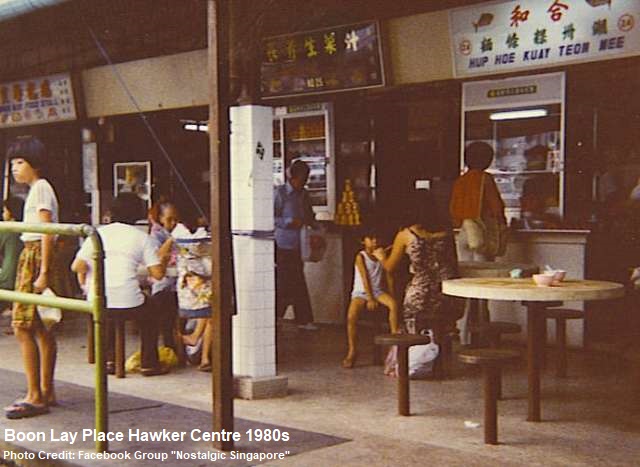
A hawker centre and market were added at Boon Lay Place in 1976. Many street hawkers from Jurong Road 13th and 15th milestones were relocated to the hawker centre’s new food stalls.

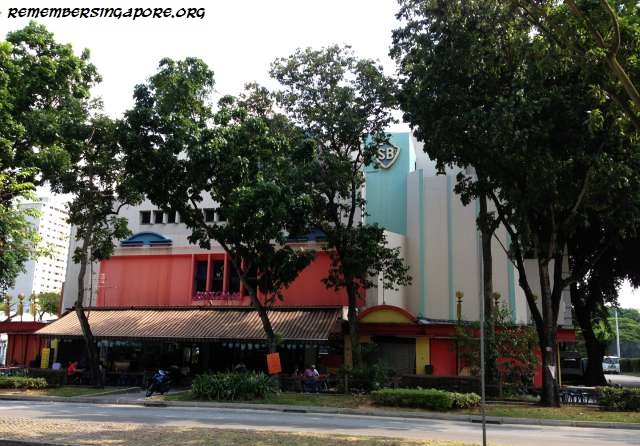
The Boon Lay Shopping Centre was up in 1978, becoming Jurong’s first shopping and residential complex. The simple neighbourhood hub, in its early days, had many money changers to cater to the large foreign population, most of them Malaysians, working at the Jurong industrial estate.

In the early eighties, Boon Lay residents had their own cinema too, when Shaw Organisation opened the Savoy Cinema, or commonly known as the Old Boon Lay Cinema, beside Boon Lay Shopping Centre. The cinema lasted for more than a decade until the late nineties.

Several schools were established at Boon Lay estate during its development stage.

Boon Lay Garden Primary School was set up in 1977, catering to the new housing estate’s increasing number of families. Opened by Ngeow Pack Hua, former MP for Boon Lay, it had about 1,080 students and 27 classes in its first year of enrolment. In 2001, the school was relocated to a new campus along Boon Lay Drive. Today, its classes have increased to 50 with more than 1,500 students.

Jurong Vocational Institute, Boon Lay Garden Primary School’s old neighbour along Jalan Boon Lay, was set up as early as 1969 (its official opening was in 1973) to train students in their technical expertise and provide future skilled workers for the booming industries at Jurong. It was converted in 1992 into the Institute of Technical Education (ITE) Jurong.

The old campus sites of Jurong Vocational Institute and Boon Lay Garden Primary School are currently occupied by River Valley High School.
Another school at the Boon Lay vicinity was Boon Lay Secondary School, established in 1977 and officially opened in 1979 as a bilingual school with classes in both English and Chinese streams. The school began with only 13 classes, but gradually expanded to 34 classes by the early eighties. In 1998, Boon Lay Secondary School became a sole English-medium school, and it moved, a year later, to its new premises at Jurong West.

Interesting Trivia

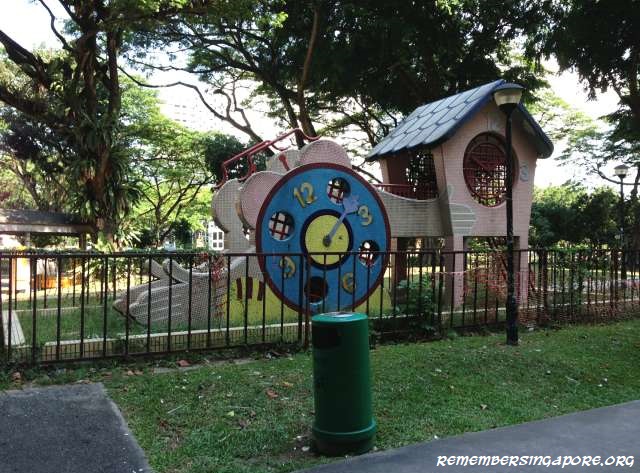
One of Singapore’s two remaining clock-design playgrounds can be found at Boon Lay. The other one is located beside the Bishan Bus Interchange. Such sand-based playgrounds, along with other iconic designs, were commonly found in the new towns and housing estates in the eighties and nineties.

In 1981, the Boon Lay residents had a chance to witness the National Day Parade at their doorsteps. The National Day Parade in 1981 had been decentralised and was held concurrently at several venues, including the sport complexes at Jurong, Queenstown, Toa Payoh and Jalan Besar.

55 contingents and cultural groups lined up at the Jurong Stadium, witnessed by the former Minister for Labour Ong Teng Cheong and 10,000 spectators, before marching from the Fourth Chin Bee Road to Boon Lay Drive.

The Boon Lay estate is now part of a larger Boon Lay district, which is inclusive of the Jurong West New Town. Like Taman Jurong, new HDB developments have been launched at Boon Lay in the recent years, as replacement and upgrading for the aging JTC flats. The previous SERS project was carried out for Block 180-184 in 2006; the redeveloped site is now known as Boon Lay Meadow. It is now Block 167-172’s turn to be redeveloped.

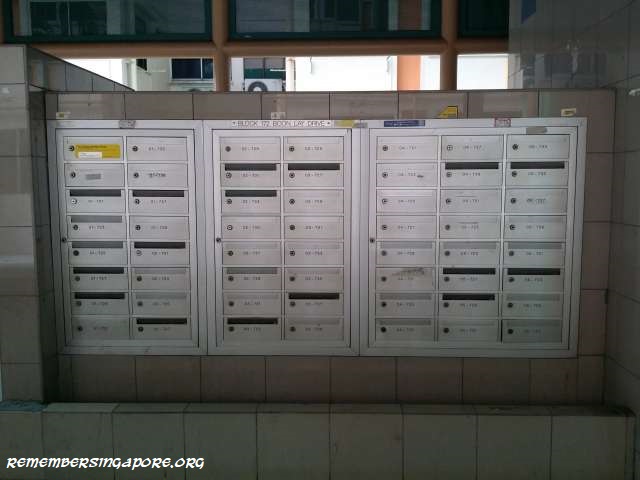
More Photos of the En-Bloc JTC Flats (Block 167-172) at Boon Lay Drive:

Published: 17 September 2017

Posted in Cultural, Historic, Nostalgic | Tagged , , , , , , , , , , , , , , , , , , , , , , , , , , , , , , , , , , , | 11 Comments

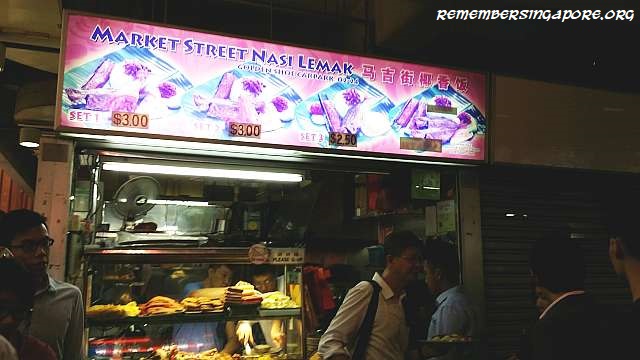
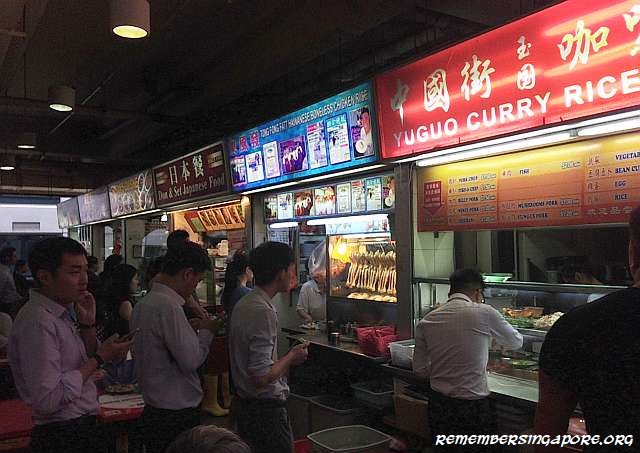
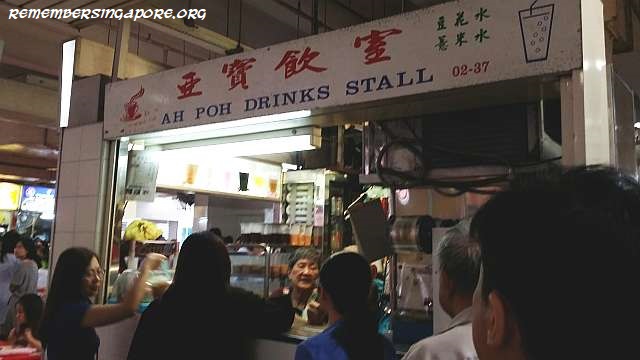
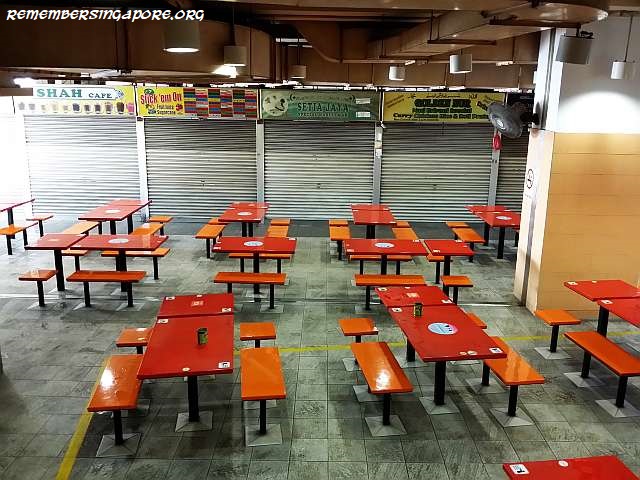
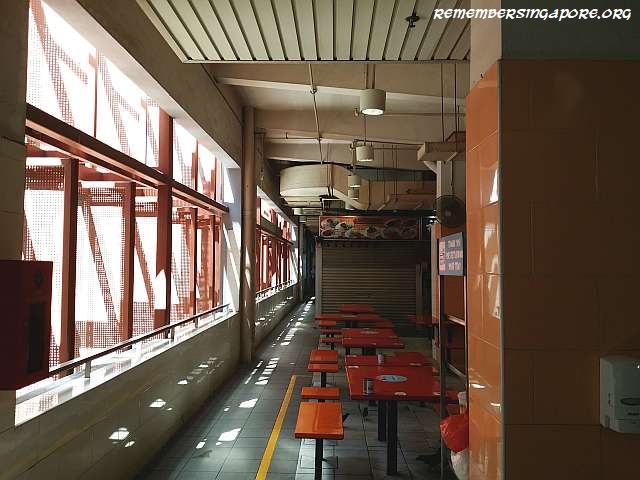
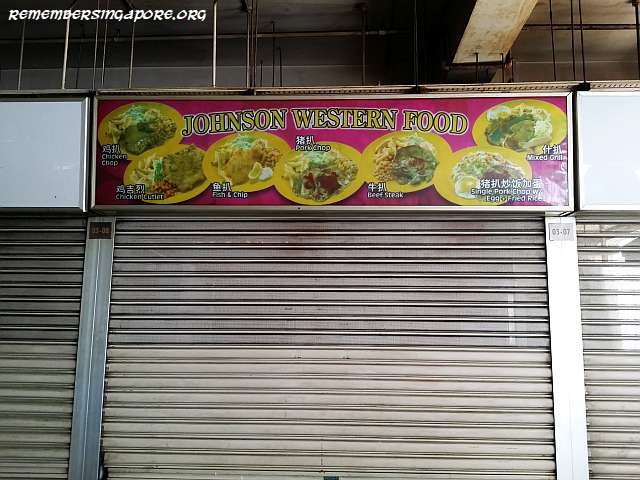
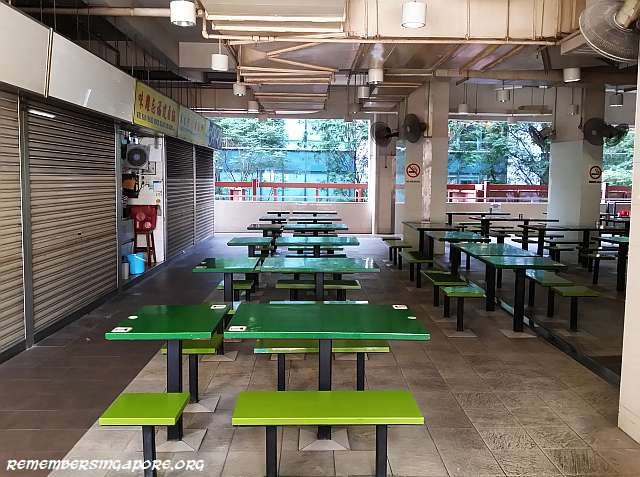
Goodbye to the old Golden Shoe Hawker Centre

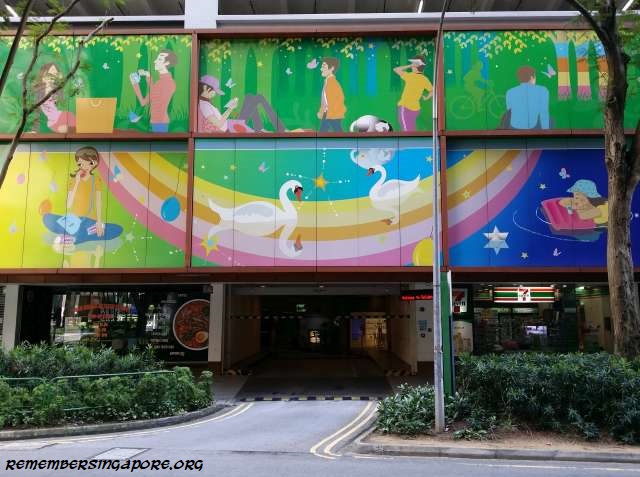
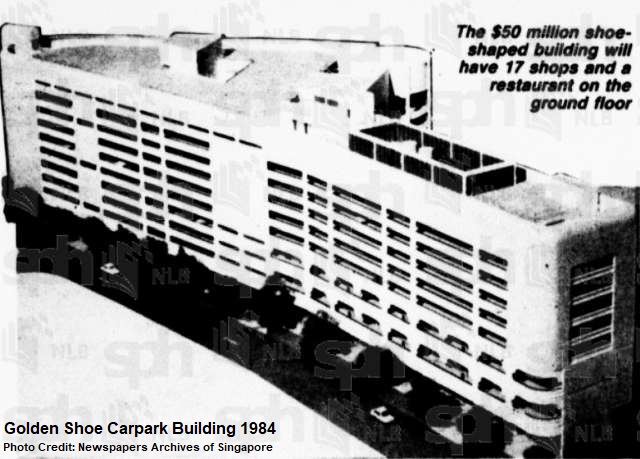
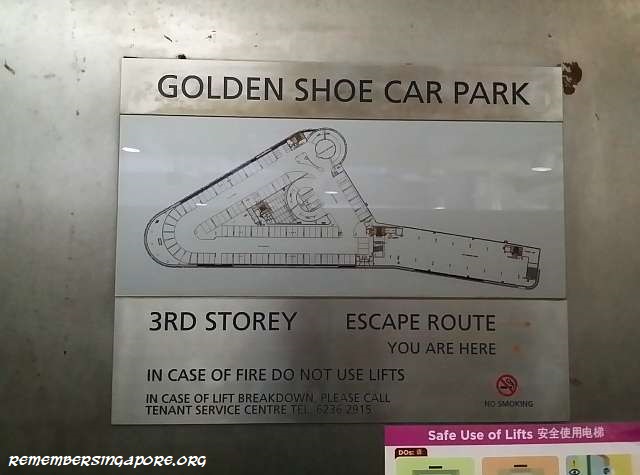
Many refer it to the Golden Shoe Hawker Centre, although its formal name was known as the Market Street Food Centre. Located at second and third levels of the Golden Shoe Carpark, the 33-year old food centre was formerly one of the most popular eating places at Raffles Place and Shenton Way.

The hawker centre had 56 stalls, serving a wide variety of affordable and delicious local food such as nasi lemak, chicken rice, roti prata, bak chor mee and fish soup. It was a common sight to see congested crowds, “choped” tables with tissues and long queues at the stalls during the lunch hours from Mondays and Fridays.

On 31 July 2017, the stalls were shuttered for the final time, bringing an end to its 33 years’ history. An interim hawker centre has been set up next to the Telok Ayer MRT Station at Cross Street.

The old Golden Shoe Carpark will be demolished and replaced by a new 51-storey integrated tower made up of offices, serviced residence, carparks and retail shops. One level will be reserved for a food court, which will be occupied by most of the former Market Street Food Centre stallholders. When completed in 2021, the building will be one of the tallest at Raffles Place.

The name “Golden Shoe” refers to the piece of prime land at the city area in the sixties and seventies. The 80-acre district, shaped like a shoe, was bounded by Collyer Quay, Raffles Quay, Shenton Way, Telok Ayer Street, Church Street, Boat Quay and Fullerton Square. It was where the most crowded and expensive office space could be found in Singapore, especially at the likes of Robinson Road, Change Alley, Raffles Place, Cecil Street and Market Street.

In 1970, the government announced the urban renewal project for the Golden Shoe district, hoping to attract influxes of investment capital and redeveloping the vicinity to match the prestigious “Golden Mile” that was fronting the Nicoll Highway. Under the Controlled Premises (Special Provisions) Act, landlords could evict tenants under certain conditions, in order to free up property for redevelopment.

Thousands of small businessmen and shopkeepers were affected. Many of them were sub-tenants, and had been doing businesses at the district since the 1940s. The move, however, was applauded by the various chambers of commerce in Singapore, pointing out that the rent-controlled premises and a shortage of good class office accommodation had been a hindrance to the development of Singapore’s prime district as a financial centre.

The compensation process soon kicked off, and many old shophoues and buildings were demolished. Within a few years, rents and land values at Raffles Place and Shenton Way rose rapidly. By the early seventies, many new skyscrapers were erected, such as the $10-million Cecil House, and the $80-million Ocean Building.

The Golden Shoe Carpark building was opened in May 1984 at a construction cost of $50 million. Its massive 1,074 parking lots was able to ease the increasing demand of carpark space in the city. 500 lots were initially reserved for season parking, which was offered at a rate of $130 per month, similar to that of the nearby Market Street Carpark.

The 10-storey building also came with three floors of hawker stalls, 17 shops, a restaurant and even a petrol kiosk at its ground level. Some of the early tenants at Golden Shoe Carpark were the minimart owned by Siang Heng Brothers and the famous Noodle Garden Restaurant.

In November 1984, the Market Street Food Centre at Golden Shoe Carpark building was officially opened by Ong Pang Boon, the Minister for the Environment. Within a short time, the new hawker centre established itself as a popular eating place among the workers at Raffles Place.

The first generation of the stallholders at the hawker centre were the street hawkers formerly plying their trades at D-Almeida Street and the back lanes of Market Street and South Bridge Road. The relocation of the street hawkers to a proper food centre was part of the government’s effort to clear all food hawking off the streets by the late eighties.

The Central Business District (CBD) has been constantly evolving. One of its changes was the demolition of old carparks and the subsequent redevelopment of their sites. This included the Raffles Place Carpark (closed in 1984), Empress Place Carpark (closed in 1989), Fullerton Square Carpark (1954-1989) and the Market Street Carpark, Singapore’s first multi-storey carpark (1964-2014).

Published: 14 August 2017

Posted in General | Tagged , , , , , , , | 1 Comment