Vroom Vroom… Looking Back at the Old Singapore Grand Prix

The Formula One Singapore Grand Prix has been in the headlines lately. There is a possibility that Singapore will end the race after 2017, after statistics show that its most recent ticket sales and attendance are declining. The three-day weekend race, held at the Marina Bay Street Circuit every September since 2008, is the world’s only full night race so far.

The Early Days of Racing

The Formula One Singapore Grand Prix is not Singapore’s first motorcar race. The first Singapore Grand Prix was held 55 years ago, in 1961, at the Thomson Road Circuit. It was then organised, by the Singapore Motor Club (SMC) and sponsored by the Ministry of Culture, in an event named “Visit Singapore – The Orient Year”. The sport event was part of a campaign in promoting and boosting Singapore’s tourism sector in the sixties.

The Singapore racers, however, had an even earlier start. In 1948, a group of local motor sports enthusiasts founded the Singapore Motor Club, and organised races at South Buona Vista, Lim Chu Kang and Farrer Road. Some early local racers, such as Lim Peng Han and Osman Abbas, also competed at the Johore Grand Prix, a 3.7km long circuit running through the Johor Bahru town, in the early fifties. The Johore Grand Prix, first held in 1940 and ended in 1969, was one of the oldest races in Malaya.

johore-grand-prix-1952

johore-grand-prix-1953

Then came 1957, when an one-day race was organised by the Forces Motoring Club at the Royal Air Force (RAF) Changi’s 3.2km-long circuit. The 5-lap motorcar and 10-lap motorcycle races attracted 106 participants and almost 100,000 spectators. In the motorcar racing event, the winner Chan Lye Choon and his Aston Martin DB3S sprinted well ahead of the other contestants.

The 1957 race attracted much interest and fanfare but it turned out to be an one-off event. The Forces Motoring Club and Singapore Motor Club wanted other suitable sites for regular racing competitions, and the Sembawang circuit at the Old Upper Thomson Road, belonged to the War Department during that time, was one of the favourite choices. But the authorities would approve the circuit to be used only for motorcycle races, as it was deemed too tight and dangerous for motorcar racing.

first-singapore-grand-prix-1961

Hence, the initial plan of a Singapore Grand Prix in the early sixties was to use a road circuit looping via Thomson Road, Whitley Road, Dunearn Road and Adam Road. But this would affect thousands of residents living in the vicinity. The Sembawang Circuit remained as the best choice, but it would have to be expanded to include the New Upper Thomson Road. Certain stretches of the roads that were narrow and bumpy would also have to be resurfaced and improved by the authorities.

Singapore’s First Grand Prix

Finally, the first Singapore Grand Prix was held over a weekend in mid-September 1961, promising entertainment and excitement for the spectators, both local and foreign. The Grand Prix kicked off on Saturday – the first day was more of an amateur and leisure contest, with motorcycles, vintage cars and saloons taking part in various races.
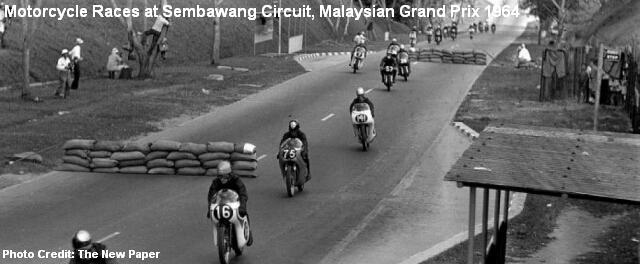
malaysian-grand-prix-motorcycle-races-1964

The main attraction came on Sunday, when two competitive races – one for the motorcycles and the other for motorcars – were hosted. Among the participating racing cars were established brands like Volvo, Lotus, Lola, Saab and Cooper, driven by famous Singaporean and Malayan racers such as Rodney Seow, Chan Lye Choon, Peter Cowling, Saw Kim Thiat and Yong Nam Kee.

Via the Old Upper Thomson Road and Upper Thomson Road, the competing drivers had to race in the 4.8km-long Sembawang Circuit that had several challenging bends with interesting nicknames such as Circus Hairpin, The Snakes, Long Loop and the Devil’s Bend.

The famous but dangerous Devil’s Bend, located near the entrance to the Upper Peirce Reservoir, was the most challenging of all. Shaped like the letter V, the chicane tested the skills and reactions of the qualified 30 racers, who had to complete 60 laps and a distance of approximately 286.5km, and the capabilities of their vehicles.
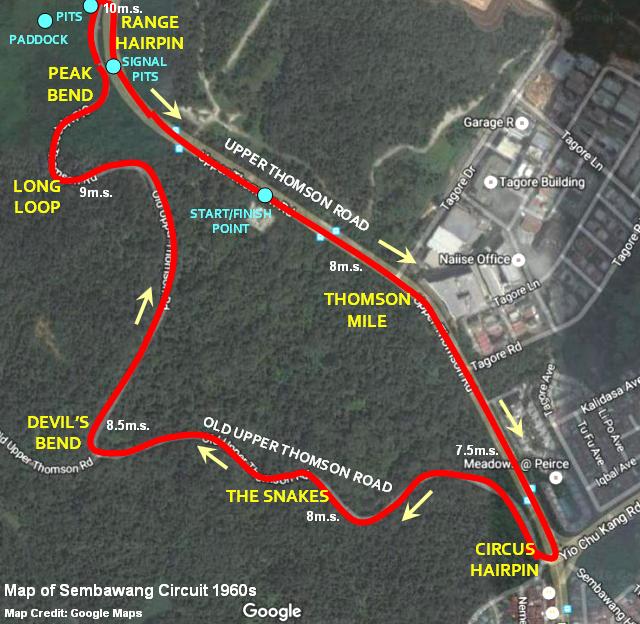
map-of-sembawang-circuit-old-upper-thomson-road

The first Singapore Grand Prix was a major success. Tickets, priced at nine ringgits for grandstand seats and one ringgit for general stands, were snapped up fast. Almost 20,000 spectators turned up for the first day’s races. On the second day, a 100,000-strong crowd packed along the sides of the roads to watch the speeding cars and motorbikes. Due to Grand Prix’s enormous success, Singapore’s tourism sector in 1961 posted a record revenue and number of tourists.

The Singapore Grand Prix gained global prominence and recognition in the subsequent years. The motorcycle racing event was listed in the international racing calendar since 1963, followed by the motorcar race three years later (although it was not considered a world championship).
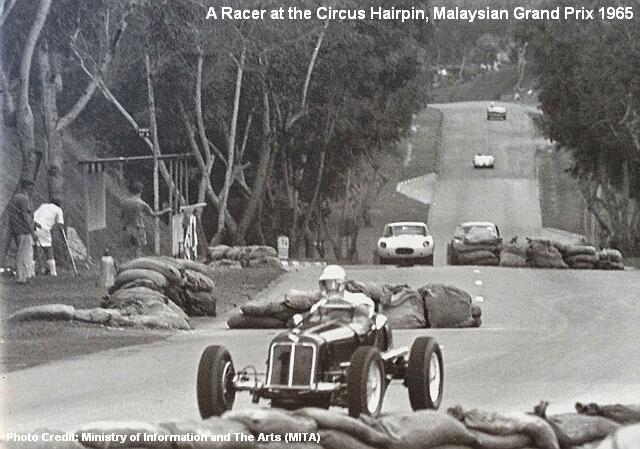
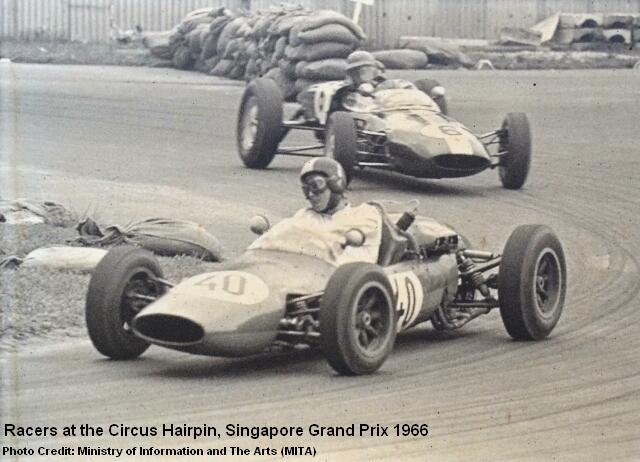
racer-circus-hairpin-malaysian-grand-prix-1965

racer-circus-hairpin-singapore-grand-prix-1966

By the early seventies, the races were telecast, with live commentary, across Asia, Australia and New Zealand. Over the years, the competitions of Singapore Grand Prix had improved to higher standards with professional racers from Japan, Indonesia, Thailand, Britain, The United States, Canada, Australia and New Zealand participating together with the Singaporeans and Malaysians.

The old Singapore Grand Prix lasted 13 years between 1961 and 1973. In between, it was renamed as Malaysian Grand Prix from 1962 to 1965, when Singapore joined the Federation of Malaysia as a state. After independence, the racing event was named once again as Singapore Grand Prix.
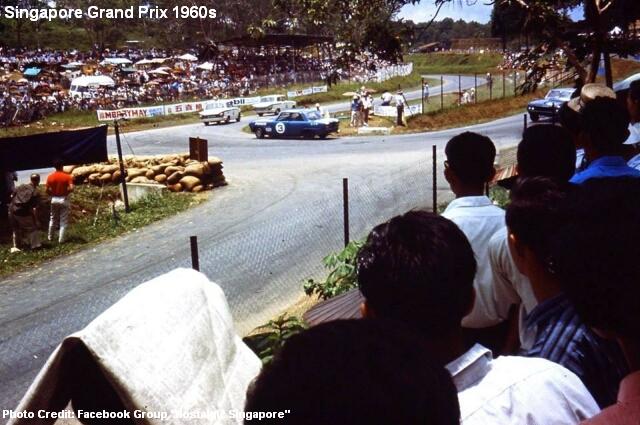
singapore-grand-prix-1960s

End of the Races

In 1973, Singapore officially ended the Singapore Grand Prix. After the 13th annual race, the Singapore Sports Council (SSC) informed the Singapore Motor Sports Club, the event’s organiser, of the sudden decision. Safety concern was the main reason given, since there were several high profile fatal accidents occurred in the races over the years. As many as seven racers had died between 1963 and 1973. Many fans, however, believed it was a move by the authorities to discourage illegal motor racing.
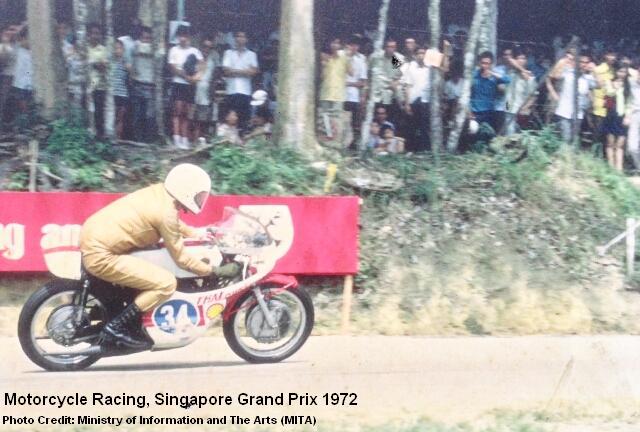
motorcycle-racing-singapore-grand-prix-1972

After the ban of the Singapore Grand Prix, most of the local racers went over to Malaysia to train and compete. In 1974, star rider Gerry Looi led a team of Singaporean motorcycle racers to compete in the Selangor Grand Prix at the Batu Tiga Circuit.

Meanwhile, there were calls from the public to revive the popular races. The Singapore Motor Sports Club actively looked for sponsorship to build a complete circuit at Mandai, but the plan was called off due to the potential high construction cost of $5 million. Other alternatives were proposed, such as making use of a driver training circuit at Sembawang or a runway at Changi Airbase, but they were all rejected by the authorities. The Singapore Grand Prix did not make a comeback in Singapore until 35 years later.

singapore-grand-prix-1973

List of Winners of Singapore Grand Prix (Motorcars)

1961 (1st Singapore Grand Prix) – Ian Barnwell, Britain (Aston Martin DB3S)
1962 (1st Malaysian Grand Prix) – Yong Nam Kee, Singapore (Jaguar E-Type)
1963 (2nd Malaysian Grand Prix) – Albert Poon, Hong Kong (Lotus 23)
1964 (3rd Malaysian Grand Prix) – race cancelled after 5 laps due to downpours
1965 (4th Malaysian Grand Prix) – Albert Poon, Hong Kong (Lotus 23)
1966 (1st Singapore Grand Prix) – Lee Han Seng, Singapore (Lotus 22)
1967 (2nd Singapore Grand Prix) – Rodney Seow, Singapore (Merlyn F2)
1968 (3rd Singapore Grand Prix) – Garrie Cooper, Australia (Elfin-Ford)
1969 (4th Singapore Grand Prix) – Graeme Lawrence, New Zealand (McLaren-Cosworth F2)
1970 (5th Singapore Grand Prix) – Graeme Lawrence, New Zealand (Ferrari V5)
1971 (6th Singapore Grand Prix) – Graeme Lawrence, New Zealand (Brabham BT30)
1972 (7th Singapore Grand Prix) – Max Stewart, Australia (Mildren)
1973 (8th Singapore Grand Prix) – Vern Schuppan, Australia (March 722)

singapore-grand-prix-max-stewart-mildren-1972

singapore-grand-prix-geoff-perry-suzuki-1972

List of Winners of Singapore Grand Prix (Motorcycles)

1961 – (1st Singapore Grand Prix) Chris Proffit-White, Singapore (Honda 4)
1962 – (1st Malaysian Grand Prix) Teisuke Tanaka, Japan (Honda)
1963 – (2nd Malaysian Grand Prix) Chris Conn, Britain (Norton Manx)
1964 – (3rd Malaysian Grand Prix) Akiyasu Motohashi, Japan (Yamaha)
1965 – (4th Malaysian Grand Prix) Akiyasu Motohashi, Japan (Yamaha)
1966 – (1st Singapore Grand Prix) Mitsuo Ito, Japan (Suzuki)
1967 – (2nd Singapore Grand Prix) Akiyasu Motohashi, Japan (Yamaha)
1968 – (3rd Singapore Grand Prix) Akiyasu Motohashi, Japan (Yamaha)
1969 – (4th Singapore Grand Prix) Tham Bing Kwan, Malaysia (Norton)
1970 – (5th Singapore Grand Prix) Ou Teck Wing, Malaysia (Yamaha)
1971 – (6th Singapore Grand Prix) Geoff Perry, New Zealand (Suzuki)
1972 – (7th Singapore Grand Prix) Geoff Perry, New Zealand (Suzuki TR 500)
1973 – (8th Singapore Grand Prix) Bill Molloy, New Zealand (Kawasaki)

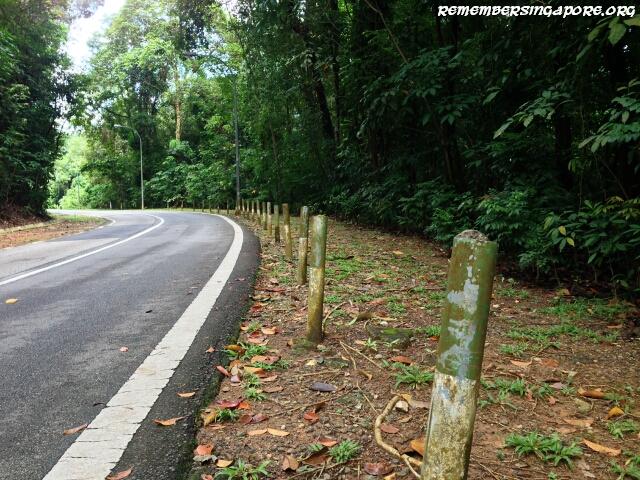
Today, the Old Upper Thomson Road is a quiet winding road, where people use it mainly for jogging and cycling. Half a century ago, this was the venue that hosted one of Singapore’s most popular annual events.
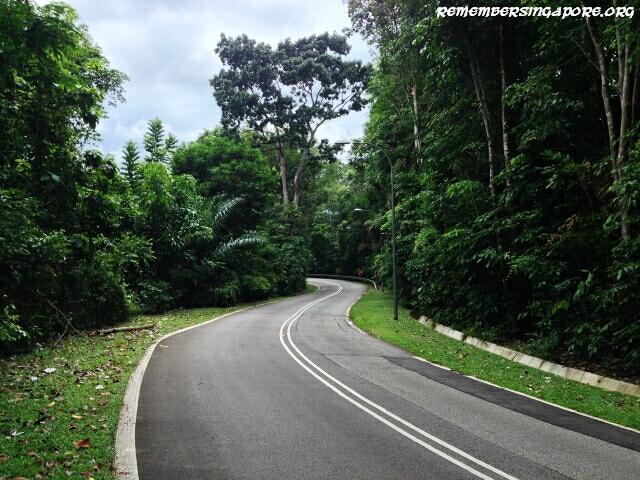
old-upper-thomson-road1-2016

old-upper-thomson-road2-2016

old-upper-thomson-road3-2016

Published: 26 November 2016

Posted in Cultural, Historic | Tagged , , , , , , , , , , , , , , , , , , , , , , , , | 22 Comments

Flashback 30 Years Ago… Singapore in 1986

30 years have passed in the blink of an eye. Do you still remember the major events happened in Singapore in 1986?

Singapore’s First Recession

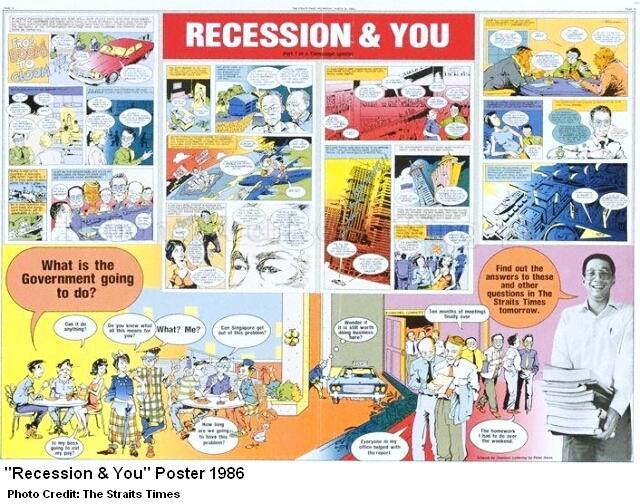
In early 1986, Singapore was still recovering from its first ever post-independence recession, which began in the second quarter of 1985. For 20 years, Singapore had emerged as a frontrunner among the developing countries, enjoying substantial Gross Domestic Product (GDP) growths averaging about 10% a year.

straits-times-recession-and-you1-1986

Towards the end of 1984, however, a combination of global and domestic factors led to a downturn. First, the developed countries, especially the United States, were experiencing a slowdown in their economies. Next, demands for Singapore’s exports and services had declined, and increasing operating costs made the country less competitive.

Singapore’s growth rate plunged to -3.5% in the third quarter of 1985, while unemployment rate jumped to 4.1%. Companies going bankrupt and mass retrenchments of workers hit the headlines. Residential and commercial projects by private developers also hit the slump, recording only 1,089 projects and an estimated total construction cost of only $1.6 billion, the lowest in seven years.

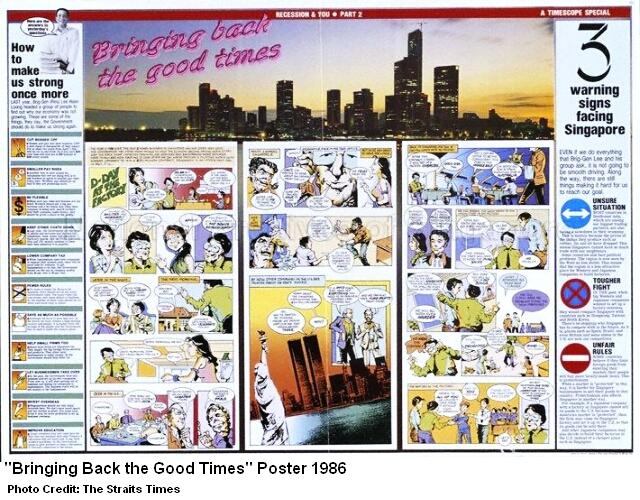
straits-times-recession-and-you2-1986

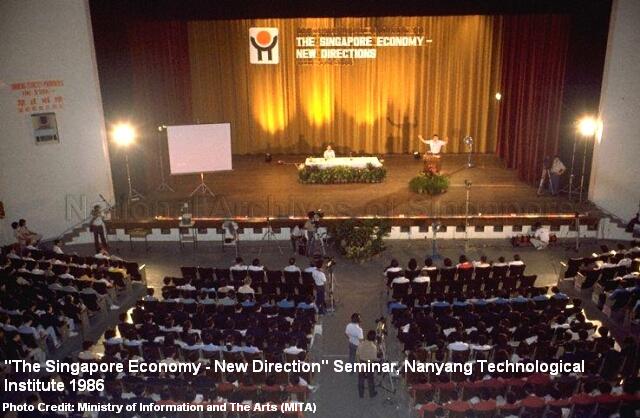
An Economic Committee was quickly appointed to review and analyse the economic downturn and propose policies to restructure the economy. The committee, headed by Lee Hsien Loong, then Minister of State for Defence and Trade and Industry, suggested implementing wage flexibility in the labour market, making changes to the Central Provident Fund (CPF), handing out rebates on various taxes and privatising certain state-owned companies. Also, to counter the decline in the construction sector, many public projects were pushed forward, resulted in the most number of approved government projects since 1980.

singapore-economy-seminar-nanyang-technological-institute-1986-mita

What happened next?

By mid-1986, Singapore’s economy showed signs of rapid recovery, posting a 1.2% growth in the second quarter and 3.8% in the third quarter. The country’s budget also improved from a $1.25-billion deficit in 1985 to a $500-million deficit in 1986. Overall, Singapore posted a modest 1.8% GDP growth in 1986. The recovery was confirmed when a year later, its economic growth jumped to more than 8%.

The 1985 recession, however, remained as the only time Singapore’s economy contracted while the global economy was still growing.

After-Effects of Pan-El Crisis

The stock market was still in a chaotic mess, due to the spectacular collapse of Pan-Electric Industries Limited which was suspended from listing two months earlier on 19 November 1985.

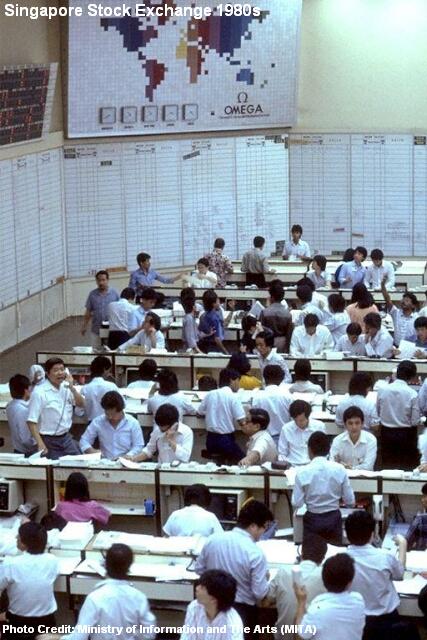
singapore-stock-exchange-trading-1980sBy end of November 1985, it almost spelt the death of the company as it went into receivership. Thousands of small shareholders had their investments and savings wiped out. Rumours of “white knights” rescuing the company gave hopes to the shareholders, but all optimisms were dashed in February 1986 when the liquidation proceedings of Pan-Electric commenced.
The Pan-El crisis resulted in a 3-day closure of the Singapore and Kuala Lumpur stock exchanges in early December 1985. It was the first and only time the Singapore Stock Exchange was forced to shut down due to a trading emergency.

The effect was catastrophic and widespread. In the following weeks, share prices across the market plunged and investors’ confidence badly shaken. Singapore’s reputation as a leading financial centre was tarnished.

What happened next?

A series of new regulations and stringent checks were enforced to the local stockbroking industry and stock market to curb speculations and manipulation in shares. Listed companies were also required to be more transparent in their financial reports.

Tan Koon Swan (born 1940), the president of the Malaysian Chinese Association (MCA) and major shareholder of Pan-El, was arrested for criminal breach of trust and was subsequently sentenced to two years’ imprisonment by the Singapore High Court. The MCA Youth protested aggressively against Tan Koon Swan’s arrest and sentence, calling for a boycott of Singapore goods and services.

Hotel New World Tragedy

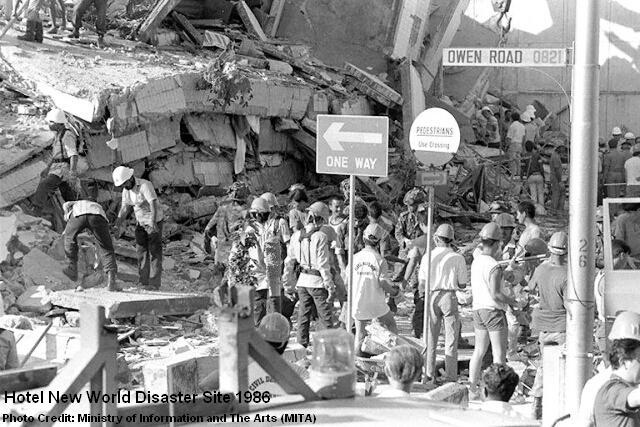
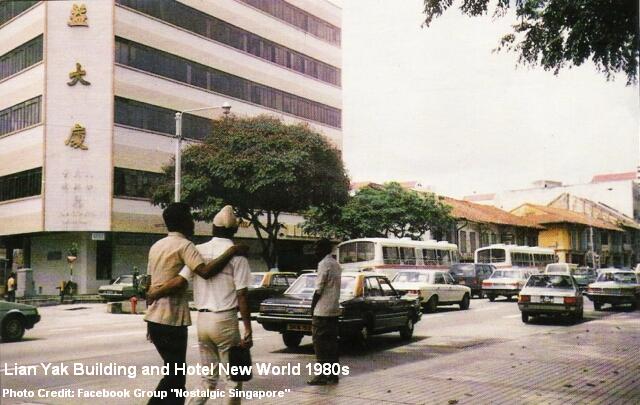
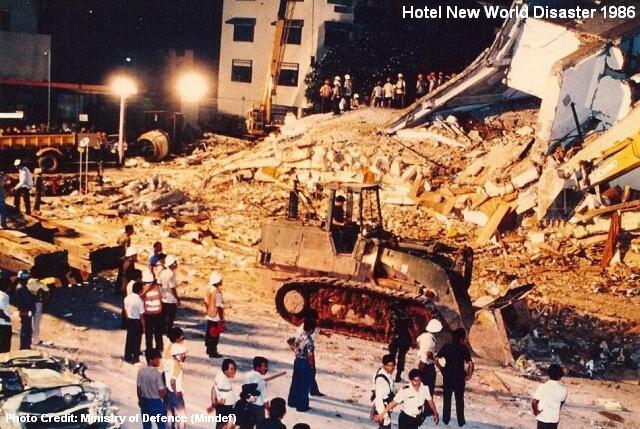
In the late morning of 15 March 1986, the sudden news of the Hotel New World collapse shocked Singapore. Singaporeans were horrified by the tragedy, which remains as one of the country’s worst disasters after the Second World War.

lian-yak-building-hotel-new-world-1980s

Located at the junction of Serangoon and Owen Roads, Hotel New World, formerly known as New Serangoon Hotel, was housed in a six-storey building called Lian Yak Building. The sudden collapse of the hotel, occurred in less than a minute, was later investigated to be due to the building’s inadequate structural integrity and an overloaded roof with water tank and air-conditioning system installations. The negligence in the maintenance of the building also played a part. Weeks before the disaster struck, many cracks had been observed in the walls and floors.

hotel-new-world-collapse-disaster-1986

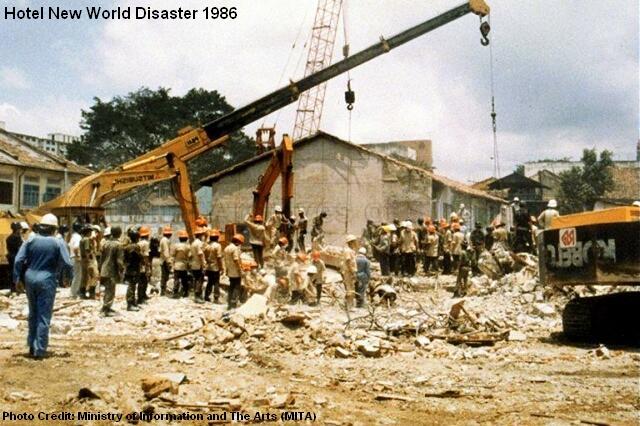
A search and rescue operation was immediately planned and carried out. A temporary command centre was set up in a shophouse opposite the disaster site, and more than 500 personnel from the Singapore Civil Defence Force (SCDF), Singapore Fire Service, Singapore Armed Forces (SAF) and Singapore Police Force (SPF) were activated. Foreign experts from Britain and Japan – they were in Singapore for the construction of the Mass Rapid Transit (MRT) tunnels – were also roped in. A total of 17 survivors were rescued from the rubble in the operation, but the death toll numbered 33.

The Hotel New World tragedy traumatised the whole nation, but it also brought all Singaporeans together. Many private organisations loaned their mechanical cutting equipment and lifting cranes to assist the SCDF, while the public actively raised funds and rendered help in all possible ways. Leaders of different political parties came together to rally the rescue teams and assist the victims’ families.

hotel-new-world-collapse-rescue-operations-1986

hotel-new-world-disaster-1986

What happened next?

The government assumed a more active role in the regulation of the building industry in Singapore. The Ministry of National Development’s (MND) Development and Building Control Division was assigned to conduct regular structural and maintenance checks on buildings, and all building plans and drawings were more stringently checked and approved.

In addition, the Singapore Fire Service was integrated with the SCDF to improve the organisation’s efficiency and response in rescue missions.

Babies Not Enough

In 1986, the Total Fertility Rate (TFR) of Singapore fell to 1.42, the lowest level in the eighties. The “Stop At Two” population policy, began as early as 1972, was showing its impact by the late seventies when the TFR slipped to 1.82, well below the replacement level of 2.1 children per woman.

What happened next?

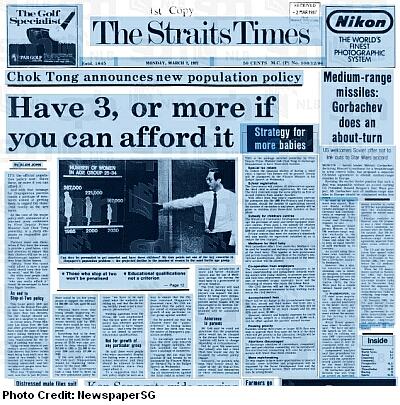
have-three-or-more-if-you-can-afford-it-1987The Singapore government in 1986 switched from anti-natalist schemes to pro-natalist policies. Incentives such as childcare subsidies, tax rebates, allocation priorities in Housing and Development Board (HDB) flats were implemented.

In March the following year, a new slogan “Have Three Or More, If You Can Afford It” was launched by Deputy Prime Minister Goh Chok Tong. But Singapore’s TFR would continue to decline constantly throughout the three decades.

Conservation Master Plan

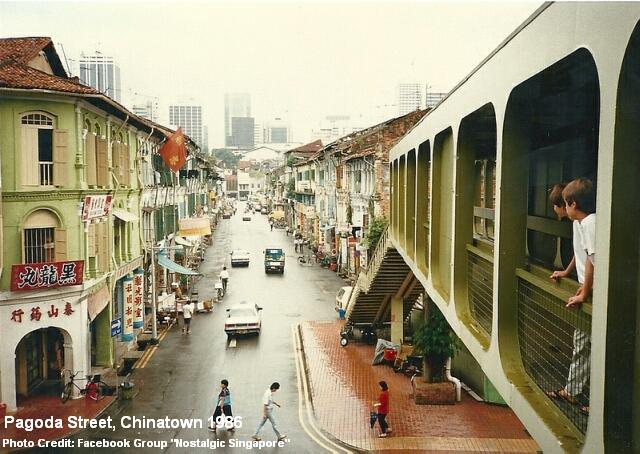
In December 1986, the Urban Redevelopment Authority (URA), for the first time, included six historical districts in its Conservation Master Plan. Kampong Glam, Little India, Chinatown, Emerald Hill, Singapore River and the Civil District from Empress Place to Fort Canning Park were identified as part of the URA’s plan to preserve the city’s history, architecture, colour and character.

pagoda-street-chinatown-1986

Prior to this, Singapore had been undergoing massive urban renewal programs and conservation efforts were only limited to single building or landmarks. The Conservation Master Plan, in total, covered almost 1 square kilometre of site or 4 percent of the city core.

What Else Happened in 1986?

12 January – The Singapore Bus Services (SBS) introduced a new air-conditioned bus service, numbered 3, plying daily from Bedok to Chinatown. Aircon buses were getting popular among the commuters, after the first SBS aircon bus, numbered 168, debuted in April 1985.

use-nets-instead-of-cash-198618 January – The Network for Electronic Transfers (NETS) was officially launched, as Singapore aimed to move towards a cashless society. The electronic payment service enabled more than 1 million users to make transactions through the NETS terminals at restaurants, shopping malls, petrol stations and government departments.
17 February – Armed with an axe, a gang of three men committed a robbery of a goldsmith shop at Chander Road. After robbing a Beauty World Centre goldsmith shop in June, two of the robbers were caught by the Criminal Investigation Department (CID).

15 March – The Singapore Armed Forces’ (SAF) first full-scale civilian vehicle mobilisation exercise, named Civil Resource Mobilisation, was carried out at the carparks of the Chinese and Japanese Gardens in Jurong. More than 170 pickups, lorries, buses and trailers were notified, registered and tested in the three-hour exercise. The owners were compensated for their time and use of their vehicles.

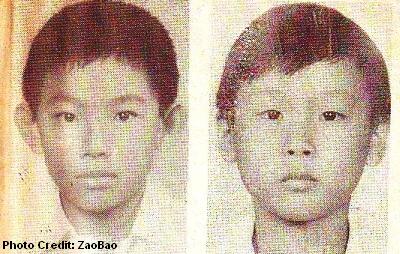
14 May – Two 12-year-old Owen Primary School students, Toh Hong Huat and Keh Chin Ann, mysteriously disappeared without a trace while on their way to school. Many theories were put forward but the case remained unsolved.

missing-boys-owen-primary-1986After investigations, the police deduced the boys were unlikely to have run away from homes as they were both well looked after by their families. It was not kidnap either, since the families had never received any ransom demands. There were also no known cases of illegal trades then, and illegal traders would have taken more than two boys. In addition, the police did not think it was a murder or drowning case as the bodies of the two boys were not found.
19 May – The new $7-million Toto computerised system made its debut, replacing the old laborious method in which betting agents had to manually stamp the betting slips with agency numbers, seal numbers and control stamps.

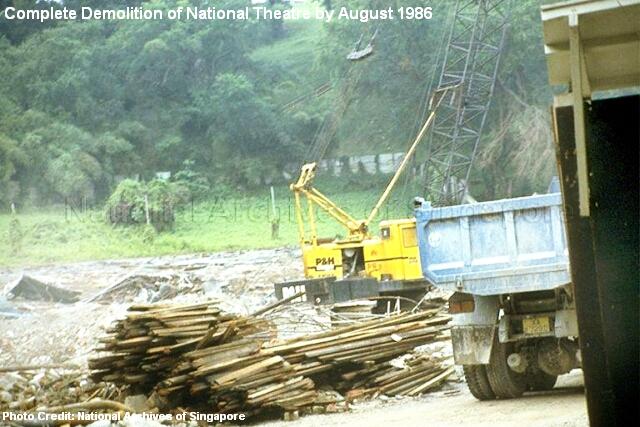
20 May – The closed National Theatre, deemed unsafe in its structural integrity, began its demolition.

national-theatre-demolished-august-1986

25 June – Minister of State for Defence and Trade and Industry Lee Hsien Loong engaged with vocational, secondary and pre-university students in a talk named Conversations With The Young – The Economic Recession. In the talk, shown on TV later, were discussions on the effects of the recession, job prospects, expectations and the hope of a Swiss standard of living by 1999.

26 June – Armed with a knife, a jobless man robbed a DBS Finance’s branch at North Bridge Road. He robbed the finance company again in the following week, and got away with a total of $27,500. He was subsequently arrested by the police.

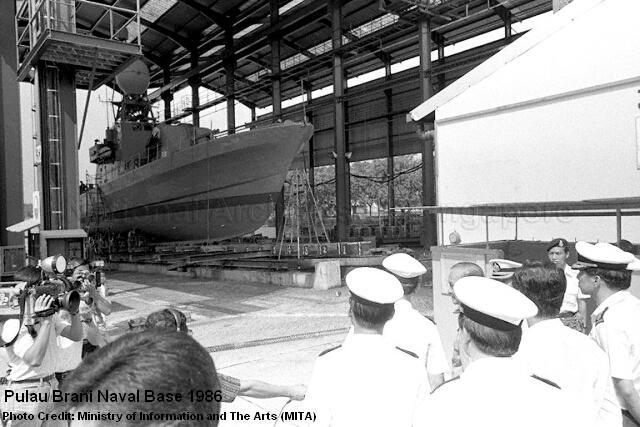
27-29 June – Pulau Brani was opened to the public for the first time in many years as the Republic of Navy (RSN) held an open house at the island’s naval base, demonstrating sea cruises and mock target shootings.

republic-of-singapore-navy-naval-base-at-pulau-brani-1986

2 July – Singaporeans were shocked when two separate robbery-cum-murder cases occurred on the same day. A 83-year-old man was robbed and killed in a restaurant at Joo Chiat Road, while a pregnant woman was found strangled in her Tampines flat. Her cash and jewellery, worth about $1,500, were missing.

6 July – A 38-year-old kopitiam (coffeeshop) stallholder was slashed to death by 10 men armed with knives and parangs (machetes) in a heated argument at a carpark at Mattar Road.

1 August – The Newspaper and Printing Presses (Amendment) Bill was passed in the parliament to curb the sale and distribution of foreign publications containing news that were deemed to have interfered in Singapore’s politics and internal affairs, destabilised the society or damaged the country’s image.

1 September – Singapore’s first town councils were established in Ang Mo Kio to reduce the role of HDB and involved in greater participation of residents in the policy-making and decision-making. With the success of the pilot project, the Town Council Act was passed in the parliament two years later.

5 September – The Association of Small and Medium Enterprises (ASME) was formed, with approval by the government, to protect the interests of the small- and medium-sized companies in Singapore, as well as to allow them to have a common channel in knowledge and experience sharing.

27 October – The Legal Profession (Amendment) Bill was passed by the parliament to enforce the regulation and disciplinary processes of legal practitioners by the Law Society.

18 November – Israeli President Chaim Herzog paid an official 3-day visit to Singapore, the first visit by an Israeli head of state. His visit was met with protests by the Malaysian, Indonesian and Bruneian governments.

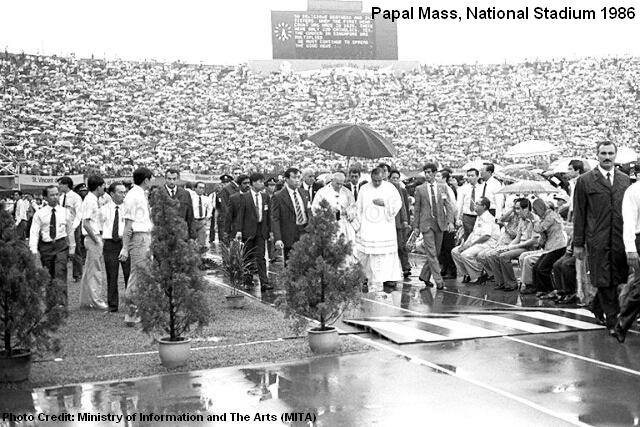
20 November – Pope John Paul II arrived, becoming the first Catholic pope, as well as the first Vatican’s head of state, to visit Singapore. A special welcoming ceremony was held at the National Stadium, where the pope delivered a sermon, prayers and speeches to almost 80,000 Catholics.

papal-mass-at-national-stadium-1986

3 December – The Singapore Informatics exhibition was opened at the World Trade Centre.

21 December – The Faber House at Orchard Road, housing the Israeli embassy and Canadian high commission, was cordoned off by the police after an explosion went off at the back of its building. It was the second time the Faber house was bombed. The first incident occurred a year earlier on 17 March 1985, when an explosion in a nearby drain shattered the building’s windows and damaged its walls. It was a sign of early terrorism in Singapore.

A Pictorial Gallery of Singapore 1986

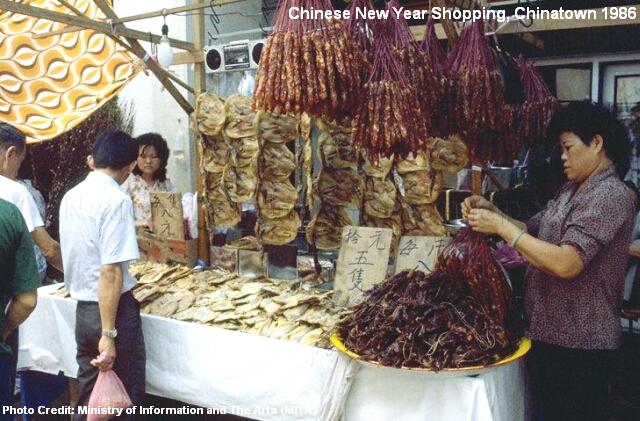
chinese-new-year-shopping-chinatown-1986

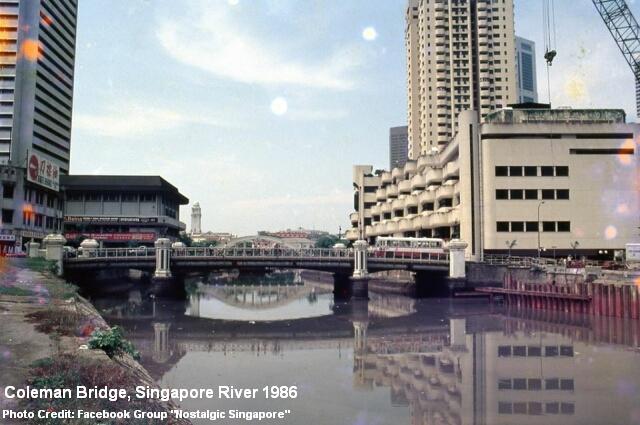
singapore-river-coleman-bridge-1986

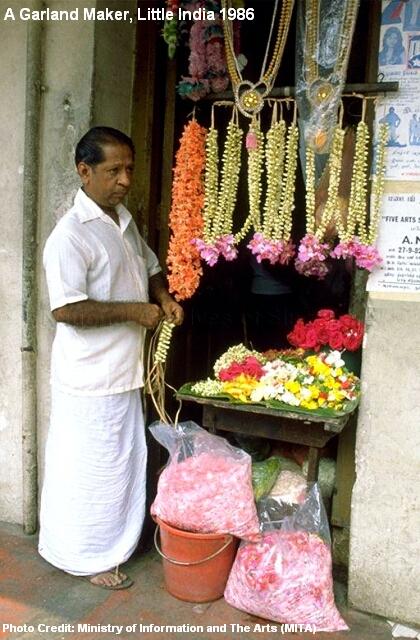
garland-maker-little-india-1986

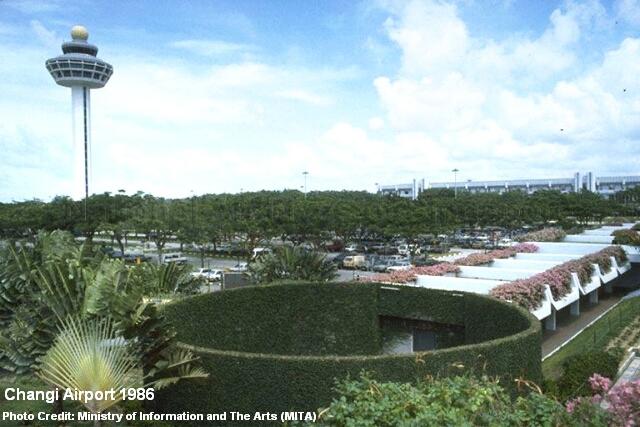
changi-airport-1986

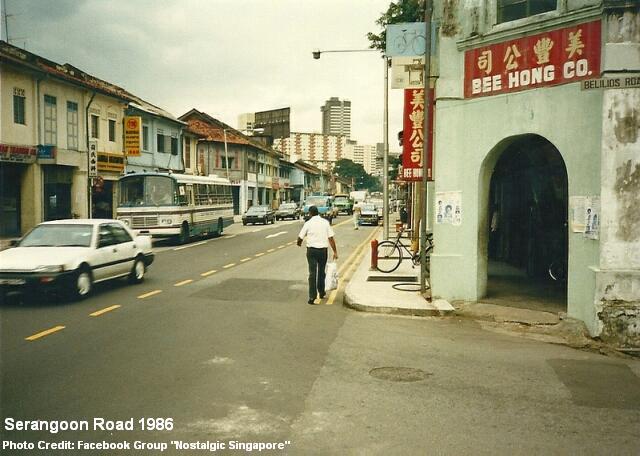
serangoon-road-street-scene-1986

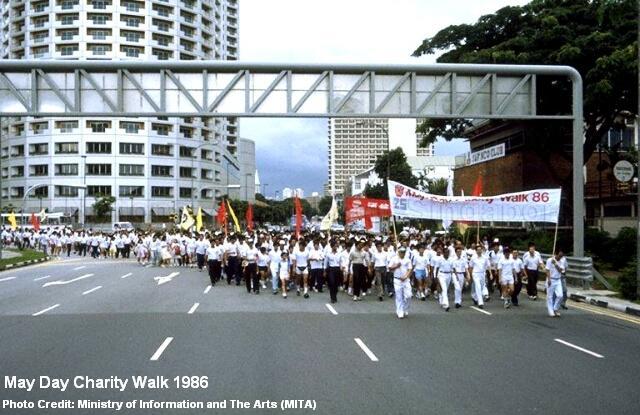
may-day-charity-walk-1986

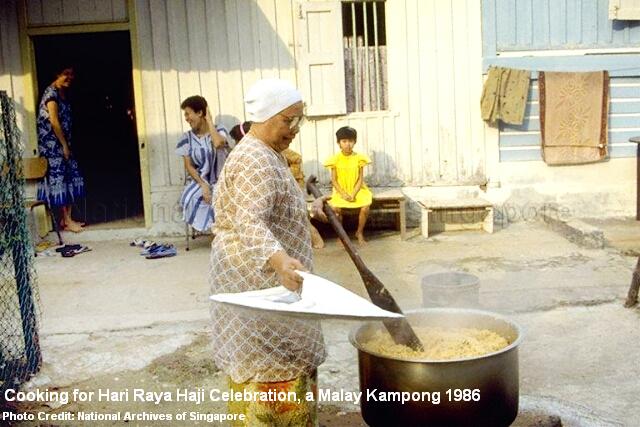
hari-raya-haji-cooking-malay-kampong-1986

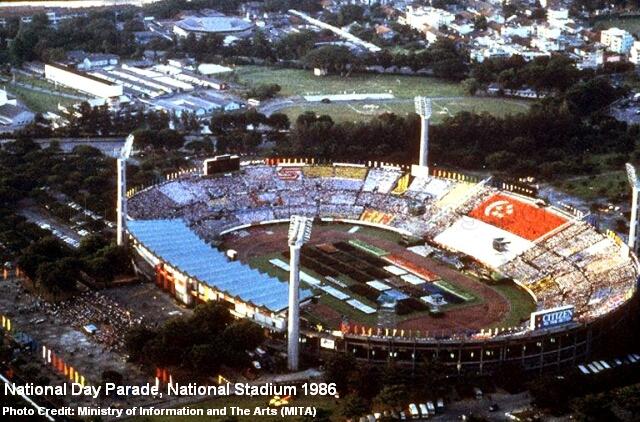
national-day-parade-1986

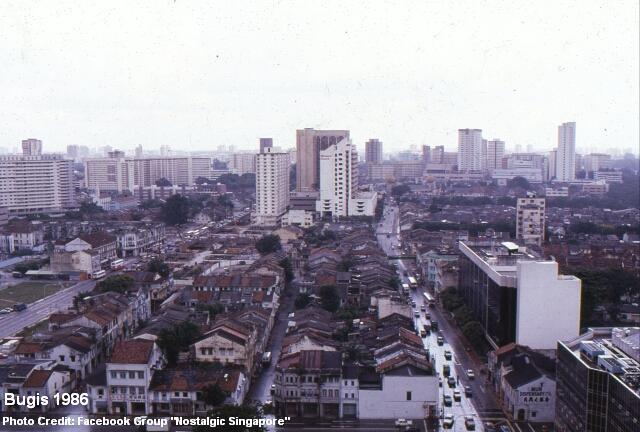
bugis-aerial-view-1986

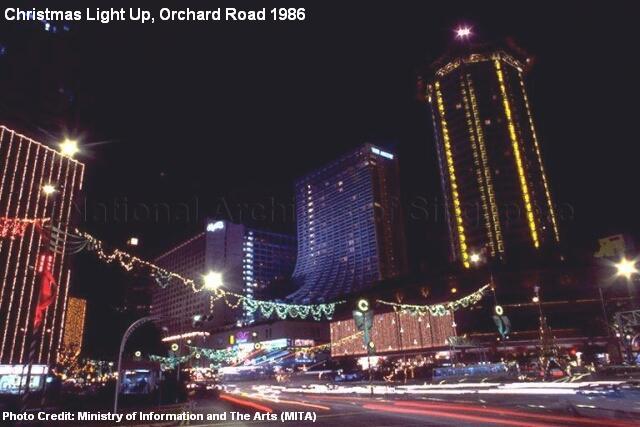
christmas-light-up-orchard-road-1986

Published: 20 November 2016

Updated: 28 February 2022

Posted in Cultural, General, Historic | Tagged , , , , , , , , , , , , , , , , , , , , , , , , , , , , , , , , , , , , , , , , , , , , , , , | Leave a comment

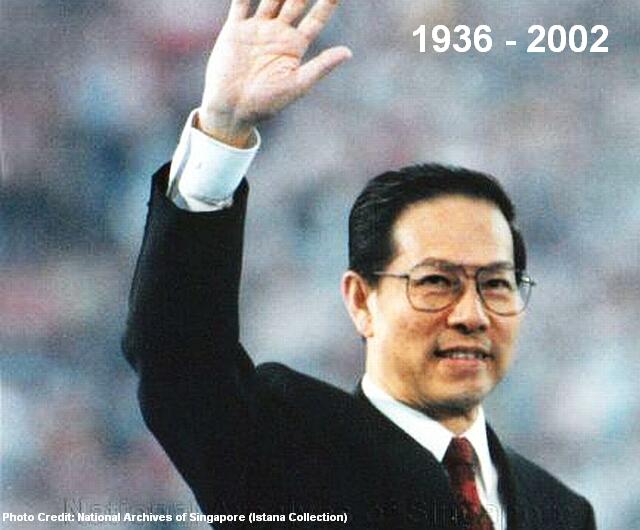
Remembering Ong Teng Cheong (1936-2002), the People’s President

Ong Teng Cheong (1936-2002) was Singapore’s first elected President. He was also the nation’s fifth President, holding office between 1993 and 1999. In his political career that spanned over 25 years, Ong Teng Cheong had also served as a Member of Parliament (MP), Minister for Communications, Minister for Labour and Deputy Prime Minister.

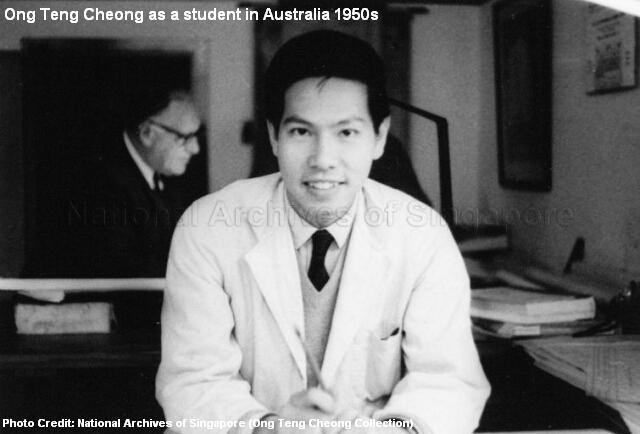
Fluent in English, Mandarin and Hokkien, Ong Teng Cheong was born in 1936 to a middle class family. The second of five children in the Ong family, he attended The Chinese High School after the Second World War, graduating as their top student in the mid-fifties. After obtaining an architecture degree in Australia, Ong Teng Cheong began his career as an architect in a local firm, before leaving for England to pursue a master’s degree in civil design.

ong-teng-cheong-student-australia-1950

Upon his return to Singapore in 1967, Ong Teng Cheong was hired by the Ministry of National Development (MND) where he led a team in planning the development of Singapore’s central region. In the early seventies, Ong Teng Cheong briefly left the civil sector to continue his architectural practice, and would return a few years later to take up office in the government.

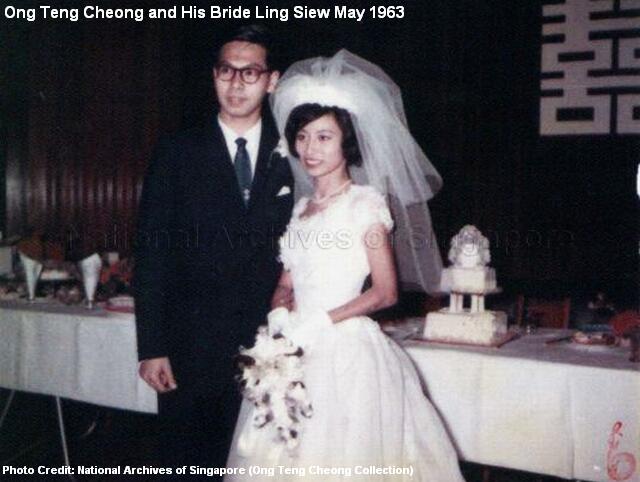
ong-teng-cheong-ling-siew-may-wedding-1963

In the 1972 General Election, Ong Teng Cheong contested as a People’s Action Party (PAP) candidate at the Kim Keat constituency. In his debut, he was elected as a MP, after a convincing 74% victory against his opponents. He would then serve as the MP for Kim Keat, and later Toa Payoh Group Representation Constituency (GRC), for the next two decades.

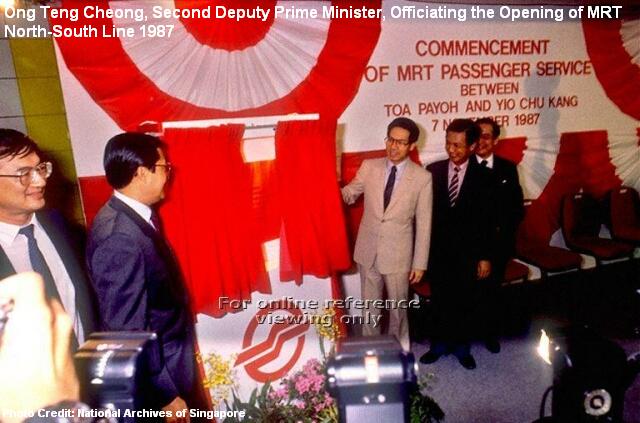
In 1975, Ong Teng Cheong was appointed as the Minister of State for Communications. One of his contributions was his firm support and push for the development of a Mass Rapid Transit (MRT) in Singapore. It was a debate that the parliament had for many years, before coming to a decision in 1982 to embark on the massive MRT project. Between 1977 and 1983, Ong Teng Cheong also served a number of other posts, including the acting Minister for Culture and Minister for Labour.

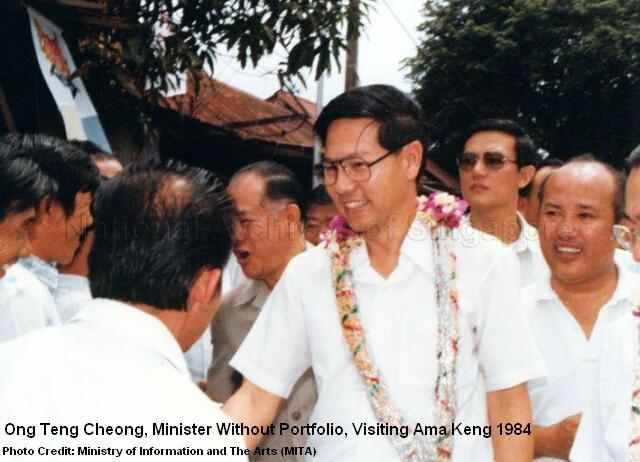
ong-teng-cheong-minister-without-portfolio-visited-ama-keng-1984

After 1983, Ong Teng Cheong started his decade-long tenure with the National Trades Union Congress (NTUC). As the secretary-general of NTUC, he paid particular attention to the lower income workers and their benefits, especially during the recession in 1985. He also straightened out the differences between the government and unions, which had become increasingly strained.

An organised strike by workers over unfair treatment by their company Hydril in 1986 was sanctioned by Ong Teng Cheong. Six workers from the American company, which specialised in oil-field equipment, were dismissed over allegations of being anti-unions. It was the first strike in Singapore since the late seventies. Ong Teng Cheong did not inform the Cabinet beforehand, drawing a strong reaction from the Trade and Industry Ministry. The 61-employee strike proceeded and lasted for two days. Eventually the management of Hydril gave in, reinstating one worker and compensating the other five over unfair dismissal.

ong-teng-cheong-second-deputy-prime-minister-officated-opening-mrt-north-south-line-1987

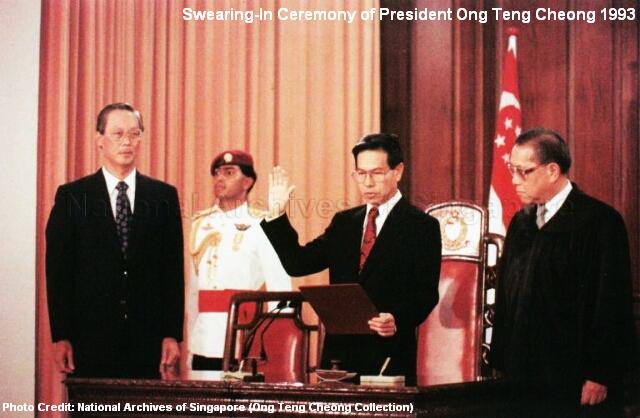
In 1993, Ong Teng Cheong, after resigning from his positions in NTUC, Cabinet and PAP, contested in Singapore’s first ever presidential election. He became the nation’s first elected president with a 58.7% victory over his opponent Chua Kim Yeow. Earlier in 1991, the Constitution was amended to empower a directly-elected President the veto in the use of past reserves and appointment of key officials in the public service. The safeguarding of the national reserves therefore became one of the elected President’s major roles.

Ong Teng Cheong in 1996 requested from the Accountant-General an inventory of the physical assets owned by the government, such as lands, buildings, roads, reservoirs and others, so that he could understand what the reserves consisted of. The President later revealed in a press conference that he was informed it would take 56 man-years to produce the complete valuation of all physical assets. The Ministry of Finance clarified that it was a misunderstanding, as 56 man-years referred to the amount of work to be done, and not of the time it would take to do (eg it could mean 56 men working for a year, or 28 men working for two years).

ong-teng-cheong-swearing-in-ceremony-president-1993

In addition, Ong Teng Cheong also expressed his disappointment in the government’s definition of the Net Investment Income (NII) as current or past reserves, the sale of the Post Office Savings Bank (POSB), a government statutory board with reserves under the President’s safeguarding, to the Development Bank of Singapore (DBS), and the withholding of information by civil servants in the ministries.

Through the media, the differences between the President and the government were put into the spotlight, attracting mixed reactions from the public. This prompted then-Prime Minister Goh Chok Tong and Finance Minister Dr Richard Hu Tsu Tau to make their clarifications and statements in the parliament in August 1999.

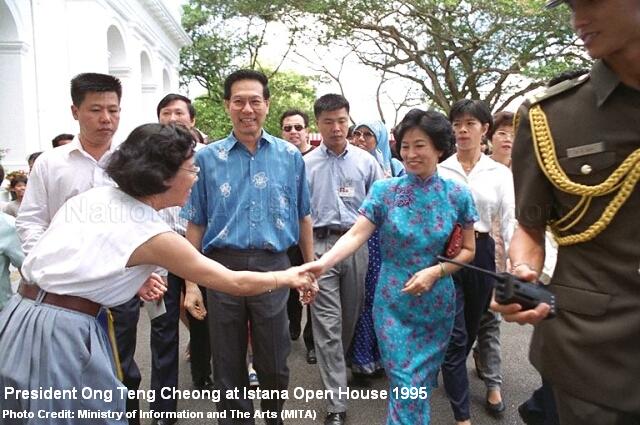
president-ong-teng-cheong-istana-open-house-1995

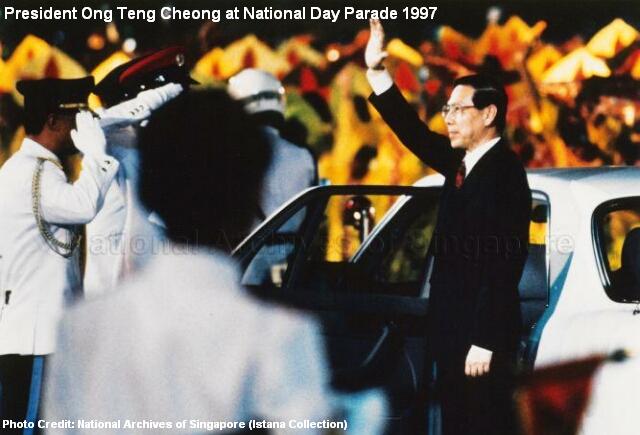
president-ong-teng-cheong-national-day-parade-1997

Ong Teng Cheong was diagnosed with lymphoma in 1992. In July 1999, Ong Teng Cheong announced he would not contest in the upcoming presidential election due to his health and also to take care of his sick wife Ling Siew May. They had knew each other since their secondary school days, and were married in 1963. Ling Siew May passed away on 30 July 1999 due to colon cancer. A motion was moved in the parliament in early August 1999, expressing sympathies to Ong Teng Cheong and his family.

On 8 February 2002, Ong Teng Cheong succumbed to his long battle with lymphoma. He passed away, at age 66, at the Singapore General Hospital (SGH), leaving behind two sons. He was accorded a state-assisted funeral, with Singapore flags lowered at half-mast at the government buildings. This, however, gave rise to speculations from the public on why Singapore’s first elected President was not accorded a state funeral like his predecessors.

Ong Teng Cheong, according to his last wishes, was cremated and his ashes placed, together with those of the commoners, at the Mandai Columbarium. Till this day, he remained well-remembered by many Singaporeans as the People’s President of Singapore.

Some people still ask whether my long previous association (with the PAP) will stop me from acting independently. The answer is no. My loyalty is first and foremost, to the people of Singapore. It has always been so, and will always remain so” – Ong Teng Cheong, August 1993

ong-teng-cheong-1936-2002

Published: 20 November 2016

Posted in General | Tagged , , , , , , , , , , , , , , , , , , , , , , , | 6 Comments

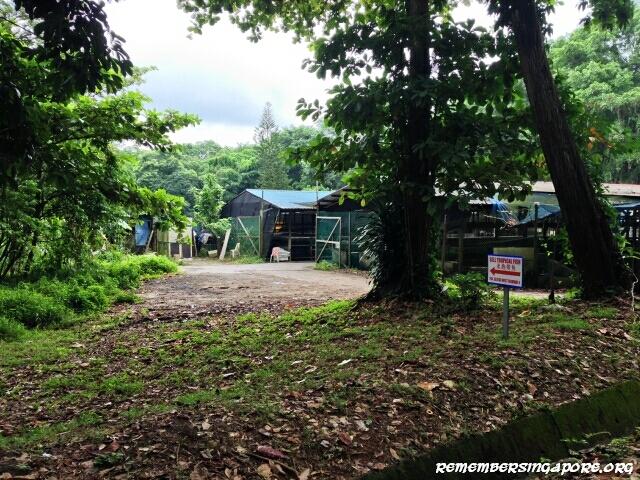
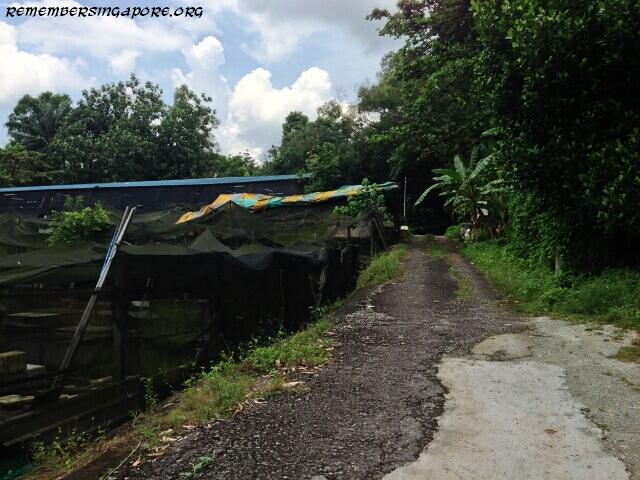
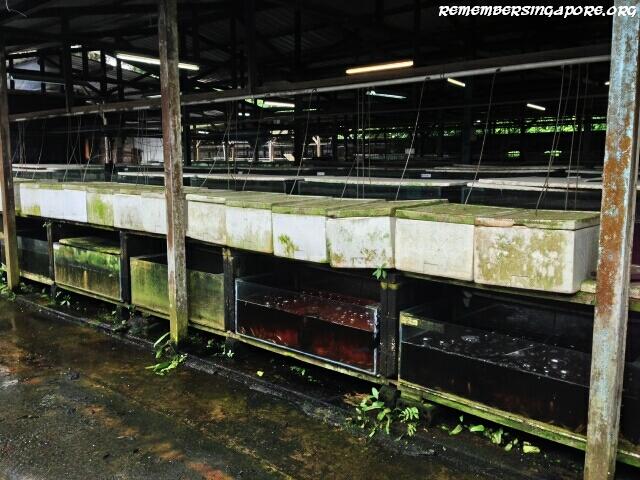
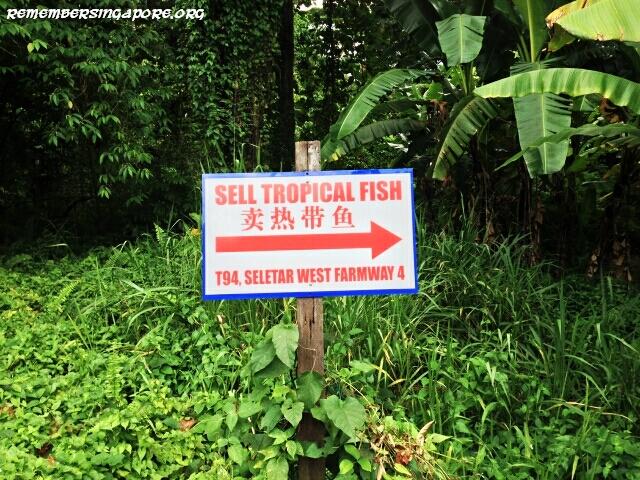
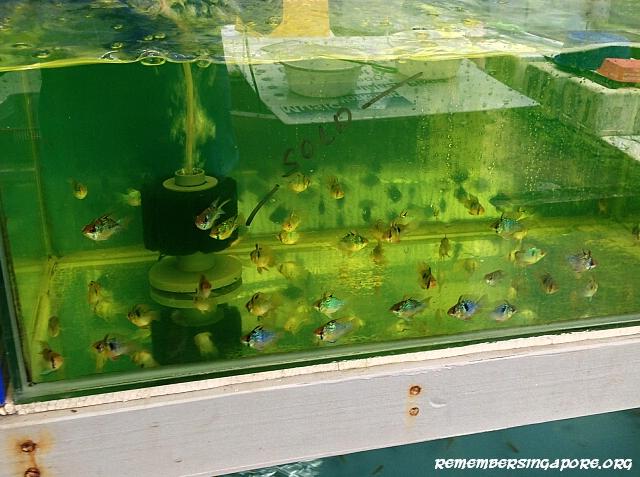
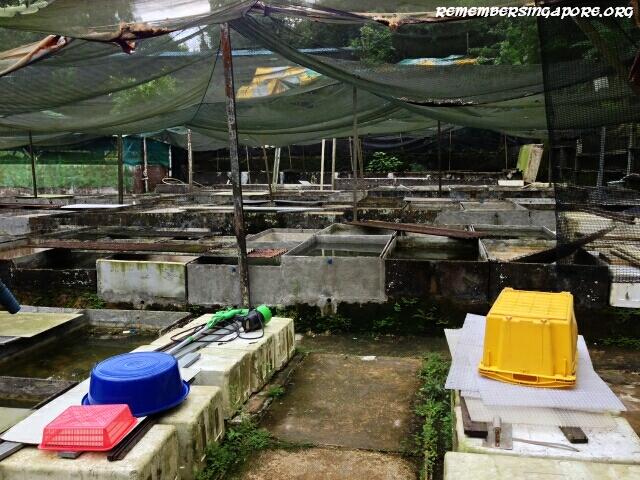
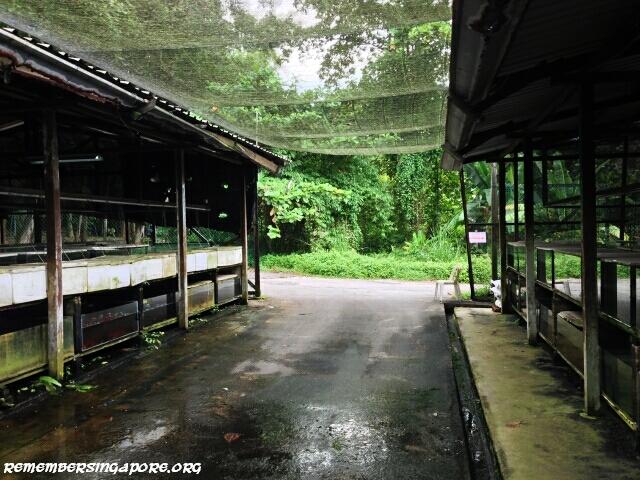
The Last Fish Farm at Seletar West Farmway 4 Closes

last-fish-farm-seletar-west-farmway-4-1

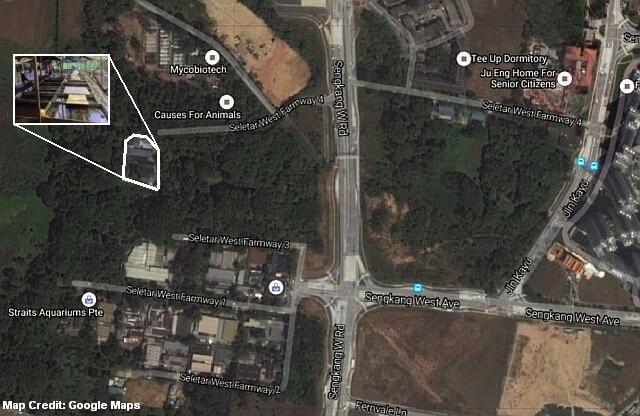
In 2012, a new road named Seletar West Road was constructed as a quick access to the Seletar Aerospace Park, cutting through a network of farm roads and splitting Seletar West Farmway 4 and 6.

Four years later, the rightmost parts of Seletar West Farmway 4 and 6, which were home to the former Jalan Kayu Rural Centre (also known as the Seletar Flats), have been redeveloped as part of the expansion plan of Fernvale housing estate. At their opposite side, it looks like development and urbanisation, too, will soon be entering into this quiet rustic area.

seletar-west-farmway-4-fish-farm-map

The forgotten fish farm, located at the western end of Seletar West Farmway 4, will be closing on 15 November 2016. It is the only fish farm left at Seletar West Farmway 4; its neighbour, the Summer Koi Farm, has already shifted to Lorong Chencharu, off Sembawang Road, in 2012. For the time being, the other fish farms in the vicinity are concentrated at Seletar West Farmway 1, 2 and 3.

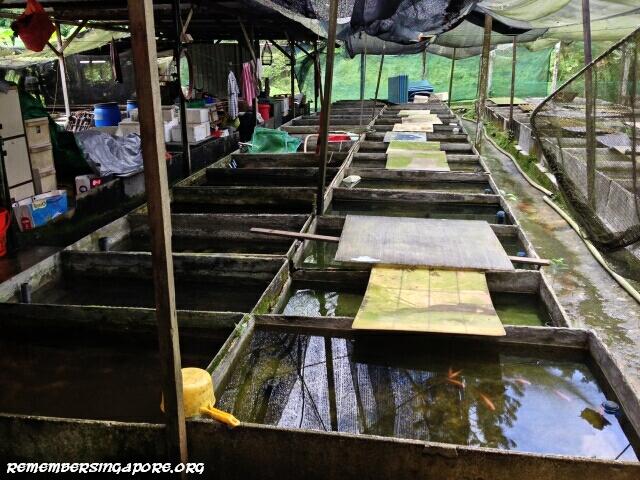
The Seletar West Farmway 4 fish farm is managed by three brothers of the Bai family, who have spent most of their life rearing and breeding ornamental fish such as guppies, rams, angel fish and cichlids. The brothers, in their 60s now, had set up their first fish farm at Sembawang almost forty years ago, before relocating to Tampines, Pasir Ris and Seletar West.

last-fish-farm-seletar-west-farmway-4-3

The bucolic nature of the fish farm is a reminder of Singapore’s olden days, when large parcels of farms once occupied much of the island’s northern regions such as Sembawang, Punggol and Kangkar. The Seletar West Farmways remained relatively undisturbed until the early 2000s, when the expansion of Sengkang New Town, and later the establishment of the aerospace park, saw development inching towards them. It is only a matter of time before this vicinity becomes urbanised.

Elsewhere, the fish farms at Pasir Ris Farmway and the vegetable and poultry farms at Lim Chu Kang will also be affected in the next couple of years. Their lands are expected to make way for the development of light industries and Singapore Armed Forces’ (SAF) training grounds by 2017 and 2019 respectively.

last-fish-farm-seletar-west-farmway-4-5

last-fish-farm-seletar-west-farmway-4-7

last-fish-farm-seletar-west-farmway-4-6

last-fish-farm-seletar-west-farmway-4-4

last-fish-farm-seletar-west-farmway-4-2

last-fish-farm-seletar-west-farmway-4-8

Published: 14 November 2016

Posted in Exotic | Tagged , , , , , | 2 Comments

A Little History along the Kallang River

The Kallang River is Singapore’s longest river, starting from the Lower Peirce Reservoir, via Ang Mo Kio, Bishan, Toa Payoh and Geylang Bahru, and ending at the Kallang Basin. The name Kallang had appeared as early as 1835, in a map drawn by George Dromgold Coleman (1795-1844), an Irish architect, planner and surveyor of early Singapore.

rochor-link-bridge-kallang-river

kallang-riverside-park-merdeka-bridge-sports-hub

Kallang as a place name was derived from one of Singapore’s earliest settlers orang kallang. Originated from Java, Indonesia, the orang kallang were skillful boat dwellers and had already made their home at the swamps of Sungei Kallang when Sir Stamford Raffles arrived at the island. In 1824, the orang kallang were resettled by the Temenggong of Johor to the Pulai River after Singapore was ceded to the British.
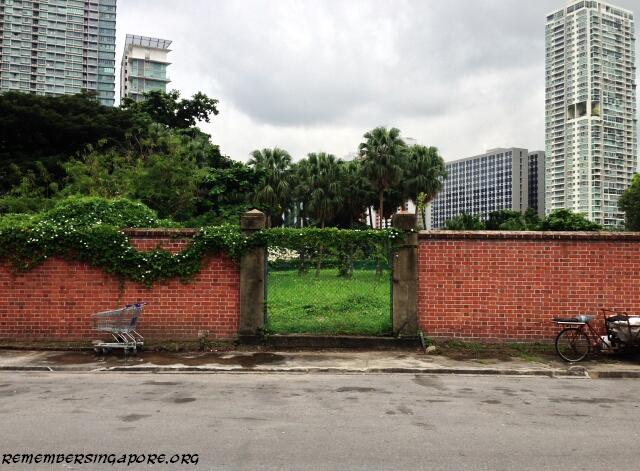
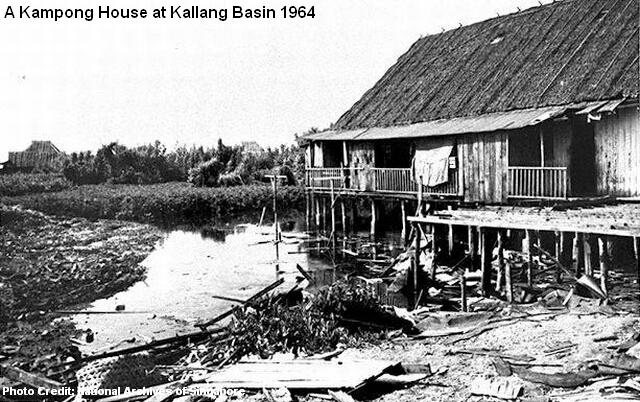
Huge mangrove swamps had existed on both sides of the Kallang River. The swampy areas on its southeastern bank was filled up in the 1930s for the construction of the Kallang Airport, while its northwestern side was reclaimed in the sixties, when the Kallang Basin was designated as an upcoming industrial estate.

kallang-basin-kampong-hosue-1964

In 1964, millions of tons of earth were transported from Toa Payoh to dump into the Kallang Basin. The Kallang River was straightened, and roads widened. About 388 acres of new land were made available by 1968, largely reserved for the setting up of light and medium industries and low-cost flats.
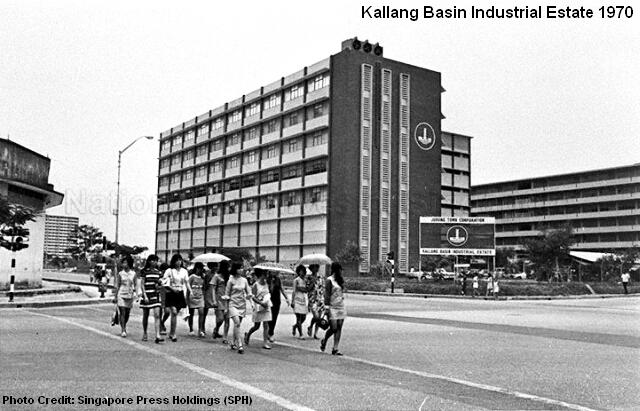
Named Kallang Basin Industrial Estate, the new industrial estate, when completed, was Singapore’s second largest after the Jurong Industrial Estate. Some of its early tenants included the Blue Box Factory, Singapore’s first toy factory (opened in 1968), Texas Instruments (1969) and General Electric (1970). In addition, some 15,000 housing units were built to accommodate the workers and those who were affected by the urban renewal projects.

kallang-basin-industrial-estate-1970

In 1971, the Kallang Basin Industrial Estate was further expanded. Kampong Soopoo, a squatter colony in the vicinity, was demolished for the development of new light industries. More than 100 families from Kampong Soopoo were compensated and resettled at the Housing and Development Board (HDB) flats at Toa Payoh. The old shophouses along Kallang Road were torn down too, replaced by two seven-storey flatted factories used for the manufacture of garments, electronics and printing materials.

Many prominent landmarks, past and present, have existed at Kallang. Some of the most iconic ones were the Kallang Gasworks (1862-1998), Kallang Airport Building (1937-Present), National Stadium (1973-2007), Merdeka Bridge (1956-Present) and Sri Manmatha Karuneshvarar Temple (1888-Present).

kallang-landmarks-past-and-present-map2

Kallang Gasworks (1862-1998)

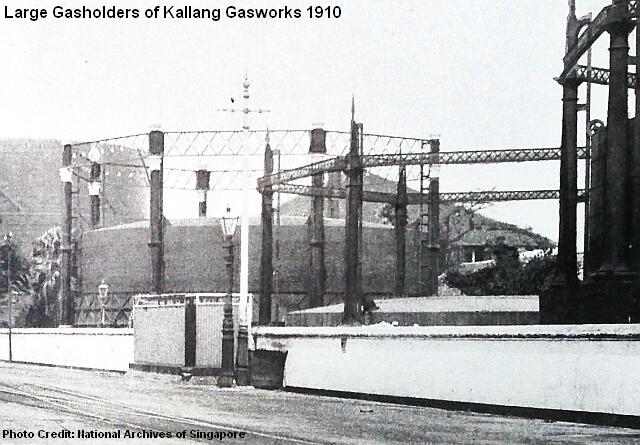
For over a century, the huge bluish cylindrical Kallang Gasworks was Kallang’s most iconic landmark. It was built in 1862 by the Singapore Gas Company to supply piped gases for the street lighting. The Gasworks had originally four tanks: The first two were built in 1862 but they were demolished in 1957; the third and fourth were both added in the early 20th century.

kallang-gasworks-gasholders-1910

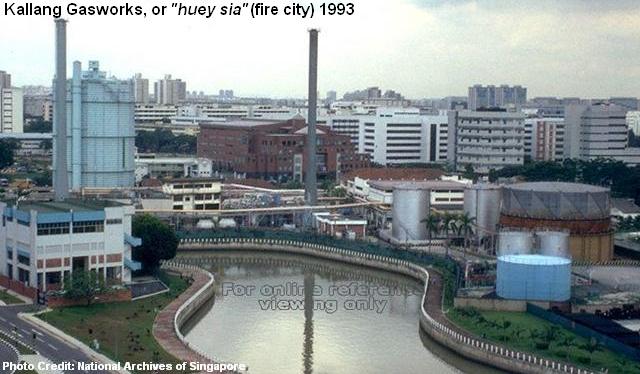
The Kallang Gasworks had produced and supplied gas continuously for more than a century except during the Second World War. Also known as huay sia, or “fire city” in Hokkien, many locals would avoid the Kallang area due to the stench of gas as well as fears of an exploding Gasworks.

By the 1950s, more piped gas was used for cooking and heating than its supply for the street lamps. The last gas-supplied street lamps officially walked into history in 1956, replaced by the electricity-powered street lighting.

kallang gasworks 1993

Kallang Gasworks in 1958 commissioned three state-of-the-art production plants and switched its feedstock from coal to fuel oil. It became the first gasworks in Southeast Asia to use fuel oil as its raw material. In 1966, it changed its feedstock again, this time to the cleaner and more efficient naphtha.

former-kallang-gasworks-brick-walls

By 1997, all primary gas production in Singapore had been shifted to the new $240-million Senoko Gasworks. The 137-year-old Kallang Gasworks was retired a year later; its operations were ceased, with most of its plants, equipment and structures dismantled.

kallang-gasworks-gasholder-number-3-1

kallang-gasworks-gasholder-number-3-2

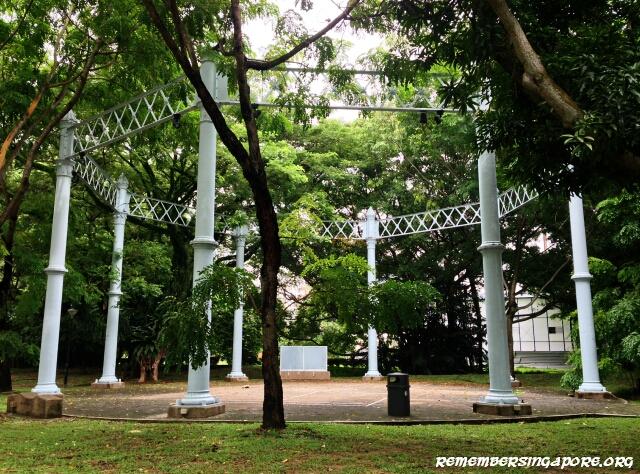
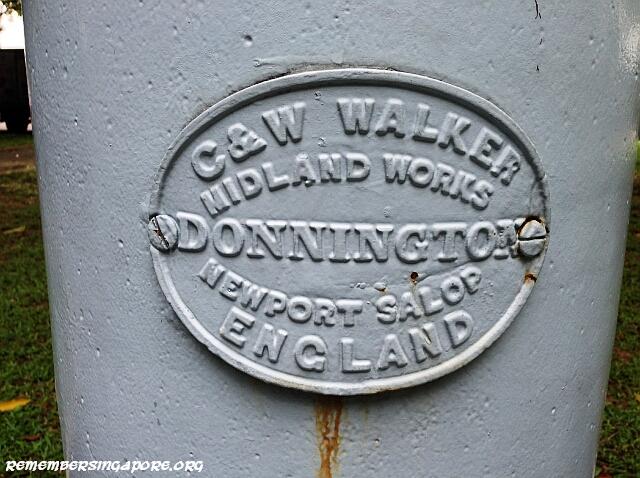
As a tribute to Kallang Gasworks’ contributions to Singapore’s economic development, the supporting pillars and girders of its Gasholder No. 3 (above), the gasworks’ oldest remaining structure, were preserved and refurbished. They were later installed at the Kallang Riverside Park.

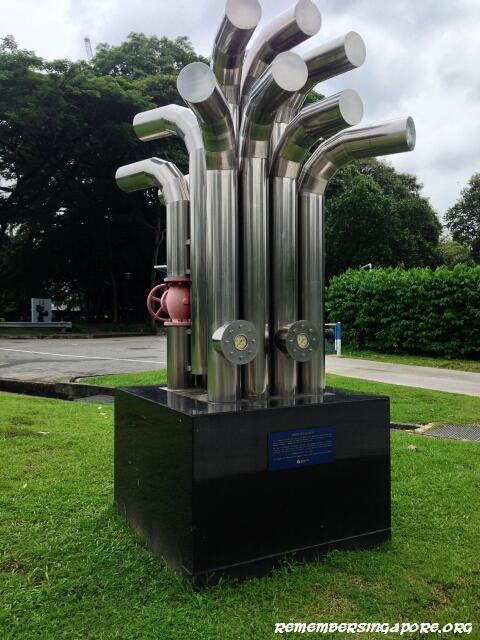
Today, the Gasholder No. 3 structure and the Spirit of Kallang sculpture (below), created by Lim Leong Seng using the leftover materials from Kallang Gasworks, pay a special homage to the former iconic landmark of Kallang.

spirit-of-kallang-sculpture

Kallang Airport Building (1937-Present)

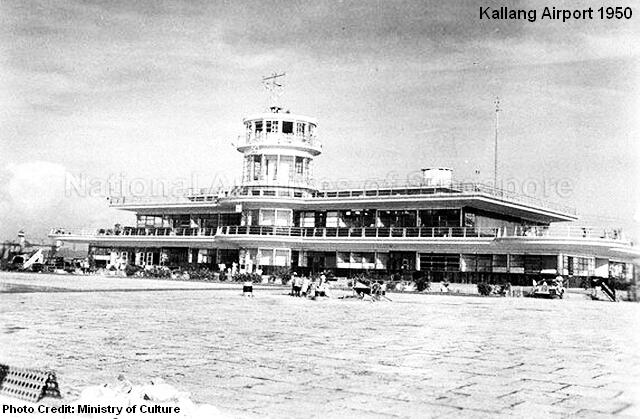
Singapore’s first civil airport, Kallang Airport was opened in 1937 after six years of construction. Built on reclaimed lands, it had operated for almost two decades, earning the distinctive honour of being the British Empire’s finest airport during its early years. In 1955, the opening of Paya Labar Airport spelt the end of Kallang Airport as the former took over Singapore’s main operations in civil aviation.

kallang-airport-building-1950

Kallang Airport was made up of a main terminal building with a control tower, side blocks, hangars and a runway. The main Kallang Airport Building was designed in early modernist British architectural style, with its interiors decorated with Art Deco features. Its main runway was originally grassy. During the Second World War, after occupying the airport, the Japanese extended the runway and converted it into a concrete one.

The British regained Kallang Airport after the war, but it was not until 1949 before the airport was again used by civil airplanes. The aviation industry had developed quickly in the 1950s. With larger planes and more congested air traffic, it was increasingly clear that Kallang Airport was unable to cope. It was eventually closed after 1955 when Paya Lebar Airport became operational.

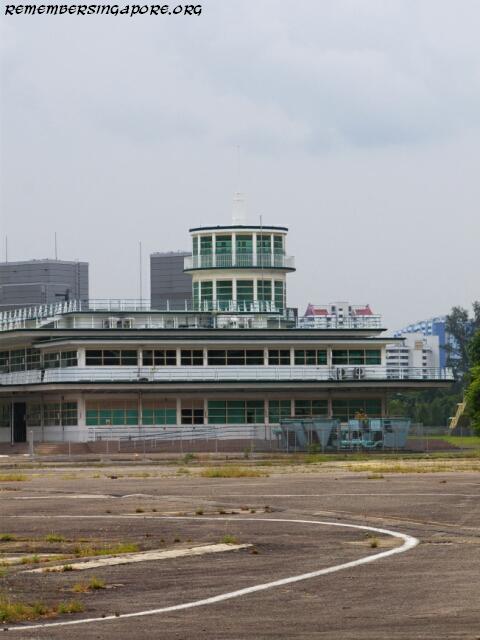
former-kallang-airport1

With its closure, the airport building was occupied briefly by the Singapore Youth Sports Council, while the rest of its vacated premises was converted into Kallang Park. Between 1960 and 2009, the former Kallang Airport Building was used to house the People’s Association (PA) headquarters, Public Works Department (PWD) and Central Manpower Base (CMB).

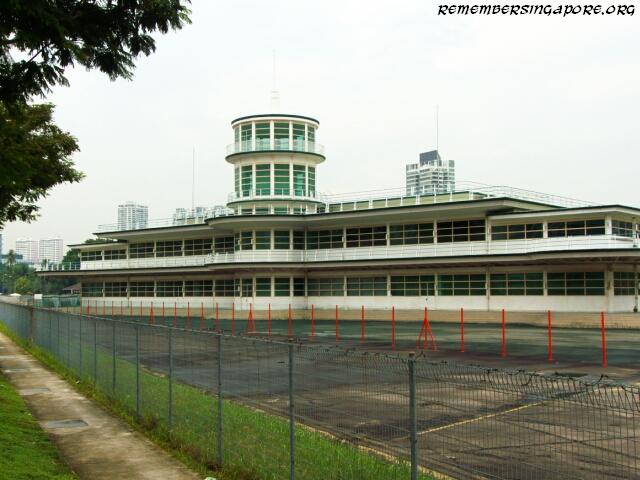
former-kallang-airport2

Although briefly used in the eighties as a drag racing track and temporary carpark, the airport runway was left largely abandoned. The former Kallang Airport Building, on the other hand, was preserved and extensively restored in the mid-nineties. Awarded the conservation status by the Urban Redevelopment Authority (URA) in December 2008, it has been utilised as a hosting venue for art exhibitions and other events in recent years.

Kallang Park (1959-Present)

After the closure of Kallang Airport, much of its premises, other than the main terminal building, was left vacated for several years. In the late fifties, Ong Eng Guan (1925-2008), then Minister for National Development, proposed “Project Lung” – a redevelopment project to convert the former airport premises into public parks and children’s playgrounds.

In early 1959, the Singapore Constitution Exposition was successfully held at the disused runway of Kallang Airport. Later that year, in October 1959, Kallang Park was officially opened. The new park, with facilities for both the elderly and young, was a unique one, as it was built through the joint efforts of the state government and the volunteering locals.

kallang park fountain 1960s

The volunteering response was overwhelming – more than 13,000 people offered their help, turning up at the site with pickaxes and shovels to join the Cabinet members, Parliamentary secretaries, Assemblymen and other government staff in clearing rubble, planting trees and even building ponds and concert stages.

Kallang Park’s most iconic feature was perhaps its futuristic-looking fountain, gifted by the Singapore Chinese Chambers of Commerce. The park was extremely popular in the sixties, hosting many interesting events such as kart racing, road safety games, fish exhibitions and agriculture show.

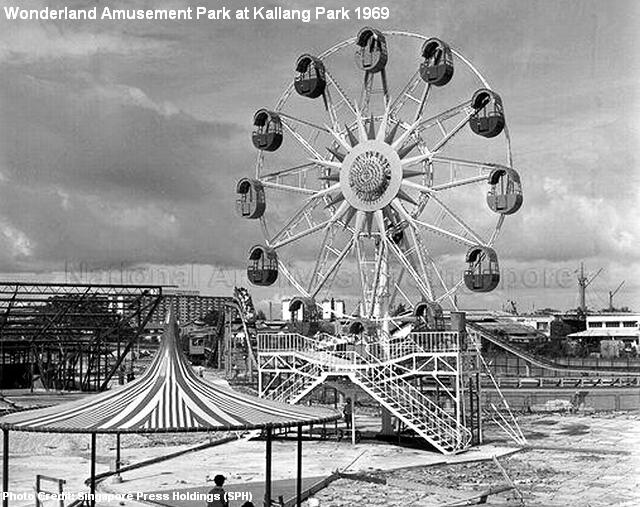
kallang-park-wonderland-amusement-park-1969

In the late sixties, Kallang Park evolved to include racing tracks and tennis courts. But its biggest attraction was the Wonderland Amusement Park, opened in July 1969 to coincide with the celebrations of 150th year anniversary of Singapore. The setting up of the amusement park cost more than $3 million. When completed, it offered fun and excitement to the public with its roller coaster, Ferris wheel, gyrating “teacups”, miniature trains, kiddy fun rides, battery operated cars and other games.

Many more facilities were later added to Kallang Park. By the mid-seventies, it had a bowling centre, ice skating rink, theatre, nightclub, the grand National Stadium and a floating restaurant named Oasis.

National Stadium (1973-2007)

After Singapore’s independence, the idea of building a national stadium and good sport facilities were mooted by the government, as this would generate the people’s interest in sports as well as create a decent venue for the hosting of local and international events, which in turn would boost the national pride.

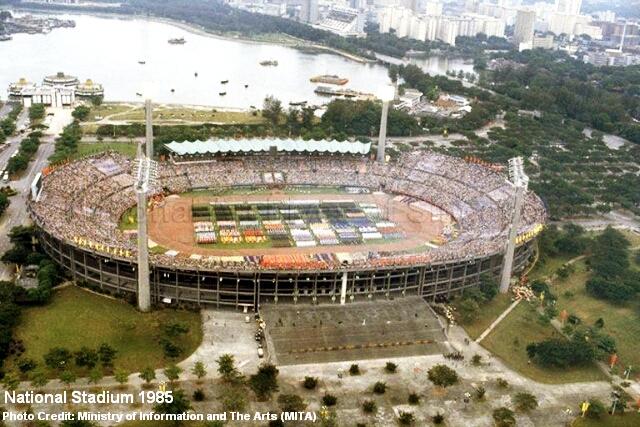
national-stadium-1985

In 1966, the piling for the foundation of the new stadium began. The National Stadium was officially opened in July 1973, and would go on to become one of Singaporeans’ most familiar landmarks. Two months after its opening, the National Stadium held its first major event – the 7th Southeast Asian Games.

Local football fans would likely have the fondest memories of the 55,000-capacity National Stadium – it was regularly packed to the brim during the Malaysia Cup matches between the seventies and the nineties. Thousands of fans backed and cheered the Singapore team, creating a famous phenomenon called the Kallang Roar.

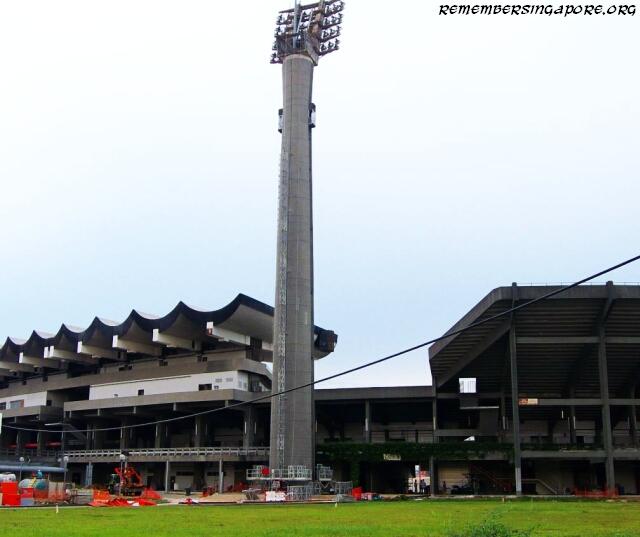
national-stadium-2010

In 2005, the government announced that the aging stadium would make way for a new integrated world class sports hub. An official closing ceremony for the popular stadium was held in June 2007, although its life would be extended for another couple of years due to the delays in the new sports hub project. The National Stadium was eventually demolished in late 2010.

Merdeka Bridge (1956-Present)

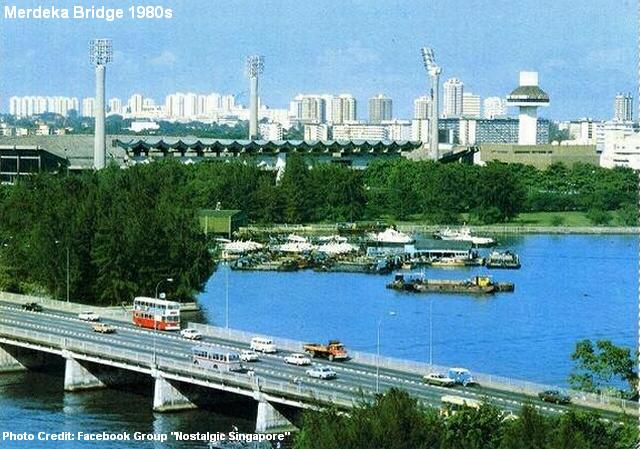
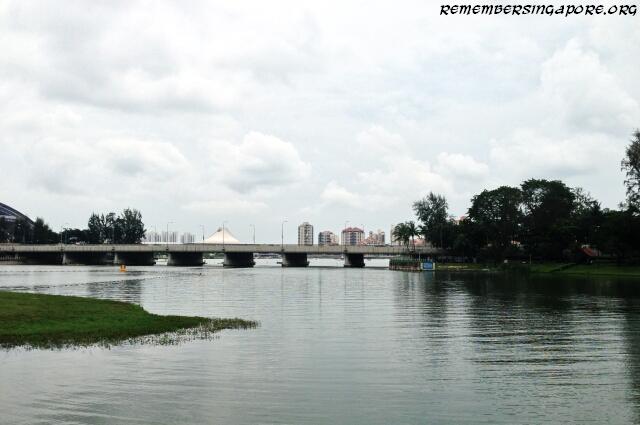
In the 1950s, Kallang Road was constantly bothered by traffic jams, especially during the peak hours. To relieve the traffic bottleneck, the Public Works Department (PWD) decided to build a bridge across the Kallang Basin to link Kallang to Beach Road. Costing $6 million in construction, the dual-carriageway concrete bridge was then the longest bridge in Malaya, spanning about 609 metres.

merdeka-bridge-1980s

PWD’s superintendent engineer R.J. Hollis-Bee was assigned to be the main designer of Merdeka Bridge. The construction of the bridge began in early 1955, and it took more than 18 months for its completion due to various difficulties in steel supplies, deep muddy swamps and illegal squatters at the basin areas.

merdeka-bridge-kallang-basin

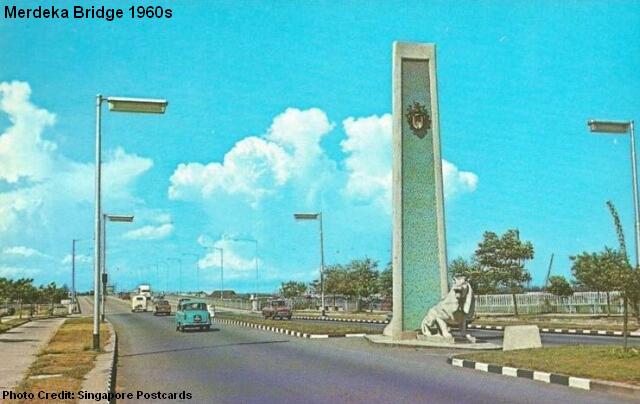
In June 1956, Francis Thomas, then Minister for Communications and Works, officially named it Merdeka Bridge. Merdeka means “independence” or “freedom” in Malay, hence the local Chinese used to refer it as dok lee kio, or “independence bridge”. After the opening of Merdeka Bridge by Chief Minister Lim Yew Hock in August 1956, Nicoll Highway became the main link between the city area and the eastern side of Singapore.

merdeka bridge 1960s

The two stone Merdeka Lions were once inseparable features of Merdeka Bridge, each standing at the foot of the tall stone structure erected at both ends of the bridge. But when the Nicoll Highway was widened in 1966, the stone lions were shifted to a site near the entrance of Kallang Park. They would be moved again, in the nineties, to Pasir Laba Camp, before settling at the Singapore Armed Forces Training Institute (SAFTI) Military Institute.

Sri Manmatha Karuneshvarar Temple (1888-Present)

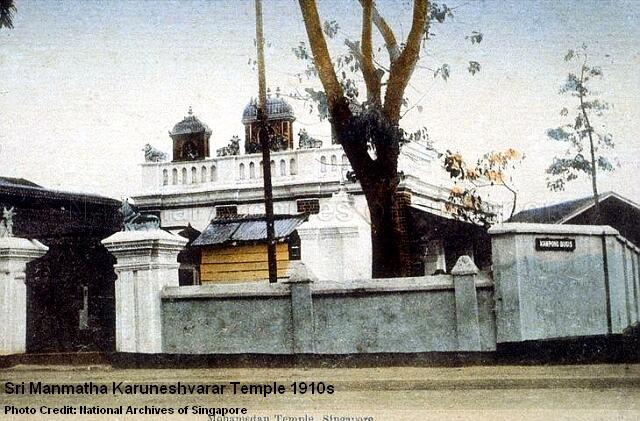
Also popularly known as the Kallang Gasworks Hindu Temple, Sri Manmatha Karuneshvarar Temple started as a simple religious establishment in early 1888, dedicated to the worship of Hindu god Shiva and catered for the Hindu community working at the gasworks.

sri-manmatha-karuneshvarar-temple-1910s

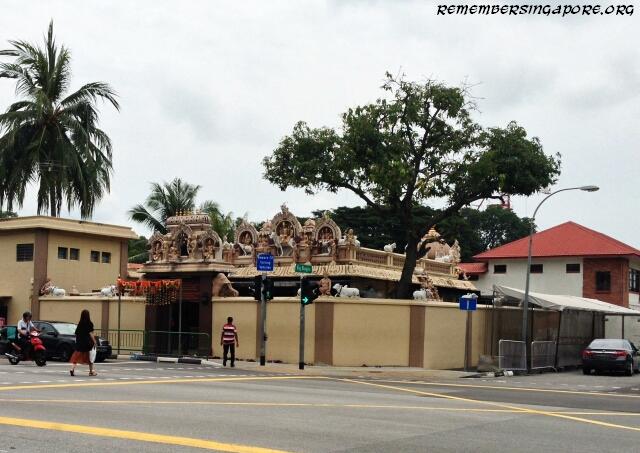
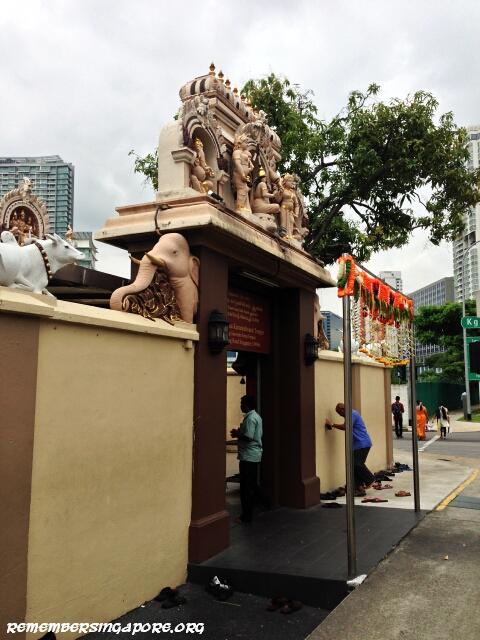
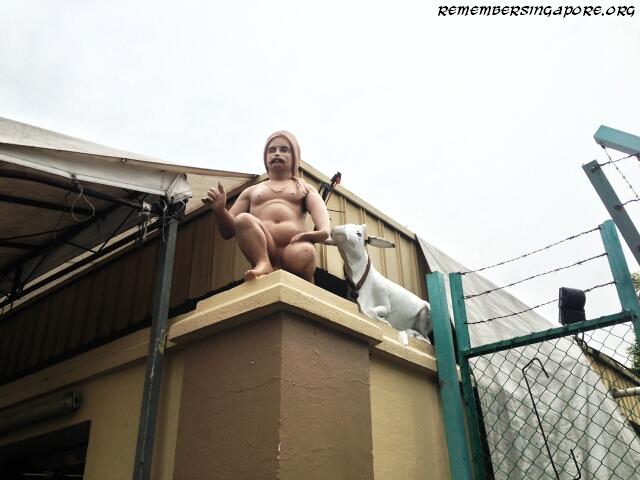
Designed in a traditional style of a typical South Indian temple, the building of Sri Manmatha Karuneshvarar Temple has an elaborate entrance filled with sculptured figures. There are also many sculptures of cows – a sacred animal in Hinduism – on the yellow temple walls that were previously painted in red and white strips.

sri-manmatha-karuneshvarar-temple1

sri-manmatha-karuneshvarar-temple2

The temple’s main central shrine, also known as Mandapam, was built in 1900. In 1909, the colonial government awarded it with a 99-year lease.

During the mid-1930s, early 1950s, 1974 and mid-1990s, the temple underwent extensive renovations and upgrading. In June 2014, the Sri Manmatha Karuneshvarar Temple was added to the conservation list by the URA. It is currently one of the two remaining landmarks in the vicinity – the other is the Mun San Fook Tuck Chee Temple at Sims Drive – that has its history dated back to the 19th century.

sri-manmatha-karuneshvarar-temple3

Published: 01 November 2016

Posted in Cultural, Historic, Nostalgic | Tagged , , , , , , , , , , , , , , , , , , , , , , , , , , , | 6 Comments

Bras Basah Complex, Singapore’s City of Books

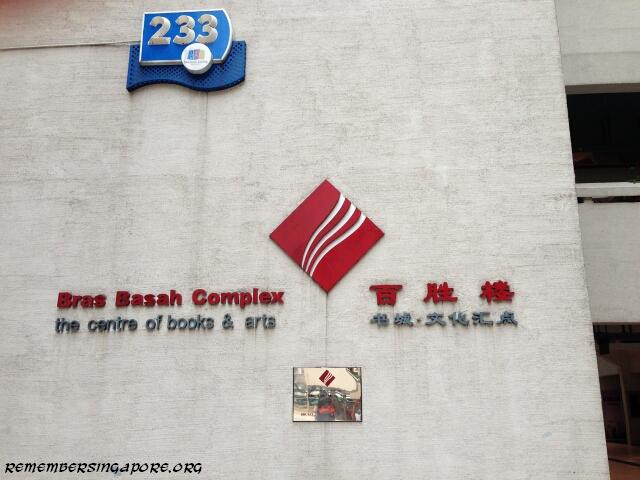
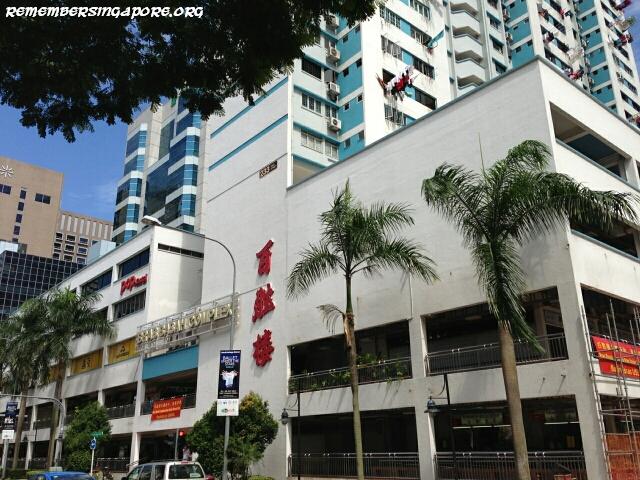
bras-basah-complex-block-233

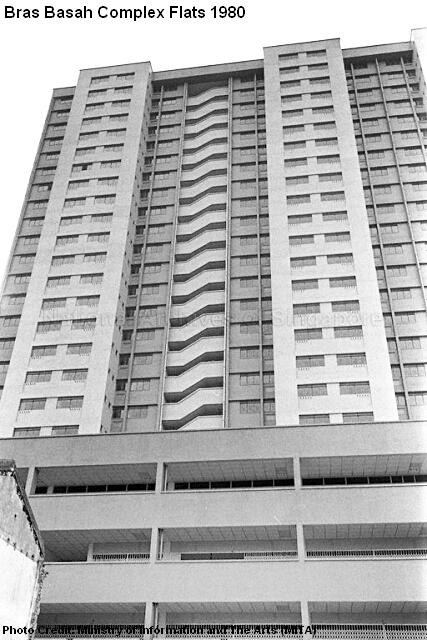
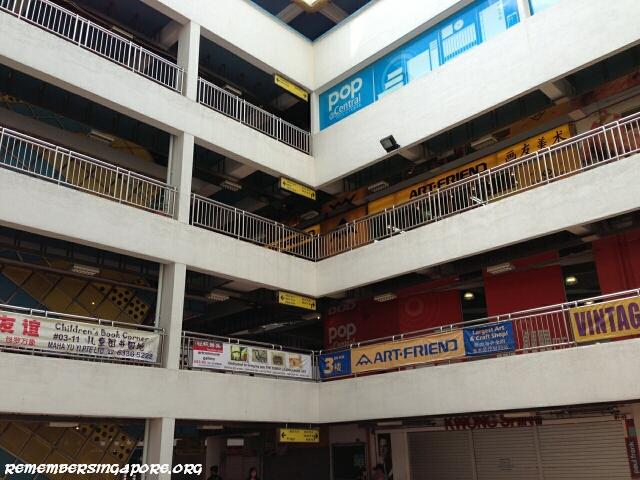
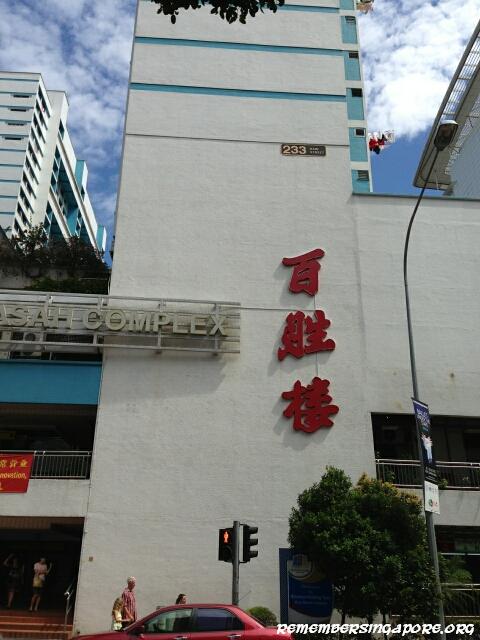
Completed in 1980 under the urban renewal plan, the Bras Basah Complex has been a familiar place to many Singaporeans for the past three decades. Over the years, the commercial-cum-residential complex has become Singapore’s well-known City of Books, an unofficial yet representative name just like the Beach Road’s Army Market, the Arcade where moneychangers ply their trades, or the famous Sungei Thieves Market with their second hand goods.

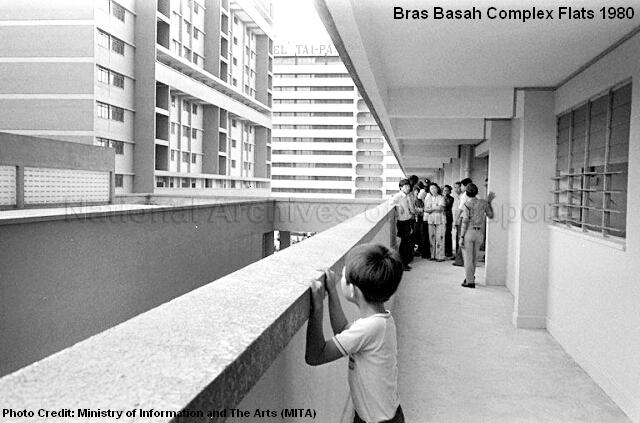
The Bras Basah Complex is made up of two 25-storey blocks, where the first to fifth floor are catered for commercial purposes and the sixth to 25th level as residential units. The flats are part of an early public housing plan at the downtown area developed by the Housing and Development Board (HDB) in the seventies and eighties, which also include the flats at Selegie Road (Selegie House, built in 1974), Rochor Road (Rochor Centre, 1977), Waterloo Street (Waterloo Centre, 1978) and Queen Street (Cheng Yan Court, 1984).

bras-basah-complex-flats-1980

bras-basah-complex-flats2-1980

The origin of the Bras Basah name is disputed. It might be derived from beras basah, which means “wet rice” in Malay. In the early days, boats carrying sacks of rice would unload and dry them along the banks of Sungei Brass Bassa (now Stamford Canal), and the rice would often get wet by the rising tides.

Another saying was that the name came from Sungai Beras Basah, which was originally Parit Singapura, the moat of the ancient fortress city of Kingdom of Singapura. When the kingdom fell in 1398 due to a Majapahit invasion, the last king Parameswara (or Iskandar Shah) fled to Muar, leaving his fortress city in ruins. Beras Basah can be referred as abandoned or discarded items, and Parit Singapura came to be known as Sungai Beras Basah, or abandoned river.

bras-basah-complex

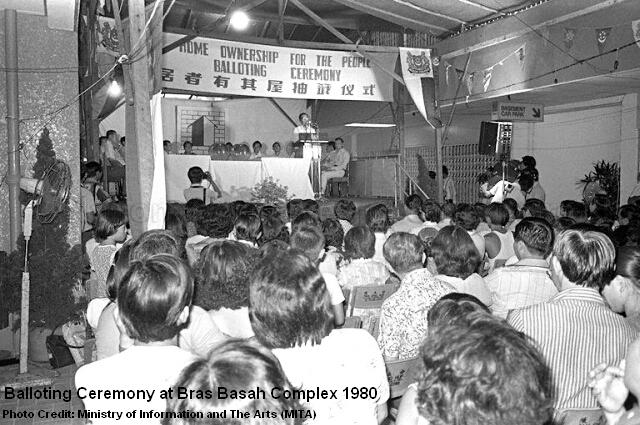
The sale and balloting of the Bras Basah Complex flats were carried out when the buildings were completed in 1980. Under the Home Ownership for the People Scheme, interested Singapore citizens were invited to have a tour of the blocks and residential units before the balloting was officiated by then-Minister for Labour Ong Pang Boon.

The Home Ownership for the People Scheme was launched by the HDB in 1964 to enable low income Singaporeans to buy and own their flats at affordable prices. This would also give the citizens a tangible asset and a stake in the nation building, and foster a sense of identity to the country.

bras-basah-complex-flats-balloting-1980

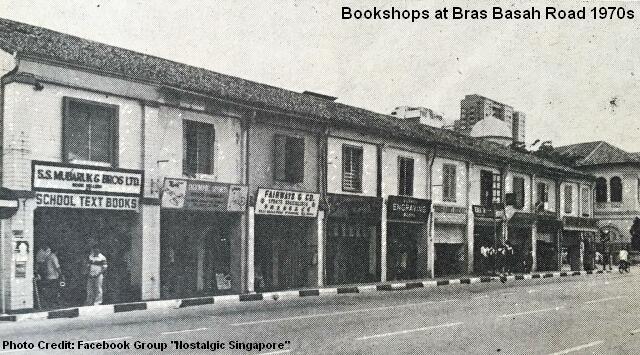
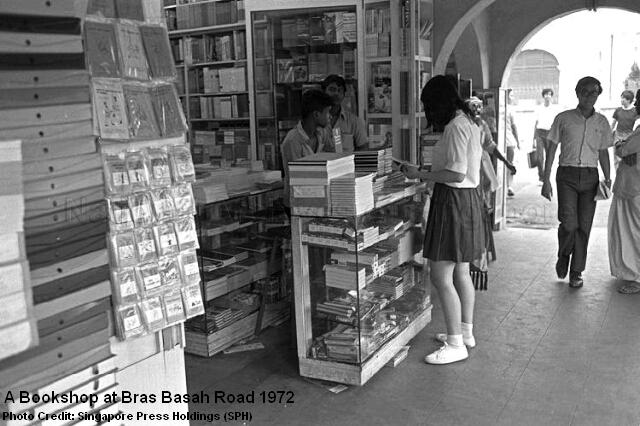
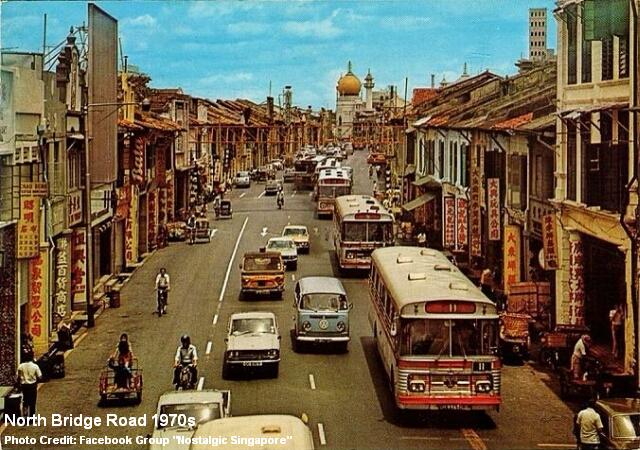
Before the construction of the Bras Basah Complex, the old streets of North Bridge Road, Victoria Street and Bras Basah Road had been traditional venues for book stores, second-hand bookshops and stationery shops. Dozens of such shops were often housed side by side in old shophouses competitively. To the students of the sixties and seventies, it was the go-to place to get the necessary school textbooks and study guides to Shakespeare, poetry and science.

The bookshops at Bras Basah Road probably had its best days in the sixties, when there were strong demands of textbooks from regional countries such as Indonesia and Brunei. The most popular textbooks were those of English literature, history and science. Although the demands from overseas had considerably waned by the seventies, the bookstores continued to have their businesses boosted by the local market.

bras-basah-road-bookshops-1970s

bras-basah-road-bookshop-1972

By the end of July 1982, however, the last of the many bookshops at Bras Basah Road – Educational Book Emporium, S.S. Mubaruk and Brothers and Student’s Books Associates – had to shut down, following the previous lot in their relocation to the new Bras Basah Complex or other available space at North Bridge Road. The old Bras Basah Road shophouses were later demolished.

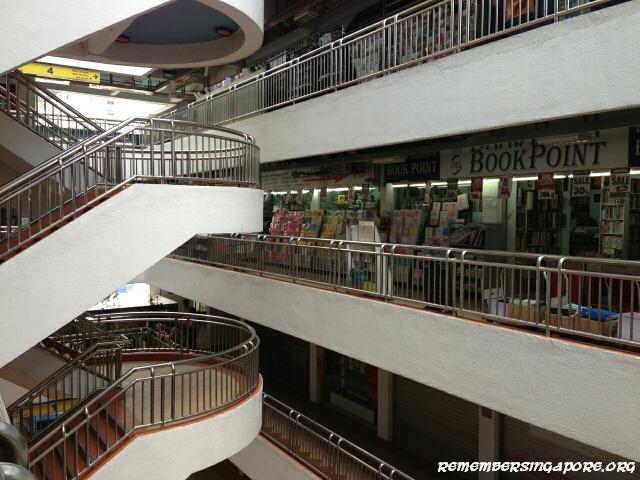
When the Bras Basah Complex was built, it was designed and designated to be a book centre. The early batches of tenants were contractually obliged to sell books. The early tenants – many of them were the book merchants and bookshop owners from North Bridge Road and Bras Basah Road – formed the Bras Basah Complex Merchant’s Association (BBCMA) in the eighties to work together, protect interest and settle common problems at the newly-built complex.

bras-basah-complex3

In mid-1986, the Business Enterprise Committee announced that the HDB had decided to allow the tenants at the complex to change their trades, although most of the tenants, represented by the BBCMA, would prefer at least 80% of the shop space at Bras Basah Complex to be reserved for bookshops. This would uphold the clean and wholesome image of the complex as a “city of books”. Some of the shops, however, later switched to selling of watches, leisure goods and others.

bras-basah-complex5

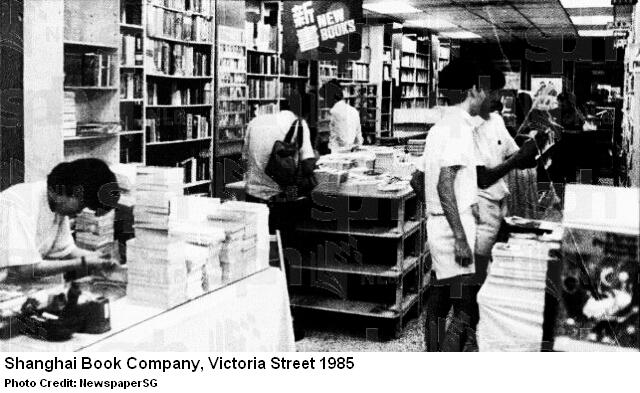
One of Singapore’s oldest bookstores, Shanghai Book Company (上海书局), was previously housed at the Bras Basah Complex between the eighties and late 2000s. Established in 1925 in a High Street double-storey shophouse, it was one of the “big four” pre-war Chinese bookshops in Singapore, which included The Commercial Press (established in 1915), Chung Hwa Book Company (1923) and The World Book Company.

Shanghai Book Company was set up by Chen Yoh Shoo and Wang Shuyang, who came to Singapore after the May Fourth Movement in China. They were also the founders of Hou Chio Public School (後觉公学), a local Chinese school at North Bridge Road that was banned after only three years of operation.

north-bridge-road-street-scene-1970s

Having survived the Great Depression in the 1930s and the Japanese Occupation, Shanghai Book Company’s heydays came in the fifties and sixties, where it enjoyed brisk business selling large number of books in Chinese, English, Malay and Tamil.

The famous bookshop was patronised by many local Chinese students, even as it shifted from High Street to North Bridge Road and Victoria Street before settling at the Bras Basah Complex. But a shrinking market and declining interest in Chinese books in the eighties changed its fortune. To revive the public interest, Shanghai Book Company initiated a series of exhibitions and book fairs, such as the Bilingual Book Fair in 1983 and an exhibition of Chinese bookmarks in 1985.

shanghai-book-company-victoria-street-1985

But its final chapter eventually arrived in the late 2000s, when Shanghai Book Company was embroiled in internal disputes between its local and China shareholders. Also mired in deep debts, the 83-year-old bookshop had to cease its operation by mid-2009, spelling the end of one of Singapore’s oldest Chinese bookshops.

In February 2016, Bras Basah Complex lost yet another of its long-time tenant in Kaiming Enterprises, when the 77-year-old stationery shop closed due to dwindling business and a retiring owner. Established in 1939, Kaiming Enterprises had supplied stationery to the local and Malaysian markets in the past decades.

bras-basah-complex-new-atrium-1989

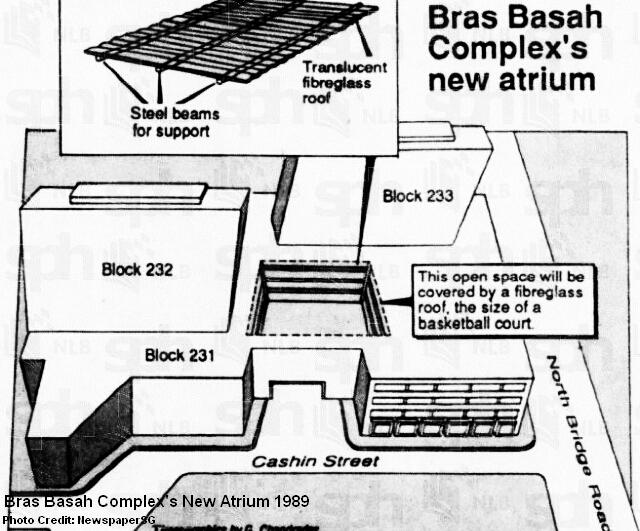
In the eighties and nineties, numerous exhibitions, art galleries and cultural performances were held at the atrium of the Bras Basah Complex. In 1989, the HDB upgraded the atrium with a $80,000 fiberglass roof to shelter it from disruptive weather. This was due to the sudden rains that sometimes affected the cultural events such as Chinese painting exhibitions or instrumental performances.

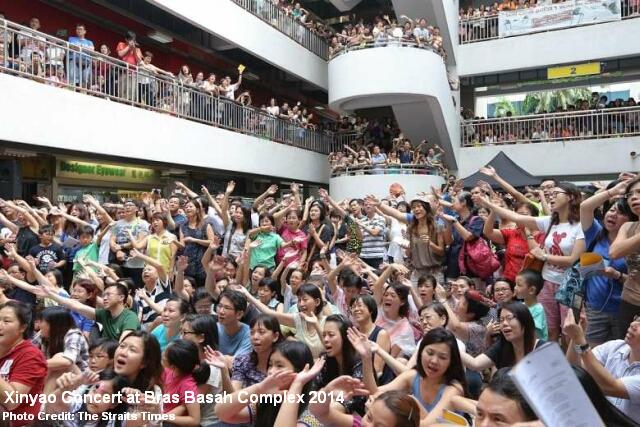
Another event that drew the crowds to the Bras Basah Complex in the eighties was the popular xinyao (Singapore Chinese folk songs) concerts and competitions. Local xinyao singers with their new releases of songs and cassette albums often attracted hundreds of fans, largely made up of students and young adults, that filled up the entire atrium. With the decline of xinyao in the nineties and 2000s, the complex had not witnessed such spectacular scene until 2014, when a two-hour xinyao reunion performance had almost 1,000 fans turned up.

bras-basah-complex-xinyao-concert-2014

Standing for more than three decades, the Bras Basah Complex has seen some tremendous changes in its surroundings and neighbours, even as it has stayed largely unchanged.

Victoria Street was widened and changed in the eighties from a one-way to a dual-carriageway road. The Empress Hotel was demolished, and the minor roads of Lorong Sidin and Holloway Lane were expunged. The site is now occupied by the new National Library building. On the other side of the Bras Basah Complex, the Odeon Theatre and Bethesda Church were long gone, replaced by the Odeon Towers and Carlton Hotel today.

bras-basah-complex2

bras-basah-complex4

bras-basah-complex6

Published: 23 October 2016

Updated: 28 October 2021

Posted in Cultural, Historic | Tagged , , , , , , , , | 11 Comments

Bird Singing, a Favourite Pastime of the Past

Bird singing competitions, bird singing corners, bird singing clubs. True enough, bird singing was and is still a favourite hobby among many Singaporeans. The fascinating hobby seemed to have kicked off in Malaysia and Singapore in the late fifties. The bird singing contest held in Singapore in 1960 was a success, stimulating great interest among bird enthusiasts and attracting headlines from the local newspapers.

bird-singing-contest-at-cairnhill-community-centre-1967

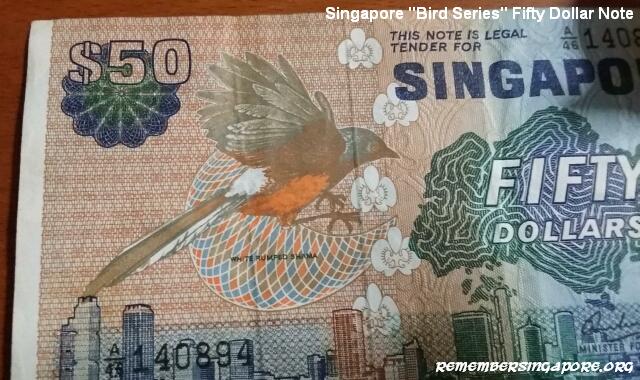
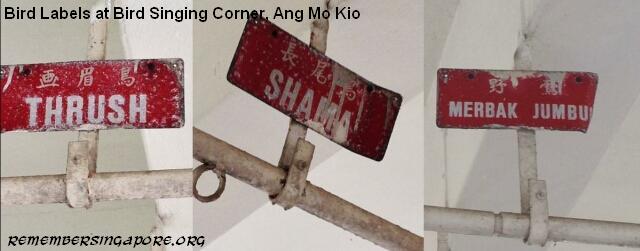
Locally, the favourite birds kept as songsters are the merbok (zebra dove), white-rumped shama, merbak jambul (red-whiskered bulbul), mata puteh (oriental white eye) and China thrush (Chinese hwamei). The merbok, in particular, is well known for their pleasant and soft cooing calls. Previously more commonly known as perkututs, the bird is dark brown in colour and resembles a small pigeon, and was once commonly found at the sandy parts of Singapore’s countryside. The white-rumped shama, on the other hand, was featured on the Singapore fifty dollar note of the bird series.

singapore-bird-series-fifty-dollar-white-rumped-shama

In the sixties, there were many bird shops at Rochore Road. Birds like merobok would cost a few dollars each, but the prized ones could easily fetch up to $3,000. Several local bird singing interest groups were formed, with the Kelab Burong Singapore (Singapore Bird Club) being one of the most prominent ones. It regularly organised annual bird singing competitions, especially in the late sixties and early seventies, at venues such as Jalan Besar Stadium, Gay World Stadium and the South Buona Vista Training Institute.

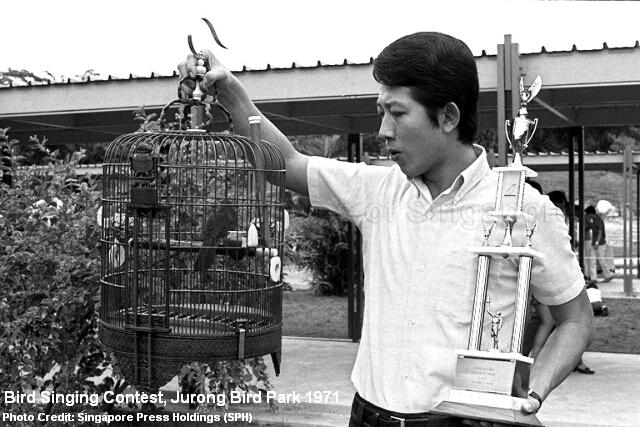
When the Jurong Bird Park opened in 1971, it also held bird singing contests to boost its visitorship. In its first ever contest, held at the tram terminal of the park, a total of 287 participants competed, making the contest a considerable success.

bird-singing-competition-jurong-bird-park2-1971

When the government ramped up new public housings at Ang Mo Kio, Bedok, Tampines and Clementi in the seventies and eighties, the hobby and contests in bird singing started to move into the heartlands.

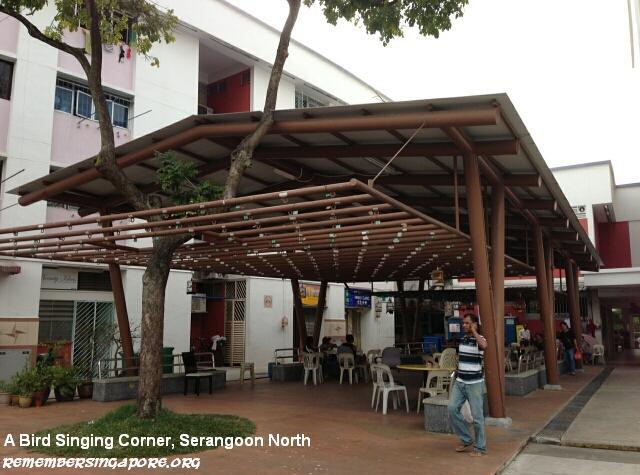
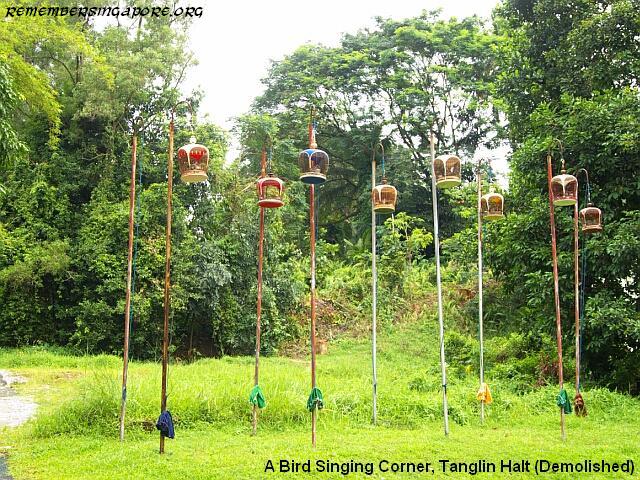
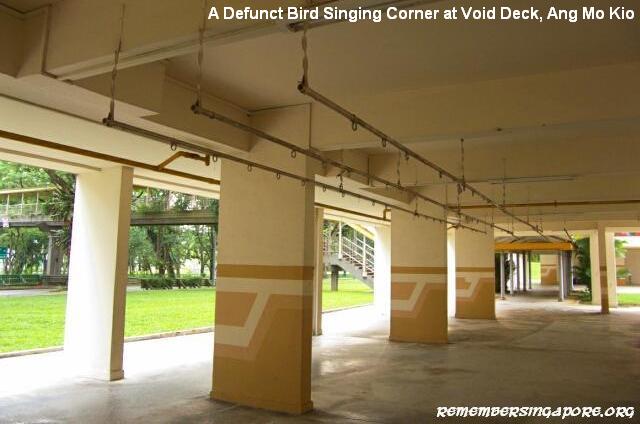
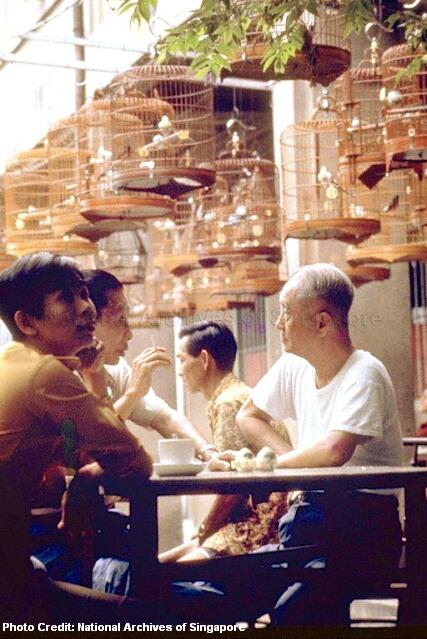
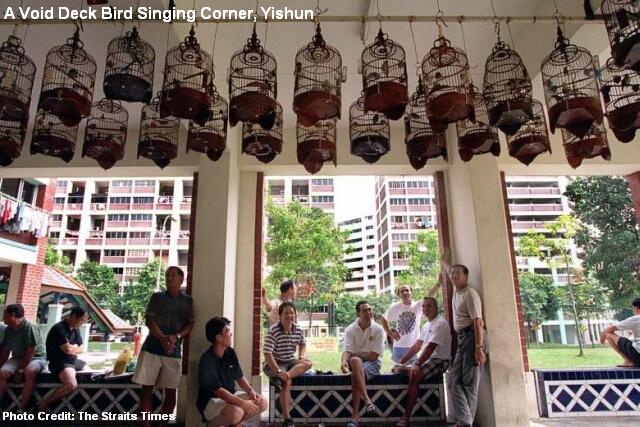
Many bird singing corners were set up at the flats’ void decks, open fields or the parks within the housing estates, where there were customised poles and railings used for hanging rows of bird cages currently. It proved to be popular among the residents, who, beside showcasing their chirping birds, could also engaged in chit chatting, exchanging of views and tips, making friends, or simply engrossing in their prized feathered pets’ melodies in the common space.

serangoon-north-bird-singing-corner

tanglin-halt-bird-singing-corner

ang-mo-kio-hdb-flat-void-deck-bird-singing-corner

ang-mo-kio-hdb-flat-void-deck-bird-singing-corner-bird-labels

Community centres, People’s Association and the Singapore Armed Forces (SAF) Reservists’ Association were the most regular organisers of local bird singing contests. In the eighties, such competitions easily saw hundreds of bird lovers taking part, and Members of Parliament (MPs) were often invited as guests of honour. Monetary prizes and trophies were awarded for the most outstanding birds.

Judges were invited to give marks to each bird’s performance, and sometimes it took hours for them to assess hundreds of birds. To pick a champion was no easy task. There were several criteria to determine a winner; its general appearance, the number of scales on its feet, the health of its plumage, and – the most important factor of all – its singing ability, which included the length of each call, the tonal quality, the volume and the purity in the sound of the calls.

bird-singing-leisure-pastime5-1980s

bird-singing-leisure-pastime2-1980s

In 1983 and 1984, the National Bird Singing competition, organised by Jurong Bird Park, Singapore Tourist Promotion Board (STPB) and the People’s Association, were held at the open space next to the Mandarin Hotel and Ngee Ann Building respectively. The contest attracted more than 850 entries, some of which even came from neighbouring countries such as Indonesia and Thailand. Computers were used for the first time to aid the judges in their assessment. Thousands visited the events, which resembled a carnival that consisted of talks, sale of bird cages and bird seed, and even a bird show of colourful parrots from the Jurong Bird Park.
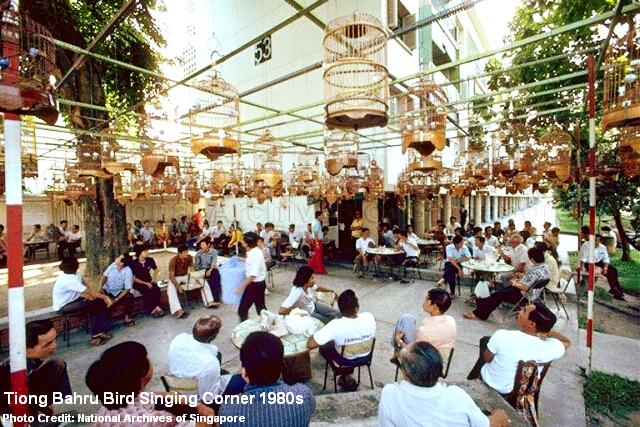
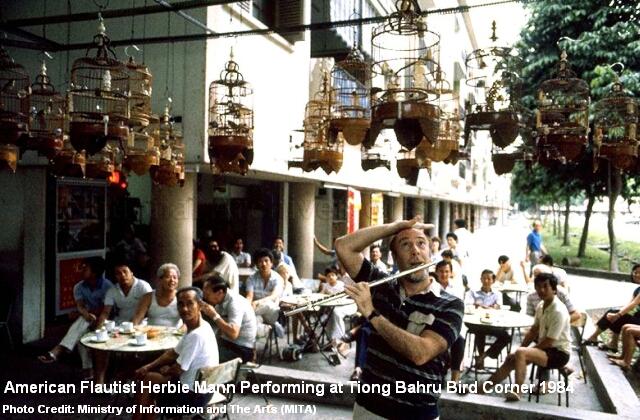
Perhaps the most famous bird singing corner in Singapore was the one at Tiong Bahru Block 53. The bird singing corner, dubbed as “Singapore’s most famous Sunday bird singing concert“, was located beside a kopitiam named Wah Heng, a favourite meeting place for bird enthusiasts between the early seventies till its closure in the nineties. The popular spot was said to have started off in the mid-fifties as a gathering venue for a small group of bird lovers. Over the years, the group grew bigger as others joined in.

tiong-bahru-bird-singing-corner-block-53-1980s

In the mid-eighties, during the Sundays, the number of bird lovers outside the coffeeshop could be as high as 300, made up of mostly men, old and young, and among them were contractors, businessmen, technicians and retirees. Some of the bird lovers even came all the way from Ang Mo Kio and Jurong.

tiong-bahru-bird-singing-corner-1980s

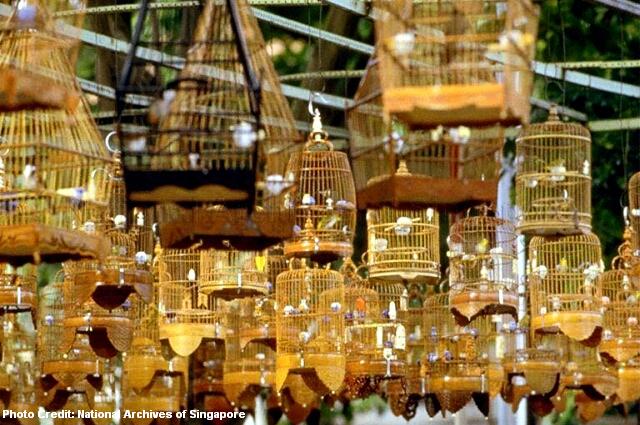
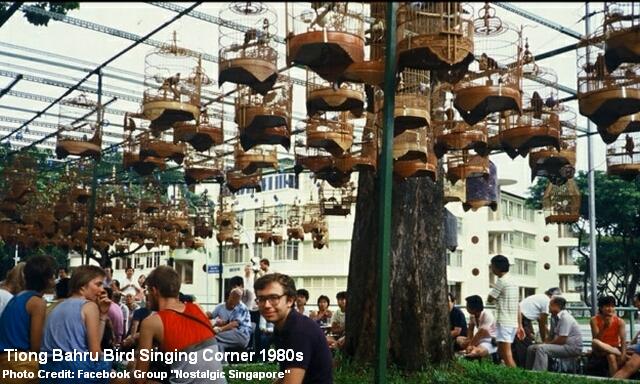
Hundreds of bird cages could be seen suspended from a metal trellis. It was put up by the kopitiam owner Teah Lam Kuan, who saw his business grew tremendously in the eighties. Such was the high popularity of the Tiong Bahru bird singing corner that it was promoted by STPB as a tourist attraction, and was regularly featured in foreign newspapers and magazines.

The news spread fast and many curious tourists and foreigners could be seen visiting the place and snapping photos of the crowds and bird cages. Renowned American flautist Herbie Mann (1930-2003) paid a visit to the Tiong Bahru bird singing corner in 1984 to perform “against” the songbirds, while Dutch journalist Guus van Bladel joined the folks at the Tiong Bahru kopitiam to write about the interesting hobby for his Dutch newspapers.

herbie-mann-tiong-bahru-bird-singing-corner-1984

During the 1986 Christmas Day, KLM, the Dutch airlines, even organised a bird-singing competition at the bird singing corner, sponsoring many flight tickets as top prizes. It also paid for the hooks and number tags used for the hanging of the bird cages at the corner.

The Singapore Improvement Trust (SIT) flat of Block 53 was later converted into a hotel, while the bird singing corner was renovated in 1997 by the Tanjong Pagar-West Coast Town Council in a $60,000 upgrading project. In 2008, a bird singing competition was held at the newly reopened Tiong Bahru bird corner, but the hype and buzz seen in the older days could no longer be duplicated.
Bird singing hobby is still very much alive in Singapore today, although its most spectacular moments were arguably between the seventies and nineties.
yishun-hdb-flat-void-deck-bird-singing-corner

Published: 29 September 2016

Posted in Cultural, Nostalgic | Tagged , , , , , , , , , , , , , , , , , , | 6 Comments

Singapore’s Street of Religious Harmony (Part 1) – Telok Ayer Street

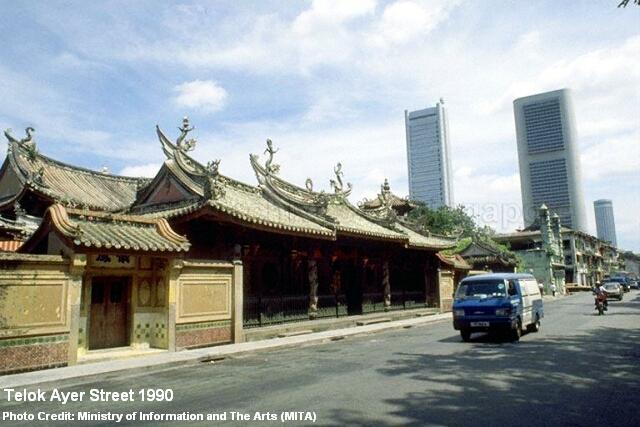
Telok Ayer Street is truly Singapore’s representative street of religious harmony. Several major places of worship – a mosque, Indian Muslim shrine, Chinese temple and church – have made this street, a short 350m-long stretch between Boon Tat Street and Cecil Street, their home for more than a century.

All the four religious buildings – Al-Abrar Mosque, Nagore Dargah Indian Muslim Heritage Centre (formerly the Nagore Dargah shrine), Thian Hock Keng Temple and the Telok Ayer Chinese Methodist Church – have been gazetted as Singapore’s national monuments. In addition to the Telok Ayer’s conservation list are the Ying Fo Fui Kun Building and Singapore Yu Huang Gong Temple.

telok-ayer-street-2016

Telok Ayer Street

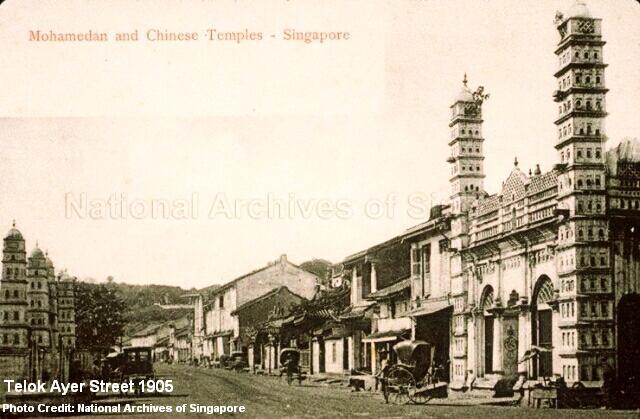
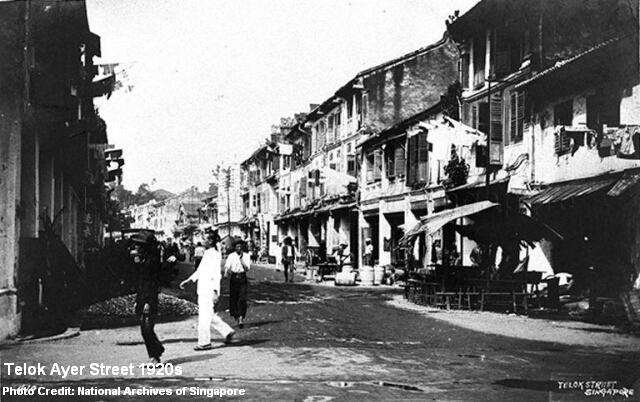
In Malay, telok means bay and ayer is water, referring to the seafront where Telok Ayer Street once ran past. It was one of the earliest streets in Singapore, and it took the form of a road as early as 1836. The Telok Ayer vicinity was designated as a Chinese district by Sir Stamford Raffles in the 1820s and its seafront and docking bay had served as one of the earliest landing sites for Chinese immigrants, especially the Hokkiens from the Fujian province of Qing China.

With their arrivals at Singapore in waves, the Chinese immigrants soon formed the largest community at Telok Ayer. Chinese religious buildings and clan associations popped up rapidly. During Chinese festivals, Telok Ayer Street would be adorned with colourful banners and flags, where thousands of spectators crowded along the street to watch the interesting performances by the Chinese processions, acrobats, and marching bands.

telok-ayer-street-shophouses1-2016

telok-ayer-street-shophouses2-2016

The street in the 19th century was shared by the Chinese, Indian and Muslim immigrants. The Indian immigrants would work as milk traders – many could be seen walking along the street with buckets of milk slung across their shoulders – or labourers at the harbours, loading and unloading cargo from the merchant ships docked at the Telok Ayer Basin.

By the late 19th century, Telok Ayer became a commercial and trading centre. But the issues of pollution and overcrowding bothered the street. In 1891, a large fire destroyed many shophouses and other properties. The merchants began to move out of Telok Ayer for other suitable trading places along the Singapore River, resulting in the declining importance of the street.

telok-ayer-street-shophouses3-2016

In the mid-19th century, Indian convicts were roped in for the land reclamation from the Singapore River mouth to Telok Ayer. By the early 1900s, the area known as Shenton Way today was formed. Telok Ayer Street no longer faced the waterfront; the coastline was shifted several hundreds of metres away.

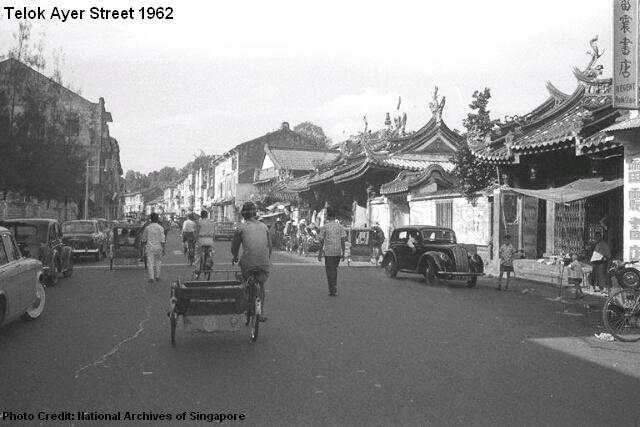
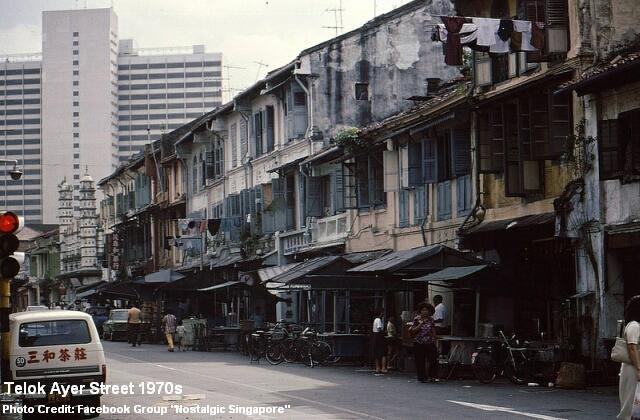
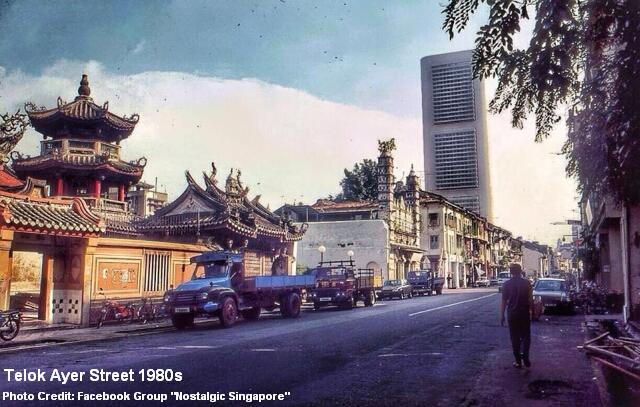
Today, rows of refurbished pre-war shophouses line up along both sides of the street, witnessing the tremendous changes of Telok Ayer in the past 150 years.

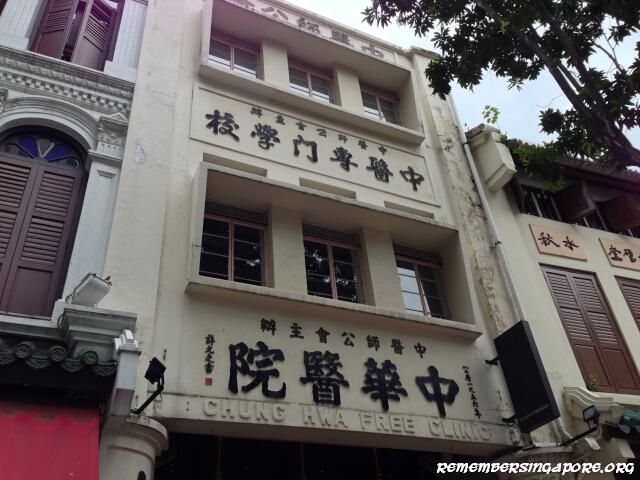
chung-hwa-free-clinich-telok-ayer-street

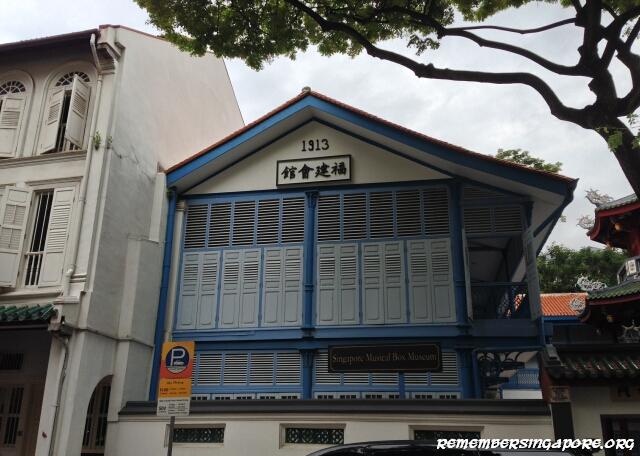
hokkien-huay-kuan-telok-ayer-street

Al-Abrar Mosque

al-abrar-mosque-telok-ayer-street

al-abrar-mosque-telok-ayer-street2

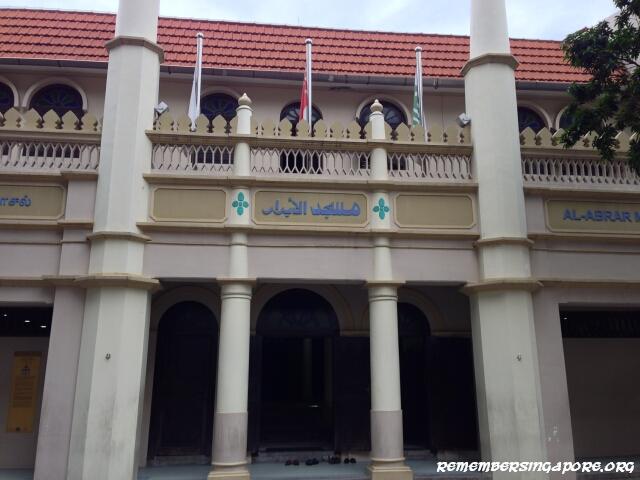
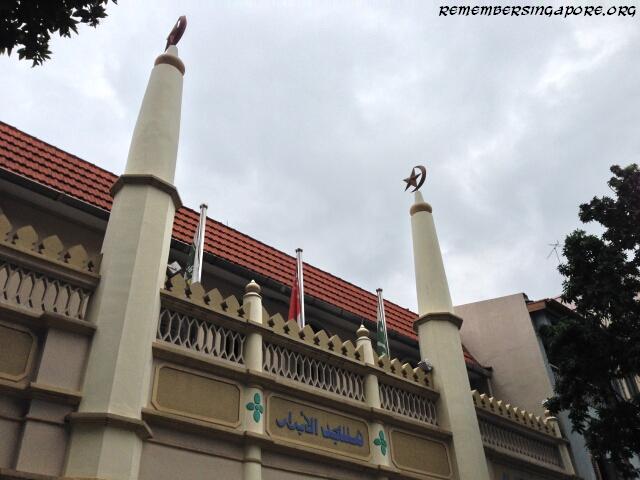
The Al-Abrar Mosque, also known as Masjid Chulia, had its roots all the way back to 1827, when it began in a simple hut. In the 1850s, the mosque was upgraded to a brick building to serve as the primary place of worship for the South India’s Tamil Muslims who worked and lived around the Singapore River area.

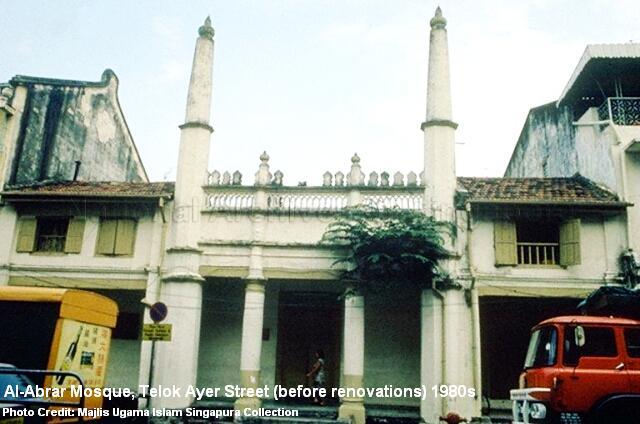
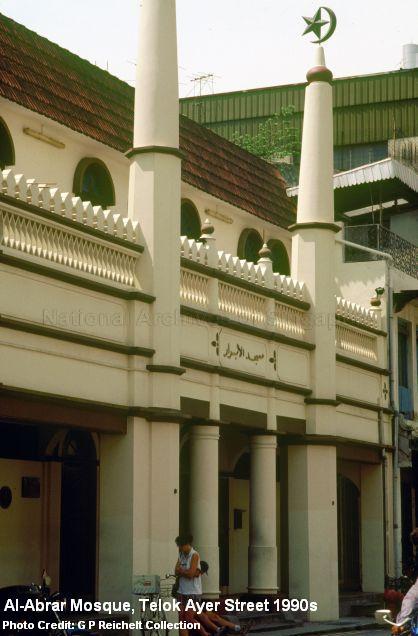
The architectural setting of Al-Abrar Mosque blends easily into the facades of the shophouses at Telok Ayer Street. The Indo-Islamic architectural styled mosque faces the direction towards Mecca, but like other shophouses, it also has a five-foot way. A second storey, jack roof, prayer room and an upper gallery were added to the mosque building in a $1-million renovation project in the late eighties, but the mosque’s most iconic features belong to its twin octagonal minarets, each topped with a crescent and star.

The Al-Abrar Mosque was gazetted as a national monument on 19 November 1974. Today, the mosque premises can accommodate up to 800 worshippers, many of them working in the offices nearby.

al-abrar-mosque-telok-ayer-street-1980s

al-abrar-mosque-telok-ayer-street-1990s

Nagore Dargah Indian Muslim Heritage Centre (former Nagore Dargah Shrine)

nagore-dargah-shrine-telok-ayer-street2

nagore-dargah-shrine-telok-ayer-street1

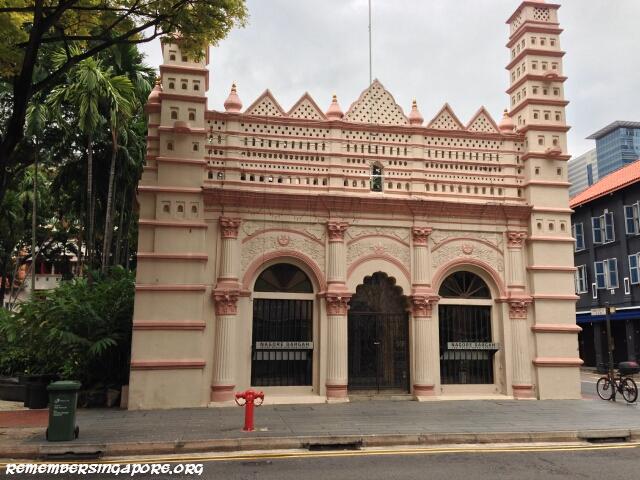
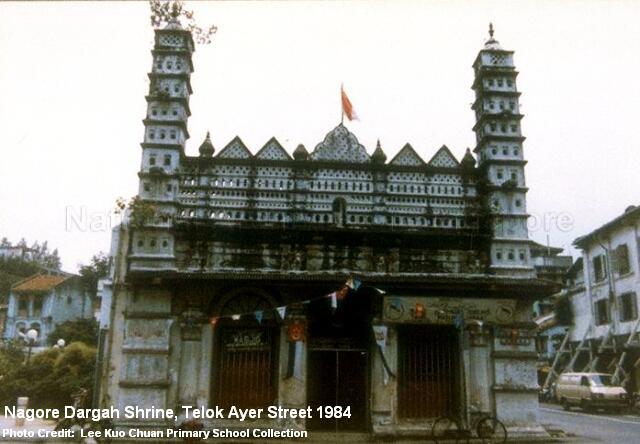
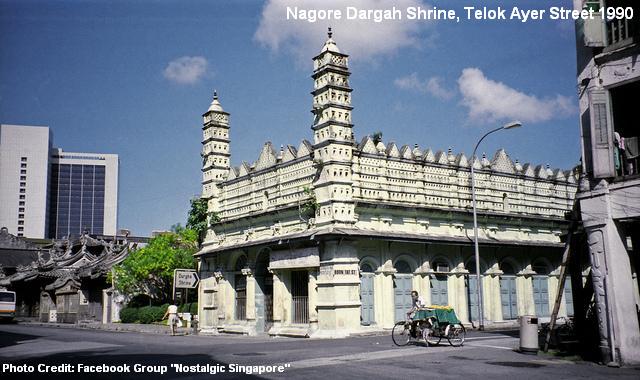
Completed in 1830, Nagore Dargah is a memorial or cenotaph, in the shape of an Indian Muslim shrine, built by the Chulias from South India. The shrine commemorates Sayyid ‘Abdul Qadir Shahul Hamid (1490-1557 or 1579), a South Indian saint and Islamic preacher who was widely respected for his propriety and holiness.

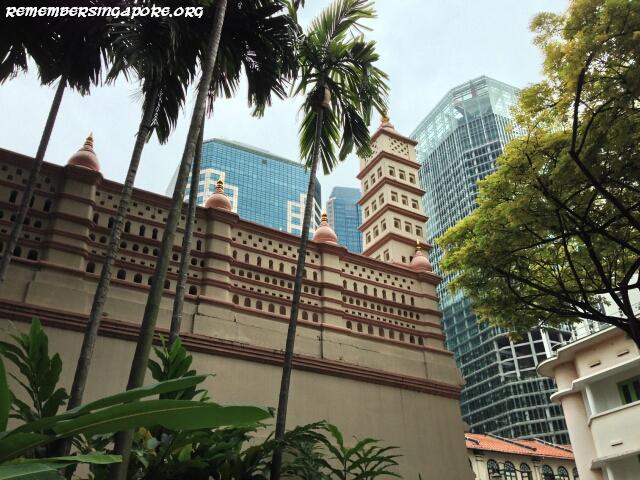
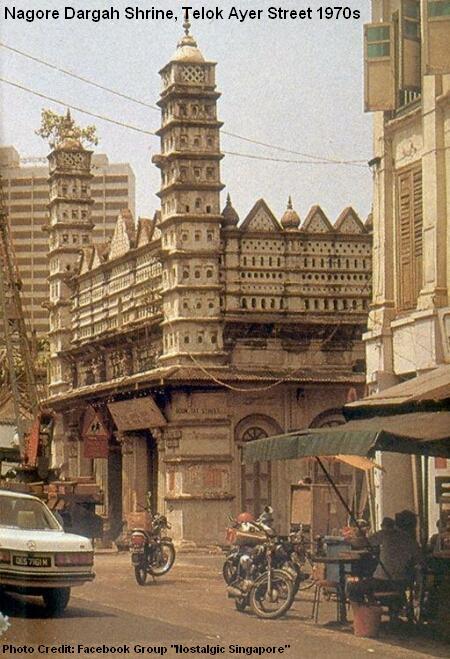
Initially known as Shahul Hamid Dargah, the limestone building was designed and built as a replica of the original shrine in India. Like Al-Abrar Mosque, Nagore Dargah Shrine was gazetted as a national monument on 19 November 1974, and underwent major restoration works in 2007. The shrine’s most eye-catching features – its four corner minaret towers topped with small domes – were carefully restored and touched up.

Officially reopened in 2011, the shrine was converted into an Indian Muslim heritage centre that has galleries and exhibitions showcasing the pioneers of the Indian Muslim community in Singapore.

nagore-dargah-shrine-telok-ayer-street-1970s

nagore-dargah-shrine-telok-ayer-street-1984

nagore-dargah-shrine-telok-ayer-street-1991

Thian Hock Keng Temple

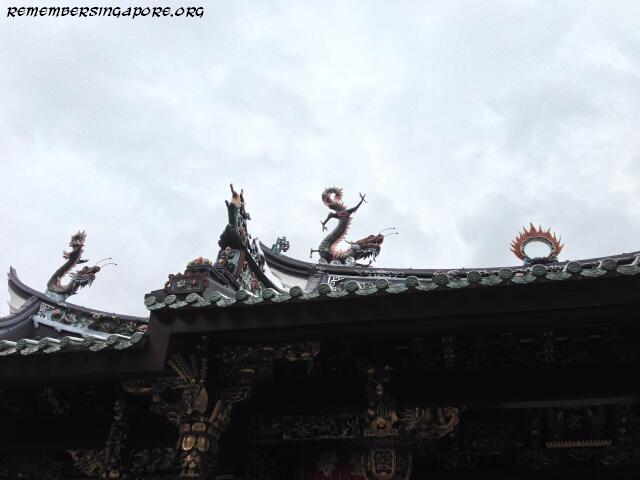
thian-hock-keng-temple-telok-ayer-street1

thian-hock-keng-temple-telok-ayer-street2

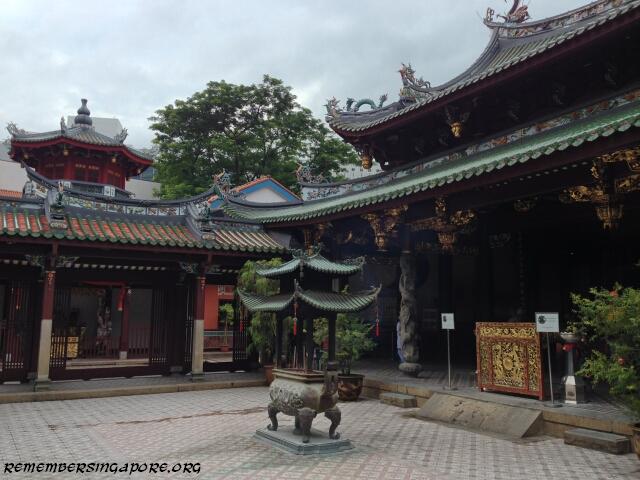
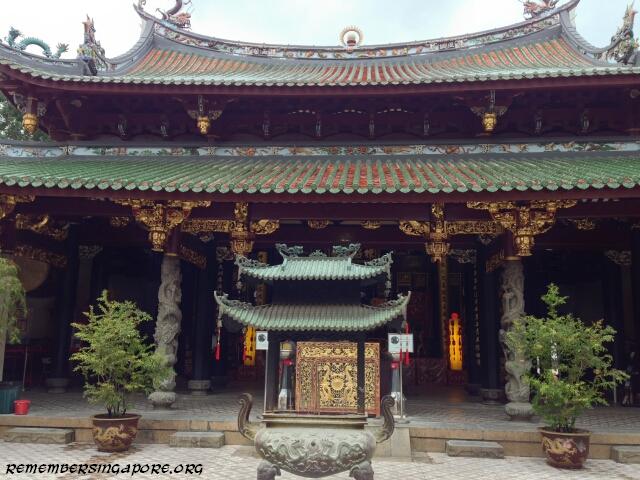
Thian Hock Keng, whose name means “palace of heavenly happiness” in Hokkien, first existed in the early 1820s as a small temple located at the seaside of Telok Ayer Basin. It was dedicated to Mazu, the sea goddess believed by its devotees who would give blessings and protection to the seafarers.

In 1842, with the generous funding from various local Chinese businessmen such as Tan Tock Seng (1798-1850), a larger and much more elaborated Thian Hock Keng was built. Costing almost $30,000 (in Spanish silver dollars), the temple was completed with all building materials and skilled craftsmen imported from China. It was said that not a single nail was used in the construction of the temple.

thian-hock-keng-temple-telok-ayer-street3

Thian Hock Keng was later added a Chung Wen Pagoda, Chong Boon Gate and Chong Hock Pavilion. In 1907, the temple received its recognition from the Qing Empire when Emperor Guangxu (1871-1908) bestowed on it an imperial scroll with the words “Bo Jing Nan Ming” (波靖南溟, “The waves are calm in the South Seas” in Chinese).

Thian Hock Keng was also home to the Singapore Hokkien Huay Kuan (clan association), founded in 1840 to provide assistance such as accommodation, jobs and burial services to the early immigrants. On 28 June 1973, Thian Hock Keng was added to the national monument list, while major restoration works were carried out at the temple premises in the late nineties.

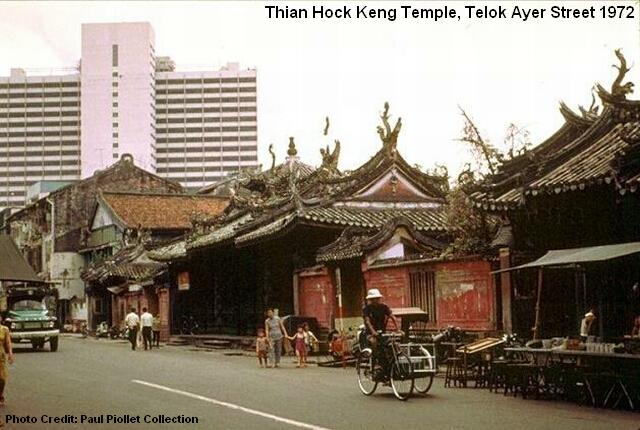
thian-hock-keng-temple-telok-ayer-street-1972

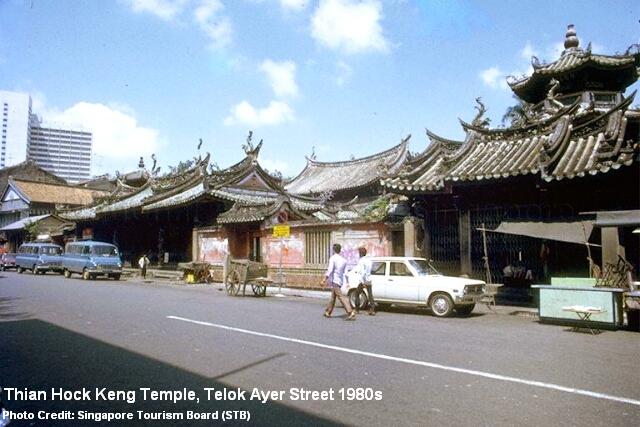
thian-hock-keng-temple-telok-ayer-street-1980s

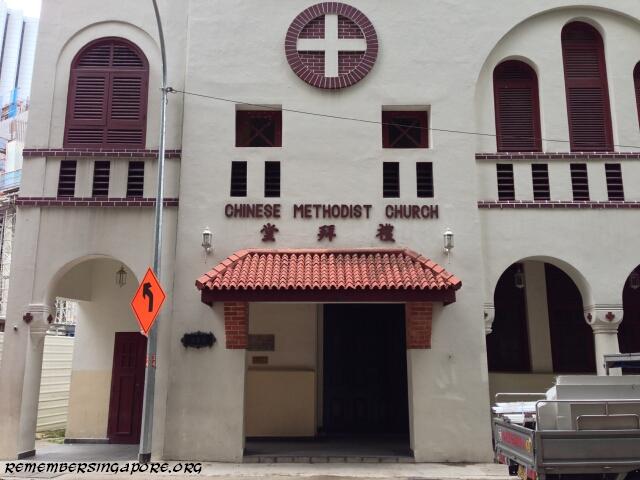
Telok Ayer Chinese Methodist Church

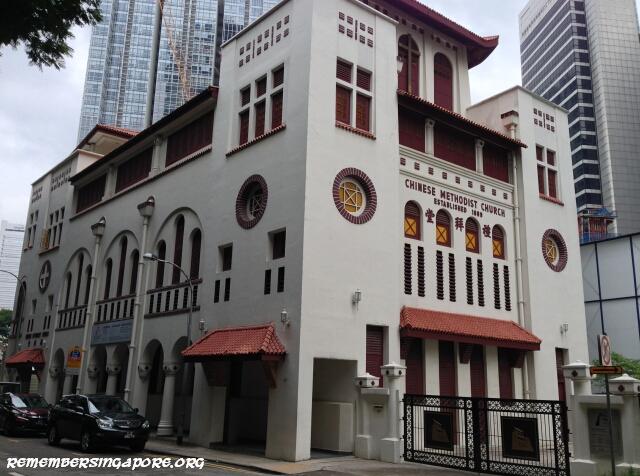
chinese-methodist-church-telok-ayer-street1

chinese-methodist-church-telok-ayer-street2

The Telok Ayer Chinese Methodist Church joined other religious places of worship at Telok Ayer Street in 1925. The church, however, was established much earlier in 1889. Founded by Benjamin Franklin West, a doctor and missionary, in a rented old shophouse at Upper Nanking Road, the church reached out to the Chinese immigrants, especially the opium addicts, with sermons and services in Hokkien. Hence, in its early days, it was known as the Hokkien Church.

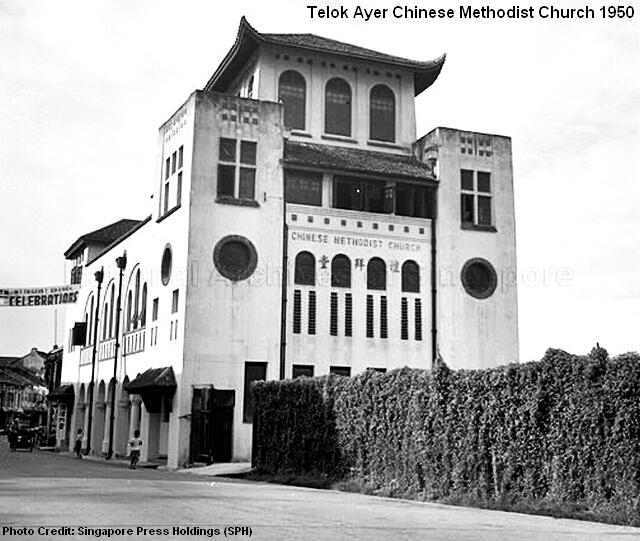
The church expanded in the late 19th and early 20th century, accepting members of different dialect groups. With its increasing number of followers, the church had to look for larger premises. Therefore, it was relocated several times to Boon Tat Street, Neil Road and eventually its current location at the junction of Telok Ayer Street and Cecil Street, where it bought the land for $3,600. The Chinese Methodist Church at Telok Ayer started as a tent and zinc hut, before they were replaced by the current building, designed with a unique mixture of European and Chinese styles.

chinese-methodist-church-telok-ayer-street3

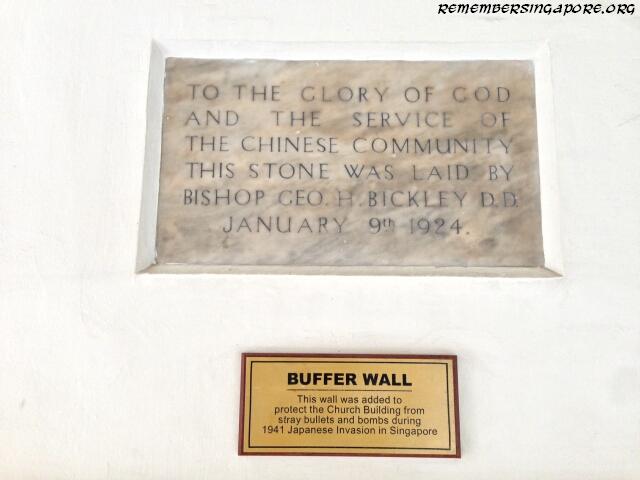
During the Second World War, a buffer wall was added to the church building as a protection against stray bullets and bombs. As many as 300 Chinese took refuge in the church, and members were encouraged to attend the Sunday services during the harsh and difficult Japanese Occupation.

On 23 March 1989, the Telok Ayer Chinese Methodist Church, on its 100-year anniversary, was preserved as one of Singapore’s national monuments. Today, it is the oldest Chinese-speaking Methodist church in Singapore.

telok-ayer-chinese-methodist-church-1950

Telok Ayer Street in the Past Century

telok-ayer-street-1905

telok-ayer-street-1920s

telok-ayer-street-1962

telok-ayer-street-1970s

telok-ayer-street-1980s

telok-ayer-street-1990

Also read Singapore’s Street of Religious Harmony (Part II) – Waterloo Street.

Published: 14 September 2016

Updated: 25 November 2017

Posted in Cultural, General, Religious | Tagged , , , , , , , , , | 5 Comments

The Old World Charm of Mountbatten

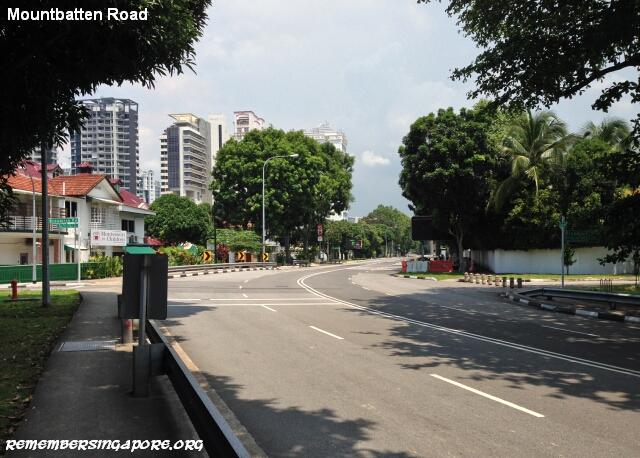
Mountbatten Road today is a 4.5km-long road, connecting to Geylang Road on one end and linking to East Coast Road on the other, where there is a good mixture of quality bungalows and high-end apartments. New houses have been popping up in this old residential district in recent years, but the old laidback charm and elegance of Mountbatten is still very much alive.

mountbatten road 2016

In the past, Mountbatten Road was known as Grove Road. It was later named after Lord Louis Mountbatten (1900-1979), who was the Earl Mountbatten of Burma, last Viceroy of India and also Southeast Asia’s Supreme Allied Commander during the Second World War. In September 1945, Lord Mountbatten was in Singapore to witness the surrender of the Japanese Forces at the Municipal Building. Grove Road was renamed in his honour a year later.

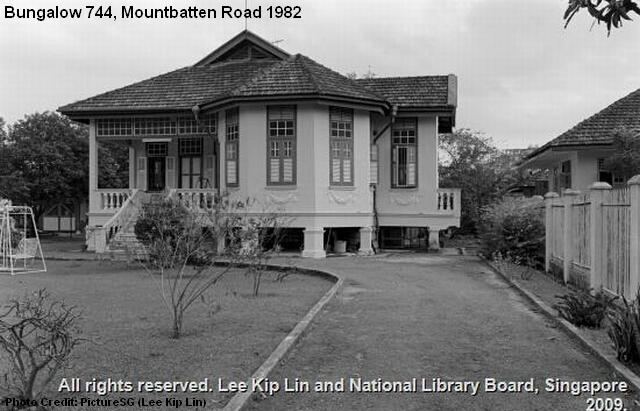
In the late 19th century, the area between Grove Road and the original shoreline, before the land reclamation, was a huge plantation known as the Grove Estate, where its western boundary was Sungei Geylang (also known formerly as Sungei Gaylang or Gaylang River). Its eastern side was the Confederate Estate (Confederate Estate Road is present-day Joo Chiat Road), with Tanjong Katong Road as the divider. Due to its low-lying grounds, Grove Estate was extremely prone to floods, and bunds had to be erected to protect against the overflowing Sungei Geylang during high tides.

bungalow 744 mountbatten road 1982

Thomas Dunman (1814-1887), Singapore’s first Superintendent and Commissioner of Police, was the then-owner of Grove Estate. After his retirement from the Straits Settlements Police Force in 1871, Thomas Dunman began cultivating Grove Estate. He died in 1887, and his son William Dunman (1857-1933) took over the assets. William Dunman would go on to expand the estate by hiring coolies to plant thousands of coconut trees, rubber trees and lemon grasses.

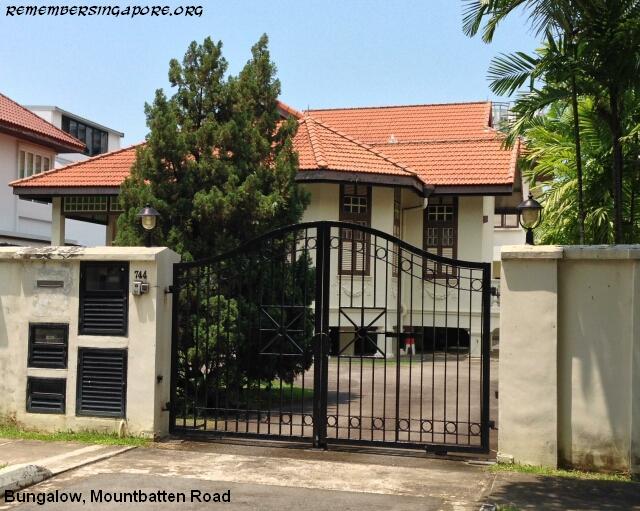
mountbatten road bungalows1

In the late 19th and early 20th century, William Dunman’s properties took a hit when the rubber trees at Grove Estate were destroyed by floods and the coconut trees overran by the infestation of red beetles. It almost bankrupted him, but fortunately for him, the rubber boom years in the 1920s made William Dunman a very wealthy man again.

In the early 1920s, as more Europeans entered Singapore, accommodation became an issue for the colonial Housing Commissions. The city area was getting congested and new blocks of flats at Coleman Street, North Bridge Road and Orchard Road were not getting constructed fast enough to meet the demands.

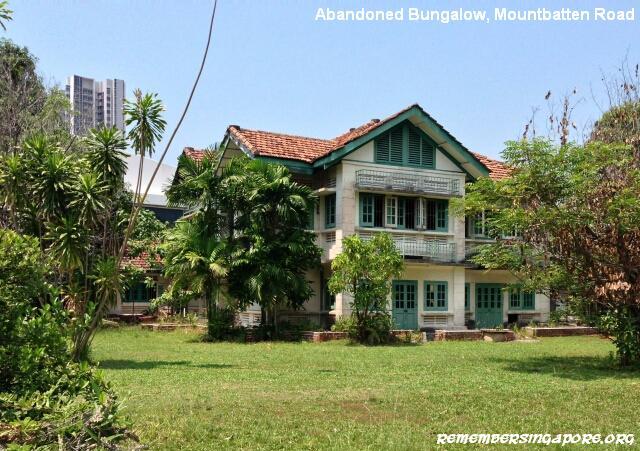
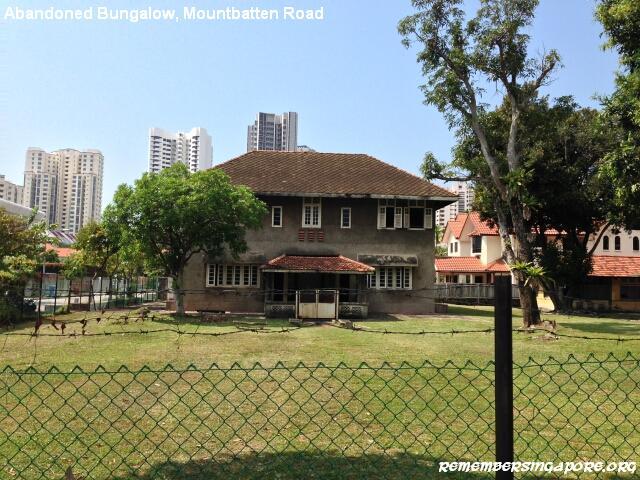
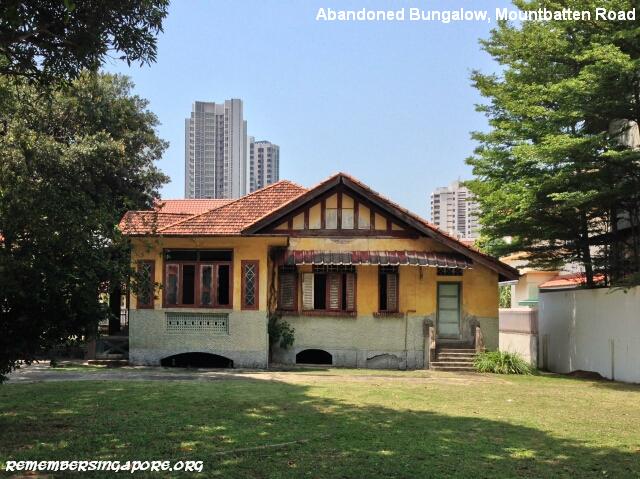
mountbatten road abandoned bungalow1

mountbatten road abandoned bungalow2

mountbatten road abandoned bungalow3

Grove Estate was proposed as an alternative, as it was only an hour’s trip from the city. William Dunman had already built numerous bungalows in his estate – he himself lived in a $2,000-bungalow by the lake –  and these housings were deemed suitable for those junior married Europeans and bachelors. Moreover, William Dunman had an electricity plant and a brick factory to supply the construction materials if there was a need to built a large number of similar bungalows.

By the late 1920s, William “Old Billy” Dunman began selling off his Grove Estate, and moved to Cameron Highlands for retirement. He died at an age of 77 in Batu Gajah, Perak, after suffering from a fever in 1933.

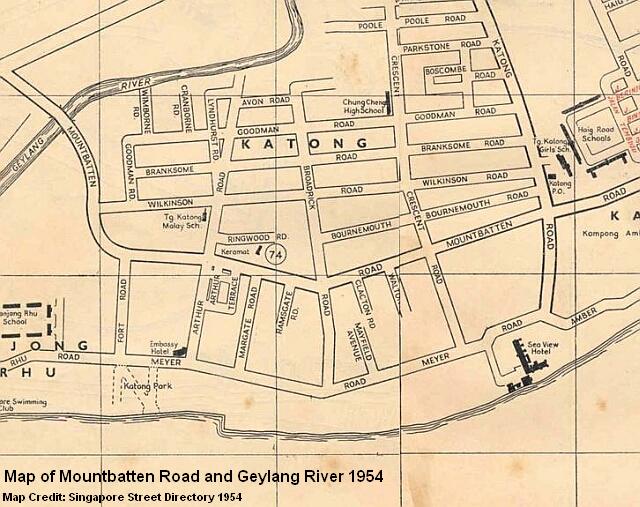
map of mountbatten road 1954

One of the most prominent families at Mountbatten and Tanjong Katong in the early 20th century was the Lee family, who owned several grand residences in the vicinity. Wealthy Peranakan merchant Lee Cheng Yan (1841-1911) built the famous Mandalay Villa at Amber Road, which was later passed to his son Lee Choon Guan (1868-1924), also a successful businessman himself.

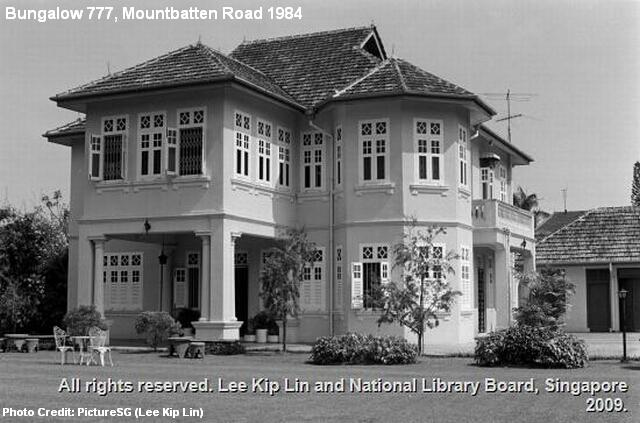
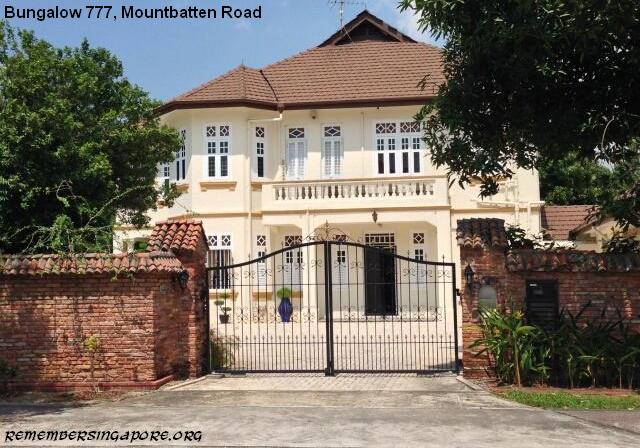
The Lee family used to throw lavish parties at the villa, inviting distinguished guests such as the Governor of Singapore and Sultan of Johore. Another grand residence, Bungalow 777 situated at the junction of Mountbatten and Crescent Roads, was owned by Lee Cheng Yan’s grandson Lee Pang Chuan.

mountbatten road bungalow 777 1984

mountbatten road bungalow 777

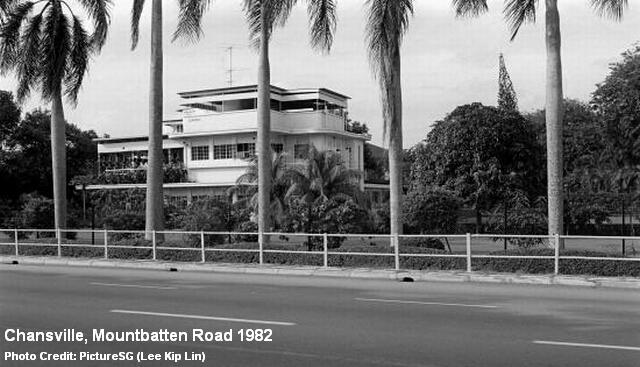
Another well-known family at Mountbatten was the Chan family, who had lived in a double-storey Early Modern-style bungalow at 745 Mountbatten Road between the 1940s and 2000s.

It was owned by Dr Chan Ah Kow (1912-1996), a local swimming coach who had trained his children to become some of the best swimmers in Singapore in the sixties and seventies, including Patricia Chan, a multi-gold medalist at the Southeast Asian Games. The bungalow, dubbed as Chansville, was sold to SC Global in 2004 and was redeveloped as part of a luxurious residential project called the Five Legends of Mountbatten.

chansville mountbatten road 1982

On 23 July 1993, the Urban Redevelopment Authority (URA) designated the Mountbatten Road Conservation Area, giving conservation status to a total of 15 bungalows with significant histories. Most of the old bungalows have since been restored and refurbished. Some, after bought over by new owners, are given new leases of life with the addition of modern swimming pools, garages or extended buildings.

One example is Bungalow 733, which was built as early as 1927. An outhouse was added to the single-storey Early Style bungalow in 1955. When the new owner took over in 1999, the house’s original roof, staircases, floor tiles, timber partitions and windows were retained or carefully restored.

mountbatten road bungalow 733

One of the bungalows in the vicinity has been functioning as a hotel since the end of the Second World War. Located at 759 Mountbatten Road, the two-storey hotel named Sing Hoe (formerly Sin Hoe) Hotel was owned in the fifties by Ong Tiow Kian, a Chinese hotel-keeper.

sin hoe hotel mountbatten road 2006

sing hoe hotel at mountbatten road

Sing Hoe Hotel was not the first hotel at the Mountbatten/Tanjong Katong district. The Grove Hotel had first started operating at Tanjong Katong in 1903. Named after Grove Estate, the hotel, housed in a two-storey bungalow at the sea front, was unlike any other early hotels built during the hotel boom years in the early 20th century.

While most hotels were built in the developed city area of Singapore, Grove Hotel was settled at the “countryside” of Mountbatten and Tanjong Katong, where it had horse-drawn carriages and sampans to ferry its guests between the city and the hotel. At the Grove Hotel, visitors and guests were treated to a different experience in exotic beaches, picnics and hiking.

grove hotel early 20th century

Grove Hotel, however, operated only a few years before it became part of the old Sea View Hotel in 1909. The old Sea View Hotel was first owned by Sir Reuben Manasseh Meyer (1846-1930), a wealthy local Jewish businessman, municipal commissioner and philanthropist. Like Grove Hotel, it was also housed in a large colonial bungalow situated by the sea.

When the hotel was leased to the Armenian brothers of the Sarkies family in 1923, it went through a series of elaborated renovations. By the 1930s, the old Sea View Hotel became a prestigious hotel equipped with modern bathrooms, tennis courts, a grand ballroom, swimming pool, golf course and other luxurious facilities. In fact, it was rated, along with Adelphi Hotel and Raffles Hotel, as Singapore’s top three hotels.

sea view hotel3 1930s

The Sarkies was a famous family who had owned many high-end hotels in Southeast Asia in the late 19th and early 20th century. The four brothers (Martin, Tigran, Aviet and Arshak Sarkies) and their cousin (Arathoon Sarkies), at one period, were the owners of Singapore’s top Raffles, Adelphi and Sea View Hotels.

Other than hotels, some Mountbatten Road’s old bungalows are converted into pre-school centres, such as the Brighton Montessori pre-school centre. Brighton is the name of an English seaside town; in the old days, Tanjong Katong, with its seaside location and idyllic surroundings, was fondly known as the “Brighton” of Singapore.

mountbatten road brighton montessori preschool

montessori for children mountbatten road

The old bungalows at Mountbatten Road came in different designs and styles. The most common and popular architectural styles belong to those of Colonial, Victorian, Art Deco and Early Modern. Owned by the wealthy and elite class, they used to have a fanciful nickname called the “millionaires’ bungalows”.

Some of the most unique and beautiful bungalows at Mountbatten Road are the single-storey ones with their eye-catching conical roofs. Built in the late 1920s, only a couple are left to be conserved. The houses, beside their iconic roofs, also come with detailed verandahs, balustrades, staircases and stilts that allow under-floor ventilation. It is a well-designed feature that has proven to be effective in the hot and humid climate of Singapore.

mountbatten road old bungalow 781 2007

mountbatten road bungalows2

Published: 06 September 2016

Posted in General, Historic | Tagged , , , , , , , , , , , , , , , , , , , , , , | 12 Comments

S.R. Nathan (1924-2016) – President, Diplomat, Crisis Leader

At his lowest point in life, he almost could not survive out there in the streets. Yet in the later part of his life, he would go on to become Singapore’s sixth and longest-serving President (2011). It was a colourful and amazing life story of ups and downs, and the story belonged to a man called Sellapan Ramanathan (S.R.) Nathan, who was born in Singapore in 1924 to a Tamil Indian family.

sr nathan family late 1920s

During his childhood, Nathan’s family was relocated to Muar, Johor, where his father worked as a clerk in a rubber plantation. The world economy and rubber prices, however, collapsed in the early 1930s, and with his father out of job, Nathan’s family was thrown into a crisis. The family tragedy struck when Nathan was only eight; his father had committed suicide after a series of difficulties in finding new jobs.

By then, Nathan and his family had moved back to Singapore. Under his uncle’s care, Nathan had his studies at Anglo-Chinese School and Victoria School. But in an incident where he was accused of stealing his classmate’s books, a 16-year-old Nathan was forced to leave school. Unable to face his family, he decided to run away from home. To survive, Nathan took up several odd jobs and also worked as an office boy.

sr nathan and lieutenant kokubu japanese occupationIt was the early 1940s, and the impacts and horrors of the Second World War had reached Singapore. During the Japanese Occupation (1942-1945), Nathan, in a twist of fate, managed to master the Japanese language with the help of an English-Japanese dictionary. At age 18, he started working as an interpreter and translator to a high-ranking officer in the Japanese civilian police.
After the war, Nathan went to work as a clerk at the Public Works Department (PWD). In the early fifties, he pursued his studies and was enrolled at the University of Malaya, graduating with a diploma in 1954.

sr nathan received public service star 1964After graduation, S.R. Nathan began his 40-plus-year career at the civil service, until the late nineties, taking on numerous roles at the Marine Department, Labour Research Unit, Ministry of Foreign Affairs and Ministry of Defence.
In the eighties, Nathan also chaired the Hindu Advisory Board, Hindu Endowments Board and Singapore Press Holdings (SPH), and was the director of the Singapore National Oil Company, Singapore Mint and Times Press Foundation.

S.R. Nathan’s arguably highest-profile accomplishment was the handling of the Laju hijacking incident. On 31 January 1974, four terrorists from the Japanese Red Army and Popular Front for the Liberation of Palestine, after failing to blow up the oil refinery on Pulau Bukom, hijacked a ferry named Laju. Five crew members on the ferry were held hostages.

Serving as the director of the Security and Intelligence Division (SID), Nathan led a team, made up of Internal Security Department (ISD) director Yoong Siew Wah, Marine Police Deputy Superintendent Tee Tua Bah, several government officials and Singapore Armed Forces (SAF) commandos, to negotiate with the armed hijackers. After more than a week of intense negotiations, the hijackers accepted the offer of a safe passage to Kuwait.

sr nathan laju hijacking incident 1974

In exchange for the release of the hostages, a team of guarantors, including Nathan himself, would be required to accompany the hijackers and hostages throughout the flight. The incident was successfully resolved on 08 February 1974 when the team of guarantors returned to Singapore unharmed.

S.R. Nathan demonstrated his firm diplomatic skills when he was appointed as the High Commissioner to Malaysia and Ambassador to the United States in 1988 and 1990 respectively. During his times as the high commissioner, Nathan had to tackle escalating bilateral issues such as the Malayan railway land in Singapore, Pedra Branca dispute and the visit of Singapore by Israeli president Chaim Herzog.

The Michael Fay case in 1994 was another test for Nathan. Singapore’s decision to convict and cane the teenager for vandalism caused an uproar among the American public. As the ambassador, Nathan had to deal with the immense pressure from the United States government and backlash from the Americans.

sr nathan high commissioner to malaysia 1988

In 1999, S.R. Nathan ran for the candidacy of the presidential post. Being the only eligible candidate, he successfully became Singapore’s sixth President and was sworn into office on the first of September. Nathan would be again re-elected without contest in 2005, bringing his total tenure as the President of Singapore to 12 years.

In 2000, with a vision to build a more caring and cohesive society, Nathan initiated the consolidation of several charity projects into one annual event called the President’s Challenge. Since then, the Challenge has raised, through various fundraising and charity drives, more than $100 million for over 500 beneficiaries. S.R. Nathan stepped down as Singapore’s President in 2011, and was conferred Darjah Utama Temasek (Order of Temasek) First Class, the nation’s highest award, in 2013.

sr nathan sworn into office singapore president 1999

In recent years, some had expressed doubts in Nathan’s contributions to the nation, given that the President of Singapore, at more than $3 million a year, is one of the highest-paid leaders in the world. Other less favourable critics included Nathan’s passive custodial role, regarding the nation’s reserves and assets, when compared to his predecessor Ong Teng Cheong (1936-2002). Nathan, however, did his part as the key guardian of the national reserves in 2009, approving a $4.9-billion withdrawal from the past reserves to deal with Singapore’s worst recession since independence.

Despite the controversial opinions, S.R. Nathan’s contributions to Singapore and the public service should not be denied. In July 2016, S.R. Nathan was taken to the Singapore General Hospital (SGH) after suffering a stroke. He passed away on 22 August 2016, at an age of 92, leaving behind his wife, a daughter and son, and three grandchildren.

sr nathan 1924-2016

Published: 25 August 2016

Posted in General | Tagged , , , , , , , , , , , , , , , , , , , | Leave a comment