The Forgotten Legacy of Chui Eng Free School

Located at Amoy Street, Chui Eng Free School (萃英书院) was established by the Hokkien Huay Kuan in 1854 with endowment from Tan Kim Seng (陈金声, 1805-1864), a wealthy Peranakan businessman and philanthropist who had donated generously to the education causes and public water works in Singapore in the mid-19th century.

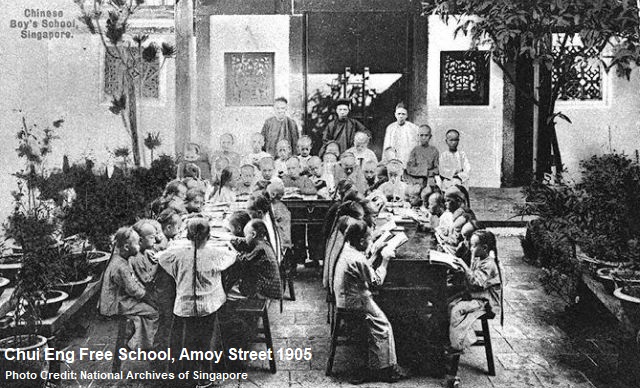
Chui Eng Free School, also known as the Chinese Free School, provided free education to the boys of the local Hokkien community. Its name means “gathering of talents”; the school hoped to nurture young children into brilliant and skilled individuals. Three stones on its walls bore the inscriptions of the school’s objectives: “to enable the children of both the rich and the poor to receive education so that they can become useful citizens“.

After Raffles’ founding of Singapore in 1819, Chinese immigrants began arriving in large batches. Chinese schools, however, were non-existent. A couple of private Chinese tutoring was reported to have emerged at Chinatown in 1829. One was taught in Cantonese, while the other two were in Hokkien. All three private Chinese tutoring had a total of 50 students.

By the 1840s, Tan Kim Seng led the local Chinese community leaders in establishing the first proper Chinese private school in Singapore. Chong Wen Ge (崇文阁) was set up beside Thian Hock Keng Temple in 1849, providing free education to the underprivileged girls of the Hokkien community. Chong Wen Ge went on to become Chong Hock Girls’ School (崇福女学校) in 1915, before evolving into Chongfu School today.

In the 1850s, Tan Kim Seng again rallied the community in contributing to the setup of another Chinese private school, this time for the boys of the poorer families. He donated $1,710 in purchasing a parcel of site along Amoy Street for the new school. A total of $10,000 was successfully collected, making Chui Eng Free School the second private Chinese school in Singapore. Both Chong Wen Ge and Chui Eng Free School were Singapore’s earliest free educational institutions.

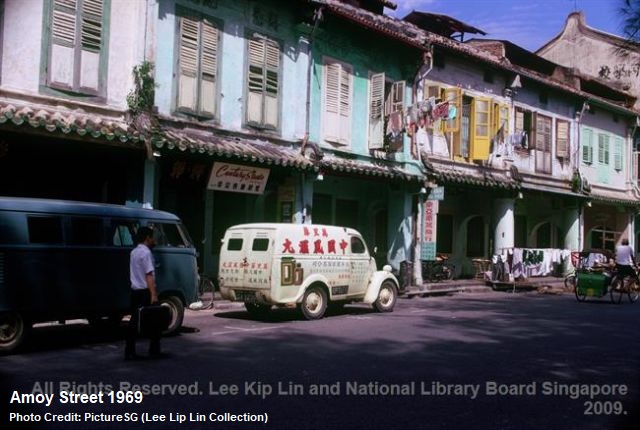
Amoy Street was built in the 1830s. After the school was built, the road became colloquially known as gi oh kau (“义学口” in Hokkien) to the local Chinese. The name literally means the front of the charity school, referring to Chui Eng Free School and its noble cause.

The two private Chinese schools were taught in Hokkien in their early days. Their teaching method largely followed the Qing Dynasty’s education system, where students were taught Chinese Classics such as the Analects of Confucius, Four Books, Book of Filial Piety and U-Ching.

Chui Eng Free School was designed in typical Hokkien architectural style originated from Quanzhou, Fujian. Skilled craftsmen and the construction materials were imported from China to build the school. It had a courtyard, inner hall and swallowtail-ridged roof with terracotta tiles.

It was at the courtyard where the students, sitting at two parallel tables, recited their lessons and homework. A peach tree once stood at the main entrance, symbolising the Chinese idea of successfully educating generations of students (桃李满天下).

Tan Kim Seng’s descendants continued to support the education causes in Singapore. In the 1880s, his grandson rallied the local Chinese community to donate $20,000 to renovate the aging Chui Eng Free School.

Chui Eng Free School continued to provide free education until the Second World War. After the war, due to the inflationary pressures, the school had no alternatives but to start charging its students a monthly fee of $3 to support the daily operational costs. The school had three teachers and 80 students during the fifties.

Despite its persistence, Chui Eng Free School struggled with many issues, such as aging amenities, outdated teaching materials and dwindling number of students. It was eventually closed in 1954, after 100 years of existence.

The school was vacated and soon its building and premises fell into a state of disrepair. The courtyard was illegally used by trespassers for gambling activities and storage of goods. In the early sixties, Hokkien Huay Kuan took over the ownership of the premises. There were suggestions to convert the place into an old folks’ home or funeral parlour, but the plans did not materialise.

The school’s plaque, inscribed with the Chinese name “Chui Eng School”, was removed from the entrance door in the nineties and acquired by a local antique collector. He later donated it to the Overseas Chinese Museum in Xiamen, China. Over the years, the local Chinese community and history enthusiasts have been trying to liaise with the museum for the return of the plaque.

The former Chui Eng Free School welcomed a new lease of life in the nineties when a new mix-use development called Far East Square was put in place to refurbish and rejuvenate the vicinity. In this $190-million development and conservation project, the former school building and 61 old shophouses would be extensively renovated and restored.

Fuk Tak Chi (福德祠), a Chinese temple that was established at Amoy Street in 1824 by the early Hakka and Cantonese immigrants, was also refurbished into a museum today. It is one of the few buildings in Singapore with a history of more than 200 years.

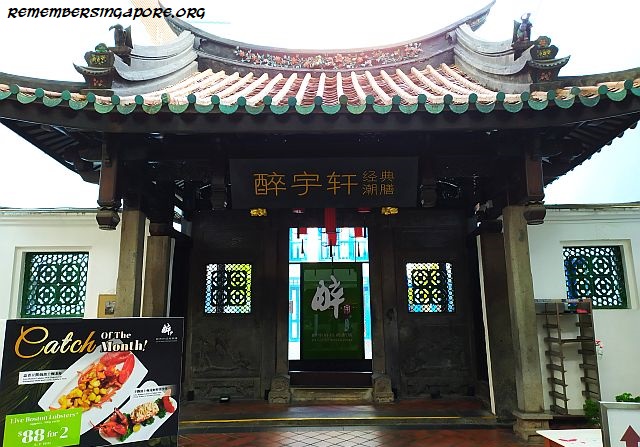
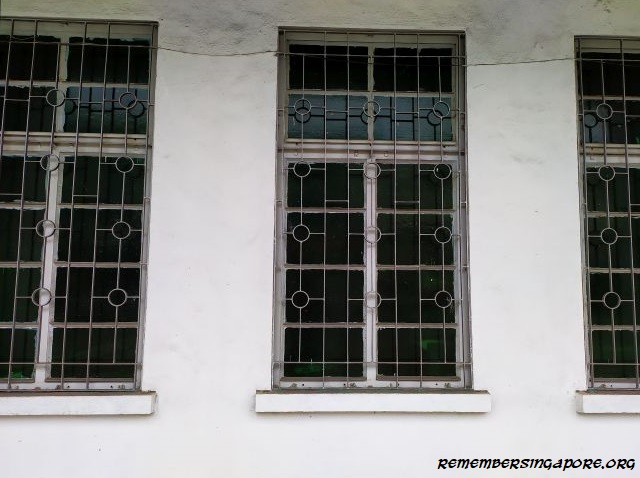
During the restoration in the nineties, only the entrance walls, door and windows of the former Chui Eng Free School were retained. The refurbished premises was designated to be used as a restaurant, although this was initially met with objections by some members of the public.

Far East Square was completed in 1998 and officially opened a year later by then-Singapore President Ong Teng Cheong. After more than two decades, the former Chui Eng Free School remains the façade of a restaurant, but not many still remember its history and legacy.

Published: 26 February 2025

Posted in Nostalgic | Tagged , , , , , , , , , , | 1 Comment

Tanglin Shopping Centre’s 52-Year Legacy at Orchard Road

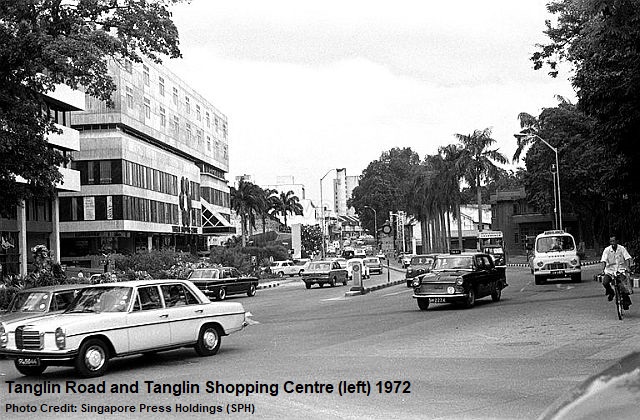
Opened in 1972, Tanglin Shopping Centre was one of Orchard Road’s earliest retail landmarks. Until its closure and demolition in 2024, it had witnessed, for more than half a century, the development and progress of Singapore’s most famous shopping belt.

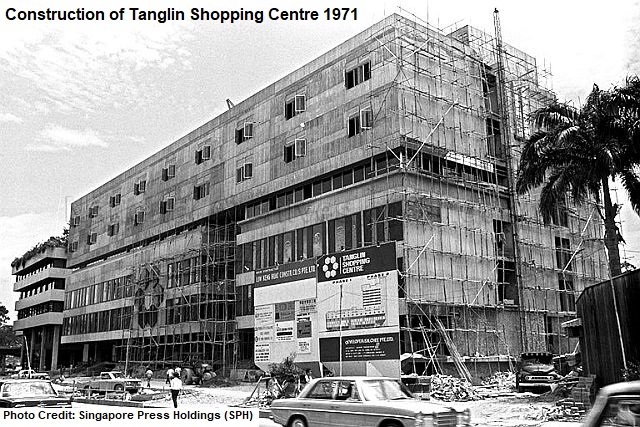
Designed by local architect William Lim, the construction of Tanglin Shopping Centre began in 1969 along the Tanglin Road-Orchard Road stretch, where there were previously a row of shophouses, including one that housed the family of the founder of S.K. Chee Pte Ltd, also the developer of Tanglin Shopping Centre.

The $7.5-million mall was designed to cater for both the tourists and locals. It had seven storeys, made up of 150 shop and office units, and a two-level basement carpark. A display consultant was hired to advise on shop interiors and displays in a bid to improve the new mall’s attractiveness to shoppers.

Tanglin Shopping Centre was part of the rise of many shopping complexes in the early seventies. Other malls that were built at about the same time were Peninsula Shopping Centre, Specialist Shopping Centre, Golden Mile Complex and People’s Park Complex.

Tanglin Shopping Centre had the first “day hospital” in Singapore. The Singapore Medical Centre, with 18 medical practitioners and up-to-date facilities, was established at the fourth and fifth floor of the new mall in late 1971.

Lufthansa German Airlines also relocated its office from Raffles Place to Tanglin Shopping Centre. It paid $1.2 million for its huge 5,000 square feet of office space.

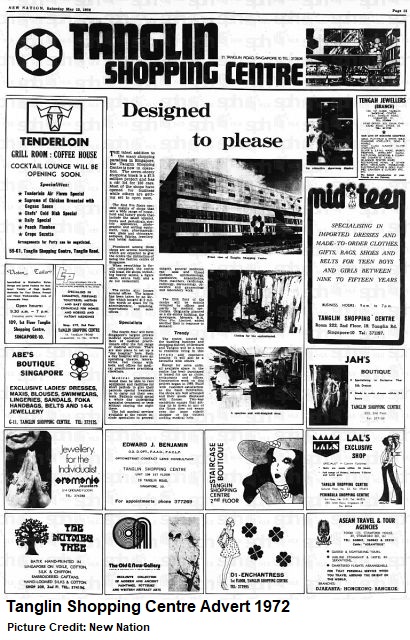
Midteen Boutique was one of the first shops opened at Tanglin Shopping Centre. Selling teen clothes, it was opened just before the Christmas Day of 1971.

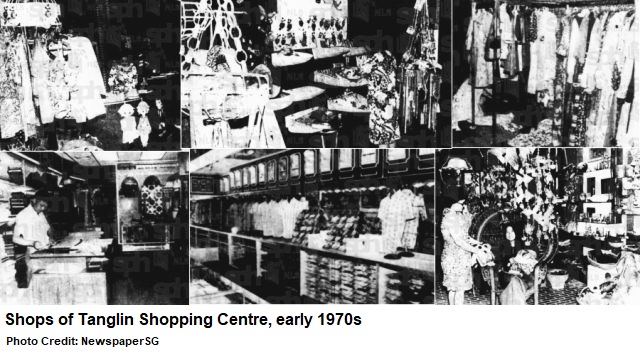
With almost all the shops and offices sold or leased out, Tanglin Shopping Centre was fully opened in January 1972. Throngs of tourists and local shoppers were lured to the new mall as it had a large variety of shops that ranged from apparel, jewellery, beauty salons to cafes and restaurants.

Some of Tanglin Shopping Centre’s early tenants were Connoisseur (antiques), Sun Craft (handicrafts), The Nutmeg Tree (antiques), The Gallery (art gallery), Di-Enchantress (ladies’ fashion), CYC Shanghai Shirt (men’s shirts), Bata Boutique (shoes), Shui Hwa Jewellery (jewellery), SPH de Silva (jewellery), Genexco (home products), Sharmila (Indian cuisine), Tenderloin Grill and Coffee House (western cuisine) and The Cookie Box (pastries).

Like other early prominent shopping centres in Singapore, Tanglin Shopping Centre had its fair share of issues in its early days.

In 1974, there were several cases of tourists buying luxurious items, such as expensive watches and jewellery, from Tanglin Shopping Centre’s shops with counterfeit cheques. On 29 April 1974, two armed robbers barged into jewellery shop SPH de Silva and got away with $5,000 cash and $200,000 worth of gems. It was the largest robbery case, in terms of the loots’ value, in the year of 1974.

The high-profile jewellery robbery of Tanglin Shopping Centre was just one of the many cases occurred in 1974. In the first six months of 1974, there were more than 900 cases of robberies and thefts reported. Homes, offices, workshops, jewellery shops and money changers in different parts of Singapore were robbed or broken into. The victims suffered a combined loss of $1.4 million.

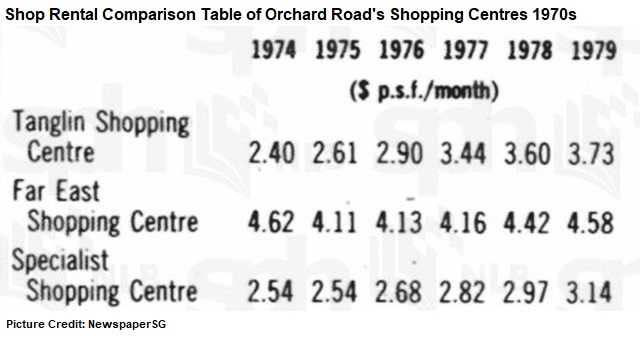
By the eighties, the older shopping centres of Orchard Road, including Tanglin Shopping Centre, faced increasing competition from the newly-built malls, such as Orchard Plaza (opened in 1980), Far East Plaza (1982), Scotts Shopping Centre (1983), Centrepoint (1983), Orchard Point (1983), Meridien Shopping Centre (1983), Delfi Orchard (1984), Promenade (1984) and The Paragon (1986).

Tangs and Yaohan Orchard also underwent revamps in 1984 and 1985 respectively to polish their appeals to the shoppers.

In 1980, Tanglin Shopping Centre’s developer S.K. Chee Pte Ltd added a $12-million office tower extension to the mall’s circular concourse. In 1981, S.K. Chee Pte Ltd was acquired by King’s Hotel and renamed King’s Tanglin Shopping Pte Ltd. King’s Hotel itself was the hotel subsidiary of City Developments.

Following its revamp, Tanglin Shopping Centre had its lower levels leased out to several prominent artwork shops and antique shops specialised in old maps, prints and artefacts. Slowly gaining a reputation as a “treasure chest of antiques”, the shopping centre became a place where the rich and famous visited to pick up exquisite artworks and antiques for their own collections.

In 1994, Tanglin Shopping Centre carried out a $9-million renovation project in a bid to bring it on par with its nearby malls, hotels and buildings. Its aging aircon systems were replaced, and new interior finishes were applied to the floorings, ceilings and toilets. A new, wider canopy was also built to provide more shelter at the driveway.

Tanglin Shopping Centre had several well-known longtime tenants.

Steeple’s Deli, opened at Tanglin Shopping Centre in 1981, was Singapore’s first delicatessen (a shop that sells cooked meat, cheeses and other foreign prepared food). Its faithful patrons would remember its retro interior fittings, served milkshakes and sandwiches. One of Tanglin Shopping Centre’s longest serving tenants, Steeple’s Deli was closed in April 2023.

Another one was Anywhere Club, home to Singapore’s rock legends Tania, made up of lead guitarist Zulkifli Sutan, singer Alban De Souza and keyboardist Ismet “Boy” Lubis. Anywhere Club was established at Tanglin Shopping Centre in 1986 and lasted almost 20 years before its closure in 2005.

Other names that come to mind are Club 21, Laugh Comedy Club, Antiques of the Orient, Excalibur Bar and D&O Film and Videos.

By the mid-2000s, there were criticisms that the older shopping centres of Orchard Road were increasingly looking outdated, empty and even “haunted”. In 2007, Tanglin Shopping Centre was in the news due to a “rumoured” en-bloc sale. It was then put up for a collective sale three times between 2010 and 2017. However, its reserve price of $1 billion to $1.5 billion failed to secure any buyers.

In 2022, in its fourth sale attempt, Tanglin Shopping Centre was finally acquired by Pacific Eagle Real Estate in a $868 million deal. The mall was eventually vacated and demolished in 2024, after a long 52 years of history at Orchard Road.

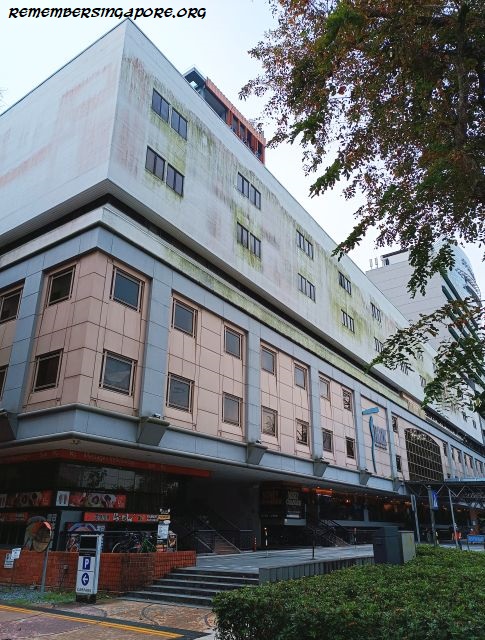
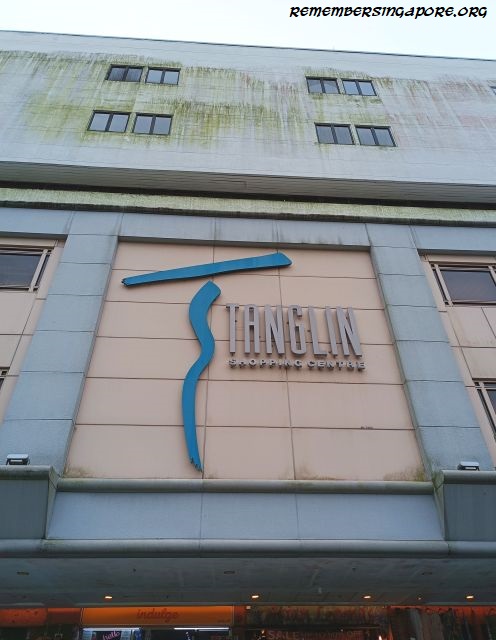
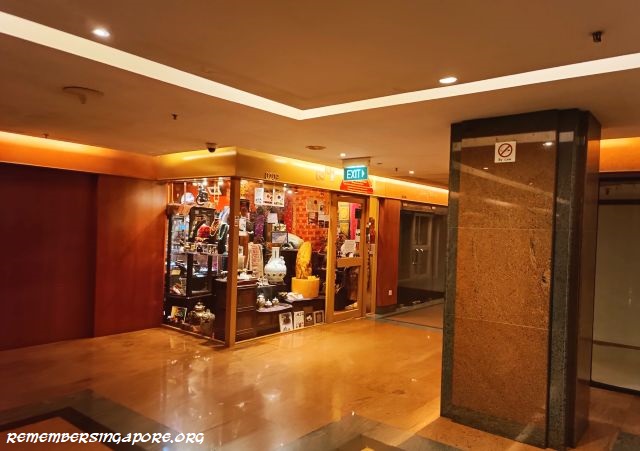
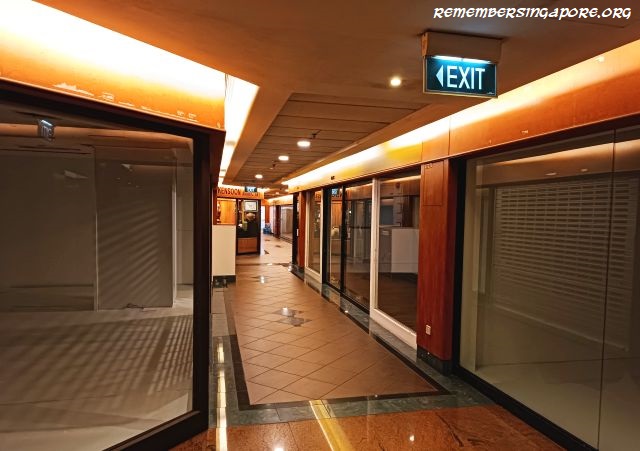
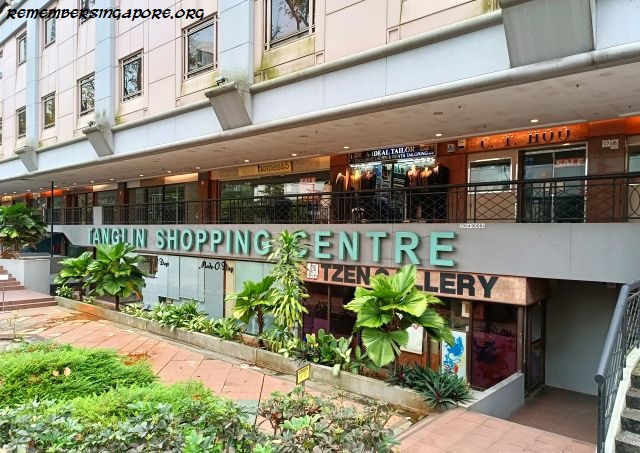
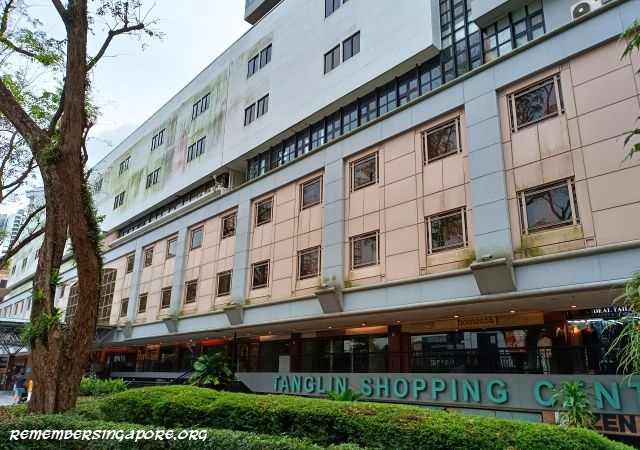
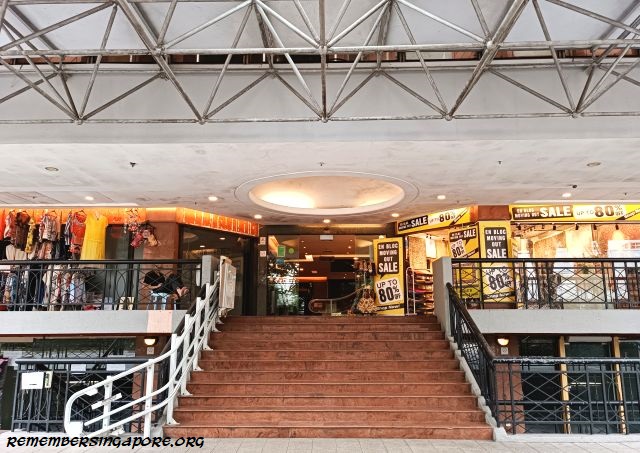
Tanglin Shopping Centre in 2023, a year before its demolition:

Published: 29 January 2025

Posted in General | Tagged , , , , , , , , , , | 1 Comment

Tong Nam Tobacco and the Rise and Fall of Local Cigarette Producers

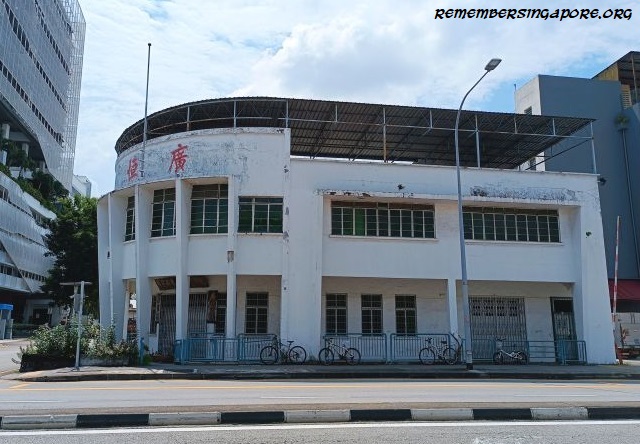
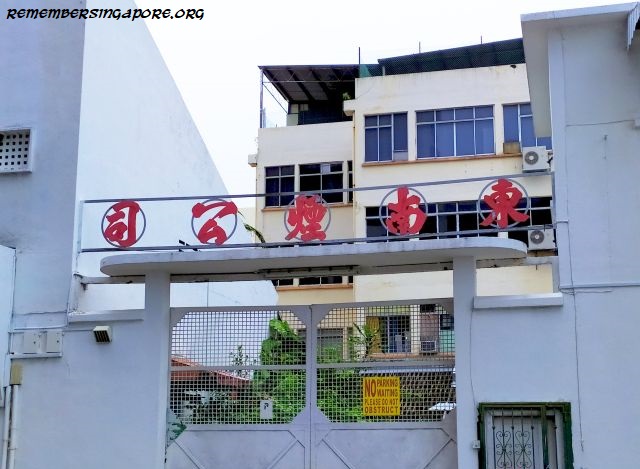
Along MacPherson Road, at its junction with Harvey Road, is a white double-storey shophouse that was once one of Singapore’s major cigarette manufacturers. This was the former factory of Tong Nam Tobacco Company (东南烟草公司).

Tong Nam Tobacco

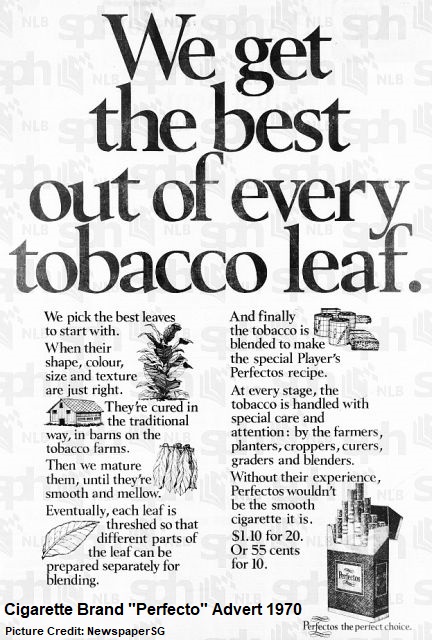
Tobacco companies existed in Singapore since the 19th century, where operating licenses for opium, liquors, and tobacco farms were regulated and issued by the Straits Settlements government. Overseas Tobacco Company, established at Hill Street in the 1900s, was one of the most popular cigar and cheroot manufacturers in Malaya and Singapore before the Second World War.

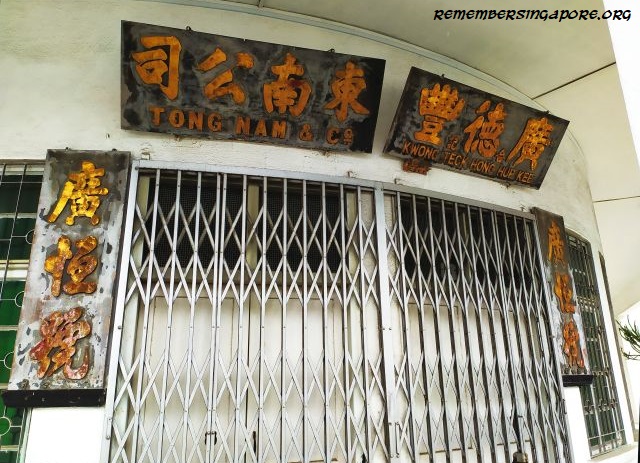
Tong Nam Tobacco, on the other hand, originated from Kwong Hang Ho (广恒号), which was one of the seven large trading firms (七家头) established at Singapore’s downtown area between the early and mid-19th century. These seven trading firms dominated the local markets of rice, cooking oil, sugar, salt, soya sauce, tea, cigarettes and other provisions for almost a century.

In the 1930s, Kwong Hang Ho had some of its shares acquired by investors, and began operating at North Canal Road under the name Tong Nam Tobacco.

Tong Nam Tobacco was embroiled in a legal battle in 1937 when its “Kwong Hang Ho” trademark was counterfeited by another company Chop Wing San. Tong Nam Tobacco eventually won the case and the managing partner of Chop Wing San was fined $200 by the District Court.

During the occupation, the Japanese authority grouped all the major tobacco companies in Singapore to form the Syonan Tokubetu-si Tobacco Manufacturing Association, in order to raise funds and ensure consistent supply of cigarettes and cigars.

In June 1956, Tong Nam Tobacco moved to its new premises at Harvey Road. It was a new modern building with a curved façade and flat roof, architectural design elements that were ahead of their times in the fifties. The top of the façade still bears the name of Kwong Hang today.

In the late fifties and sixties, Tong Nam Tobacco employed about 100 workers and was able to churn out a daily production of more than 550,000 sticks of cigarettes.

The success of Tong Nam Tobacco caught the attention of the government, which had plans to set up a people’s cigarette factory at a cost of $10 million. Keen to tap on the experiences of the established tobacco companies in Singapore, Jumabhoy Mohamed Jumabhoy, then-Minister for Commence and Industry, toured Tong Nam Tobacco in 1958 to better understand the production of cigarettes. He also visited Malayan Cigarette Manufacturers Limited.

Popular Local Brands

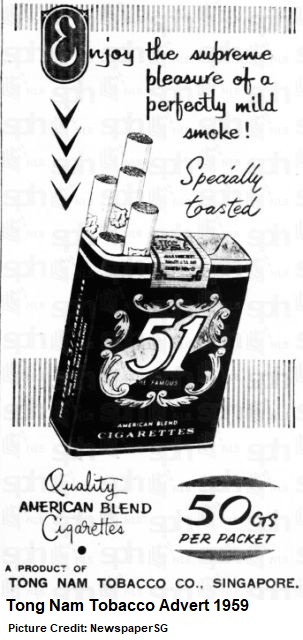
The sixties and seventies were arguably Tong Nam Tobacco’s golden eras. It enjoyed good sales with its popular household brands of “My Dear“, “Pigeon“, “Carrier“, “Stage“, “Stag“, “51” and “Gold Circle“.

Other major cigarette producers of the same period were Seng Lee Tobacco Company (with brands such as “Clock Tower“, “Rhinoceros“, “Saxophone“, “Shell“, “Flower“, “Three Generals“), Singapore Tobacco Company (“Neptune“) and Malayan Cigarette Manufacturers Limited (“Seven Diamonds“, “Hallo“, “Tiger Head“, “Sail“, “Winning Rush“, “Golden Flame“, “Wiseman“).

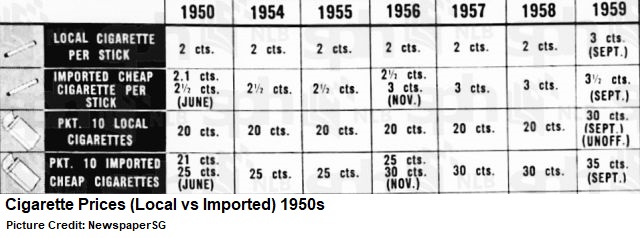
A 1959 survey conducted by the Straits Times estimated that Singaporeans were smoking 20 million cigarettes every month. Majority of the smokers favoured local brands, as compared to imported ones, due to their relatively cheaper prices.

Below is the price list of the different brands of cigarettes in Singapore before a price revision was implemented in 1959. The revised prices were largely due to tax increases imposed by the government.

Tobacco Farms

Tobacco growing in Singapore greatly increased after the war, when the colonial government provided tobacco farmers with incentives of $300 to $400 a picul (about 60kg) in 1948.

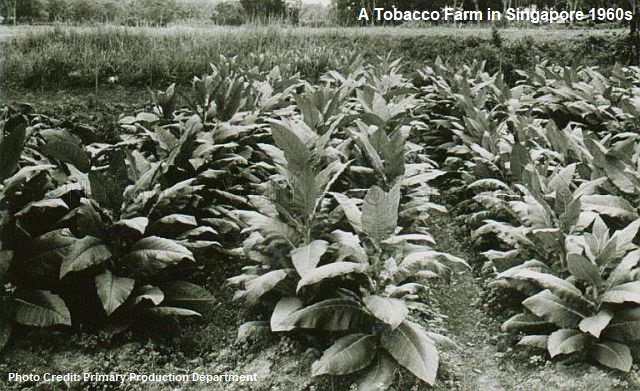
Tobacco (nicotiana tabacum) became one of the main cash crops for many farms in Singapore during the fifties and sixties. Tobacco farms could be found from Pulau Tekong to Lim Chu Kang, Kranji, Bukit Panjang and Mandai areas.

Harvested by the farmers twice a year, the tobacco leaves were then dried and sold to the local tobacco companies and factories. In 1978, as much as 600 tonnes of tobacco leaves were harvested. Although it was Singapore’s smallest cash crop, tobacco brought in the fourth highest revenue in the country’s agricultural sector, after vegetables, orchids and fruits.

Decline & Demise

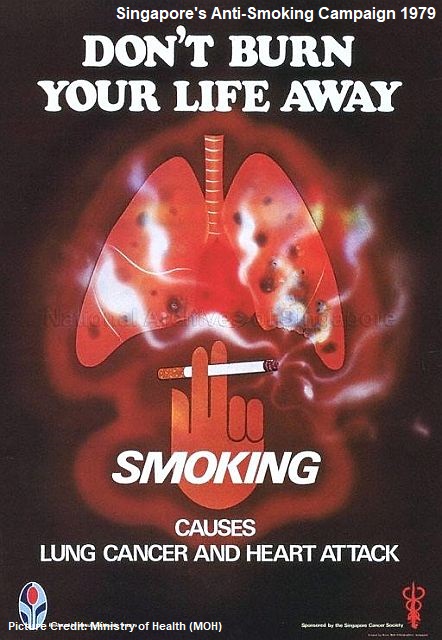
In the late seventies, the United Nations launched global campaigns to urge tobacco growers to switch to other crops. Singapore reciprocated with its own national health drive to educate the population on smoking’s hazardous effects to health and encourage smokers to give up smoking.

By the eighties, many of the local tobacco farms were acquired by the government to make way for urban and residential redevelopment. According to the Primary Production Department, Singapore’s total production of tobacco leaves in 1986 fell to only 10 tonnes, as compared to 133 tonnes in the year 1980.

The sales of Tong Nam Tobacco, as well as other local cigarette manufacturers, began to decline by the eighties. The competitive prices of imported cigarettes from major global brands, aggressive anti-smoking campaigns by the government and the loss of tobacco farms to redevelopment all led to the slowing down of the local tobacco industry.

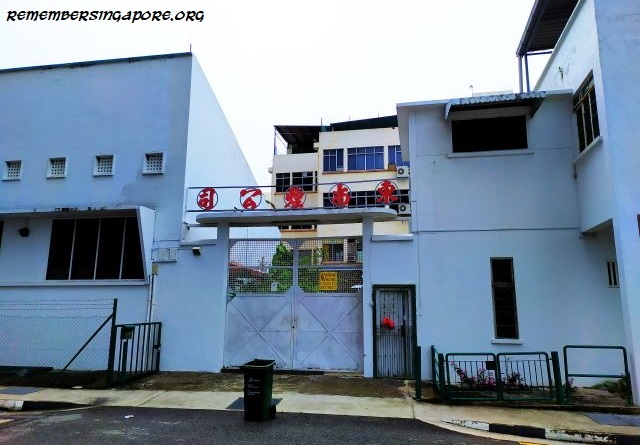
Tong Nam Tobacco ceased its production and business by the end of the eighties. The company was reregistered under sole proprietorship, and it continues to retain the ownership of the Harvey Road building till today.

Published: 19 December 2024

Posted in Historic | Tagged , , , , , , , , , , , , , , | 3 Comments

Reminiscing the Rustic Charm of Ulu Sembawang

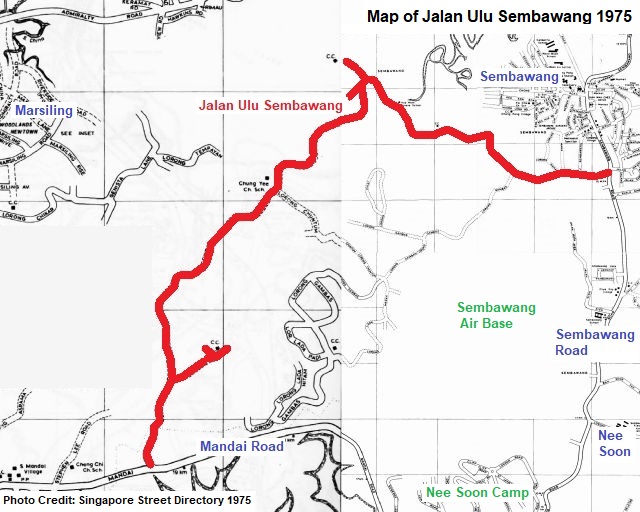
Ulu Sembawang in the eighties remained a rustic, countryside-like place, seemingly isolated from the rest of Singapore that had seen rapid urbanisation over the years. Jalan Ulu Sembawang, the main route in the area, wound through a large part of northern Singapore where it has developed into the new towns of Woodlands, Sembawang and Yishun today.

New Rural Roads

Jalan Ulu Sembawang was one of the nine new roads built in 1948, shortly after the war. It was part of the colonial government’s plans to convert agricultural tracks into better roads in order to better serve the increasing number of residents living at the rural areas of Singapore.

The new roads were Jalan Ulu Seletar, Jalan Kuala Sempang and Jalan Ulu Sembawang in the Sembawang district, and Pepys Road, Yew Siang Road, Jalan Mat Sambol, Jubilee Road, Chua Kay Hai Road and Zehnder Road in the Pasir Panjang area. The naming of these roads, submitted by Sembawang and Pasir Panjang’s village committees, was approved by the Singapore Rural Board.

The Kampong Days

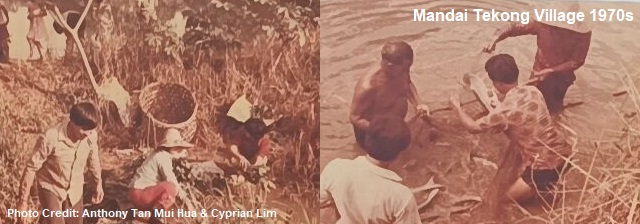
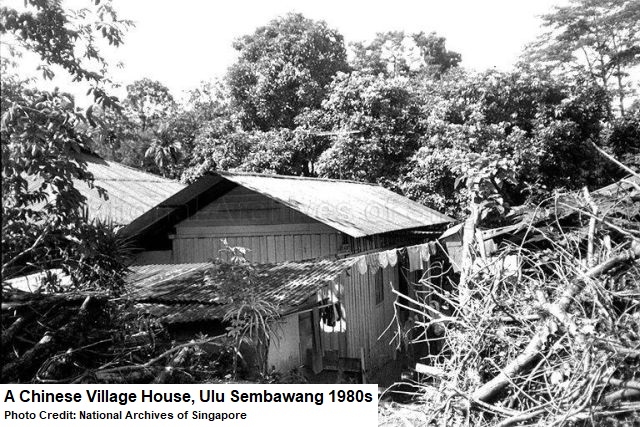
Jalan Ulu Sembawang stretched several kilometres between Mandai Road 12th milestone and Sembawang Road 12th milestone. This vast Ulu Sembawang area had numerous clusters of communities such as Mandai Tekong Village, Mandai Catholic Village, Chong Pang Village, Sungei Simpang Village and other smaller kampongs.

Mandai Tekong Village was named after a company called Mandai Tekong, which owned rubber plantations and other estates at Mandai and Pulau Tekong. The name of Mandai Catholic Village, on the other hand, was associated with the settlement of Catholic Teochew refugees from China.

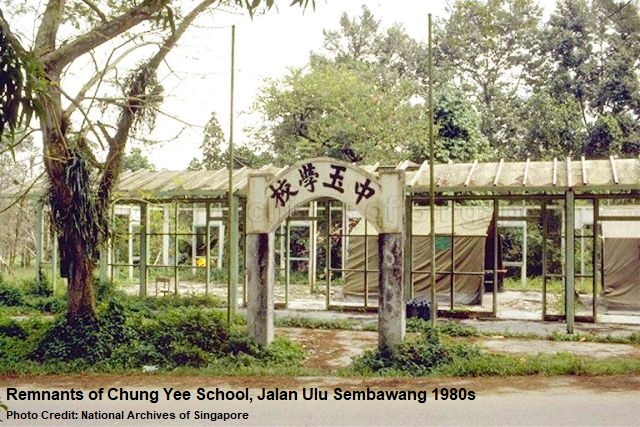
Rural schools were established to support the basic education needs of the villages’ children. The likes of Cheng Chi School, Chung Yee School, Methodist Tamil School, Sin Hwa School and Hua Mien School flourished during the fifties and sixties. The schools’ compounds were often used as makeshift theatres, where free movies were put up by the Ministry of Culture as a form of entertainment for the residents of nearby villages.

Most of the schools were closed by the eighties, after facing diminishing students’ enrollment due to the resettlement of the Ulu Sembawang residents. For example, Hua Mien School’s Primary One student registration, in 1980, had fallen to only 15.

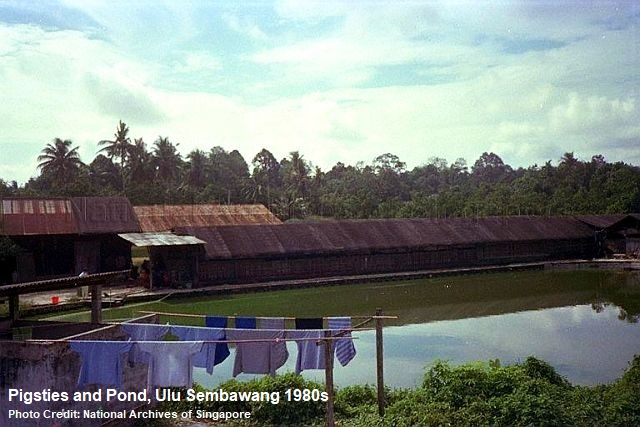
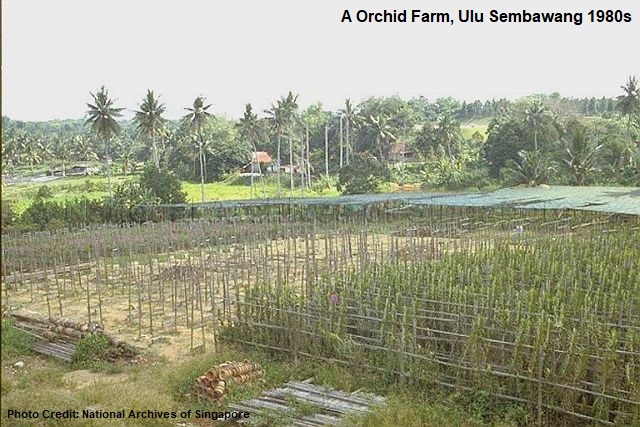
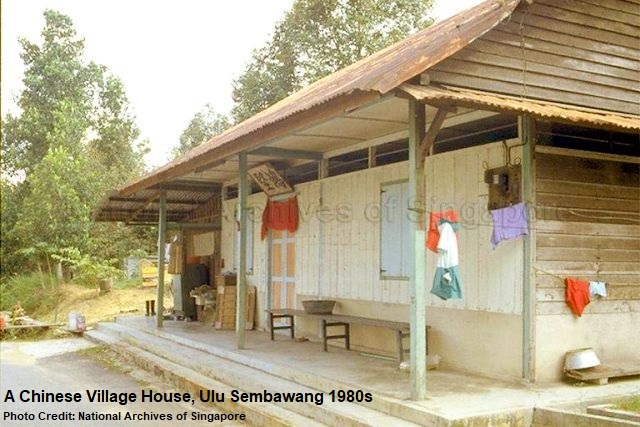
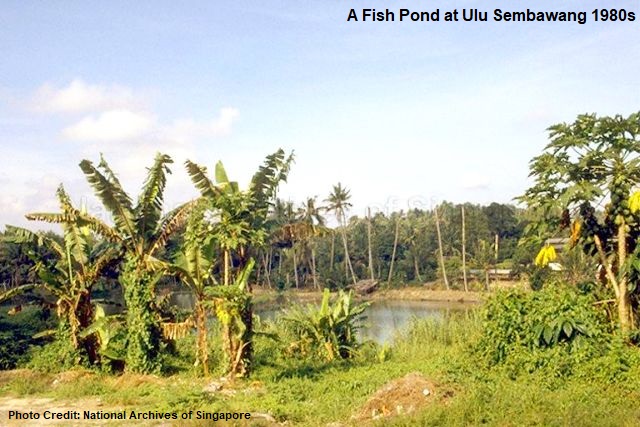
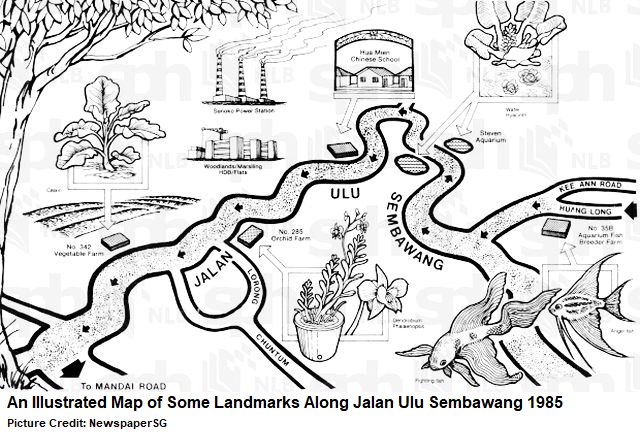
Farmhouses, squatter huts, wells, village schools, fish ponds, pigsties and vegetable farms were still aplenty at Ulu Sembawang, even in the eighties. There were also businesses established in the area, such as car workshops, orchid farms and scrap rubber factories.

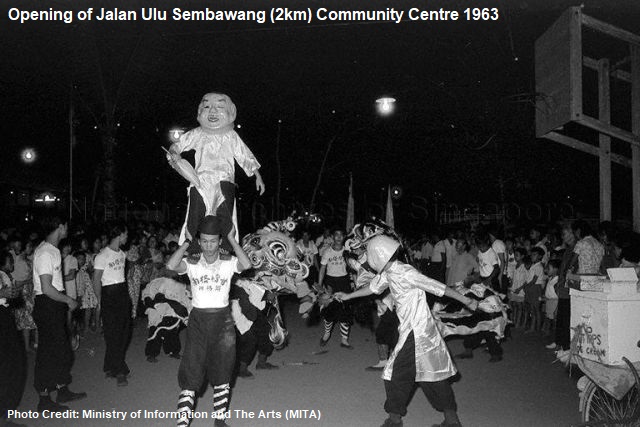
Ulu Sembawang had several community centres too, two of which were the Jalan Ulu Sembawang (2km) Community Centre and Jalan Ulu Sembawang (3km) Community Centre. The “2km” and “3km” probably refer to the distances of the community centres from Mandai Road.

Opened in 1963 by then-National Development Minister Tan Kia Gan, Jalan Ulu Sembawang (2km) Community Centre served the communities for more than 15 years before its closure in 1979. Jalan Ulu Sembawang (3km) Community Centre, on the other hand, lasted until 1985.

Other community centres in the vicinity, including Chong Pang (1960s-1985), Huang Long (1960s-1985) and Canberra (1971-1985), were also closed in the same period. Mandai Tekong Community Centre, located at the junction of Lorong Gambas and Lorong Lada Merah, also ceased to exist in 1985.

Catholic Village

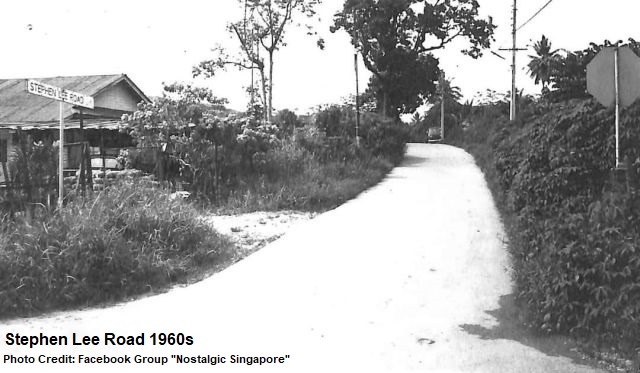
While most Chinese villages in Singapore had traditional religious beliefs in Buddhism, Taoism or other Chinese folk religions, Mandai Catholic Village stood out as a rare one with Catholic roots. It was founded in 1927 by Catholic Teochew refugees fleeing from a chaotic China plagued by political unrest. With no money or ties here in Singapore, they sought help from Father Stephen Lee (1896-1956), the assigned chaplain to the refugees.

Father Stephen Lee made a total of 49 applications to the colonial government, before it was approved that the refugees could settle down at the Ulu Sembawang and Mandai areas. The Catholic village, also known as hong kah sua in Teochew, soon thrived and the government named the village road Stephen Lee Road, in recognition of the chaplain’s effort. The road’s entrance was located near 13 milestone of Mandai Road.

Father Stephen Lee also founded Cheng Chi School for the villagers’ children so they could receive some formal education. The school lasted from 1932 to the eighties.

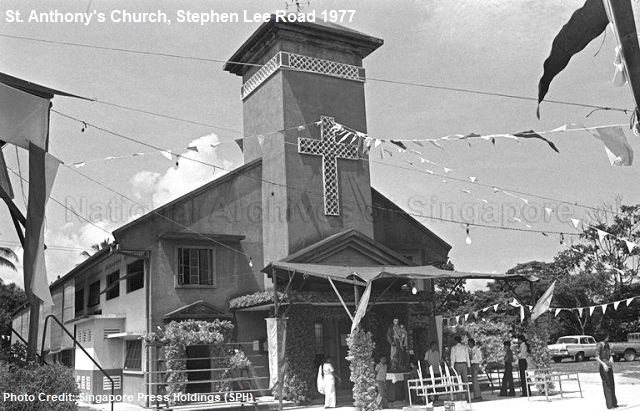
A wooden chapel was constructed in 1933 as a place of worship for the villagers. St Anthony’s Church, a larger concrete building, replaced the chapel in 1960. When the villagers were resettled in the eighties, the church was relocated to Woodlands Avenue 1 in 1994, where it stands till this day.

Network of Roads

Besides the main Jalan Ulu Sembawang, there were numerous minor roads and tracks reaching different parts of Ulu Sembawang. For example, Huang Long Road allowed the residents and drivers to reach Chong Pang Village and Sultan Theatre. Lorong Maha was paved and opened for traffic in 1968. Lorong Gambas lent its name to the modern Gambas Avenue today.

By the nineties, most of these roads were expunged or absorbed into the Singapore Armed Forces’ (SAF) military training grounds. Other than the abovementioned roads, others such as Chong Sin Road, Lorong Pikat, Lorong Chikar, Lorong Chuntum, Lorong Lada Merah and Lorong Lada Padi had all vanished into history. Lorong Lada Hitam is one of the few remaining ones still existing in the area.

Jalan Pasar Sembawang, located on the opposite side of Sembawang Road at 12¾ milestone, had a name similar to Jalan Ulu Sembawang. The difference between the two is that ulu means “remote” or “secluded” in Malay, whereas pasar refers to “market”. Jalan Pasar Sembawang was expunged in the early nineties.

Before 1986, Mandai Road was a narrow two-lane undivided carriageway. That year, the Public Works Department (PWD) began a road widening project to convert it into a three-lane carriageway with a central divider. It took four years for the completion of the road project that included the improvement works to the street lights, bus bays, footpaths and drains along Mandai Road.

Gotong Royong

Before the seventies, Jalan Ulu Sembawang was nothing more than a dirt track. Some sections of the road were in such bad conditions that Teong Eng Siong, Member of Parliament (MP) for Sembawang, brought it up in the parliament in the early seventies, asking if the road could be repaired immediately.

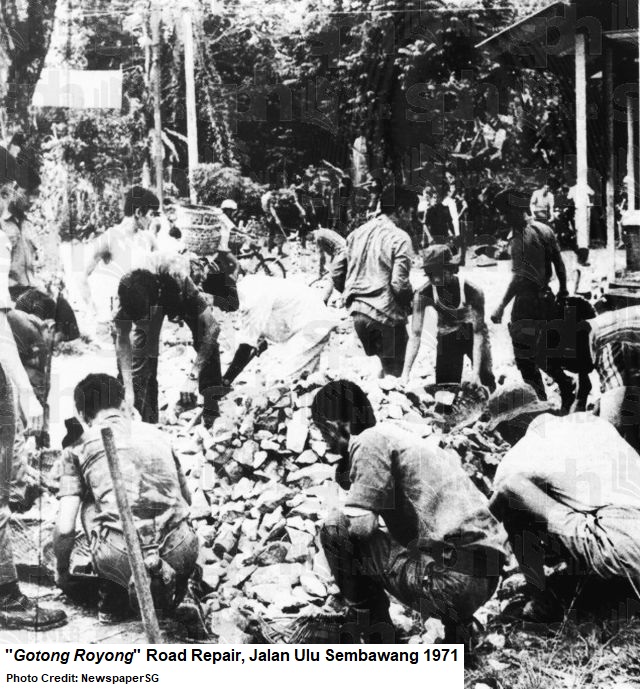
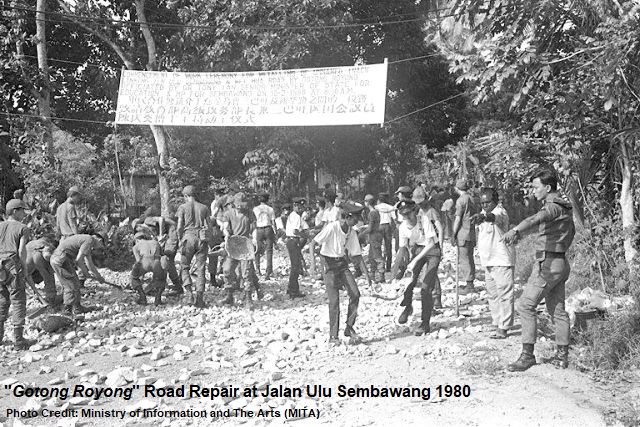
Hence in 1971, about 130 national servicemen from Seletar West Camp and 50 residents volunteered, in the good spirit of gotong royong (“communal work”), to repair a 1.7km damaged stretch of Jalan Ulu Sembawang. The machines, tools, materials and technical knowledge on road construction were supplied by the PWD.

It took just four days for the volunteers to complete the road repair project. Costing $65,000, the newly repaired stretch was officially opened by Teong Eng Siong on 6 March 1972, and was expected to benefit 8,500 residents living at the Bukit Panjang, Nee Soon and Sembawang areas.

In 1974, another gotong royong road repair project saw 300 residents and 1,200 Singapore Polytechnics students taking part in the metalling of a 2.75km-long section of Jalan Ulu Sembawang.

Another gotong royong work in 1978 had 900 volunteers, including Mandai Camp I and Nee Soon Camp’s national servicemen as well as students from Chung Yee School and Hua Mien School. Together, they laid a 1.1km-long track at Jalan Ulu Sembawang that served as a shortcut between Mandai Road and Sembawang Road. The completion of the track improved the accessibility to the area where there were about 100 houses, two schools and a community centre.

Illegal Activities

Despite the tranquility of Ulu Sembawang, it, however, possessed a darker side. Due to its secluded nature, the area was also notorious for being a popular hideout place for secret society members, robbers and kidnappers.

In 1954, under “Operation Eagle”, the Singapore Police’s Special Branch and Reserve Unit raided several Jalan Ulu Sembawang farmhouses, arresting five Malayan Communist Party members and unearthing arms caches of pistols, live rounds and grenades.

Throughout the sixties and seventies, there were cases where illegal samsu and opium manufacturers were caught at Ulu Sembawang. For example, in 1973, the Customs and Excise Department successfully busted two illicit samsu distillers hidden in an old rubber estate along Jalan Ulu Sembawang.

In 1974, the police stormed a gangster hideout at Jalan Ulu Sembawang and arrested six Gi Leng Hor 18 secret society members. A cache of gangland weapons such as parangs, daggers, bearing scrapers and iron pipes were seized by the police. Gi Leng Hor 18 was also suspected to be involved in the murder of a 24-year-old labourer at Jalan Ulu Sembawang in 1973. Another secret society that actively operated at Ulu Sembawang was Ang Soon Tong.

Jalan Ulu Sembawang, together with Jalan Kemuning, hit the headlines again in 1974 when it was revealed that both places had brothels and gambling dens disguised as exclusive clubs for foreign sailors. Some local taxi drivers earned their commissions by fetching the foreigners to these “popular clubs”.

In 1992, the Singapore Police busted an illegal cockfighting arena at Jalan Ulu Sembawang, where some disused kampong huts were converted for the betting game that was banned in Singapore since the sixties. Attracting more than 100 Singaporeans and Malaysians to visit every weekend, the betting stakes for the cockfighting were between $30 and $500 per fight, but some bets reportedly could rise to as high as $5,000.

Mysterious Case

A mysterious case occurred at Ulu Sembawang in 1991. A 38-year-old woman Cheah Moi Moi went missing with her truck found abandoned along a deserted stretch of Jalan Ulu Sembawang.

Cheah Moi Moi was the owner of a mobile grocery business that supplied vegetables, fish, eggs and rice to the foreign workers at the construction sites. On 4 March 1991, she was reported missing by her 26-year-old business partner Lim Keow Soon when he found her truck along Jalan Ulu Sembawang. The police combed the area but found no traces of the missing woman and any signs of struggle.

Cheah Moi Moi was last seen by her sister-in-law at the Chong Pang Market on 3 March. She was never found and her case remains unsolved till this day.

Amenities and Landmarks

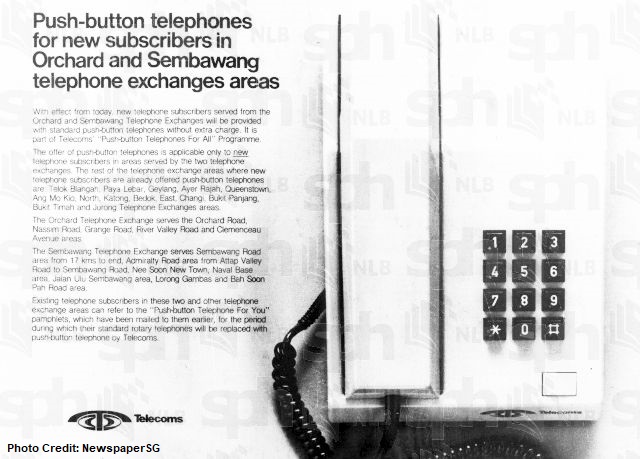
A $1.5-million telephone exchange was built by the Telecommunications Authority of Singapore (TAS) in 1975 at the junction of Jalan Ulu Sembawang and Sembawang Road. Another $2.1-million telephone exchange was built at Telok Blangah Way.

Both exchanges allowed TAS to add 12,000 telephone lines to its system, with a potential to increase another 40,000 lines, to serve the increasing number of residential and commercial telephone users in Singapore.

The Jalan Ulu Sembawang telephone exchange site was acquired in 2002 for $17 million by Centrepoint Properties Ltd, formerly known as Frasers Centrepoint Singapore, to be used for private residential redevelopment.

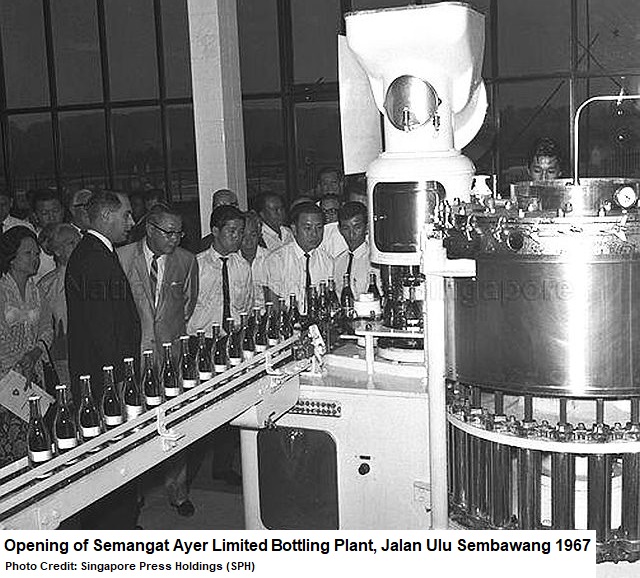
Another landmark near the junction of Jalan Ulu Sembawang and Sembawang Road was Fraser & Neave’s (F&N) $1.5-million bottling plant called Semangat Ayer Limited. Opened in 1967, it bottled Seletaris, a popular mineral water brand made from the Sembawang Hot Spring. Its site was acquired in 1985 by the Ministry of Defence to become part of Sembawang Air Base, but the hot spring was released back to the public in the nineties for recreational use.

Bus Services

Public bus services arrived at Ulu Sembawang in July 1978. Despite its great length, Jalan Ulu Sembawang was not served by any public buses prior to this year. The only form of public transport was a few taxis willing to ply the route, and their relatively expensive fares meant that many Ulu Sembawang residents would rather walk almost an hour or cycle long distances to reach their homes from the main Mandai or Sembawang Roads.

In the late seventies, the Registry of Vehicles (ROV) introduced Scheme B bus services to the rural areas of Singapore to provide better accessibility and convenience to the residents. The buses, charging 20c for a 3km ride, 30c between 3km and 6km, and 40c for distances more than 6km, were able to pick up and drop off passengers anywhere along Jalan Ulu Sembawang. Students were charged a flat rate of 10c.

Land Acquistions and Resettlement

By 1983, there were only 30 small chicken farms and 20 duck farms left at Lorong Gambas, off Jalan Ulu Sembawang. The larger poultry farms had been relocated to Lim Chu Kang, whereas the remaining ones were given eviction notices by the government.

In the sixties, Bukit Sembawang Estates, one of Singapore’s largest landowners and property developers, had acquired large parts of the Ulu Sembawang area. Some of the lands were cultivated into rubber plantations, managed by the company’s subsidiary Singapore United Rubber Plantations. Other parts were designated for agricultural and rural purposes.

Over the years, the company had sold much of its rubber plantations and lands at Jalan Kayu, Sembawang, Nee Soon, Pasir Ris and Punggol to the Singapore Government for residential redevelopment. For Ulu Sembawang, the government acquired almost 550,000 square metres of the lands from Bukit Sembawang Estates in 1985.

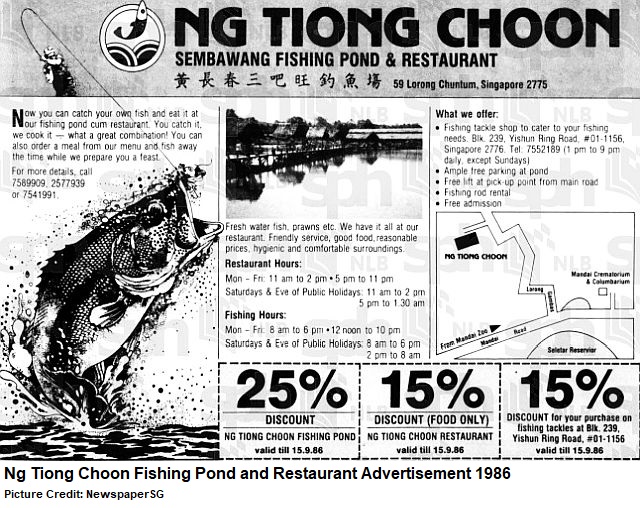
Old-time fishing enthusiasts might remember the large pond at Lorong Chuntum, off Jalan Ulu Sembawang, in the mid-eighties, where it was filled with grass carp, snakehead fish and Thai catfish. It had a restaurant called Ng Tiong Choon Seafood Restaurant, where the anglers could engage the chefs, for a price of $10, to cook the fish they caught from the pond.

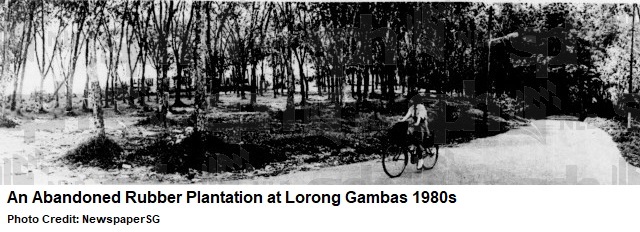
Ulu Sembawang still had rubber plantations in the mid-eighties. One particular rubber plantation, at the junction of Jalan Ulu Sembawang and Lorong Gambas, was known as chiew ni kah, or “foot of rubber trees” in Hokkien, among the residents. In 1987, it was acquired by the government to be used as part of the SAF training ground and camping site for the National Cadet Corps (NCC) and Girl Guides.

Ulu Sembawang’s residents, from 1981 to 1990, were gradually resettled at the new towns of Woodlands, Marsiling, Sembawang and Yishun. By 1984, the SAF began to conduct exercises at the Ulu Sembawang area. For the remaining residents still living at the area, it became a norm for them to occasionally hear the sounds of thunderflashes and firing of blanks.

Some residents, unable to adjust to the flat-dwelling HDB lifestyle, still returned to Ulu Sembawang regularly despite the presence of SAF warning signages. The older residents would often reminisce their tough yet happy days living in the rural areas. Others recalled spending their carefree childhood days climbing trees, plucking fruits and jumping into the ponds and rivers.

By the nineties, the abandoned vegetable farms, empty fish ponds and deserted rubber plantations were reclaimed by nature.

Old Cemetery and Temple

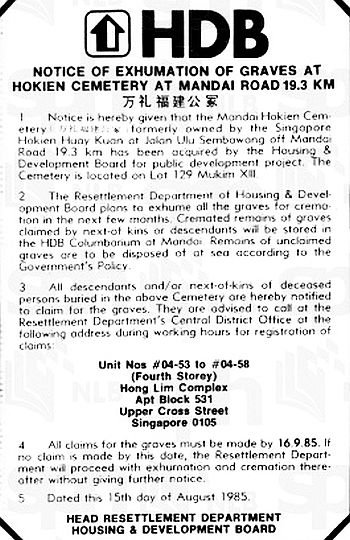
The Mandai Hokkien Cemetery at Jalan Ulu Sembawang was also acquired in 1985 by the Housing and Development Board (HDB) for public housing redevelopment. The 1.6-hectare Chinese cemetery, owned by the Singapore Hokkien Huay Kuan, had more than 20,000 graves, many of where were reinterred in the sixties from exhumed graves at Red Hill and Leng Kee Road’s cemeteries.

HDB carried out the exhumation of Mandai Hokkien Cemetery in March 1986, with the first phase involving some 5,200 graves. Mandai Hokkien Cemetery’s unclaimed remains, together with the unclaimed remains of other exhumed cemeteries in Singapore, were subsequently exhumed and disposed at the sea off Punggol Point in 1988.

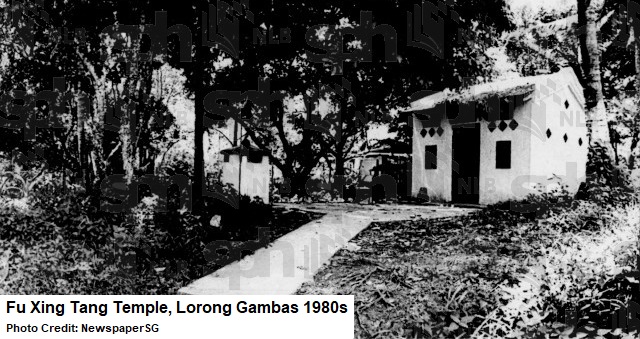
A small Taoist temple called Fu Xing Tang stood along Lorong Gambas. It was built in the fifties by the residents pooling their resources for a place of worship where they could seek peace and protection from Chinese deity Tua Pek Kong.

Like the huts, farms and ponds of Ulu Sembawang, the temple eventually walked into history when the areas were acquired by the government and the residents resettled.

New Park Connector

In 2002, the government looked into the possibility of carving out an area within the SAF training grounds to build a park, allowing the public to access the areas’ rich flora and fauna. Pulau Tekong and Ulu Sembawang were two of the areas studied.

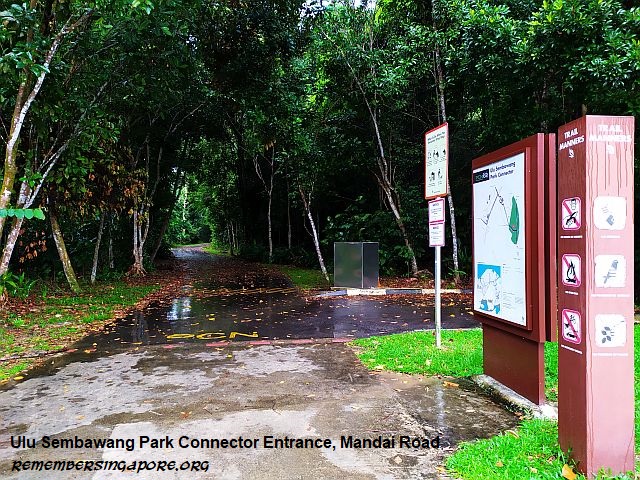
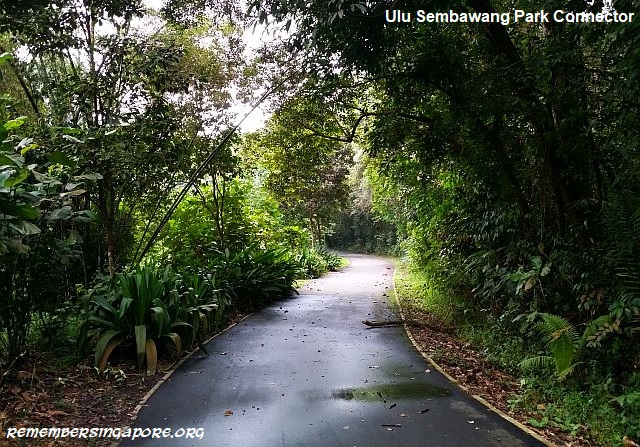
A 1.3km-long Ulu Sembawang Park Connector was constructed and opened in 2010. It was built on a former section of Jalan Ulu Sembawang near its junction with Mandai Road. The rest of the Ulu Sembawang area remains a restricted military ground under the charge of the Ministry of Defence.

Published: 30 November 2024

Updated: 2 December 2024

Posted in Exotic, Historic, Nostalgic | Tagged , , , , , , , , , , , , , , , , , , , , , , , , , , , , , , , , , , , , , , , , , , , , , , , , , , | 5 Comments

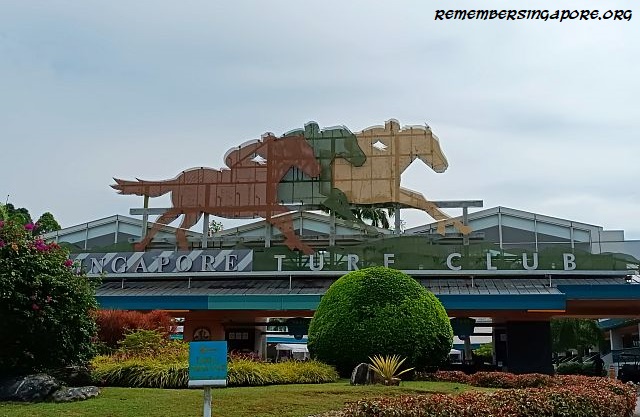
Singapore’s 182 Years of Horse Racing Reaches the Finishing Line

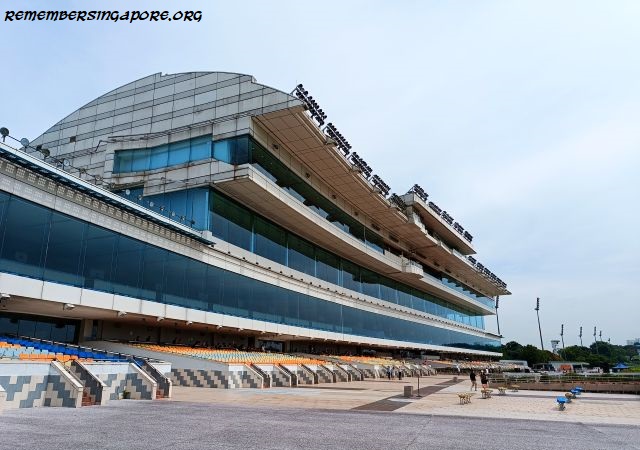
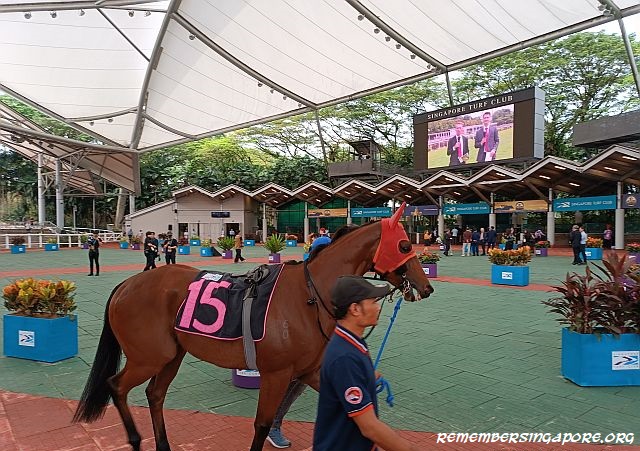
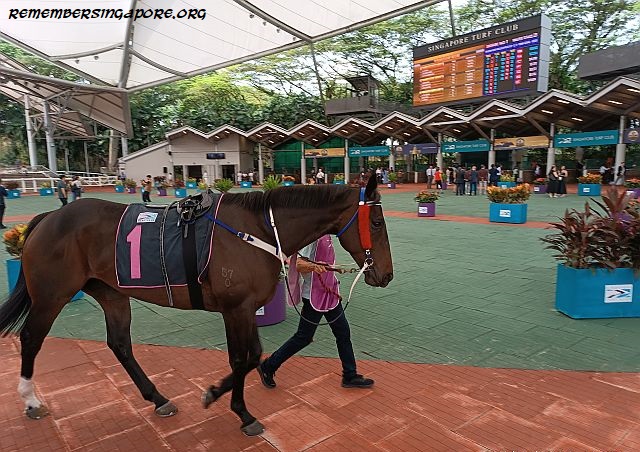
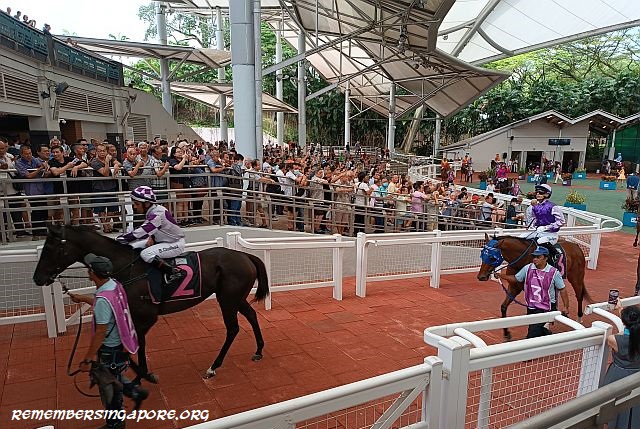
On 5 October 2024, a 10,000-strong crowd turned up to witness Singapore’s final horse races held at the Singapore Turf Club’s Kranji racecourse. As the horses raced past the finishing line, it marked the end of a long and glorious 182-year history in local horse-racing.

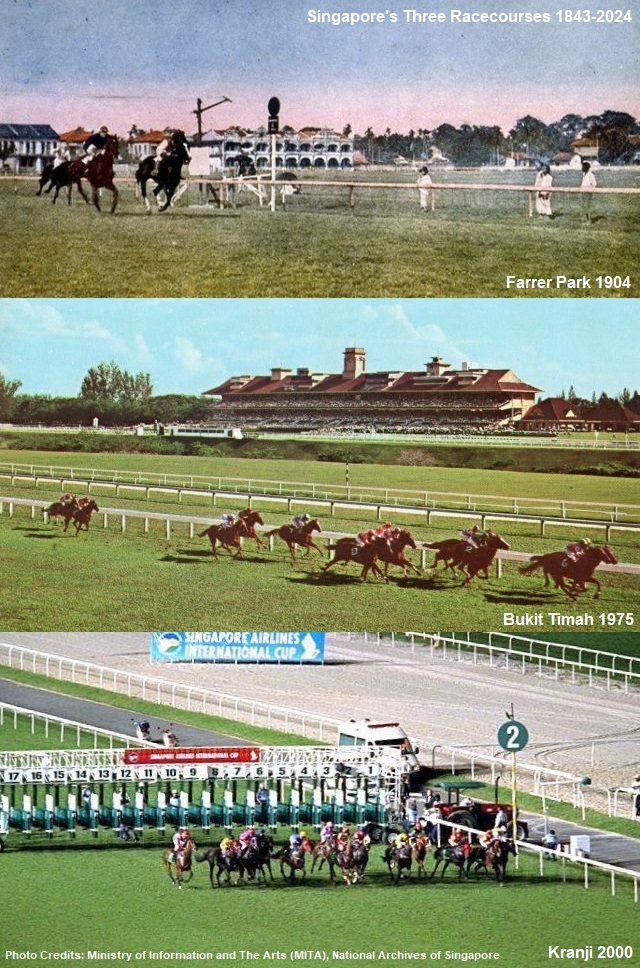
Horse-racing in Singapore began as early as 1842, when the Singapore Sporting Club was founded. A year later, Singapore’s first racecourse was built at the swampy Farrer Park. A grandstand and track were built, along the Race Course Road which was named after the new amenity.

Farrer Park racecourse debuted its first races on 23 and 25 February 1843 to a crowd of more than 300. It was Singapore’s first official horse races, with an attractive prize money of $150.

In 1924, the Singapore Sporting Club was renamed Singapore Turf Club to better reflect its role and activities. By then, the fast growing interest in horse-racing meant that Farrer Park racecourse was too small to accommodate all the spectators. After shortlisting several sites, a parcel of land at Bukit Timah Rubber Estate was eventually secured at a cost of $3 million for the construction of a new Bukit Timah racecourse. The new racecourse was opened in 1933 to a 5,000-strong crowd.

In 1988, in a review of land use in Singapore by the government, the Bukit Timah Turf Club site was a possibility for residential redevelopment by the mid-nineties. A large 120-hectare (1.2-square km) plot of site at Kranji, near the new Kranji MRT Station, was identified as the ideal location for the new horse-racing grounds. In the proposal, the turf club might be relocated to Kranji as early as 1997.

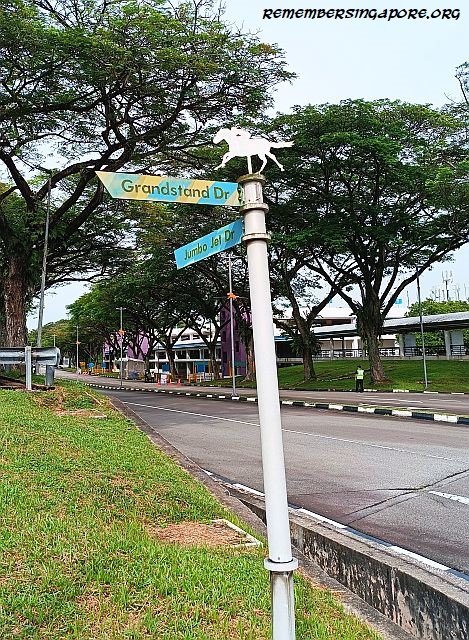
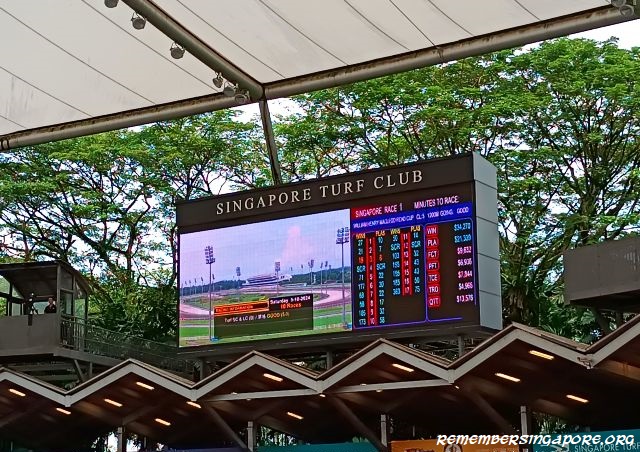
The design of the new horse-racing grounds was taken up by Indeco Consultants and established American racecourse designer Ewing Cole Cherry & Brott. Works commenced in December 1995. The new Kranji complex, costing almost $600 million, was fitted with a 30,000-capacity grandstand, Owners’ Box, Jockeys’ Box, Parade Ring, Diamond Vision screens, a stabling complex and additional betting counters.

Floodlights and lighting system suited for night racing were installed in 1998, making Singapore the first in the Malayan Racing Association – the other club members were Selangor, Perak and Penang – to have night racing capabilities.

On 25 July 1999, the Bukit Timah racecourse hosted the Emirates Singapore Derby, its last ever major race. After the relocation of the turf club to Kranji, the old premises was converted into Turf City, where it operated for more than two decades until its closure at the end of 2023.

The Singapore Turf Club at Kranji had a soft opening on 25 September 1999 and hosted Singapore’s first ever night horse race, although the special occasion was interrupted by a power failure. The racecourse’s official opening was officiated by then-President of Singapore S. R. Nathan (1924-2016) on 4 March 2000. On its opening day, spectators and punters were treated to an exciting 2,000m race of the Singapore Airlines International Cup with a prize money of $3 million.

In June 2000, the turf club also organised a night horse race dedicated to ladies, a first in its history. The special lady night was an instant hit as more than 8,000 women attended the event with free entry to the racecourse.

The Singapore Turf Club had a “turfmeter” to describe the state of its track for sand races. It has three ratings of “firm”, “good” and “yielding”, where “firm” is the best condition for a fast track, especially after a heavy rain that makes the sand more compact. Beside the sand track, the Kranji racecourse also had a new 1,500m-long polytrack, or all-weather track, added in 2008.

In November 2002, the Kranji racecourse held its first ever concert, where popular male singer Li Mao Shan sang at the Parade Ring in front of 1,500 fans. Other than concerts, the Singapore Turf Club also organised orchestra performances, “Fun for All Under the Stars” open houses and even a vintage car race at its Kranji premises.

The annual Singapore Airlines International Cup was cancelled in 2003 due to the SARS pandemic. As many as 120 horses, including 91 from overseas, were affected by the cancellation.

In 2006, the Singapore Turf Club welcomed distinguished guest Queen Elizabeth II (1926-2022) at its Kranji racecourse. The British monarch had visited the Bukit Timah racecourse in 1972; it was a long 34 years later that her royal presence graced the Singapore horse-racing realm once again.

A gigantic Panasonic Astrovision LED screen, measured 46m long by 8m tall, was installed by the Singapore Turf Club in 2007. The huge outdoor screen was able to display clear and sharp images to almost all the spectators seated at the grandstand.

Over the years, popular winning horses such as Nightyfive Emperor, Storm Racer, Magnum Force, Rocket Man, Better Be The One and Al’s Knight wowed countless of spectators, punters and horse-racing lovers with their impressive speeds and brilliant victories.

Horse-racing, however, seems to lose its attraction to the younger generations of Singaporeans. The annual visitorship to the Singapore Turf Club gradually declined, especially in the new millennium. The average daily attendance had dropped from 11,000 in 2010 to 6,000 in 2019 and 2,600 in 2022.

In 2023, the government announced the permanent closure of Kranji racecourse in a year’s time. This not only spells the end of Singapore’s third racecourse, but also its 182 years of horse-racing history. The Kranji site will be returned to the government in 2027, and residential redevelopment is expected to commence by the end of the 2020s.

Published: 29 October 2024

Posted in General | Tagged , , , , , , , , , , , , , , , , , , , | 2 Comments

Goodbye Bukit Timah Market and Hawker Centre

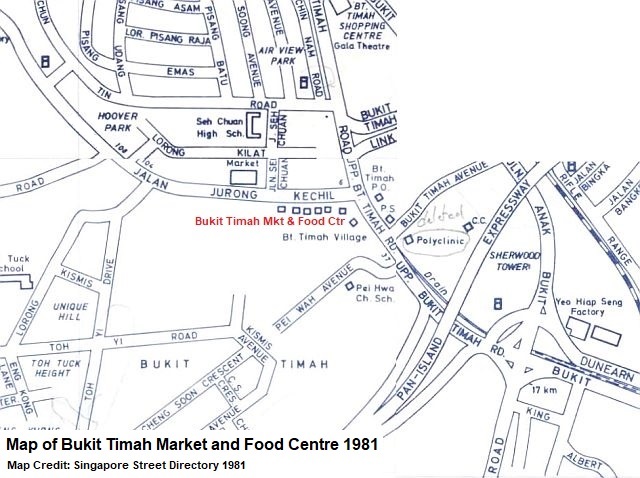
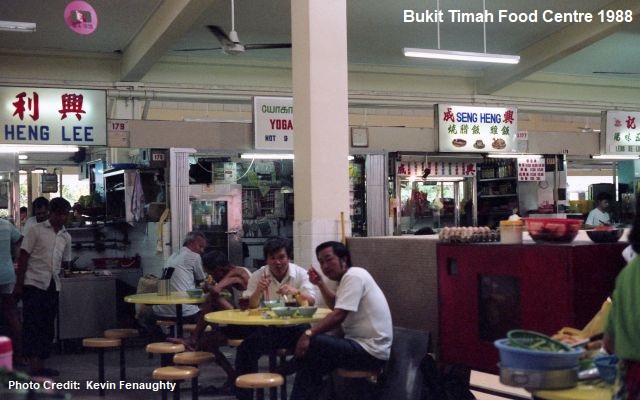
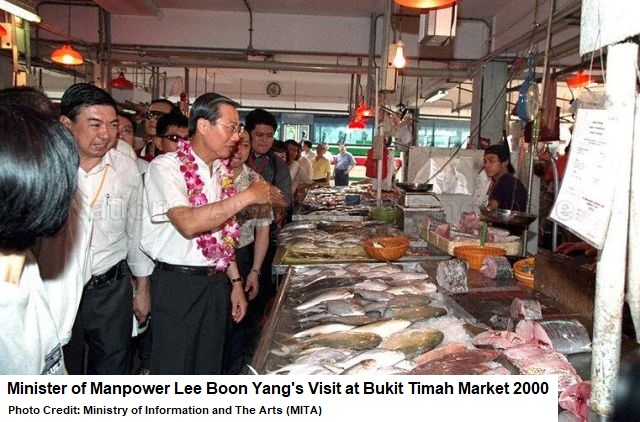
On the last day of September 2024, the Bukit Timah Market and Food Centre will be officially closed, spelling the end of its history that spans almost half a century.

Built in 1975 at a cost of $1.4 million, the double-storey Bukit Timah Market and Food Centre houses a wet market and shops on its ground floor, and hawker stalls at the second level. In total, there are almost 180 market and hawker stalls.

It was first used for the relocation of the street hawkers plying along Jalan Jurong Kechil in the sixties and seventies. The hawker centre later became a popular eating place among food lovers with its delicious carrot cake, satay bee hoon, Hokkien mee, chicken rice and other local delights.

The prices of the hawker food at Bukit Timah Food Centre in the late seventies were $1 for a plate of carrot cake, 80c for char kway tiao and 70c for a bowl of fishball soup.

Several Bukit Timah Food Centre’s foodstalls are almost as old as the hawker centre itself. The likes of Sin Chew Satay Bee Hoon, Xie Kee Hokkien Mee, Seng Heng Hainanese Chicken Rice, Yong Seng Satay and He Zhong Carrot Cake are now helmed by the second or third generations, passed down by their parents or grandparents who had started as street hawkers, before shifting to Bukit Timah Food Centre in the late seventies or eighties.

In 1977, some of the vacant stalls at Bukit Timah Market were allocated to the owners who lost their stalls in the nearby Beauty World Market fire.

Rude and rowdy hawkers were a concern for the Environment Ministry in the late seventies. In 1978, Bukit Timah Market and Food Centre topped the ministry’s list for the most cases of incidents; it had two cases for fighting between hawkers, and one for alleged rudeness to customers. The Boat Quay Food Centre, Empress Place Food Centre and Esplanade Satay Club each had two cases of rude hawkers.

Hence, an amendment to Environmental Public Health (Hawkers) Regulations was passed in April 1978 with a new law enforced. Under this new law, stallholders could have their licenses suspended, cancelled or revoked for offenses such as gambling, fighting, vandalism and harassment to customers in the market or hawker centres. The hawkers were also not allowed to stop customers who had the rights to the free sitting at any tables and chairs in the markets and hawker centres.

In the same year the new law kicked in, a total of 22 hawkers from various markets and hawker centres in Singapore received warnings from the Environment Ministry.

In July 1983, a pressure cooker at one of Bukit Timah Food Centre’s stalls suddenly exploded, damaging the roof and injuring seven people, including the stallholder’s children and several customers.

In 1985, Bukit Timah Market was one of the nine wet markets in Singapore to debut the sale of frozen pork to consumers. It was part of the “Eat Frozen Pork” campaign as Singapore was targeting to entirely phase out pig farms by the end of the eighties.

In the eighties, just a decade after its opening, Bukit Timah Food Centre was rated as one of Singapore’s dirtiest hawker centres. In 1985, the building was bothered by a persistent pungent smell due to three drainages choked by the garbage and oily remnants of food dumped by irresponsible hawkers. In 1988, a news article criticised the hawker centre as a dirty and oily place infested with rats.

The poor hygienic issues finally got resolved when the hawker centre was closed for repair works, repainting and cleaning up of stalls from July to September 1988. The roof was also replaced to allow better ventilation. When Bukit Timah Market and Food Centre was reopened for business later that year, it was reported that there was a marked improvement in the cleanliness and orderliness.

In 1990, Bukit Timah Market and Food Centre’s toilets, along with the ones at Chomp Chomp (Serangoon Gardens), East Coast Lagoon Food Rendezvous and Taman Serasi Food Centre, were upgraded to new modern ones.

Bukit Timah Market and Food Centre was closed for two months in 1997 for upgrading works. In late 2002, it was renovated again under the Hawker Centres Upgrading Program.

The hawker centre’s roof was modified into a higher wing-shaped design to allow better ventilation. The tables were changed to rectangular ones with side extensions to merge with adjacent tables. The renovation works cost $4 million, and the rejuvenated Bukit Timah Market and Food Centre was officially reopened on 8 March 2003.

In a 2003 survey, Singaporeans voted Bukit Timah Market as their favourite market. Maxwell Food Centre was voted as the locals’ favourite hawker centre and Best Coffee Shop at Jurong West was the favourite kopitiam.

Bukit Timah Market and Food Centre will be demolished after its closure in end-September 2024. Replacing it will be a new five-storey integrated development expected to be ready by 2029. This new building will comprise Bukit Timah Community Club, a school indoor sports hall and a new market and food centre.

Half of the existing stallholders at Bukit Timah Market and Food Centre, meanwhile, will be relocated to a temporary site at the nearby Jalan Seh Chuan to continue their businesses.

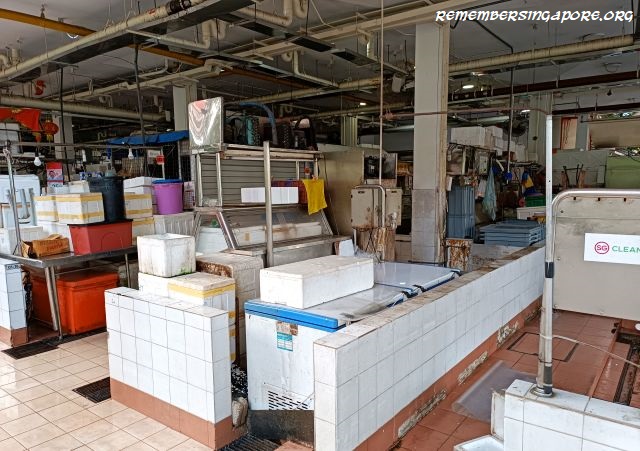
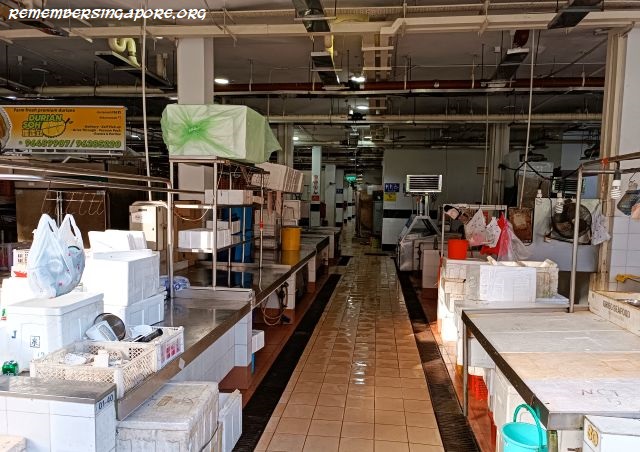
A last look at Bukit Timah Market and Food Centre:

Published: 29 September 2024

Posted in General | Tagged , , , , , , , , | 8 Comments

Our Favourite Soft Drinks of Yesteryears

We used to call our favourite soft drinks bok zwee or hor lan zwee (“bottled water” or “Holland water” in Hokkien), or ang sai that refers to Fraser & Neave (F&N) orange juice (“red lion” in Hokkien; referring to the F&N logo displayed on their glass bottles).

For most of the ordinary folks, soft drinks in the past were not an everyday item, but a luxurious treat reserved only for the festivals, weddings, birthdays or other joyous occasions. It delighted the kids most, who would look forward to have their favourite fizzy or orangey taste of the soft drinks.
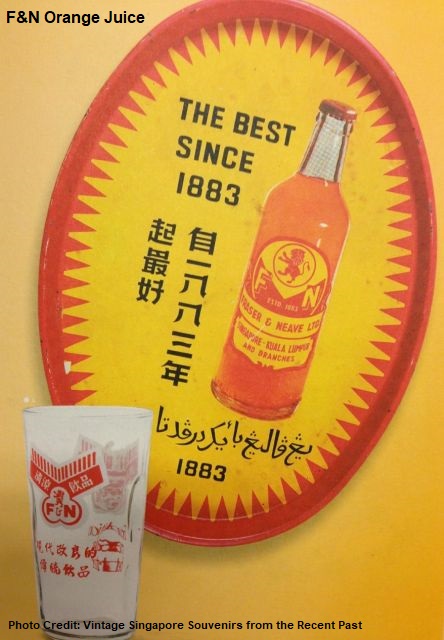
In general, soft drinks refer to non-alcoholic drinks, particularly those that are carbonated (or “aerated” before the mid-20th century). Coca Cola was introduced to the world in the 1890s, and still remains as one of the most popular soft drink brands today.

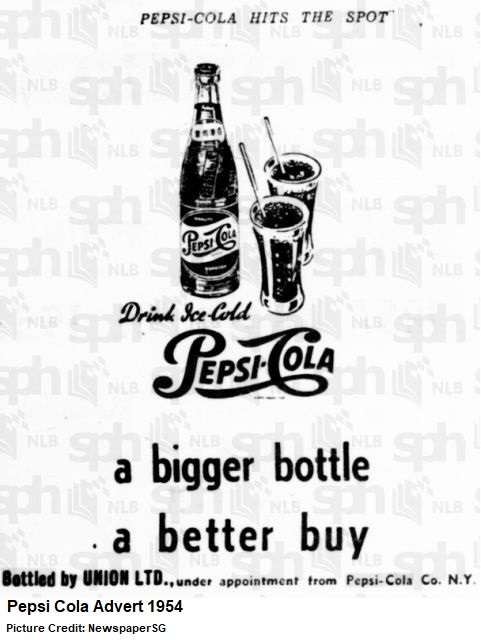
In Singapore, the range of soft drinks varied from the colas (Coca Cola landed in Singapore before the Second World War and Pepsi Cola in 1953) and fruit-based carbonated drinks (for example F&N Orange, Framroz, Sinalco, Green Spot) to the non-carbonated traditional drinks (such as Yeo Hiap Seng’s chrysanthemum tea, Dixon soyabean milk, herbal tea).

Some strong brands have flourished for decades, and remain successful till this day. Some were popular for only a few years, while a number had already vanished into history.
In 1980, the total manufacturing output of soft drinks in Singapore reached 130 million litres, almost doubled from the 77.6 million litres recorded a decade earlier in 1970. In the 1987 data collection by the Economic Development Board (EDB), Singaporeans gulped down an incredible 235.6 billion litres of soft drinks in that year, almost 2,000 times more than the 1980’s figure in the manufacturing output volume of soft drinks.

The popularity of these soft drinks, however, peaked between the eighties and 2000s, before many Singaporeans became health conscious enough to voluntarily cut down on the intake of these sweetened drinks.

Early Aerated Water Manufacturers

Prior to 1880, there were no manufacturers in Singapore producing soft drinks on a large scale. In 1883, John Fraser (1843-1907) and David Chalmers Neave (1845-1910) cofounded The Straits Aerated Water Company, which was converted into a limited liability company in 1889 known as Fraser & Neave (F&N). F&N’s long and successful legacy continues till this day.

In the early 20th century, the Seletar Springs was discovered and this led to the formation of The Singapore Hot Spring Limited that produced aerated waters for a number of years. The company, together with the springs, was then bought over by F&N to produce their star products in Vichy Water and Zom.

A couple of short-lived aerated water manufacturers, such as Harbour Aerated Water Factory (at Middle Road) and Oriental Aerated Water Factory, existed in the 1910s.

Three major aerated water manufacturers rose to challenge F&N during the pre-war period. They were Framroz, Popular Aerated Water Works and Phoenix Aerated Water Works.

Framroz was cofounded in 1904 by Phirozshaw Manekji Framroz (1877-1960) and Navroji Rustamji Mistri (1885-1953). Both of them were Parsi who came to Singapore from Bombay in the early 20th century. The Framroz brand lasted until the seventies (more information about Framroz below).

In 1924, a Chinese firm named The Imperial Aerated Water Company was established. It shifted to a larger premises at Tanjong Pagar’s Choon Guan Street in 1928 and was renamed The Popular Aerated Water Works Ltd. Under its new “Popular” name, its soda water was advertised with catching slogans such as “as refreshing as a dip in the sea“, “when the night’s devilish hot” and “knock the spots out of old sol (sun)“.
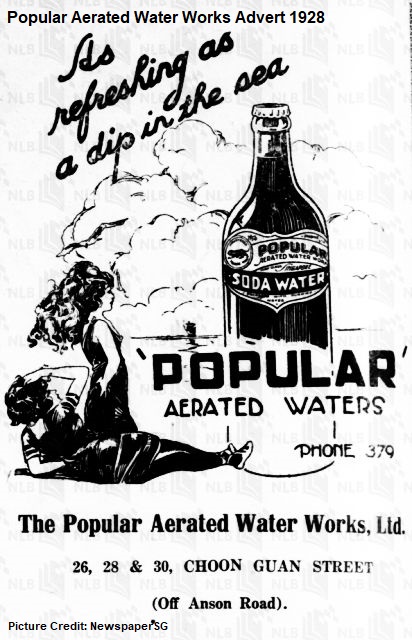
The company, however, went into liquidation and was acquired by prominent businessman and community leader Lee Choon Seng (1888-1966) in 1933.

The Phoenix Aerated Water Works was started by Navroji Mistri in 1925 at Anson Road. This soured his relationship with Framroz and resulted into a years-long court case that ultimately ruled in Mistri’s favour.
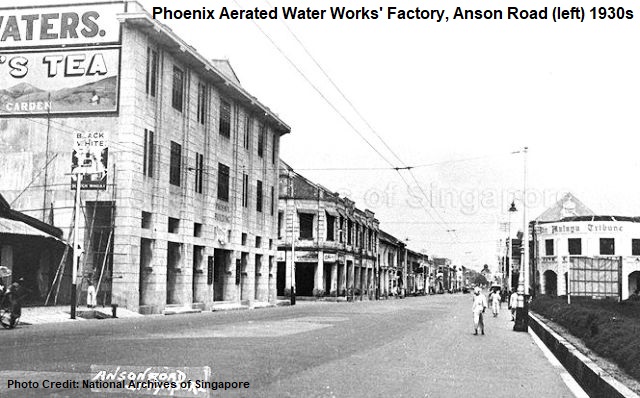
In just a few years, Phoenix Aerated Water Works’ business expanded and began exporting its soda water, mineral spring waters, flavoured sweet drinks and fruit beverages to Malaya, Java, Sumatra, Borneo and India. The company lasted for almost half a century, before it was eventually wound up in 1972.

By the 1930s, there were as many as nine registered aerated water manufacturers in Singapore, with a large portion of the market shares dominated by F&N, Framroz, Popular and Phoenix. Together, the aerated water manufacturers in Singapore produced an estimated 25 million bottles of aerated waters a year in the 1930s.
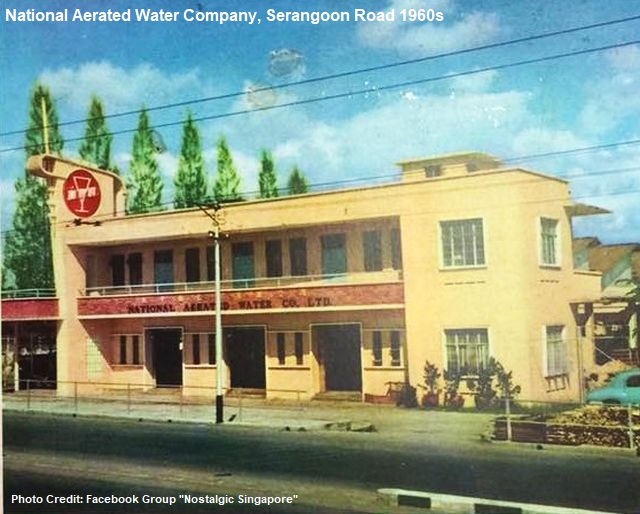
One smaller aerated water manufacturer that later grew to become the largest Chinese manufacturer of aerated water products in Singapore was the National Aerated Water Company. Started in 1929, it was able to produce popular orange juice, pineapple juice and sarsaparilla (root beer) after years of research.

By 1950, National Aerated Water Company’s daily production rose to more than 30,000 bottles, sold mostly to local consumers. Its Art Deco-style factory, built in 1954, was an iconic landmark along Serangoon Road for more than 60 years. The building was conserved in 2017 to become part of the new private condominium named Jui Residences.
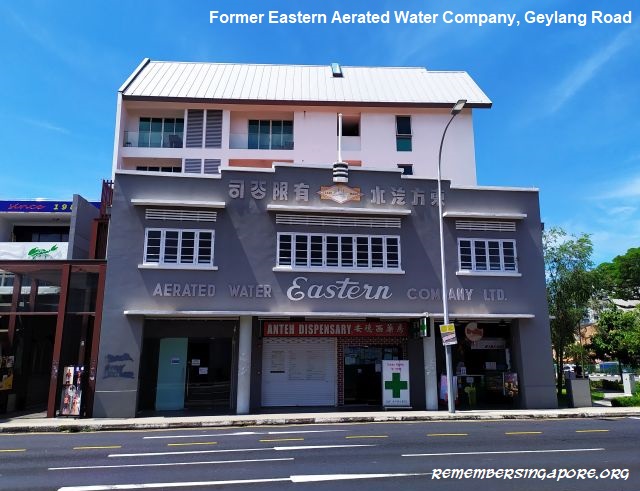
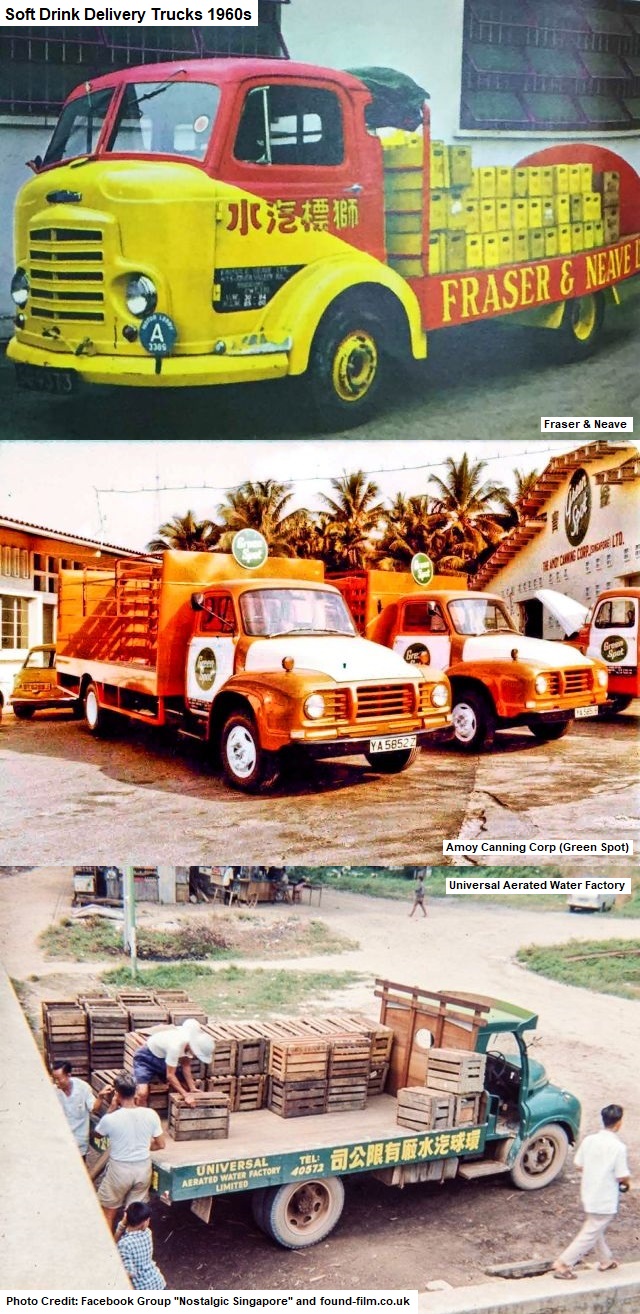
Another major player in the local soft drink industry was the Eastern Aerated Water Company. The company had eight delivery trucks and more than 100 employees in 1950.

By 1951, Eastern Aerated Water Company’s Geylang Road factory was able to ramp up its production to 1 million bottles a month (or about 33,000 a day), similar to National Aerated Water Company’s daily production. It sold 16 kinds of soft drinks, including its house brands of Eastern Cola and Eastern Aerated Water, in both Singapore and Malaya in the fifties and sixties.
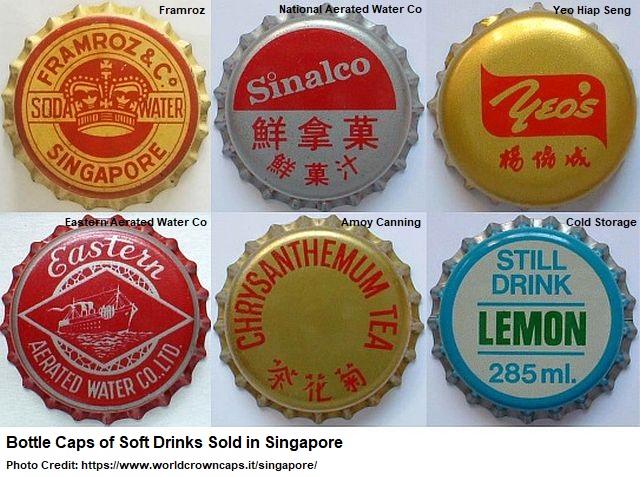
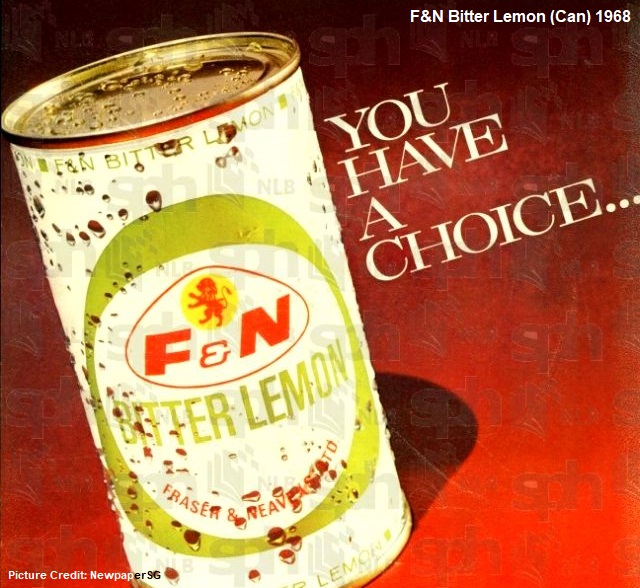
Singapore’s economy gradually recovered after the war, and this helped to lift the local soft drink industry. The bottling of soft drinks also evolved; while many of the drinks continued to be produced in glass bottles with metallic caps, aluminum cans were beginning to be widely used in the sixties.

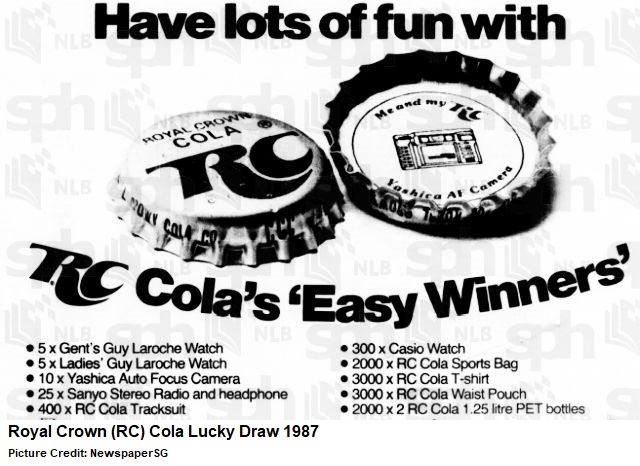
Consumers were spoiled for choice when competitive soft drink brands, both local and foreign, flooded the Singapore market in the sixties and seventies. Among the popular ones were F&N, Coca Cola, Pepsi Cola, Framroz, Eastern Cola, Eastern Aerated Water, Long Bros, Suka, Sinalco, Kickapoo Joy Juice, Royal Crown Cola, 7-Up, Bubble Up, Mirinda and Green Spot.
Popular Soft Drink Brands

Framroz

Framroz was manufactured by Framroz Aerated Water Factory, first located at Cecil Street and later shifted to Telok Ayer Street. In the 1930s, the soft drink manufacturer claimed to be one of the first in Singapore to sell fruit juice in aerated form, including its popular Orange Smash, Pineapple Smash, Strawberry Smash and Raspberry Smash.

Framroz’s products were exported regionally to Malaya, Java, Sumatra and Borneo. Locally, its largest customers were the British military, institutes, and civil and military hospitals in Singapore.
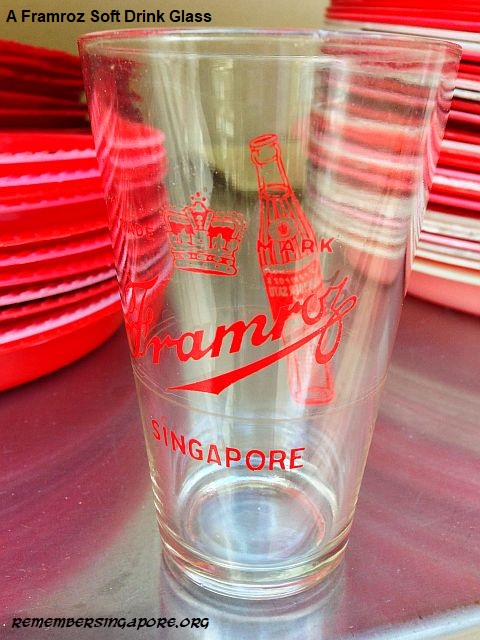
In 1952, Framroz moved again, this time to Jalan Besar’s Allenby Road where it stayed until the end of its business in the seventies. Its Crown Orangia and Crown Pine Smash were heavily marketed as part of its carbonated and non-carbonated drinks made from imported fruits from California.

The company and brand peaked in the fifties and sixties, selling as many as 16 types of soft drinks with 11 flavours. Framroz’s fortune, however, declined in the late sixties and, despite an acquisition attempt in 1972 by another local food company Ben Foods, it was not able to survive past the seventies.

Sinalco

Famous German soft drink Sinalco was introduced in Singapore in the early 1950s and quickly gained popularity among Singaporeans with its unique taste that resembles a mixture of orange, lemon, blackberry, raspberry, strawberry and pineapple juices.
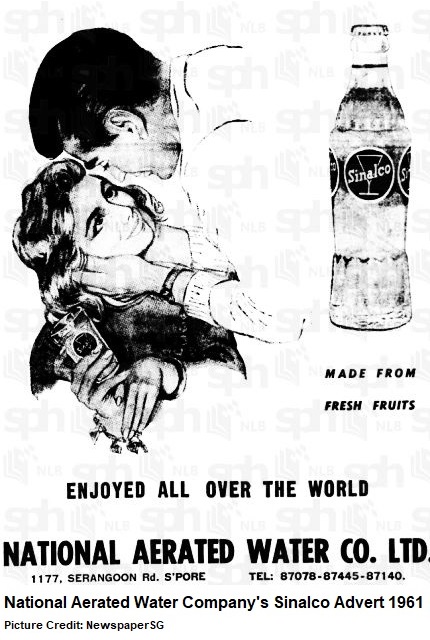
The name Sinalco is derived from the combination of the Latin words sine (“without”) and alcohole (“alcohol”), indicating that its drinks are non-alcoholic. Its Chinese name “鲜拿果” literally means fresh fruits.

Bottled by the National Aerated Water Company, the soft drink made its debut in 1953 at the Sinalco booth in the Great Eastern Trade Fair. The company’s $500,000 Serangoon Road factory was upgraded in 1954 with new machinery and technologies imported from Britain and the United States for more efficient bottling process.
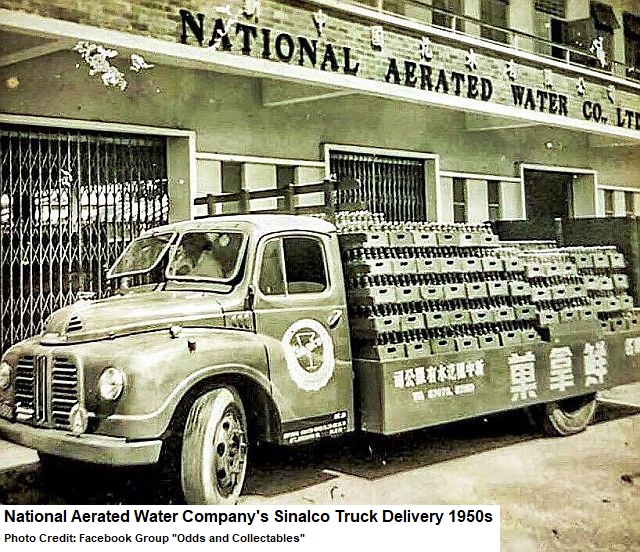
National Aerated Water Company built another $350,000 factory at Kuala Lumpur in 1964 to bottle Sinalco. This production was solely to meet the Malaysia market’s increasing demands.

In 1965, a new variation of Sinalco, called Sinalco-Kola, was introduced globally. Another new version Sinalco Special was launched in the late seventies. Sinalco remains the oldest soft drink brand in Europe today, although its popularity in Singapore has considerably waned since the nineties.

Kickapoo Joy Juice

Kickapoo Joy Juice, a citrus-flavoured soft drink, was another popular product bottled by the National Aerated Water Company.

The name first appeared in Li’l Abner, an American comic strip that ran from 1934 to 1977. The Straits Times carried this comic strip in its papers during the sixties and seventies, raising public awareness of the name and drink (although it was depicted as an alcoholic drink in the comic). Some of the comic characters printed on the drink bottles became a recognisable part of the brand.
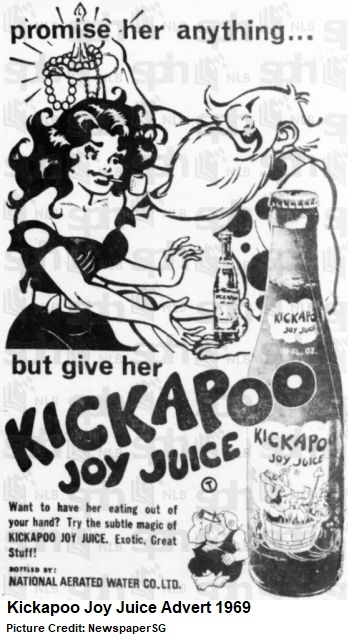
Kickapoo Joy Juice was introduced to the Southeast Asian markets after the mid-sixties. In Singapore, its refreshing taste was generally well-liked, making it a popular must-have drink during festivals or on a hot day.

Green Spot

Green Spot was created as an American orange-flavoured soft drink in 1934. Making its debut in Singapore in 1939, it was sold at the luxurious hotels and cafes and advertised as a refreshing and invigorating drink made from “cane sugar and pure juice of fresh sun-ripened oranges“.

Green Spot became readily available to the common folks after the war, when Amoy Canning obtained the franchise rights to bottle the soft drink on a massive scale.
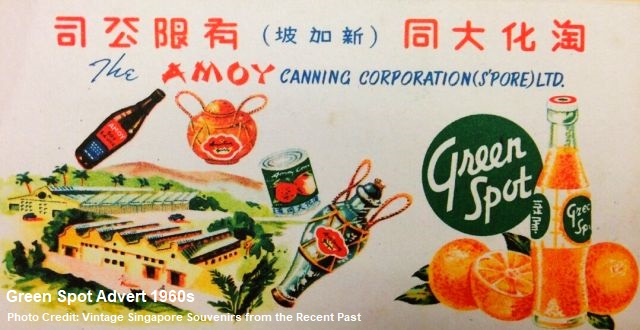
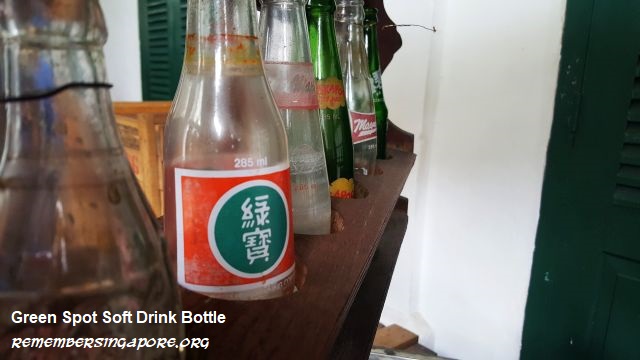
Founded in Amoy (Xiamen) of China in 1908, Amoy Canning started with soya sauce made from its home-made recipes. In 1949, the company expanded to Singapore with the building of a $1.5 million factory at Bukit Timah Road 8th milestone. Equipped with a modern bottling machine known as the premix gravity filler, Amoy Canning was able to produce 8,000 cases, or 192,000 bottles, of Green Spot everyday.

Besides Green Spot, Amoy Canning’s star products were Bubble Up, a lemon-lime-flavoured soft drink, and Dixon, a non-carbonated soya bean drink. Bubble Up was brought into Singapore from the United States in the sixties.

In 1994, Amoy Canning relocated its factory to Chin Bee Avenue in Jurong. It then shifted to its current premises at Bukit Batok in 2016. The century-old company is currently helmed by the fourth generation of the founder’s family.

Mirinda

Mirinda, originated from the United States and introduced by Pepsi Cola International, made its debut in Singapore in 1957. Three years later, the company worked with local franchised bottler Union Pte Ltd, established at Havelock Road in 1950, to supply Pepsi Cola, Schweppes and Mirinda to the Singapore and Malaya markets.
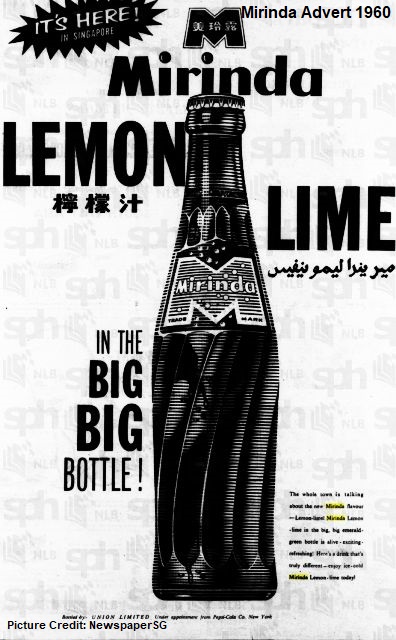
In 1969, Union moved to a new factory at Woodlands. Occupying a large area of 6,500 square metres, the factory was equipped with modern pre-mix machinery that were able to produce as many as 60 million bottles each year. Former Education Minister Ong Pang Boon (born 1929) officiated the opening of Union’s factory on 1 July 1969.

Mirinda Orange and Mirinda Lemon-Lime were sold in the sixties. In 1975, Pepsi Cola introduced a new flavour in Mirinda Strawberry. An aggressive one-month campaign was launched, with almost $180,000 worth of the new soft drink given away at several major public places such as supermarkets, swimming pools and the National Stadium.
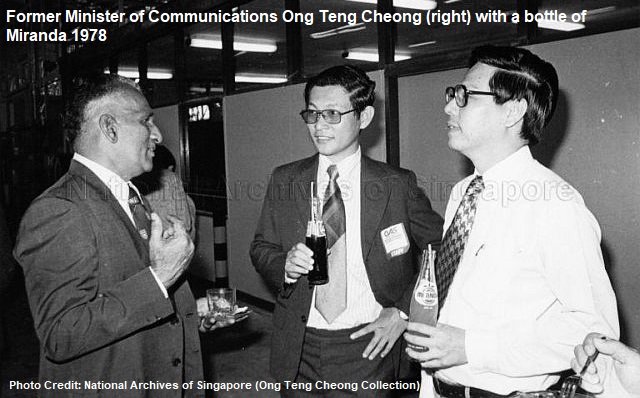
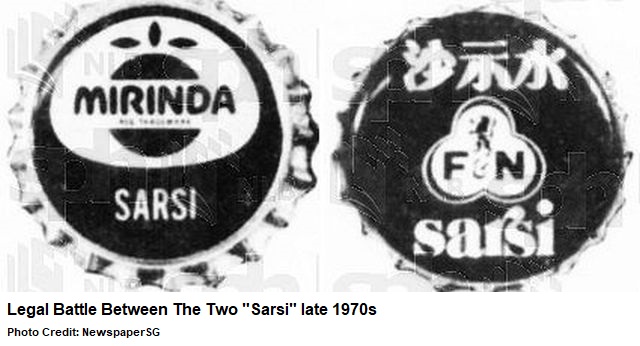
The local bottling of Pepsi Cola and Mirinda was taken over by Yeo Hiap Seng in the late seventies. A fourth taste – Mirinda Sarsi – was introduced to the local market in the late seventies.

This, however, led to a legal battle between Yeo Hiap Seng and F&N over the use of the name “sarsi“. The High Court eventually ruled in Yeo Hiap Seng’s favour in August 1980.
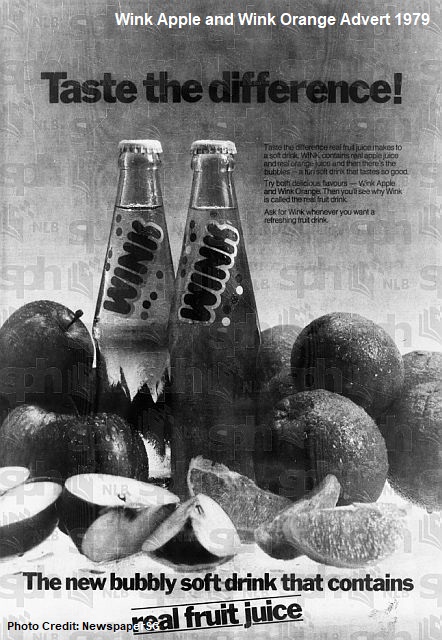
Other than Mirinda, Yeo Hiap Seng also brought in two more soft drinks for the local market in the late seventies. They were the Canada Dry, a Canadian soft drink well-known for its ginger ale, and Wink, an American soft drink that offered two flavours in apple and orange.
Fanta

Carbonated fruity soft drink Fanta originated from Germany in 1941 during the Second World War. Due to the United States’ trade embargo of Nazi Germany, Fanta was created by Coca Cola’s German factory as an alternate option to the popular Coca Cola. After the war, Coca Cola took back the factory as well as Fanta’s trademarks.

Fanta’s most popular flavour Fanta Orange was created in 1955. By the sixties, the soft drink had landed in Singapore and its bottling rights went to F&N, which already had been bottling for Coca Cola since 1936. Fanta introduced more flavours – grape, strawberry and fruitade – in the seventies.
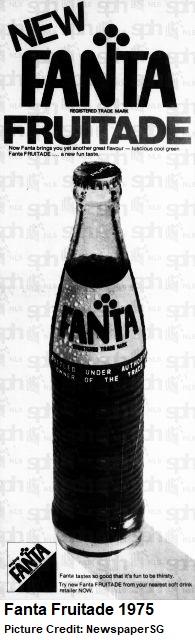
In 1992, F&N and Coca Cola entered a joint venture to become F&N Coca Cola, with F&N holding 75% of the shares. To strengthen the new brand, F&N considered dropping Fanta Orange so that it could concentrate in selling only one orange drink – F&N Orange – to the local and regional markets. The plan did not materialise and Fanta Orange continued to be a popular soft drink in Singapore for the rest of the nineties.

Coca Cola vs Pepsi Cola

In the mid-eighties, the fierce rivalry between Coca Cola and Pepsi Cola, dubbed as the Cola War, spilled over from the United States to Singapore.

Coca Cola in the early eighties had introduced a new taste that became known as the new Coke. This move did not go too well with the consumers, and it forced Coca Cola to bring back the original taste under the name Coca Cola Classic. Pepsi Cola took the opportunity to mock their rival, claiming “it took us 87 years to beat the old Coke, but it only took us 87 days to beat the new Coke.

In Singapore, things would turn out to be quite different. Coca Cola seemed to gain the upper hand when McDonald’s, established here since 1979, switched from Pepsi to Coke in 1985.

Other major fast food chains in Singapore that served Coke in the eighties were Kentucky Fried Chicken, Burger King, Wendy’s, Hardee’s, Orange Julius and A&W. In comparison, only Pizza Hut, Milano’s Pizza, Long John Silver’s and Big Rooster served Pepsi.

7-Up vs Sprite

A major shakeup happened in 1986 when Yeo Hiap Seng was awarded the 7-Up franchise by Pepsi Cola. First introduced in Singapore in 1960 by Lion Ltd, a subsidiary of F&N, 7-Up grew to become Singapore’s leading lemon-lime soft drink brand in the eighties.
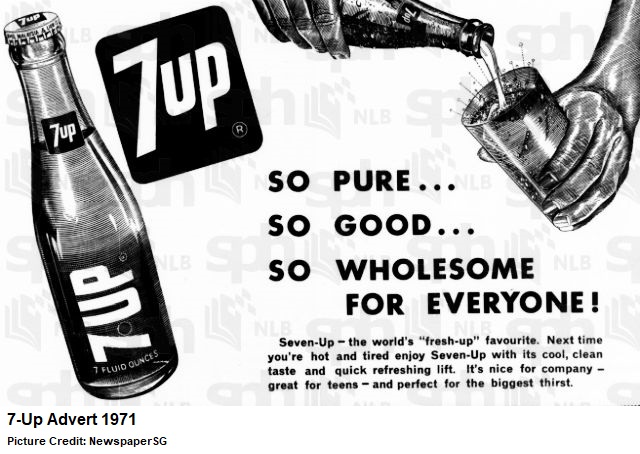
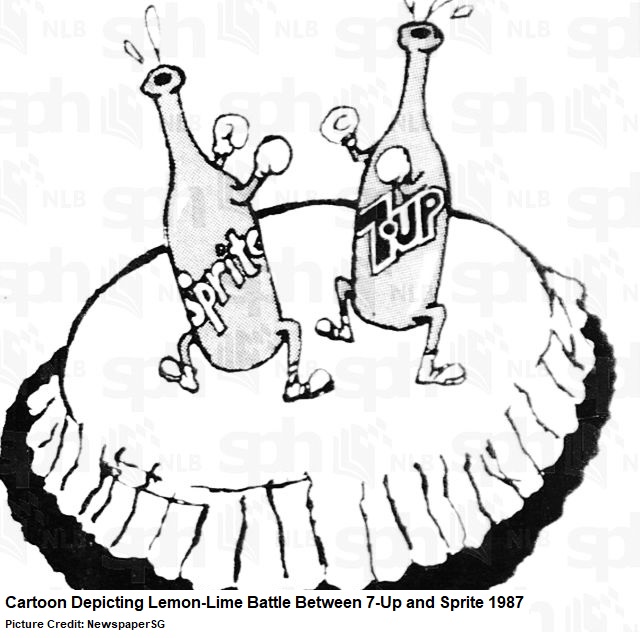
F&N then went on to take over the Sprite franchise previously under Cold Storage. Sprite was owned by the Coca Cola company. The late eighties witnessed the intense “lemon-lime battle”, as F&N’s Sprite competed with Yeo Hiap Seng’s 7-Up and Mirinda Lemon-Lime for the market shares. The “lemon-lime battle” was considered an extension to the Cola War between Coca Cola and Pepsi Cola.

In 1991, Pepsi Cola collaborated with Warner Bros and superstars to market its soft drinks. Pepsi Cola was endorsed by the likes of Michael Jackson, Madonna and Tina Turner, whereas Bugs Bunny and Looney Tunes characters were used to promote Mirinda, and 7-Up represented by popular cartoon character Fido Dido.
Change of Taste

Not all soft drinks enjoyed success in Singapore. In the eighties, Cold Storage, franchised bottler for Sprite, A&W Root Beer and Magnolia, introduced a mint drink that did not go down well among the Singaporeans. In 1982, an orange-flavoured barley drink was withdrawn from the market after only three months.

Meanwhile, more Singaporeans had become health conscious. There were concerns about the soft drinks’ sugar level, use of artificial sweeteners and the effect of caffeine on children.
In 1992, the major drink manufacturers in Singapore pledged to reduce the sugar content of their drinks in order to fight obesity in schools. The sugar level in their drinks would gradually be reduced from 10% to 8%. In the same year, the canteens of the schools, technical education and tertiary institutes in Singapore were instructed to stop selling Coca Cola, Pepsi Cola and other soft drinks with more than 10% sugar level.

The nineties and 2000s saw more beverage choices for the local consumers, such as isotonic drinks, ice blended coffee and bubble tea. On the other hand, soft drinks, despite the availability of sugar-free versions such as Diet Coke and Diet Pepsi, never quite shook off their unhealthy image and reputation. This led to a general consensus that soft drinks should not be consumed on a regular basis.

A list of popular soft drinks in Singapore throughout the years:

Soft Drink

Debut in Singapore

F&N

1883

F&N was established to produce carbonated soft drinks

Zombun

1909

Made by Singapore Hot Spring Ltd using Sembawang Hot Spring water

Zom

1920s

Introduced by F&N using Sembawang Hot Spring water

Vichy Water

1920s

Introduced by F&N using Sembawang Hot Spring water

Popular

late 1920s

Introduced by Popular Aerated Water Works

Lemonpop & Orangepop

1930

Lemon and orange juice-based soft drinks by Phoenix Aerated Water Works

Squeeze

1931

Orange juice-based soft drink by Popular Aerated Water Works

Marquisa

1932

Mixed fruit juice-based soft drink by Phoenix Aerated Water Works

Kasi Kola

1937

Bottled by Phoenix Aerated Water Works

Green Spot

1939

US orange-flavoured soft drink bottled by Amoy Canning Corp

Vimto

1930s

Advertised by F&N as a health fruit tonic that fought work weariness. Sold by Phoenix Aerated Water Works in the 1950s

Framroz

1930s

Known for its popular fruit juices in aerated form, such as Orange Smash, Pineapple Smash, Strawberry Smash and Raspberry Smash

Coca Cola

1930s

Popular US cola brand, bottled by F&N since 1936

Diet Coke

1985

Sugar-free Coca Cola, rebranded as Coke Light in the late 1990s

Cherry Coke

1986

Advertised with slogan of “Cherry Coke turns your world upside down”

Vanilla Coke

2003

Said to contain vanilla planifolia from South America

Coke Zero

2008

Sugar-free Coca Cola

Eastern Cola

1950

Introduced by Eastern Aerated Water Company

Pepsi Cola

1953

Popular US cola brand, advertised as “Tree of Life” beverage in the 1950s and bottled by Union Pte Ltd

Diet Pepsi

1985

Sugar-free Pepsi Cola

Pepsi Twist

2002

Lemon flavoured cola

Sinalco

1953

German soft drink bottled by National Aerated Water Company

Mirinda

Lemon-Lime

1957

US soft drink first bottled by Union Pte Ltd, then by Yeo Hiap Seng

Orange

1960s

Strawberry

1975

Sarsi

late 1970s

Kool-Aid

late 1950s

US soft drink in 4 flavours (orange, cherry, lemon, grape) and available in packet form for self making of soft drink

Suka

1960

US strawberry-flavoured non-carbonated soft drink bottled by Birely’s Ltd

7-Up

1960

US lemon-lime flavoured soft drink first bottled by Lion Ltd, then by Yeo Hiap Seng

Bubble Up

1960s

US lemon-lime flavoured soft drink bottled by Amoy Canning Corp

Kickapoo Joy Juice

1960s

Citrus-flavoured soft drink bottled by National Aerated Water Company

Fanta

Grape

1970

German soft drink bottled by F&N

Strawberry

1972

Fruitade

1975

Royal Crown (RC) Cola

1972

Bottled by National Aerated Water Company

Wink

1979

US apple and orange flavoured soft drink distributed by Yeo Hiap Seng

Sprite

1980

First distributed by Cold Storage, then by F&N

100 Plus

1983

Launched by F&N as part of its 100-year commemoration

Ferrarelle

1992

Italian sparkling mineral water distributed by Yeo Hiap Seng

Published: 7 September 2024
Posted in Nostalgic | Tagged , , , , , , , , , , , , , , , , , , , , , , , , , , , , , , , , , , , , , | 8 Comments

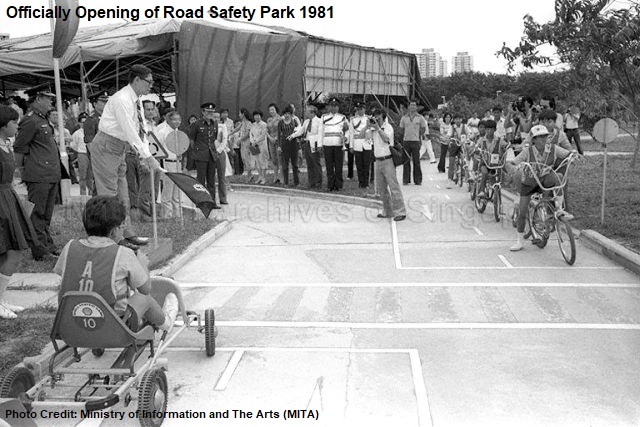
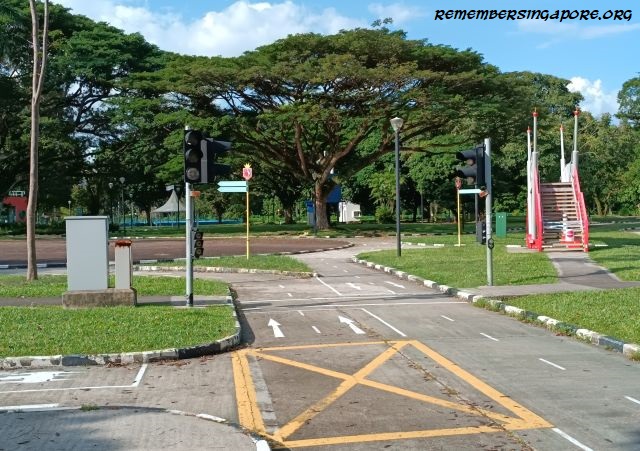
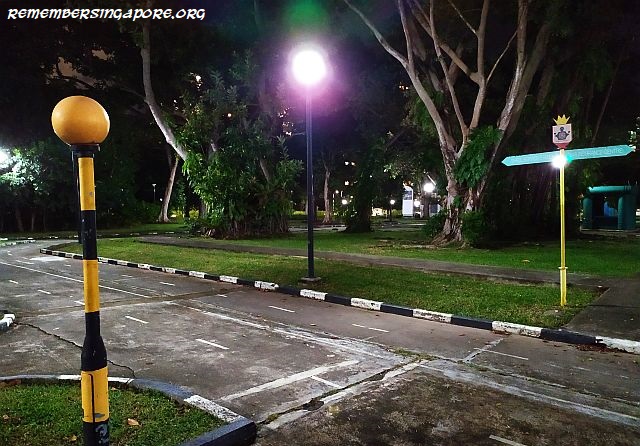
Nostalgic Memories of East Coast’s Road Safety Park

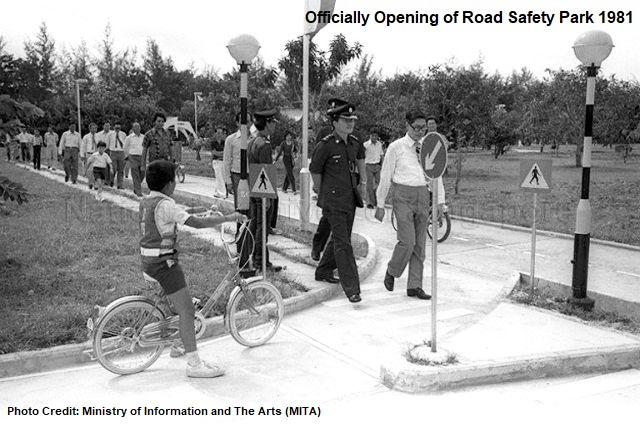
To many, the Road Safety Park (present-day Road Safety Community Park) brings back fond nostalgic memories of their fun school excursions and carefree student days. More than a million local students had played the traffic games held at this 4-hectare park along East Coast Parkway since the early eighties.

Road Safety Park Project

Road safety was a major concern in the seventies. An average of 260 lives were lost in road accidents annually, with thousands more injured. About 33% of the total pedestrian casualties were children below the age of 15.

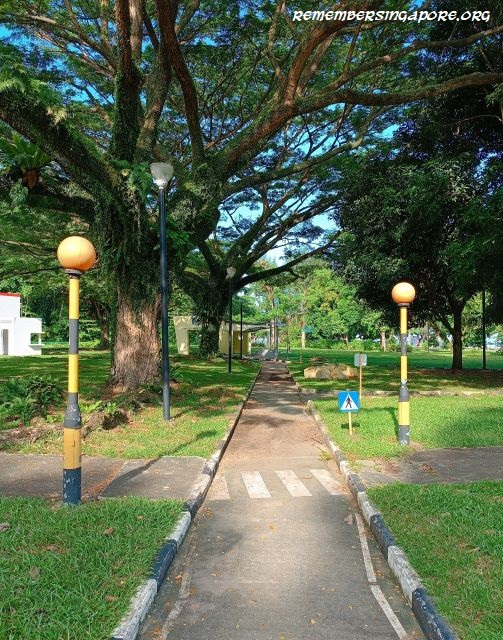
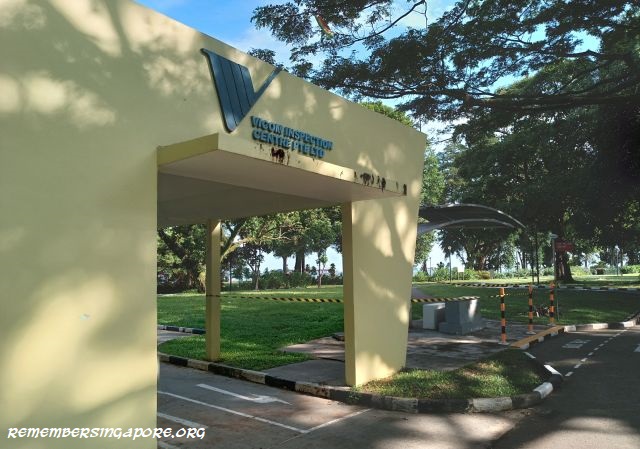
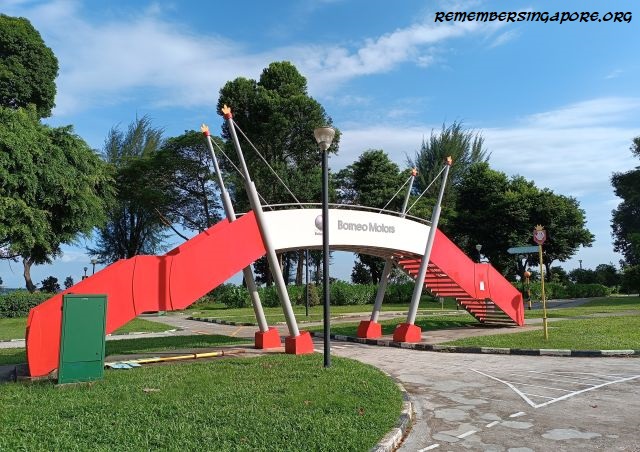
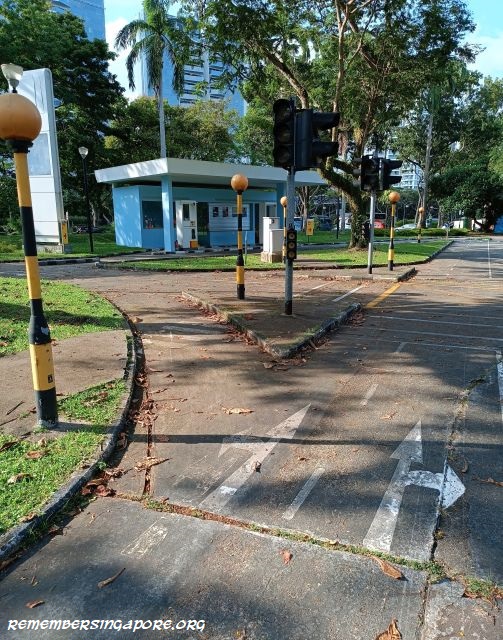
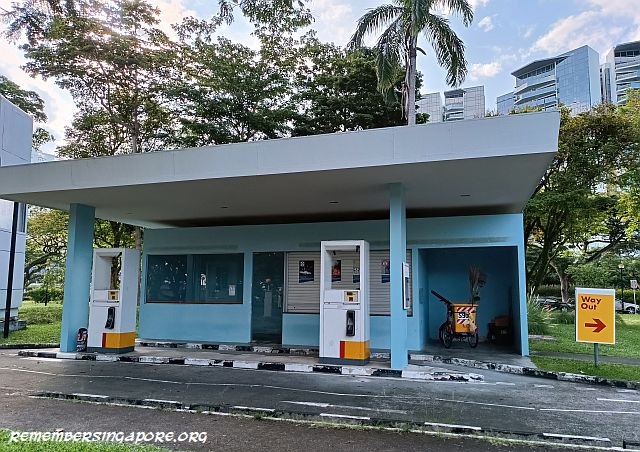
To tackle the issue, the Ministry of Education and Traffic Police came together to do a Road Safety Park project that would introduce road safety to the students as a way of life. It would also educate them the importance to abide by the traffic rules, be more road safety conscious and considerate to other road users. At the park, the students would learn traffic hand signals and the functions of traffic light junctions, zebra crossings, road signages and petrol kiosks.

The project gained support from various local organisations and companies such as General Insurance Association of Singapore, Singapore Turf Club, Shell Singapore, Post Office Savings Bank (POSB), Tan Chong & Sons Motor Company, McDonald’s Singapore, Cycle and Carriage and Mitsubishi Motors. Their sponsorships ensured the successful completion of the $1.3-million Road Safety Park in late 1980. On 11 January 1981, the new park was officially opened by then-Home Affairs Minister Chua Sian Chin.

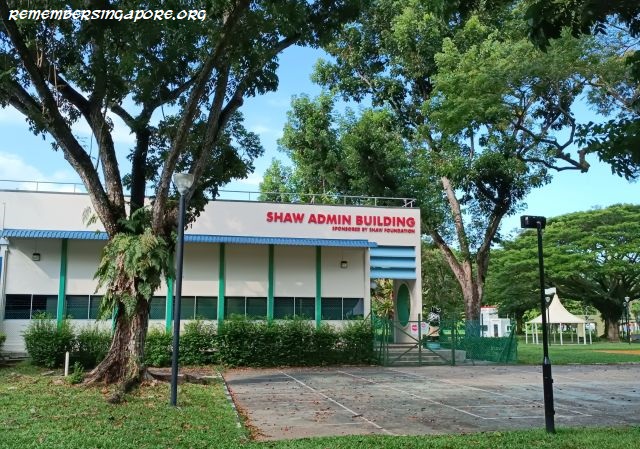
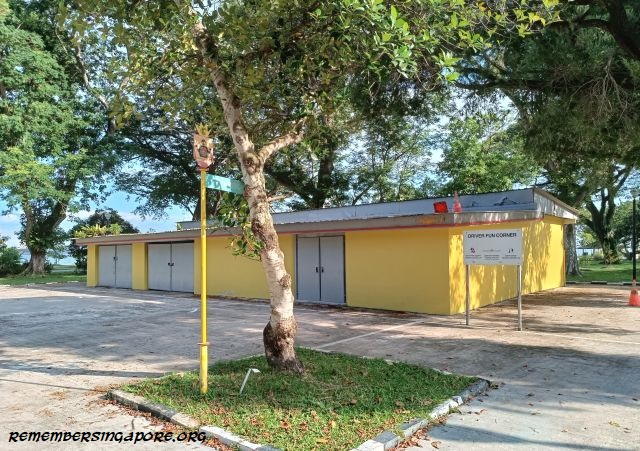
In 1984, the Road Safety Park added a new $760,000 administrative block, with $250,000 of its construction cost sponsored by the Shaw Foundation. Initially built for the National Safety Council, it was handed over to the Traffic Police Command upon its completion. The block had a multi-purpose hall, offices, workshops and a snack bar.

First Road Safety Park

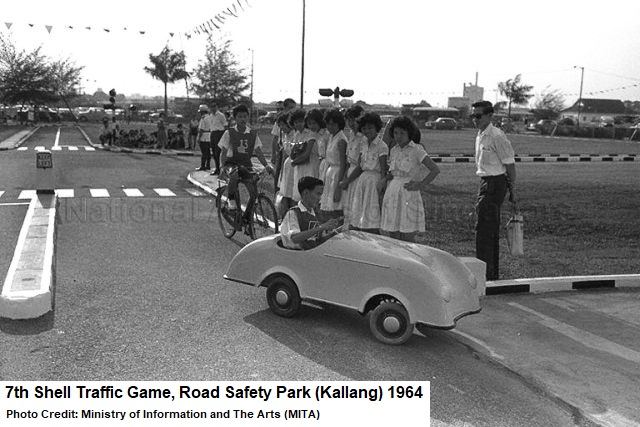
East Coast’s Road Safety Park, however, was not the first road safety-themed park in Singapore. In 1950, the Shell Group of Companies introduced the Shell Traffic Game to Germany and the popular game later spread to other large cities in Europe. It proved to be an effective method to train the young in road safety. The first traffic game came to Singapore in 1958, organised by Shell and sponsored by the Singapore Safety First Council.

A $75,000 course at Kallang Park was provided by the Singapore government for the Shell traffic game, which quickly became popular among the locals. However, it was discontinued in the mid-sixties as the Kallang course had to be demolished to make way for the new National Stadium. It was not until more than a decade later that another road safety course was built at East Coast.

Traffic Games for Students

The Road Safety Park was able to accommodate up to 300 students at any point in time. By 1991, a decade after the park’s opening, more than 600,000 Primary Three to Secondary Two students had participated at least once in the traffic games.

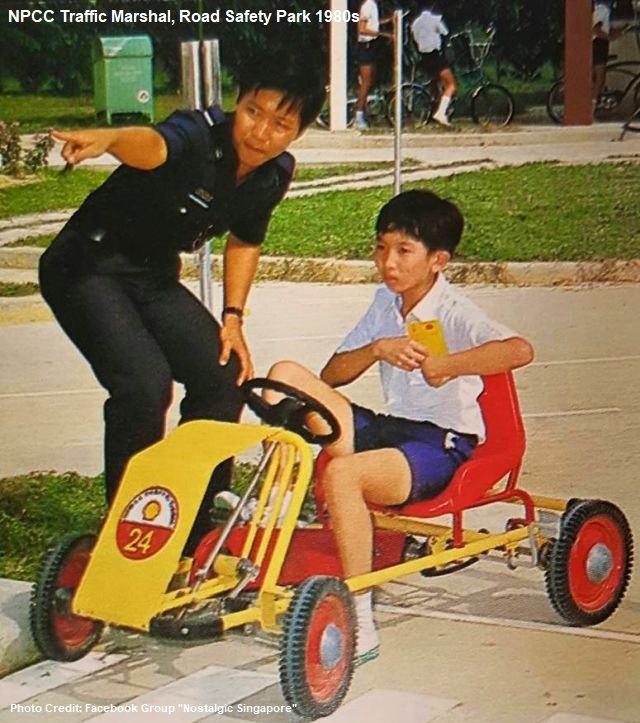
In the traffic games, the National Police Cadet Corps (NPCC) members were assigned with the roles of traffic marshals to guide their fellow students, who would play the roles of pedestrians, cyclists and go-kart drivers. The go-kart driver and cyclist roles were the most popular among the students.

Each participant was issued a route card, and those who completed the games without any traffic violations and penalty points were awarded proficiency certificates.

In June 1985, the park was opened to the public during the weekends to further spread the road safety message to families, elderly and young. The charges were $1 for a 45-minute g0-kart drive around the park, and 50c for a 45-minute bicycle ride. Pedestrians were free to stroll around the park.

The park would be fully opened to the public in 2010.

In the eighties, the Road Safety Park was also the venue for the Singapore Scout Association’s cadet scouts to take practical tests for their Road Safety Proficiency Badges.

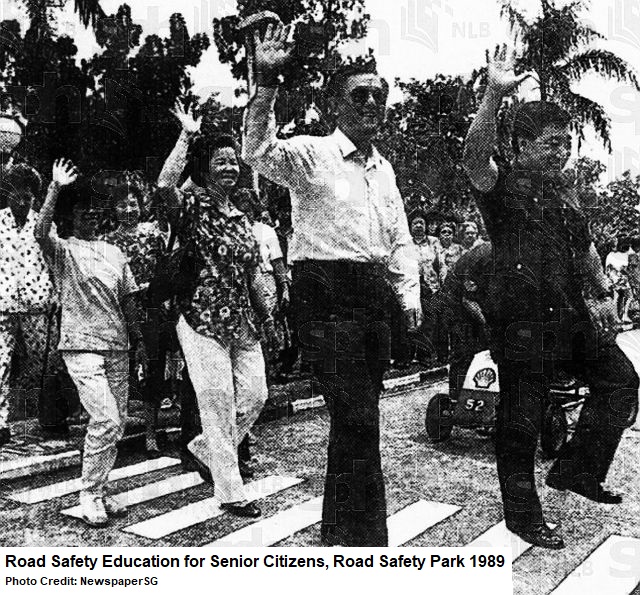
From 1989 to the nineties, the park was used to provide road safety education for the senior citizens, where they were given lessons on safe crossing of roads at zebra crossings and traffic junctions. The elderly were encouraged to wear clothing of brighter colours to increase their visibility to the drivers.

Road Safety Campaigns and Mascots

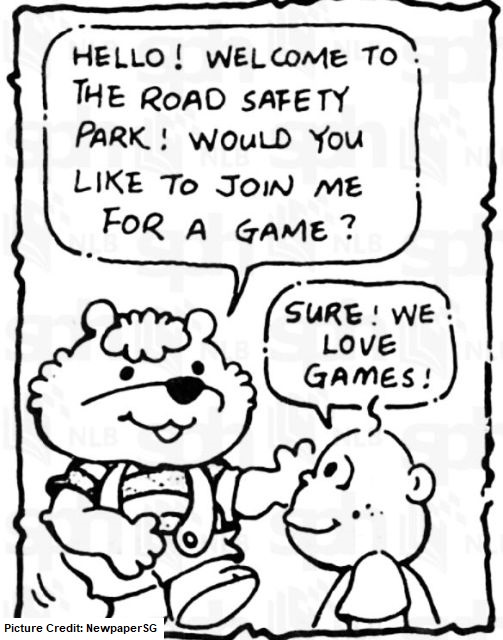
The Traffic Police unveiled a mascot called Safety Bear (小安安) in 1986, together with a “More Patience, Fewer Accidents” slogan, as part of its road safety campaign.

Safety Bear was then introduced through televised safety filmlets, comic strips and printed T-shirts. There were even 6,000 Safety Bear toys on sale at the Road Safety Park, department stores and neighbourhood shops.

The mascot would become part of Singapore’s memorable and iconic mascots of the eighties and nineties, along with Singa the Courtesy Lion and Teamy the Productivity Bee.

The road safety campaign had a positive effect on many children. A 11-year-old girl called Carol Lin Meimei, in 1988, wrote a road safety poem that impressed the Traffic Police so much that they used it as part of their road safety education for the primary school students in the late eighties. The poem was:

I have learnt my two times table
And I know my A B C
But the thing that is most important
So my teacher says to me
Before I cross the road
To stop and look most carefully
I look to the right
I look to the left
And back to the right, I know.
And only if the road is clear
Am I allowed to go.
Whatever else I may forget
Kerb drill I must remember.
It’s most important everyday
From January to December.

In 2011, the Singapore Road Safety Council, Traffic Police, People’s Association and Automobile Association of Singapore collaborated to introduce another road safety mascot called Mr Zebra. Its road safety slogan was “Be Seen, Be Safe. Every Life Matters“.

Other road safety measures in the eighties included a road-crossing monitor scheme implemented in 1987 at many schools, where students in bright orange vests would stand near the school gates to ensure their fellow students obey the safety rules when entering and leaving the school.

As for the drivers, the Traffic Police introduced the Driver Improvement Point System (DIPS) in 1983 that identified habitual bad drivers for re-training. More resources were also allocated to improve the training and testing methods for the learner drivers. Two new training circuits – the Singapore Safety Driving Centre at Ang Mo Kio and Kampung Ubi Driving Test Centre – were opened in June 1985 and March 1986 respectively. Learner drivers must pass a Final Theory Test before they could take the practical driving test.

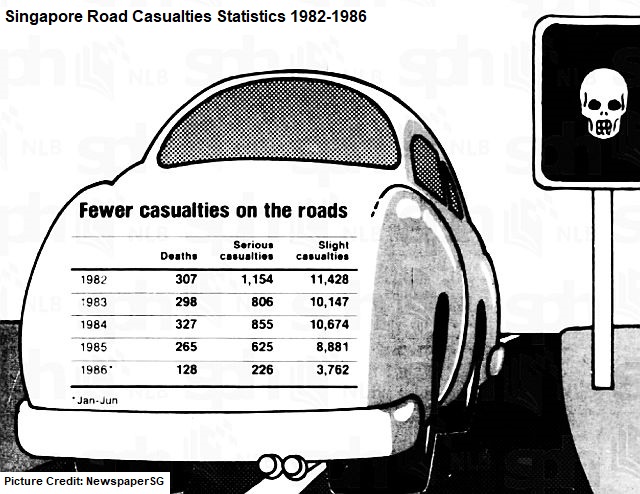
The road safety campaigns, measures and education helped to lower the number of accident-related deaths and injuries on Singapore roads in the eighties.

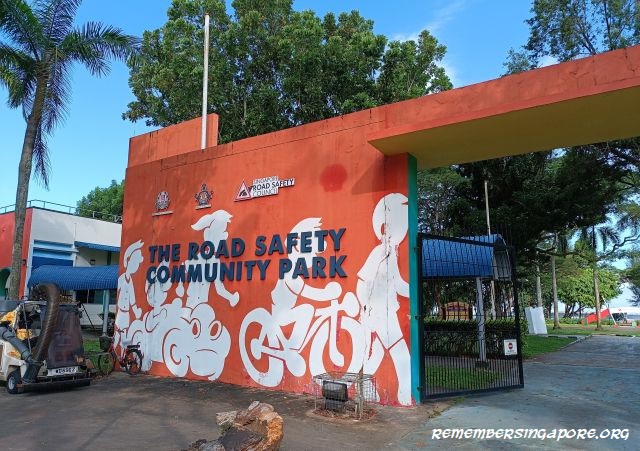
In 1994, for the first time since its opening, the Road Safety Park was closed for repainting and repair works. It was upgraded again in 2002, with a change of name to Road Safety Community Park to emphasise the importance of the community’s role in road safety. By its 20th year, more than one million students in Singapore had gone through the traffic games at the park.

In 2003, the Shell Traffic Games, which had always been held at the Road Safety Park, was moved indoors for the first time at the Singapore Expo Hall.

Today, the Road Safety Community Park is still hosting the annual traffic games for the students. According to the Traffic Police’s Road Safety Branch, the park will soon be upgraded once more as it continues to serve as an integral part of the ever-ongoing road safety campaigns.

Published: 27 July 2024
Posted in Nostalgic | Tagged , , , , , , , , , , | 8 Comments

Old Hill Street Police Station, the Iconic Colourful Landmark by the Singapore River

Originally called the Hill Street Police Station and Barracks, the majestic six-storey Neoclassical-style colonial building was Singapore’s largest government building when it was completed at a cost of about $634,000 in 1934. It was dubbed by the British as one of the finest police barracks in the world.

Former Landmarks

Old Hill Street Police Station is located at the junction of Hill Street and River Valley Road and at the foot of Fort Canning Hill. Singapore’s first prison and the Assembly Hall (also known as Assembly Rooms) formerly occupied this site in the 19th century.

The Assembly Hall started as an attap and wooden house, built for public functions as Singapore’s first town hall. In 1858, it held one of the colony’s most elaborate ceremonies, when the Knight Commander of the Bath (KCB) was bestowed on James Brooke, the “White Rajah of Sarawak”. A new Town Hall was later built in 1862 at Empress Place. The Victoria Memorial Hall was added to the Town Hall in 1905, and the building has become known as the Victoria Theatre and Concert Hall today.

Early Police Stations

The first police office was a wooden shack built by convicts in 1821 near the present-day Anderson Bridge. Other police stations before 1880s were mostly timber buildings with unstable foundations.

In the late 1920s, Harold Fairburn (1884-1973), the Inspector-General of the Straits Settlements Police Force from 1925 to 1935, pushed for the construction of modern police stations in Singapore. He studied police requirements, crafted proposals and sought funds and approval from the colonial government.

Due to Harold Fairburn’s efforts, new concrete police stations were erected by the Public Works Department (PWD) between 1931 and 1936, including the Central Police Station, Beach Road Police Station and Barracks, Traffic Police’s branch at Maxwell Road and Sikh Police Barracks at Pearl’s Hill.

But the largest would be the Hill Street Police Station and Barracks, completed and officially opened in 1934. It was designed by Frank Dorrington Ward (1885-1972), Singapore’s Government Architect from 1928 to 1939, whose impressive portfolio included the Volunteers Headquarters, Clifford Pier, former Supreme Court building (present-day National Gallery Singapore), former Custom House and the terminal building of the former Kallang Airport.

Largest Police Station

The huge Hill Street Police Station and Barracks, designed with offices, garages, two prison cells and three electric lifts, could house 1,000 working personnel. The building also had bunks, kitchens and even badminton courts to meet the accommodation and recreational needs of the hundreds of policemen and their families staying at the police station between the 1930s and 1950s.

There was also the Singapore Police Creche, a nursey located at the top floor of police station. It served as a temporary home for the children of the policemen when they were outstationed or away for duties. Necessary medical care was also provided for those with sick and undernourished kids.

The nursery, headed by the Lady Medical Officer of the Police Force, was said to be one of its only kind in the Far East. During the Second World War, however, the Singapore Police Creche’s medical equipment, cots, beds and toys were looted by the Japanese.

Warning Sirens

The late 1930s saw increased international tensions throughout Europe and Asia. In Singapore, the colonial government carried out civil defence exercises in March 1939, simulating air raids and naval attacks of the island. A total of eight air raid warning sirens were installed at Hill Street Police Station, Orchard Road Police Station, Kandang Kerbau Police Station, Kallang Airport, Geylang Fire Station, Keppel Harbour and a garrison school at Mount Faber.

After the war, in 1958, another new air raid warning siren was installed and tested at Hill Street Police Station.

Japanese Occupation

The Hill Street Police Station, like many other government buildings, was taken over by the Japanese during the occupation. The offices and prison cells were rumoured to be used by the Kempeitai (Imperial Japanese Army’s military police) for interrogation and torture of the anti-Japanese personnel.

In 1943, the Japanese painted the Hill Street Police Station in dark brown shades, in order to camouflage the building against the Allied Forces’ air raids. After war, in 1949, the British repainted the building with new pearly white coats of paint, to signify a new era after Singapore’s darkest period in history.

Post-War Period

The Arms and Explosive Branch moved to Hill Street Police Station in 1949. It was the department that issued licenses to the private gun owners between the fifties to seventies.

In the fifties and sixties, audacious cases of robberies and fights between secret society members just outside the Hill Street Police Station were not uncommon.

Hill Street Police Station underwent a $500,000 renovation project in 1971. More than just a functioning office for the police force, the building then also housed numerous police-affiliated organisations such as the Police Junior Officers’ Association, Junior Officers’ Mess, Junior Officers’ Non-Muslim Benevolent Society, Lembaga Khairat Muslim (Muslim Benevolent Society) and the Police Cooperative and Loan Society.

In the seventies, urban renewals were carried out at many parts of Singapore’s downtown and city areas. In 1977, the Whampoa Ice House, a 123-year-old godown opposite of Hill Street Police Station, was demolished to make way for the widening of River Valley Road. The ice house, built by Ho Ah Kay in 1854, had been a prominent landmark in the vicinity for more than a century.

Hill Street Police Station was also a demolition target in the late seventies. Fortunately, in 1983, it was included in the Preservation of Monuments Board’s list of buildings, bridges, statues and monuments that merit preservation.

The police force vacated Hill Street Police Station by the end of the seventies. As the building no longer functioned as a police station, Hill Street Police Station was renamed Hill Street Building in 1980.

In the following decade, various agencies from the civil and public services moved into the building, including Board of Film Censors, Public Trustee’s Office, Official Receiver, Official Assignee, Display and Distribution Unit, Prison Welfare Service, and the National Archives and Records Centre (became National Archives and Oral History Department in 1981 and National Archives of Singapore in 1993).

The National Archives of Singapore stayed at Hill Street Building until 1997 as its last tenant.

Hill Street Building was gazetted as a national monument on 18 December 1998. It was given a $82-million facelift to convert the building into an arts centre, as well as offices for the Ministry of Information and The Arts (MITA) and its related statutory boards such as National Arts Council, National Heritage Board, Singapore Broadcasting Authority and Singapore International Foundation.

The major facelift also gifted the building its iconic appearance today. In 1999, the former police station building’s dull and stern image was instantly transformed when its 927 windows were painted with a riot of bright yellow, tangerine, red, green, blue and purple. On 1 November 2000, the reburbished building was officially reopened as MITA Building.

The opening of MITA Building would place MITA strategically opposite of The Treasury at High Street, which housed the Ministry of Trade and Industry, Ministry of Law, Ministry of Finance and Ministry of Foreign Affairs.

MITA absorbed the information technology function from the Ministry of Communications and Information Technology in 2001 and became the Ministry of Information, Communications and the Arts (MICA). Three years later, in 2004, MITA Building was renamed MICA Building.

In 2012, MICA was restructured to become part of the Ministry of Communications and Information (MCI) and Ministry of Culture, Community and Youth (MCCY). As it might be too difficult to remember the building’s name carrying the acronyms of the two ministries, it was decided that MICA Building would be renamed Old Hill Street Police Station.

A summary of the changes in the building’s name throughout the decades:

Name

Years

Remarks

1

Hill Street Police Station and Barracks

1934-1960s

Officially opened in 1934.

2

Silver Jubilee Building

1935

Briefly renamed in 1935 as a commemoration for the 25th anniversary of King George V’s reign.

3

Hill Street Police Station

1960s-1980

Policemen housed in the building were gradually relocated to other accommodation in Singapore.

4

Hill Street Building

1980-2000

The police force moved out of the building in 1980.

5

MITA Building

2000-2004

Home to the Ministry of Information and The Arts (MITA).

6

MICA Building

2004-2012

MITA was renamed Ministry of Information, Communications, and the Arts (MICA).

7

Old Hill Street Police Station

2012-Present

Reverted to its original name after MICA was restructured to become part of Ministry of Communications and Information (MCI) and Ministry of Culture, Community and Youth (MCCY).

Published: 30 June 2024
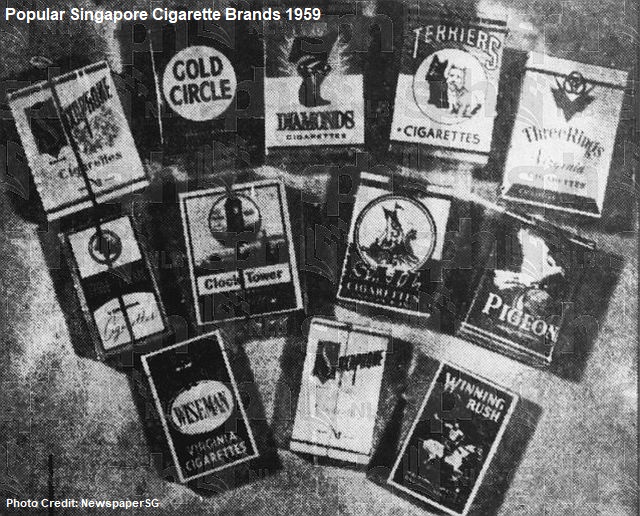
Posted in General, Historic | Tagged , , , , , , , , , , , , , , , , , , | 3 Comments

End of the Road for Trishaws in Singapore

The First Trishaws

According to Singapore Infopedia, trishaws were first introduced in Singapore in 1914 as an improvised version to the two-wheel rickshaws. It had side chairs bolted to tricycle frames, and could be pedalled like bicycles. An American company apparently was keen to import 500 trishaws to Singapore but this request was rejected by the colonial government due to road safety issues.

However, in the local newspapers, “trishaw” was mentioned only in 1936 as a new type of vehicle that made its debut in Burma’s Rangoon. It was described as a further development of the rickshaw, fitted with a third wheel and propelled by pedals. It was able to cruise at 15 miles per hour (or 24km/h) speed on its three pneumatic tyres. Its inventor was said to be a Chinese resident in Burma, who had patented the new vehicle for use in British India and Burma.

Trishaws in Malaya

In British Malaya, 50 trishaws were introduced in Penang in 1936. Taiping had its first batch of 15 trishaws in 1941, whereas trishaws were brought into Singapore a year later, during the Japanese Occupation. The Syonan Times reported in 1942 that there were 48 trishaws plying the roads in Singapore.

Trishaws gained popularity rapidly, eventually replacing the rickshaws after the war. Bicycles, on the other hand, were still the most common mode of transport; the registered bicycles numbered 42,000 in September 1942.

In 1946, the Singapore Municipal Commission regulated the fares of the rickshaws and trishaws, after many complaints that the rickshaw pullers and trishaw riders were frequently demanding exorbitant charges. This was especially so during chaotic periods when bus companies put up strikes and disrupted the public transport system.

The regulations stated that the distance-based rickshaws and trishaws could not charge more than 20c per half mile. For those hired by time, the charge would be $1.50 per hour, and an additional 40c every subsequent 15 minutes. A rickshaw or trishaw hired for an entire day, regardless of distance, would cost a maximum of $6. For reference, a trishaw cost between $280 and $300 in the late forties, and could be rented out for $1 to $1.50 per day.

Rules and Regulations

In July 1946, the Municipal Commission decided not to renew the licenses of the 3,500 rickshaws in Singapore, as it was considered inhumane to treat the pullers as “beasts of burden” in this “degrading trade”. Rickshaws, therefore, would be officially phased out on 1 May 1947. In other parts of Malaya, rickshaws were banned in Malacca on 1 January 1948, followed by the ban of rickshaws in Penang in the same year.

The total number of registered trishaws in 1946 was 4,000. Due to impending ban of rickshaws, many rickshaw owners and pullers rushed to apply licenses to switch their vehicles to trishaws. In just a year, in 1947, the number of trishaws in Singapore more than doubled to 10,000, with 20,000 registered riders.

The oldest rickshaw puller at that time was 72-year-old Goh Ah Leng, who came to Malaya when he was 54 years old. He had previously worked as a sedan chair carrier in China. The rickshaw ban prompted him to retire and go back to China.

Besides the regulated fares, the Municipal Commission also imposed a list of rules for the trishaws, including the installation of efficient brakes, bells, and front and rear lamps. Every rider must wear a numbered arm badge that was visible at all times. No licenses would be granted to riders under 16 years old.

Trishaw riders were also required to pass a traffic test that comprise control of the trishaw, road sense, how to read the hand and light signals and knowledge of the rates of hire. Unlicensed trishaw riders were not permitted to ride on the Singapore roads.

In May 1947, 5,000 trishaw riders protested the new trishaw registration law and the hefty $5 registration fee, but the Municipal Commission stood firm in its decision. The trishaw riders also refused to wear the arm badges as they felt it was “humiliating”.

In 1948, the Municipal Commission added more rules, including the definition of trishaws as passenger-carrying vehicles and must not be used to carry goods only. It also ruled that trishaw riders must wear blue clothes, as a form of identification, starting from 1949.

The Singapore Rickshaw Owner’s Association, Singapore Trishaw Labour Union, Singapore Rick and Trishaw Workers’ Union, and Singapore Trishaw Owner’s Association were the major associations that looked after the interests of the rickshaw pullers and trishaw riders. This included subsidising the funeral expenses of a deceased member, or providing loans to a sick member to cover his medical expenditures.

Other than the more stringent rules and regulations, trishaw riders faced numerous issues during the forties and fifties. More riders means stiffer competition for customers; the riders often resort to aggressive touting and fights occasionally broke out.

There were extortions from the secret society members and gangsters too; although many of the riders themselves were part of the gangs. The riders also frequently flouted traffic rules, causing accidents and congestions and affecting other road users.

In 1949, the Singapore Commission proposed a third party insurance scheme to be taken up by each trishaw riders, much to the displease of the riders and their associations and unions. The insurance would be additional burden to their financial difficulties. The proposal was eventually dropped.

Trial of Trixis

The Municipal Commission and Registry of Vehicles (ROV) did a trial run of motorised trishaws (nicknamed “trixis” or “trishaw-taxis”) in 1950. “Trixis” were commonly found elsewhere in Bangkok, Saigon, Hong Kong and Indonesia.

George Lee Motors brought a small number of motorised trishaws into Singapore, but the attempt to introduce this new vehicle on a massive scale was strongly protested by the traditional trishaw riders and taxi drivers. In 1951, the Municipal Commission decided to scrap the “trixis” proposal.

Tourist Attraction

In 1954, almost 7,000 trishaw riders generously donated their entire day’s earning, along with the likes of shopkeepers, street hawkers and taxi drivers, for the building of the new Nanyang University.

Buses and taxis had become more common in the sixties, offering passengers speedier rides with competitive fares as compared to the slow and outdated trishaws. This caused the trishaw population to decline to around 3,000. The number dropped further to less than 2,000 by the end of the seventies. Many trishaw riders were struggling and living hand-to-mouth in this declining trade.

The trishaw business was given some revival hope in 1965, shortly after Singapore’s independence. The newly-set up Singapore Tourist Promotion Board (STPB) identified trishaws as “great tourist attractions”. At some of the leading hotels, designated trishaw stands were built for tourists to take the trishaws for some sightseeing tours of the Chinatown and city area.

Singapore also featured a trishaw as one of its attractions at the Expo ’70 held at Osaka, Japan. In 1973, Singapore presented a trishaw to a French museum during the Jaycees World Congress. Another trishaw was displayed by STPB at the Singapore Fair ’76 in Tokyo’s Toshima-en Amusement Park.

There was even a “cleanest trishaw” competition in 1968, organised by the ROV as part of “Keep Singapore Clean” campaign. 41-year-old trishaw rider Ong Ah Lock, with his gleaming blue trishaw, came in first and was awarded $60 in prize money.

In the seventies, the University of Singapore’s (NUS) Student Union organised the Trishaw Pageant as a means to foster the cultural and social aspects of the Singapore society. Held annually, it featured a convoy of trishaws that displayed different national themes of slogans and undergrads in their fancy dresses. The trishaw parade would travel from NUS’s Bukit Timah campus to Orchard Road, attracting huge crowds along the way.

In December 1974, the trishaws were banned from plying along the major and congested roads during peak hours. Some of the roads listed in the ban were Bra Basah Road, Victoria Street, New Bridge Road, Robinson Road and North and South Bridge Roads.

Another new rule under Road Traffic (Public Service Vehicles) (Vocational Licenses and Conduct of Drivers, Conductors and Passengers) (Amendment) Rules was implemented in 1977, setting an age limit for the licensing of public service vehicle drivers and trishaw riders. They could no longer drive these vehicles on the roads after the age of 70.

The seventies and eighties witnessed Singapore’s booming tourism industry but this also led to numerous complaints of taxi drivers and trishaw riders overcharging and extorting the tourists.

One 1981 case even involved the Interpol when a couple of Japanese tourists were forced to pay $310 each for trishaw rides from King’s Hotel to the Singapore Handicraft Centre at Tanglin Road. In 1982, an American university professor was demanded $128 for a two-hour trishaw ride in town. The increasing number of such cases damaged Singapore’s reputation as a tourist destination.

As a result, Operation Trishaw was carried out in 1982 by the ROV and Tanglin Police to round up the unlicensed trishaw riders and those who charged exorbitant fares from their passengers. 12 trishaw riders were caught in the operation.

In 1987, the ROV approved the displaying of advertisements on trishaws in Singapore. Japanese camera and film maker Konica was the first to advertise on trishaws. This brought an additional income of $50 per month for each of the selected 150 trishaw riders.

According to ROV’s 1988 Annual Report, there were only 533 licensed trishaw riders left in Singapore. Hock Sin Hin, located at Joo Chiat Road, was the last shop in Singapore to assemble, repair, rent and sell trishaws. Its business was started half a century ago in the 1930s.

In the nineties, STPB licensed three travel agents – Trishaw Tours Pte Ltd, Triwheel Tours Pte Ltd and Pedicab Tours Pte Ltd – to operate trishaw tours in Singapore.

Trishaw Uncle, the sister company of Singapore River Cruises Leisure, was established in 2010. With its fleet of 100 trishaws, the company hoped to revitalise the nostalgic scene of old Singapore with city tours for the tourists. The Singapore Tourism Board (formerly STPB and renamed STB in 1997) appointed it to manage the Albert Mall Trishaw Park at Queen Street.

However, in May 2023, Trishaw Uncle, by then the only licensed trishaw operator left in Singapore, had its license ended and not renewed. Its trishaw tours were halted, with most of its trishaws scrapped. Once a common mode of public transport in Singapore for many decades, trishaws would likely disappear from the roads forever.

Published: 11 May 2024
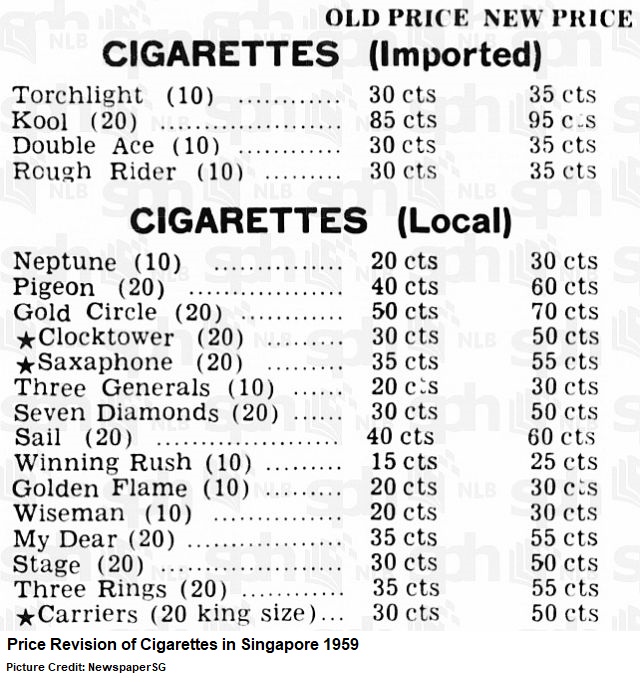
Posted in Nostalgic | Tagged , , , , , , , , , , , , | 10 Comments