In the mid-sixties, shortly after Singapore’s independence, a new primary and secondary schools named Changkat Changi were built at Changi Road 10 milestone. Changkat Changi Secondary School, an integrated secondary school, cost a hefty $1.4 million in its construction, furniture and equipment. Well-equipped with 24 classrooms and laboratories, it offered three streams in English, Malay and Chinese to some 2,000 students a year from Changi, Tampines, Pulau Ubin and Pulau Tekong.
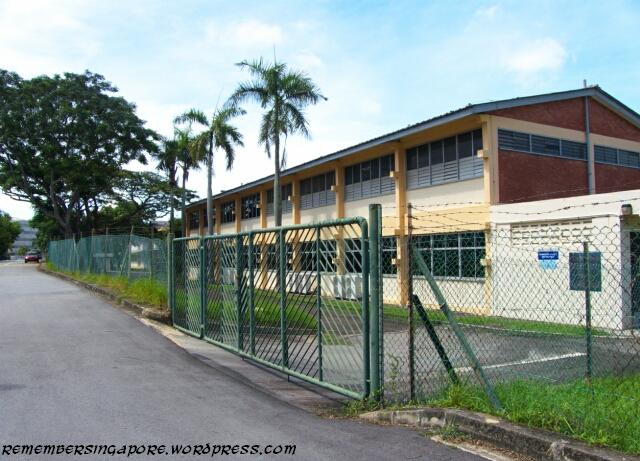
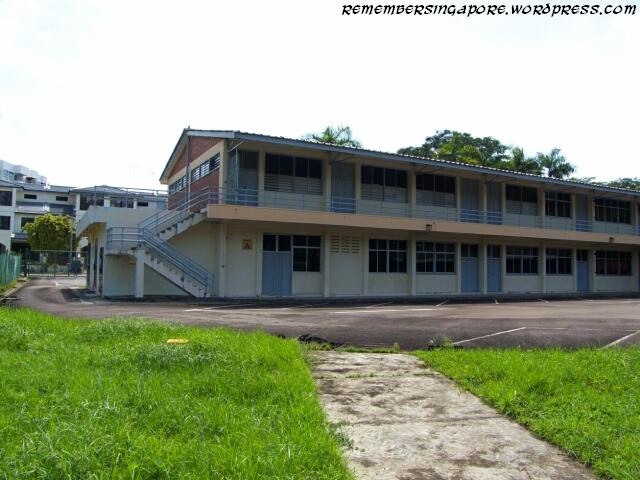
In 1988, Changkat Changi Primary School left its old campus and was relocated to Simei Street 3. It did, however, return for two years between 2002 and 2004 during the upgrading program of its school premises at Simei. Changkat Changi Secondary School, on the other hand, stayed at Jalan Tiga Ratus for 35 years until 2001 before it too moved to Simei Street 3. Since then, the premises have been left empty, except for a brief period of occupation by Junyuan Primary School in 2009.
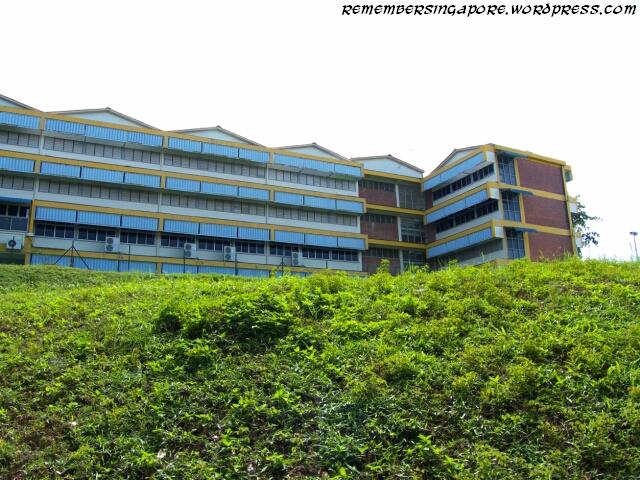
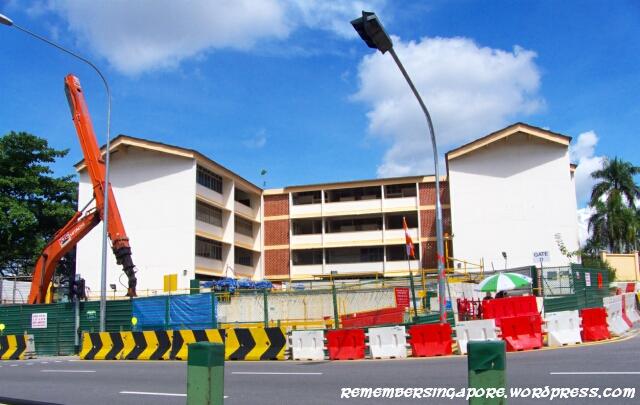
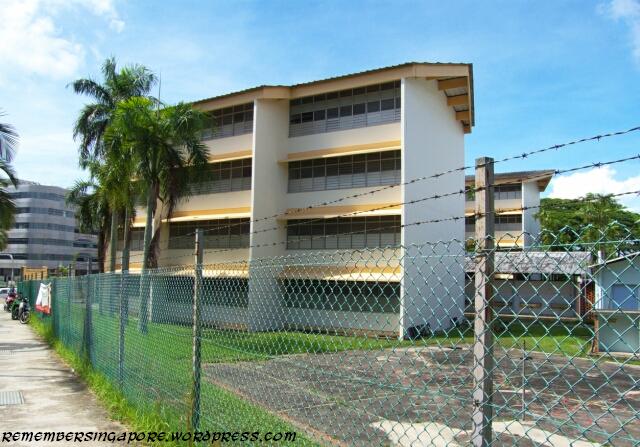
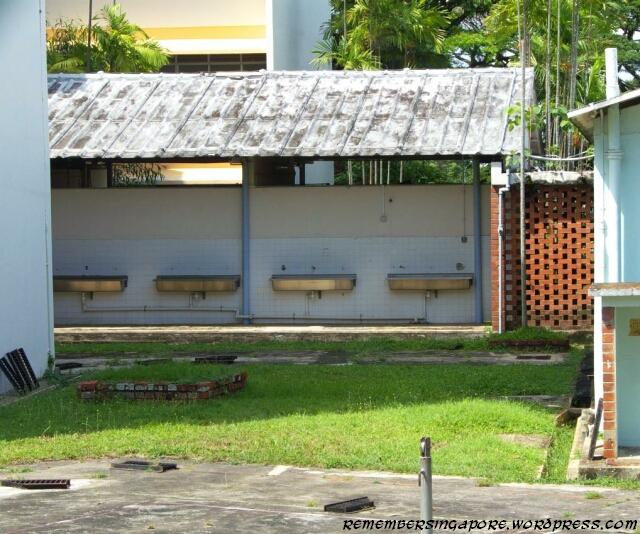
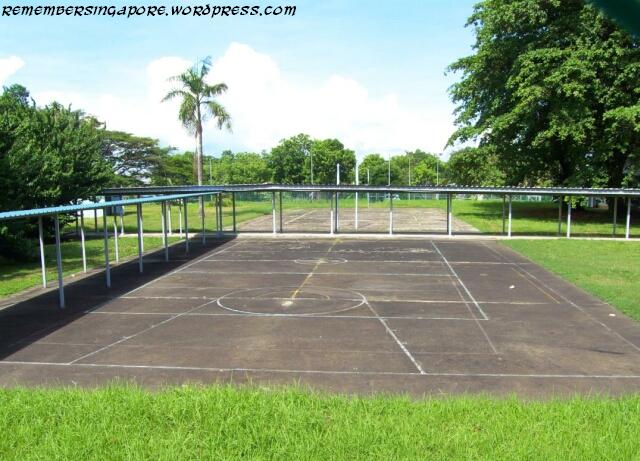
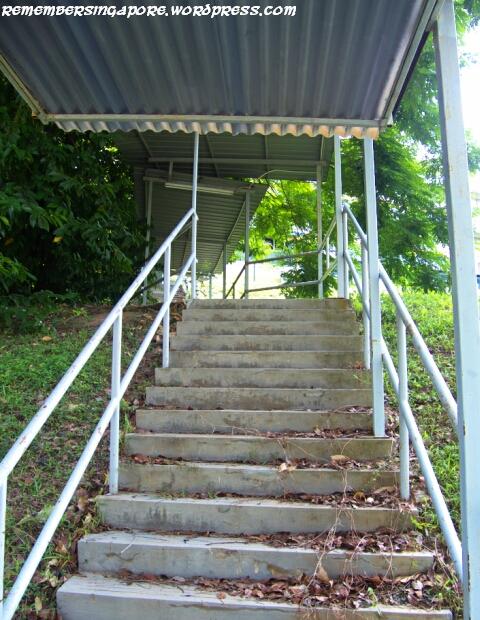
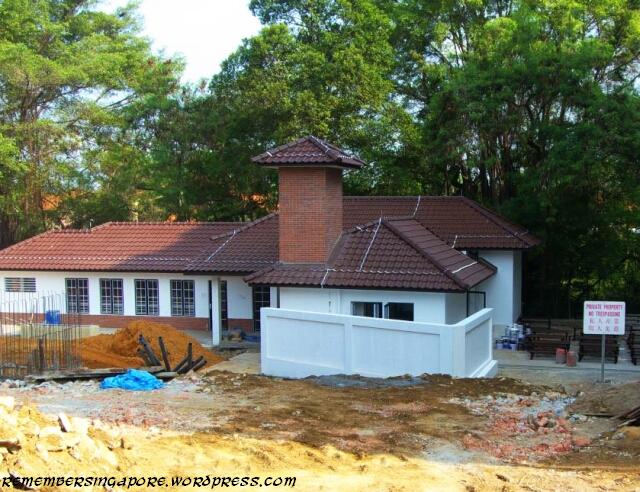
With the kampong days at Changi Road 10 milestone gone, the only remnants that still remind its former residents of the old days are the former campuses of these two schools, which are still standing on the same small hill that has given rise to their names (Changkat means small hill in Malay).
Jalan Tiga Ratus used to be a long winding road that extended to where the Simei MRT Station exists today. That was also the location of Nong Min School, a humble rural school started by a group of merchants and farmers at a warehouse left behind by the Japanese after the war. It was closed in 1977, along with Min Zhong Public School at the old Somapah Road. Wan Tzu (Red Swastika) School, another school in the Somapah vicinity, was relocated to Bedok North in 1981.
The former Somapah Changi Village was where Tropicana Condominium is standing today, while Kampong Harvey and Gulega Village had disappeared decades ago. The expunged Lorong Gulega Kechil, Lorong Lodeh, Wing Loong Road and Jalan Somapah Timor were replaced by the current Singapore Expo, Changi North industrial estate and the new eastern campus of the Singapore University of Technology and Design.
Changkat
When Simei was developed in the mid-eighties, neither Somapah nor Changkat was used as the name of the new town. It was a decision that baffled many, especially the non-Chinese ethnicity who were confused by the hanyu-pinyinised street names. Changkat did, politically, exist as a short-lived SMC (Single Member Constituency) between 1984 and 1988, represented by its only Member of Parliament Dr Aline Wong, before being split and absorbed into Changi and Tampines GRCs (Group Representation Constituencies).
There was even a Changkat Day, a carnival-like event held at Tampines Street 22 in September 1986. The grassroot organisations hoped to promote neighbourliness and a sense of identity among the residents of the new constituency, formed from part of Tampines and Bedok estates. Ironically, Changkat would “cease to exist” just two years later. There was also a Changkat Community Centre, first started in 1985 as a void deck office at Block 138 of Tampines Street 11. It was modelled, along with 11 other similar concepts at Fengshan, Hong Kah, Eunos and Yuhua, after the first void deck sub-community centre at Hougang Avenue 1. In 1992, it moved to its new standalone building, and was renamed as Tampines Changkat Community Centre.
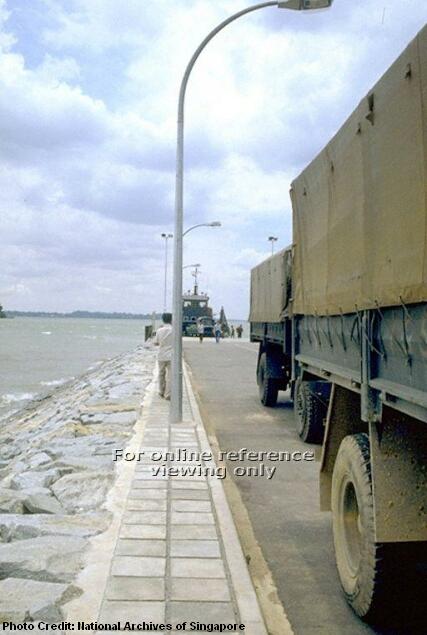
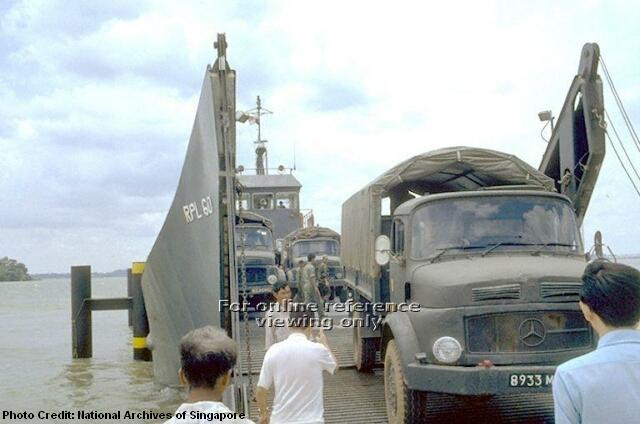
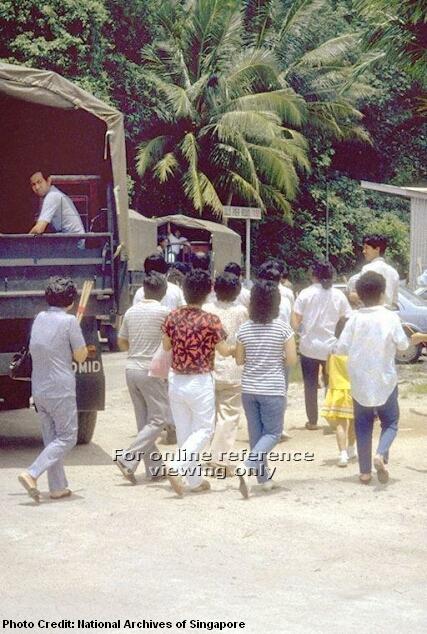
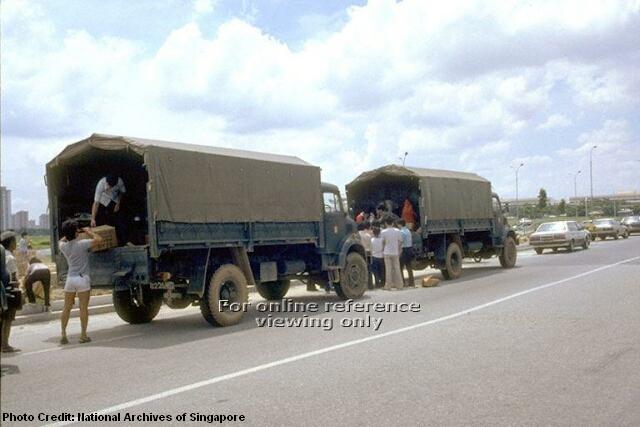
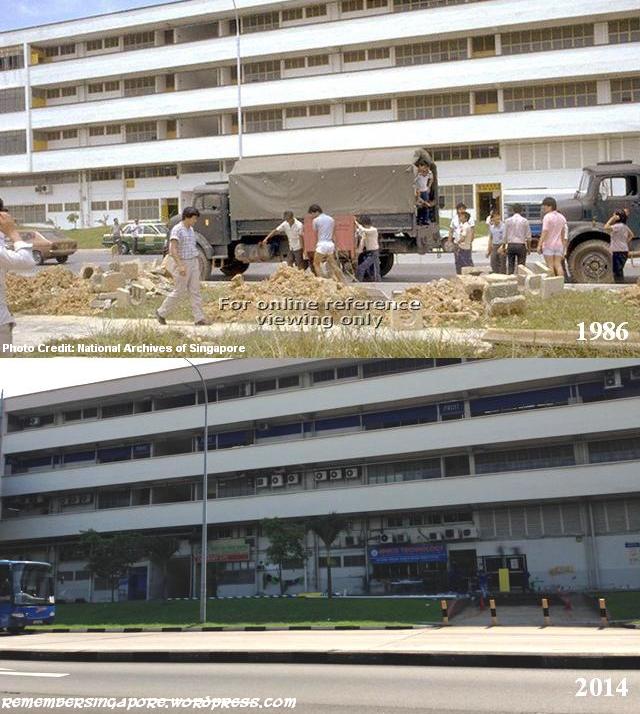
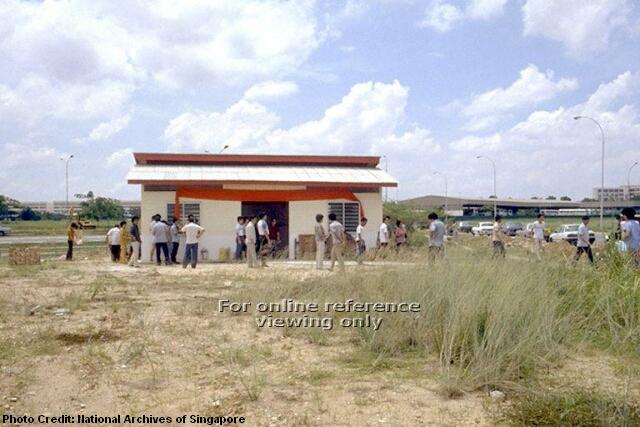
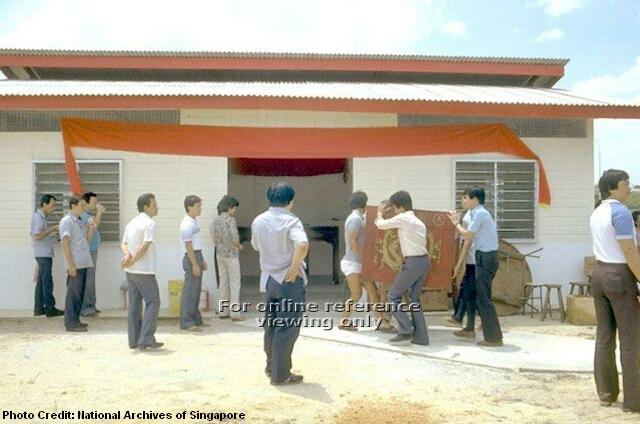
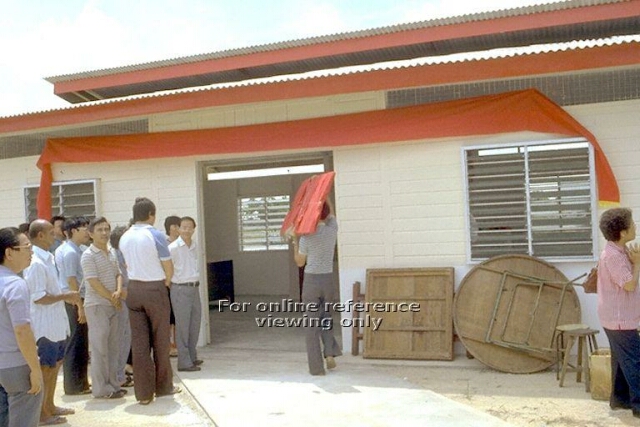
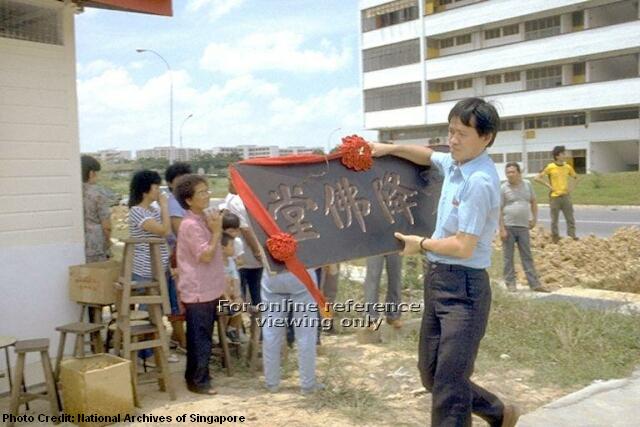
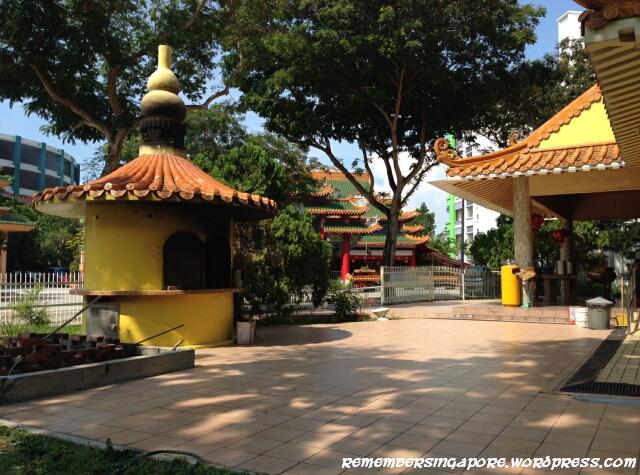
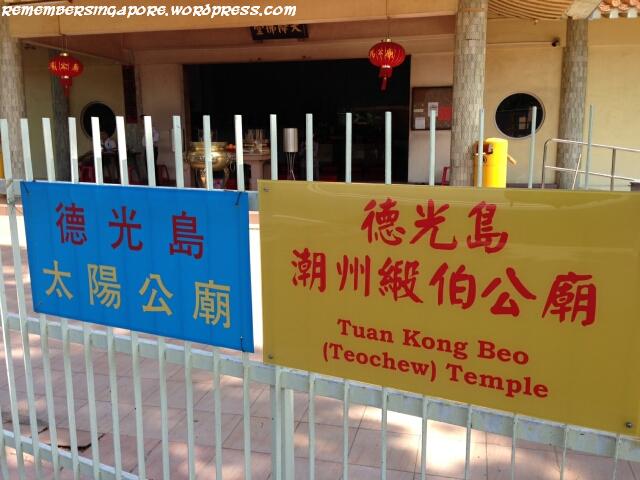
I was searching for old photos of Pulau Tekong at the National Archives of Singapore, when I came across a series of coloured photos that featured the resettlement of a Chinese temple from the island to mainland Singapore with the help of SAF (Singapore Armed Forces). Eager to find out more, I paid the Temple of Sun Deity (太阳公庙) a visit, coincidentally on a hot sunny morning.
The origins of the Temple of Sun Deity went back to the sixties. For three decades, a Chinese couple had lived on Pulau Tekong, relying on fishing and farming as their livelihood. In 1966, after recovering from a serious illness, the couple decided to pay their gratitude to the Deity of the Sun by setting up a temple beside the lake at Kampong Pasir Merah. The temple soon became popular and attracted many devotees, and was said to be well-known within the Southeast Asian region.
By the late seventies, the islanders were informed that there were plans for Pulau Tekong to be developed into a restricted military training base. After a meeting held in 1984 at the Kampong Selabin Community Centre, the temple’s abbot and committee decided to register their place-of-worship with the government and proceed with the resettlement plan. A small parcel of land at Bedok North Avenue 4 was purchased as the temple’s new home.
Prior to the Second World War, many residents on Pulau Tekong were engaged in the island’s gambier and rubber plantations. Others plied their trades in engaged in fishing and agriculture. Prominent businessman Tan Kah Kee (1874-1961) also set up a brickwork factory on Pulau Tekong, providing employment opportunities for the islanders. The Hakkas, Malays and Teochews made up the largest communities on Pulau Tekong. By the eighties, the island’s population peaked at almost 8,000.
The Temple of Sun Deity was the only Chinese temple left on Pulau Tekong by the mid-eighties. There were once as many as six Chinese temples on the island, the larger ones being De An Temple, Jiang Fu Temple and Tianzhao Buddhist Temple. Most of them had shut down when the island was acquired by the government. When the grand resettlement ceremony of the Temple of Sun Deity was carried out in an auspicious day in September 1986, dozens of former residents of Pulau Tekong returned to participate in the ritual with the temple’s devotees.
The SAF had assigned its military personnel, several 3-tonners and a RPL (Ramp Powered Launcher) to assist in the transportation of the temple’s idols and paraphernalia. It was probably the one and only time the military was activated to assist in the resettlement of a religious place-of-worship. After a 30-min journey, the convoy landed at the Commando Jetty at the end of Old Pier Road. It was another one-hour road trip before they arrived at the temple’s new home at Bedok North.
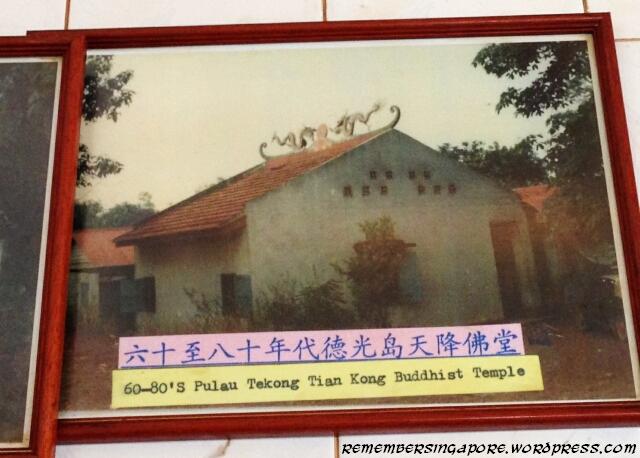
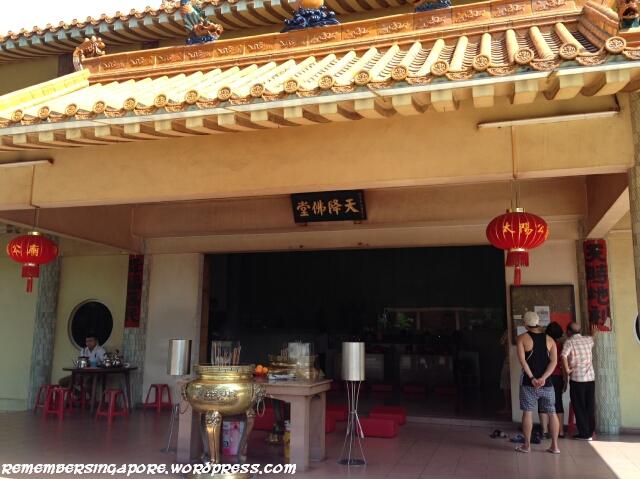
The Temple of Sun Deity at Bedok North was initially housed in a simple single-storey wooden building. In 1992, it was replaced by a new modern design and was renamed as Tian Kong Buddhist Temple, where it was joined by two other Chinese temples and a monastery in the vicinity, forming a cluster of Chinese places-of-worship within the designated Bedok North industrial estate.
The temple also honoured the God of Tuan (Tuan Kong). A Malay general of the Aceh Kingdom, Tuan died fighting against the Portuguese invaders in the 16th century. In the 19th century, a mysterious elderly Malay man was seen sailing in a boat around Pulau Sejahat. A huge stone was later discovered after his disappearance on the island.
Believed that the elderly man was the guardian of the sea, the Hakka and Teochew villagers decided to honour and worship the stone after Tuan, conducting grand rituals every mid-Decembers of the lunar calender for the safety of those who plied their trades on the waters.
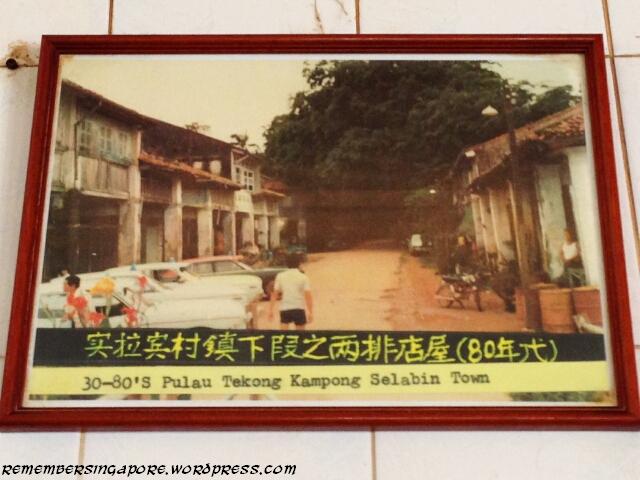
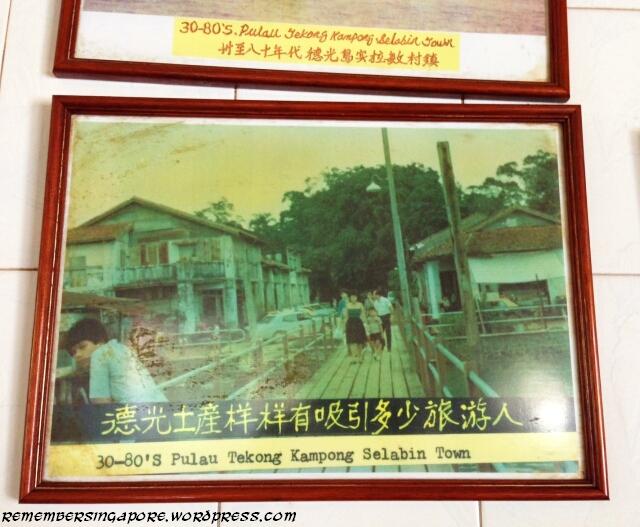
Every year, the temple comes to life with rituals and other bustling activities during the birthday of the Sun Deity, which falls on 19th of March of the lunar calender. Otherwise, it enjoys a quiet moment at the junction of Bedok North Avenue 4 and Street 5. Its interior still displays many photos of Pulau Tekong of the eighties, including Kampong Selabin and its old shophouses, that act as a constant reminder for the former islanders of their life before the resettlement.
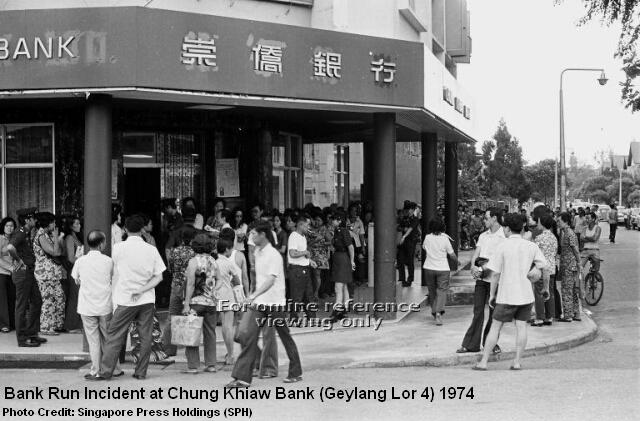
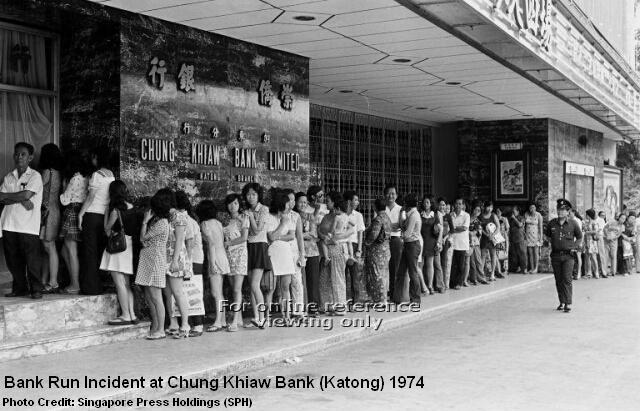
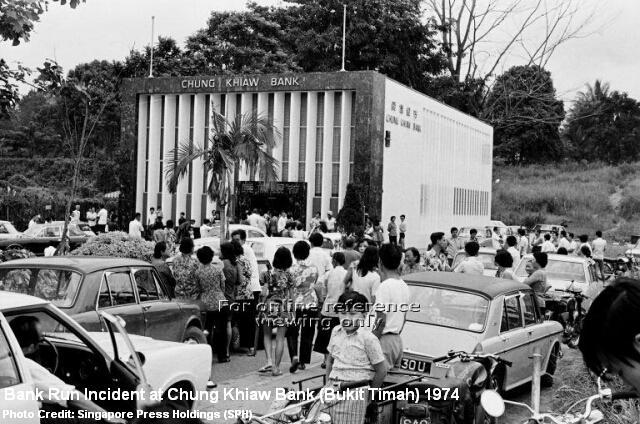
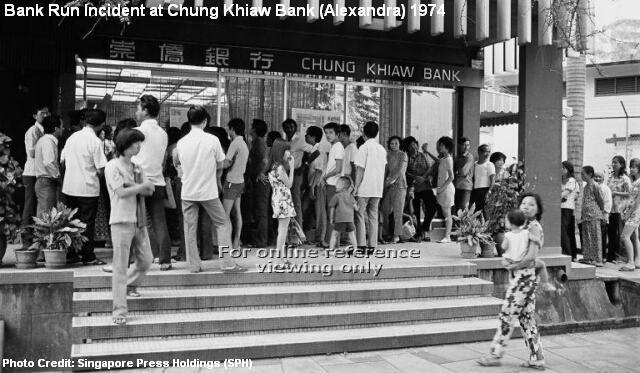
The world economy was still suffering from the wide-spreading shocks caused by the global oil crisis that occurred a year earlier. Singapore, affected as well, posted its worst set of economic data after enjoying a double-digit growth rate since its independence in 1965. The economic uncertainty was likely one of the factors in the starting of the rumours, which spread quickly like wild fires that the financial health of the banks in Singapore had taken a big hit. Chung Khiaw Bank Limited, then part of The United Overseas Bank Limited (UOB) Group, was rumoured to have faced a severe liquidity position and could run out of money soon.
The Incident
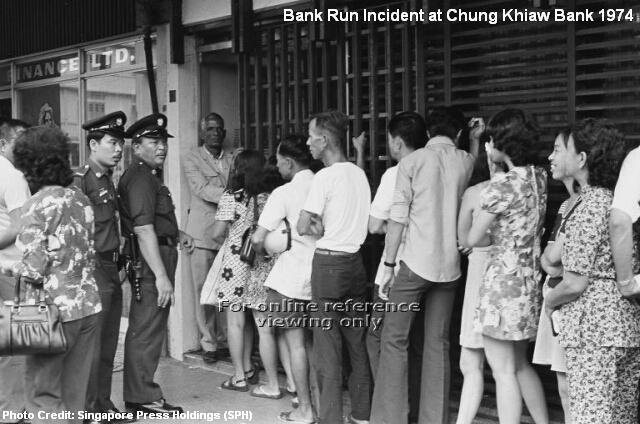
In the morning of 3rd of October, crowds began to gather outside several branches of Chung Khiaw Bank. Its branch at Geylang Lorong 24 saw long lines of queues formed. Facing the increasingly anxious crowds that were growing larger in numbers, the police had to be called in to maintain order. A number of Chung Khiaw Bank branches had to extend their opening hours beyond their normal operations between 10am and 3pm. Chung Khiaw Bank’s Jalan Kayu branch was opened until 7pm, while its Geylang branch allowed its customers to withdraw their cash until 10pm.
By 8pm, there were still 300 people outside Chung Khiaw Bank at Geylang Lorong 24. A Cisco van arrived at Geylang with more money after the branch manager requested a requisition of $3 million cash for further cash withdrawals. Bank officials had to constantly reassure the crowds not to panic but it was not until 1030pm before the last customer made his successful withdrawal of deposits.
The Reassurance
The following days saw Chung Khiaw Bank releasing an official statement, citing the positive financial health of the bank. With an excess of $700 million in the form of government securities, treasury bills and physical cash, and a healthy loan deposit ratio of 63%, the bank hoped to quash the rumours and convince the people of its strong liquidity position. The Monetary Authority of Singapore (MAS) also pledged that the UOB group of banks was safe and well-protected. After further appeals by the Association of Banks, Singapore Chinese Chamber of Commerce and the Singapore Bank Employees Union, the size of the crowds queuing up to withdraw their savings finally began to ease by the fourth day since the bank run incident started.
The Establishment
Chung Khiaw Bank Limited was established in February 1950 by Aw Boon Haw (胡文虎, 1882-1954) to tap into the credit and loan sectors for businessmen of the smaller-scale companies. Aw Boon Haw, famous for his Tiger Balm ointment brand and Har Paw Villa, had a vast business empire ranging from traditional medicine and gold mining to banks and newspapers. He was also a generous philanthropist who had donated millions to charity causes.
Ahead of its times, Chung Khiaw Bank was fast growing and innovative in ways and services to increase its market share in the banking sector. It managed to report a fixed asset of nearly $35 million just five years after its establishment. In 1956, it launched the “mobile bank” scheme, where its vans were deployed to different parts of Singapore to bring banking services to those in need. A valet service was also introduced at its head office at Robinson Road, so that car owners visiting the bank would not be hindered by the limited parking lots.
In the sixties, the bank rolled out their coins “piggy” banks, in shapes of different animals such as pigs, rhinos and kangaroos, which proved extremely popular among the kids. Its strategy to reach out and woo the common folks and child depositors reaped spectacular results, earning the bank with a reputation of being a “small man’s bank”. By 1970, Chung Khiaw Bank had opened as many as 32 branches in Singapore; the latest were at Toa Payoh and High Street.
The Acquisition
UOB, established since 1935, remained a relatively small player in the Asia Pacific region after Singapore’s independence. After achieving its public listing on the Singapore and Malaysian stock exchanges in 1970, UOB proceeded with a series of aggressive acquisitions. Chung Khiaw Bank was its first target. A stake in Chung Khiaw Bank was acquired in June 1971, but it would take 16 years before UOB was able to buy up all of the shares in Chung Khiaw Bank and take full control. By 1999, the brand of Chung Khiaw finally ceased to exist when its operations in Singapore, Malaysia and Hong Kong were merged into UOB.
UOB went on to acquire other local banks: Lee Wah Bank (in 1973), Far Eastern Bank (1984), Singapore’s Industrial & Commercial Bank (1987) and Overseas Union Bank (2003). Today, it is part of Singapore’s “Big Three” banks, along with DBS (The Development Bank of Singapore Limited) and OCBC (The Overseas-Chinese Banking Corporation Limited)
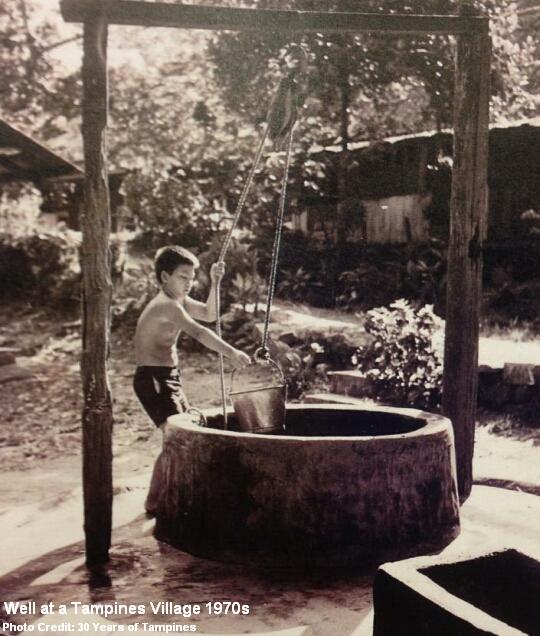
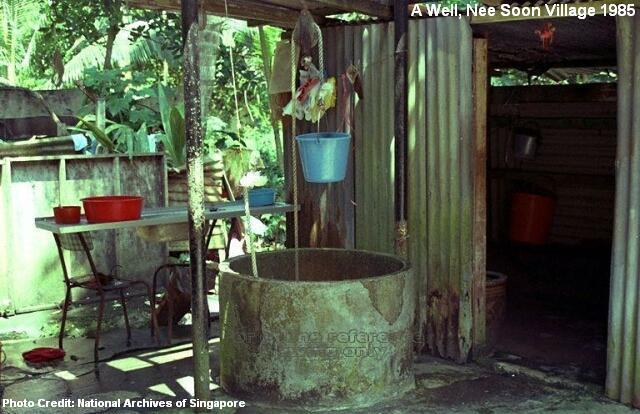
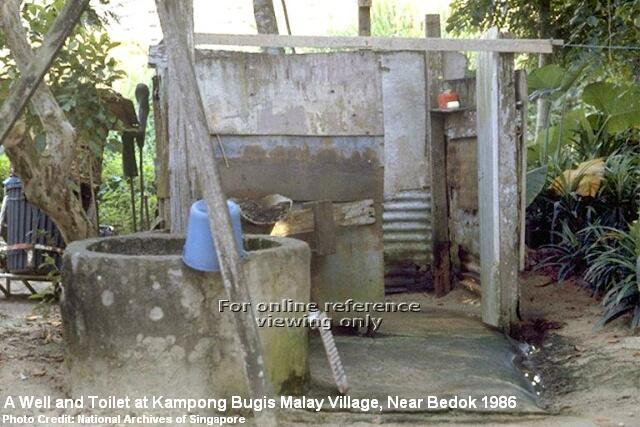
Water wells were once part of the essential amenities for the residents in Singapore. Its water supply was used by the villagers for cooking, drinking, washing and bathing purposes. It took more than four decades before they were totally replaced by piped and tap water supplies. A few, though, are still standing around, serving as a reminder of our difficult past.
The Last Water Wells in Singapore
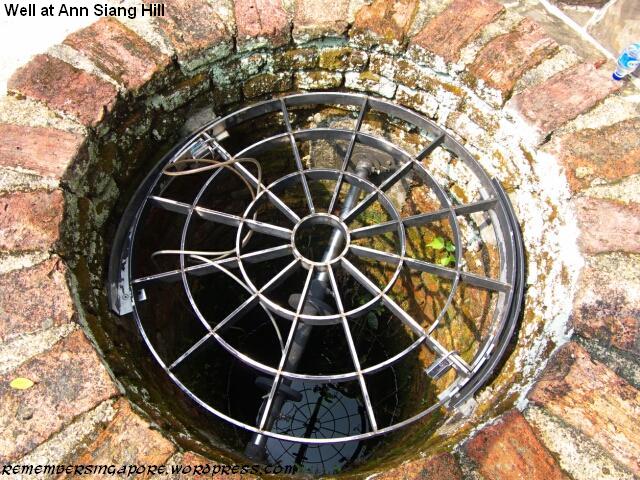
The most famous well that still exists today is perhaps the century-old water well near Chinatown. Preserved but forgotten at the quiet Ann Siang Hill Park (established in 1993), the well was once one of the important water supply points in the late 19th century. Back then, there was limited fresh water for the residents of Chinatown. They had to regularly collect their water supplies from the bullock-drawn carts from several wells at Ann Siang Hill. This later gave rise to the name gu chia zhui (Bullock Cart Water).
One of the water wells which the bullock carts drew water from was located near the junction of South Bridge Road and Neil Road. A nearby spring had its water flown into the well, and this later gave rise to the name of the road in that vicinity as Spring Street.
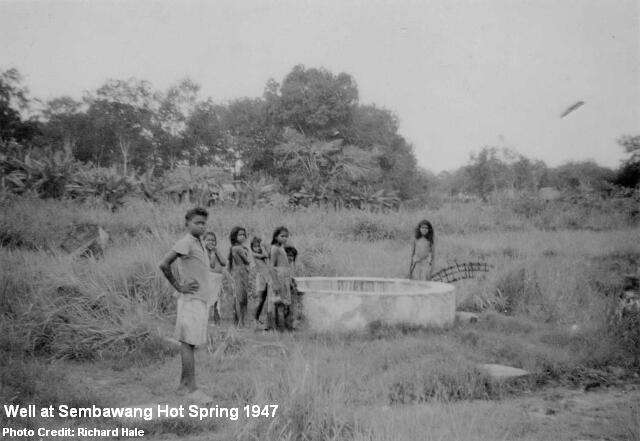
Another famous well is the one located at the Sembawang Hot Spring, which has its history dated back to the early 20th century. The well, as well as water pipes, could have been installed to tap the resources; a factory was also set up to manufacture bottled spring water. The facilities no longer exist today, except for the well that has seen the surrounding changes throughout the decades.
In 1985, the land where the hot spring and well were located was acquired by the government for the expansion of Sembawang Air Base. Today, the hot spring and well are opened to the public daily, although they remain under the ownership of Mindef. The historic well, over the years, has its fair share of rumours (of a child falling into it) and is now locked in a small red-bricked building.
The third century-old well is located at Jalan Gelenggang, off Upper Thomson Road. It has been preserved and is part of a restaurant today.
A Popular Well at Upper Serangoon
It is not common in Singapore that an ordinary water well became a landmark or was well-remembered by the community.
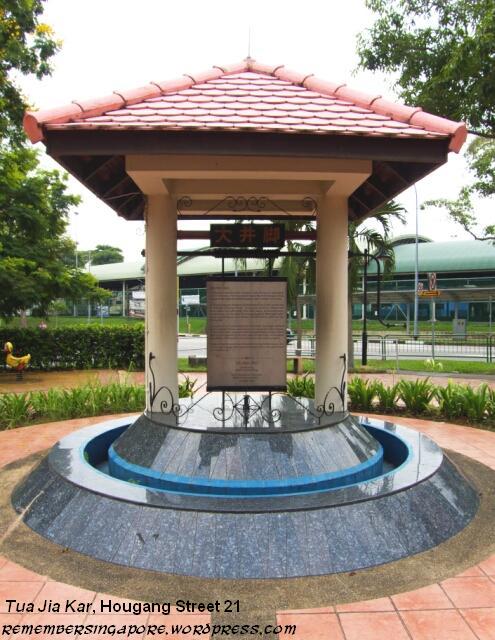
The one at the former Upper Serangoon’s Somapah Village, though no longer existing today, had the glory to have its own commemorative plaque and replica installed at Hougang Street 21 since 2005. The well, fondly known as tua jia kar (Bottom of the Big Well), had been a good and consistent supply of clean water to the villagers, hawkers and and the nearby market. Although piped water were later installed at Somapah Serangoon Village, many villagers still preferred to draw water from tua jia kar.
By the seventies, tua jia kar had evolved to become a focal point for gatherings and communal activities for the villagers at Upper Serangoon. Its surroundings were bustling with staged Chinese wayang and people listening to tales told by storytellers. The well was later demolished due to the development of the vicinity, but its legacy remains fondly remembered by the Teochew community living at Upper Serangoon and Hougang.
A Brief Record of Wells, Reservoirs and Piped Water Supplies in Singapore
1857 – Businessman and philanthropist Tan Kim Seng donated S$13,000 for the construction of Singapore’s first waterworks and piped water supply.
1868 – The first reservoir was constructed at Thomson Road. It was named MacRitchie Reservoir in 1922.
1910 – Kallang River Reservoir was built, and was renamed as Peirce Reservoir in 1922.
1920 – Seletar Reservoir was completed in the central catchment area.
1927 – The Municipal Commissioners of Singapore signed an agreement with Sultan Ibrahim of Johor for the supply of raw water from Gunong Pulai.
1952 – The Singapore City Council ruled that the polluted wells in areas fitted with piped water supplies must be closed. It was a decision that affected the livelihoods of many towgay (bean sprouts) farmers at Rochore, Kallang and Geylang areas who depended on the water wells.
1953 – Singapore Rural Board implemented a $200,000 scheme to install water mains at Changi, Loyang and Jurong so that thousands of rural residents relying solely on wells could have piped water supplies.
1959 – The British engineers embarked on a $400,000 project to bring piped water to Pulau Brani and Blakang Mati (Sentosa today). The undersea pipelines would provide fresh water to the hundreds of residents living on the two islands, who previously had to rely on rain and water boats for their water supply.
1961 -The Singapore City Council signed the Tebrau and Scudai Rivers Water Agreement with the state of Johor for a 50-year supply of raw water. A year later, it signed another Johor River Water Agreement for a 99-year supply of raw water.
1963 – A prolong dry spell forced Singapore to endure its longest record of water rationing. A 12-hourly suspension of water supply was first implemented in April according to different district zones. The water rationing was later extended to the rest of the island, and lasted throughout the year.
1960s – The Rural and Urban Services Advisory Council implemented a water and electricity supply scheme at several kampong areas in Singapore, but they were subjected to the population density and the possibility of the installation of the amenities. Not all villages had enjoyed the benefits. Kampong San Teng, for instance, did not get its piped water supply until the late sixties. Some villages, especially those at the lesser accessible locations such as Jurong Road and Tanjong Kling, waited for more than a decade before they could get their piped water supplies.
1972 – The Public Utilities Board (PUB), established in 1963, started laying piped water supplies to villages such as the one at Jalan Kong Kuan, off Upper Bukit Timah Road. The projects, often costing as much as $18,000 each, were aimed to replace the usage of wells, whose water was easily polluted. During droughts, the wells were also dried up and residents had to fetch their water from the public standpipes situated far from their homes.
1976 -The government kicked off the Pulau Tekong Water Supply Scheme, which cost as much as $7.3 million and three years in the construction of water catchment areas, filters and storage plants on the outlying island. When the project was completed in 1979, the 4,000 residents living in Kampong Selabin, Kampong Pahang and Kampong Ladang on Pulau Tekong could finally give up their buckets, wells and the dependence on rains.
During the 1972 droughts, Pulau Tekong was hit especially hard as the wells on the island ran dry and the residents had to rely on PWD (Public Works Department) waterboats for their supply of fresh water. The cost of the water, at its peak, rose to as much as 20c per kerosine tin.
1981 – Four reservoirs were constructed at the western catchment area. They are the Murai, Poyan, Sarimbun and Tengeh Reservoirs.
1986 – Bedok Reservoir became operational.
2008 – The Marina Barrage became Singapore’s 15th reservoir upon its completion.
2011 – The PUB identified “Four National Taps” to increase the water supply in Singapore. These taps are the expanding of local catchment areas, importing water from Johor, NEWater and the desalination of seawater.
PS: This is an article extension from From Villages to Flats – The Kampong Days. Please feel free to contribute if you are aware of any water wells still existing in Singapore.
One of the most famous “haunted” places in Singapore is now undergoing redevelopment.
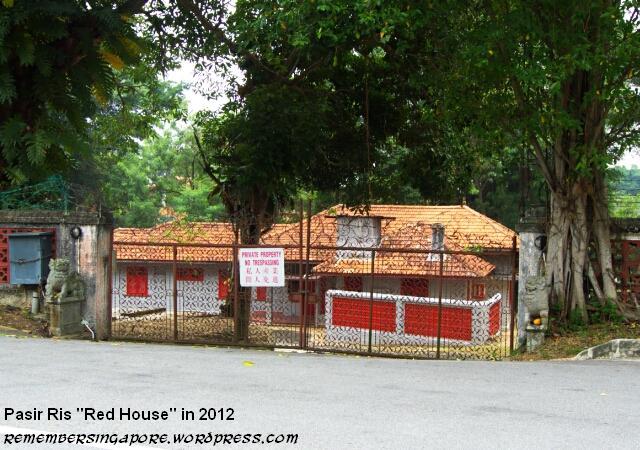
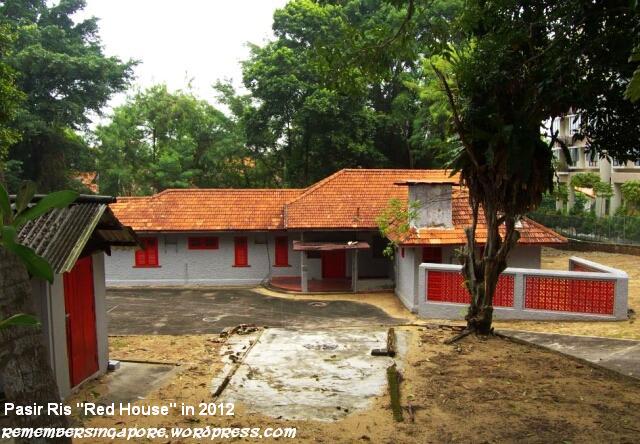
The private residence at 191 Jalan Loyang Besar was once a favourite haunt for thrill-seeking youngsters in their supernatural-hunting activities. Nicknamed the Pasir Ris Red House (or Loyang Red House), the building had been nominated by the local paranormal groups since the nineties as one of the three most haunted “coloured” houses in Singapore; the other two being the White House (Punggol Matilda House) and the Green House (Hillview Mansion).
Jalan Loyang Besar used to be a narrow and bumpy road that was linked directly to the main Loyang Avenue. A large portion of it was removed when Pasir Ris New Town and Pasir Ris Drive 1 were constructed in the eighties. Today, it is more popularly known as the road leading to the chalets and holiday resorts at Pasir Ris.
It was built in 1938, and was purchased by the McNeice family in the late 1940s. Sir Percy McNeice (1902-1998), well-known for his contributions in housing, family planning and social welfare, was a British civil servant who had served as Singapore’s first president of the City Council. His wife Loke Yuen Peng (1917-2012), also known as Lady McNeice, was the daughter of Loke Yew, British Malaya’s richest man before the Second World War, and sister of Loke Wan Tho, the founder of Cathay Organisation.
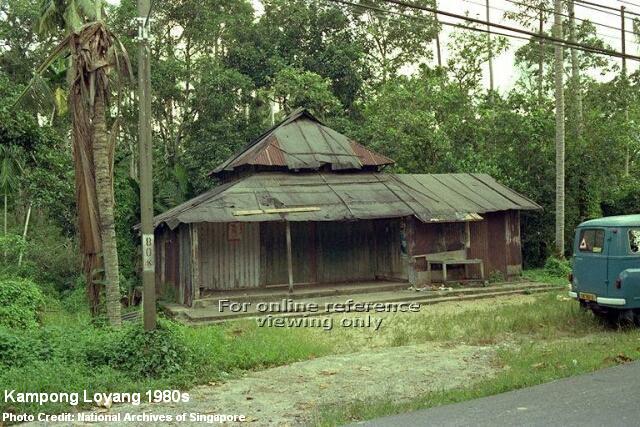
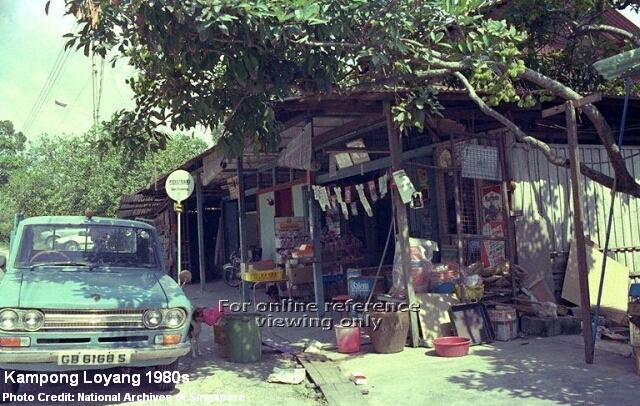
The old Pasir Ris was made up of several villages; Kampong Loyang was a fishing village, largely made up of Malay families, that existed until the eighties. Before the establishment of the People’s Association (PA) in 1960, the Red House was used for providing communal services for the villagers of Kampong Loyang.
In 1964, the property was sold to CK Tang (Tang Choon Keng, 1901-2000), where the boss of the Tangs department store and his family was said to have lived in the house for a brief period of time. The double-block house once enjoyed a clear sea view of the Johor Straits, before it was blocked by the development of the Pasir Ris Park and the NTUC and UDMC holiday chalets in the late eighties.
By the nineties, rumours began to circulate that the house was haunted. It did not help when the property, by then, had been left vacated for four decades and was in a derelict state. The popularity of the nearby chalets and holiday resorts was also a possible reason for the spread of the rumours, as many youngsters sneaked out at nights to “explore” the Red House.
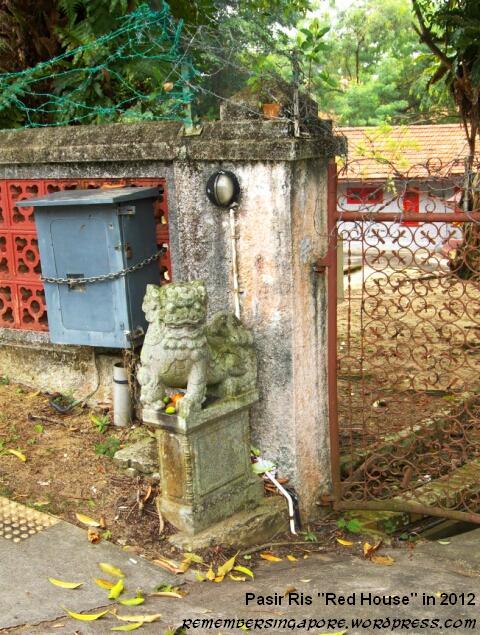
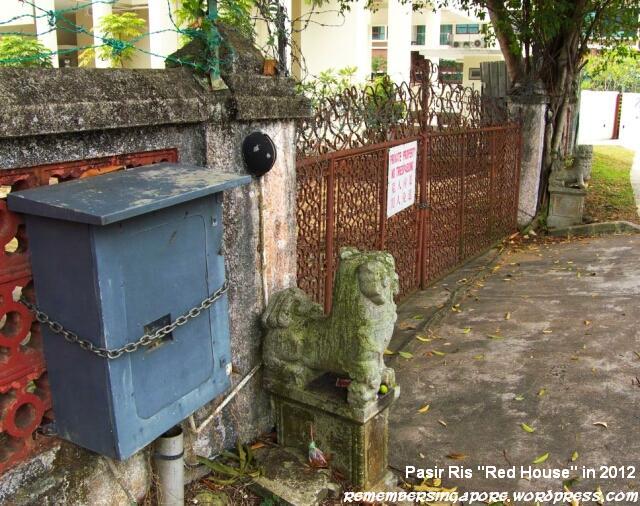
Stories such as the pair of haunted stone lions at the gates, a weeping doll on a rocking chair inside the house, or white shadows spotted within the compound, failed to deter people from going to the house. In fact, more were lured to the place. The rumours, however, did start to fade away in recent years.
With the redevelopment of the Pasir Ris Red House, it spells the end of the legendary “haunted” houses of the past. The Punggol Matilda House has already been converted into a clubhouse, whereas the Hillview Mansion was razed to the ground in the mid-2000s.
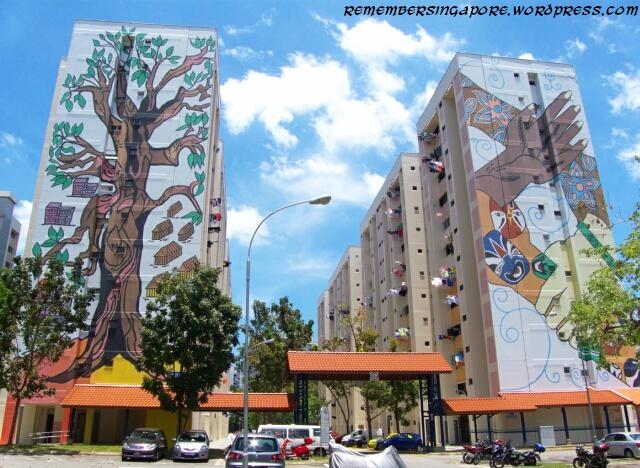
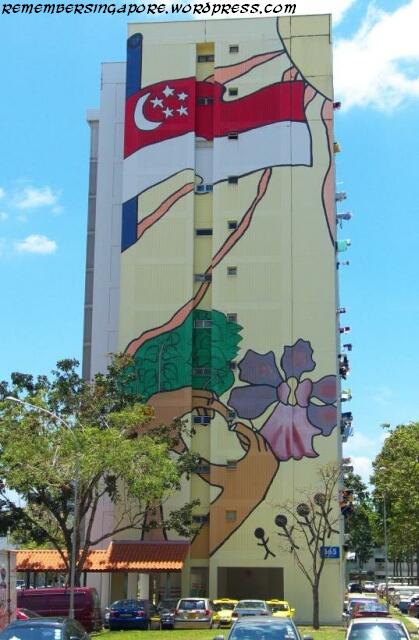
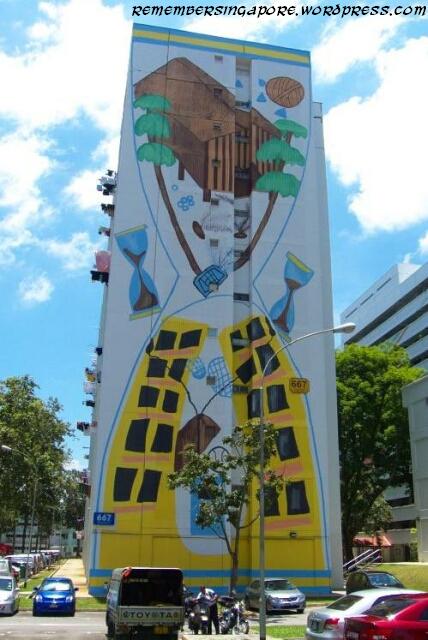
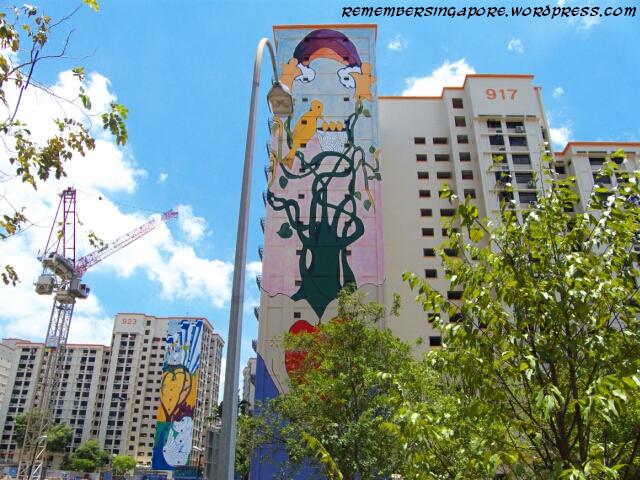
Have you ever passed by a HDB flat painted with murals?
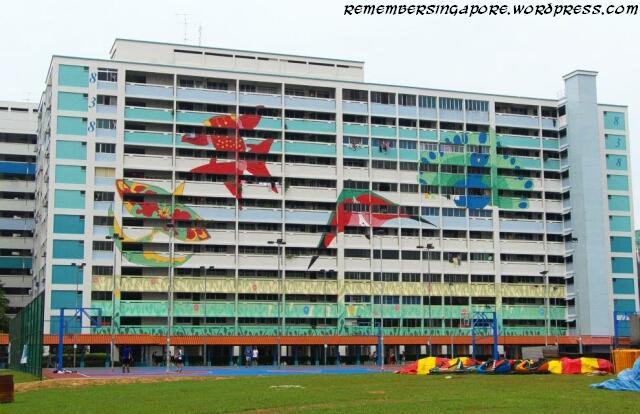
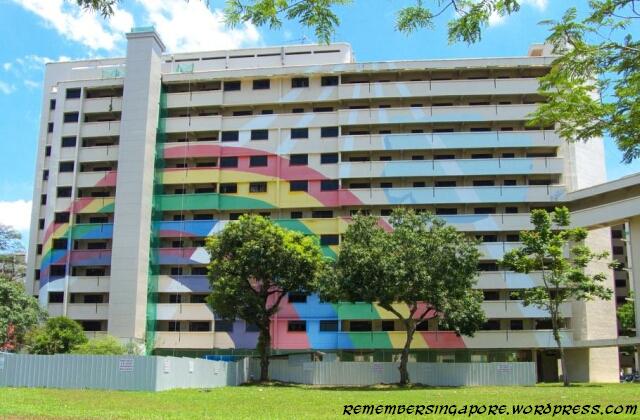
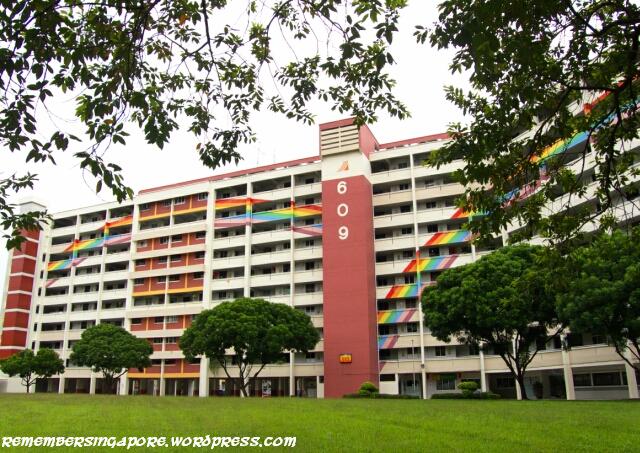
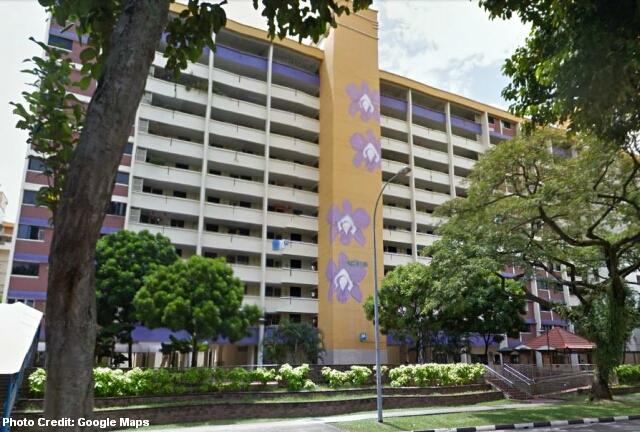
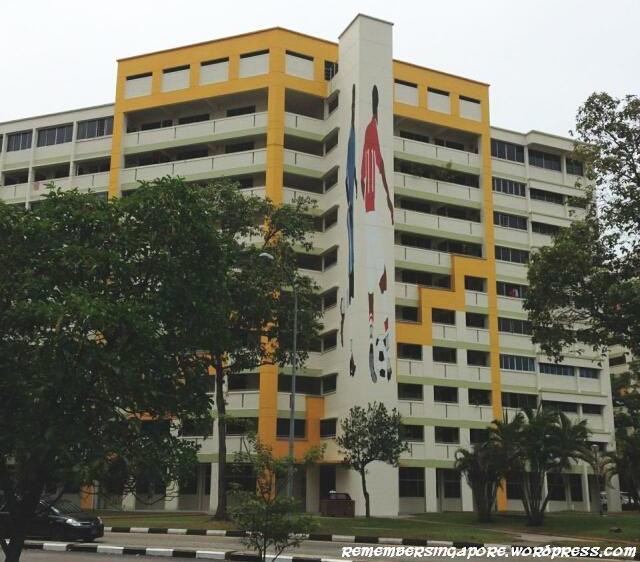
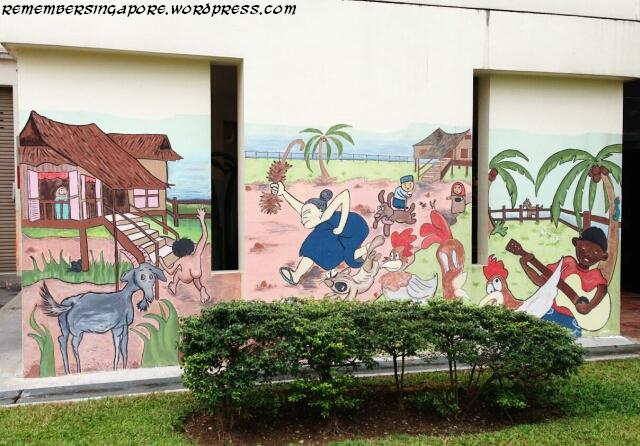
There are quite a few such blocks in Singapore; the most famous ones are probably the Hougang rainbow block and the Khatib flat with paintings of giant kites. Not always visually pleasant to everyone, these HDB murals, however, help to add a touch of uniqueness to certain blocks and make them stand out among the rest.
Traditional Layang-layang
Standing opposite the Khatib MRT Station, it is unlikely that one will miss this prominent block with its four gigantic murals of kites.
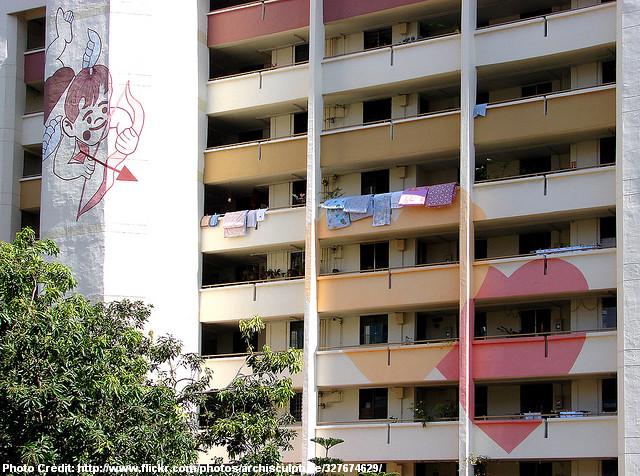
Commuters on the SMRT East-West Line used to see this adorable Cupid mural when their trains passed by Block 210 of Jurong East. Painted in 2005, the mural no longer exists today after the block underwent an upgrading program a few years back.
Location: Block 210, Jurong East Street 21
Blooming Orchids
Since 1981, Vanda ‘Miss Joaquim’ has been chosen as the national flower of Singapore, so it is natural to see them used as representative murals on some of the old HDB flats, such as the ones at Tanjong Pagar Plaza and Yishun. The orchid murals, however, had been removed when the blocks were given fresh coats of painting in recent years.
Location: Block 2, 4 & 5, Tanjong Pagar Road
Location: Block 740, Yishun Avenue 5
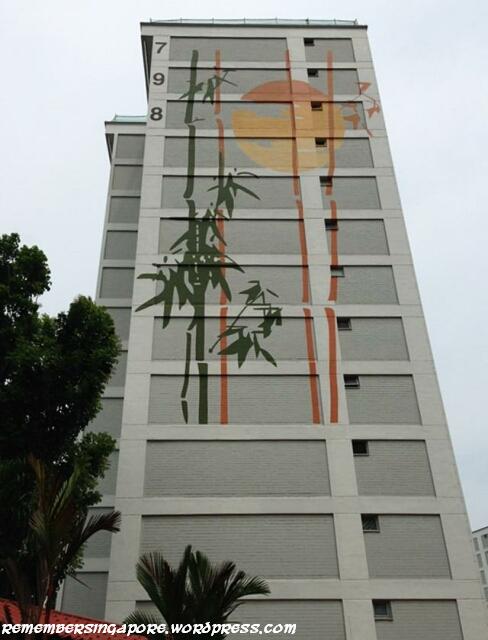
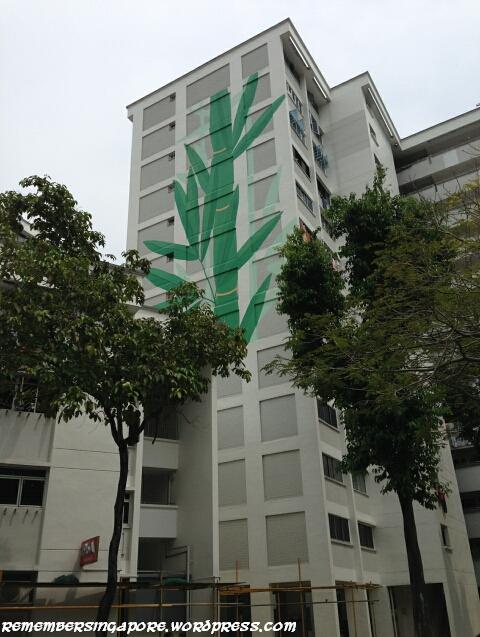
Sturdy Bamboos
Location: Block 790 & 798, Yishun Ring Road
Location: Block 796, Yishun Ring Road
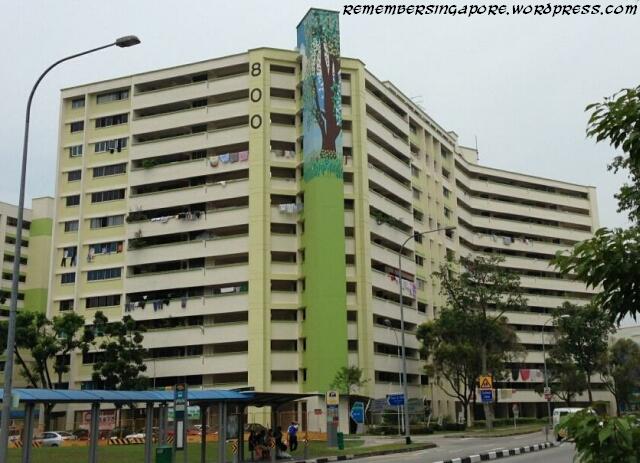
Trees of Life
Location: Block 800 & 804, Yishun Ring Road
Symbolic Singapore
Another tree mural can be found on a HDB block at Hougang. It belongs to a cluster of four identical blocks that are painted with symbols and pictures representative of Singapore. These include attap houses, public housing, racial harmony, Merlion and the national flag.
Playing sports is a good way to keep a healthy lifestyle, and football, tennis and cycling are some of the favourite sports here in Singapore.
Location: Block 855, Yishun Ring Road
Location: Block 858, Yishun Ring Road
Location: Block 309, Hougang Avenue 5
Kampong Days
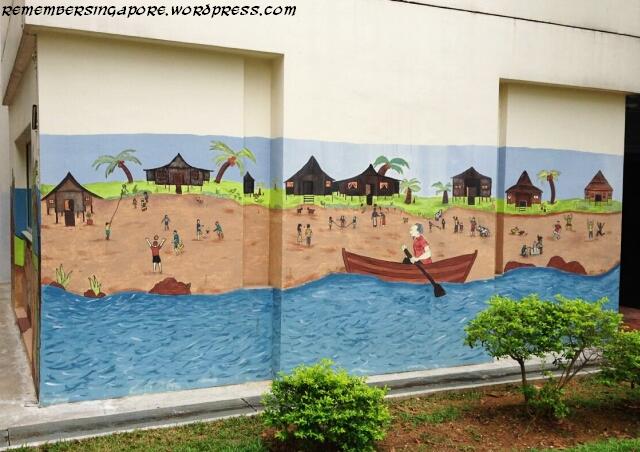
Painted at the ground floor, instead of the top level, of Block 105D of Edgefield Plains, the murals depict the former appearances of Punggol, when it was still a rustic and peaceful fishing village before the eighties.
Television used to be an influential item that was once a big part of our life. It probably still is today, except that its influence is being challenged by internet, smartphones and other entertainment devices.
Like many others, the Singapore Broadcasting Corporation (SBC) dramas, especially those from Channel 8, used to accompany me in my childhood and teenage years.
The Early Days of SBC
The eighties and a large part of the nineties were undeniably the golden periods for SBC, the predecessor of Mediacorp (and TCS). SBC, Singapore Broadcasting Corporation in full, was established in February 1980 as a statutory board, after the corporatisation of Radio and Television Singapore (RTS).
Back then, the sources of Chinese dramas were mainly from Hong Kong and Taiwan. The dramas, many of them in Cantonese and Minnan (Taiwanese Hokkien), had to be dubbed in Mandarin for Singapore audience. After its establishment, SBC decided to invest and produce Singapore’s own Chinese drama series.
In 1978, Hong Kong’s entertainment realm was hit by the collapse of Commercial Television and the change in ownership of Rediffusion Television (now Asia Television Limited). The two incidents provided opportunities for SBC to recruit some of the top talents in Hong Kong scriptwriters and producers.
The early eighties also saw the first batch of local artistes recruited through drama training classes. This lasted a decade before it was eventually replaced by the Star Search competition in 1988, which produced the likes of Zoe Tay, Aileen Tan and Chew Chor Meng. In 1982, the successful production and broadcast of “Seletar Robbery” signified the birth of local Mandarin dramas.
Channel 5, Suria and Vasantham
Malay programs found their ways to TV as early as the sixties. “Pak Awang Temberang” (Uncle Awang Tells Stories) was the first Malay-language drama series aired in 1966. The seventies were the golden era for Malay dramas; many were produced and directed by Bani Buang (1929-1996), popularly known as the father of Singapore’s modern Malay dramas.
Locally-made Tamil dramas soon followed. “Ippadiayam oru Kudumbam” (What A Family), aired in August 1980, was the first Tamil-language drama series produced in Singapore.
Ironically, Singapore did not produce its own local English dramas until the nineties, even though Channel 5 was the first TV channel debuted in April 1963. The much-criticised “Masters Of The Sea” became the first local English TV drama series aired in 1994.
20 Most Memorable SBC (Channel 8) Dramas
Between 1982 and 1990, SBC produced close to ninety Chinese drama series for Channel 8; many were forgettable, some became classic, along with their theme songs which were tailor made to suit the storylines of the dramas. Creativity was at its peak as SBC explored different types of drama genres, such as mystery, horror, comedy, science-fiction and wuxia (pugilistic/martial arts).
RemSG sorts out its list of 20 most memorable Channel 8 dramas. Which of these were your favourite ones?
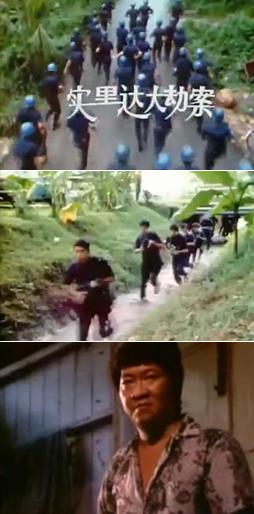
1. Seletar Robbery 实里达大劫案
Period: 24 July 1982
Episodes: 1
Genre: Thriller
Main Cast: Huang Wenyong (黄文永), Chin Chi Kang (钱治钢), Lim Sin Ming (林生民), Steven Woon (云昌凑)
Plot Summary: It was a police and thief game as three robbers got away with a $300,000 loot from a construction company.
Trivia: Although it had only one episode and lasted only 90 minutes, “Seletar Robbery” was considered the first locally-produced Chinese drama. It took less than a month to finish the filming of the drama.
Memorable Scene: Chin Chi Kang as the undisputed villain.
2. Army Series 新兵小传
Period: 14 March 1983 to 06 May 1983
Episodes: 6
Genre: Military
Main Cast: Huang Wenyong, Wang Yuqing (王玉清), Lin Liyun (林丽云), Ang Puay Heng (洪培兴), He Qitang (何其糖)
Plot Summary: Everything seemed well for the much-respected officer who was getting married and was just promoted to the rank of lieutenant, before an accident at the training ground cost his life.
Trivia: “Army Series” was the first true drama series produced by SBC, with a total of six episodes. It was also the first local production depicting the NS life, long before the movies of “Army Daze” (1996) and “Ah Boys to Men” (2012) were screened in Singapore. Its theme song “A Measure of Strength” (一份力量), sang by the SAF, was used as one of the National Parade songs in the late eighties.
Memorable Scene: Huang Wenyong, as the caring officer, was killed in the blast while saving his nervous recruit in a grenade-throwing training exercise.
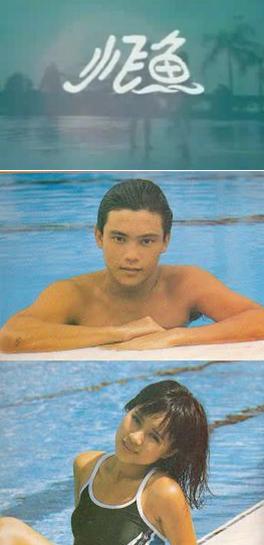
3. Flying Fish 小飞鱼
Period: 12 August 1983 to 30 September 1983
Episodes: 8
Genre: Sport/Youth
Main Cast: Wang Yuqing, Maggie Teng (邓妙华), Chen Bifeng (陈碧凤), Wang Xiangqing (王相钦)
Plot Summary: A teenager who aspired to become one of the best swimmers, but was pressured by his father to abandon his interest and instead study hard for the examinations.
Trivia: “Flying Fish” was introduced shortly after the 1983 National Day. Dubbed as Singapore’s first idol drama, it catapulted Wang Yuqing to stardom. The production also invited Singapore swimmer and SEA Games gold medalist Ang Peng Siong to guide the actors and actresses in their swimming styles.
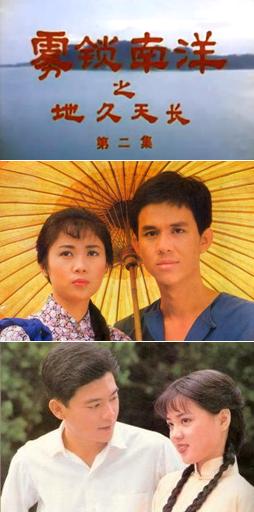
4. The Awakening 雾锁南洋
Year: 06 February 1983 to 07 May 1983 (Part 1), 06 August 1984 to 12 October 1984 (Part 2)
Episodes: 27 (Part 1), 26 (Part 2)
Genre: History/War
Main Cast: Huang Wenyong, Xiang Yun (向云), Chen Shucheng (陈澍承), Huang Peiru (黄佩如), Wang Yuqing, Chen Bifeng, He Jie (何洁), Chen Tiansong (陈天送), Chen Tianwen (陈天文), Huang Yuling (黄毓玲), Liu Qiulian (刘秋莲), Ke Shafei (柯莎菲), Li Huiyan (黎惠燕), Chin Chi Kang
Plot Summary: “The Awakening” came in two parts and four major stories; the arrival of the early Chinese migrants at the start of the 20th century, the Japanese Occupation, the independence of Singapore and the country’s rapid economic development in the seventies and eighties.
Trivia: The first local blockbuster drama cost a total of $500,000 in production fees, and involved more than 200 artistes and calefares. It managed to gain 800,000 in viewership, helping Huang Wenyong and Xiang Yun in cementing their statuses as the leading actor and actress in SBC. “The Awakening” also became the first SBC drama to be bought by TV companies overseas.
Memorable Scene: The Chinese migrants who arrived at Singapore in an overcrowded junk.
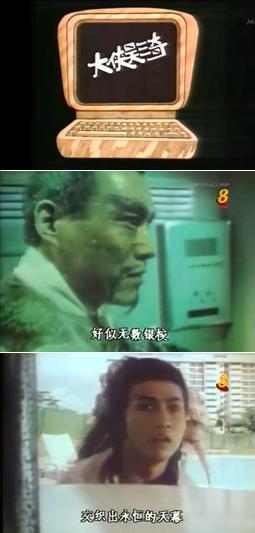
5. Men From The Past 大侠吴三奇
Period: 08 February 1985 to 03 March 1985
Episodes: 12
Genre: Pugilistic/Martial Arts/Fantasy
Main Cast: Chen Tianwen, He Jie, Liu Qiulian, Xia Chuan (夏川), Lina Yeo (杨丽娜), Yan Bingliang (严丙量)
Plot Summary: One of the earliest “time travel”-themed dramas in Asia, “Men From The Past” featured an ancient martial arts expert and his nemesis who brought their feuds to the modern society after travelling through time.
Trivia: “Men From The Past” was the first SBC production that had travelled overseas for some of their filming scenes. It was also the first SBC production that, instead of using voice dubbing, recorded the actual dialogues between the actors and actresses during the filming. This, however, received criticisms from the public that the acting crews’ pronunciations were not up to standard.
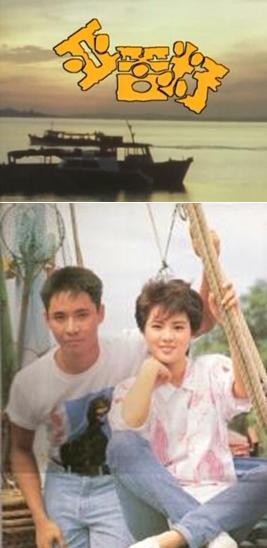
6. Son of Pulau Tekong 亚答籽
Period: 13 June 1985 to 26 July 1985
Episodes: 26
Genre: Society
Main Cast: Huang Wenyong, Lin Mingzhe (林明哲), Chen Bifeng, Chen Xiuhuan (陈秀环), Huang Peiru, Liu Qiulian, Chen Guohua (陈国华)
Plot Summary: Two young men, leaving behind their innocent and carefree days at Pulau Tekong, struggled for their respective new life on mainland Singapore.
Trivia: The 26-episode drama “Son of Tekong” was well-remembered due to its locally-flavoured name (which literally means “attap seed”), beautiful theme songs and a storyline that struck a resonance with the previous generation who had experienced the resettlement from kampongs to HDB flats. The drama also showcased the rustic lifestyle of Pulau Tekong before it was converted into a militarized zone.
Memorable Scene: The RPL (Ramp Powered Lighter) that ferried the islanders and their belongings.
7. The Coffee Shop 咖啡乌
Period: 16 December 1985 to 04 February 1986
Episodes: 30
Genre: Comedy
Main Cast: Lin Mingzhe, Chin Chi Kang, Xiang Yun (向云), Huang Yiliang (黄奕良), Hong Huifang (洪慧芳), Hong Peixin (洪培兴), Ke Shafei, Li Huiyan, Dai Peng (戴鹏), Wu Weiqiang (邬伟强), Steven Woon
Plot Summary: A particularly “grassroot” drama, “The Coffee Shop” talked about the incidents and people around the kopitiam, and the everyday life of the families living in the nearby housing estate, including the braggart stallholder and his four younger sisters, the gossip aunty and the hardworking coffee shop assistant.
Trivia: The drama’s theme song “Connection of Emotions” (情感联络站), sang by Eric Moo with the familiar phrase “kopi O kopi O“, became an instant hit overnight. “The Coffee Shop” was the first local drama to hit one million average viewership.
Memorable Scene: The clash between the “red” (wedding) and the “white” (wake) at the void deck.
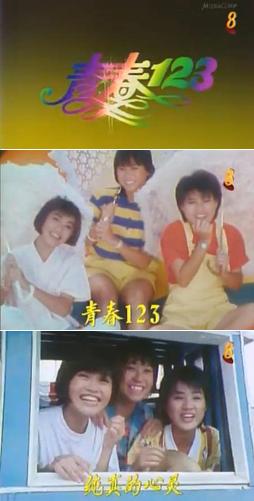
8. The Happy Trio 青春123
Year: 06 February 1986 to 11 March 1986
Episodes: 20
Genre: Youth
Main Cast: Chen Bifeng, Yang Libing (杨莉冰), Huang Wenyong, Hu Shuxian (胡淑贤), Wang Yuqing, Chen Shucheng (陈澍承), Huang Peiru, Zhu Houren (朱厚任), Anna Tan (陈安娜), Jin Jugong (金举拱)
Plot Summary: “The Happy Trio” touched on the life and difficulties faced by three teenage girls, such as family, love, friendship and studies.
Trivia: The drama’s catchy opening theme song was sang by then-upcoming xinyao singer Yan Liming (颜黎明).
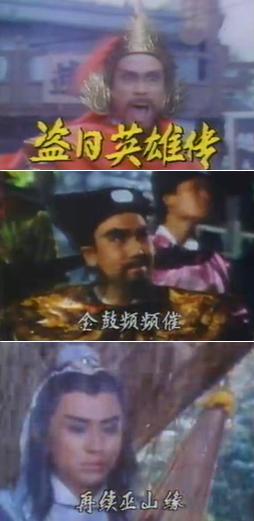
9. Men of Valour 盗日英雄传
Year: 13 March 1986 to 02 May 1986
Episodes: 30
Genre: Pugilistic/Martial Arts/History
Main Cast: Hugo Ng (吴瑰岸), Xiang Yun, Lin Mingzhe, Chen Liping (陈莉萍), Lin Meijiao (林梅娇), Huang Yiliang, Huang Shinan (黄世南), Li Huiyan (黎惠燕), Xia Chuan, Chen Tianwen
Plot Summary: It was a chaotic era during the early South Song Dynasty. Famous Song general Yue Fei led his army to resist the invasion from the barbaric Jin troops, with the help of several righteous swordsmen.
Trivia: A major attempt by SBC to produce a drama series with a storyline that derived from China history. One of its filming locations took place at the Chinese Garden. Taiwanese diva Feng Feifei was invited to sing the drama’s theme songs.
Memorable Scene: The massive battle between the Song city defenders and the Jin invaders.
10. The Samsui Women 红头巾
Year: 05 May 1986 to 13 June 1986
Episodes: 24
Genre: Nostalgia
Main Cast: Zeng Huifen (曾慧芬), Hong Huifang, Huang Wenyong, Li Yinzhu (李茵珠), Li Wenhai (李文海)
Plot Summary: Another locally-flavoured drama series produced by SBC after “Son of Tekong” and “The Coffee Shop”, “The Samsui Women” described the life and difficulties of three samsui women working in Singapore after the war.
Trivia: The opening theme song, sang by Taiwanese songbird Sarah Chen, became a classic hit. The drama also brought fame to its leading actresses Zeng Huifeng and Hong Huifang.
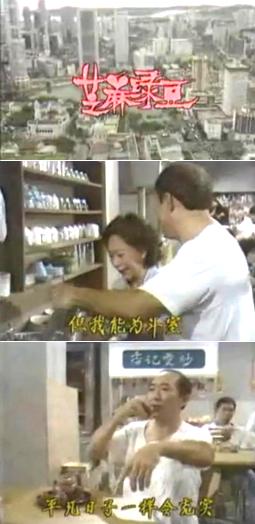
11. Neighbours 芝麻绿豆
Year: 07 July 1986 to 03 October 1988
Episodes: 510
Genre: Comedy
Main Cast: Cai Pingkai (蔡平开), Chen Guohua (陈国华), Duan Weiming (段伟明), Lina Yeo, Fang Hui (方辉), He Jie, Zhou Shiqiang (周世强), Jin Yinji (金银姬)
Plot Summary: Like “The Coffee Shop”, “Neighbours” was a “grassroot” drama series that had a day-to-day storyline revolving around a kopitam and its stallholders of different characters.
Trivia: The daily half-hour “Neighbours” was the longest running drama series produced by SBC, with a total of 510 episodes and lasted more than two years. It brought fame to veteran actress Cai Pingkai, as her character “Er Gu” (Second Aunt) became a household name. The opening theme song “Voices From The Heart” (小人物的心声) was included in the Ministry of Communications and Information’s “Sing Singapore” booklet in 1988.
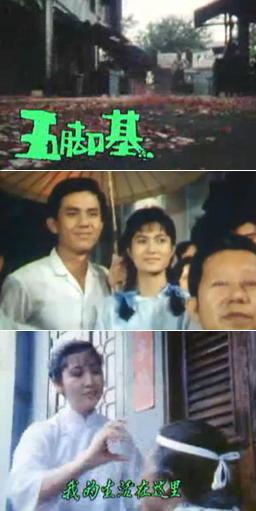
12. Five Foot Way 五脚基
Year: 16 March 1987 to 24 April 1987
Episodes: 30
Genre: Nostalgia/Society
Main Cast: Huang Wenyong, Wang Yuqing, Ye Sumei (叶素梅), Huang Peiru, Huang Shinan, Bai Yan (白言), Liang Tian (梁田), Tang Hu (唐琥), Chen Meiguang (陈美光), Li Yinzhu, Wang Xiuyun (王秀云)
Plot Summary: Sharing a common space, the different families living at the row of shophouses showed their cooperative and helpful nature for one another. The story spanned over more than two decades, from the late fifties to the early eighties.
Trivia: Many veteran SBC artistes were involved in the production of “Five Foot Way”, which brought back many old familiar memories of Singapore such as tikam, chap ji kee and firecrackers. Its popular theme song “My Life Is Here” (我的生活在这里) was also recorded in Sing Singapore 1988.
13. Strange Encounters 奇缘
Year: 26 October 1987 to 27 November 1987 (Part 1), 19 December 1988 to 27 January 1989 (Part 2)
Episodes: 25 (Part 1), 30 (Part 2)
Genre: Mystery/Horror/Fantasy
Main Cast: Wang Yuqing, Chen Bifeng, Zheng Wanling (郑宛玲), Jin Jugong, Li Wenhai, Chen Shucheng, Huang Peiru, Lin Mingzhe, Desmond Sim (沈金兴), Ye Sumei, Lina Yeo, Anna Tan, Huang Shinan, Lin Meijiao, Chen Huihui (陈慧慧), Huang Wenyong, Huang Yiliang, Chen Xiuhuan, Liu Qiulian, Zoe Tay (郑惠玉), Chen Hanwei (陈汉玮)
Plot Summary: “Strange Encounters” was made up of several short stories (seven in Part 1 and nine in Part 2) in paranormal, strange tales and Chinese legends.
Trivia: There was also a Part 3 of the drama series. It was produced by TCS and telecast in 1995.
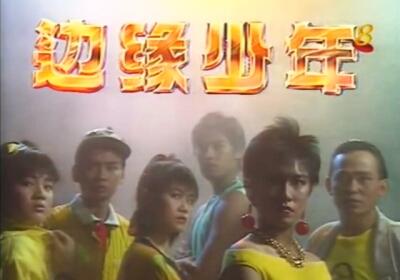
14. On The Fringe 边缘少年
Year: 18 April 1988 to 20 May 1988
Episode: 25
Genre: Youth
Main Cast: Li Nanxing (李南星), Yang Libing, Chen Bifeng, Zheng Wanling, Duan Weiming, Zheng Guoping (郑国平), Huang Yiliang, Lin Meijiao
Plot Summary: A group of rebellious youths gradually fell into the dark side of the society after losing their directions in life.
Trivia: In 2011, Mediacorp produced a 20-episode “remake” of “On The Fringe” (边缘父子), also starring Li Nanxing. It was Channel 8’s first PG (Parental Guidance) drama series.
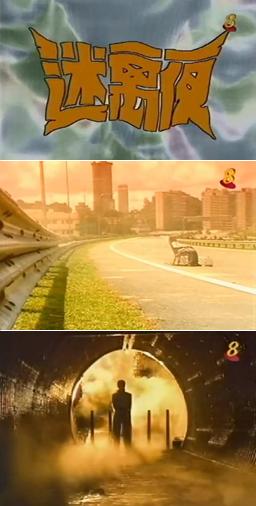
15. Mystery 迷离夜
Year: 29 August 1988 to 07 October 1988
Episodes: 30
Genre: Horror/Mystery
Main Cast: Madeline Chu (朱乐玲), Zeng Huifen, Lin Mingzhe, Chen Xiuhuan, Yang Libing, Wang Yuqing, Li Wenhai, Pan Lingling (潘玲玲), Zheng Wanling, Chen Shucheng, Huang Wenyong, Xiang Yun, Tang Miaoling (汤妙玲), Angela Ang (洪昭容), Edmund Chen (陈之财), Zhu Houren, Huang Shinan, Chen Meiguang, Cai Pingkai, Tang Hu
Plot Summary: “Mystery” was made up of eight short mysterious stories, namely “Butterfly” 蝶, “Piano” 琴, “Infant” 婴, “Beauty” 美, “Dream” 梦, “Caution” 戒, “Soul” 魂 and “Puzzle” 迷.
Trivia: A Part 2 was produced and telecast in 1992.
Memorable Scene: Madeline Chu, in the first story “Butterfly”, aged rapidly after bitten by a butterfly.
16. Teahouse In Chinatown 牛车水人家
Year: 10 October 1988 to 18 November 1988
Episodes: 30
Genre: Nostalgia/Society
Main Cast: Li Nanxing, Chen Liping, Lin Meijiao, Zhu Houren, Fu Shuiyu (傅水玉), Zhang Shuifa (张水发), Liu Quilian, Tracy Wong (王裕香), Sean Say (成建辉), Chen Tianwen, Steven Lim, Wu Weiqiang, Jin Yinji
Plot Summary: “Teahouse In Chinatown” described an ordinary family; an aging couple who was constantly worrying about their five children, each with a different character.
Trivia: The drama’s opening theme song was sang by Eric Moo.
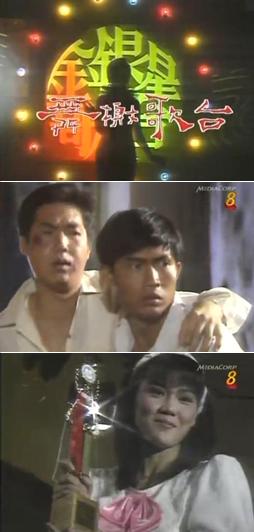
17. The Last Applause 舞榭歌台
Year: 25 July 1988 to 16 August 1988
Episodes: 40
Genre: Society/Romance
Main Cast: Zeng Huifen, Lin Mingzhe, Xiang Yun, Huang Wenyong, Chen Tianwen, Li Wenhai, Liu Qiulian, Lin Meijiao, Huang Peiru, Lina Yeo, Edmund Chen, Jin Jugong
Plot Summary: One of the blockbusters produced by SBC in the late eighties, “The Last Applause” talked about the life of different getai (stage) singers who faced numerous challenges and discrimination. Many years later, an aspired singer became famous and popular, leading to a misunderstanding with her lover.
Trivia: The drama’s popular theme songs “When The Curtains Falls” (落幕的心情) and “Gentle Night” (温柔的夜) were sang by local singer Maggie Teng.
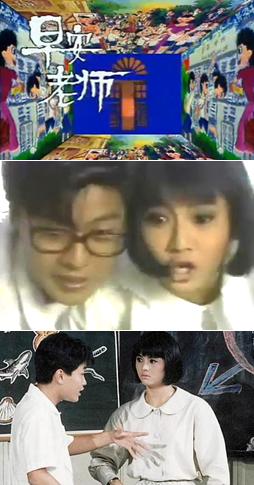
18. Good Morning, Sir! 早安老师
Year: 22 May 1989 to 16 June 1989
Episodes: 20
Genre: Society/Comedy
Main Cast: Li Nanxing, Chen Liping, Madeline Chu, Aileen Tan (陈丽贞), Zhu Houren, Hong Huifang, Hong Peixin, Lin Tianlong (林天龙)
Plot Summary: A young passionate lady took up a teaching role at a local kampong school in the sixties, inspiring her students with new teaching methods. She later fell in love with a Chinese physician in the village.
Trivia: Along with its catchy opening theme song, “Good Morning, Sir!” was a big hit, as Li Nanxing and Chen Liping emerged as SBC’s new leading actor and actress. “Aiyoyo” also became Chen Liping’s nickname.
Memorable Scene: The kampongs and farming areas in Singapore that still existed in the eighties.
19. A Mother’s Love 亲心唤我心
Year: 1989
Episodes: 35
Genre: Kinship
Main Cast: Wang Xiuyun, Li Nanxing, Wang Yuqing, Zoe Tay, Zeng Huifen, Zheng Guoping, Fu Shuiyu, Xie Shaoguang (谢韶光), Ye Shipin (叶世品), Chen Fengling (陈凤凌)
Plot Summary: A mother got separated from her five young children after she was sentenced to prison. The siblings were eventually reunited with their aging mother many years later, after a series of hardships, conflicts and misunderstandings.
Trivia: “A Mother’s Love” was popularly regarded as one of the most touching SBC dramas in the late eighties. The drama also saw the debut of Xie Shaoguang.
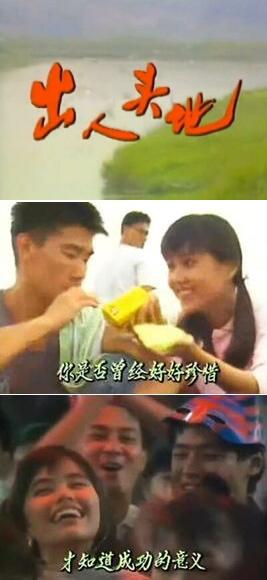
20. The Finishing Line 出人头地
Period: 1990
Episodes: 30
Genre: Society
Main Cast: Li Nanxing, Zoe Tay, Edmund Chen, Aileen Tan, Liang Weidong (梁维东), Tracy Wong, Hu Shuxian
Plot Summary: “The Finishing Line” described the life and friendship of three good friends in Singapore in the eighties. Growing up together in a kampong at Sembawang, each of them had chosen a different career after their National Service.
Trivia: The drama catapulted Edmund Chen to stardom.
Memorable Scenes: A glimpse of Singapore’s thriving financial centre at Shenton Way in the late eighties.
Other Notable Dramas
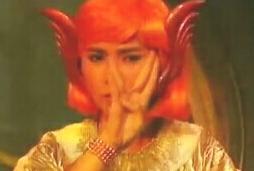
Other memorable SBC Channel 8 drama series of the eighties also include “Takeover” 人在旅途 (1985), “The Bond” 天涯同命鸟 (1986), “Paint A Rainbow” 调色板 (1987), “Painted Faces” 戏班 (1987), “Moving On” 变迁 (1987), “Star Maiden” 飞越银河 (1988) (SBC’s first ever science-fiction drama), “Turn of the Tide” 浮沉 (1989) and “Two Different Lifes” 金兰结 (1989).
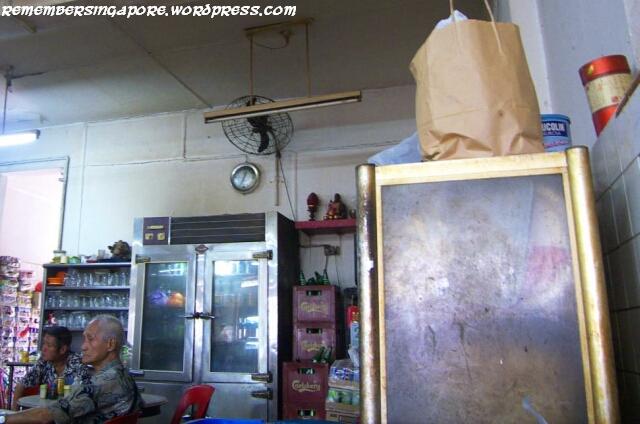
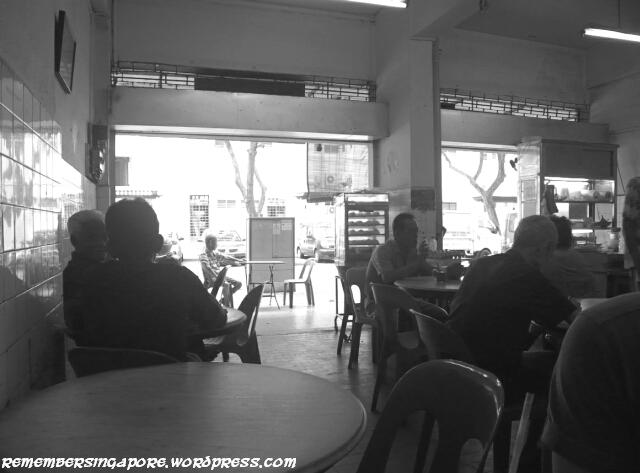
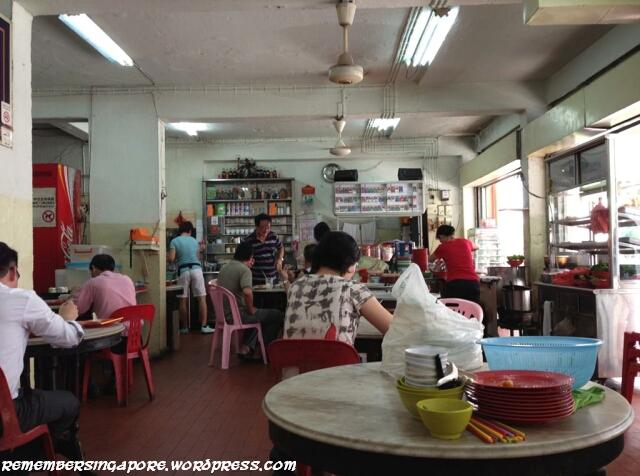
It was a warm and humid afternoon. There were few customers in this old kopitiam tucked away at the ground floor of one of the old HDB flats at North Bridge Road.
The sleepy neighbourhood had seen several changes in the past three decades; the once-popular Plaza Cinema and Golden Sultan Theatre at the nearby Textile Centre and Sultan Plaza were long gone. Eng Cheong Tower, standing beside North Bridge Road Hawker Centre, has been redeveloped into a condominium named Southbank in the mid-2000s.
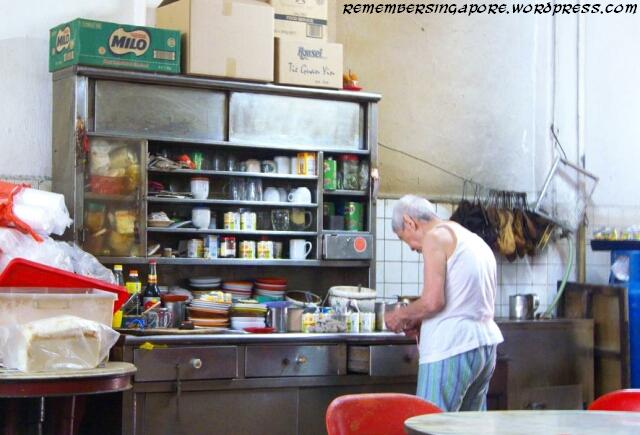
But Heap Seng Leong still holds its ground against the name of progression and development. Its interior has remained largely the same for years, served by the old uncle in his pajamas who makes dozen cups of kopi day after day.
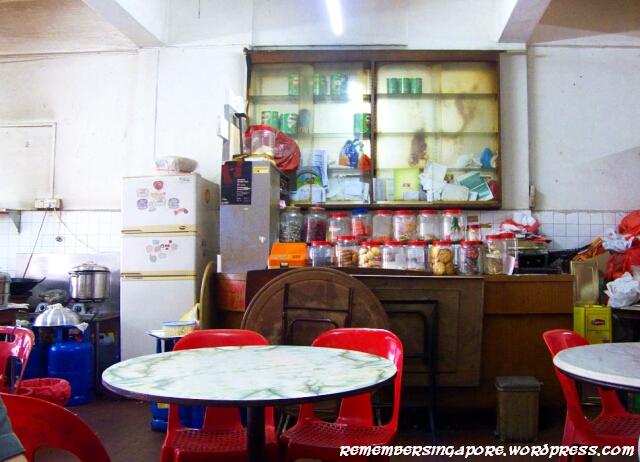
The plastic chairs are perhaps the only “new” things in the kopitiam. The others, such as the round marble-top tables, Formica tables, Diamond-brand electric clock, Bakelite switches, orange payphone and old wooden cabinets, remind one of Singapore of the seventies and eighties.
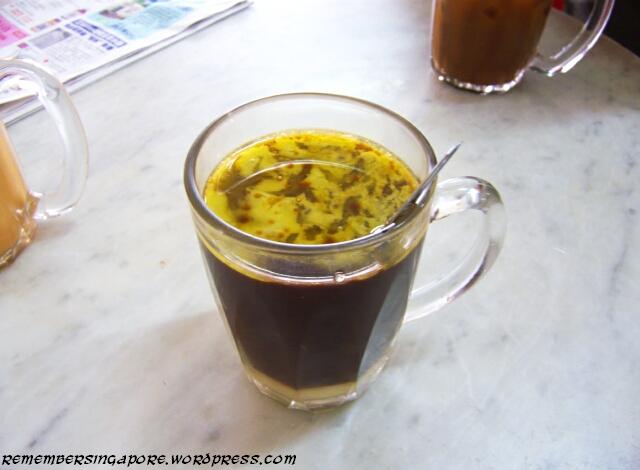
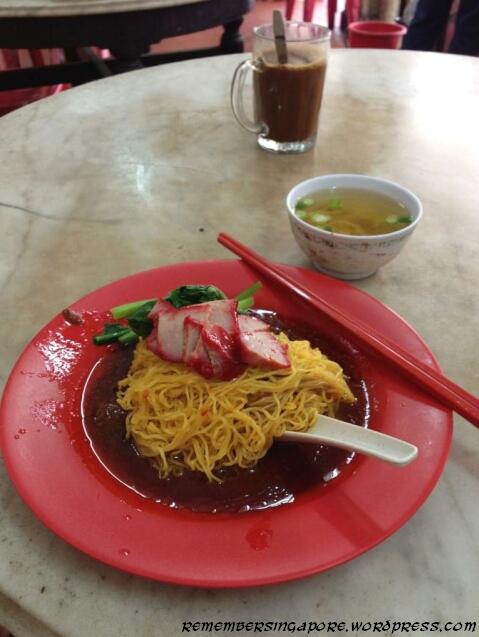
Heap Seng Leong’s “specialty” is kopi gu you (coffee with butter). The dissolving butter may not look too pleasing to the eye, but it certainly adds a nice aroma and taste to the thick coffee.
While other modern coffeeshops keep on raising their prices, using inflation as a convenient excuse, Heap Seng Leong’s beverages remain affordable, which is a good news to the elderly living in this estate.
So the next time you pass by North Bridge Road, show your support by having a cup of kopi or a plate of Hokkien mee at Heap Seng Leong, because how much longer will this old kopitiam last? Nobody knows.
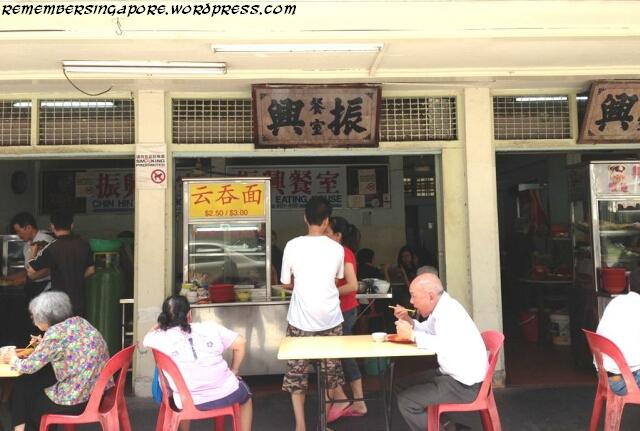
While writing this article, another old kopitiam is about to cease its operation soon.
Chin Hin Eating House, established at Tanglin Halt since 1976, has decided to call it a day at the end of February 2014. The aging housing district, commonly known as chup lau (tenth floor) is slated for demolition and redevelopment.
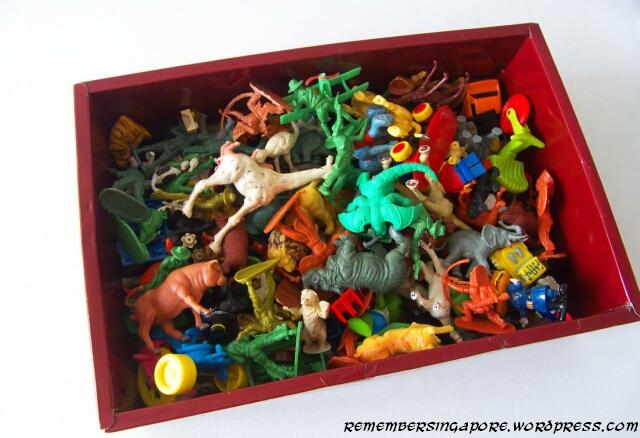
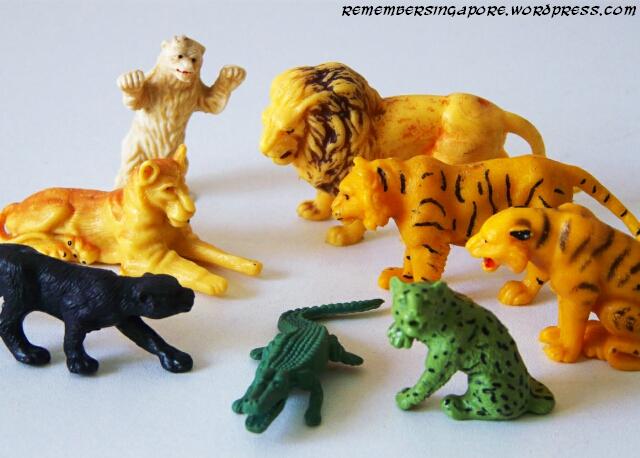
I was doing some spring cleaning for Chinese New Year two weeks ago, and “rediscovered” a box of toys which I have played during childhood. The box has been hidden in a corner of the storeroom for many years, and I have long forgotten that I once spent many hours playing with these plastic figurines.
Flimsy and covered with flashes and burrs, these cheap plastic toys, most of them made in China, would probably fail the quality tests by today’s standard. Nevertheless, they were still fun to play with, as they stretched a child’s imagination in building a miniature farm or zoo. It also helped in his learning and identifying of different species of animals.
Children today may shun these types of “boring” toys; they probably prefer playing their virtual zoos or other games on smart phones and tablets.
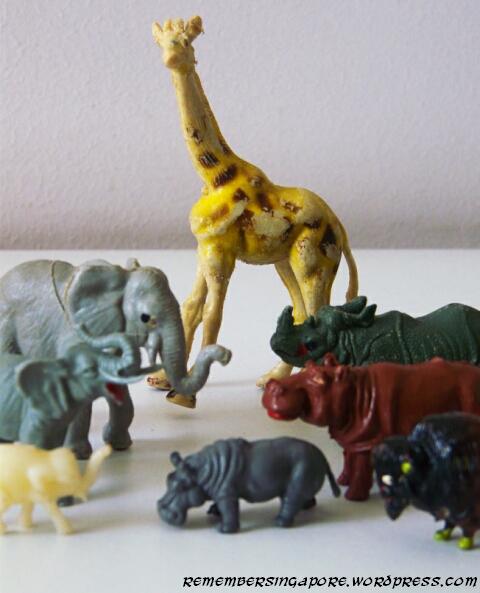
Hippopotamus and rhinoceros. Two of the long English words I first came across as a kid.
The green leopard and red kangaroo do seem a little odd here, but the colours of other animals are quite reasonably accurate.
They even come in the shapes of different types of dinosaurs!
Of cos, a boy’s masak-masak would not be completed without toy soldiers.
Influenced by the Western culture, figurines in the forms of cowboys and Red Indians were also common. But I later realised that there were stereotypical depictions: the cowboys were always deemed as cool and heroic, while the Red Indians were backwards and barbaric.
McDonald’s figurine collectibles were also popular back then.
The good old Lego toys that remain popular today.
Like many other boys of my generation, my favourite toys were the Transformers and M.A.S.K., but I never managed to own any sets. I remember I used to loiter at the toy departments of Yaohan or OG, looking enviously at the different types of Autobots and Decepticons and telling myself I would buy them all when I grow up. I never did.
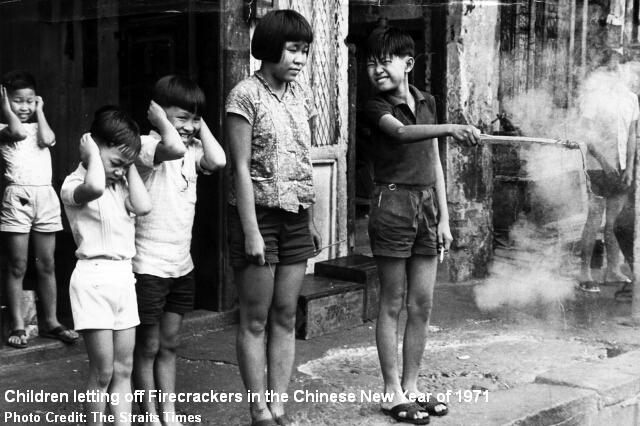
Some traditions survive the test of time. Others disappear due to certain circumstances. Lion dances, angpows, Mandarin oranges and auspicious couplets have always been the items commonly seen in Chinese New Year celebrations in Singapore. More than 40 years ago, there was also another item deemed indispensable for the most important festival for the local Chinese. It was the firecracker.
Origin
The origin of firecracker was said to have dated back to the Song Dynasty of China (960-1279). It was first intended for driving away evil spirits that caused illnesses, but over time, it became an integral part of joyous events and festivals. In Singapore, firecrackers were also widely and popularly used during Chinese New Year and festivals of other races such as Deepavali and Hari Raya.
“Cracker Wars”
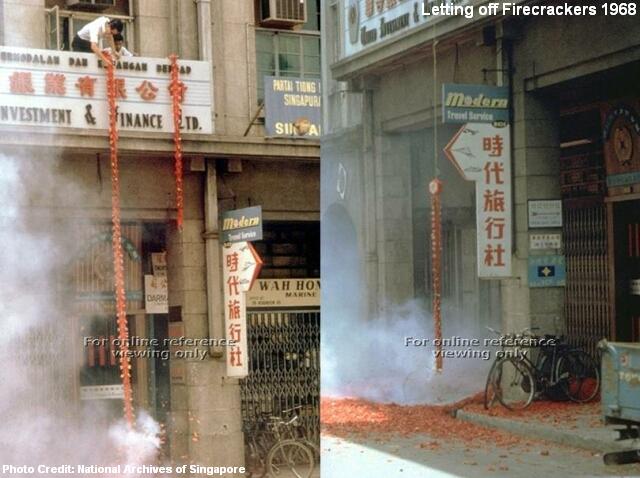
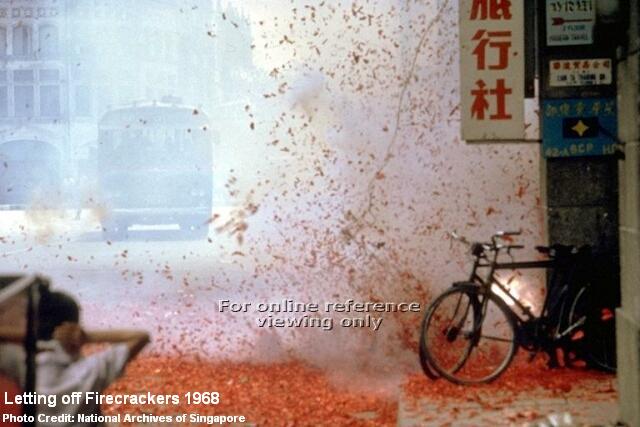
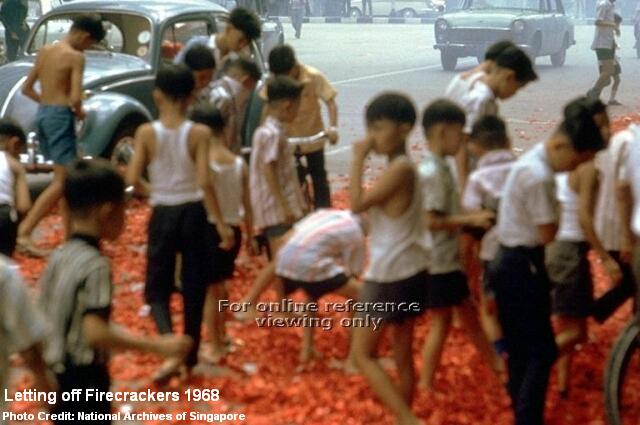
In the sixties, “cracker wars” were rampant, especially in the downtown area around North Bridge Road. During the zhap goh meh or Yuan Xiao Jie (the 15th and last day of the Lunar New Year), Chinese businessmen would compete with each others by hanging and letting off long firecrackers at their shophouses. Packets of firecrackers would also be thrown indiscriminately onto the roads, sometimes posing a danger to the motorists and pedestrians.
During the Lunar New Year period in 1970, joy was turned into grievance after more than three firecracker-caused fires broke out at areas around North Bridge Road, Aljunied Road and MacKenzie Road. A total of six people died, almost 70 were injured and eight shops burnt down. Former Prime Minister Lee Kuan Yew described the unfortunate incidents as madness, and was determined to eradicate the usage of firecrackers.
Firecracker Ban
In March 1970, the legislation was passed by the parliament to clamp down on the indiscriminate firing of crackers. Offenders would face a harsh fine or imprisonment. In the next two years, the ban was partially lifted during the Chinese New Year, with designated places opened for the public to let off firecrackers. However, some ignored the restriction and continued to fire crackers at will.
On the Chinese New Year eve in 1972, two police constables were attacked by six men at Upper Serangoon Road when they tried to stop them from firing crackers at a non-designated location. It proved to be the last straw, as the government later announced a total ban on firecrackers. In June that year, the Dangerous Fireworks Bill was passed in the parliament. Firecrackers became an illegal item and Chinese New Year celebrations in Singapore would never become the same again.
“Pop Pop”
In the late eighties and early nineties, the “Pop Pop” pellets became hugely popular with their crackling sounds when thrown to the ground, simulating the noise of firecrackers. Many kids would buy and throw the pellets down onto the void decks and staircases in large numbers. Unsuprisingly, they were also later banned in Singapore.




 1952 – The Singapore City Council ruled that the polluted wells in areas fitted with piped water supplies must be closed. It was a decision that affected the livelihoods of many towgay (bean sprouts) farmers at Rochore, Kallang and Geylang areas who depended on the water wells.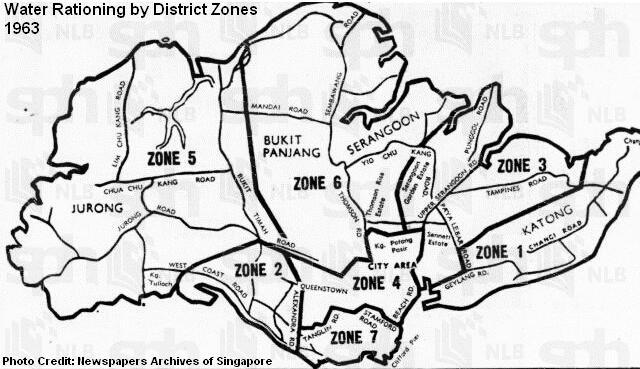



 The eighties and a large part of the nineties were undeniably the golden periods for SBC, the predecessor of Mediacorp (and TCS). SBC, Singapore Broadcasting Corporation in full, was established in February 1980 as a statutory board, after the corporatisation of Radio and Television Singapore (RTS).
 In 1978, Hong Kong’s entertainment realm was hit by the collapse of Commercial Television and the change in ownership of Rediffusion Television (now Asia Television Limited). The two incidents provided opportunities for SBC to recruit some of the top talents in Hong Kong scriptwriters and producers.
 Locally-made Tamil dramas soon followed. “Ippadiayam oru Kudumbam” (What A Family), aired in August 1980, was the first Tamil-language drama series produced in Singapore.
 Period: 24 July 1982
 Year: 06 February 1983 to 07 May 1983 (Part 1), 06 August 1984 to 12 October 1984 (Part 2)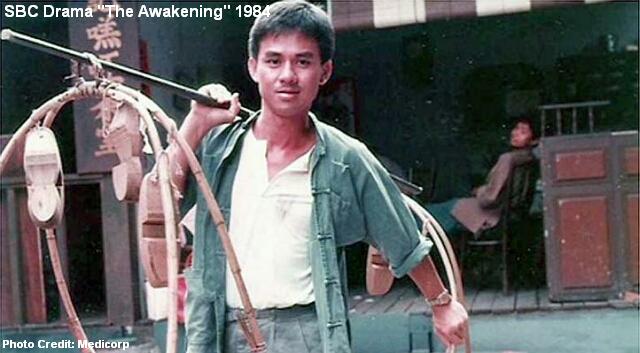
 Period: 08 February 1985 to 03 March 1985
 Period: 13 June 1985 to 26 July 1985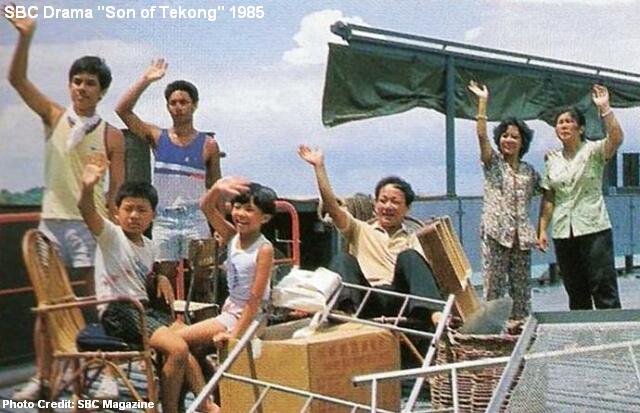
 Episodes: 30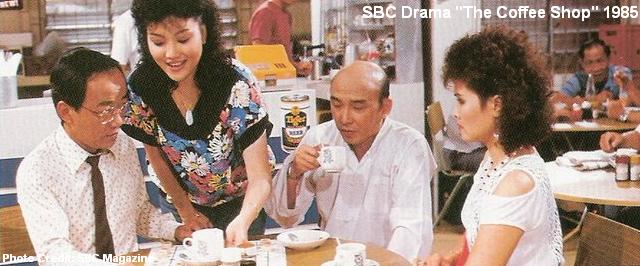
 Year: 13 March 1986 to 02 May 1986
 Year: 05 May 1986 to 13 June 1986
 Year: 07 July 1986 to 03 October 1988
 Episodes: 30
 Year: 26 October 1987 to 27 November 1987 (Part 1), 19 December 1988 to 27 January 1989 (Part 2)
 Main Cast: Li Nanxing (李南星), Yang Libing, Chen Bifeng, Zheng Wanling, Duan Weiming, Zheng Guoping (郑国平), Huang Yiliang, Lin Meijiao
 Year: 29 August 1988 to 07 October 1988
 Year: 25 July 1988 to 16 August 1988
 Year: 22 May 1989 to 16 June 1989
 Period: 1990
 Other memorable SBC Channel 8 drama series of the eighties also include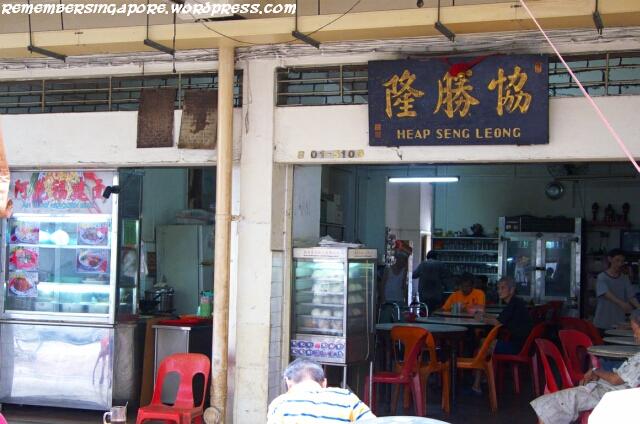


















 Remember Singapore