The grand mansions and villas of yesteryear might not match the likes of the modern houses owned by the rich and famous today at Nassim Road, Ridley Park, Bukit Timah or Sentosa Cove, but they certainly had their charms in old architectural designs such as British colonial, Peranakan, Art Deco or neo-Renaissance.
Some of these grand houses did not survive till this day, but fortunately many have been preserved, or integrated with new buildings. Others are forgotten, probably waiting patiently for new owners to give it a new lease of life.
The list is not in any alphabetical and chronological order.
Atbara House, Gallop Road (1898-Present)
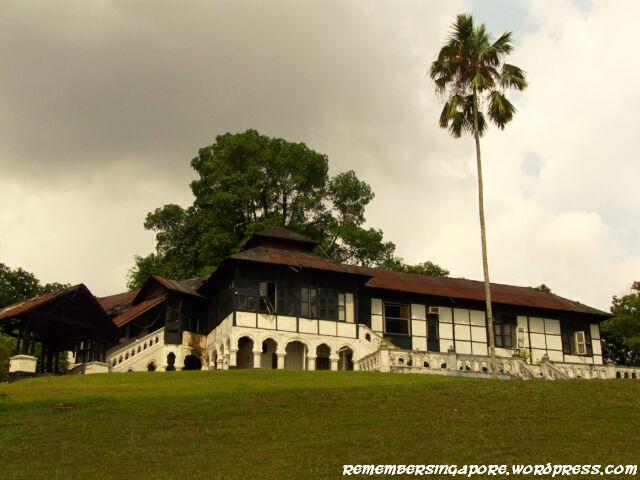
The abandoned black and white colonial house at a small hill beside Gallop Road is the former French embassy to Singapore, otherwise known as Atbara House.
It was built in 1898 by architect Alfred John Bidwell (1869-1918), who was also the designer of Raffles Hotel, Stamford House and Goodwood Park Hotel. The two-storey house possesses a distinctive red roof and whitewashed walls that are still in a considerably good shape today, although some parts of the house have exposed their neglected conditions since the French embassy moved to another location in 1999.
Matilda House, Punggol (1902-Present)
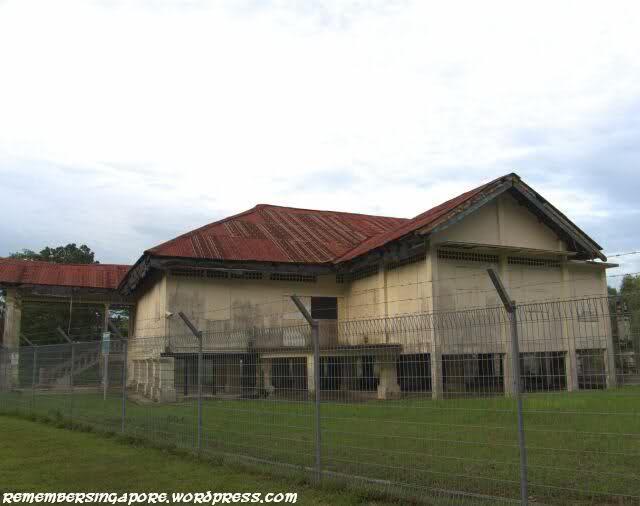
A weekend resort located in the far north of Singapore built by wealthy Irish lawyer Joseph William Cashin (1844-1907) in 1902, the Matilda House had six rooms, a fruit orchard and even an outdoor tennis court during its heydays.
It was unknown when the house was abandoned, but the nearby land was acquired by the government in the 1970s. It was placed on the conservation list in 2000, when Punggol was in the stage of development into a new town.
Today, blocks of new flats have filled the empty field where the house stands on. It will soon be given a new lease of life after decades of abandonment.
Sea Breeze Lodge, Marine Parade Road (1898-Present)
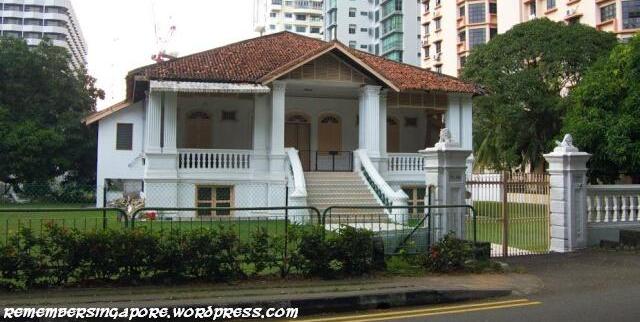
Owned by the Choa family as a seaside resort, this villa at Marine Parade, also known as Sea Breeze Lodge, was only 5m from the coast before the government did a land reclamation in the 1970s.
Malacca-born businessman Choa Kim Keat (undetermined-1907), who had Kim Keat Road named after him, built several grand mansions in Singapore, but only Sea Breeze Lodge is left standing today.
After being occupied by the Japanese forces during the Second World War, the Choa family returned and lived in it for generations until when they sold it to Far East Organisation for $104 million. The house was conserved in 2009, and may be refurbished into a clubhouse for the condominiums expected to be built in a few years’ time.
Sun Yat Sen Villa, Tai Gin Road (1880-Present)
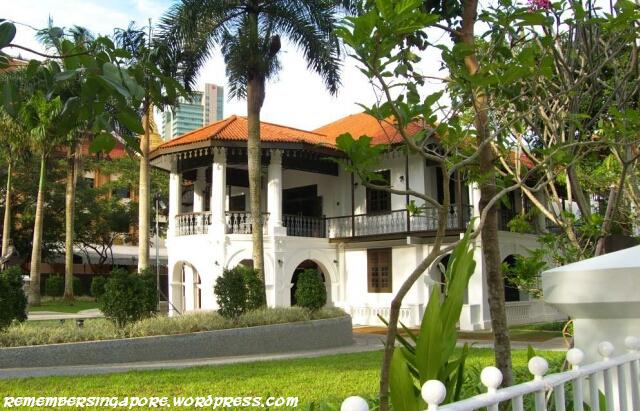
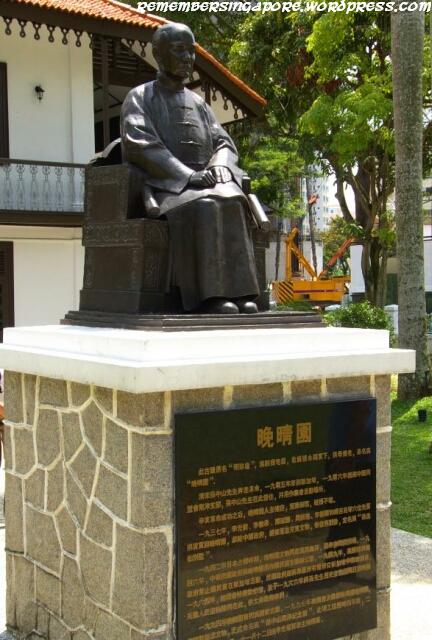
The double-storey colonial-styled villa at Balestier, now known as Sun Yat-Sen Nanyang Memorial Hall, is also known as Wan Qing Yuan (晚晴园) and formerly as Sun Yat-Sen Villa.
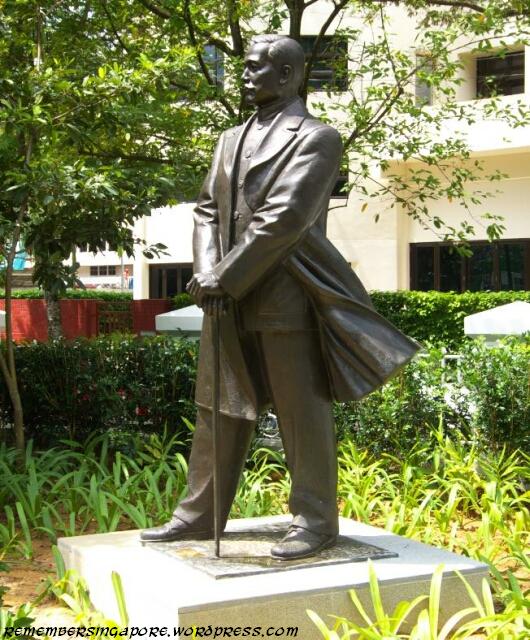
The house was known as Bin Chan House in the late 19th century, which got its name from Bin Chan, a mistress of Chinese businessman Boey Chuan Poh. In 1905, rubber tycoon Teo Eng Hock (1872-1957) bought the villa for his mother Tan Poh Neo. When Dr Sun Yat-Sen (1866-1925) visited Singapore to promote his revolutionary nationalist ideas, Teo Eng Hock offered the villa as a residence and the headquarter for Dr Sun Yat-Sen’s party Tong Meng Hui.
Teo Eng Hock sold his property in the later years when his business suffered a decline. Prominent businessman and philanthropist Lee Kong Chian (1893-1967) led a group of Chinese merchants to buy over the villa. It was occupied by the Japanese during World War II, and took over by Singapore Chinese Chamber of Commerce and Industry after the war.
Sun Yat-Sen Villa was gazetted as a national monument in 1994 and underwent extensive restoration three years later.
Chek Jawa House No. 1, Pulau Ubin (1930s-Present)
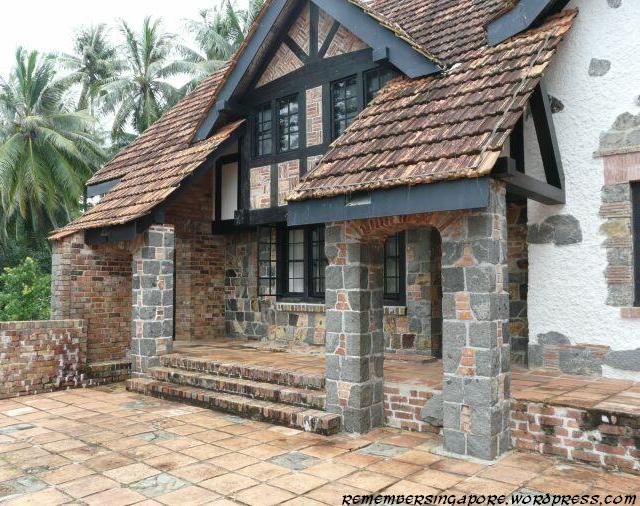
This little Tudor-styled cottage is located on Pulau Ubin, a north-eastern island of Singapore. Built in the 1930s by former Chief Surveyor of Singapore Landon Williams, this beautiful resort, resembling an English cottage, is completed with a private jetty and the only workable fireplace in Singapore.
For decades, the house was badly affected by the strong winds and rains at the eastern side of Pulau Ubin. It was not until 2003 that Chek Jawa was given the conversation status and opened four years later as a Visitor Centre for the public after a series of renovations.
Karikal Mahal, Still Road South (1920-Present)
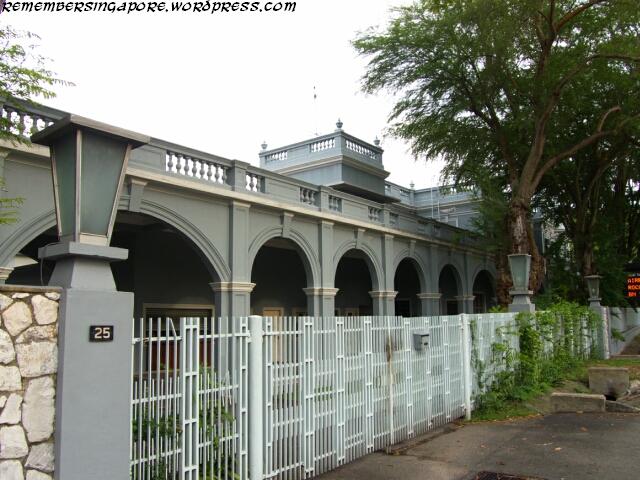
In 1920, rich Indian cattle merchant Moona Kadir Sultan built this huge grand mansion for his numerous wives and named it Karikal Mahal (Mahal is “palace” in Indian, whereas Karikal is the name of a South Indian town). It had four luxurious houses completed with a spacious garden with artificial lake and fountain. Located just in front of the sea before the land reclamation of the East Coast area, its windows, roof and arches showed glimpses of Italian style.
In 1947, the entire site was sold to Lee Rubber Company which renovated the place into a 20-room budget hotel known as Renaissance Grand Hotel. Its garden was split away from the mansion when Still Road was constructed in 1973.
Today, it is forgotten by the public and is used largely as a storage place for unwanted furniture.
Black & White Colonial House, Seletar Camp Park Lane (1930s-2012)
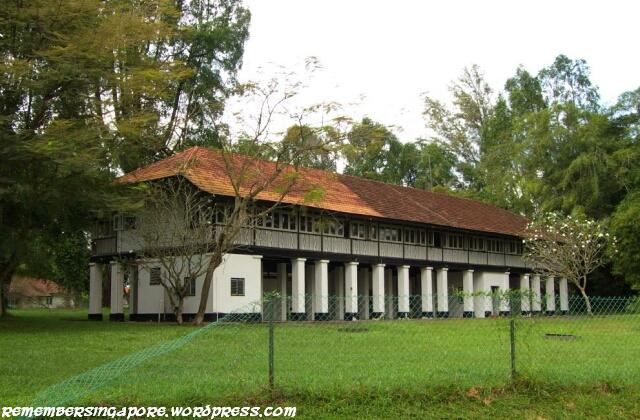
The 30-plus black and white houses near Park Lane of Seletar Camp are due to be demolished in 2012, with the exception of a few. There are three huge mansions among the cluster of the colonial houses, one of them was formerly a clubhouse.
Seletar Camp was established by the British as early as 1928, and the houses were the home of the British military personnel. The two biggest mansions were perhaps reserved for the highest ranking officers during that era. The rapid development of the region as an Aerospace Hub has unfortunately caused the abandonment and eventual demolition of these beautiful houses.
House No. 106, Jervois Road (undetermined-Present)
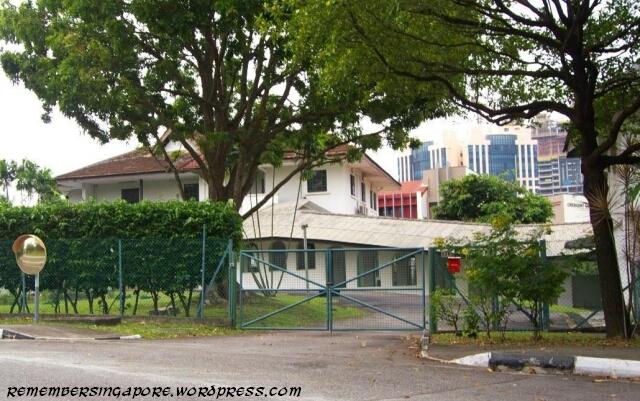
It is unknown when was the house built, but it has been in existence before the Second World War. From the limited records, House No. 106 at Jervois Road was used as a temporary residence for former British Resident Cabinet Minister Duff Cooper (1890-1954) and his wife Lady Diana in 1941.
Duff Cooper was in Singapore to deal with the urgent political situation at the start of the Second World War. He had based in Singapore briefly to set up his headquarters in dealing with the full-blown war in Pacific.
The Pier, Lim Chu Kang (1940s-Present)
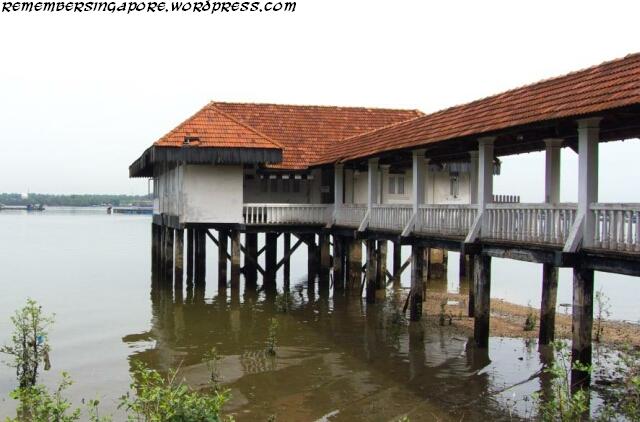
One of the most unique houses in Singapore, it was built on a pier, as its nickname suggests. The Pier was another weekend resort owned by the wealthy Cashin family. It was likely to be built in the 1940s, according to the reports that this area, as well as The Pier, fell to the Japanese forces in February 1942.
Howard Cashin and his wife would occasionally stay here after their marriage in 1953. Their regular home was the Matilda House at Punggol. The Cashin family had another splendid home at Amber Road’s “Butterfly House”.
Beaulieu House, Sembawang (1910-Present)
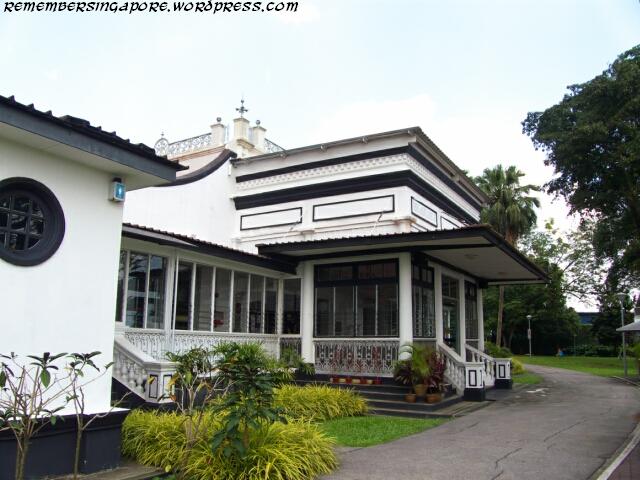
Situated on a small hill right at the end of Sembawang Park, beside the former Singapore Naval Base (now Sembawang Shipyard), the Beaulieu House was built in around 1910 as a seaside resort owned by a family of surname David.
The house was acquired by the British colonial government in the 1920s, and was later used as the private residence for the senior naval officers. Admiral Geoffrey Layton (1884-1964), Commander-In-Chief of the China Station for Britain, stayed in it for two years just before the Second World War.
The century-old Beaulieu House, designed with a mixture of Neo-Classical and Victorian styles, was probably named after a place in England. It was given the conversation status in 2005, and is now operated as a restaurant.
Bukit Rose, Bukit Timah Road (early 1900s)
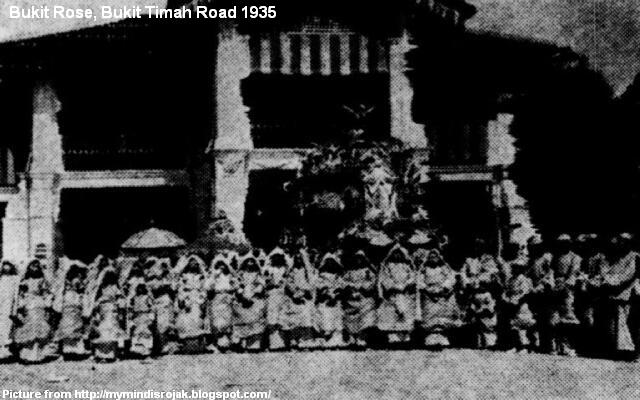
Located at Bukit Timah Road and built in the early 20thcentury, Bukit Rose was local Chinese businessman Ong Sam Leong’s (1857-1918) private residence. Besides being the key supplier of labourers to the mines of phosphate-rich Christmas Island, Ong also had rubber plantations, brickworks and sawmills in his vast business empire.
One of the most successful businessmen of his era, Ong Sam Leong was well respected among the communities. When his wife Yeo Yean Neo passed away in 1935, the Johor Sultan even sent his state band to play for her funeral.
Little India’s Sam Leong Road was named after him, whereas Boon Tat Road at Lau Pa Sat was named after his son Ong Boon Tat. After his death, Ong Sam Leong was buried in the largest tomb at Bukit Brown Cemetery.
Alkaff Mansion, Telok Blangah Green (1918-Present)
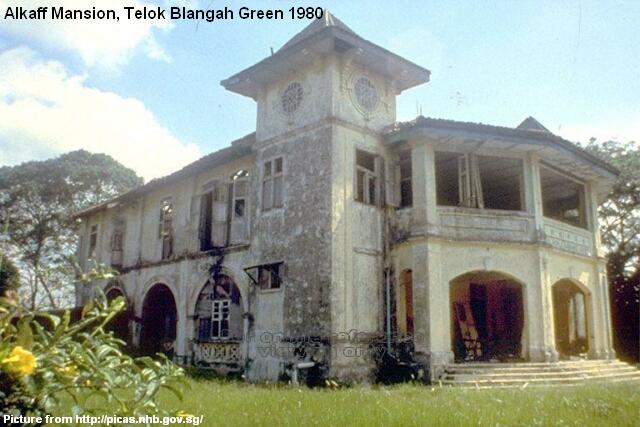
Occupying a landsize of 780 square meters on top of a small hill at Bukit Jagoh (now known as Telok Blangah Green), the Alkaff Mansion was a holiday villa built by Syed Abdul Rahman Alkaff to entertain their customers and guests.
Syed Abdul Rahman Alkaff (1880-1948) was a Yemeni trader who came to Singapore in the early 20th century. The Alkaff family was famous for their regional businesses in spices, sugar, coffee and other commodities. They also had vast property interests in other parts of Singapore such as Pasir Panjang and Henderson Road, and owned a beautiful Japanese-styled Alkaff Lake Gardens near MacPherson Road.
After the Second World War, the Alkaff family sold much of its properties, including the Alkaff Lake Gardens, in a bid to revive its struggling businesses. Alkaff Mansion, built in 1918, was abandoned and left forgotten until 1990, when it was leased to Hotel Properties Ltd for redevelopment into a fine-dining place.
The venture lasted more than a decade when it was finally closed down in 2003. The mansion was left empty once more.
Former Eng Wah Building, Jalan Besar Road (early 1900s-2006)
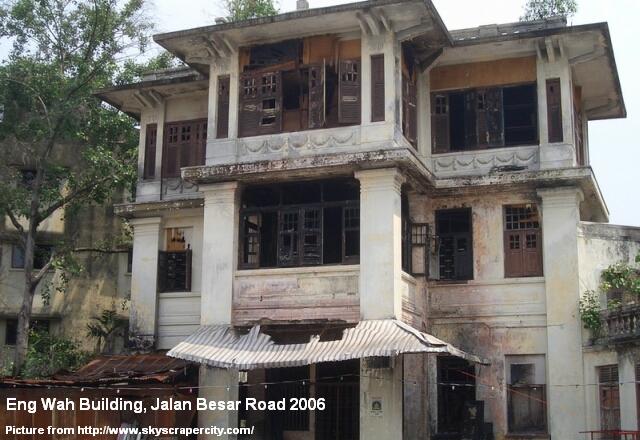
Former Eng Wah Building was a century-old conserved building that was destroyed by a fire in early 2006. The name derived from the popular cinema operator Eng Wah who rented this place as an office in the mid-1900s.
Located in an area with old world charm and designed with Peranakan flavours, it was unfortunate that the three-storey building was deemed structurally unsafe after the fire disaster, and was demolished by the end of 2006.
Wesley House, Mount Sophia (late 1800s-early 1900s)
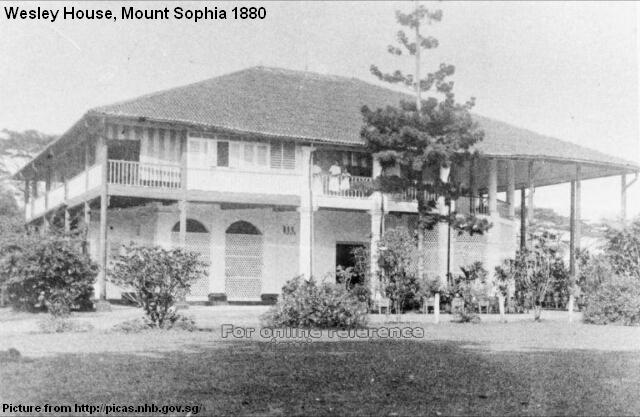
Little was known about this house except that it was used as a residence and training centre for Methodist ministers. The first owners were Reverend Ralph Waldo Munson, Reverend Charles Corwin Kelso and Reverend Fred Hugh Morgan who registered the property.
Methodism was brought to Singapore by Reverend William Fitzjones Oldham (1854-1937) who arrived from India in 1885. Wesley House was part of the Methodist Episcopal Church started by the Americans in 1897 to strength the faith formation after Reverend Oldham. The Methodist congregation later had their official place of worship Wesley Methodist Church at Fort Canning Road built in 1908.
India House, Grange Road (1911-Present)
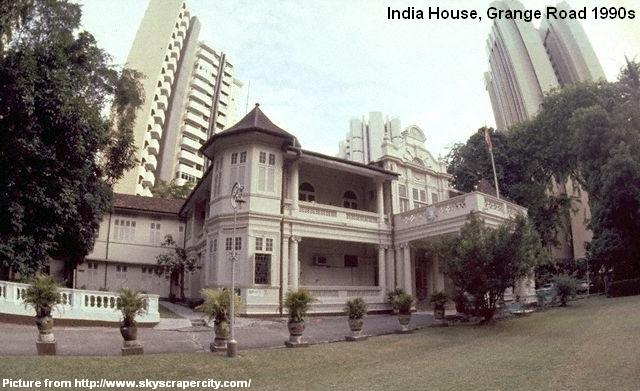
Built in 1911, the India House was a black and white colonial house located at Grange Road. It occupies a large area of 42,351 square feet of land and was bought by the Government of India in 1948, a year after its independence from the British rule. The house hosted its flag hoisting ceremony during the Indian Independence Day every year, attended by prominent Indians in Singapore.
There is little information about its previous owners, but after years of neglect, the house was in a bad dilapidated state before being owned by the Indian government. In 2009, it was restored by the Urban Redevelopment Authority (URA). Today, it serves as the High Commission of India.
Hurricane House, Orchard Road (1860s-Present)
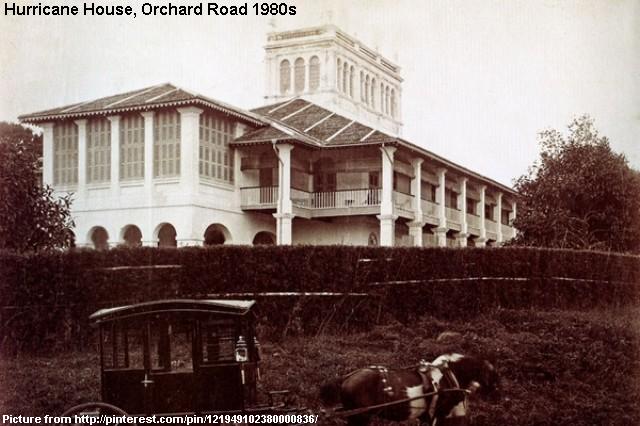
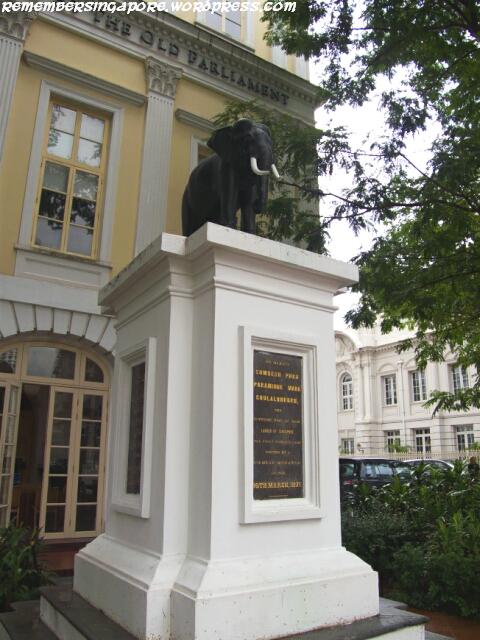
One of the early mansions along Orchard Road in the mid-19th century, the grand house, dubbed “Hurricane House”, was acquired by the King of Siam (Thailand) Somdech Phra Paramindr Maha Chulalonkorn (1853–1910).
Widely respected as the Thai monarch who led his kingdom to modernisation, King Chulalonkorn had always been on friendly terms with the neighouring countries and Singapore was his first ever foreign trip in 1871. He decided to purchase the Hurricane House in the 1890s through Tan Kim Ching, the Thai Consul in Singapore. Two adjoining properties were later added to the mansion. Today, it is the Royal Thai Embassy along Orchard Road.
Gedung Kuning, Sultan Gate (1920s-Present)
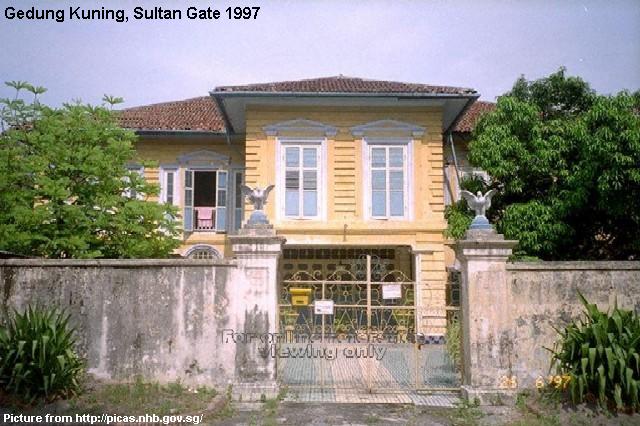
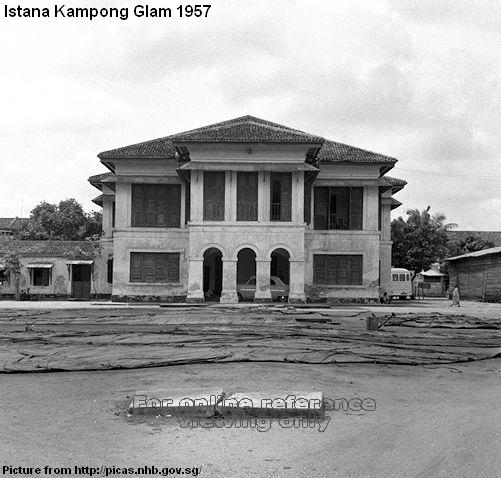
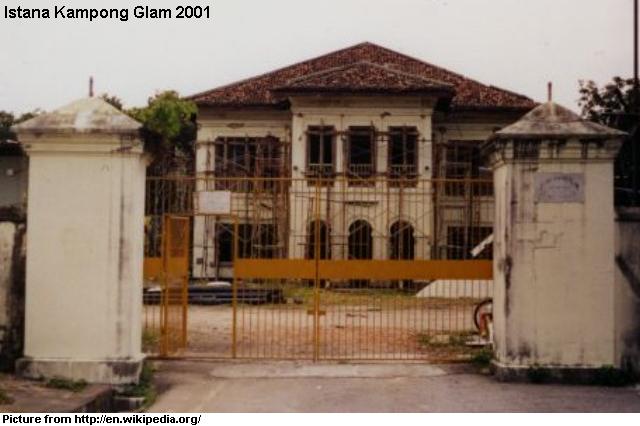
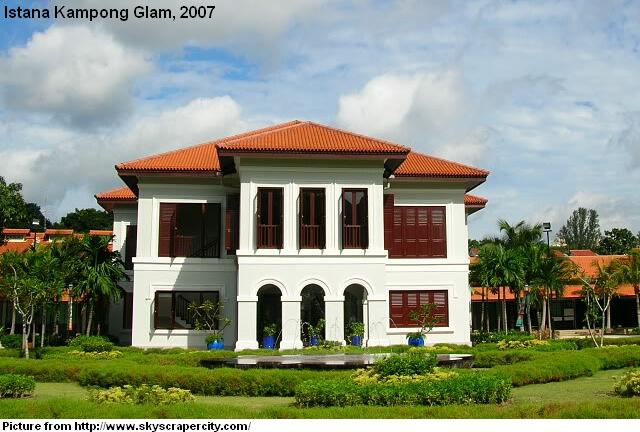
Formerly known as the Bendahara (“Chief Minister” in Malay) House, the Palladian-styled house was owned by Tengku Mahmud, the third son of Sultan Ali (1824-1877), the former ruler of Johor. His brother Tengku Alam Shah (1846-1891) lived in the nearby Istana Kampong Glam. Although both of them were heirs to the sultanship of Johor, they were powerless to stop Temenggong Abu Bakar (1833-1895) from claiming the Johor territories from their family.
The house was later sold to Javanese businessman Haji Yusof Bin Haji Mohammad, whose descendants lived in it for generations. In 1999, the government acquired the house and placed it on the conservation list. Together with Istana Kampong Glam, it was redeveloped as the Malay Heritage Centre in 2003. Renamed as Gedung Kuning (“Yellow Mansion” in Malay), it now houses a restaurant called Tepak Sireh.
Bungalow 781, Mountbatten Road (1927-Present)
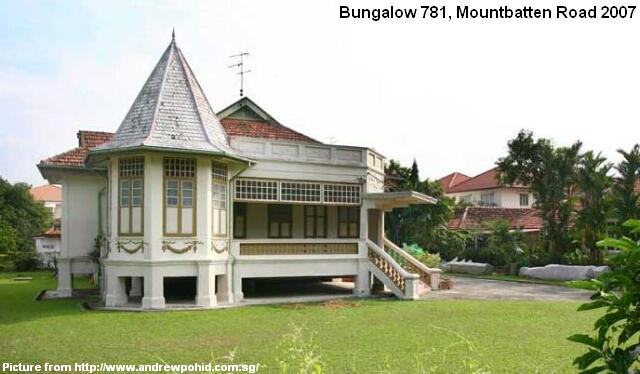
Named after Lord Louis Mountbatten (1900-1979), Mountbatten Road was formerly known as Grove Road. There was a vast coconut plantation in this area in the late 19th century, and was home to many rich merchants.
Nicknamed the “Millionaires’ Bungalows”, the houses, mainly single-storey built on brick piers, were a common sight. The designs of the bungalows were modelled after those in India, which had the rooms cooled by under-floor ventilation and were effective in the tropical countries.
The earliest known occupants of bungalow 781 were Charles James Lacey, Robert Dunman, Meyer-Hyeem Sassoon, and Richard Lake, registered in 1927. The unique house might be built at an earlier period. In the fifties, it was sold to a certain Mr Teo, before being auctioned for $10m in 2007.
Another famous house nearby was the Early Modern-styled Chansville, home of Singapore’s famous swimming champion and coach Dr Chan Ah Kow and his seven children including Alex, Roy, Mark and Patricia, all well-known for their swimming prowess in the sixties and seventies. The Chan family had lived in Chansville since 1940s. It was sold for $11m in 2004.
Houses No. 124 & 126, St Patrick’s Road (1914 & 1925-Present)
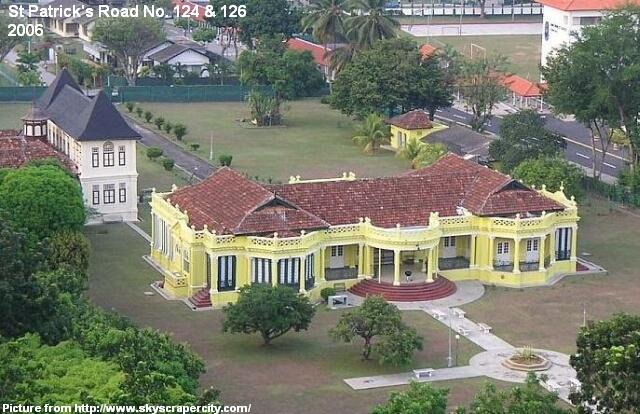
A splendid beachfront villa located at Katong, this was the former asset of Tan Soo Guan, the descendant of wealthy local Chinese merchant Tan Kim Seng (1805-1864), who had Kim Seng Road named after him.
The yellow mansion, designed with a mixture of Peranakan and British architectural styles, was built in 1914. The two-storey white English-styled building behind the mansion was added in 1925.
In late 2005, the Tan family sold their property to United Industrial Corp Ltd (UIC) for $65.5m, which developed the vast land into a 121-unit condominium called the “Grand Duchess of St Patrick’s”. Being a conserved building, the former villa was converted into a clubhouse named as Majestic Clubhouse.
Tanjong Katong Villa (late 1800s-mid-1900s)
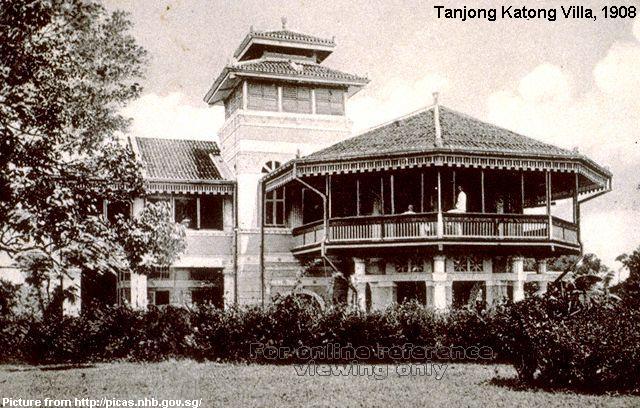
Before the land reclamation of East Coast after the mid-sixties, the coastline was near to where Katong is today. Therefore, many wealthy figures would build their mansions and villas at Katong in the late-19th to mid-20th century as their private seaside resorts for the weekends.
This villa was modeled after a European bungalow, probably due to the fact that many early Eurasians lived in Katong in the early 20th century. Early houses with large grounds usually had a gazebo or pavilion on the lawn.
Whampoa/Bendemeer House, Serangoon Road (1840-1964)
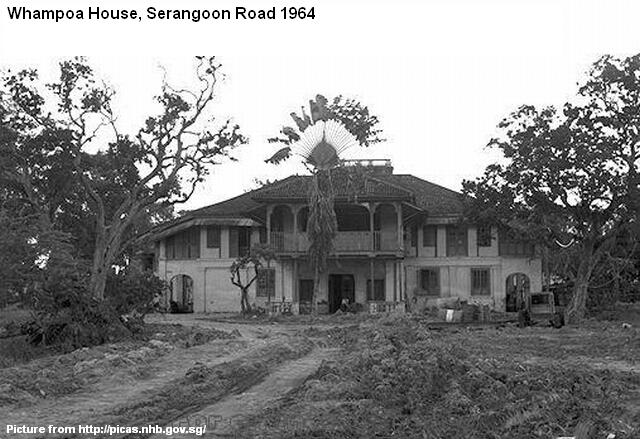
The grand Whampoa House was owned by well-respected local Chinese businessman Hoo Ah Kay (1816–1880), or popularly known as Whampoa. Born at Whampoa near Canton, he came to Singapore at an age of 15. Venturing into shipping chandler, bakery, properties and even an ice house at River Valley Road, Hoo Ah Kay became one of the richest Chinese in Singapore in the 19th century.
In 1840, he built a grand mansion along Serangoon Road, completed with a beautiful Chinese garden that was opened to the public during Chinese New Years and was extremely popular among the Europeans. It was named Whampoa’s Gardens or Nam Sang Fa Un (南生花园).
Hoo Ah Kay was able to converse in English and thus held high positions in the British colonial government, such as consuls of Russia, China and Japan in Singapore. The present-day Whampoa area is named after him.
Whampoa House was sold to wealthy Teochew millionaire Seah Liang Seah (1850-1924) in 1881, a year after Hoo Ah Kay died. He renamed it Bendemeer House (明丽园), which lasted until 1964 when the government decided to demolish it to make way for the development of Boon Keng. Due to Seah Liang Seah’s contributions to the community, the nearby road was named as Bendemeer Road, whereas Liang Seah Street was named after him in 1926.
Eu Villa, Mount Sophia (1915-1980s)
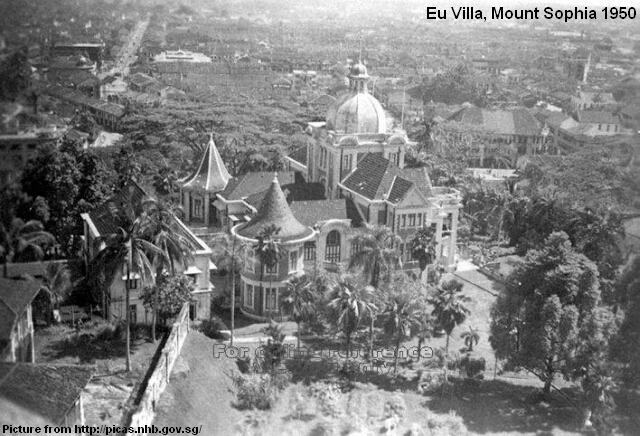
Eu Villa was the residence of wealthy Penang-born local businessman and philanthropist Eu Tong Sen (1877-1974), nicknamed “King of Tin”. He took over his father’s estate at an age of 21 and expanded the family business in the tin mine industry. By 30, he was one of the richest men in Asia.
Eu Tong Sen later ventured into the medicinal sector to help his sickly workers and it developed into the well-known Eu Yan Sang today. Eu Tong Sen Street at Chinatown was named after him.
One of the largest houses in Singapore before the Second World War, this five-storey mansion was built at an estimated cost of $1m, an astronomical figure during that era. Eu Tong Sen hired Swan & Maclaren to design the house as early as 1915. It was demolished some time in the 1980s.
Butterfly House, Amber Road (1912-2007)
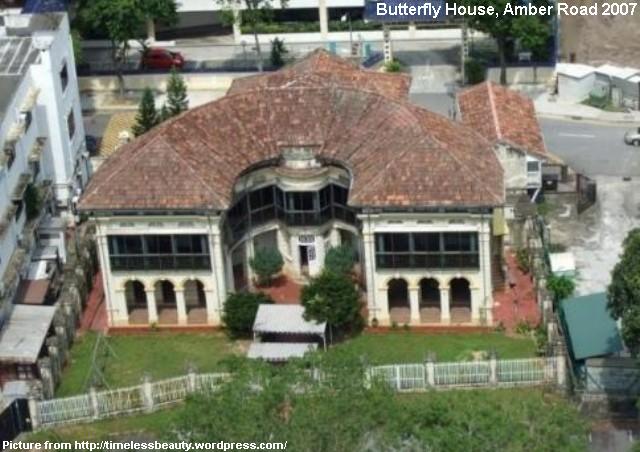
It was the only private residence designed by architect Alfred John Bidwell (1869-1918), who also designed the Atbara House, Raffles Hotel and Goodwood Park Hotel. Built in 1912, the beautiful mansion, the only residence in Singapore with curved wings by its side (hence its nickname), was the home of the famous Cashin family for generations. The Cashin family also had properties in other parts of Singapore, such as the Punggol Matilda House and the one at the pier.
The unique neo-Renaissance crescent-shaped house once stood just in front of the coastline, before the land reclamation of the present-day East Coast. In 2006, a private developer bought the land and planned to erect a 18-storey condominium at the site despite appeals by the public to preserve the house. In the end, the developer only retained the main porch and stair hall to integrate with the condominium, but the famed wings of the historical house were torn down.
Golden Bell Mansion, Mount Faber (1909-Present)
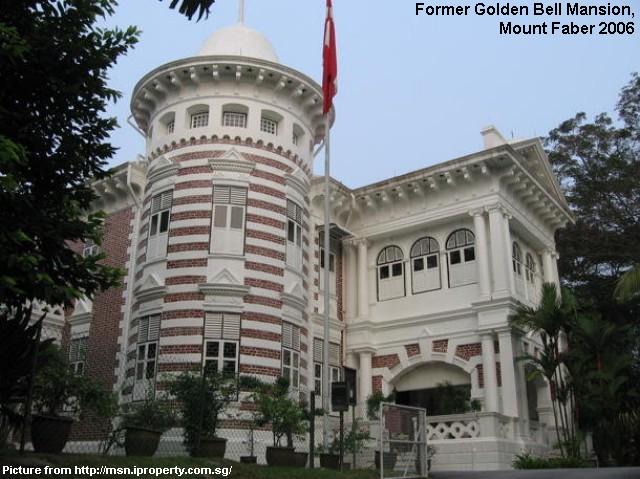
The former Golden Bell Mansion at Pender Road, Mount Faber, was owned by Tan Boo Liat, great-grandson of famous local Chinese pioneer and philanthropist Tan Tock Seng. It was constructed in 1909, and was named after Tan Boo Liat’s grandfather Tan Kim Ching (陈金钟), whose Chinese name was interpreted as Golden Bell.
The two-storey red-and-white-bricked Edwardian-styled Golden Bell Mansion was designed by then famous architect Wee Moh Teck. He also added Straits Chinese and Thai design elements in the appearance of the mansion.
Chinese great Dr Sun Yat-Sen had a brief stay in Golden Bell Mansion in 1911, invited by Tan Boo Liat who was then the President of the Singapore Kuomintang. The house was sold in 1934 when Tan Boo Liat passed away. It was leased to the Danish Seamen’s Church in 1984, which is still in operation today.
Mount Emily Mansion, Upper Wilkie Road (early 1900s-Present)
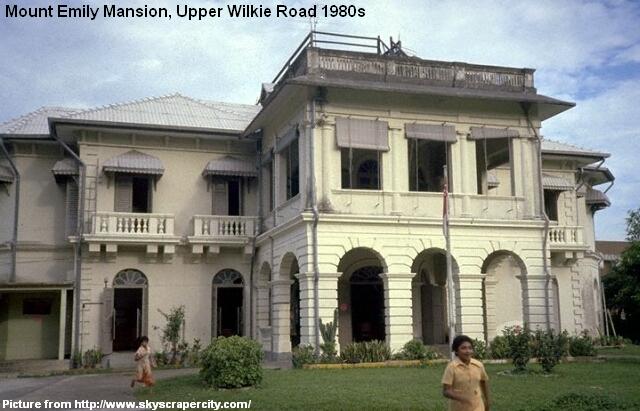
It is unknown when is this mansion built, but it is one of the grandest houses located at Mount Emily. The earliest record of ownership was a Mr J. Ikeda in 1935 who did some expansion to the house.
There was a Japanese community living nearby during the thirties, so Mount Emily Mansion became a Japanese General Consulate from 1939 to 1941.
After the Second World War, the former Ministry of Social Affairs took over the mansion, converting it into a Girls’ Home in 1969. In the eighties, it became the Wilkie Road Children’s Home, and then a counseling center for the drug addicts.
Today, the house is owned by Emily Hill Enterprise Ltd as a center for arts and business.
House of Jade, Nassim Road (1930s-1980s)
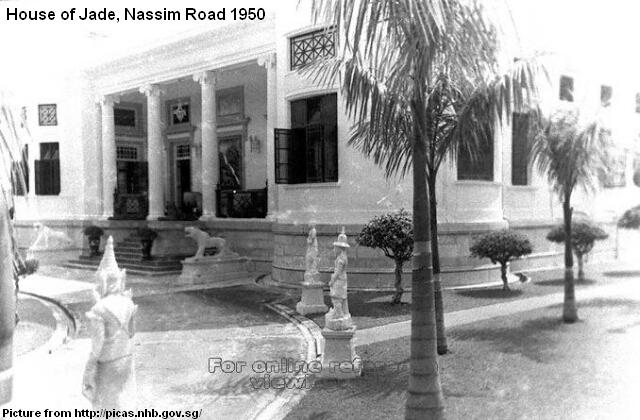
The Tiger Oil House of Jade at Nassim Road was the proud property of the famous Aw brothers, who displayed their large collection of jade in this house, open for public viewing in the 1930s.
The Aw brothers of Aw Boon Haw (1882-1954) and Aw Boon Par (1888-1944), being one of the most successful families in Singapore in the early 20th century, also owned the Haw Par Villa and the Tiger Balm Garden.
The vast collection in the House of Jade managed to escape the destruction of the Japanese Occupation during the Second World War. In 1979, the Aw family donated part of the collection to the National Museum of Singapore, whereas the mansion was demolished in the 80s. Today posh condominium Nassim Jade stands in its place.
Sri Temasek, Orchard Road (1869-Present)
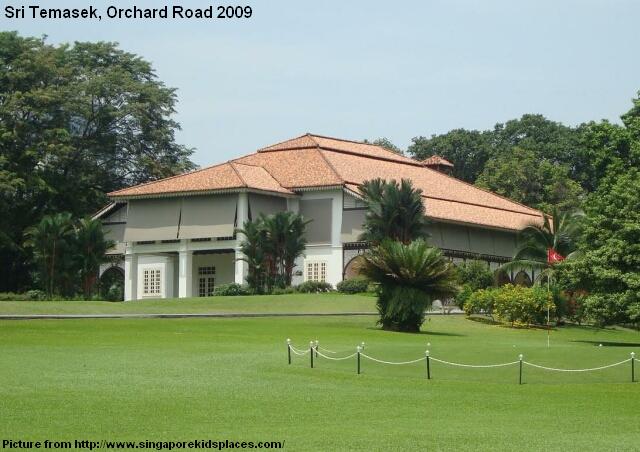
The second most prestigious government house after the Istana at Orchard Road. Sri Temasek was built in 1869 under the order of Sir Henry St George Ord (1819-1885), Governor of the Straits of Settlement from 1867 to 1873. The double-storey detached house was designed by British architect John Frederick Adolphus McNair (1829-1910), using largely a western style decorated with several Oriental elements. Its name Sri Temasek means “splendour of Temasek” in Malay.
Sri Temasek was formerly used as a residence for the Colonial Secretary, while the Governor lived in the Istana. After independence, it served as the official residence for the Prime Minister of Singapore, but none of the country’s Prime Ministers have made it their home. In the sixties and seventies, it was used mainly as a site for state functions. In 2010, it was used for holding the wake of Madam Kwa Geok Choo, wife of Lee Kuan Yew.
Sri Temasek was gazetted as a national monument in 1992.
House No. 9, Buckley Road (early 1900s-Present)
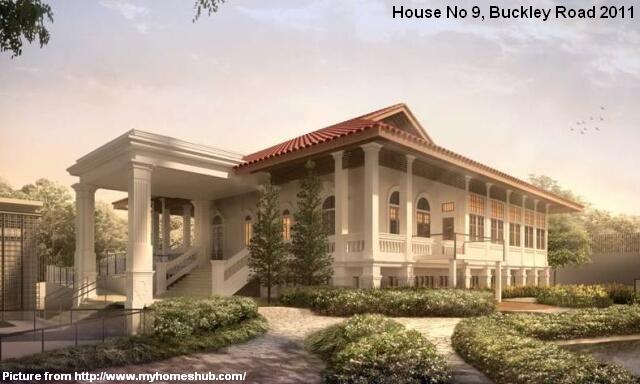
House No. 9 of Buckley Road is one of Singapore’s remaining houses built on raised footings. Completed in the early 20th century, it was designed with a mixture of Baroque and Classical styles, which were popular before the Art Deco and Modern designs of the 1930s.
The bungalows in the same area were also designed in the same manner. The symmetrical bungalow has a giant tall porch that seems to welcome its guests. It was given the conservation status in 2008, and three years later, House No. 9 became the clubhouse of the newly launched condominium Buckley Classique.
Chee Guan Chiang House, Grange Road (1930-Present)
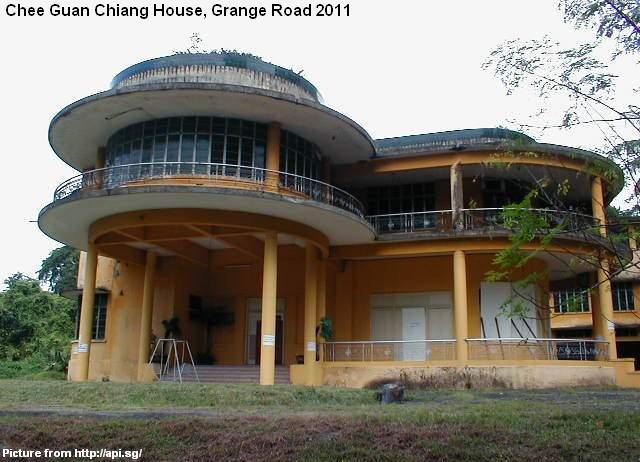
Chee Guan Chiang House was hidden away from the main road of Grange Road but a legal dispute in 2005 threw the pale-orange mansion into the spotlight.
Built in 1930, it was a fine example of a Modern bungalow, designed by a leading Modern Movement architect Ho Kwong Yew. Also the designer of the original Haw Par Villa, Ho Kwong Yew was killed during the Japanese Occupation.
Typical Modern styles emphasize on straightforward lines, horizontality and proportionality. The mansion has mild steel reinforcement, extensive windows, curved walls as well as a roof garden. Its design was heavily influenced by the architecture of the Weissenhof Siedlung of Stuttgart (1927) and the Da La Warr Pavilion of the United Kingdom (1935).
Chee Guan Chiang House got its “name” from its first owner Chee Guan Chiang, the eldest son of OCBC Group’s first chairman, Malacca-born Chee Swee Cheng.
The house is currently owned by Lee Tat Developments and was given conservation status in 2008. Due to its 100,000-sq-ft landsize and prime location, the estate is estimated to worth more than $400 million today.
Haw Par Villa Mansion (1937-1945)
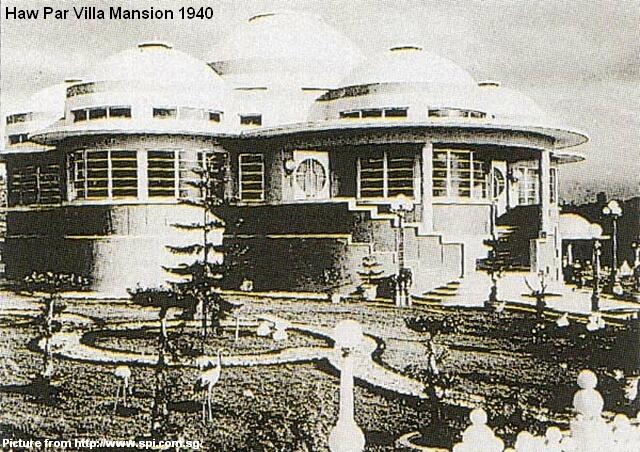
Beside the House of Jade, Tiger Balm tycoon Aw Boon Haw also built a magnificent mansion for his beloved brother Aw Boon Par inside the Haw Par Villa. Many distinguished guests were invited on its opening day in March 1937.
Designed by Ho Kwong Yew (also designer of Chee Guan Chiang House), the mansion had a huge central hall, a dining room, a drawing room, a dressing room and two bedrooms. The most eye-catching part was the seven domes over the rooms.
Unfortunately this Modern-styled mansion lasted only couples of years, when it was later destroyed by the Japanese bombings during the Second World War.
Command House, Kheam Hock Road (1938-Present)
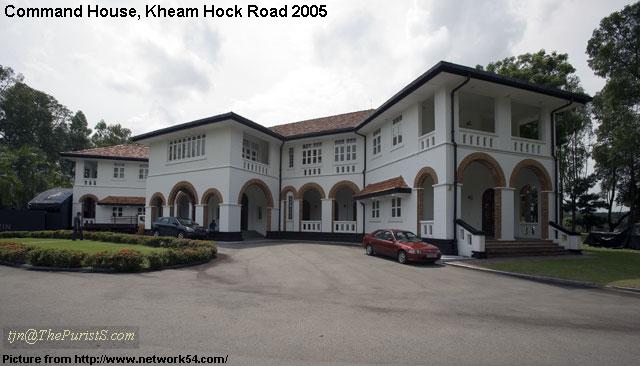
Originally called Flagstaff House, Command House was the official residence for the British General Officer Commanding (GOC) of Malaya from 1938 to 1971, when the British made their final withdrawal from Singapore.
Built in 1938 at a cost of $100,000, Command House was the second residence for the GOC after the original Flagstaff House at Mount Rosie. The first resident of this grand colonial mansion was Major General W.G.S. Dobbie. A total of 15 British military officers had stayed in this house, including the famous Admiral Lord Louis Mountbatten (1900-1979).
From 1979 to 1989, Command House served as the official residence for the Speaker of Parliament Dr Yeoh Khim Seng. Former President of Singapore Ong Teng Cheong also had a brief stay in the house in the mid-nineties when the Istana underwent renovations.
The mansion was gazetted as a national monument in 2009. Today, it serves as a campus for UBS Business University.
Old Admiralty House, Old Nelson Road (1939-Present)
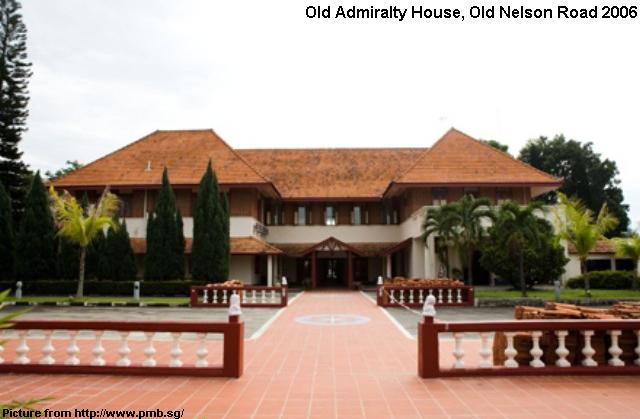
Perhaps one of the houses with the most names, the Old Admiralty House was called Canberra House (1939-1945), Nelson House (1945-1958), Admiralty House (1958-1971), Anzuk House (1971-1975), Yishun Country Club (1991-2001). In 2002, it was renamed Old Admiralty House and gazetted as a national monument.
Designed by British architect Edwin Lutyens (1869-1944), the house served as the strategic planning headquarters for the British armed forces. After the Second World War, it became the official residence of the Royal Navy Commander-in-Chief of the Far East Station.
Resembling a traditional English cottage, the two-storey brick bungalow is currently leased to YESS Group Pte Ltd as a recreational clubhouse.
Grange House, Grange Road (1850s-undetermined)
Grange House was one of the earliest mansions built at around Grange Road, which was constructed in 1866 and named after this house.
In 1846, Dr Thomas Oxley bought a large plot of land from the British government to cultivate a nutmeg plantation. The land, bounded by present-day River Valley and Orchard Road, was largely an uncleared forest. The land later became known as the Oxley’s Estate, and Thomas Oxley had his private residence built there, named as Grange House. Grange Road first served as a private road leading to the Oxley’s Estate.
Little is known about the Grange House but it no longer exists today. Grange Road, on the other hand, has developed into one of the main roads at Orchard area.
Spring Grove, Grange Road (1845-Present)
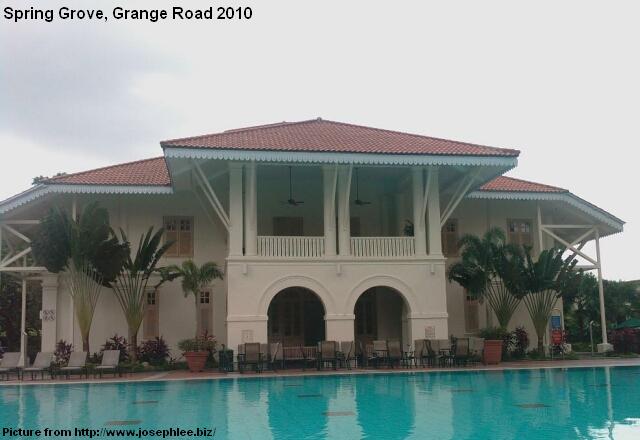
It is the clubhouse of a posh condominium at Grange Road now, but the history of Spring Grove goes all the way back to the 1840s. The double-storey Victorian bungalow was first owned by Hoo Ah Kay in 1845, who also built the famous Whampoa House at Serangoon Road.
Han Becker of Behn Meyer & Company bought the 263,400 sq-ft property in 1906, before the house changed hands again to serve as the residence for the United States’ ambassadors to Singapore from 1936 to 1941.
After the Second World War, the US embassy took back the ownership again, until 1991 when it sold the land to City Development Limited. The condominium completed in 1996 is named after this grand bungalow.
Westbourne (Field House), Gilstead Road (early 1900s-Present)
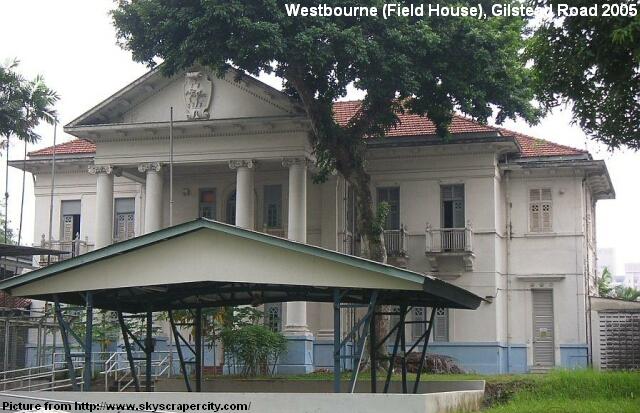
Located at Gilstead Road near Newton Circus, Westbourne was reputedly built by the Chinese father of British author Leslie Charteris, born Leslie Charles Bowyer-Yin (1907-1993). During the Second World War, it was forcibly occupied to serve as the Kriegsmarine (War Navy) Headquarters (Stützpunkt-Office) for the alliance of the German-Japanese forces.
It was renamed Field House after Professor Elaine Field, a paediatrician who founded the Spastic Children’s Association of Singapore. The property was leased by the association from the Singapore government in 1957 to act as their headquarters. After 2003, the place became the Gracefields Kindergarten.
Tan Chin Tuan Mansion, Cairnhill (early 1930s-Present)
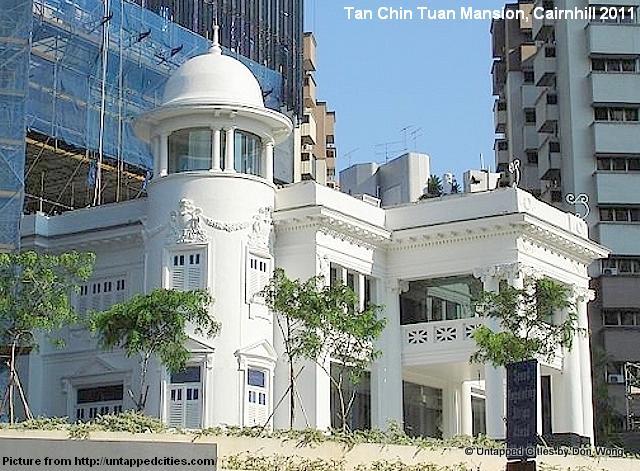
Tan Chin Tuan Mansion is another house that is fortunately given the conservation status and turned into a clubhouse or integrated part of a condominium instead of demolition.
The two-storey Peranakan and colonial styled bungalow was built in the early thirties by Chinese pioneer Tan Kah Kee (1874-1961) and bought by prominent banker and philanthropist Tan Sri (Dr) Tan Chun Tuan (1908-2008) in 1939. The Tan family had lived in it for decades, before the house underwent major renovations in 1969.
A 20-storey residential tower of the same name was built over the bungalow in 2008, using the center of the house as its main lift lobby. It even won the URA architectural heritage award that year.
House No. 38, Oxley Road (late 1800s-Present)
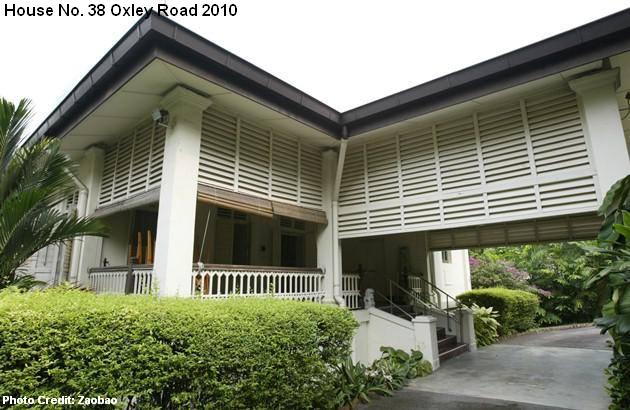
This is, of cos, one of the most famous houses in Singapore, being the home of Singapore’s former Prime Minister Lee Kuan Yew for almost seven decades. In 1954, a group of 20 people, including 14 founding members of PAP, met at the basement of the house to discuss the independence of Singapore from British rule.
The eight-room house at 38 Oxley Road was built by a Jewish merchant in the late 19th century. It was where current Prime Minister Lee Hsien Loong spent his childhood. Lee Kuan Yew has suggested the old house to be demolished when he passes away, instead of preserving it as a heritage site.
Telok Paku Resthouse, Changi (1930s-1977)
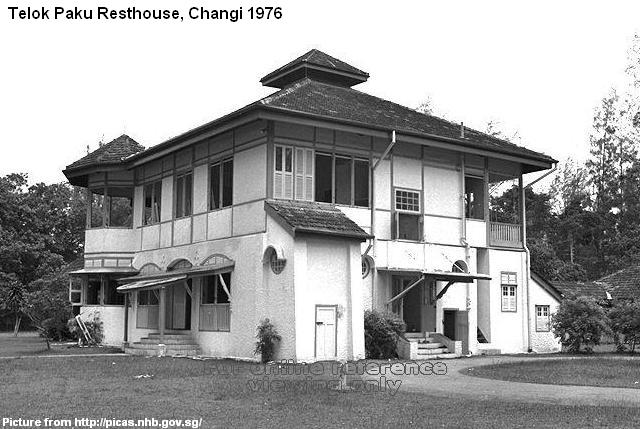
Built before the Second World War, the first owner of this old villa was unknown. It was likely to be the residence of a British officer stationed at the Changi military base. Since 1962, the Singapore government took over and rent it out to the public as a chalet.
At the quiet corner of Changi, there were once around 10 such villas standing at Telok Paku, Ayer Gemuroh, Wing Loong Road and Mata Ikan areas. By 1977, all the villas were demolished to make way for the construction of the new Changi International Airport.
Bedok Resthouse, Old Bedok Road (undetermined-1990s)
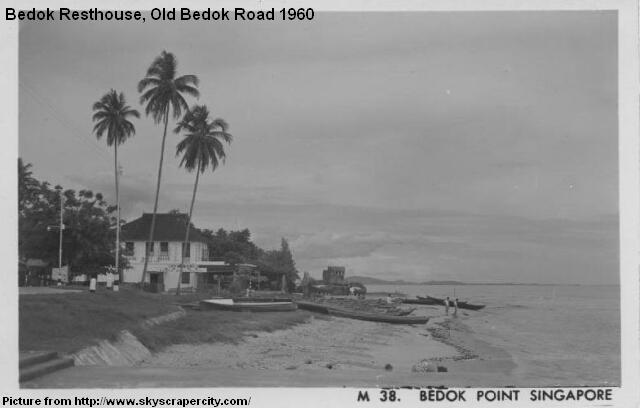
Long Beach Seafood operated at Bedok Resthouse as early as 1946, and was a popular venue for wedding dinners in the fifties and sixties. Facing the beach and sea, it was also patronised by many British officers after the Second World War.
Bedok Resthouse was a simple two-storey colonial building that lasted until the 1990s, witnessing the dramatic changes of the landscape it once stood on. In 1966, the land reclamation of East Coast saw its splendid seafront view vanished. The coastline was moved more than a kilometer away.
Today, Fairmount Condominium stands in its place.
Cliff House, Bukit Chermin (1848-1960s)
Situated at the summit of Bukit Chermin (Mirror Hill in Malay), Cliff House was built as early as 1848 by prominent British businessman W..P.W Kerr, owner of Paterson, Simons & Company Limited. Kerr was also one of the founders of the New Harbour Dock Company, formed to develop the docking facilities of what is now the Keppel Harbour.
Cliff House was destroyed by a fire in the 1960s.
House No. 30, Bukit Chermin (early 1900s-Present)
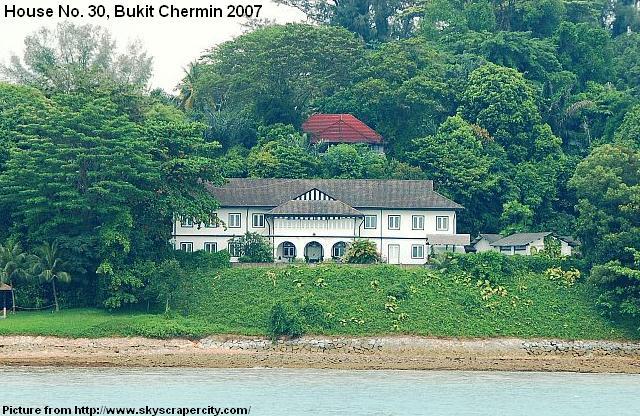
This is the largest of the four existing black and white bungalows still standing at Bukit Chermin. It is known as House No. 30, although it has been misunderstood as the Cliff (or Cliffe) House, which was actually demolished after a fire in the 1960s (see above).
It was likely to be the residence of the portmaster during the colonial era. The majestic house, located at the east side of Labrador Park, has a splendid seafront view, and is easily visible from Tanjong Berlayer. It remains unoccupied now, although there are plans to convert it into a F&B (Food & Beverage) hub.
The area of Bukit Chermin was given the conservation status in 2008.
House of Tan Teng Niah, Little India (1900-Present)
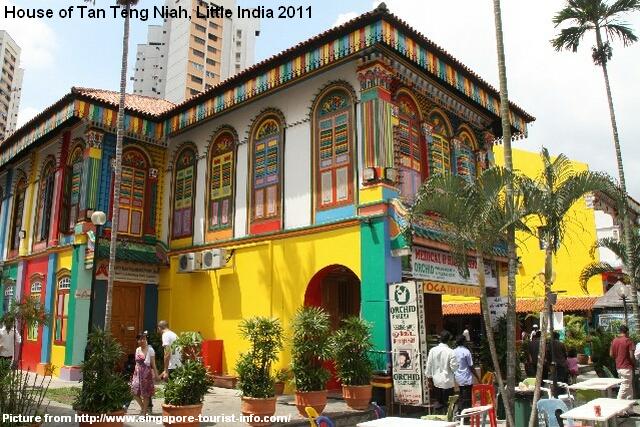
Built in 1900, this house is one of the last Chinese villas left standing in Little India. It is known as the House of Tan Teng Niah (陈东岭), who was a prominent local Chinese businessman who had many confectionery factories along Serangoon Road and a rubber smokehouse at Kerbau Road in the early 20th century.
The eight-room villa, designed with a courtyard, bamboo tiled roof and swinging doors, was Tan Teng Niah’s gift to his wife. It was restored in the 1980s, but its colourful appearance was added on in a later period. Its original colours were whitewashed walls with a green roof. The house is currently leased out for commercial use.
River House, River Valley Road (1880s-Present)
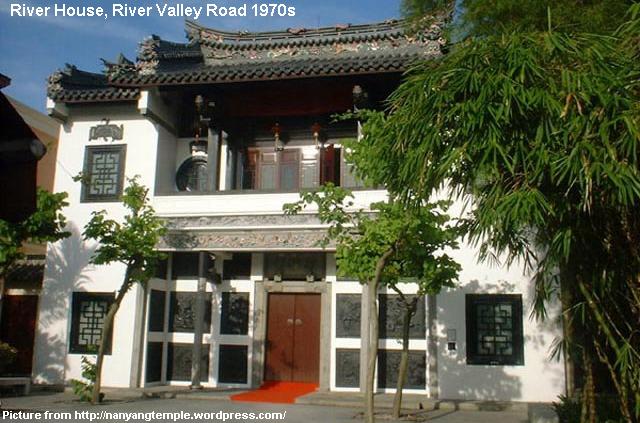
Early Teochew businessman Tan Yeok Nee 陈旭年 (1827-1902) built this house in the 1880s, rumoured to be a gift for his mistress. Tan Yeok Nee came from China at an young age and made his fortune through gambier, pepper, alcohol and opium trades. On very good terms with the Johor Sultan, Tan Yeok Nee would later become Malaya’s biggest kangchu (港主, lord of the river settlements) at the age of 39. By 1868, the sultanate bestowed Tan Yeok Nee the status of the kapitan (representative of the Chinese enclaves), and presented him with the title of “administration” (资政).
His River House, also known as Water Ripple House (涟漪楼), is one of the rare existing houses in Singapore designed in Southern Chinese architectural style, decorated with sculptures of many symbolic animals in dragon-fish, cranes and Chinese unicorns (麒麟). Tan Yeok Nee had another preserved house at the junction of Penang Road and Clemenceau Avenue (see below).
The River House has been utilised as a warehouse and a Chinese clan association in recent years.
House of Tan Yeok Nee, Penang Road (1882-Present)
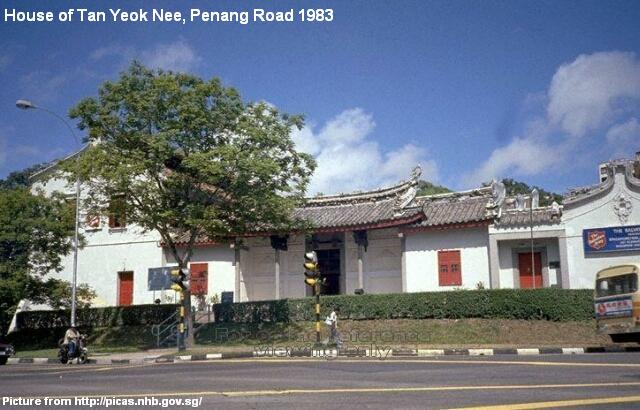
Currently leased to the University of Chicago Graduate School of Business, this century-old house was originally known as “House of Administration” (资政第). Together with the River House, they are the last remaining Chinese-styled mansions in Singapore.
The House of Tan Yeok Nee is also the only surviving house of the famous “Four Big Mansions” (四大厝) built by Teochew tycoons in the late 19th century, where the other three were the House of Tan Seng Poh (located at the junction of Loke Yew Street and Hill Street), the House of Seah Eu Chin (located at the northern Boat Quay) and the House of Wee Ah Hood (also known as 大夫第 and demolished in 1961).
Conserved as a national monument in 1974, the house has undergone dramatic events in its history. It was acquired in the early 20th century when the first railway was constructed. The house became home for the Tank Road Station master.
It was sold to the Anglican Church in 1912, which set up St Mary’s Home and School for the Eurasian girls. In 1938, the Salvation Army took over the site as their headquarters but it was bombed and occupied by the Japanese forces during the Second World War. After the war, extensive repairs were carried out and when the Salvation Army was relocated to Bishan in 1991, the house was sold to Cockpit Hotel and subsequently Wing Tai Group.
House at Nee Soon Village (mid 1800s-1976)
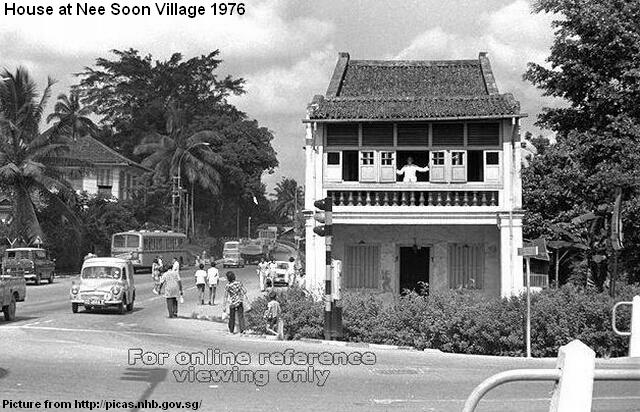
It was the first concrete house at Nee Soon Village at the northern part of Singapore. Nee Soon Village was established as early as 1850, and consisted mostly of wooden attap houses, farms and plantations. The double-storey bungalow stood at the junction of Mandai Road, Upper Thomson Road and Sembawang Road.
It was occupied by the Japanese as one of their operational headquarters during the Second World War. The last owner Soh Chee Kim was requested by the authority to vacate the house by 1976 upon its demolition.
Note the old Nee Soon Post Office in the background of the photograph.
House No. 1, Bedok Avenue (undetermined-Present)
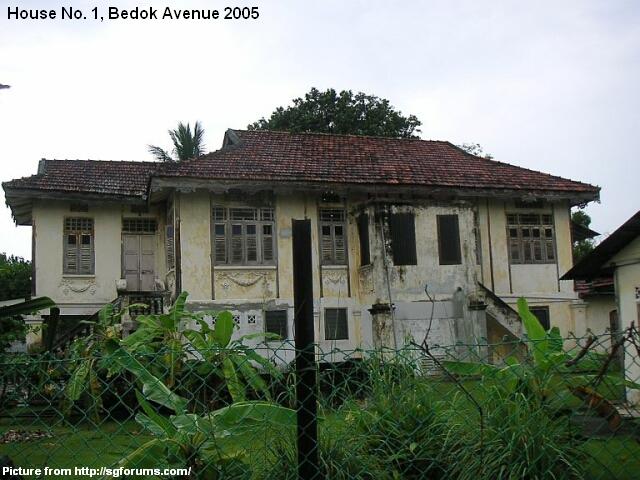
At the quiet estate between Bedok Avenue and Jalan Haji Salam stands a dilapidated villa that seems to be lost in time. There is little information about the house, but its design looks to be a mixture of Peranakan and Straits Chinese styles. The vertically long rectangular wooden windows resemble those of the Chinese shophouses.
There is also a rare single-storey kampong house beside the villa, which is currently unoccupied.
Old Manasseh Meyer Bungalow, Netheravon Road (1927-Present)
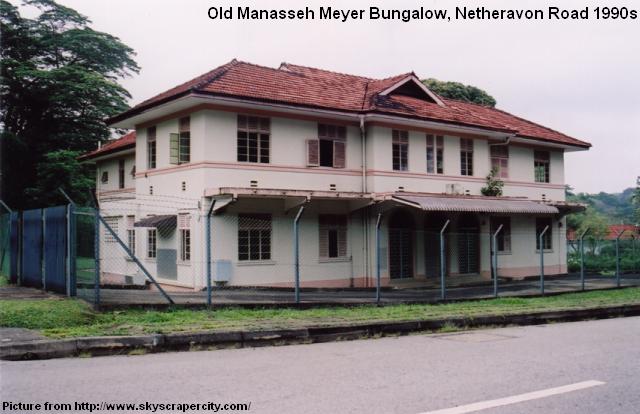
The old bungalow was named after its first owner Sir Manasseh Meyer (1843-1930), who was a wealthy British Jew who came to Singapore in 1861. A businessman as well as a philanthropist, Meyer contributed generously to the educational institutions of Singapore, particularly to Raffles College. He also built the famous Maghain Aboth Synagogue and Chesed-El Synagogue. The long Meyer Road at East Coast was named after him.
The British bought over the bungalow from Meyer in 1933 to operate as a school for the military personnel based at Changi. It was occupied by the Japanese during the Second World War to house prisoners-of-war. After the war, the house served as a temporary hostel for the Royal Air Force officers. Today, it is part of the Civil Service Club
Tyersall House, Tyersall Avenue (1854-1890)
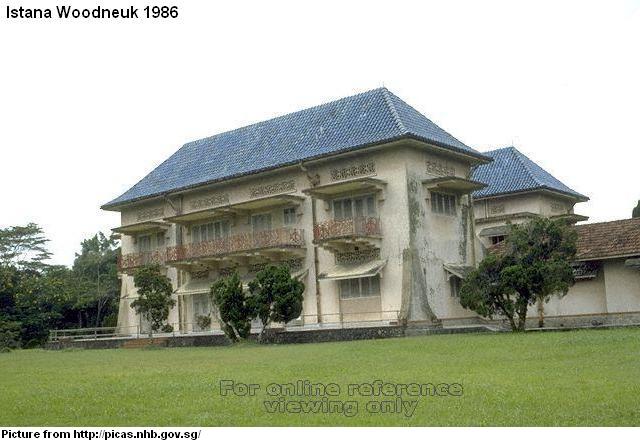
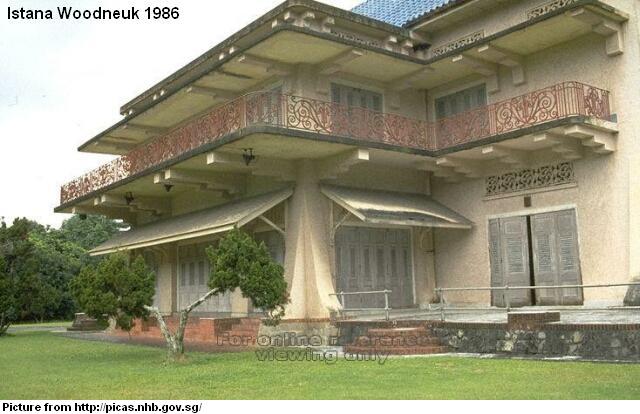
The Tyersall House, not to be confused with Istana Tyersall or Istana Woodneuk, was built by the first lawyer in Singapore William Napier in 1854. Napier arrived at Singapore in 1831 and together with G.D.Coleman, Edward Boustead and Walter Scott Lorrain, they launched the Singapore Free Press, Singapore’s second English language newspaper after the Singapore Chronicle. Napier Road was named after him.
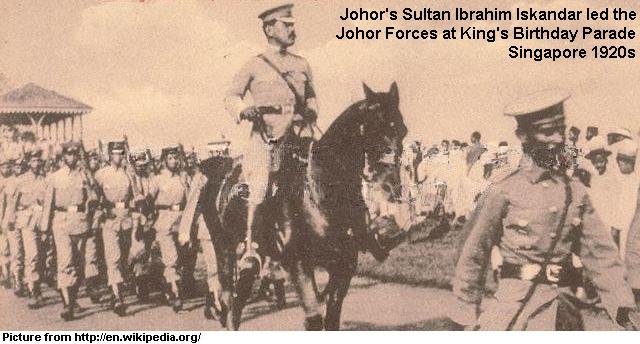
On good terms with Temenggong Abu Bakar, Napier sold his land to him in the 1860s. Tyersall House was later destroyed by a fire in 1890, prompting Abu Bakar, who proclaimed to be the Sultan of Johor, to build another magnificent house as a replacement. That house was known as Istana Tyersall.
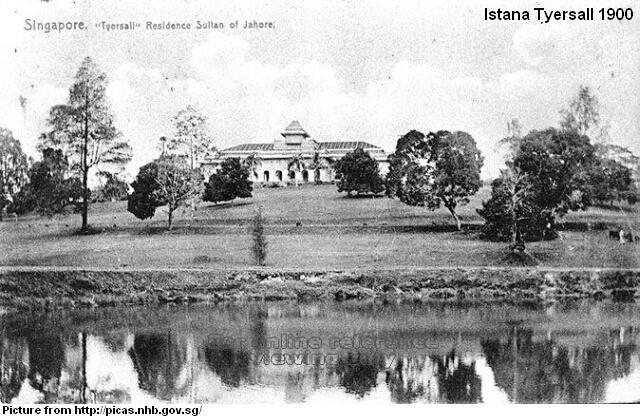
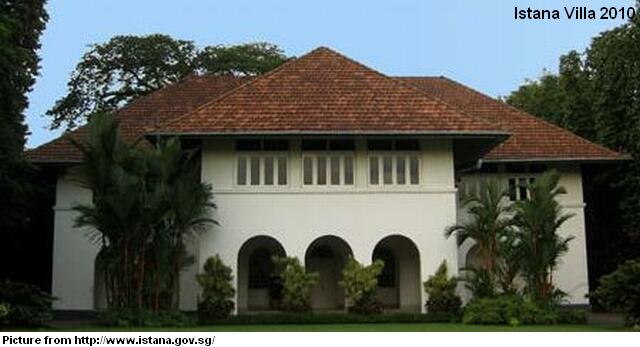
Istana Tyerall and Istana Woodneuk, Johor Sultan’s former royal palaces in Singapore, are further discussed in The Last Royal Palace in Singapore.
Published: 08 February 2012
Updated: 15 July 2015








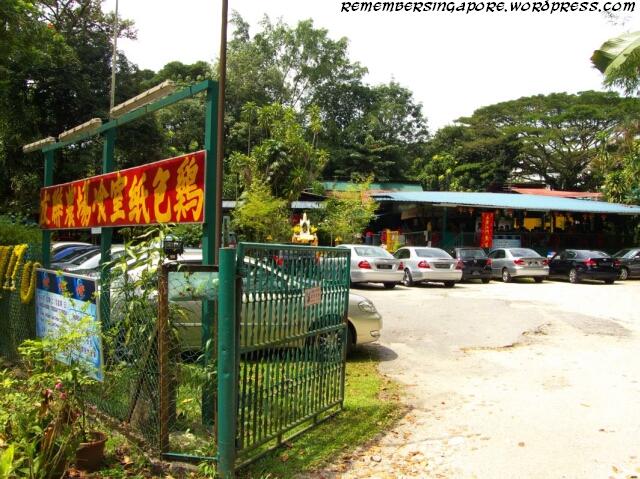
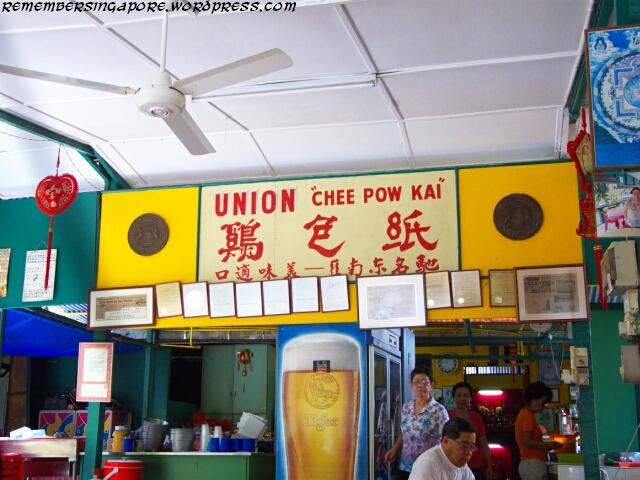
 Some other trades are not so lucky. Unable to find suitable successors, or due to declining revenues, some old brands and shops in Singapore have already walked into the history books.
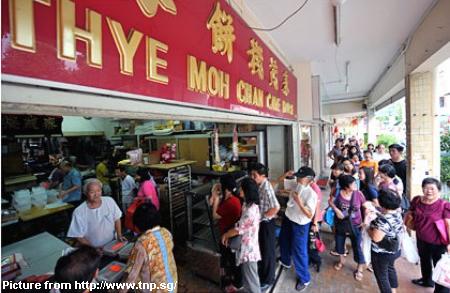
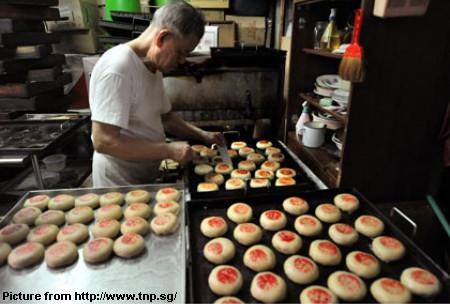 Traditional Teochew confectionery store Thye Moh Chan at Geylang Lorong 27 decided to call it a day in September 2011 after operating for 68 years. Established in 1943 initially at Liang Seah Street, the shop had been run by three generations. And even so, the last owner, grandson of the shop’s founder, found it difficult to keep it going. He and his team of workers were already in their sixties and seventies, and the issues of manpower and successor had been bothering the boss in recent years.
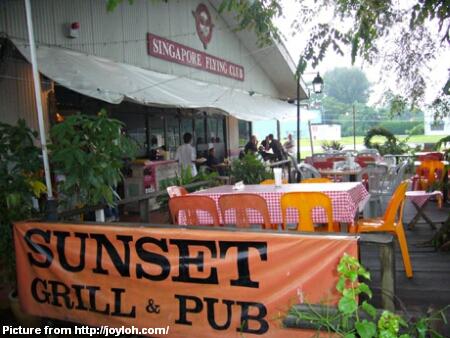 Although the direction to this well-hidden place was challenging, the simple restaurant of Western food still attracted many patrons, especially on a cool evening during the weekends.
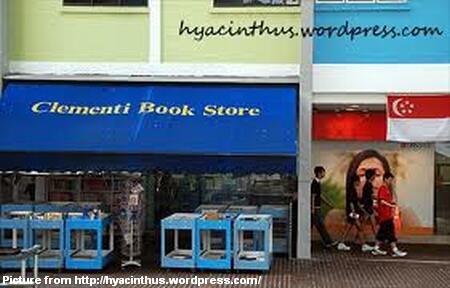 With wide selection of textbooks, reference materials and stationary, the bookshop was extremely popular among many generations of students studying nearby. But even for that they could not compete against the online book stores and the availability of reading materials on the internet.
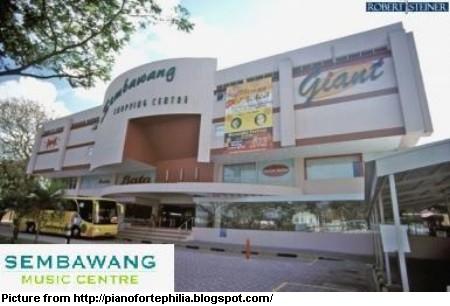 From cassette tapes to CDs, music lovers will not be too unfamiliar with Sembawang Music Centre. Operating for more than 20 years, it had been one of the leaders in the local retail music industry. Many students would save up their allowances to buy his or her favourite music albums from the store in the eighties and nineties.
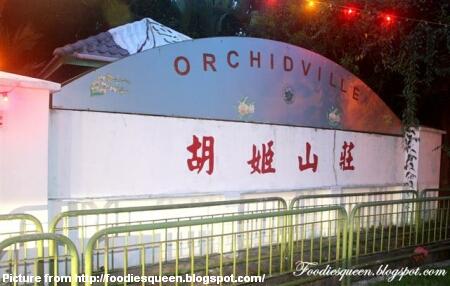 The demand for space is also a headache for many businesses in land-scarce Singapore. Orchidville, Singapore’s largest orchid farm, faces the dilemma when the land it currently occupies is needed by Land Transport Authority (LTA) to build a depot for the upcoming Thomson Line.
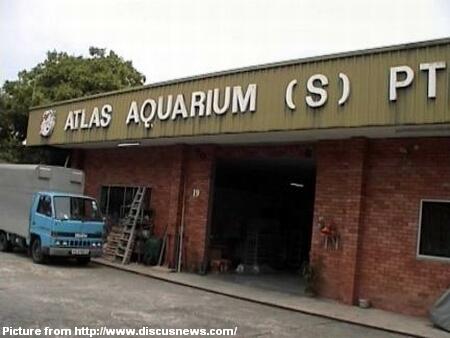 The
The 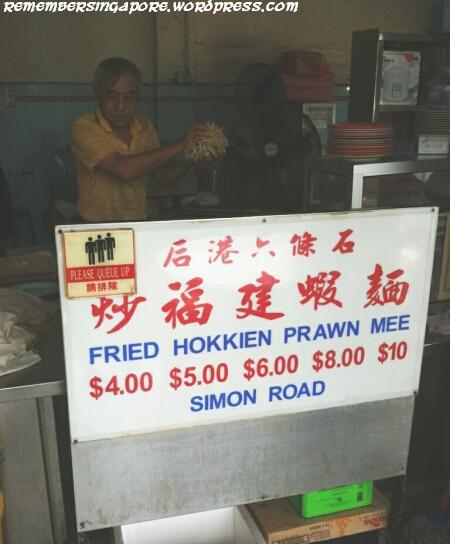

























 Remember Singapore
