Why do our older generations address nurses as “bee see“? Why do we call someone without roles or assignments “lobo“? Find out more…
Arrow
- Original Meaning: A type of shooting weapon (English)
- Local Meaning: To order someone to do a task
A term probably first used in the military, it is now frequently used in local context to mean an order being directed at someone, like an arrow, to carry out a task, usually against his wishes.
Bao Toh
- Original Meaning: Bun knife (Hokkien)
- Alternate Meaning: To tattle
The phrase also refers to sabotage, to betray secrets or “tell” on others. The long bun knife is possibly used to describe the backstabbing.
Bee See
- Original Meaning: Young ladies (Missy, English)
- Local Meaning: Nurses
During the colonial days, young ladies were referred as Missy by the British, probably derived from “Miss”.
This applied to the young nurses working in hospitals, where the doctors would address them politely as “Missy” and the local patients, particularly the Malays, would pick it up and call them “Misi” as well.
The local Chinese, speaking mostly in dialects during that era, might have pronounced it in the Hokkien dialect and called the nurses, young or old, as “bisi” (pronounced “bee see“).
Catch No Ball
- Original Meaning: Nil
- Local Meaning: Don’t understand
Singaporeans like to use the phrase “catch no ball” or liak bo kiu (Hokkien) as a way to express his lack of understanding of certain topic.
It is another way of saying: The ball is in my court, but I fail to catch it (It has been explained to me, but I fail to understand it).
Calefare
- Original Meaning: Free from anxiety or responsibility (carefree, English)
- Local Meaning: Bit actors/Extras
Referring to bit actors and actresses, this unique local phrase is borrowed from Cantonese term of 咖喱啡, which is possibly derived from English word “carefree”, since these supporting roles in a film have few lines or little responsibilities.
The other meaning could be because these bit actors and actresses are usually provided with meals (curry rice and coffee), hence the Cantonese term.
Chop-chop
- Original Meaning: Hurry up (English)
- Local Meaning: Same as original meaning
Influenced by British seamen, who used “chop” or “chop-up” as a way of saying “hurried” or “quick”, the Cantonese also termed “chop-chop” as hurry up. The term appeared as early as 1834 in English newspaper articles in Canton.
When the westerners visited China in the 17th century, they were amazed by the nimbleness of chopsticks, thus they named them as “quick-sticks” which in turn became “chopsticks”.
The local usage of “chop-chop” goes one step further to become “chop-chop kali pok”, where kali pok is curry puff and has nothing to do with “hurry up” except that the rhymes make the whole phrase sounds phonetically, just like song-song gao Jurong (“happy-happy” “arrive at Jurong”) or ya-ya papaya (“arrogant”).
Claypot
- Original Meaning: Earthenware pot used for cooking (English)
- Alternate Meaning: Total loss
While many Singaporeans love claypot rice, the word claypot is intensively borrowed by football punters as a term for “losing everything”. It is viewed as a direct opposite of “jackpot”, or “winning all”.
The logical explanation, other than both words rhyme with each other, is that a claypot breaks into pieces easily and when that happens, it represents a total loss.
Di Gu
- Original Meaning: Earthquake (Chinese)
- Local Meaning: NEA inspector
At the peak of street-hawkers’ peddling in Singapore during the sixties to seventies, the hygiene was the biggest concern for the NEA (National Environment Agency). NEA inspectors would go around the streets to catch unlicensed hawkers, who would be fined or had their pushcarts confiscated.
Such chases after the guilty hawkers usually resulted in chaos with toppled pushcarts and knocked-down passers-by. The scenario was like a rumbling earthquake, thus the inspectors were called di gu in Hokkien (地牛 is an ancient Chinese name for earthquake).
The sights of several chasing inspectors were also likened to that of some uncontrolled wild bulls.
Eat Snake
- Original Meaning: Skiving (jiak zua, Hokkien)
- Alternate Meaning: Same as original meaning
Snake is viewed as a lazy animal by the Chinese, hence jiak zua or “eat snake” refers to the act of skiving.
Go Stun
- Original Meaning: Reversing of a boat (go astern, English)
- Local Meaning: Reversing of any vehicles
Go stun is a corrupted version of the English phrase “go astern” which means to move a boat backwards from the currents or winds.
The local borrowed it and described it to the reversing of any vehicles on the road.
The phrase might have evolved from “go astern” to “go stern” and finally “go stun”.
Goondu
- Original Meaning: Marble, nut (gundu in Malay)/Fat, ball, bomb (kuntu in Tamil)
- Local Meaning: Idiotic
“Goondu” is a Singlish word, derived either from Malay or Tamil to express something that is hard and heavy, which indirectly suggests a stupid person.
Goondu and guru, which sound alike, are regularly used in Singapore in referring to an idiot and expert.
Jia Lat
- Original Meaning: Energy/Strength wasting (“eat strength” in Hokkien)
- Local Meaning: In trouble
Originally meant to describe a job or task that consumes a lot of energy or strength, but over the time, it has evolved to mean “in trouble” or simply “oh no!”
Kaki
- Original Meaning: Leg (Malay)
- Alternate Meaning: Buddy
Since “leg” in Chinese (脚) has the same pronunciation as 角 (角色, character), the local Chinese borrowed the Malay word to describe partner, buddy or close friend, such as mahjong kaki or lunch kaki.
Kantang
- Original Meaning: Potato (kentang, Malay)
- Alternate Meaning: Westernised Singaporeans
The term “kantang” is used to mock westernised Singaporeans who converses only in English and cannot speak their mother tongues properly.
It is probably derived from the view that potato is a staple food for westerners. Rice, on the other hand, is a staple food for East and Southeast Asians.
However, the actual Malay word for potato is kentang, and “kantang” is instead adopted by most local Chinese, probably due to mispronunciation.
Karung Guni
- Original Meaning: Gunny Sack (Malay)
- Alternate Meaning: Rag and bone man
In the old days, the rag and bone man used gunny sacks to collect the used newspapers. Since they rarely use gunny sacks nowadays, the term karung guni is used to describe the rag and bone men instead.
Karung guni men, each equipped with a horn and cart, are familiar sights in old Housing and Development Board (HDB) estates, going from floors to floors in the flats and shouting “garung guni, buay bor zua gu sa kor, ley lio dian si kee” (rag and bone, buy newspapers and old clothes, radios and televisions).
The residents will receive small amounts of payment in return of their unwanted old items.
Kayu
- Original Meaning: Wood (Malay)
- Alternate Meaning: Blockhead/Buck up
Visit any football matches in Singapore and Malaysia and you’ll like hear some fans screaming “referee kayu!”. Kayu is a Malay word for “wood”, and fans like to criticise the referee as a wooden blockhead whenever he makes a controversial decision.
Jalan Kayu, which literally means wooden road, has a Chinese translation of 惹兰加由(油), which 加油 itself means “to buck up”, so “referee kayu” can also mean asking the pressurised referee to buck up.

Kelong
- Original Meaning: Offshore platform for fishing (Malay)
- Alternate Meaning: Match-fixing
Fans in football-crazed countries of Singapore and Malaysia will often describe matches with dubious results as kelong. The term kelong is a Malay word which refers to a wooden offshore platform used by fishermen.
Knowing very well that fish will escape in faulty nets, the fishermen will carefully mend their nets before casting into the sea. Likewise, a bribed football player will attempt to throw the match away, and thus “kelong” is used locally to describe the guilty player or the dubious match.
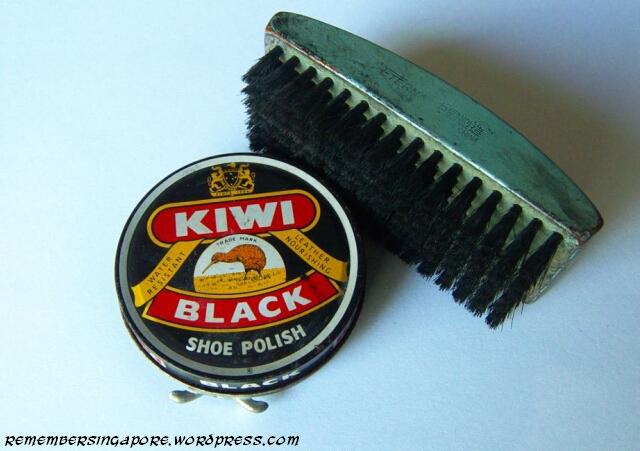
Kiwi
- Original Meaning: New Zealand wingless bird (English)
- Local Meaning: To polish
Every National Service (NS) personnel will not be unfamiliar with the round polish container he receives in military training. Filled with black boot polish, the black container is easily recognised by a kiwi on its cover.
The trademark brand, established in 1906 by Scottish-Australian manufacturer William Ramsay, has since become the global brand in shoe polish.
Therefore, the term “Kiwi” is used locally as a substitute for polish.
Lobang
- Original Meaning: Hole (Malay)
- Alternate Meaning: Opportunity
Originally the Malay word for hole, it is borrowed by the local Chinese to refer to an opportunity, usually in businesses or deals. It has been used so intensively that a person with many sources of business opportunities is called a lobang king.
“Kang tow” in Hokkien (工头) is similar to lobang. It refers to the supervisors working at the harbours or construction sites, where the Chinese labourers would ask him for jobs.
Lobo
- Original Meaning: Left Out of Battle Order (English)
- Alternate Meaning: Soldier without assignment/Lazy person
The term “lobo” is originated from the military, which stands for “left out of battle order”. It is likely to be derived from LOB, a concept in World War I, which referred to “left out of battle”. In order to prevent a complete wipeout by the enemies, the second-in-command and several officers and men were left behind as LOB.
However, the term is now a derogatory term to describe soldiers without posts or assignments, or simply, a lazy person.
Masak-masak
- Original Meaning: Cooking (Malay)
- Alternate Meaning: Playing toys
Little girls love to pretend to cook with toys utensils, but over the time, “masak-masak” is generally used to describe children playing with their toys.
It can also be used as a reference to describe a serious matter, as in this is not “masak-masak” (this is not a play thing or this is no laughing matter).
Merlion
- Original Meaning: Half-lion, half-fish mascot of Singapore
- Alternate Meaning: Vomiting
Popularised in recent years, this word is now used to describe the vomiting of a drunk person, where his throwing up is similar to that of the water spouting by the actual Merlion at the Singapore River.
On The Ball
- Original Meaning: Alert (English)
- Local Meaning: Hardworking, enthusiastic
The phrase “on the ball” originated from baseball which it became popular in the 19th century. The batter has to be alert and keep his eyes on the ball in order to complete a successful strike.
The phrase is now used locally to describe a hardworking or even an over enthusiastic person, especially during the military training. “On” is also the short form for “on the ball”.
Or Bi
- Original Meaning: Nil
- Local Meaning: Deserving (in a mocking way)
“Or bi” is the short form for “or bi good”, which means very good in a sarcastic manner.
It is extracted from an old local nursery rhyme “or bi good, ang moh jiak choo loot”, where ang moh refers to a Caucasian, jiak is eat or chew and choo loot is cheroot or cigar. It is used to gloat at someone’s misfortune. Again, the “ang moh jiak choo loot” has no particular meaning except that “loot” rhymes with “good”.
Pakat
- Original Meaning: Discussion (Malay)
- Alternate Meaning: Conspire
It means discussion or an agreement of a plan in Malay, but in Singlish, it is used to describe a conspiracy or a plot, in a more negative aspect.
Pang Buay Ki
- Original Meaning: Being stood up (Hong Kong)
- Local Meaning: Same as original meaning
This phrase (放飞机 in Chinese) is similar to 放鸽子, where the former literally means “put aeroplane” while the latter means “put pigeon”. Both refer as being stood up in an appointment or date.
“Put aeroplane” origins from Hong Kong during its first ever airplane show. The angry audience was disappointed after the event was postponed for three days, hence the phrase of being stood up.
As for “put pigeon”, it was a scam that was popular in old Shanghai, where female scammers would seduce their victims and got away with their valuables and belongings.
Pok Gai
- Original Meaning: Go to hell (Hong Kong)
- Local Meaning: Bankrupt
“Pok gai” is a curse used frequently during quarrels in Hong Kong. The Chinese translation 仆街 literally means die on the street.
This derogatory term, however, is used commonly in Singapore by hardcore gamblers as an indication that he has lost a lot of money.
Orh… Han Tze
- Original Meaning: Nil
- Local Meaning: Mocking at someone who doesn’t understand
“Han tze”, which means sweet potato in Hokkien, is used to mock at a person who doesn’t understand a topic but pretends to understand. When he goes “orh…”, the one mocking at him will reply “orh… han tze”.
“Orh” sounds like yam in Hokkien, hence sweet potato is used as a counter-argument.
Remisier
- Original Meaning: Intermediary (French)
- Local Meaning: Stockbroker
Although the origin of the word is French, and features in the historical Paris stock exchange, the common usage of this word now only restricts in the Singapore and Kuala Lumpur stock exchanges.
It first appeared in the rubber and tin trading sectors in Malaya during the colonial days.
Sabo
- Original Meaning: Sabotage (English)
- Local Meaning: Same as original meaning
This English word originates from the French word sabot in the 19th century, which means poor quality work from an unskillful worker.
In Singlish, it is shortened to “sabo”, which can be used in playing a practical joke on others, deliberate harm and damage or intentional obstruction. It is frequently used in the military, and the one who likes to “sabo” is called the “sabo king”.
Shag or Shack
- Original Meaning: Sexual intercourse (English)
- Local Meaning: Tired
“Shag” is considered an offensive slang for sexual intercourse in British context, whereas in Singapore the word is being used without containing any sexual meaning. Many, especially military personnel, like to use “shag” or “shagged out” to express extreme fatigue.
Shiok
- Original Meaning: Great (shauk, Punjabi)
- Local Meaning: Pleasure
It is one of the most-used local phrases, which can be used to describe anything that provides extreme pleasure, especially food.
Sekali
- Original Meaning: Once (Malay)
- Alternate Meaning: Suddenly and unexpectedly
One of the favourite phrases used by Singaporeans, it is used to describe something that may happen unexpectedly. The term is often accompanied with a word of caution.
Taiko
- Original Meaning: Leper (Hokkien)
- Alternate Meaning: Lucky
“Taiko” is a Hokkien term to describe the condition of a person with leprosy. As medical advances, the chances of contracting the disease is lower, thus anyone who suffers from it is deemed extremely unlucky.
Hence, “taiko” in modern context is a sarcastic way of saying that a person is very lucky.
Talk Cock
- Original Meaning: Fanciful story (a cock and bull story, English)
- Local Meaning: Talk nonsense, rubbish
“A cock and bull story” was first used in England in the 18th century to describe fanciful stories told in the rivaling coaching inns The Cock and The Bull.
Locally, it means talking nonsense. A longer version “talk cock sing song” refers to get together for a casual chat.
Wah Kao
- Original Meaning: My goodness (Hong Kong)
- Local Meaning: Same as original meaning
Popularised in the mid-nineties by Stephen Chow’s comedies, this term (我靠 in Chinese translation) describes displeasure, surprise or heck care.
In local context, it is the same as “walau” or “wah piang”.
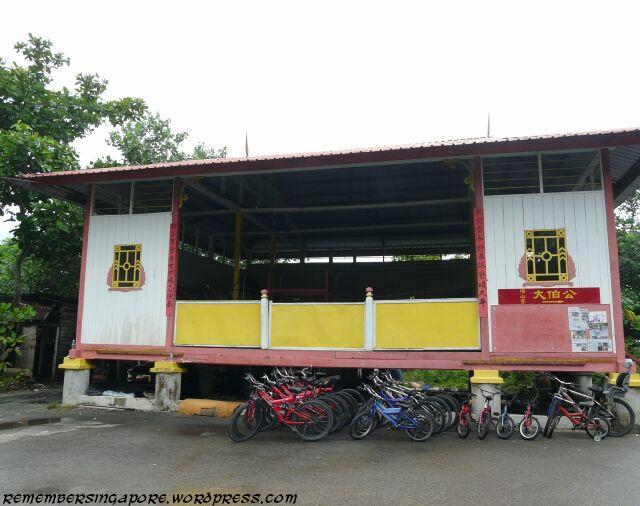
Wayang
- Original Meaning: Theatre, Performance (Javanese)
- Local Meaning: To pretend in front of others
Although the word originally means Indonesian shadow puppet performance, it is also being used to refer to local Chinese opera performance on stage.
In Singlish, “wayang” has a negative aspect, referring to a person who pretends to be hardworking, or a nice guy, in front of others.
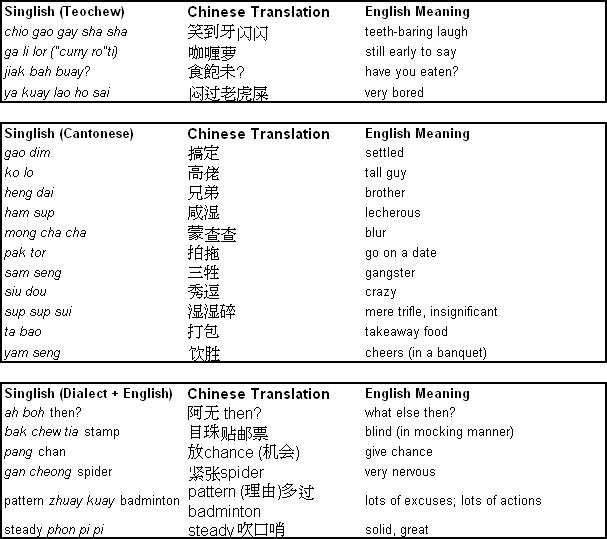
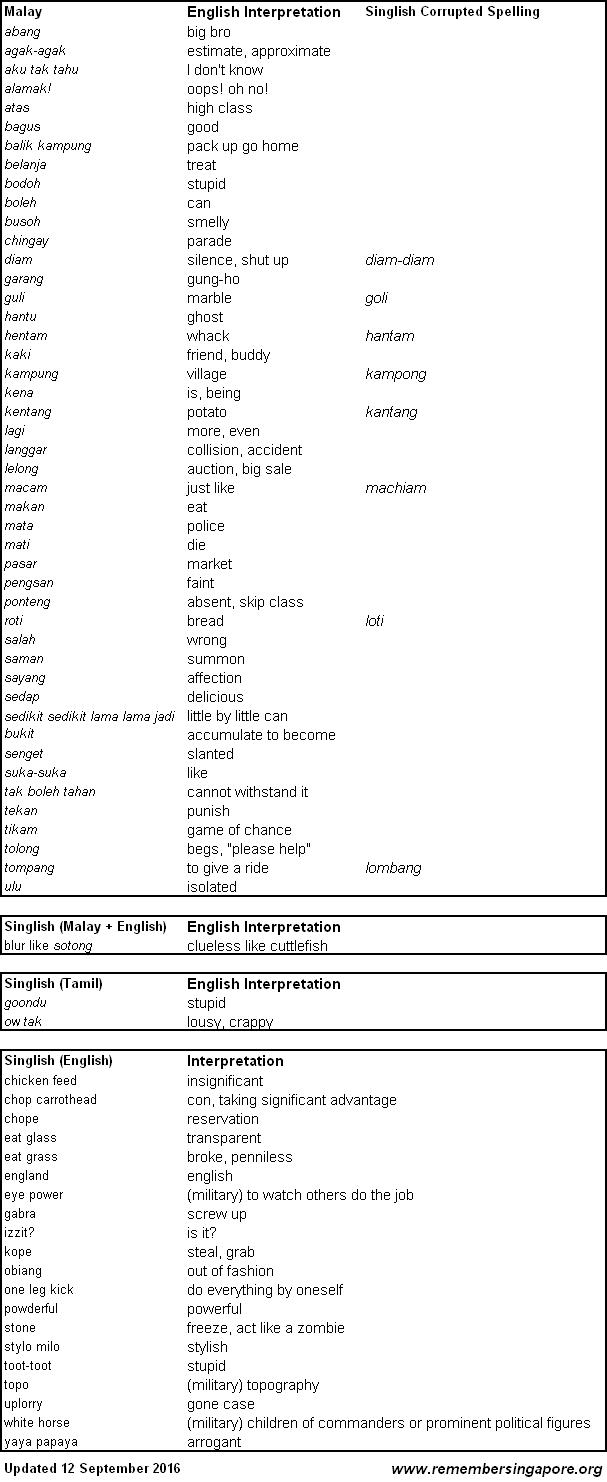
Below is a list of the most common Singlish words and phrases that are influenced by Malay, Hokkien and Cantonese. Words with sexual, racist and vulgar meanings are not included from the list. Local food and beverages, and names of local places are also excluded.

Published: 21 August 2011
Updated: 12 September 2016












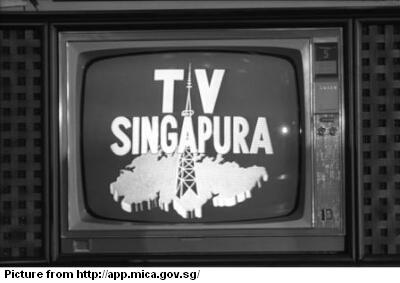 In 1965, the year of Singapore’s independence, the television station was able to screen the most defining moment of our nation as Malaysian Prime Minister Tunku Abdul Rahman announced the separation of Singapore and Malaysia.
 Thousands in Singapore cramped into various community centres to watch former Prime Minister Lee Kuan Yew on the national TV as he famously said with tears, “For me, it is a moment of anguish. All my life, my whole adult life, I have believed in merger and unity of the two territories.“
 In order to grant RTS with great autonomy so it could expand its operation and improve its efficiency, the parliament passed a bill to turn RTS into a statutory board. Hence, in 1980, the Singapore Broadcasting Corporation (SBC) was born.
 Moving ahead, the
 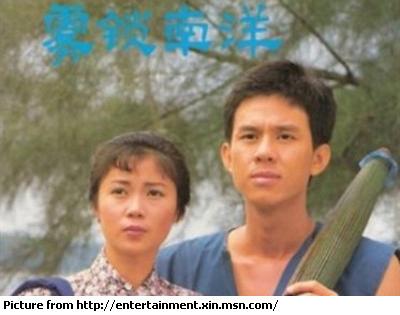 By the mid-to-late eighties, SBC was producing popular dramas with strong local flavours, such as Son of Pulau Tekong (亚答籽), The Coffee Shop (咖啡乌), Samsui Women (红头巾), Five Foot Way (五脚基), Teahouse in Chinatown (牛车水人家), The Last Applause (舞榭歌台) and Good Morning Sir! (早安老师).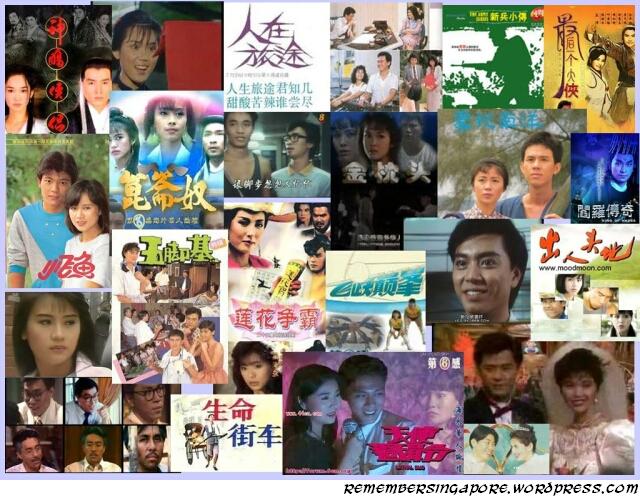
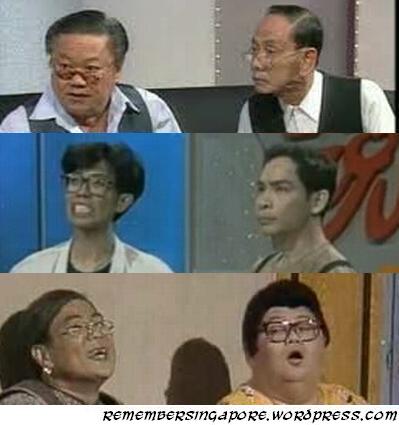 Variety shows were also hugely popular on Channel 8, enjoying high viewership from Sharp Nite (声宝之夜) (1969-1981), Live from Studio One (缤纷83) (1983–1990), Perfect Match (金童玉女一线牵) (1985–1989), to the recent City Beat (城人新杂志) series.
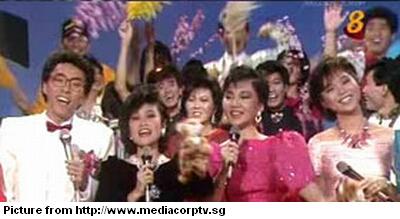 Chen Shu Cheng (陈澍承), Zhou Ru Zhu (周如珠), Zhang Yong Quan (张永权), Wang Xiang Qing (王相钦) and Huang Yu Ling (黄毓玲) were the some of the most popular variety show hosts from the late eighties to early nineties. Evergreen artiste Chen Shu Cheng has been excelling in both hosting and dramas for decades.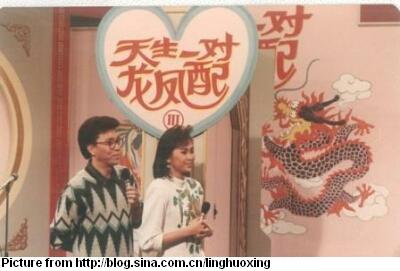
 Over at Channel 5, locally-produced English dramas had been lagging behind their Mandarin counterparts. It was not until 1994 before the first English drama, Masters of the Sea, was produced. Triple Nine followed, but it was Growing Up, lasting a total of six seasons from 1996 to 2001, that successfully attracted the most local fans.
 Channel 5 was also the prime channel for then free-to-air English Division One and Italian Serie A football, and National Basketball Association (NBA) games. Delighted football and basketball fans were glued to their TVs every week, watching the likes of Ian Rush, Marco Van Basten, Larry Bird and Magic Johnson.
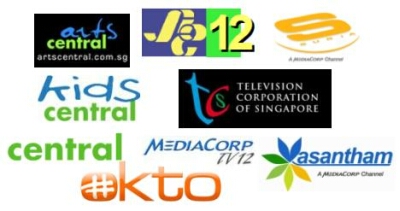 When TCS was restructured to become MediaCorp TV in 2001, the Singapore Press Holdings joined in the media broadcasting industry with two free-to-air channels: Channel U and Channel i. However, the rivalry would last only three years as SPH MediaWorks merged with MediaCorp in 2004, a move that led to the cease of operation in Channel i.































 Remember Singapore