On 5 October 2024, a 10,000-strong crowd turned up to witness Singapore’s final horse races held at the Singapore Turf Club’s Kranji racecourse. As the horses raced past the finishing line, it marked the end of a long and glorious 182-year history in local horse-racing.

Horse-racing in Singapore began as early as 1842, when the Singapore Sporting Club was founded. A year later, Singapore’s first racecourse was built at the swampy Farrer Park. A grandstand and track were built, along the Race Course Road which was named after the new amenity.
Farrer Park racecourse debuted its first races on 23 and 25 February 1843 to a crowd of more than 300. It was Singapore’s first official horse races, with an attractive prize money of $150.
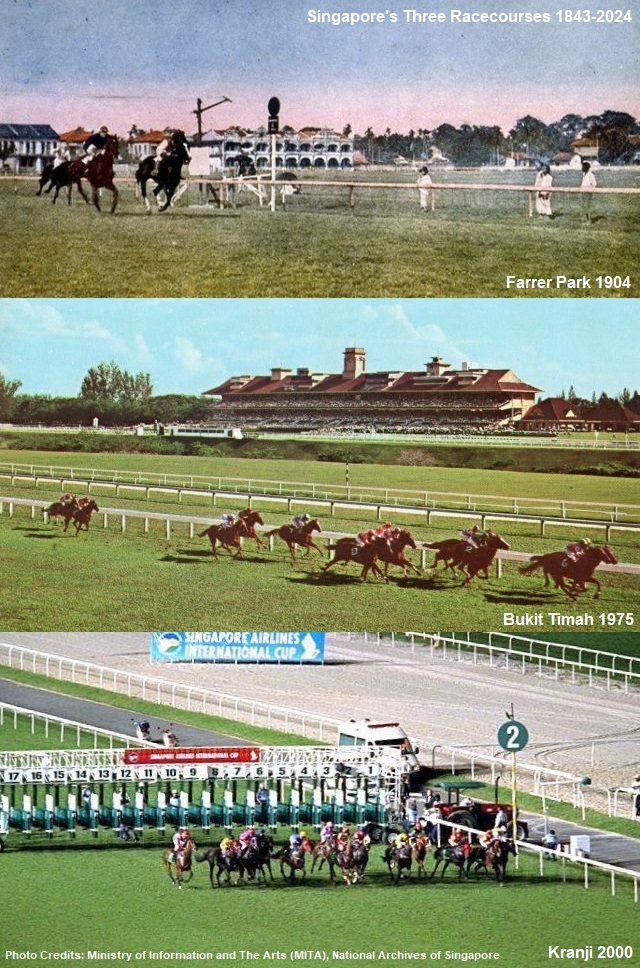
In 1924, the Singapore Sporting Club was renamed Singapore Turf Club to better reflect its role and activities. By then, the fast growing interest in horse-racing meant that Farrer Park racecourse was too small to accommodate all the spectators. After shortlisting several sites, a parcel of land at Bukit Timah Rubber Estate was eventually secured at a cost of $3 million for the construction of a new Bukit Timah racecourse. The new racecourse was opened in 1933 to a 5,000-strong crowd.
In 1988, in a review of land use in Singapore by the government, the Bukit Timah Turf Club site was a possibility for residential redevelopment by the mid-nineties. A large 120-hectare (1.2-square km) plot of site at Kranji, near the new Kranji MRT Station, was identified as the ideal location for the new horse-racing grounds. In the proposal, the turf club might be relocated to Kranji as early as 1997.
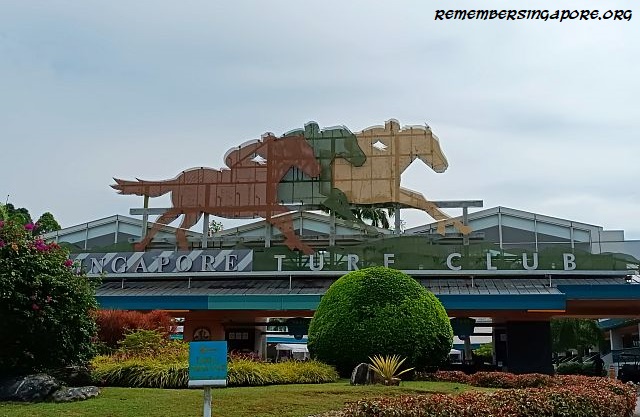
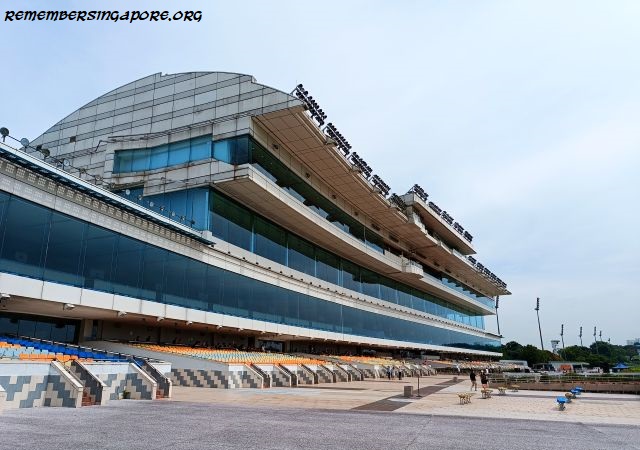
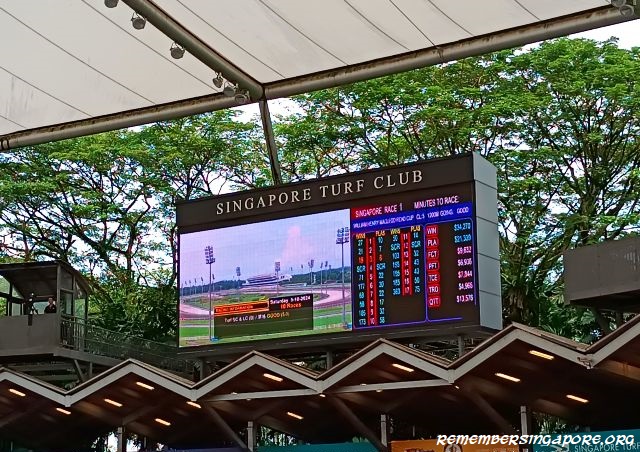
The design of the new horse-racing grounds was taken up by Indeco Consultants and established American racecourse designer Ewing Cole Cherry & Brott. Works commenced in December 1995. The new Kranji complex, costing almost $600 million, was fitted with a 30,000-capacity grandstand, Owners’ Box, Jockeys’ Box, Parade Ring, Diamond Vision screens, a stabling complex and additional betting counters.
Floodlights and lighting system suited for night racing were installed in 1998, making Singapore the first in the Malayan Racing Association – the other club members were Selangor, Perak and Penang – to have night racing capabilities.
On 25 July 1999, the Bukit Timah racecourse hosted the Emirates Singapore Derby, its last ever major race. After the relocation of the turf club to Kranji, the old premises was converted into Turf City, where it operated for more than two decades until its closure at the end of 2023.
The Singapore Turf Club at Kranji had a soft opening on 25 September 1999 and hosted Singapore’s first ever night horse race, although the special occasion was interrupted by a power failure. The racecourse’s official opening was officiated by then-President of Singapore S. R. Nathan (1924-2016) on 4 March 2000. On its opening day, spectators and punters were treated to an exciting 2,000m race of the Singapore Airlines International Cup with a prize money of $3 million.
In June 2000, the turf club also organised a night horse race dedicated to ladies, a first in its history. The special lady night was an instant hit as more than 8,000 women attended the event with free entry to the racecourse.
The Singapore Turf Club had a “turfmeter” to describe the state of its track for sand races. It has three ratings of “firm”, “good” and “yielding”, where “firm” is the best condition for a fast track, especially after a heavy rain that makes the sand more compact. Beside the sand track, the Kranji racecourse also had a new 1,500m-long polytrack, or all-weather track, added in 2008.

In November 2002, the Kranji racecourse held its first ever concert, where popular male singer Li Mao Shan sang at the Parade Ring in front of 1,500 fans. Other than concerts, the Singapore Turf Club also organised orchestra performances, “Fun for All Under the Stars” open houses and even a vintage car race at its Kranji premises.
The annual Singapore Airlines International Cup was cancelled in 2003 due to the SARS pandemic. As many as 120 horses, including 91 from overseas, were affected by the cancellation.
In 2006, the Singapore Turf Club welcomed distinguished guest Queen Elizabeth II (1926-2022) at its Kranji racecourse. The British monarch had visited the Bukit Timah racecourse in 1972; it was a long 34 years later that her royal presence graced the Singapore horse-racing realm once again.
A gigantic Panasonic Astrovision LED screen, measured 46m long by 8m tall, was installed by the Singapore Turf Club in 2007. The huge outdoor screen was able to display clear and sharp images to almost all the spectators seated at the grandstand.
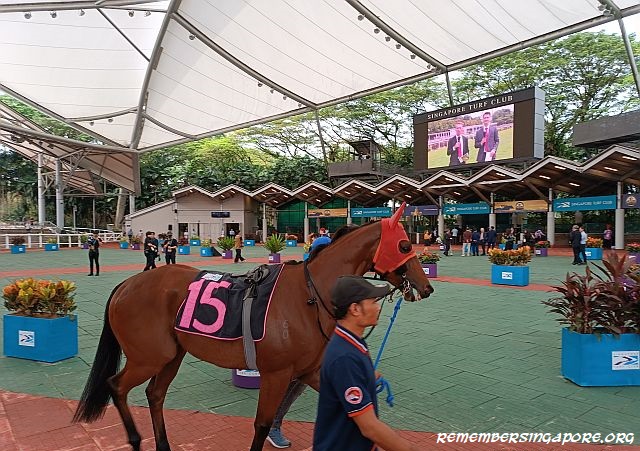
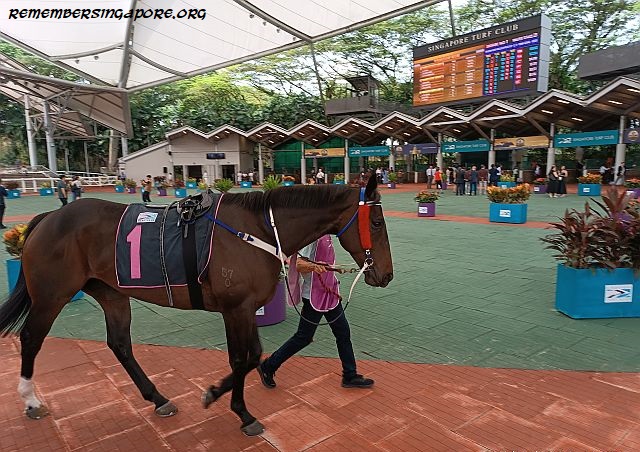
Over the years, popular winning horses such as Nightyfive Emperor, Storm Racer, Magnum Force, Rocket Man, Better Be The One and Al’s Knight wowed countless of spectators, punters and horse-racing lovers with their impressive speeds and brilliant victories.
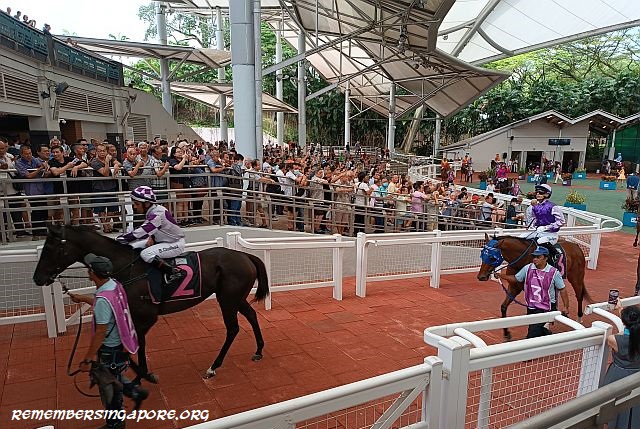
Horse-racing, however, seems to lose its attraction to the younger generations of Singaporeans. The annual visitorship to the Singapore Turf Club gradually declined, especially in the new millennium. The average daily attendance had dropped from 11,000 in 2010 to 6,000 in 2019 and 2,600 in 2022.
In 2023, the government announced the permanent closure of Kranji racecourse in a year’s time. This not only spells the end of Singapore’s third racecourse, but also its 182 years of horse-racing history. The Kranji site will be returned to the government in 2027, and residential redevelopment is expected to commence by the end of the 2020s.
Published: 29 October 2024
Discover more from Remember Singapore
Subscribe to get the latest posts sent to your email.






 Remember Singapore
is there any place not going to be converted to residential estate or shopping mall?
Detailed plans for Kranji racecourse housing estates to be sought through tender in 2026
1 December 2025
The Straits Times
A tender to flesh out detailed plans for the upcoming housing estate at the Singapore Racecourse site in Kranji will be called in 2026.
Plans will take shape in the coming decade and will be developed through the master planning and urban design consultancy exercise, said the Urban Redevelopment Authority on Dec 1, as it announced that Master Plan 2025 has been gazetted.
In a statement, the URA also said it will soon give an update on plans for Jurong Lake District’s development, and work towards activating vacant sites in Marina Bay for interim sports and lifestyle uses.
The masterplan, which is legally binding, guides Singapore’s development for the next 10 to 15 years. It is reviewed once every five years.
In a statement, URA said that government agencies sought ideas for the Kranji racecourse site in August by speaking with residents of the area, nature groups, professional bodies, and academics.
“Through a site visit and focus group discussion, participants discussed ways to plan for an inclusive and attractive estate by harnessing the memories and rustic character of Kranji and the proximity to the Kranji Nature Corridor,” said the URA.
The racecourse held its last race in October 2024.
Visitors to the Draft Master Plan 2025 exhibition – which was held from June 25 to Nov 29 at The URA Centre, and also made stops across Singapore – said the neighbourhood should have good transport connectivity, green and blue spaces, and outdoor nature-based attractions for families, URA added.
These ideas will be considered during the master planning and urban design phase, URA said. The exhibition was visited by close to 250,000 people.
Master planning for Kranji racecourse housing estate to begin 2026 | The Straits Times