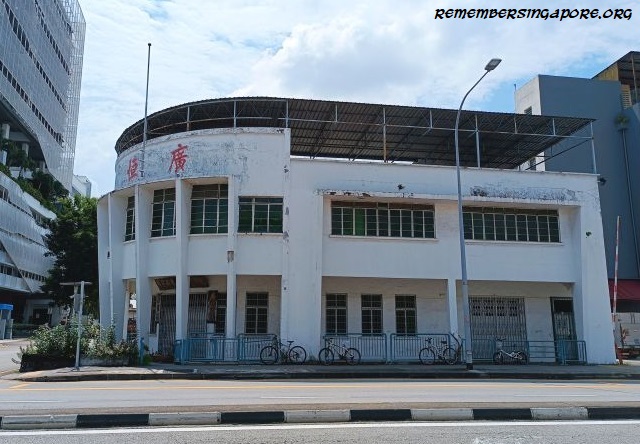
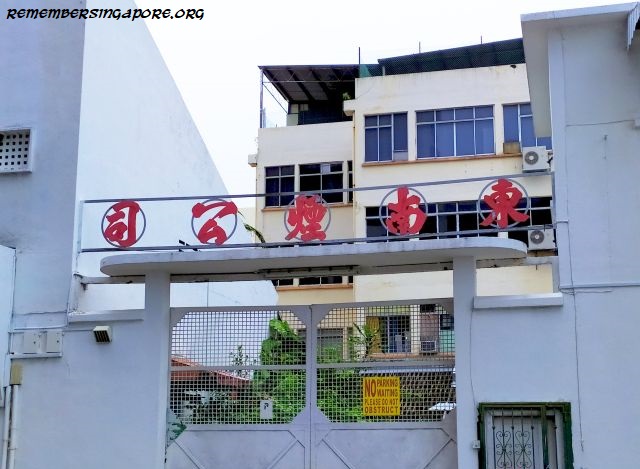
Along MacPherson Road, at its junction with Harvey Road, is a white double-storey shophouse that was once one of Singapore’s major cigarette manufacturers. This was the former factory of Tong Nam Tobacco Company (东南烟草公司).
Tong Nam Tobacco
Tobacco companies existed in Singapore since the 19th century, where operating licenses for opium, liquors, and tobacco farms were regulated and issued by the Straits Settlements government. Overseas Tobacco Company, established at Hill Street in the 1900s, was one of the most popular cigar and cheroot manufacturers in Malaya and Singapore before the Second World War.
Tong Nam Tobacco, on the other hand, originated from Kwong Hang Ho (广恒号), which was one of the seven large trading firms (七家头) established at Singapore’s downtown area between the early and mid-19th century. These seven trading firms dominated the local markets of rice, cooking oil, sugar, salt, soya sauce, tea, cigarettes and other provisions for almost a century.
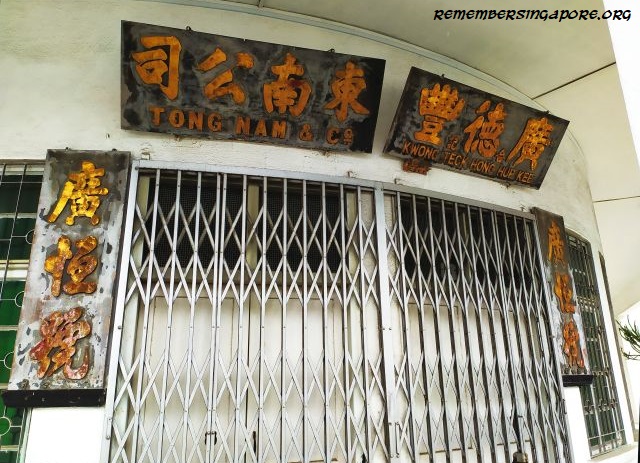
In the 1930s, Kwong Hang Ho had some of its shares acquired by investors, and began operating at North Canal Road under the name Tong Nam Tobacco.
Tong Nam Tobacco was embroiled in a legal battle in 1937 when its “Kwong Hang Ho” trademark was counterfeited by another company Chop Wing San. Tong Nam Tobacco eventually won the case and the managing partner of Chop Wing San was fined $200 by the District Court.
During the occupation, the Japanese authority grouped all the major tobacco companies in Singapore to form the Syonan Tokubetu-si Tobacco Manufacturing Association, in order to raise funds and ensure consistent supply of cigarettes and cigars.
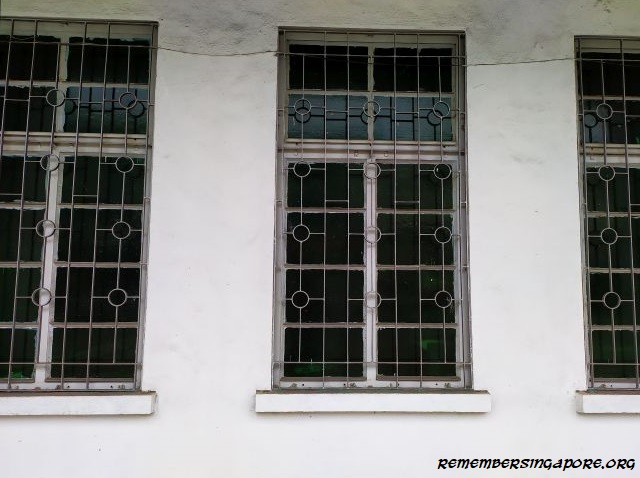
In June 1956, Tong Nam Tobacco moved to its new premises at Harvey Road. It was a new modern building with a curved façade and flat roof, architectural design elements that were ahead of their times in the fifties. The top of the façade still bears the name of Kwong Hang today.
In the late fifties and sixties, Tong Nam Tobacco employed about 100 workers and was able to churn out a daily production of more than 550,000 sticks of cigarettes.
The success of Tong Nam Tobacco caught the attention of the government, which had plans to set up a people’s cigarette factory at a cost of $10 million. Keen to tap on the experiences of the established tobacco companies in Singapore, Jumabhoy Mohamed Jumabhoy, then-Minister for Commence and Industry, toured Tong Nam Tobacco in 1958 to better understand the production of cigarettes. He also visited Malayan Cigarette Manufacturers Limited.
Popular Local Brands
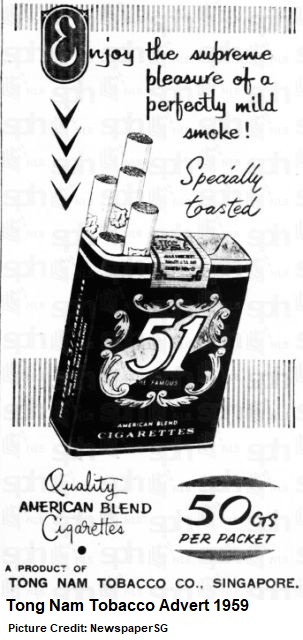
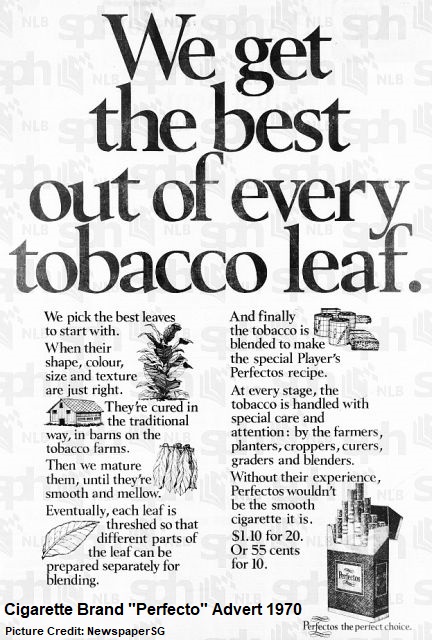
The sixties and seventies were arguably Tong Nam Tobacco’s golden eras. It enjoyed good sales with its popular household brands of “My Dear“, “Pigeon“, “Carrier“, “Stage“, “Stag“, “51” and “Gold Circle“.
Other major cigarette producers of the same period were Seng Lee Tobacco Company (with brands such as “Clock Tower“, “Rhinoceros“, “Saxophone“, “Shell“, “Flower“, “Three Generals“), Singapore Tobacco Company (“Neptune“) and Malayan Cigarette Manufacturers Limited (“Seven Diamonds“, “Hallo“, “Tiger Head“, “Sail“, “Winning Rush“, “Golden Flame“, “Wiseman“).
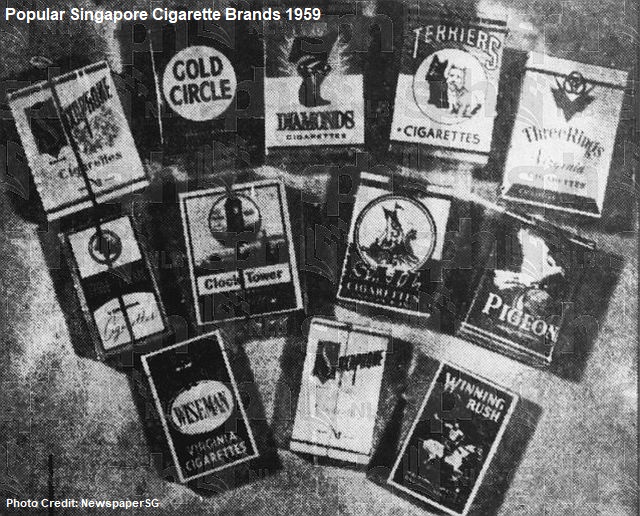
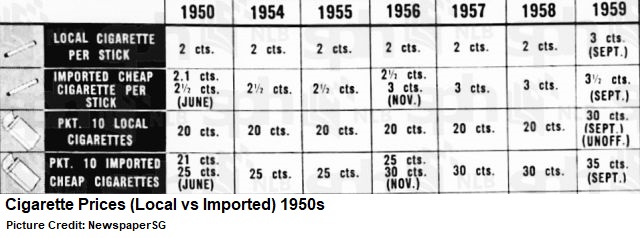
A 1959 survey conducted by the Straits Times estimated that Singaporeans were smoking 20 million cigarettes every month. Majority of the smokers favoured local brands, as compared to imported ones, due to their relatively cheaper prices.
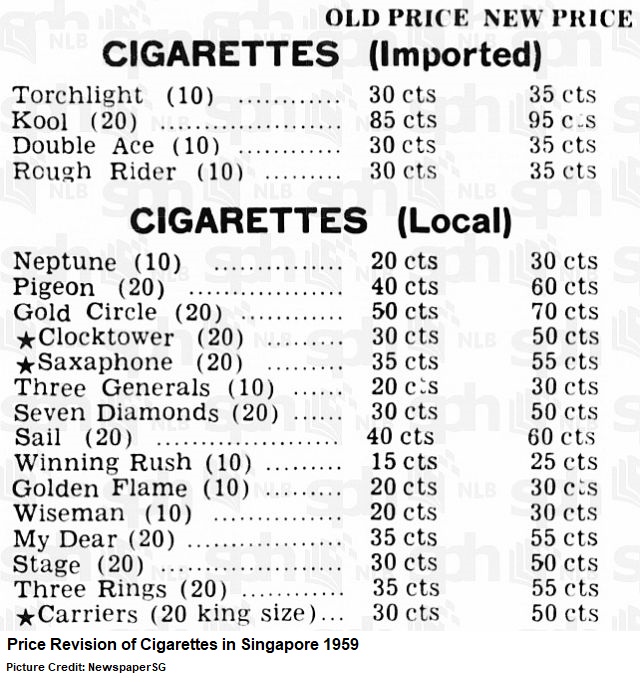
Below is the price list of the different brands of cigarettes in Singapore before a price revision was implemented in 1959. The revised prices were largely due to tax increases imposed by the government.
Tobacco Farms
Tobacco growing in Singapore greatly increased after the war, when the colonial government provided tobacco farmers with incentives of $300 to $400 a picul (about 60kg) in 1948.
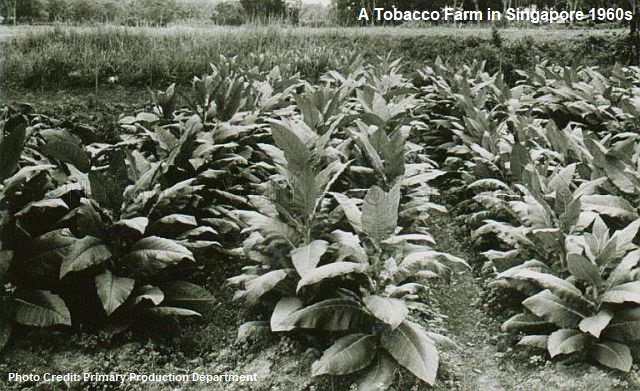
Tobacco (nicotiana tabacum) became one of the main cash crops for many farms in Singapore during the fifties and sixties. Tobacco farms could be found from Pulau Tekong to Lim Chu Kang, Kranji, Bukit Panjang and Mandai areas.
Harvested by the farmers twice a year, the tobacco leaves were then dried and sold to the local tobacco companies and factories. In 1978, as much as 600 tonnes of tobacco leaves were harvested. Although it was Singapore’s smallest cash crop, tobacco brought in the fourth highest revenue in the country’s agricultural sector, after vegetables, orchids and fruits.
Decline & Demise
In the late seventies, the United Nations launched global campaigns to urge tobacco growers to switch to other crops. Singapore reciprocated with its own national health drive to educate the population on smoking’s hazardous effects to health and encourage smokers to give up smoking.
By the eighties, many of the local tobacco farms were acquired by the government to make way for urban and residential redevelopment. According to the Primary Production Department, Singapore’s total production of tobacco leaves in 1986 fell to only 10 tonnes, as compared to 133 tonnes in the year 1980.
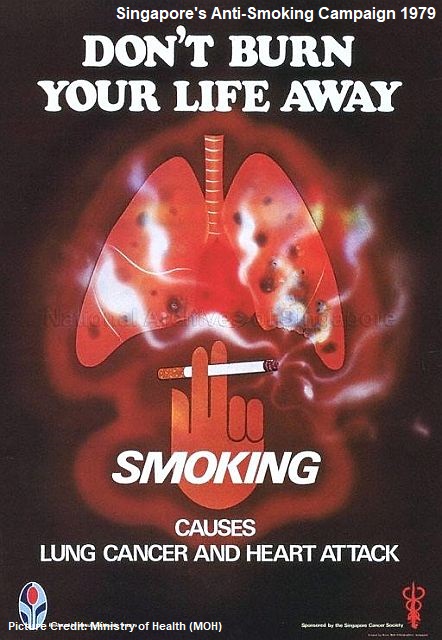
The sales of Tong Nam Tobacco, as well as other local cigarette manufacturers, began to decline by the eighties. The competitive prices of imported cigarettes from major global brands, aggressive anti-smoking campaigns by the government and the loss of tobacco farms to redevelopment all led to the slowing down of the local tobacco industry.
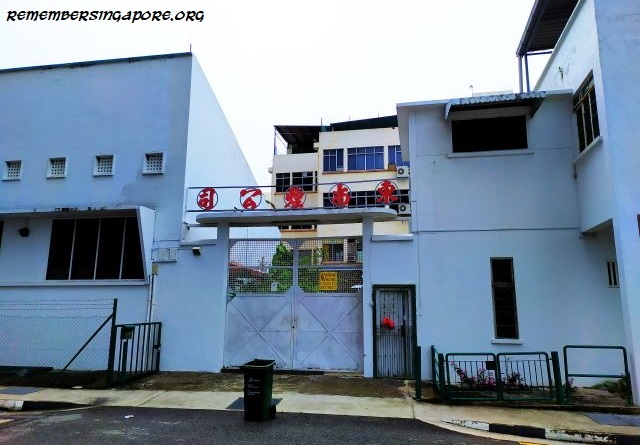
Tong Nam Tobacco ceased its production and business by the end of the eighties. The company was reregistered under sole proprietorship, and it continues to retain the ownership of the Harvey Road building till today.

Published: 19 December 2024
Discover more from Remember Singapore
Subscribe to get the latest posts sent to your email.






 Remember Singapore
I rmber there was a huge building abou 3 or 4 storeys under Singapore Tobacco Company along Hoe Chiang Road (junction with Cantonment Rd) in 1950s/1960s. I was then a primary students at the old Keppel Pri School and the school was facing Hoe Chiang Rd.
Would you possibly consider writing an article about the history of ITE schools in Singapore?
I wonder what the building would ultimately be used for.