The concept of a new town called Seletar was made known by the Housing and Development Board (HDB) in the early eighties. With the development of Nee Soon New Town (Yishun New Town today) beginning in 1977 and gaining traction by the early eighties, the government mooted the plans of another new town just next to Yishun.
New Waterfront Town
The Seletar New Town was visualised to be as large as Ang Mo Kio, bounded by Sungei Seletar, Sungei Punggol and the Johor Strait. Sungei Seletar, in 1985, had been dammed to form Sungei Seletar Reservoir, where it started to supply water in August 1986. This new water catchment area was renamed Lower Seletar Reservoir in 1992.
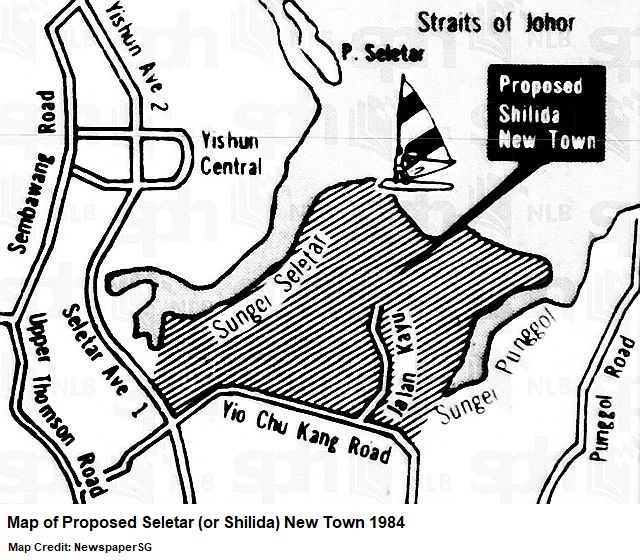
Seletar New Town was conceptualised to have as many as 40,000 to 50,000 flats, supporting a 200,000 population. It could also be an alternative, other than Yishun New Town, to the many residents who were affected by the resettlement drives at the Nee Soon and Mandai vicinities.
Also in the new housing plans were two other new towns – Sembawang and Punggol – along the northern and northeastern coasts of Singapore. The construction of Sembawang and Punggol New Towns kicked off in the mid- and late nineties respectively.
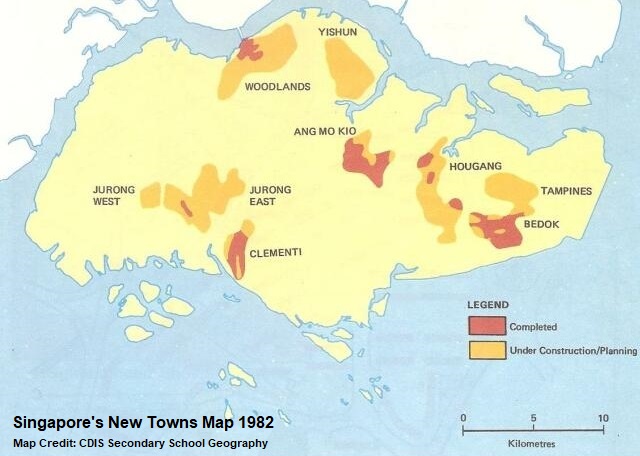
To accommodate the Seletar New Town and Punggol New town development plans, the northeastern part of Singapore underwent several phases of land reclamations. The first phase was completed between 1986 and 1991.
The $200-million project added about 228 hectares and 315 hectares of land at the Seletar and Punggol ends respectively. Both were reserved for new public housing developments once the reclaimed lands settled after a five-year period.
Name Controversy
The Seletar New Town plan became a controversial talking point when it was first proposed. Under the Speak Mandarin Campaign in the early eighties, many places with Chinese dialect names had been renamed to their hanyu pinyin version, such as Nee Soon (to Yishun), Kampong Pek San (to Bishan), Tekka (to Zhujiao), Chong Pang (to Zhongpang), Au Kang (to Hougang) and Teck Hock (to Defu).
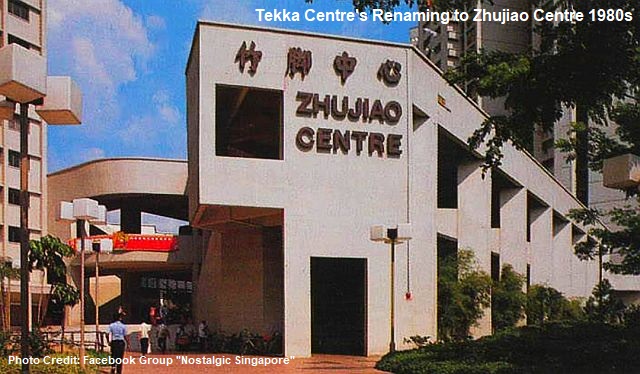
The name of Seletar New Town, too, was changed to Shilida New Town, much to the bewilderment of many Singaporeans. The name Seletar was derived from Orang Seletar, one of the native Orang Laut (means “sea people”) tribes in early Singapore. It might be adapted from the Dutch (“selatter“) and Portuguese’s (“selat“) reference to the “straits”. As the name does not have any Chinese origins, many could not understand the rationale behind the hanyu pinyinisation of “Seletar”.
Facing the criticisms, HDB clarified in 1984 that the new town would retain its Seletar name instead of the proposed “Shilida”. For the others, the likes of Zhujiao and Zhongpang were reverted to their original dialect names, but the names of Yishun, Bishan and Defu have remained hanyu pinyinised till this day.
Sengkang New Town
By the mid-eighties, HDB appeared to have shelved the plans to build Seletar New Town. It had instead identified another area, bounded by Jalan Kayu, Yio Chu Kang Road, Sungei Serangoon and the Tampines Expressway, for the development of a new town called Sengkang.
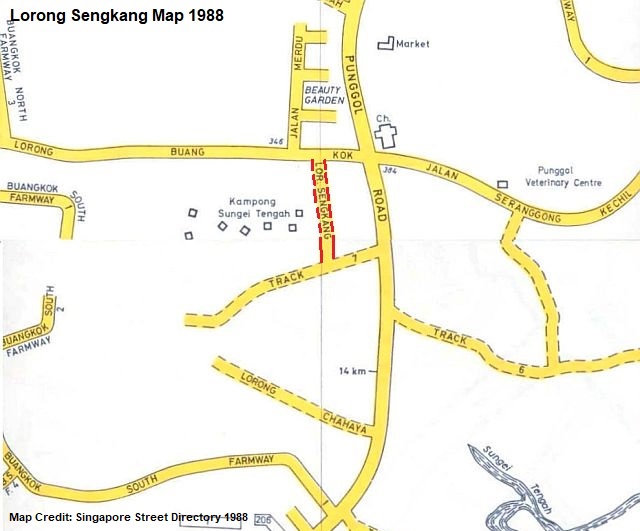
This place was originally known as Kangkar (“foot of a river” in Teochew). The name Sengkang was taken from Lorong Sengkang, a small track in the vicinity that led to Kampong Sungei Tengah. Both the village and road were torn down in the mid-nineties.
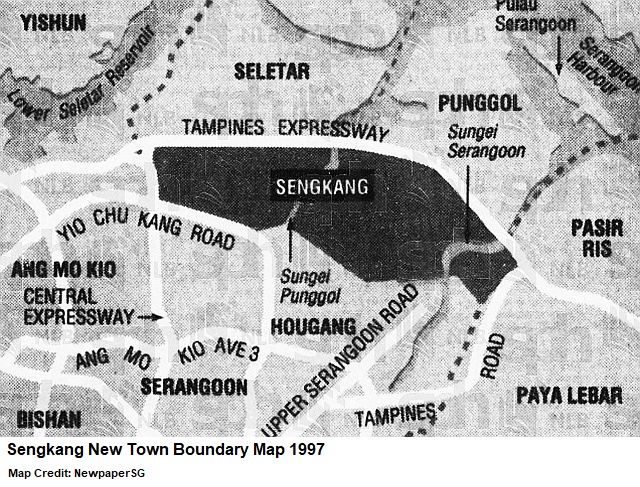
The development of Sengkang New Town commenced in 1994, with its first blocks of HDB flats completed three years later at the Rivervale neighbourhood. Sengkang would go on to become a bustling new town after the millennium.
Seletar New Town, on the other hand, did not come close to materialisation; it was quickly forgotten after its brief mention in the early eighties.
Published: 30 April 2026
Discover more from Remember Singapore
Subscribe to get the latest posts sent to your email.






 Remember Singapore
In the early 1990s there were plans to develop Seletar as the regional centre of the North East region but eventually there is no sound no picture https://eresources.nlb.gov.sg/newspapers/digitised/article/newpaper19921223-1.2.12.2
Some of the other scrapped new town plan include Simpang which is located North East of Yishun and also last time there were plans to convert Lim Chu Kang into a new town but eventually the plan was scrapped due to the remoteness of the area.
I’m a native Dutch speaker, but I don’t recognise the supposedly Dutch word “selatter“. Our word for strait is straat. It doesn’t appear to be etymologically connnected.