Taxi! Taxi! The Evolution of Singapore’s Taxi-Cabs

It was the end of road for the Toyota Crown taxis in Singapore, when its last batch officially walked into history in September 2014. Debuted since 1982, the Toyota Crown taxis were once one of the most common taxi-cabs on the Singapore roads in the nineties and 2000s, along with the models of Toyota Corona and Nissan Cedric.

The last batch of Toyota Corona taxis was scrapped in 2006. Today, the new taxis come in almost 30 different types of models, ranging from Toyota (Axio, Camry, Wish, Allion, Prius) and Honda (Fit, Airwave, Partner, Fielder, Stream) to Hyundai (Sonata, i30, Avante), Kia (Magentis, Optima, Carnival) and Chevrolet (Epica).

toyota crown taxi 1988

Other than the models, how have Singapore’s taxi-cabs evolved in the past 100 years?

1920s – Early Taxi-cabs in Singapore

Prior to the 1920s, rickshaws were widely used in Singapore. Imported from Japan since 1880, the hand-drawn taxi-cabs provided a major form of public transport to both the upper and lower class. Although rickshaws were eventually banned in 1947, the Municipal Commissioners were already aiming to replace the rickshaws with small taxis in the 1920s.

rickshaws 1920s

Engine-driven type of taxi-cabs started to appear in 1920, when Ford touring cars, painted in light yellow with black fenders, became available at Raffles Place, charging passengers at a rate of 40 cents a mile with an additional 10 cents for every quarter mile. The first true taxi-cab, designed and fitted with a Ford chassis, an economic carburetor and ample seating accommodation, was brought into Singapore only nine years later.

The Borneo Motors Limited imported the taximeter in 1930 as an experimental device for taxis in Singapore. The meter had been used in other countries such as Rangoon and Calcutta for many years. Fitted at the running board of the taxi, the driver would pull down the “For Hire” flag whenever a passenger boarded the vehicle, and the mechanism in the meter would start registering the fare. The taximeters, however, did not become a compulsory device for taxis until years after the Second World War.

1930s – Rise of the Yellow Top Taxis

The first yellow top taxis were brought into Singapore in 1933 by the Wearne Brothers, founded in 1906 and later became the sole agent of the Ford cars in the Straits Settlements, to primarily serve in the city area. The response was generally positive; a year later, Wearne Brothers established a subsidiary named General Transport Company to launch taxi services in other Malayan cities such as Malacca, Penang and Kuala Lumpur.

1940s – The First London-type Taxi

Just after the end of the Second World War, the Singapore Hire Car Association (SHCA) and Singapore Taxi Transport Association (STTA) were formed with the approval of the Registrar of Vehicles to protect the interests of their members plying the trade of taxi drivers. The associations would also step in to provide legal services to the drivers in times of conflicts.

In 1946, the official basis of charges for taxis in Singapore was set at 30-cents-a-mile by the Road Transport Department.
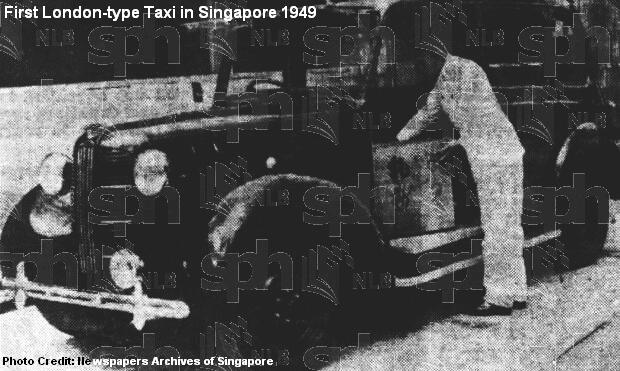
first london-type taxi in singapore 1949

An Austin 1949 model arrived in Singapore in November 1949 as the colony’s first ever London-type taxi, causing quite a stir as pedestrians and passengers gazed at the vehicle with interest. Designed with a capacity to carry five passengers, the new taxi, however, was out of reach for most drivers due to its high cost of $7,000.

1950s – Taximeters A Must

In order to provide a fairer service to the public, taximeters were finally introduced on a wider scale in Singapore by the City Council in the early fifties. The new scheme was not well-received, as the taxi drivers felt that it was a practice for passengers to bargain and pay fares below the authorised rates, and the introduction of taxi meters would disrupt their business. Nevertheless, the Singapore Taxi-Owners Co-operative Motor Garage and Stores Society Limited, a major taxi company in Singapore, became one of the first taxi companies to adopt the meters. By the end of 1953, all taxis in Singapore were required to install the taximeters.

Other new measures also generated negative responses. In 1954, a plan to install radio telephones in the 1,500 taxis in Singapore was met with protests and objections due to the high installation fees that cost as much as $800.
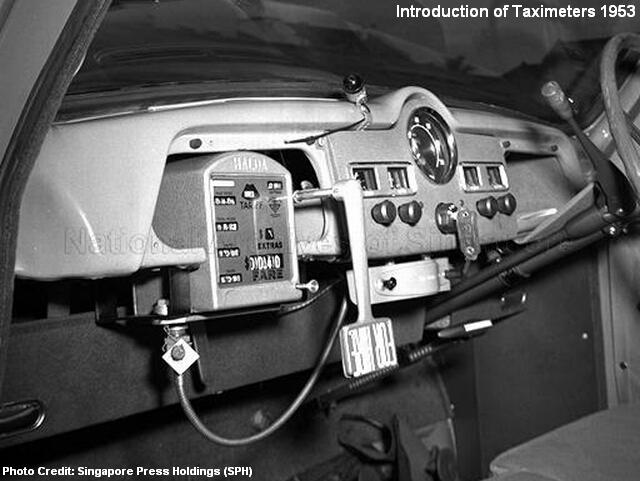
taximeters 1950s

In 1957, the City Council wanted to add more taxis on the road, and this, too, was met with objections as it would increase the competition and reduce the taxi drivers’ and owners’ earnings. Moreover, pirate taxis were running rampant in Singapore, taking away a large share of the legal drivers’ business. The same year also saw the restriction of taxis travelling freely between Singapore and the Federation of Malaya. Prior to 1957, vehicles could travel in both territories without restriction.

The number of taxis in Singapore, by the end of the fifties, had ballooned to 11,500. Most of them were under the Singapore Taxi Transport Association, Singapore Hire Car Association, Singapore Taxi Drivers’ Union and Singapore Hock Poh Sang Taxi Drivers’ Union. The increasing number of taxis indirectly led to a higher number of accidents on the road, averaging 2,000 per month. While the accidents were not entirely due to the taxi drivers, their eagerness to pick up passengers and road manners often put them in unfavourable situations with the Traffic Police.

1960s – Fighting the Pirate Taxis

By the sixties, there were more than 36,000 licensed taxi drivers in Singapore, where 90% of them belonged to three major taxi companies in the Singapore Taxi-Owners Co-operative Motor Garage and Stores Society Limited, STTA and Sharikat Sir Kemajuan. STTA is the only one still existing today, providing coverage for the private taxi owners identified by their yellow top vehicles.

Pirate taxis continued to be a source of issues in the sixties. Anyone could register their private cars as taxis, and used them to ferry passengers at arbitrary rates. Some, known as “Ali Baba”, were controlled by rogue operators that owned fleets of poorly-maintained vehicles at their territories. Taxi licenses were often traded by them at exorbitant values. In the mid-sixties, as many as 4,000 pirate taxis were running on the roads everyday.
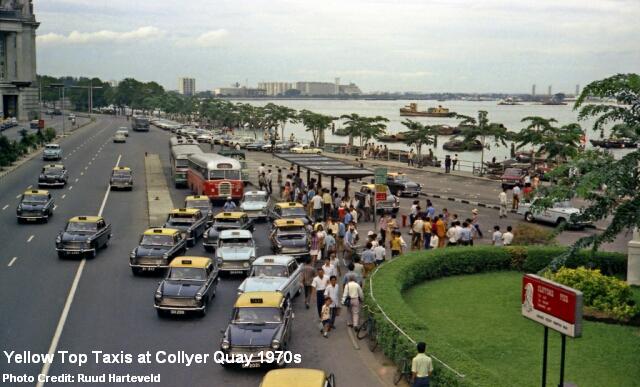
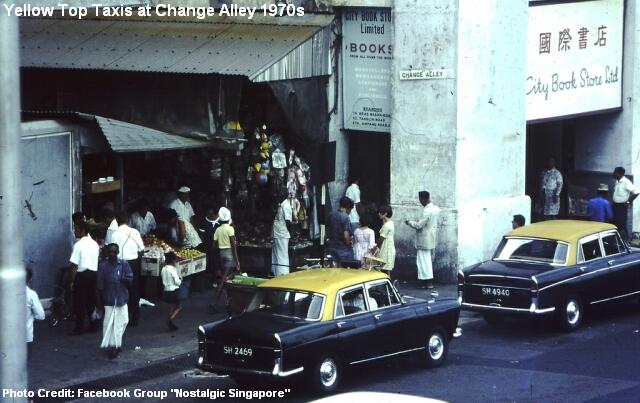
taxis at collyer quay 1970s

change alley 1970s

1970s – Radio Taxi Services Launched

In 1970, the NTUC Workers’ Co-operative Commonwealth for Transport was established with a fleet of 1,000 taxis. It would later become NTUC-Comfort, the largest player in the local taxi-cab industry for decades. Taxi licenses became non-transferable in 1973; the new taxi licenses were only issued to NTUC-Comfort.
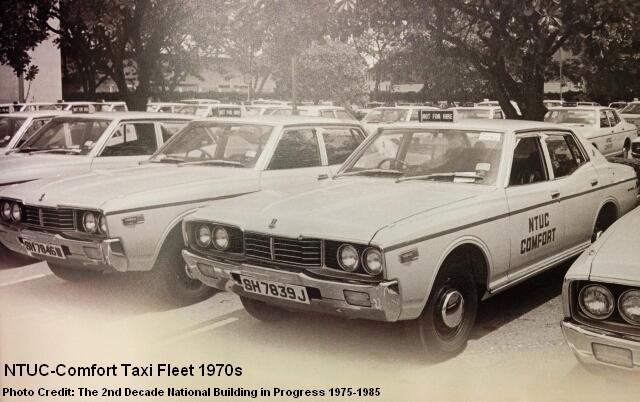
ntuc comfort taxis 1970s

The total number of taxis in Singapore in 1970 numbered about 10,500, but most of them were still pirate taxis. It led to the introduction of diesel tax, one of several measures by the government to wipe out pirate taxis. Facing uncertainty and unemployment, many pirate taxi drivers decide to switch to licensed taxis with NTUC-Comfort, or became bus drivers or conductors. By July 1971, pirate taxis in Singapore were officially “eradicated”.

The radio taxi service had been present since the fifties, but it was never popular with the public due to its unreliability. The pirate taxis also played a part then, as the commuters could easily booked one instead of calling the legitimate taxis.
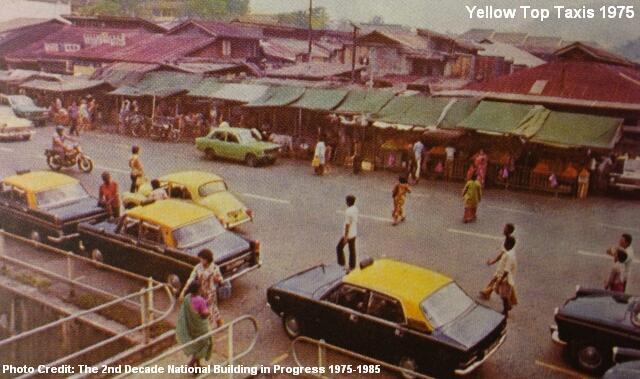
yellow top taxis 1975

In 1976, the radio taxi service started by the Singapore Taxi Owners and Drivers Co-operative Store Society, which had 190 taxis under its charge, finally proved to be a success with the public with easy-to-memorise dial-in numbers such as 363636 and 363333. In just the first eight months of service, the organisation had received 50,000 booking calls.

Soon, other taxi companies also followed suit; the Singapore Taxi Drivers Association started their radio taxi service a year later, and NTUC-Comfort launched theirs in 1979.
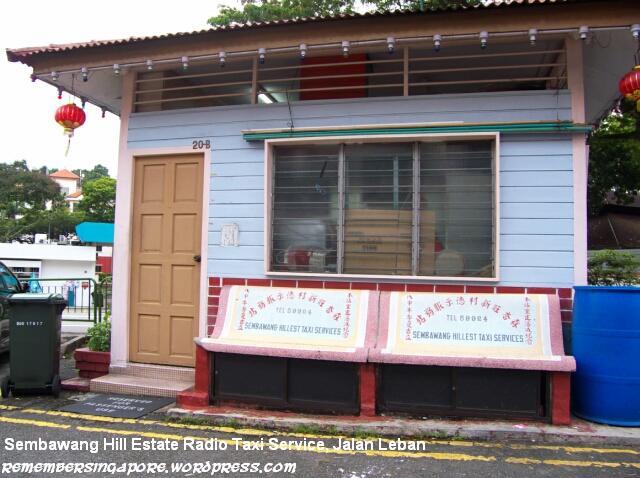
sembawang hill estate radio taxi service

By the late eighties, there was more than a dozen private radiophone taxi organisations spread all over Singapore in Singapore. Most had ceased operations by today, such as the Beach Road Radio Taxi Service (at Jalan Selaseh), Chip Bee Radio Taxi Service (at Upper Bukit Timah) and Upper Thomson Radio Taxi Service (at the long-demolished Lake View Shopping Centre).
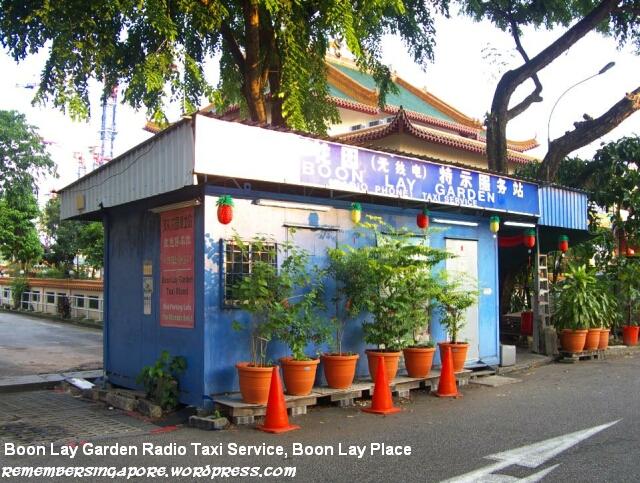
boon lay garden radio taxi service

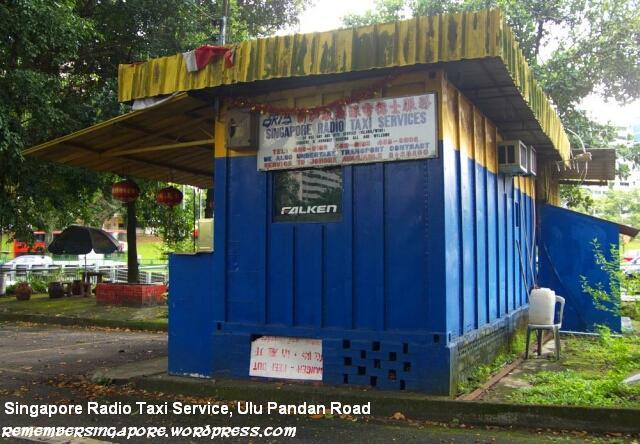
singapore radio taxi service ulu pandan

Only a handful still exists till this day. They are the Sembawang Hill Estate Taxi Service (at Jalan Leban), Boon Lay Garden Radio Taxi Service (at Boon Lay Place) and Singapore Radio Taxi Service (at Ulu Pandan Road).
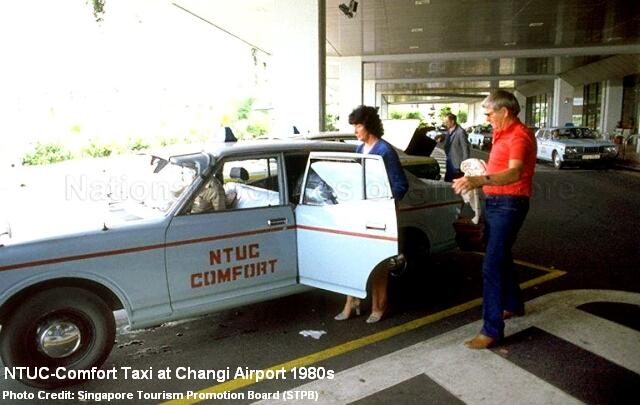
ntuc comfort taxi at changi airport 1980s

1980s – Expanding Market

Air-conditioned taxis were introduced in 1977, a move welcomed by the public. More measures for taxis were rolled out in the eighties. In 1982, radios were allowed to be installed in the taxis. In the same year, front-seat seat belts were made compulsory. In the early eighties, NTUC-Comfort made a step ahead of others by changing all their taxis’ mechanical taximeters to electronics ones. By 1984, all taxis in Singapore were required to be fitted with the electronic meters.
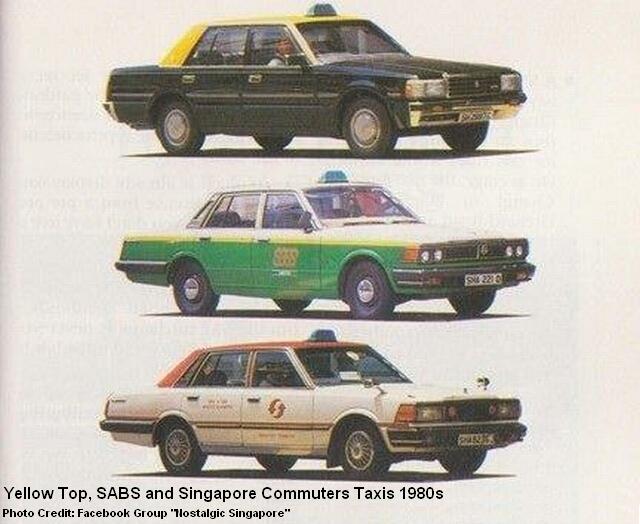
singapore taxis 1980s

There were 11,668 taxis running on Singapore roads by 1985, shared by the Singapore Commuters, NTUC-Comfort, Singapore Airport Bus Services (SABS) and SBS Taxi. NTUC-Comfort continued to own the largest taxi fleet, with almost 6,300 cars, whereas there were only 300 taxis under SABS.

SBS Taxi, a new player joining the market just two years earlier, launched their Toyota Corona taxis in white and red colours, the same signature colours used for their SBS buses.
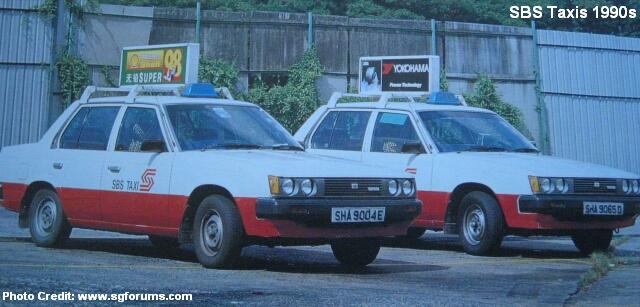
sbs taxis 1990s

1990s – The Big Merger

In 1995, CityCab was formed by the merging of SABS, SBS Taxi and Singapore Commuters. A year later, it became the first taxi company in Singapore to launch a luxurious fleet of Mercedes E300 taxis. A 7-seater named MaxiCab was also introduced by CityCab in the late nineties.
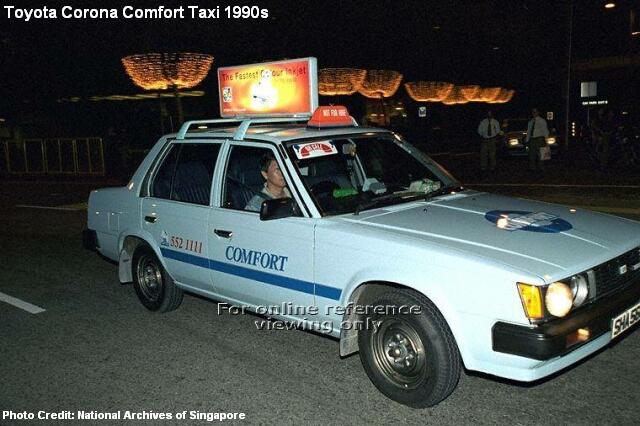
toyota corona comfort taxi 1990s

Today, there are six taxi companies in Singapore, namely Comfort, CityCab, SMRT, TransCab, Premier and Prime. The green SMART Cab, established in 1991, was the latest taxi operator to exit the industry after failing to meet the Quality of Service requirement set by the Land Transport Authority (LTA) in 2013.

Other than the six taxi operators, there are around 500 yellow top taxis in Singapore driven by their individual owners. The licenses of these yellow top taxis allow their owners to drive the vehicles until the age of 73, which means the yellow top taxis, running on the roads since the 1930s, will probably vanish in the next decade or so.

Published: 02 October 2014
Posted in General, Historic | Tagged , , , , , , , , | 16 Comments

A Flashback to Singapore 1982 Through Old Geography Textbooks (Part 2)

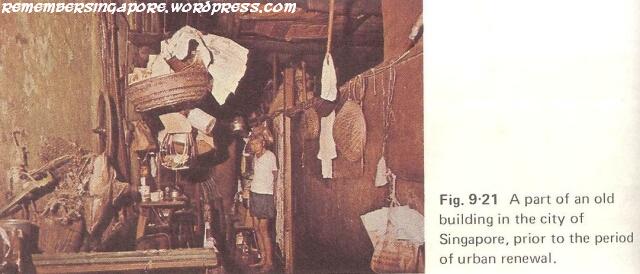
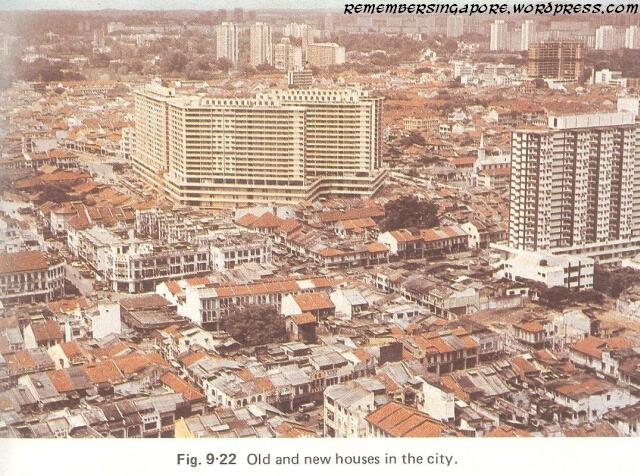
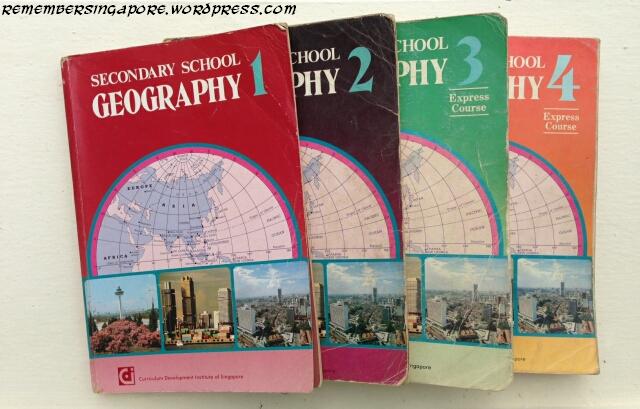
The secondary 2 edition of the good old geography textbooks we have used some 30 years ago touches on various topics, such as the environment, interaction, growth and change, hierarchy, unity and diversity.

old cdis geography textbooks

Like the other editions, there are many maps, illustrations and photos in this textbook that can bring us back to feel how the life was in Singapore in the early eighties.

1982 geography textbooks01

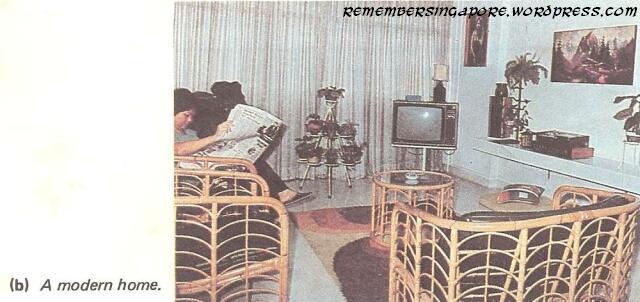
A set of rattan furniture with a 20″ CRT television. That was perhaps the standard design of a living room for a middle-income family.

1982 geography textbooks02

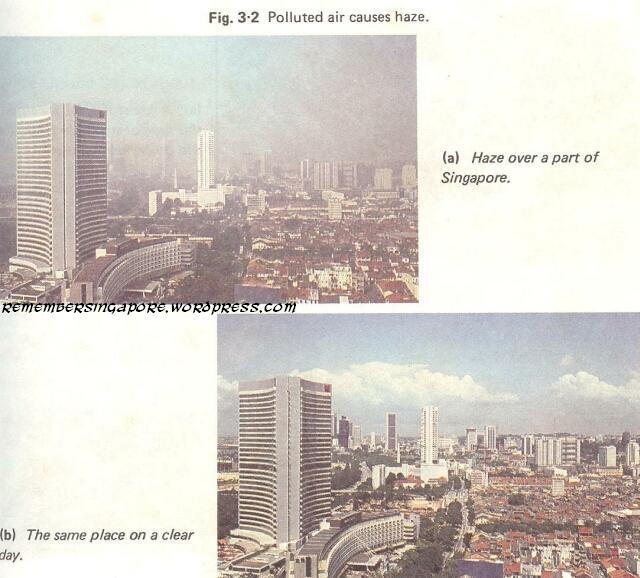
Haze was not uncommon back then. Records show that Singapore was affected by polluted air, although not on a yearly basis, since the seventies. The smokey days were mostly caused by massive forest fires at Sumatra and East Kalimantan.

1982 geography textbooks03

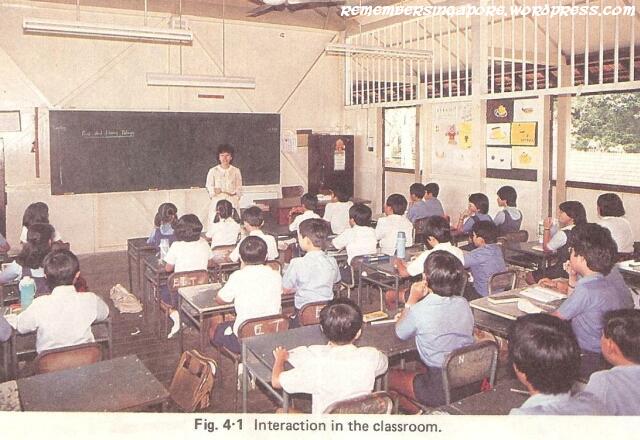
A class of some 30 students. A stern-looking teacher standing in front of a large blackboard with white chalks. That was the typical classroom scene of the eighties we were once familiar of.

1982 geography textbooks05

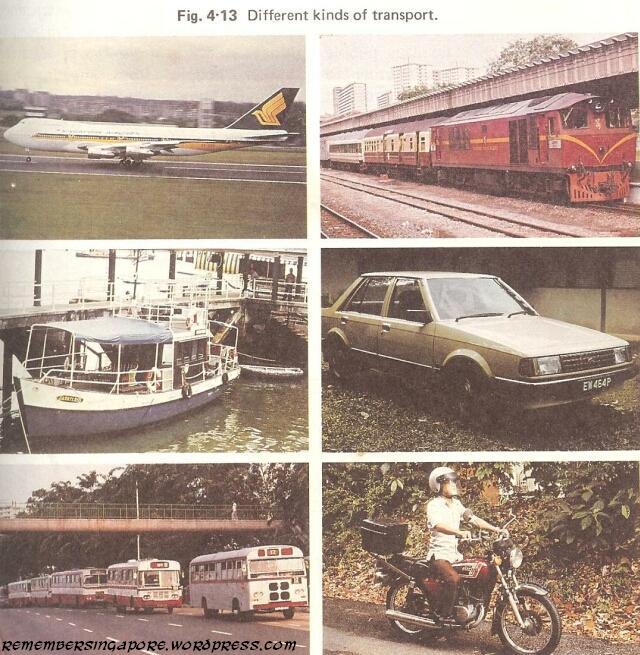
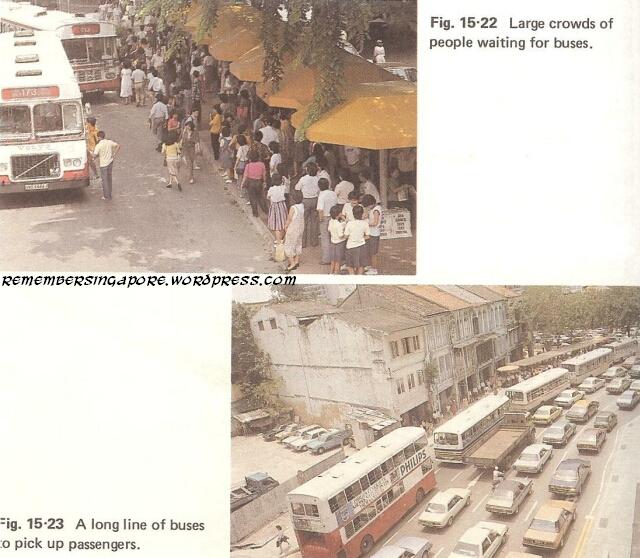
Various kinds of transport, private or public, of Singapore in the early eighties were displayed in the photo above. One glaring difference as compared to the present day; there was no MRT yet.

The license plate of the private car shows “EM”, which belongs to the E-series. The E-series (EA to EZ) commenced in 1972 and ended in 1984, when it was replaced by the SB-series (and subsequently SC-, SD-, SF-, SG-, SJ- and SK-series).

1982 geography textbooks06

1982 geography textbooks07

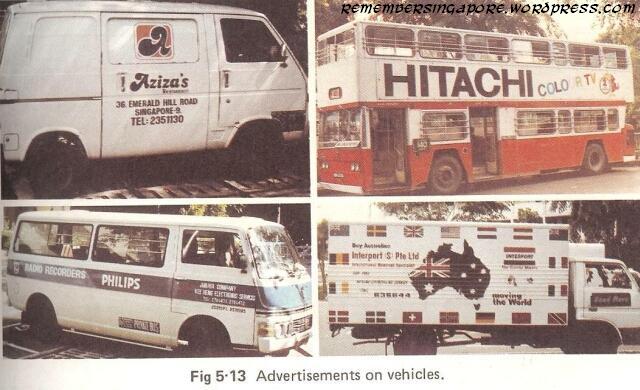
Notice the phone number on the van’s advertisement which had seven digits. Prior to 1985, fixed line numbers in Singapore existed in five or six digits. As the demand for new phone numbers rose in the early eighties, the seven-digit format was introduced.

The rise of handphones in the nineties saw mobile numbers adopting the new eight-digit format. In 1995, the digit “9” was added in front of the mobile numbers. “6” was later added as the first digit of the fixed line numbers. By 2002, all phone numbers in Singapore were standardised to the eight-digit format.

1982 geography textbooks08

1982 geography textbooks10

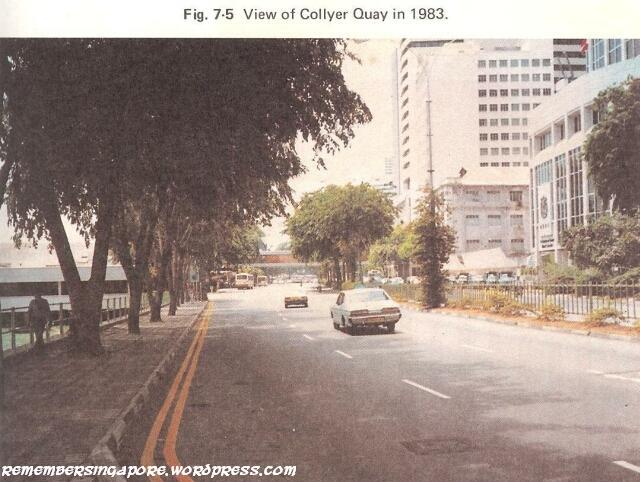
The prominent overhead bridge used to span across Collyer Quay, connecting together Aerial Plaza and the Singapore Rubber House and Winchester House on the other side. A popular place with tourists and foreign sailors for bargain hunting, the Change Alley offered a wide range of goods such as watches, bags, shoes and clothing. Numerous money-changers, both legal and illegal, also ply their trades here.

In 1989, the old Change Alley was shut down when the Singapore Rubber House and Winchester House were demolished. Today, Change Alley, and the overhead bridge, is a modern mall with a mixture of retail shops and restaurants.

1982 geography textbooks11

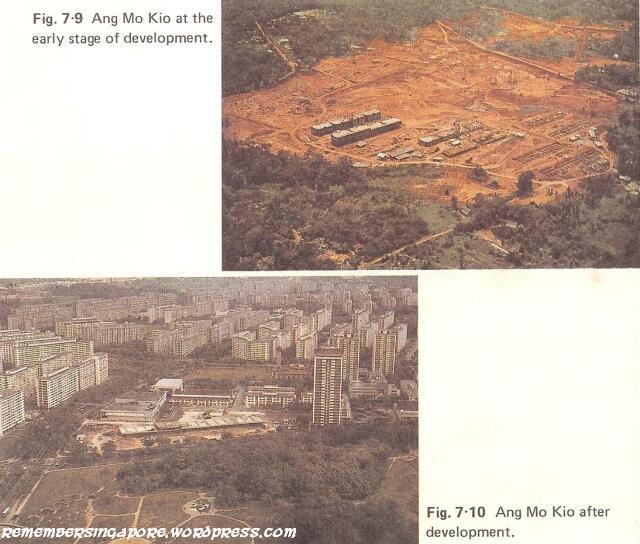
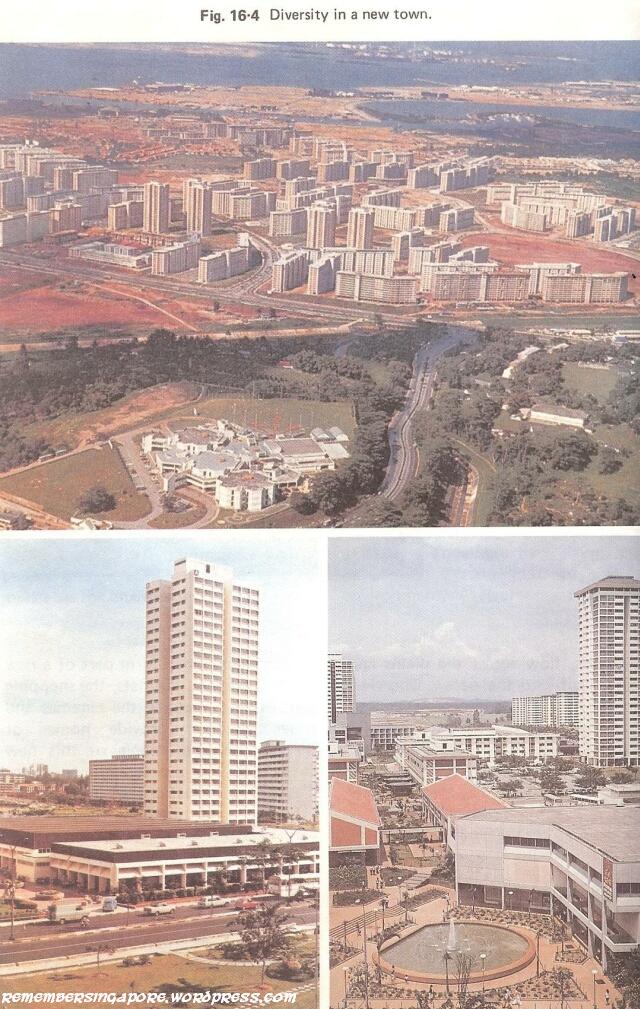
Plans to develop Ang Mo Kio as a self-sufficient new town started as early as 1973. It was the seventh housing estate to be developed by the Housing and Development Board (HDB). By the late seventies, the six neighbourhoods of Ang Mo Kio was generally completed with streets, markets, schools, community centres and places of worship.

1982 geography textbooks12

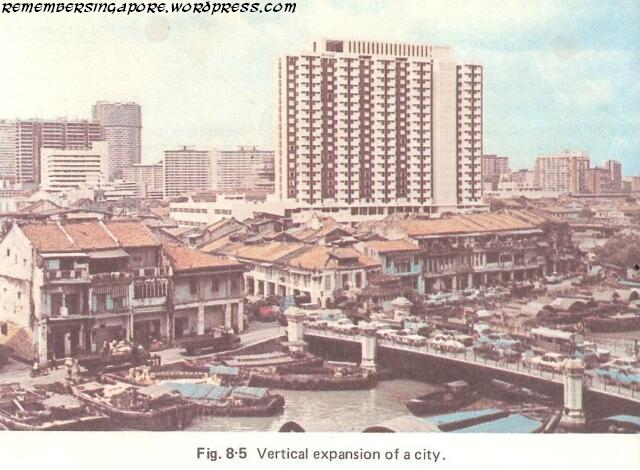
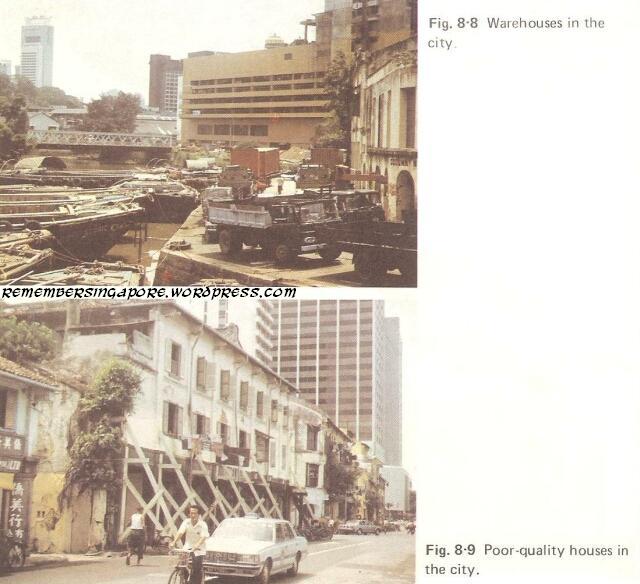
The Singapore River was then filled with twakows and tongkangs (traditional light good-carrying vessels). The cleaning up of the Singapore River began in 1977, and took ten years for the river to be freed of pollution, garbage and old wooden bumboats.

In 1984, the first “Swim Across Singapore River” was held successfully, followed by a series of water activities such as the “Singapore River Regatta” (1985), “River Carnival” (1986), and the “Dragon Boat Race” (1987) that demonstrated the new-found cleanliness of the river.

1982 geography textbooks13

1982 geography textbooks14

1982 geography textbooks15

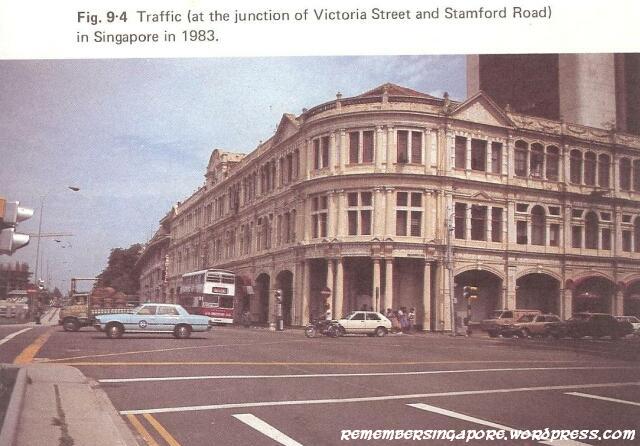
Originally known as the Oranje Building, the Victoria-styled Stamford House was designed and constructed in 1904 by prominent architect Regent Alfred John Bidwell (1869-1918), who also built the Raffles Hotel and Goodwood Park Hotel.

In 1984, the Stamford House was acquired for conservation by the Urban Redevelopment Authority (URA). It was given a restoration at a cost of $13 million in the mid-nineties.

1982 geography textbooks16

1982 geography textbooks17

1982 geography textbooks18

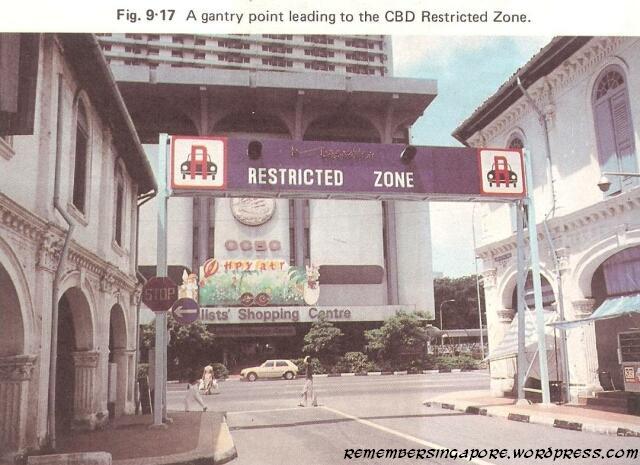
Three features in the above photo that had already vanished in today’s context. The first was the road between the two rows of shophouses. Emerald Hill Road was then linked to the main Orchard Road. In August 1985, Emerald Hill Road was designated by URA as a conservation area with its Peranakan buildings preserved. Part of the road was shut down and redeveloped into the covered walkways of the new Peranakan Place.

With the road closed, the overhead gantry of the Area Licensing Scheme (ALS) at Emerald Hill Road was removed. ALS was started in mid-1975 to control the traffic entering the downtown area. It was later replaced by the Electronic Road Pricing (ERP) scheme. The third was the Specialist Shopping Centre, built in the early seventies and operated for more than three decades before it was demolished in 2008. During its heydays, it housed John Little, the oldest department store in Singapore, and the 392-room Hotel Phoenix.

1982 geography textbooks19

1982 geography textbooks20

1982 geography textbooks21

1982 geography textbooks22

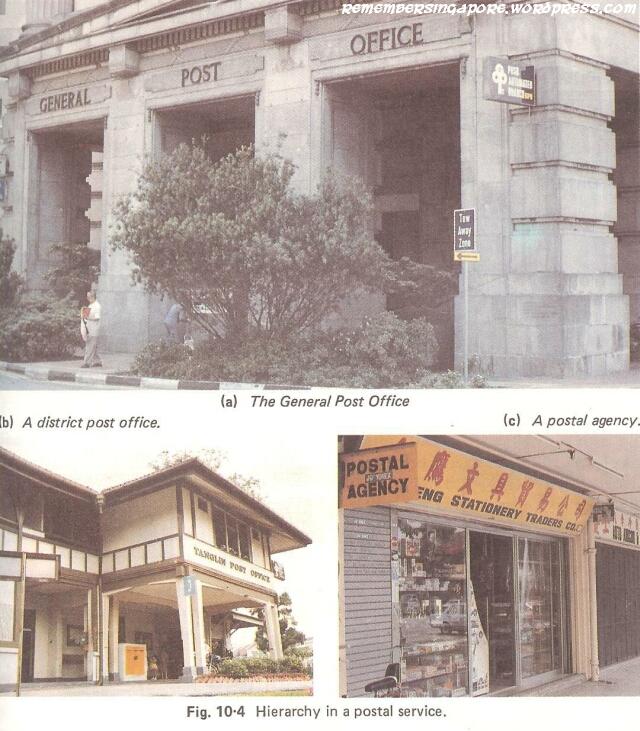
The General Post Office, in 1928, became the anchor tenant of the Fullerton Building, just two weeks after its official opening. From there, it operated for almost seven decades, before the post office headquarters, fondly known as “GPO” by Singaporeans, was relocated to the new Singapore Post Office building at Eunos Road in the late nineties. The Fullerton Building was then acquired by Sino Land for $400 million, which converted it into a boutique hotel named The Fullerton Hotel in 2001.

The double-storey colonial building of Tanglin Post Office, on the other hand, was also a prominent landmark, having existed at Tanglin Road since the early 20th century. It was eventually demolished in 2008.

1982 geography textbooks23

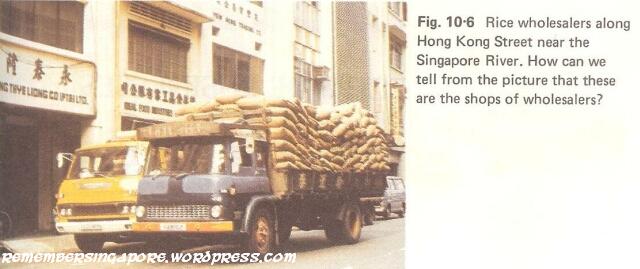
Hong Kong Street, located between New Bridge Road and South Bridge Road, used to have many trading houses and wholesalers doing businesses in the shophouses. Today, the street is better known for the bars, clubs and boutique hotels.

1982 geography textbooks24

1982 geography textbooks25

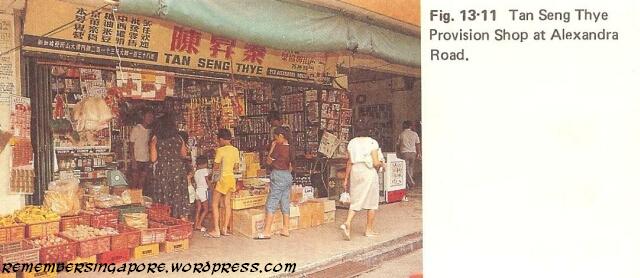
Typical old provision shops, like the Tan Seng Thye Provision Shop at Alexandra Road, used to be a common sight at the HDB neigbourhoods. Selling everything from dried food and instant noodles to cigarettes and batteries, there were as many as 1,200 provision shop in Singapore in the seventies. Since then, their number has been dwindling due to stiff competition from the minimarts, convenience stores and supermarkets.

1982 geography textbooks26

1982 geography textbooks27

1982 geography textbooks28

1982 geography textbooks29

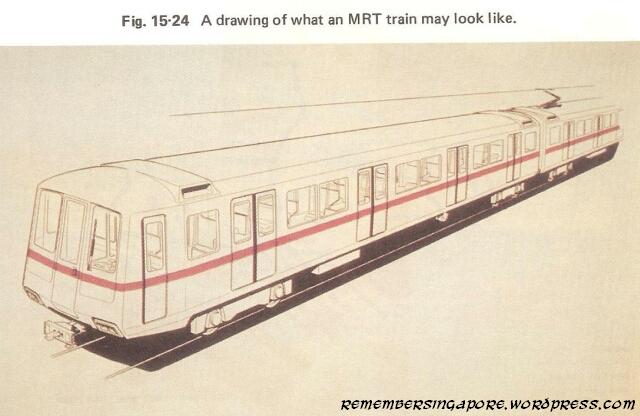
The decision to introduce rail-based MRT system was finalised in 1982, after a decade of feasibility studies. Tunnel burrowing and stations’ construction began shortly after. The first MRT stations were opened in late 1987 between Yio Chu Kang and Toa Payoh of the North-South (NS) Line.

The new MRT system was a great success, both in technical achievement and public opinion. Just three weeks after the opening of the NS Line, the MRT recorded its first millionth ridership.

1982 geography textbooks30

1982 geography textbooks31

Singapore’s population in the early eighties stood at around 2.5 million. After a series of birth controlling services and campaigns by the Family Planning and Population Board (1966-1986), Singapore’s total fertility rate (TFR) dropped below 2.1 in 1977. It was the first time the TFR dropped below the replacement rate since independence.

By 1984, policies were introduced to get singles hitched. Three years later, the “Have Three or More if You Can Afford it” campaign was launched in anticipation that the birth rate would recover by 1995. It never did.

1982 geography textbooks32

1982 geography textbooks33

Back to A Flashback to Singapore 1982 Through Old Geography Textbooks (Part 1).

Published: 28 September 2014
Posted in Nostalgic | Tagged , , , , , , | 6 Comments

A Flashback to Singapore 1982 Through Old Geography Textbooks (Part 1)

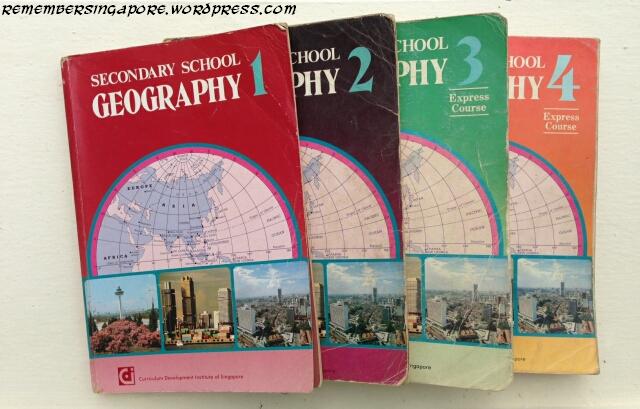
Like the good old Social Studies textbooks (see A Pictorial Gallery of Singapore in 1980), the old Secondary School Geography textbooks, first published by the Curriculum Development Institute of Singapore (CDIS) in 1982, also contain a large variety of old photos portraying Singapore of the early eighties.

CDIS was established in 1979 to provide textbooks for Primary and Secondary levels of Singapore’s education system, replacing the old textbook schemes by the Ministry of Education (MOE) (1970-1978) and its former Education Publication Bureau (EPB) (1965-1969). In 1996, CDIS was officially ceased, after the new Curriculum Planning and Development Division took over the role to prepare the syllabuses and authorize the quality and prices of textbooks.

old cdis geography textbooks

Its Part 1 (for Secondary One students) mainly touches on Singapore’s rural and urban landscapes, urban renewal and conservation, as well as Singapore’s residential, industrial and agricultural developments. Through the photo gallery, one can easily notice the large changes of Singapore in the past three decades.

Central Business District and Global City

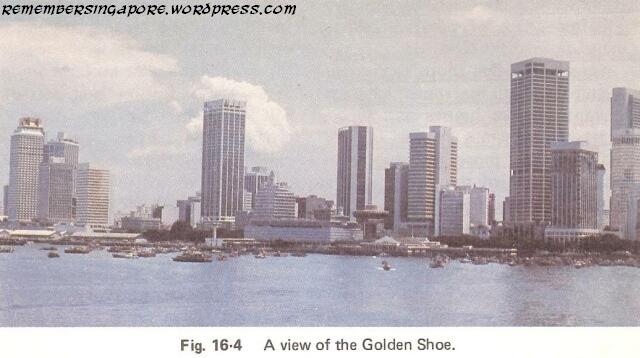
The Central Business District (CBD) has always been Singapore’s centre of commercial activities, such as banking, insurance and wholesaling. As the volume of trade grew, the CBD expanded along the waterfront facing Collyer Quay and Clifford Pier, and it became known as the Golden Shoe in the eighties and nineties (today, the name Golden Shoe was seldom used, except of the double-storey hawker centre at Market Street).

1982 golden shoe

Over the years, the Central Area was expanded to include City Hall and the Orchard vicinities. Many shopping malls were also built along a stretch of Beach Road that later became known as the Golden Mile.

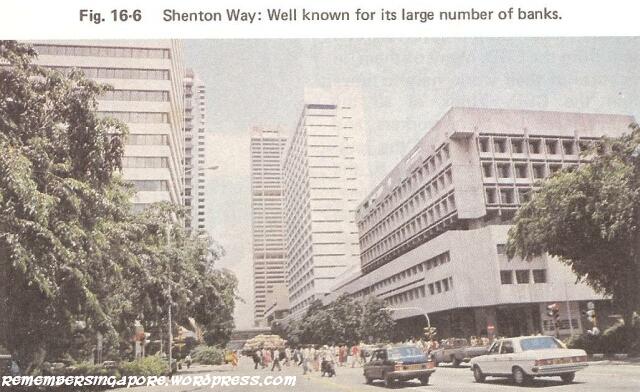
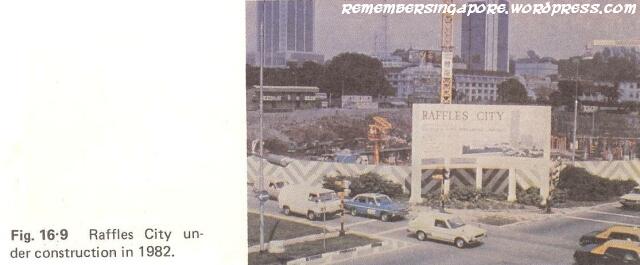
As the CBD continued to change and progress, there was a need to utilise the lands effectively. More urban renewal projects were launched to demolished the old buildings, replacing them with office towers and other skyscrapers. Parts of the coastal waters were also filled to enable the further expansion of the CBD.

1982 shenton way

1982 raffles city construction

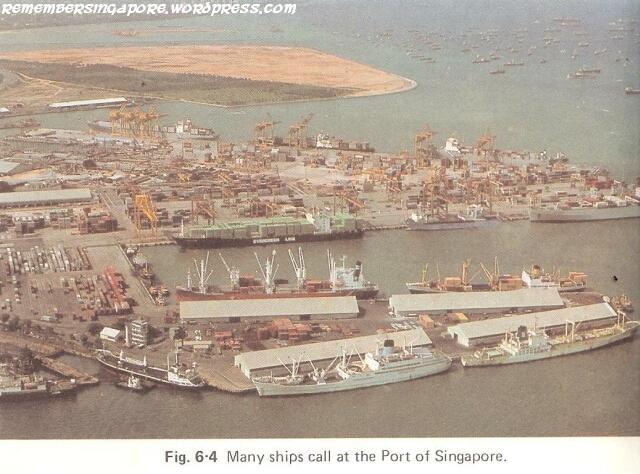
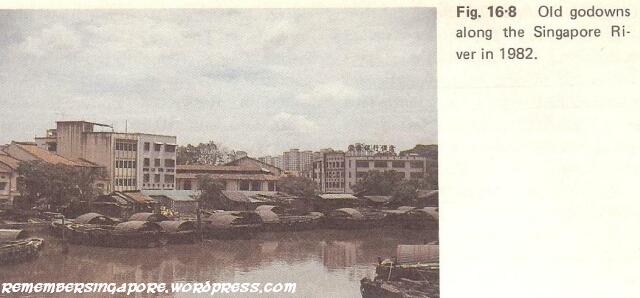
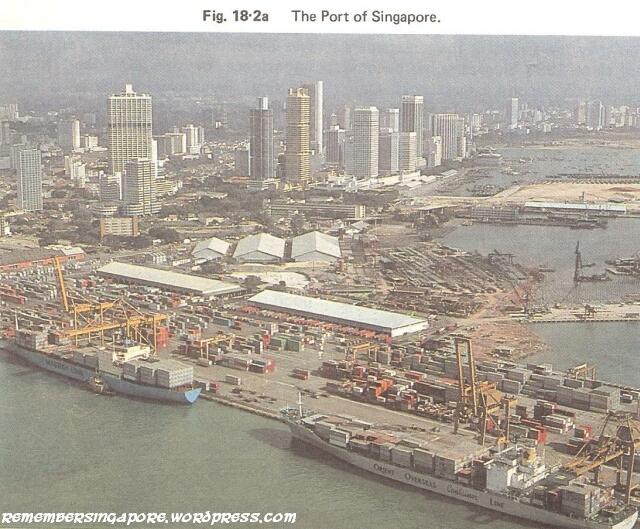
In the eighties, Singapore became the world’s second largest port after the Netherlands’ Rotterdam. Between the sixties and eighties, Singapore’s trade grew so rapidly that by 1981, there were six gateways (Keppel Wharves, Container Terminal, Telok Ayer Wharves, Pasir Panjang Wharves, Sembawang Wharves and Jurong Port) to the Port of Singapore.

1982 singapore river godowns

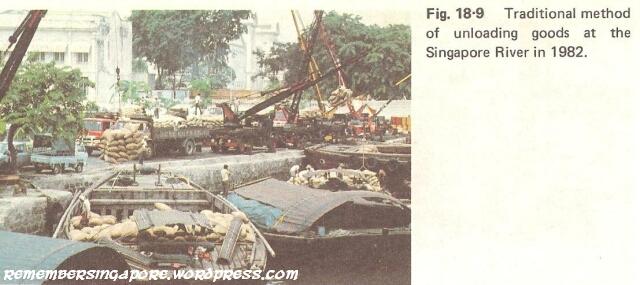
1982 goods unloading at singapore river

In the late seventies, Singapore’s major imports and exports included telecommunication equipment, fabrics, ships and boats, electronic valves and crude rubber. But the largest imported and exported products were the crude petroleum and refined petroleum products that generated more than $10 billion in annual trade.

1982 port of singapore

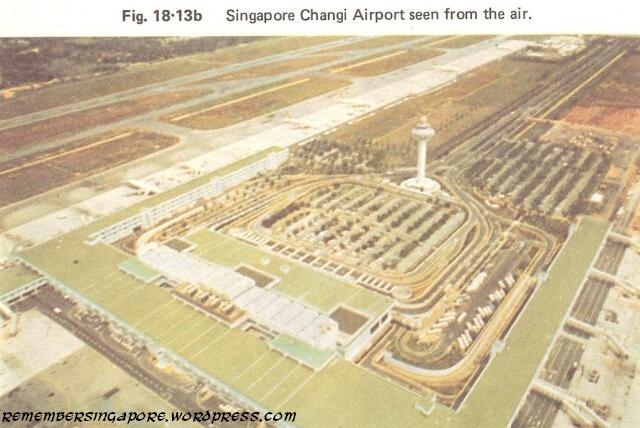
1982 changi airport

The growth as the centre of air travel was essential as Singapore thrived to become a global city. In 1981, the new Changi Airport was officially opened after six years of construction, replacing the former Paya Lebar International Airport which had became over-congested by the seventies.

Singapore’s third international airport (after Kallang and Paya Lebar airports) was mostly built on reclaimed lands. The location was chosen to be away from the populated areas in order to avoid the issues of noise pollution and traffic congestion. Domestic travelling was made convenient as new highways such as the East Coast Parkway (ECP) and Pan-Island Expressway (PIE) were linked to the airport; the travel time between the city and the airport was only twenty minutes.

Residential Development and New Towns

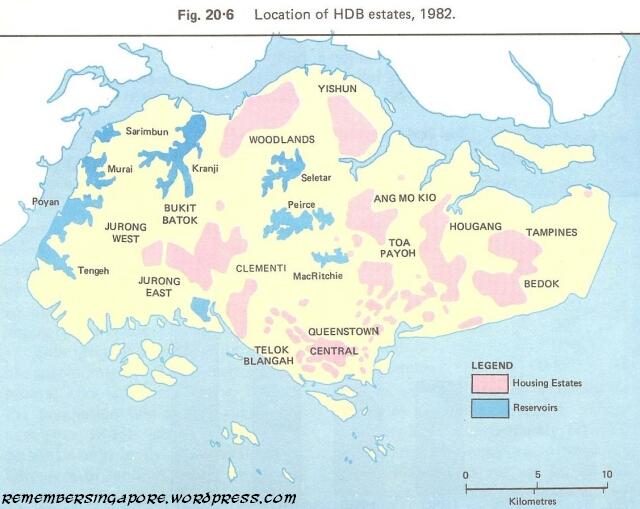
1982 singapore hdb estates

One of the maps used in the textbook displays the locations of the housing estates in Singapore in 1982. Newer housing estates such as Choa Chu Kang, Bishan, Pasir Ris, Sengkang and Punggol were not listed as they have not yet slated for modern residential development.

By 1980, almost 358,000 flats were built by the Housing and Development Board (HDB) to accommodate 75% of the 2.5 million residents in Singapore.

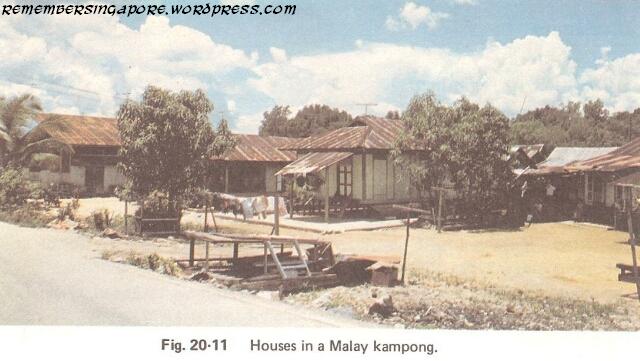
1982 malay kampong

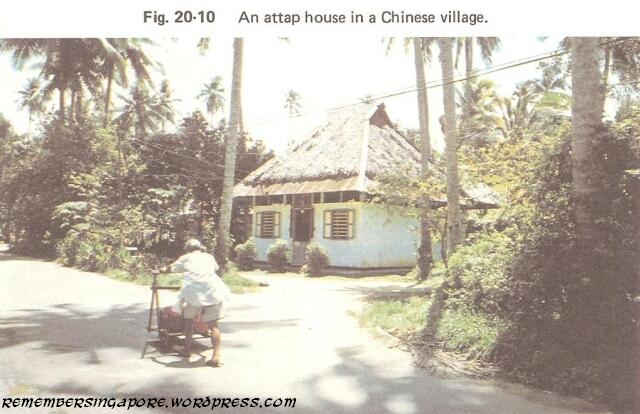
1982 chinese village

In 1982, many villages still existed in areas such as Lim Chu Kang, Yio Chu Kang and Punggol. Fast forward 30 years, all kampongs on mainland Singapore had vanished with the exception of Kampong Lorong Buangkok, which is increasingly threatened by urban development in its surroundings in recent years.

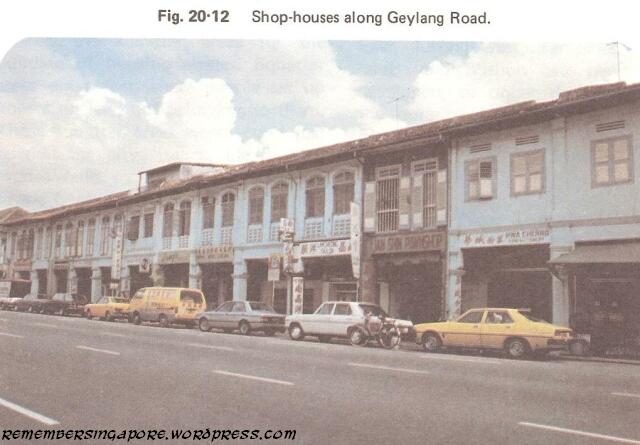
The old shophouses, on the other hand, have better fates. Although many could not escape demolition during the urban renewal projects carried out in the sixties and seventies, a large number of shophouses have been retained and restored, especially at designated areas in Geylang, Tanjong Pagar, Little India and Joo Chiat.

1982 geylang shophouses

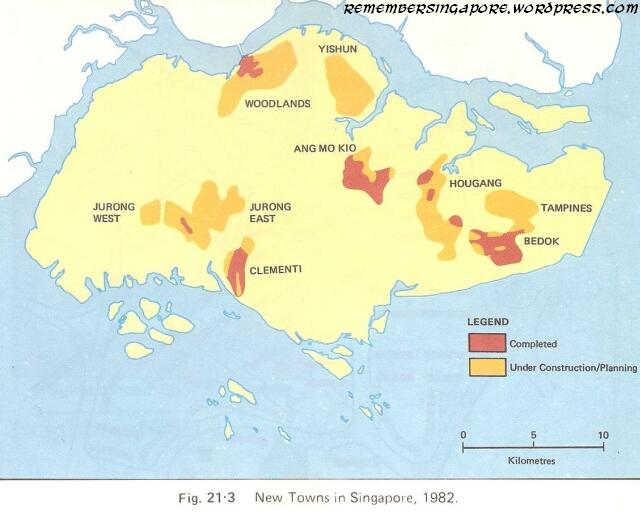
1982 singapore new towns

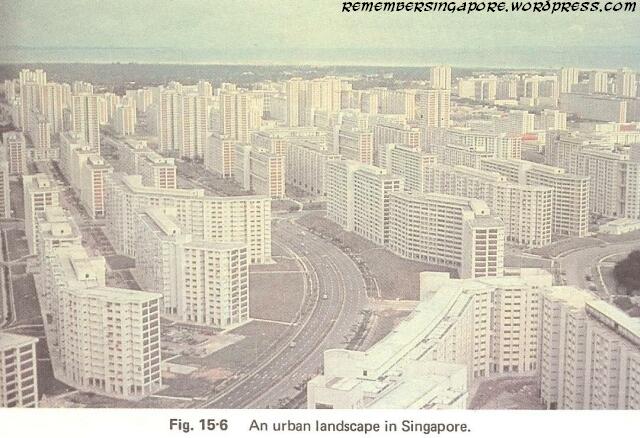
In the sixties, public housing districts, such as Queenstown, Redhill, Tiong Bahru and Farrer Park, were mostly located near the Central Area. By the early seventies, there was a need to build new housing estates in the outer regions that were 10km away from the city. The housing estates were developed into full-fledged new towns that contained flats, a variety of public amenities and flatted factories.

Ang Mo Kio, Bedok and Clementi were the three earliest new towns to be developed in Singapore. By 1982, six more new towns were planned and developed. They were Woodlands, Yishun, Tampines, Hougang, Jurong East and Jurong West.

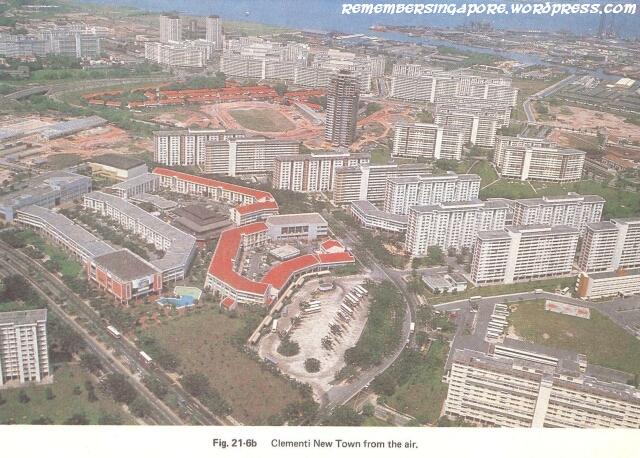
1982 clementi new town

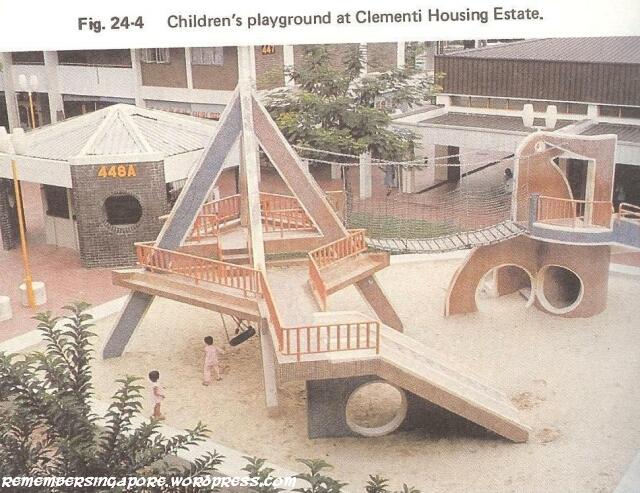
1982 clementi playground

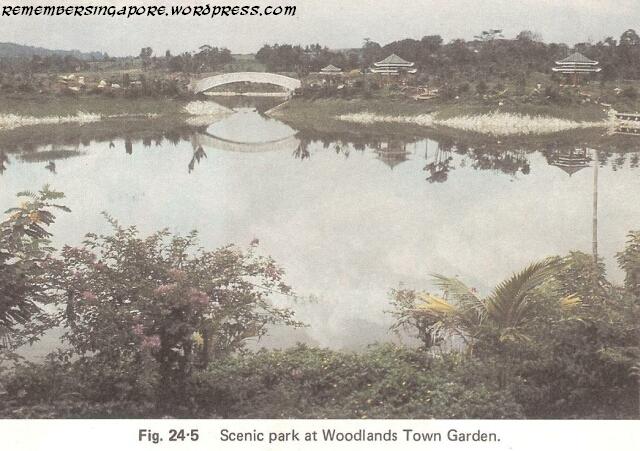
Each new town came with a town centre that acted as its commercial, social and transport centre. The new towns were divided into several neighbourhoods that consisted of residential precincts, small malls, retails shops and eating houses. A mature neighbourhood would also featured schools, markets and hawker centres.

1982 singapore urban landscape

1982 woodlands town garden

Agriculture in Singapore

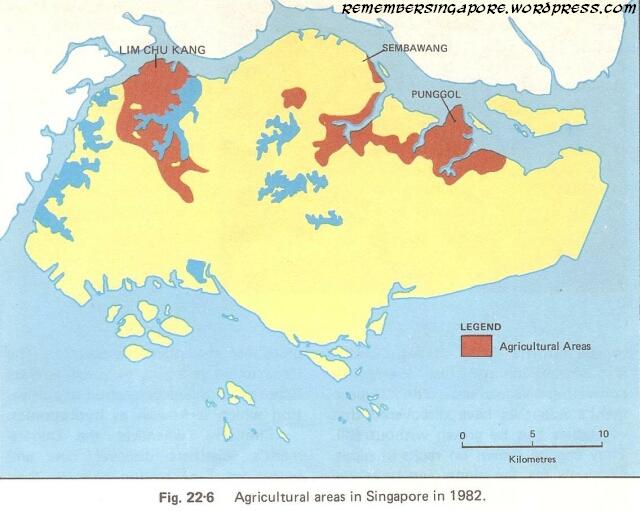
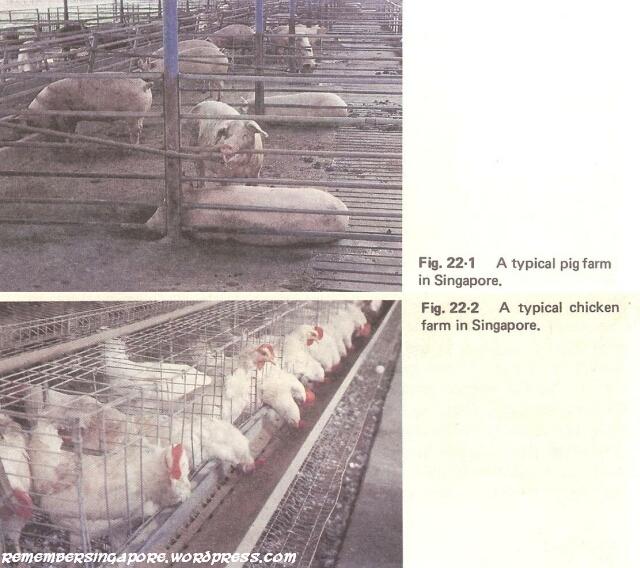
In the early eighties, the main agricultural activities in Singapore were pig and poultry rearing, vegetable farming and flowers cultivation. In 1980, the four activities generated more than $500 million in revenue. The total land area that was devoted to agriculture, however, was small. At 90 square km, it stood only 14.5% of Singapore’s total land area.

1982 singapore agriculture areas

1982 singapore pig and chicken farms

More than 1 million pigs were sent to the abattoir in 1980, and the total output from the poultry farms was 32 million chickens and 550 million eggs. The large output ensured Singapore was more than self-sufficient in pork, poultry and eggs.

The pollution caused by the pig waste, however, led to the government’s policy to phase out the pig farms in the mid-eighties. By 1988, all of the pig farms in Singapore were shut down. Poultry farms were allowed to continue, but most were downsized and generally confined to Lim Chu Kang areas.

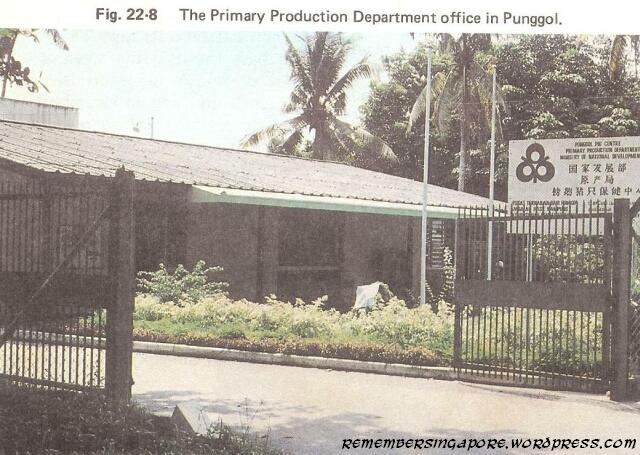
1982 punggol primary production department

Also see A Flashback to Singapore 1982 Through Old Geography Textbooks (Part 2).

Published: 13 September 2014
Updated: 29 September 2014
Posted in Nostalgic | Tagged , , , , , , , , | 13 Comments

SCDF Heritage Gallery – Singapore’s Firefighting History

First Fire Brigade

The early fires were mostly put out by policemen, sepoys, soldiers and even prisoners. In April 1869, a voluntary firefighting force was formed, but without proper training and equipment, the early brigade was proved to be inefficient in dealing with major fire disasters.

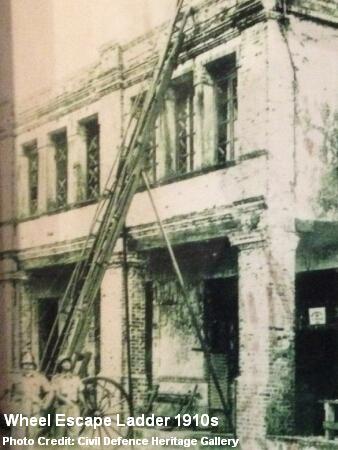
wheel escape ladder 1910sIt was only until mid-1886, and after countless fires, when the proposal to hire firemen was approved. Two years later, the Singapore Fire Brigade was officially formed. With sufficient funding, fire stations were able to be established within the police quarters, equipped with horse-drawn steam fire engines.

A breakthrough for the Singapore Fire Brigade was the purchase of its first wheel escape ladder in 1908. Measuring 50 feet, the ladder was able to reach the highest window on a double-storey building. By the seventies, the Singapore Fire Brigade had a total of six wheel escape ladders, which were operationally ready until they were decommissioned in 1981.

The Early Fire Stations

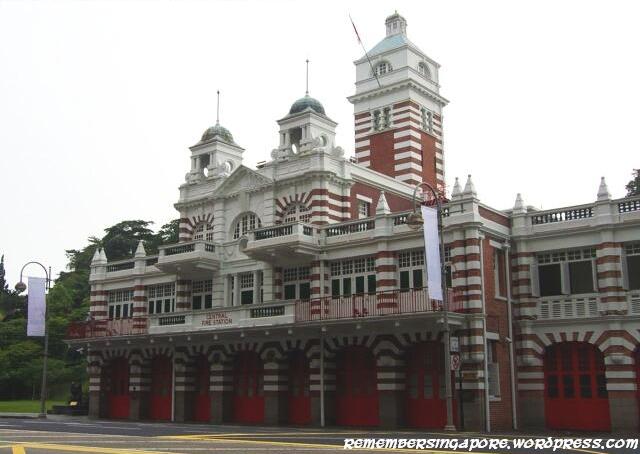
Posted from England, Captain Montague William Pett was the first professional fireman in Singapore. He was appointed as the superintendent of the Singapore Fire Brigade between 1905 and 1912, and was given the task to modernise the force. One of Montague Pett’s contributions was to commission the building of the Central Fire Station to serve as the headquarters of his firefighting force. The fire station, also known as Hill Street Fire Station, was professionally designed with a training ground, engine house and a watch tower. It was officially opened in August 1909.

central fire station

The Central Fire Station, however, was not the first fire station in Singapore. The Cross Street Fire Station had been the main station for the early firefighting force since 1891, and there were also the Beach Road Fire Station, which became operational two years later, and the Kallang Fire Station.

The Early Fire Engines

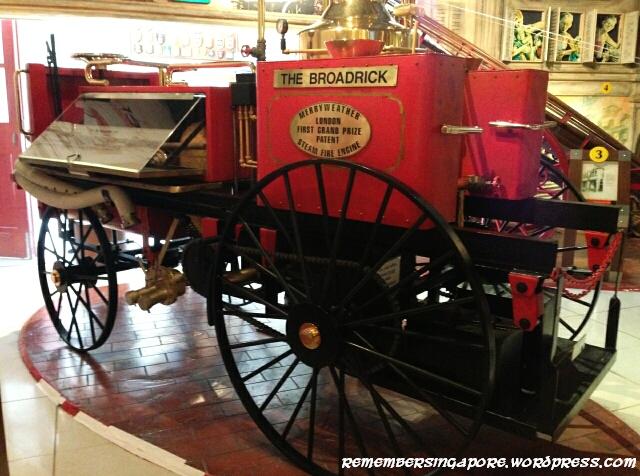
Merryweather Fire King

The Merryweather Fire King, one of the world’s best fire engines of its era, was introduced in Singapore in the early 20th century. It had been used by both London Fire Brigade and Penang Fire Brigade since 1905 and 1906 respectively. Fully motorised, it was equipped with a boiler that produced steam to drive the fire engine to the disaster site in a short period of time.

merryweather fire king

The Merryweather Fire Engine also allowed water to be pumped directly from a water source. The firemen could then use the high water pressure in their hoses to fight fire effectively.

Major Pump Three

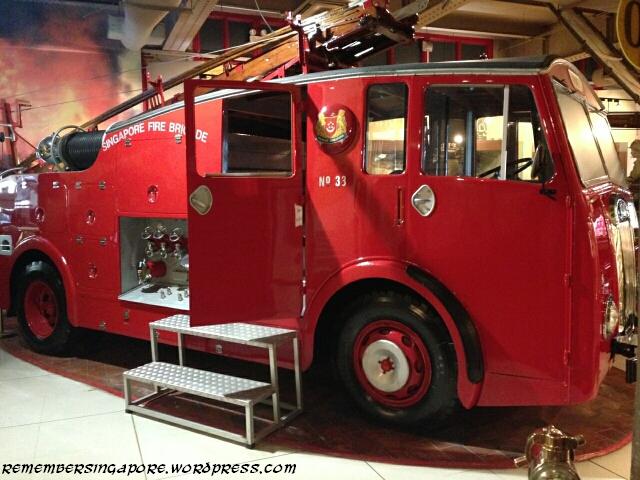
The Singapore Fire Brigade acquired two Major Pump Three before the Second World War, and added one more in 1947. Produced in the 1930s, the Major Pump Three, also known as Dennis Fire Tender, was capable of efficient firefighting and rescue missions with its 450/500 Dennis turbine and 16m escape ladder. During the operations, the driver and the officer-in-charge would sit in the front seats of the open-concept vehicle, while the rest of the firemen had to stand on the side platforms, clinging tightly onto the ladder.

major pump three

The Major Pump Three fire engines were put to test during the Bukit Ho Swee Fire in 1961. They continued to be used by the Singapore Fire Brigade until the seventies. Only one such model remains today, where it is being put on display at the SCDF Heritage Gallery.

Dennis Pump Escape

The Dennis Pump Escape was bought by the Singapore Fire Brigade in 1951 as part of an upgrade to their firefighting equipment. Fitted with a better engine, the Dennis Pump Escape also ensured the personal safety of the firemen, who could now sit inside the fire engine instead of clinging onto the side rails.

dennis pump escape

The Dennis Pump Escape served for a total of 28 years in the force, before it was retired in 1979.

Major Fire Disasters

Kampong Koo Chye Fire (1958)

Tragedy struck Kampong Koo Chye at Lorong 1 and 3 of Geylang Road on 5 April 1958, when a raging fire swept across the kampong made up of wooden and attap houses. Six lives were lost, before the firemen were able to keep the fire under control.

The disaster led to the formation of kampong firefighting parties made up of volunteers. Each party was made up of 20 young men who were given proper trainings by the fire brigade. The fire brigade would visit various kampongs in their fire engines to educate the residents on fire safety. The exercise proved to be successful. Instead of grabbing their possessions and running away, more kampong residents and the firefighting parties were able to quickly deal with small fire outbreaks before they got out of control.

Tiong Bahru Fire (1959)

Tiong Bahru had been plagued by fires between the 1930s and 1950s. A major one hit the kampongs at Tiong Bahru in February 1959, causing 12,000 residents to lose their home. The total loss was estimated to be $2 million.

Bukit Ho Swee Fire (1961 & 1968)

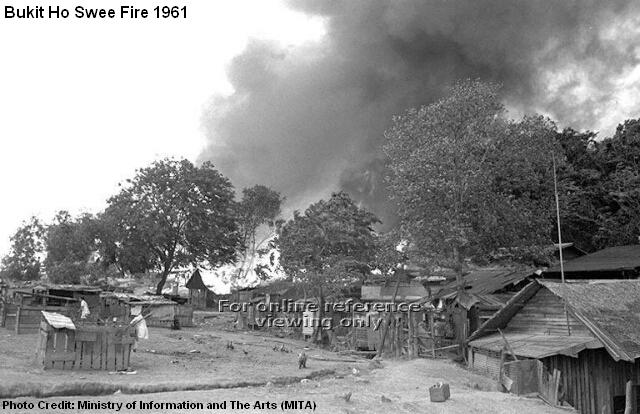
The notorious Bukit Ho Swee Fire, the worst fire disaster in the history of Singapore, broke out in the afternoon of Hari Raya Haji on 25 May 1961. Believed to have started near the King’s Cinema at Tiong Bahru, the fire, fanned by strong winds, spread rapidly through Bukit Ho Swee to Havelock Road and the Delta area. Rows of attap houses, sawmills and workshops were destroyed, and explosions were heard from the oil and petrol containers in the nearby warehouses.

bukit ho swee fire 1961

A record 22 fire engines were activated, but by 8pm, the fire was still burning strongly. By the time it was put out, the fire had destroyed more than 100 acres of squatter settlement, claiming four victims and leaving 16,000 homeless. Several years later, on 24 November 1968, Bukit Ho Swee was devastated by another big fire. This time, 3,000 residents’ homes in another squatter settlement at Bukit Ho Swee were burnt down.

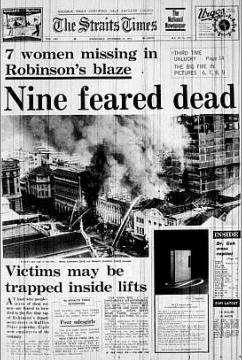
robinsons fire 1972Robinsons Department Store Fire (1972)

On 21 November 1972, a large fire, caused by an electrical short circuit, engulfed Robinsons Department Store at Raffles Place. A total of nine people perished in the fire, and more than $20 million’s worth of consumer products were destroyed in flames that could be seen as far as Jurong. The disaster also ended Robinsons’ 114-year presence at Singapore’s prime district.

Sypros Disaster (1978)

In late 1978, the Liberian-registered vessel named Sypros arrived at the Jurong shipyard for repairs. A spark from the cutting torch caused the ship’s contaminated fuel tank to explode, turning the engine room into an inferno. 76 lives were lost; many of them were burnt to death. The Sypros tragedy later led to the aggressive campaigns for safety in the shipbuilding industry.

Pulau Bukom Fire (1981)

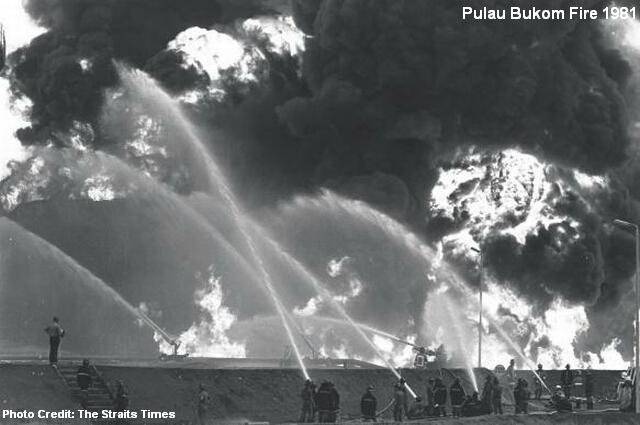
Struck by a bolt of lightning in the wee morning of 18 April 1981, the roof of an oil tank at Pulau Bukom was ignited with fires burning more than 15 hours. More than 100 firemen from the Singapore Fire Service were rushed to the scene to battle against the spreading flames.

pulau bukom fire 1981

Sentosa Hostel Fire (1982)

In the island’s first ever major fire, a two-storey youth hostel on Sentosa was partially destroyed on 24 October 1982. Flames quickly fanned through rooms filled with beds and furniture, as 70 rangers battled the fire for almost 90 minutes.

Woodlands Town Centre Fire (1984)

An arsonist burnt down two shophouses at Woodlands Town Centre on 15 December 1984, causing the death of 10 people. Most of the victims, aged between 15 and 70, died of asphyxiation. It was the worst fire case in Singapore since 1972, when the Robinson Department Store fire claimed a total of nine lives.

Pulau Merlimau Refinery Fire (1988)

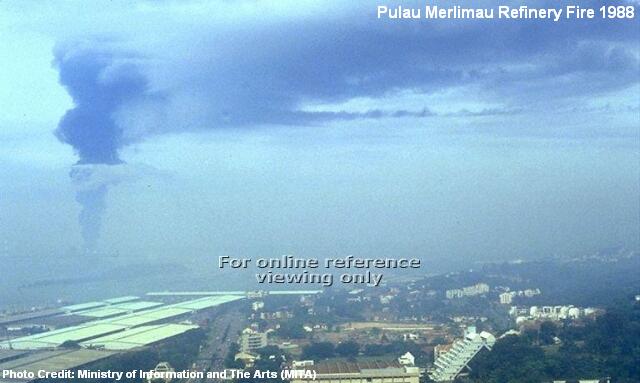
A fire had broke out on Pulau Merlimau oil refinery on 16 August 1984. Four years later on 25 October 1988, the storage tanks on the Southern island caught fire again. It went on to become Singapore’s worst offshore fire disaster. Lasting more than six day, the fire sent numerous tanks filled with naphtha into flames and smoke. The Pulau Merlimau fire resulted in 25 injuries and $15 million in losses, and thick clouds of polluted air and soot covered the western part of Singapore for days.

pulau merlimau fire 1988

Jurong Shipyard Fire (1994)

Another flash fire hit a tanker at Jurong shipyard on 8 February 1994, killing eight and injuring three.

Tuas Chemical Fire (1997)

One of Singapore’s worst chemical fires occurred on 22 May 1997. Chemical treatment plant Chemsolv Technologies, located at Tuas, was hit by a fire that found it way to the highly flammable waste chemicals stored in drums and containers. The firemen took more than four hours to control the blaze. Two were injured and more than 500 workers were evacuated.

Eunos Crescent Market Fire (1999)

On 05 July 1999, some 158 stalls were burnt to ashes in a big fire at Eunos Crescent Market.

Seletar Market Fire (2000)

The popular but now-demolished Seletar Market was almost destroyed by a big fire on 28 July 2000. 84 stalls were destroyed, and the hawkers had to be relocated at makeshift stalls nearby. The new Seletar Market was completed in the following year at a cost of $750,000, but was eventually torn down at the end of 2004.

pulau bukom fire 2011

Pulau Bukom Refinery Fire (2011)

Burning for 32 hours and resulting in a total loss of $187 million, the fire that struck Shell’s refinery at Pulau Bukom on 28 September 2011 was the worst refinery fire since 1988. More than 100 firefighters were activated to control the situation. It would take three months before Shell’s refinery was able to resume to full production.

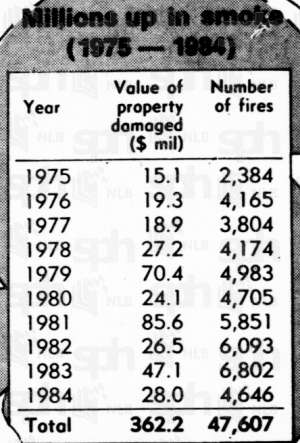
In the decade between 1975 and 1984, almost $350 million worth of property was lost in fire-related incidents, which totaled to be about 47,000. That was an average of 4,700 cases a year, or 391 per month.

The most common causes of the fire outbreaks were accidents, arsonists and vandalism, with the manufacturing sector bearing much of the brunt of the damages.

The year 1983 fared the worst, according to the Department of Statistics figures. There were 6,802 fire cases, leading to $47.1 million worth of property destroyed, many of them belonged to manufactured goods and properties of residences, warehouses and storage buildings.

The Modern-Day Force

In 1980, the Singapore Fire Brigade became officially known as the Singapore Fire Service (SFS). It was renamed as the Singapore Civil Defence Force (SCDF) in April 1989 after the merger of the Fire Service and the Civil Defence Force. The modern-day force not only dealt with fires but also other disasters such as the collapse of the Hotel New World in March 1986. Since 1988, the Civil Defence Force had also been deployed in overseas humanitarian and disaster relief operations.

995, the emergency number that most Singaporeans are familiar today, was introduced in 1984, replacing the older versions of 5555, 328111 and 3378111. In 1991, the first Public Warning System (PWS) were tested and installed. Today, the system covers more than 2,000 strategic locations on the island.

Former Fire Stations

Alexandra Fire Station (1954-2003)

Alexandra Fire Station was officially opened by the Governor of Singapore Sir John Nicoll on 25 February 1954. Constructed at a cost of $1.5 million, it was then the largest fire station in Eastern Asia. Located near Rumah Bomba Circus, the former round-about between Alexandra Road and Queensway, the fire station’s main mission was to serve Singapore’s first satellite town in Queenstown, Pasir Panjang and the west coast of the country.

Alexandra Fire Station boasted a 164-feet high watch tower, 62 feet taller than the iconic tower at the Central Fire Station. One of the station’s most difficult operations was the battle against the Bukit Ho Swee fire in 1961. Serving for almost 50 years, the aging premises of the former Alexandra Fire Station was eventually demolished in 2003.

Bukit Timah Fire Station (1956-2005)

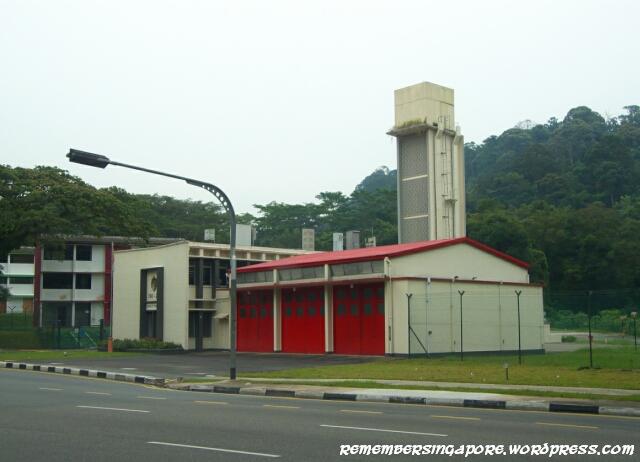
The fourth fire station in Singapore, the Bukit Timah Fire Station was built two years after the completion of the Alexandra Fire Station. Standing at the junction of Upper Bukit Timah Road and Old Jurong Road for five decades, it had become an iconic landmark in the vicinity with its distinctive red doors and watch tower. There were also several blocks of staff quarters standing beside the main station.

former bukit timah fire station

In 2005, the fire station was closed permanently; its role was taken over by the 4th Civil Defence Division housed in the new Bukit Batok Fire Station at Bukit Batok Road. The premises is currently converted into a restaurant.

Geylang Fire Station (1929-2002)

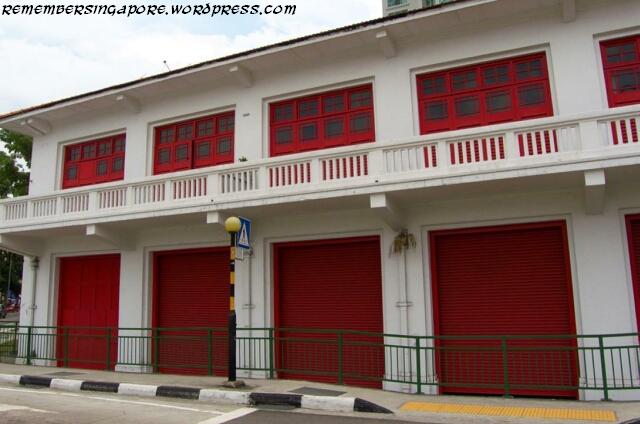
Before the ceasing of its operation, the Geylang Fire Station was the second oldest fire station in Singapore after the Central Fire Station. It was opened in 1929, and served a total of 73 years at the junction of Paya Lebar Road and Sims Avenue.

former paya lebar fire station

After 2002, the duties of the Geylang Fire Station were reassigned to the Paya Lebar Fire Station, who also serves as the headquarters of SCDF. The premises of the former fire station was given the conservation status is 2007.

Sembawang Fire Station (1941-2003)

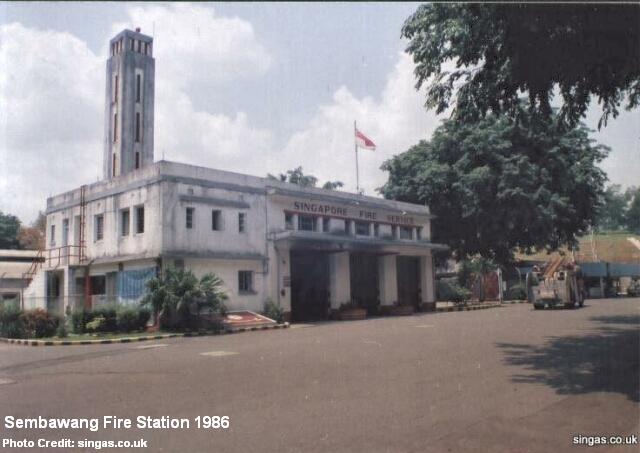
Located within the former Sembawang Naval Base, the old Sembawang Fire Station was established by the British in 1941, providing operational coverage for the naval base as well as areas around Sembawang, Mandai and Woodlands. When the British forces started their withdrawal in 1968, Sembawang Naval Base and its facilities were handed over to the Singapore government.

sembawang fire station 1986

The Sembawang Fire Station, with its fleet of fire engines, fire boats and firefighting equipment, was taken over by the Singapore Fire Brigade in 1971. It continued to be in service until 2003, when its operations were relocated to Yishun Fire Station. Like the Geylang Fire Station, Sembawang Fire Station was conserved by the Urban Redevelopment Authority (URA) in 2007.

Serangoon Fire Station (1952-2001)

Built in 1952, the Serangoon Fire Station was situated along Serangoon Road near the Kallang River. It won the best fire station award in 1996. The responsibilities of the Serangoon Fire Station were transferred to the Bishan Fire Station after it ceased its operation in 2001.

former serangoon fire station

The restructuring of the organisation ensured that the SCDF’s operational coverage was extended to the residential, commercial and industrial areas at Bishan and Thomson.

Published: 22 August 2014
Updated: 25 December 2017

Posted in Historic | Tagged , , , , , , | 12 Comments

Old School National Day’s Memorabilia

It is Singapore’s National Day again.

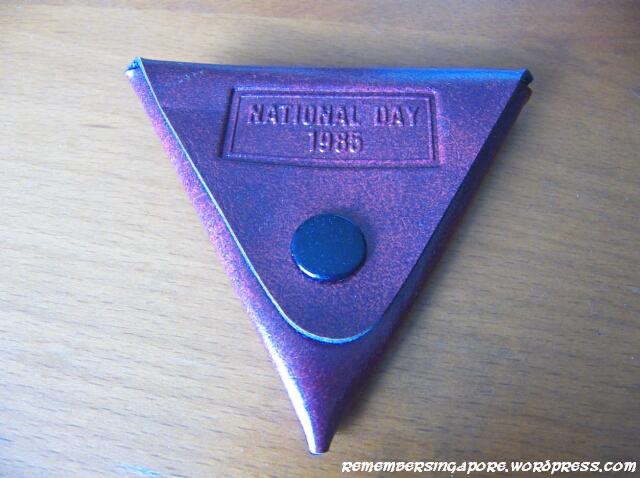
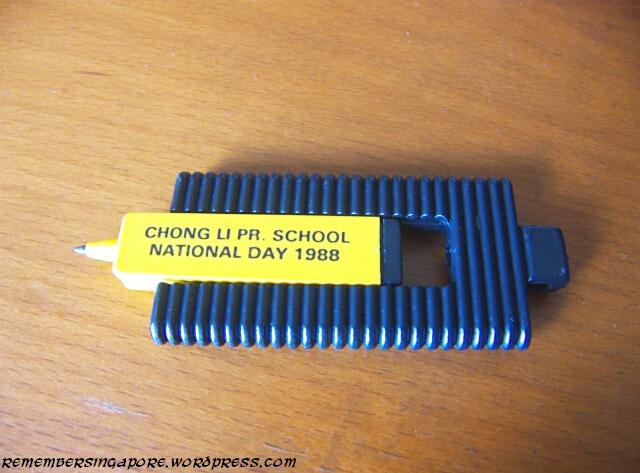
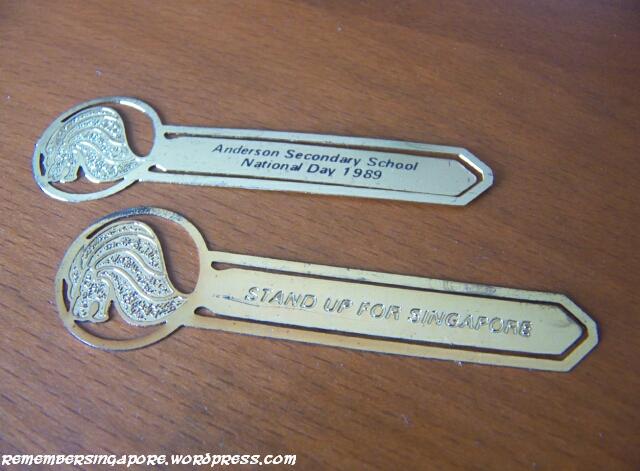
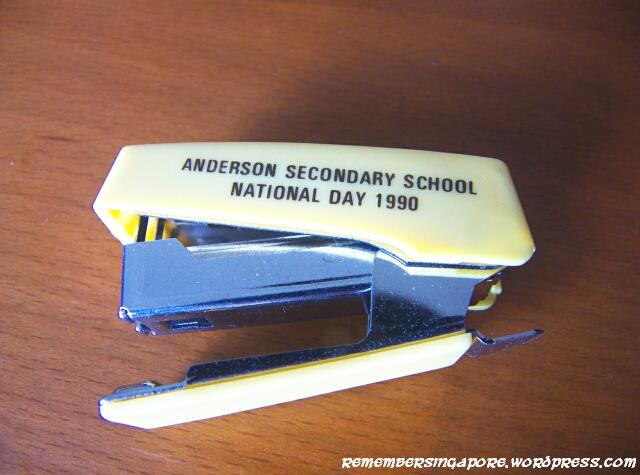
I remember during my primary and secondary school times, we used to receive memorabilia during the National Days. Each student would receive a small item that marked the annual joyous celebration. The memorabilia ranged from pens, pencil cases and staplers to bookmarks and coin pouches.

memorabilia national day 1985

memorabilia national day 1988

memorabilia national day 1989

memorabilia national day 1990

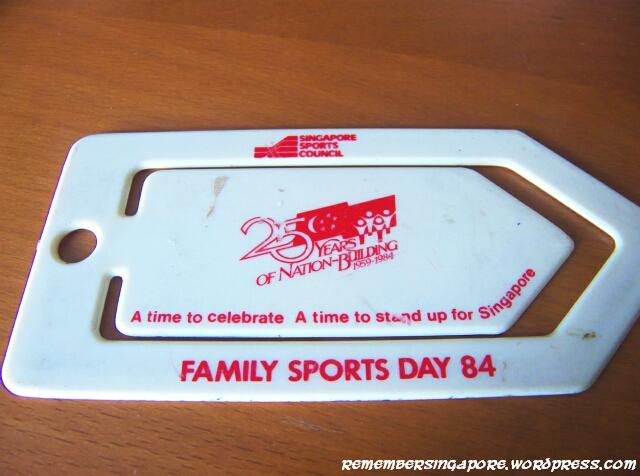
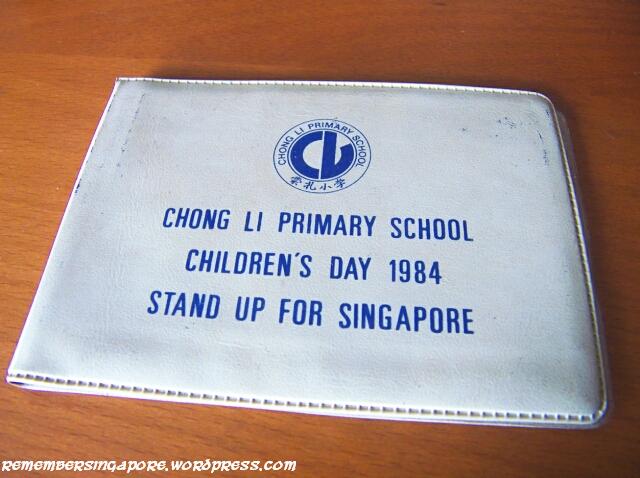
Other than the National Days, we were given memorabilia during the Children’s Days and Family Sports Days. Most of the memorabilia were sponsored by the Ministry of Education, Singapore Sports Council and the Community Chest.

memorabilia family sports day 1984

memorabilia children's day 1984

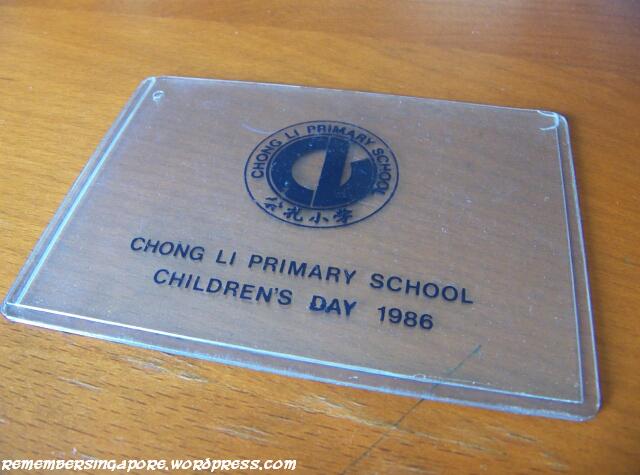
memorabilia children's day 1986

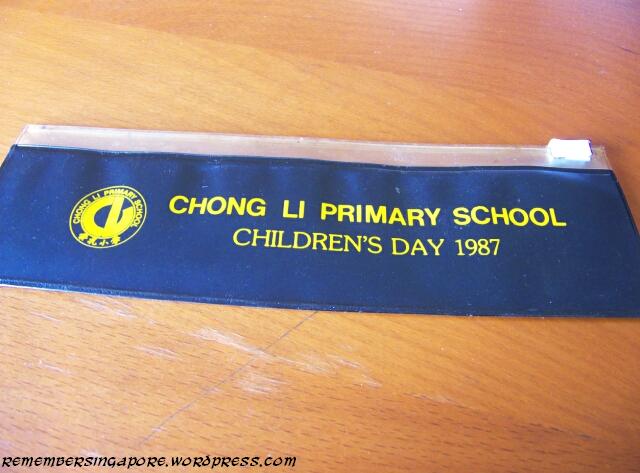
memorabilia children's day 1987

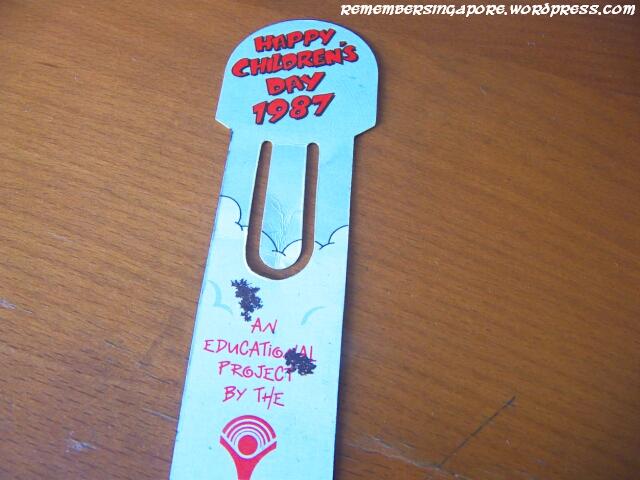
memorabilia children's day2 1987

Do you still keep these old school memorabilia given to you during your study days?

Published: 09 August 2014
Posted in Nostalgic | Tagged , , , , | 7 Comments

Raffles Place, 50 Years of Transformation

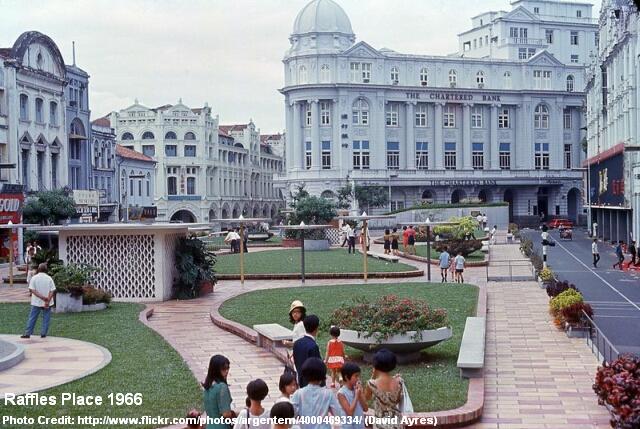
For almost two centuries, Raffles Place has been the designated business centre of Singapore. Under Sir Stamford Raffles’ Town Plan in 1822, the hilly area at the southern side of the Singapore River was leveled to fill up the nearby swamps. It became the Commercial Square, which was renamed in 1858 as Raffles Place.

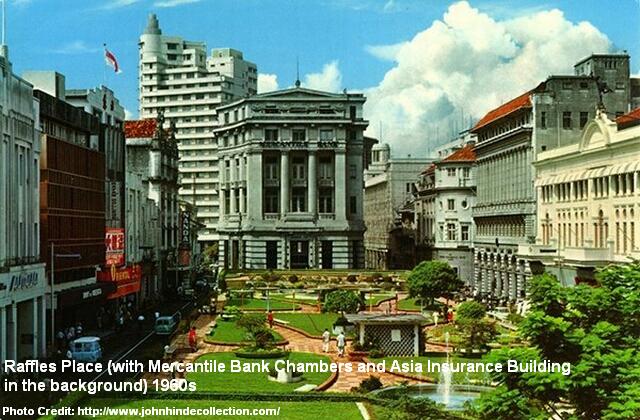
raffles place 1966

Despite the massive bombings during the Second World War, Raffles Place survived and quickly picked itself up again after the war as Singapore’s prime commercial district. It saw its biggest transformation in the past 50 years, where many of its old iconic buildings were rapidly replaced by modern skyscrapers.

Below are some of its best memorable landmarks that no longer exist today:

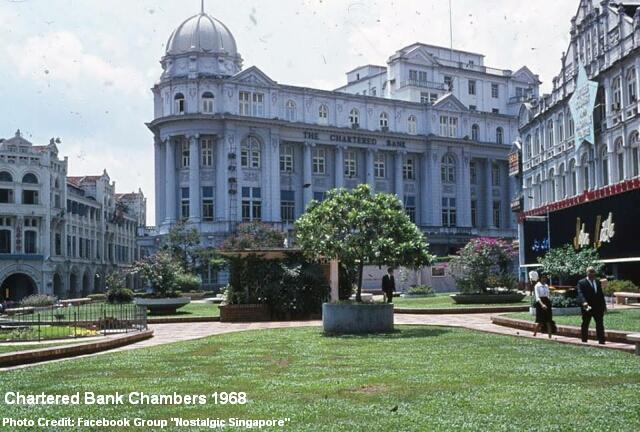
Chartered Bank Chambers

chartered bank 1968

Along with the Mercantile Bank and Hong Kong & Shanghai Bank, the Chartered Bank was one of the earliest foreign banks to be established in Singapore in the mid-19th century. Between 1895 and 1904, the Chartered Bank was located at the corner of Battery Road and Flint Street. It was later shifted nearer to Bonham Street where the bank headquarters continues to operate today.

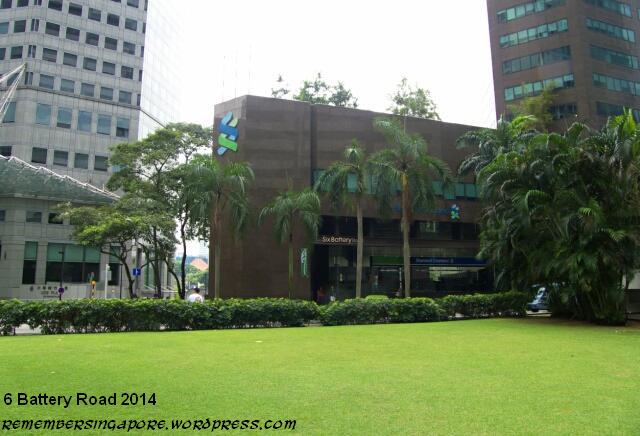
standard chartered bank 2014
The Chartered Bank Chambers, with its striking dome, was demolished in 1981. In its place, a new Standard Chartered Bank building (known as 6 Battery Road today) was constructed and completed three years later, becoming a new landmark at Raffles Place with its towering 44-storey and 174m-tall design.

Robinsons and John Little

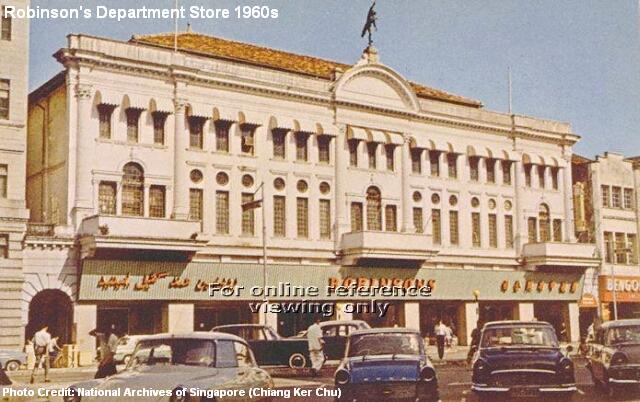
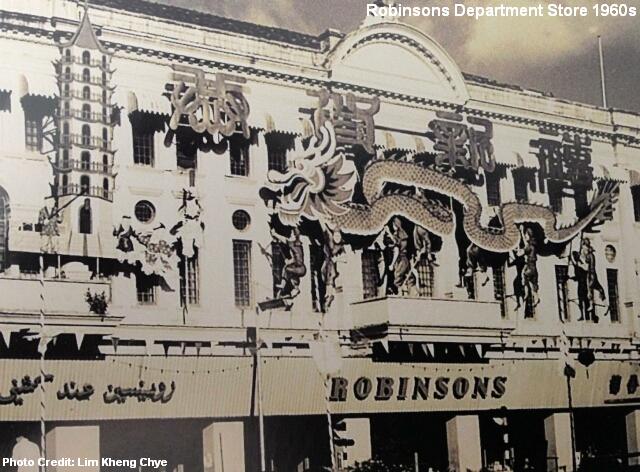
The 114-year-old Robinsons Department Store was another iconic landmark at Raffles Place, having established at Singapore’s prime commercial area since 1858. It survived the Great Depression and the multiple bombings by the Japanese during the Second World War, and even acquired its competitor John Little in 1955. But the great fire on 21 November 1972 ended Robinsons presence at Raffles Place.

The unfortunate disaster, caused by a short circuit, claimed a total of nine life; eight of them perished after being trapped in the lifts. Robinsons also suffered more than $20 million in losses, as its consumer goods packed ready for the coming Christmas period were all destroyed in the burning flames that could be seen as far as Jurong.

robinsons department store 1960s

robinsons department store2 1960s

John Little, on the other hand, was established in the mid-19th century. By the 1920s, it had expanded to many major cities in Malaya. During the Second World War, the Japanese forces took over the four-storey signature John Little’s Building at Raffles Place, renaming it as Dimaru to serve the Japanese population in Singapore. After the war, John Little reopened for business and became popular as a “meeting place” for Indian and Chinese merchants from the nearby Market and Malacca Streets.

In 1955, John Little was bought over by Robinsons. Its building, once served as the office for the Singapore Tourist Promotion Board between 1964 and 1970, was torn down in 1973. During the eighties, the oldest department store in Singapore relocated its business to Orchard Road and, later, focused on the smaller retail markets at the heartlands. Its legacy at Raffles Place, however, remained till today as its Spanish-styled facade was used as the design of the entrances for the Raffles Place MRT Station.

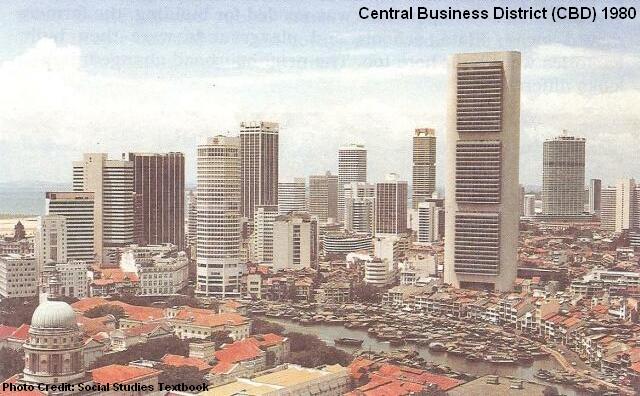
Other major department stores such as Oriental Emporium also left, as Raffles Place was transformed into a pure financial centre. The gaps were filled up by other banks, which began to see the rise of the skyscrapers. In 1980, the 190m-tall Shell Tower (Singapore Land Tower today) was built near where John Little used to be, whereas at the former site of Robinsons Department Store, the 63-storey OUB Centre (One Raffles Place today) was completed in 1986 as the tallest building at Raffles Place.

The Alkaff Arcade and the Ocean Building

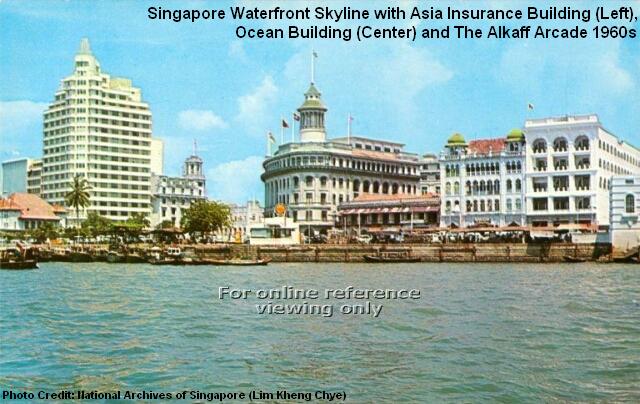
singapore waterfront 1960s

Well-known as a waterfront landmark at Raffles Place, The Arcade, representative of the Arab influence at the prime commercial belt, was built by the famous Alkaff family in 1909 as Singapore’s first indoor shopping centre. Designed by the Swan and MacLaren Architects, the four-level building possessed a distinctive Moorish style, featuring domes, arches and atrium.

By the seventies, The Alkaff Arcade was bustling with retail and commercial activities even though the building was in bad shape. In 1978, it was demolished and replaced by a new 17-storey retail-and-office tower, after the Alkaffs sold their prized asset to Singapura Developments in the early sixties for $20 million.

the arcade 1978

Standing beside The Alkaff Arcade was the Ocean Building. One of the oldest landmarks in Singapore, the first Ocean Building had made its presence at the then Commercial Square since 1864. Its second-generation existed between 1924 and 1970, and was well-known for its popular Prince Restaurant. The third Ocean Building was completed in 1974 in the form of a $70-million 28-storey office and shopping complex. Today, the Ocean Towers and Financial Centre, the fourth generation of its legacy, stand at its place.

Change Alley

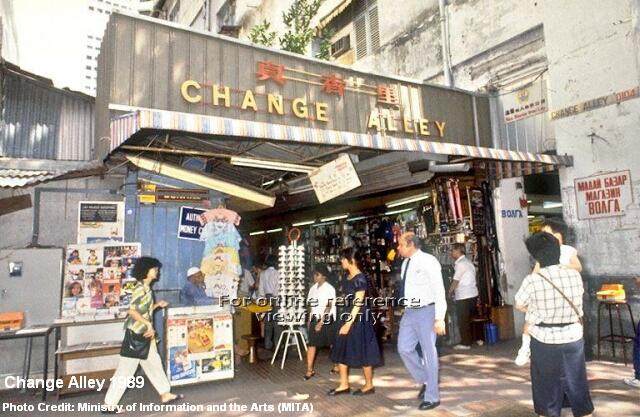
Change Alley, a narrow lane between the Winchester House and Singapore Rubber House, was once famous for its money-changers, both legal and illegal, and rows of little retail stores. It had existed for a century as a hotspot of trading activities that involved everything from clothes and bags to toys and souvenirs. During its heydays, visitors had to squeeze their ways through the congested walkways for their bargain-hunting.

change alley 1989

The Singapore Rubber House was a 15-storey landmark that faced the Collyer Quay. It was previously known as the Shell House, which started as a five-storey building since 1920. The Winchester House, on the other hand, was built in 1906.

By the late eighties, the businesses at Change Alley had dwindled rapidly due to the decreasing number of foreign sailors and military personnel visiting Singapore. In 1989, the buildings of the Winchester House and Singapore Rubber House were demolished, bringing along with them the permanent closure of the old Change Alley.

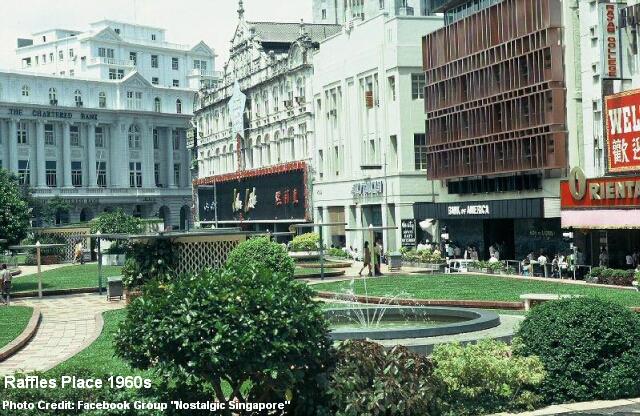
raffles place3 1960s

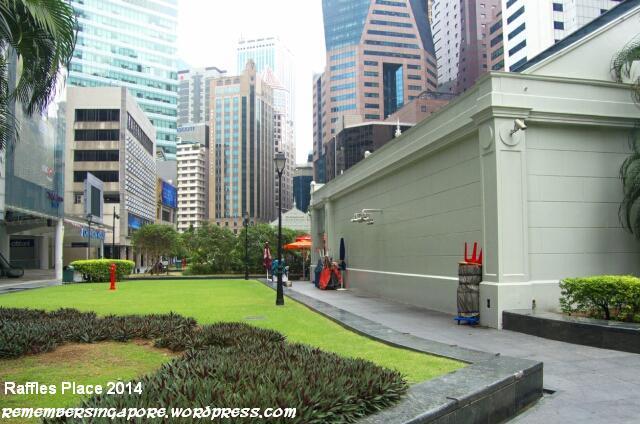
raffles place 2014
Mercantile Bank Chambers

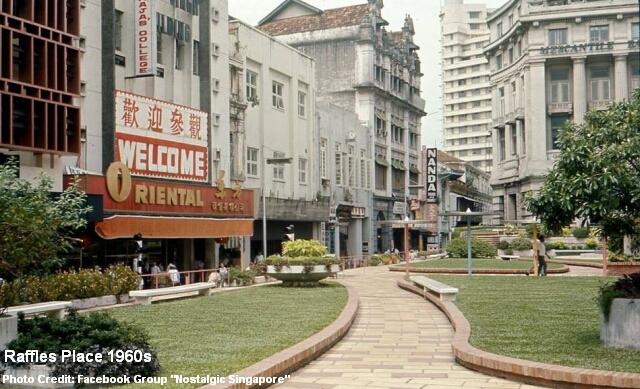
The magnificent grey building in front of The Arcade was the Mercantile Bank Chambers that stood between two streets of De Souza and D’Almeida. D’Almeida Street is still present today but De Souza Street was absorbed into the Ocean Financial Centre during its redevelopment in the late 2000s. The Mercantile Bank was first established in Singapore as early as 1855 under the name of “Mercantile Bank of India, London, and China”.

raffles place 1960s

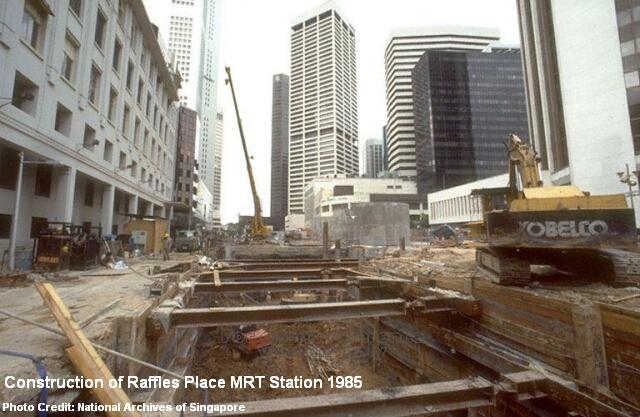
The building was later used as the office for the Prudential Assurance Company (1931-1941 and 1945-1962) and the Chartered Bank (1980-1984). In June 1984, the Mercantile Bank Chambers was demolished due to the construction of the Raffles Place MRT Station.

Malayan Bank Chambers

The former body of the Malayan Bank Chambers was the three-storey Whiteaways Laidlaw Building with its popular Whiteaways Department Store. In 1962, the building, then owned by the Malayan Banking Sdn Bhd, was refurbished with a distinctive facade, tapered-in windows and an addition of three storeys. It was torn down in 1999 to make way for the Maybank Building, a new 32-level office tower designed by SYL Architects.

Hong Kong & Shanghai Bank Building

The Hong Kong & Shanghai Bank had its roots in Singapore as early as 1877. It established its first office building at Fullerton Square between 1892 and 1919, before investing in a new Neo-Classical styled tower completed in 1925. The new building lasted more than 50 years until 1979 when it was demolished and replaced three years later by the 21-storey Hong Kong Bank Building (HSBC Building today).

Bank of China Building

Once the tallest landmark at Raffles Place for twenty years between 1954 and 1974, the Bank of China was first set up at Cecil Street in 1936, before moving to its present site at Battery Road in the early fifties. In 1999, its former record-breaking tower was replaced by a new 37-storey Bank of China Building.
Raffles Place Park and Underground Carpark

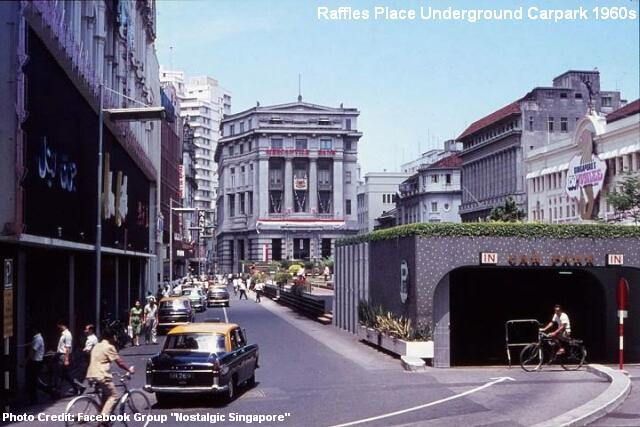
raffles place underground carpark 1960s

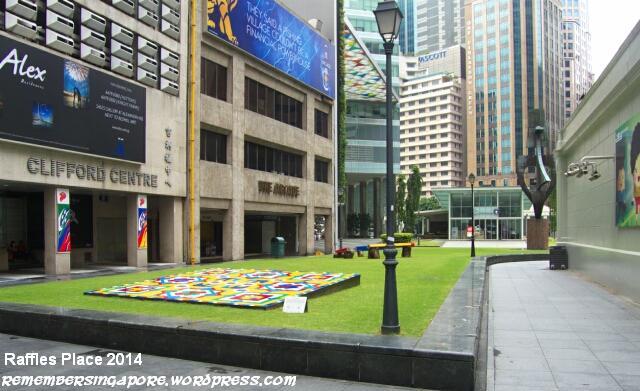
raffles place2 2014

In November 1965, Singapore’s first ever underground carpark at Raffles Place was officially opened by former Prime Minister Lee Kuan Yew. Able to accommodate 250 cars, the new carpark was expected to relive the traffic and parking congesting at Raffles Place, where its previous slots could only cater for 113 vehicles. There was also an underground subway leading directly to the basement of Robinsons Department Store, a feature welcomed by late night shoppers.

Costing a total of $500,000 constructed by the Public Works Department, the underground carpark also featured a rooftop garden known as the Raffles Place Park. Decorated with rows of lawns, shrubs and flower beds, the eye-pleasing popular landscape roof garden also came with ornamental fountains and a giant $58,000 flower clock donated by Japanese watch-maker Seiko.

raffles place clock garden 1970s

The underground carpark was demolished in the 1980s due to the construction of the Raffles Place MRT Station.

The 50-Year Chronology of the Prominent Landmarks at Raffles Place:

1962 – The Alkaff Arcade was sold to Singapura Developments for $20 million.

1965 – Singapore’s first large-scaled underground carpark at Raffles Place was officially opened.

1966 – Oriental Emporium opened its department store at Raffles Place.

raffles place2 1960s

1970 – The Ocean Building was demolished.

1972 – Robinsons Department Store was destroyed in a fire.

1972 – The areas around Raffles Place Park was pedestrianised by the Public Works Department.

1973 – The John Little’s Building was demolished.

1974 – UOB Building (UOB Plaza 2 today) was completed.

1974 – Clifford Centre was completed.

1974 – The Ocean Building was completed as a new third-generation 28-storey office and shopping tower.

1976 – OCBC Centre was completed.

1978 – The Alkaff Arcade was demolished.

1979 – The old Hong Kong & Shanghai Bank Building was demolished.

1980 – Shell Tower (Singapore Land Tower today) was completed.

central business district 1980

1981 – The new Arcade was completed.

1981 – The Chartered Bank Building was demolished.

1981 – Prominent waterfront landmark Maritime Building, formerly known as Union Building, was demolished.

1982 – The new Hong Kong Bank Building (HSBC Building today) was completed.

1984 – The Mercantile Bank Chambers was torn down due to the construction of Raffles Place MRT Station.

1984 – The new 44-storey Standard Chartered Bank building (known as 6 Battery Road today) was completed.

1984 – Tung Centre was completed at the former site of Maritime Building.

construction of raffles place mrt station 1985

1986 – OUB Centre (One Raffles Place today) was completed at the former site of Robinson’s Department Store.

1987 – Raffles Place MRT Station was officially opened.

1989 – With the demolition of the Winchester House and Singapore Rubber House, Change Alley was shut down.

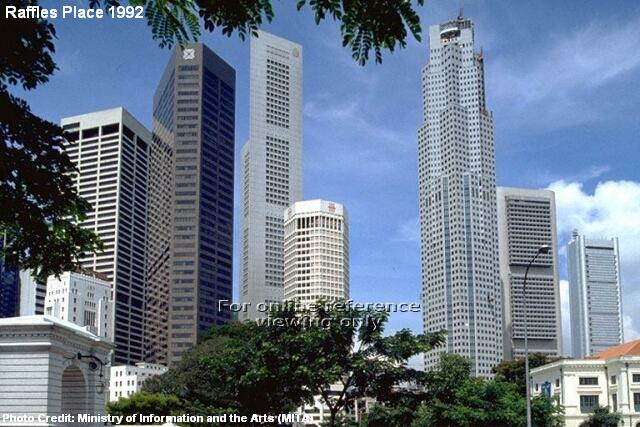
1992 – UOB Plaza 1 joined OUB Centre as the tallest buildings at CBD.

1992 – Hitachi Tower was built at the former sites of the Winchester House and Singapore Rubber House.

raffles place 1992

1995 – The Republic Plaza was the third building at Raffles Place with the height of 280m.

1999 – Malayan Bank Chambers was demolished.

1999 – The new 37-storey Bank of China Building was completed.

2000 – The Fullerton Building, built in 1928, was restored to become The Fullerton Hotel Singapore.

2006 – The 52-year-old Asia Insurance Building was bought over by the Ascott Group for $110 million, and renamed as Ascott Singapore.

2007 – The third-generation Ocean Building was demolished.

2011 – The Ocean Towers and Financial Centre was completed.

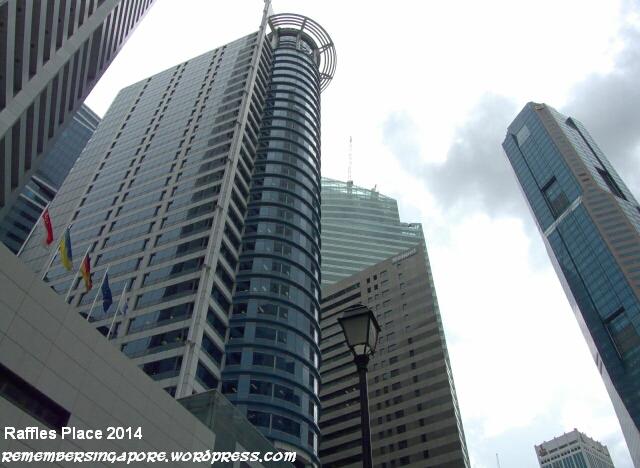
raffles place3 2014

The Tallest Landmarks at Raffles Place:

1954 – Bank of China Building (18-storey, 87m tall)

1955 – Asia Insurance Building (Ascott Singapore today) (18-storey, 87m tall)

1974 – UOB Building (UOB Plaza 2 today) (38-storey, 162m tall)

1976 – OCBC Centre (52-storey, 198m tall)

1986 – OUB Centre (One Raffles Place today) (63-storey, 280m tall)

1992 – UOB Plaza 1 (66-storey, 280m tall)

1995 – Republic Plaza (66-storey, 280m tall)

Published: 28 July 2014

Updated: 06 August 2014

Posted in Historic | Tagged , , , , , , , | 30 Comments

Tanglin Halt – Where the Trains used to Pass by

Tanglin Halt. This was where the trains used to pass by, exchanging key tokens with the station master in order to receive the authority to enter the correct tracks. Express trains from Kuala Lumpur used to stop regularly at Tanglin Halt, although that would be changed after 1936 when the Federated Malay States (FMS) Railways arranged their trains to run straight to Tanjong Pagar instead.

With the population surging rapidly after the Second World War, Singapore was facing a housing crunch. In 1952, the former Singapore Improvement Trust (SIT) kicked off the development plans of Queenstown, Singapore’s first satellite new town, to tackle the housing shortage issue. Tanglin Halt was one of the five districts within Queenstown that were initially drawn up; the other four being Commonwealth, Duchess Estate, Princess Estate (present-day Dawson & Strathmore) and Queens’ Close.
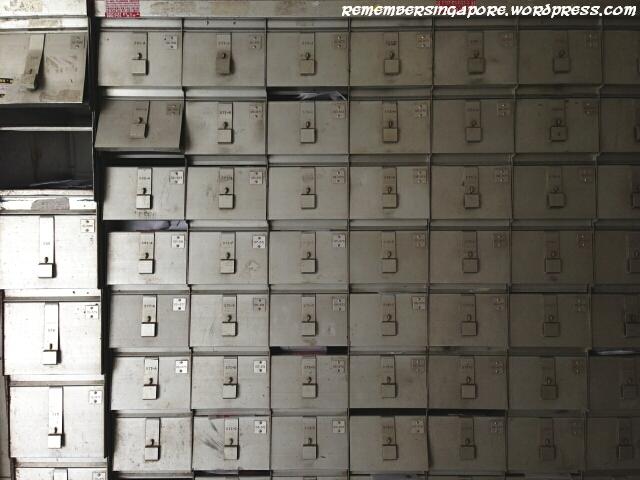
tanglin halt sit flats

tanglin halt sit flats2

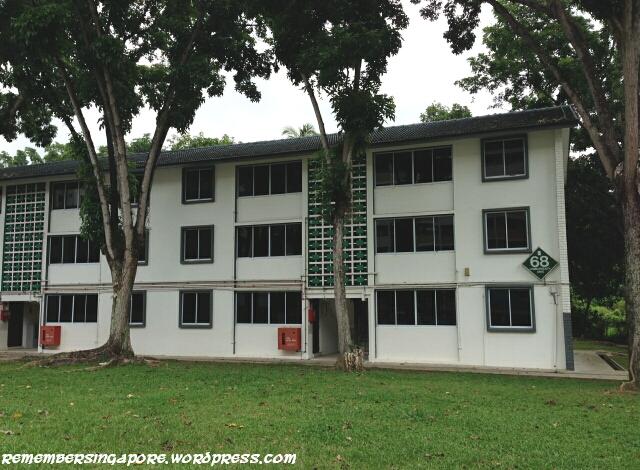
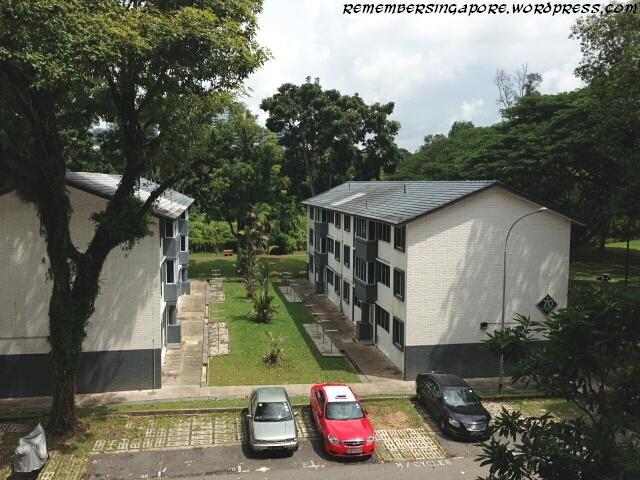
A number of low-storey SIT flats were constructed at Tanglin Halt. Built in the mid-fifties, they are currently only seven such three- and four-storey buildings left in the vicinity, serving as hostels for the university exchange students. With only 32,000 units built over a span of thirty years, SIT had proven to be ineffective in its housing development progress. It was eventually dissolved in 1959, and was replaced by the Housing and Development Board (HDB) a year later.

tanglin halt chup lau

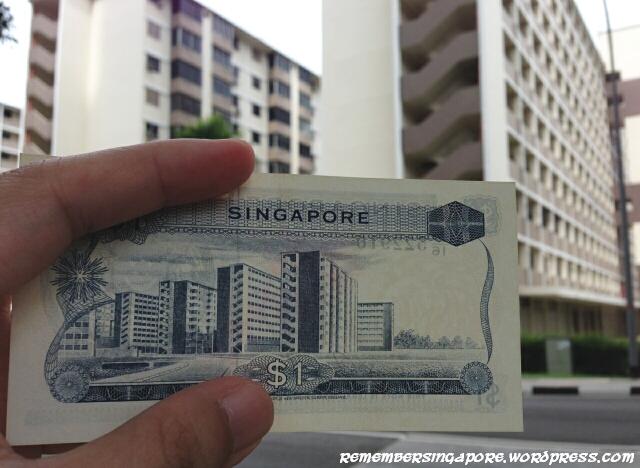
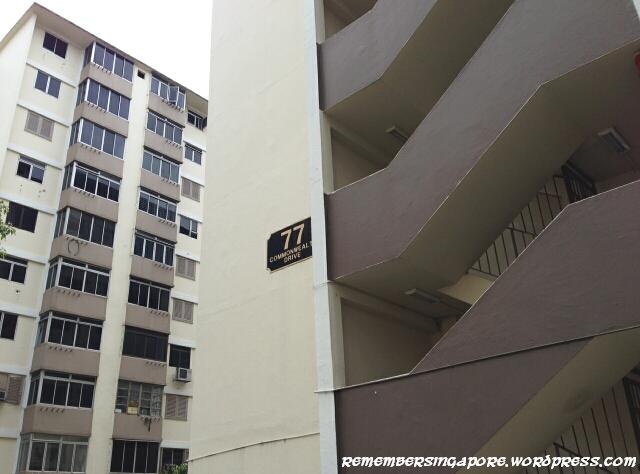
In 1962, rows of 10-storey flats were built at Tanglin Halt. Fondly known as chup lau chu (10-storey buildings in Hokkien) to the local Chinese, these iconic blocks, with diagonal staircases at their sides, were featured at the back of the Singapore one-dollar note of the Orchid Series and the Marine Series’ one-cent coin (both first issued in 1967).

tanglin halt chup lau4

In the early stages of Tanglin Halt’s housing development, the government also planned to introduce a light industrial estate near the flats to provide adequate employment opportunities to the new residents. In 1964, a $1.5 million project was launched by the Economic Development Board (EDB) to build multi-storey factories at the fringes of Tanglin Halt. The objective was to attract 30 or more factories to operate in the five-storey buildings as part of Singapore’s industrialisation program. Such scheme, first tested at Tanglin Halt, would be introduced to other part of the country if proven successful.

tanglin halt chup lau2

tanglin halt chup lau3

The challenge to develop part of Tanglin Halt into a light industrial estate had yielded positive results. In April 1965, Nippon Paint, formerly known as Pan-Malaysia Paint Industry Limited, opened a $2 million factory along Commonwealth Avenue. The new facility, sitting on a 2-arce site and possessing a tropical research station to study the effects of tropical climate on paints, had demonstrated the Japanese industrialists’ confidence in the future of Malaysia and Singapore.

Local entrepreneurs also began to move into the new vicinity. Well-established Singapore trading company Lim Seng Huat Limited Group opened their knitted garments plant at Tanglin Halt in 1969. Setron, Singapore’s own television maker, also set up a factory to assemble and produce thousands of black-and-white TVs. By the seventies, the industrial estate at Tanglin Halt was bustling with manufacturing and commercial activities with various companies involved in different trades such as electronics, textile, frozen food, chocolate, fiberglass and paper products.

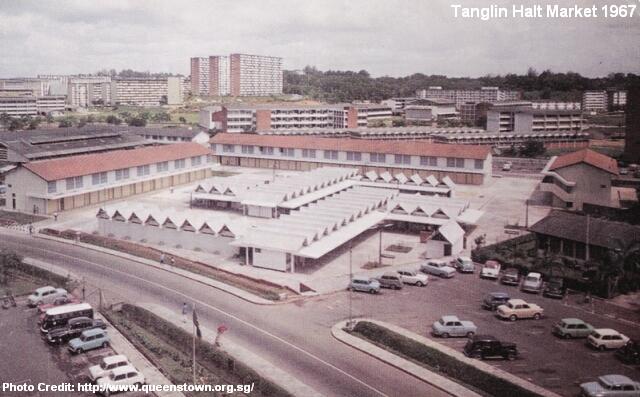
tanglin halt market 1967

Most common public amenities were added to Tanglin Halt by the late sixties. The Tanglin Halt Market was completed and opened in 1967. Tanglin Halt was also said to be the first district in Queenstown to have a public phone installed.

Tanglin Halt Road was constructed in the early sixties but was converted into an one-way street in 1964. Parking was permitted on one side of the road but it affected the traffic conditions as insufficient parking space failed to meet the demands of some 600 cars and a large number of scooters. It also did not help when many street hawkers plied their trades along the narrow road, often causing congestion to the one-directional traffic. The issue was eventually solved with more public carparks built at Tanglin Halt.

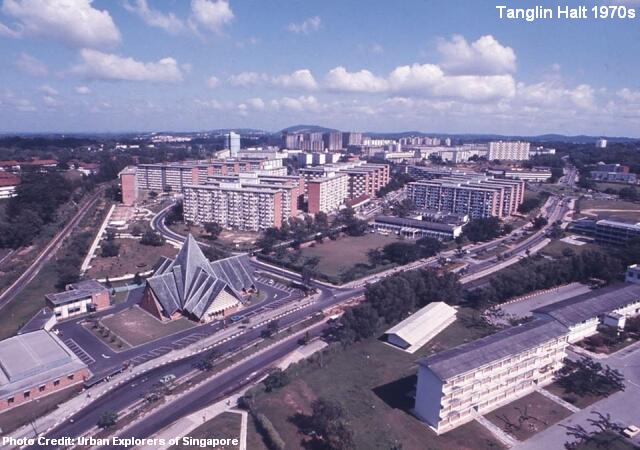
tanglin halt 1970s

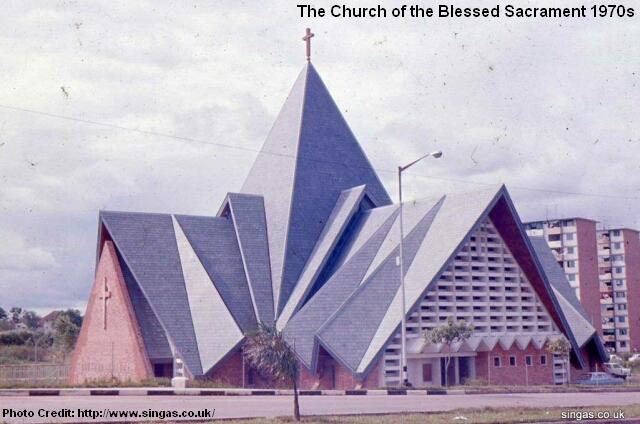
church of the blessed sacrament 1970s

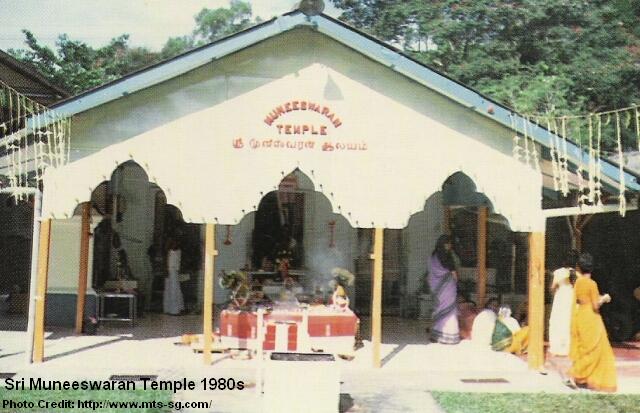
Tanglin Halt’s two most iconic landmarks are the Church of the Blessed Sacrament and Sri Muneeswaran Temple.

Unique for its blue slated roof and cross-shaped service hall, the Church of the Blessed Sacrament, designed by Y.G. Dowsett, was planned in the late fifties but could only be completed in 1965 due to limited funds. By the eighties, the church was able to serve some 7,000 parishioners at Queenstown. In 2005, the Church of the Blessed Sacrament was given the conservation status by the Urban Redevelopment Authority (URA) for its heritage value and architectural excellence.

old sri muneeswaran temple 1980s

The Sri Muneeswaran Temple, the other iconic place of worship at Tanglin Halt, has a history dated back to the early 1930s, when it was first set up as a railway shrine for the Hindu staff who lived at Queenstown and worked for the Malayan Railway.

In 1969, the Hindu devotees at Queenstown donated generously to buy a parcel of land from the Malayan Railway Administration for the construction of a temple to replace the aging shrine. The temple, however, had to be moved in the nineties due to a road widening project along Queensway. The new Sri Muneeswaran Temple finally found its new home next to the Church of the Blessed Sacrament in 1998.

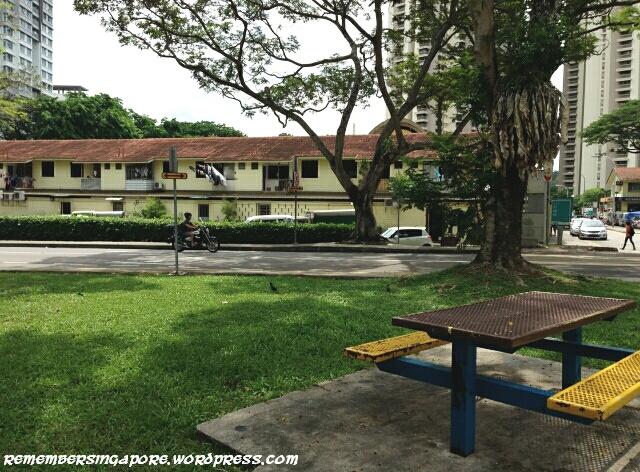
tanglin halt

tanglin halt2

The chup lau chu were placed under the HDB’s Selective En-bloc Redevelopment Scheme (SERS) in 2008, and are now awaiting demolition after most residents had moved out by mid-2014. Another 31 blocks of flats, most of them already half-century old, and the popular Tanglin Halt market, hawker centre, shops and eateries are scheduled to be cleared and torn down by 2021, in what will be HDB’s biggest SERS project to revamp and redevelop the vicinity.

When the time comes, Tanglin Halt, a unique neighbourhood where the trains used to pass by, will never be the same again.

tanglin halt chup lau5

Published: 13 July 2014

Updated: 15 July 2014

Posted in Cultural, Historic | Tagged , , , , | 34 Comments

When the Durians Fall at Pulau Ubin

It is the durian season now.

Often described as a smelly fruit with heavenly taste, a durian’s aroma is so strong that the thorny fruit is banned in MRT trains and the airport. To most locals, however, it is the king of fruits. Many durian plantations used to thrive in Singapore, especially in the early part of the 20th century. Today, one can only find abundance of durian trees on outlying islands such as Pulau Ubin and Pulau Tekong.

pulau ubin 2014

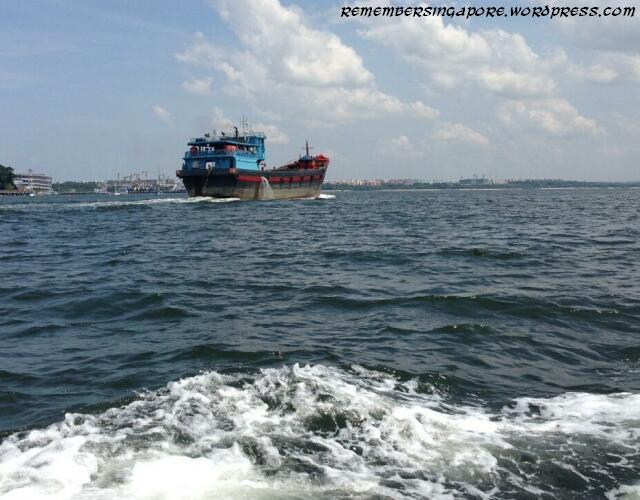
A colleague of mine has invited me to visit his grandparents’ former home at Pulau Ubin and, perhaps, pick a few durians along the way. So in one hot and humid Saturday morning, we found ourselves on the bum boat to the rustic island that resembles a Singapore of the seventies rather than the modern city it is today.

pulau ubin2 2014

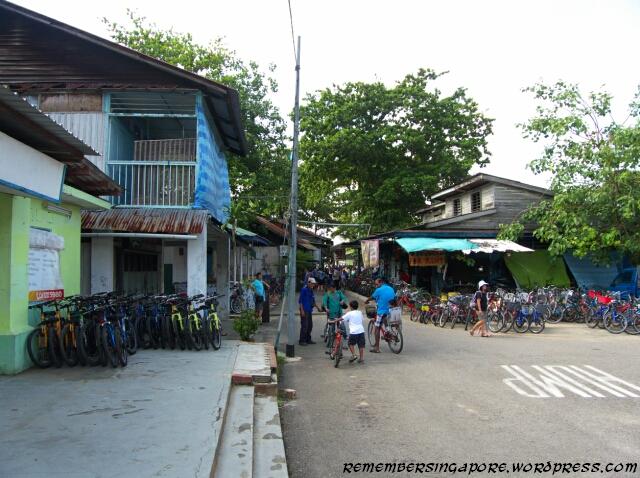
Walking around the island was perhaps too tiring and time-consuming in a hot day, so we decided to follow what most visitors to Pulau Ubin do: Cycling. It is an efficient and environmentally friendly mode of transport on the island, where its number of vehicles is kept under control.

Our first stop was the former home of my colleague’s grandparents, who had stayed on the island some twenty years ago before they resettled at the eastern side of mainland Singapore.

pulau ubin5 2014

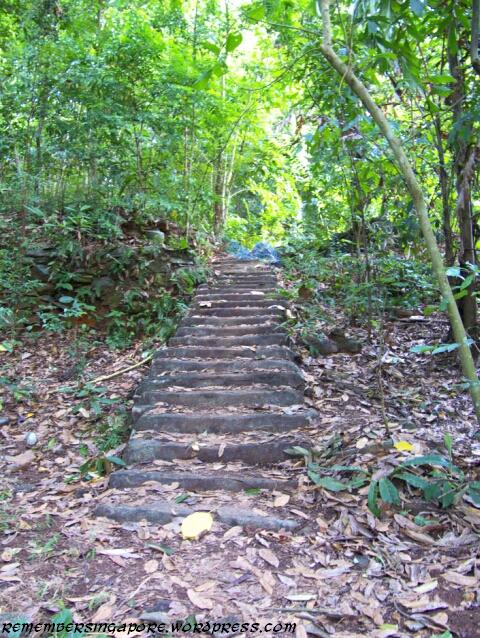
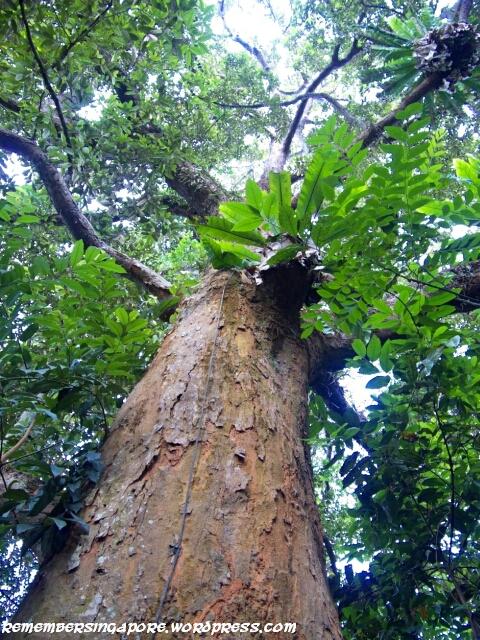
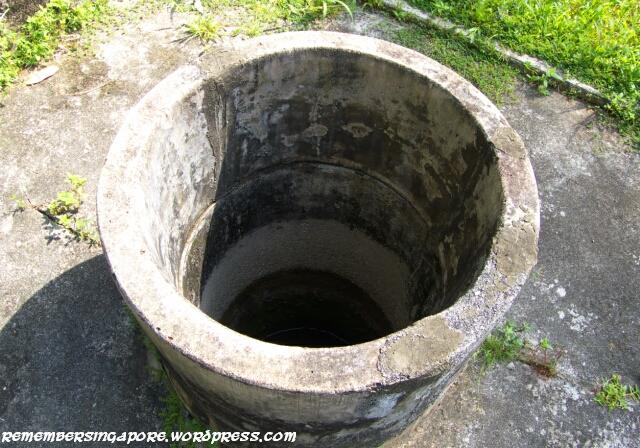
Their old house had already been demolished and only a forgotten flight of steps and a disused water well remained, with the rest slowly consumed by the forest over time. There are several giant durian trees at the vicinity; some are over 50 years old and have grown to heights of more than 10m tall. We scanned around for durians that had just dropped to the ground but unfortunately we could not find any fresh ones.

pulau ubin6 2014

pulau ubin7 2014

pulau ubin8 2014

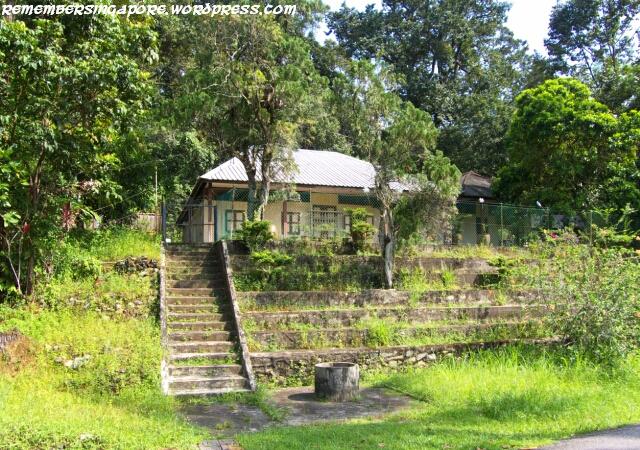
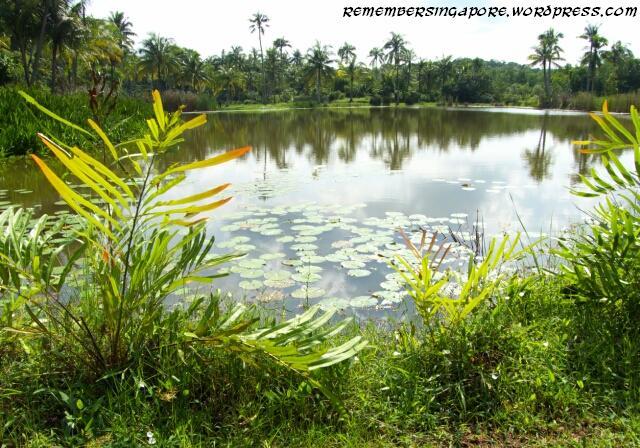
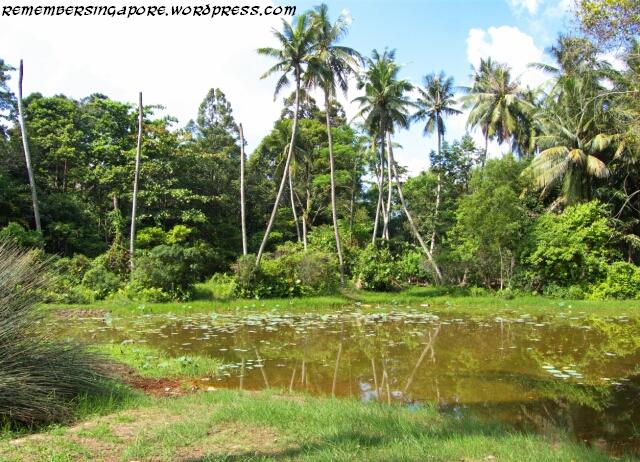
The neighbouring zinc-roofed kampong houses are still standing in a mint condition well supported by a water well and electrical generators. Opposite of the kampong houses lie two ponds, which according to my colleague, used to be a fish breeding pond and a dumping pool. In other words, it was a natural toilet.

pulau ubin3 2014

pulau ubin4 2014

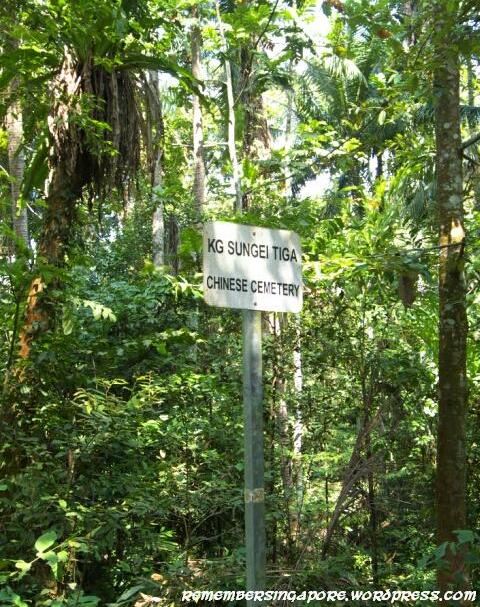
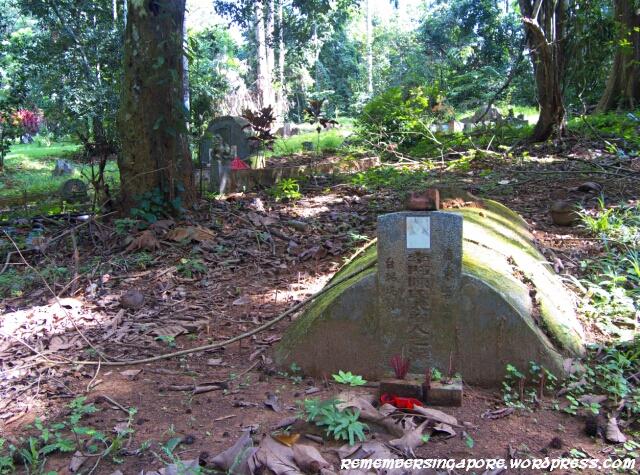
Our next stop was the Kampong Sungei Tiga Chinese Cemetery, one of the three Chinese cemeteries at Pulau Ubin, along with the Muslim cemeteries at Kampong Chek Jawa, Kampong Malayu, Kampong Sungei Durian and Kampong Sarau. At this 150-year-old cemetery lies dozens of tombs, one of which belongs to my colleague’s great-grandfather.

pulau ubin9 2014

The abandoned burial ground had few visitors even during day time, as most cyclists chose to avoid or ignore the path leading to the cemetery. We thought it was a good opportunity to pick up some fresh durians unnoticed by others. The result was not satisfactory as we came across only two good pieces.

pulau ubin10 2014

pulau ubin11 2014

pulau ubin12 2014

As we rode on, we came across the kampong house that was in the news two years ago. In late 2012, a durian tree, said to be over 90 years of age, fell and crushed the 4-decade-old house, leaving half of it in wrecked condition. The house, once featured in the National Parks Board’s Pulau Ubin trail, has since been restored, although its owner no longer lives in it.

pulau ubin13 2014

So at the end of our three-hour durian-picking and exploration of the island, we had only two good durians to show off. And they were nearly snatched by a family of wild boars.  Already used to human presence, the friendly beasts have all the freedom to roam around the island, becoming one of Pulau Ubin’s main attractions.

pulau ubin14 2014

Unlike the “branded” ones such as mao shan wang (cat mountain) or ang hei (red prawn) sold in Singapore, the Pulau Ubin durians are small in their sizes with lesser flesh. But they come with tasty pale-yellow creamy flavour that reminds us of those durian trees that once grew in abundance at Mandai, Nee Soon and Upper Thomson during the olden days. Despite only two durians as our reward, it was still considered a “fruitful” trip, especially for urban dwellers like us.

pulau ubin15 2014

Published: 25 June 2014

Posted in Cultural, Exotic | Tagged , , , , | 12 Comments

Gongs, Long Hair and Chewing Gums

What do gongs, long hair and chewing gums have in common?

They were all part of a list of items that were either permanently banned or disallowed in public for a period of time in Singapore. Some banned items contained dangerous elements, while others were associated with excessive contents of sex and violence that challenged the society’s moral standards. Banning of certain publications was common. For example, a Hong Kong comic, popular among Singapore students who would spend their pocket money to buy at the roadside stalls, was banned in 1966 due to its undesirable storyline filled with violence, gangsterism and fantasy.

So other than drugs and gambling, what had been banned in Singapore since the sixties?

Playboy Magazines

As part of the “anti-yellow” drive at the start of 1960, the Playboy magazine and its Playmate calender was officially banned in Singapore. Costing $2.10 per copy, the monthly magazine from Chicago fell under the provisions of the Undesirable Publications Ordnance. It never made it to Singapore shores since.

Three years later in 1963, thirty more “morally objectionable” novels from the United States, with contents mostly describing sex and violence, were banned by the Home Affairs Ministry.

Gongs and Cymbals

chinese funeral gong 1970sIn early 1960, the Singapore police banned gongs and cymbals at Chinese wakes and funerals. A Chinese tradition for centuries, the shattering noise of gongs and cymbals had been an integrated part of Chinese wakes that were accompanied by bands and funeral music. In the fifties, however, secret societies began to infiltrate Chinese clans and associations that increased the rivalries between one another.

The tensions were especially high during the funerals, where rival societies tried to “out-gong” each other, often resulting in fights and melees. Beside the ban, the police also ordered the funeral bands to take the shortest routes from the deceased’s houses to the cemeteries in order to minimise the possible friction between the gangs. The ban was only lifted many years later.

Firearms

Singapore is a relatively safe place today with the public not allowed to possess any forms of firearms, but it was not the same during the fifties, when post-war Singapore was in the midst of the Malayan Emergency (1948-1960). Thousands of weapons and permits were issued to individual private owners for protective purposes.

On 15 July 1960, three days after the official ending of Malayan Emergency, the Singapore police began to cancel the licenses and inform the private firearm owners to hand over their weapons. Those who failed to do so within three weeks had to justify their reasons.

Tikam Tikam

tikam tikam gameThe chance game of tikam tikam was outlawed by the police in 1961. Offenders caught playing the game would be fined $500 and jailed up to 6 months, while the tikam tikam operators faced a fine of $6,000 and a 3-year imprisonment. The harsh punishment, however, failed to deter the the public from engaging in the popular game at places such as Chinatown, Tiong Bahru and New Bridge Road.
At five cents per pick, the punter could pick a piece of paper with a number written on it. With prizes ranging from toys to packets of cigarettes, and sometimes cash, it often attracted many to gather at the tikam tikam stalls outside the schools, markets and Chinese operas. Despite the ban, the game of chance remained popular among Singaporeans until the eighties.

Pirate Taxis

In a major crackdown known as “Operation Taxi” in 1966, as many as 20 illegal taxis were chong gong (confiscated) with their drivers arrested and fined. The problem of pirate taxis had already existed in the fifties, but by the mid-sixties, there were more than 12,000 pirate taxi drivers in Singapore, offering competitive rates and “stealing” an estimated of 6 million ridership from the Singapore Traction Company’s bus services. Many being new drivers without regular driving experiences, they also added to the increasing number of accidents on the roads, complicating insurance matters.

To make things worse, many pirate taxi drivers had the backing of the secret societies, and had marked their territories in areas such as Queenstown, Aljunied and Havelock Road where few licensed taxi drivers dared to venture in to pick up passengers. In March 1966, a riot almost broke out as the illegal drivers protested against the new legislation, almost clashing with the licensed drivers and the bus companies.

In a bid to overhaul the public transport service, the government increased the number of legitimate taxis from 3,800 to 5,000 in 1969. Despite the ban and regular raids, pirate taxis continued to exist in Singapore until the eighties.

Firecrackers

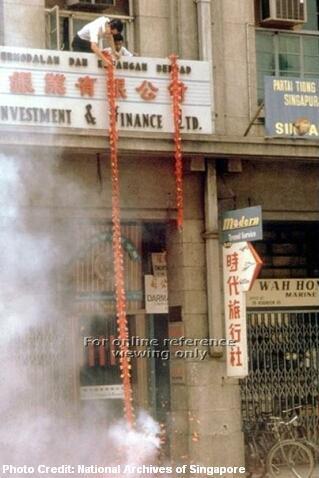
firecrackers 1968The year was 1968. Few had paid attention to the government’s repeated appeals not to let off the rocket-type firecrackers during the Chinese New Year. It resulted in the banning of the rocket-type firecrackers, but that did not stop the public from using other types of firecrackers in strings and packets.

A partial ban of all types of firecrackers was issued after 6 people died and more than 70 were injured from the fires caused by firecrackers during the 1970 Chinese New Year. The final straw came two years later, when two policemen were attacked as they tried to stop a group of men letting off firecrackers at a non-designated place. The firecrackers were totally banned in Singapore in 1972.

Long Hair

In the late sixties, long hair, bell bottoms and psychedelic shirts were largely associated with the hippie culture influenced by the Western world. The Singapore government began to strongly “discourage” male Singaporeans with long hair in 1970. Visitors to the country were turned away due to their long hairs. Students were made to go for haircuts, civil servants who refused to cut their hairs short were sacked and groups of long-haired men were rounded up and questioned by the police.

long hair served last 1972In 1973, the People’s Association launched the anti-long hair campaign in all of its 189 community centres, emphasizing that “males with long hair will have their need attended to last” when they visited government bodies. The definition of long hair was determined as hair reaching below the collar, covering the ears and forehead and touching the eyelashes.
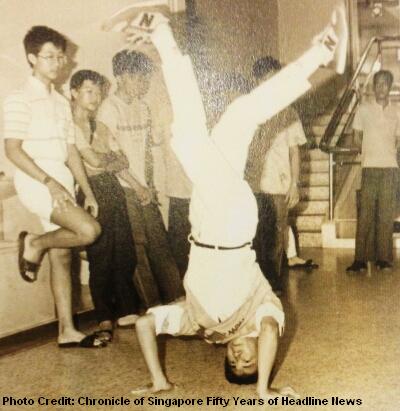
Popular artistes, such as Japanese musician Kitaro and British rock band Led Zeppelin, were also barred from entering Singapore. The baffling rule was eventually, and quietly, lifted when the hippie culture faded away by the eighties.

Nunchaku

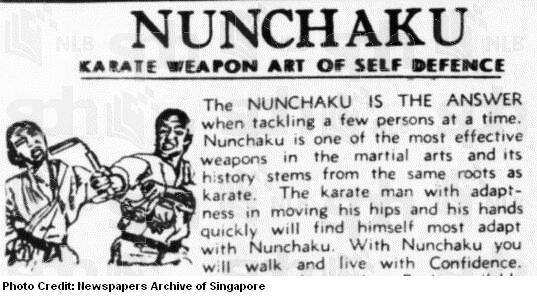
Nunchaku, the martial art weapon made up of two hard wood rods linked together by a chain, was made popular by Bruce Lee’s films in the early seventies. It was used in karate classes in Singapore, and was even advertised in newspapers.

nunchaku advert 1973

But by 1972, it was deemed as an offensive weapon and was banned in Singapore, believed to be part of the cracking down efforts of secret society members. In 1975, a 23-year-old man named Sethupillay Rajaretnam became the first man in Singapore to be jailed and caned for possessing nunchaku. Several youths carrying nunchaku were also subsequently arrested and charged in the court.

Hell-riders

“Black Coffins”, “Jacky’s Trails”, “Scorpio”, “White Snake” and “Hell’s Angels”. These were the names hell-riding groups had given themselves in the early seventies. More than just public nuisance, many hell-riders were involved in gambling, drug-taking, gang fights and, worst of all, fatal accidents. In 1982 alone, almost 80 died and more than 4,500 were injured in motorcycle accidents. In the high-speed races, it was not uncommon to read in the newspapers that a Yamaha Daytona had crashed and dragged to the roadside, with its owner lying elsewhere in a twisted manner.

After the new anti-hell-riding laws were passed in the early eighties, the Singapore police carried out a major crackdown in October 1984 at Nicoll Drive, checking on some 500 vehicles in the four-hour operation. Popular illegal racing spots at Changi and Jurong were kept quiet for more than a year, leading to the police to proudly declare that organised hell-riding was a thing of the past.

Breakdancing

breakdancing 1984The eighties saw the rise of funky youths dressed in outrageous outfits and carrying portable hi-fi sets at Orchard Road. Popularly known as the Far East Plaza Kids, McDonald’s Kids or the Centrepoint’s Kids, they could be spotted hanging out outside the popular shopping malls, sometimes in groups of hundreds.
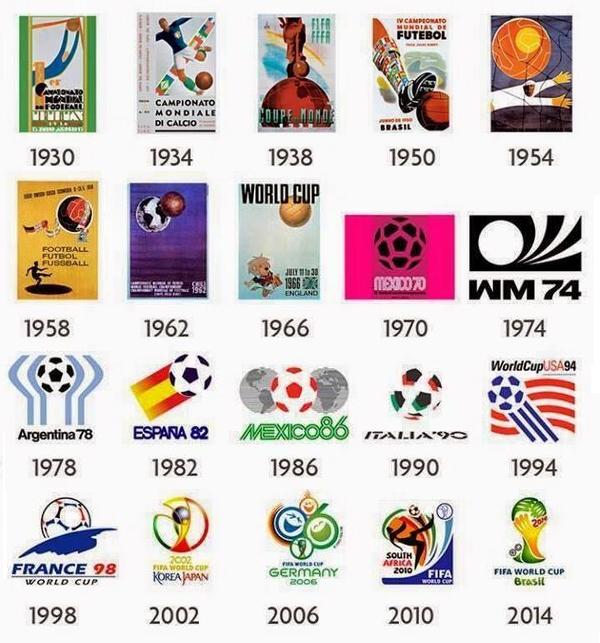

In June 1984, police task-force troops were called in to disperse a huge group of youngsters at Far East Plaza. A breakdancing performance had been organised by a record shop, attracting as many as 3,000 youngsters to gather and cheer. A week later, the police officially banned breakdancing in public places.

Chewing Gums

One of the most well-known items banned in Singapore, chewing gums were deemed as a public nuisance after repeated cases of disruptions to the MRT trains and buses. Every night, more than 400 globs of chewing gums, on average, were removed from the seats inside the MRT trains.

bubblegum2

In November 1989, chewing gums were officially prohibited in MRT trains and stations. The ban was extended to nationwide in January 1992, due to the increasing cost of removing discarded gums stuck on pavements, lift doors and other public places. The majority of the Singaporeans felt that the ban was too harsh, although many would agree that chewing gum was an irritation and public nuisance. It would take many years before certain gums were allowed to be sold in Singapore as medical products.

Published: 19 June 2014

Posted in Cultural | Tagged , , , , , | 70 Comments

The World Cup Craze and Memories

The World Cup is here again.

The biggest football tournament, held once every four years, is again expected to cause many sleepless nights among the local football fans. During Mexico ’86, the 10-year-old me always wondered why my father stayed up every night to watch some TV programs. By the time Italia ’90 was held, I was already a converted football fan and had joined my father in catching the biggest show on football scene, marvelling at the brilliant skills of Gary Lineker, Marco van Basten, Roberto Baggio, Rudi Voller, and of cos, Diego Maradona.

world cup logos

The World Cups on TVs

Since 1966, Singaporeans were able to catch the World Cups in black and white on the free-to-air Channel 5, broadcast by the Radio Television Singapura (RTS). Few had the luxury to watch at home though, since in the sixties, less than 5% of the Singapore’s population owned a television set.

In the seventies, imported brands such as Sharp and Telefunken cost as much as $3,000 per TV set, several times than that of the monthly salary of an average Singaporean. Setron, a local TV manufacturer established since 1965, was able to provide a cheaper alternative to Singaporeans with their TV prices tagged close to $1,800.

setron tv 1960s

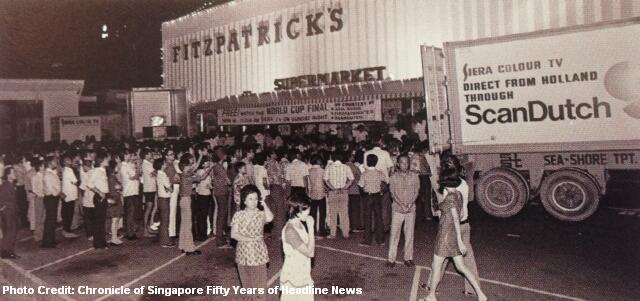
There was a breakthrough in early May 1974, when colour tests were run successfully just in time for the final of World Cup 1974 between Holland and West Germany. Hence, the first telecast of the World Cup in full colours would be presented via satellite to Singaporeans that year. When the news was out, more than 2,000 colour TVs were snapped up islandwide. Crowds also gathered outside Fitzpatrick’s Supermarket to catch the final live.

world cup final 1974 live at fitzpatricks supermarket

Singapore and the World Cups

Singapore did not have the chance to participate in the early World Cups. Southeast Asia was generally under colonial rule in the first half of the 20th century, although that did not stop Indonesia from becoming the first Asian country to participate in the World Cup 1938 when they travelled to France as Dutch East Indies. In Malaya and Singapore, the football associations were administrated by the British, and the biggest football event to the fans was the Malaya Cup.

world cup qualifier group 1978After its independence, Singapore remained inactive on the international stage, preferring to concentrate in the regional competitions such as the Asian Games, Malaysia Cup, Merdeka Cup, Ovaltine Cup, the King’s Cup in Thailand and the Merlion Cup.
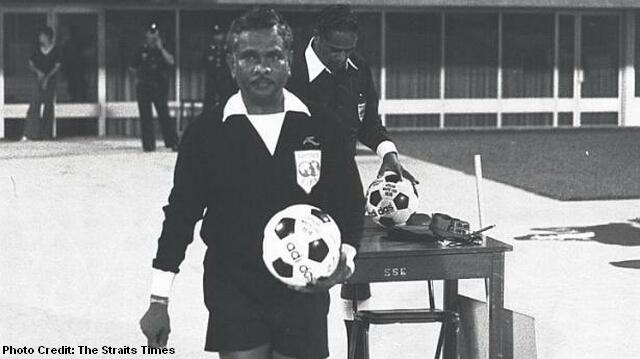
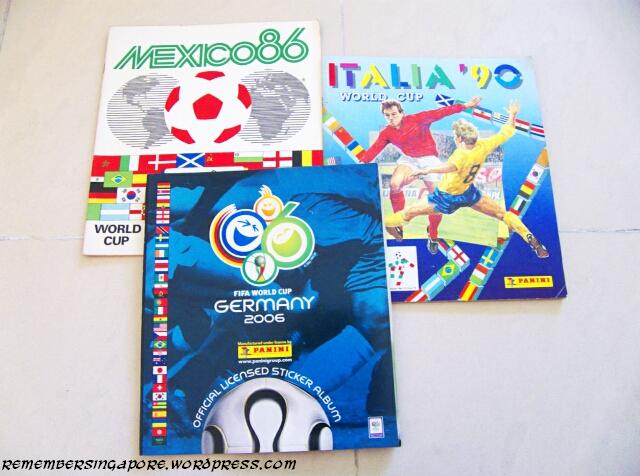

It was not until 1977 when Singapore debuted in its first ever World Cup qualification games. The inauguration of the World Cup qualifying stage in the Asian zone took place in the new National Stadium, completed just three years earlier. Finishing second in the First Round qualifying group, Singapore met Hong Kong in the playoff for the Final Round, but was knocked out with a 1-0 defeat. Iran would later emerge as the winner of the Final Round to gain a berth at the 1978 World Cup at Argentina.

Goal 2010

In 1998, former Prime Minister Goh Chok Tong, in his National Day Rally speech, visualised a dream for Singapore. That was to qualify for the World Cup finals in 2010. Citing the success of the French national team as the example, Goh Chok Tong emphasized on the importance of importing foreign sport talents to help raise the standard of the Singapore football.

The ambitious dream, which had initially excited the local football fans, came to an end when Singapore crashed out in the group stage with 2 wins and 4 losses in the 2010 World Cup Asian Qualifying Tournament.

First Singaporean Referee

Singapore did have one representative in the World Cup. It was not the national team but George Suppiah (1930-2012), the first Singaporean, and Asian, football referee to officiate in the World Cup finals. He was appointed as the man-in-charge of the first-round match between Poland and Haiti at the 1974 World Cup held in West Germany, and was also later selected as the linesman for the Sweden-Bulgaria and Brazil-Holland matches. A 25-year between 1953 and 1978 career saw him refereed a total of 43 international ‘A’ matches.

world cup 1974 referee george suppiah

Panini Sticker Albums

Many would perhaps remember the popularity of the Panini sticker collections sold in Singapore in the eighties and nineties. One of their legacies was the World Cup sticker albums, which served as memorabilia for football fans. Selling at $1 per packet of 5 stickers at the convenience stores, it was a craze back then among the students who bought the stickers with their pocket money and swapped among one another in the schools.

Today, Panini continues to launch their new series of the World Cup sticker albums, but its popularity in Singapore seems to have waned as compared to other countries.

panini world cup sticker albums

panini world cup italia 90 argentina

panini world cup italia 90 germany

panini world cup italia 90 holland

panini world cup italia 90 england

This will be the 7th World Cup I am watching. Will there ever be a chance in my lifetime to witness Singapore’s participation in the World Cup finals? Let’s certainly hope so.

Published: 08 June 2014

Updated: 10 June 2014

Posted in General | Tagged , , , | 9 Comments