
As a well-known international financial hub, there are over 100 banks in Singapore, including six local banks, 24 foreign banks, 40 wholesale banks and 42 offshore banks. Since the liberalisation of the banking sector by the Singapore government in 2001, local banks underwent a series of merging and acquisitions in order to compete with the foreign banks.
Today, most Singaporeans are familiar with the Big Three. However, the former and current home-grown local banks had played a far more important role in the past 100 years of Singapore’s banking history.
The Big Three
 United Overseas Bank Limited (UOB) was started as United Chinese Bank (UCB) by Sarawak-born Datuk Wee Kheng Chiang in 1935. The bank, in the effort to open its first branch in Hong Kong in 1965, renamed itself as UOB due to a similar name of another bank in Hong Kong. It, however, retained its Chinese name as “Tye Hwa”.
The logo, which symbolized security and unity, was introduced in 1971 and was designed based on “five-barred gate”, the traditional Chinese way of counting in fives.
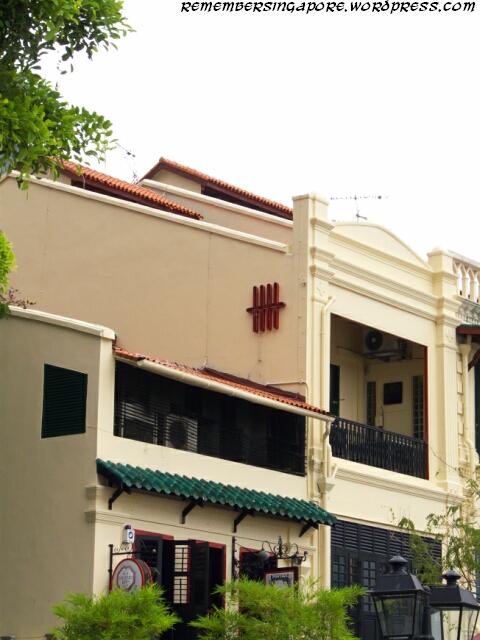
As it grew, UOB acquired a number of other local banks, such as Chung Khiaw Bank Limited (CKB) in 1971, Lee Wah Bank Limited in 1973, Fast Eastern Bank Limited (FEB) in 1984, Industrial & Commercial Bank Limited (ICB) in 1987 and Overseas Union Bank (OUB) in 2001.
 The Development Bank of Singapore Limited (DBS) was established in 1968 as Singapore’s development bank, in order to help the nation develop its economy during the difficult times after independence. It also played an important financial role in Singapore’s direction towards industrialisation.
It merged with Post Office Savings Bank (POSB) in 1998 to become the bank with the widest coverage in Singapore, with as many as 737 automated teller machines (ATM) located in most parts of the island. In 2007, DBS launched The Islamic Bank of Asia (IB Asia) to tap into oil-rich Middle East.
 Oversea-Chinese Bank Corporation Limited (OCBC) was the product of the merging of three Hokkien banks in 1932, namely Chinese Commercial Bank Limited (which was set up by local businessman Lee Choon Guan in 1912), Ho Hong Bank Limited and Oversea-Chinese Bank Limited.
Under the leadership of Dato Lee Kong Chian and Tan Sri Tan Chin Tuan, OCBC developed into one of the largest banks in Singapore and Malaysia after WWII. It is also the first Singapore bank to open branches in China, and also one of the first to venture into the Asian dollar market in the sixties.
 In 1948, OCBC introduced an innovative night safe system to allow customers to make deposits at night.
In the early sixties, it increased its business through a mobile bank system by reaching out to those who lived in the suburban areas.
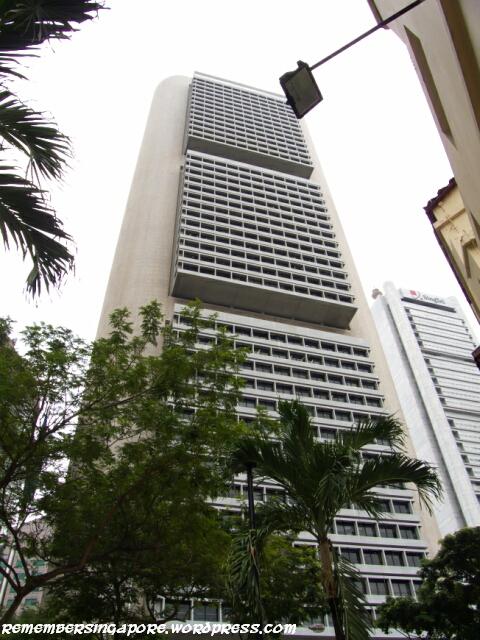
The OCBC Centre has been an iconic building in Singapore’s city skyline. At 198m tall, it was briefly the tallest building in Southeast Asia when it was completed in 1976.
Singapore’s Central Bank
 The Monetary Authority of Singapore (MAS) acts as the central bank of Singapore. It came into effect on the first day of 1971, in order to regulate the banking and financial sectors.
Over time, MAS was given more important responsibilities in securing stability in the exchange rates, currency strength and credit liquidity. The regulation of the insurance industry was brought under its wings in 1977, and in 1984, it was also given the control of the regulation of the securities on Singapore Exchange.
The People’s Bank

 The British colonial government set up Post Office Savings Bank (POSB) on 1st January 1877 at the General Post Office Building. Hugely popular prior the fifties, it was however experiencing a decline after 1955.
After the independence of Singapore, the then-struggling bank was transferred from the Postal Department to the Ministry of Communication in 1972, and then to Ministry of Finance two years later, as it underwent a restructuring to become a deposit bank in order to promote domestic savings by the public.
By 1976, POSB received its one millionth account through a series of successful campaigning. Its name was switched to POSBank in 1990 to emphasize its banking role, before it was fully acquired by DBS in November 1998.
The Vanished Number Four
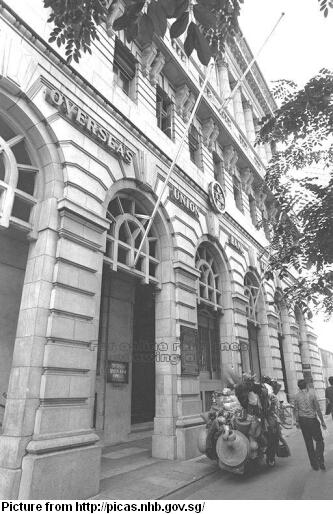 Overseas Union Bank Limited (OUB)
  was set up by local entrepreneur George Lien Ying Chow (1907–2004) in 1947. His former bank was Overseas Chinese Union Bank (OCUB), which mainly dealt with the Chinese in China. The bank could not survive the political turmoil of China after WWII, so Lien returned to Singapore to establish another bank OUB, which began operation on 5th February 1949.
 At its beginning, the bank had a paid-up capital of S$2 million and 27 staff. Despite the difficulties at the start, the bank grew rapidly and by the mid-fifties, OUB was already expanding overseas in Hong Kong, Tokyo and London. In 1973, OUB became the first Singapore bank to establish its branch in New York.
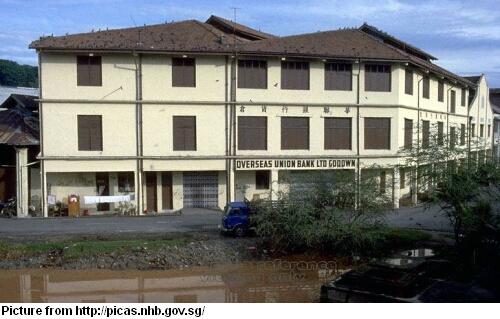
In the nineties, OUB grew to become Singapore’s fourth largest bank. UOB bid S$10 billion against rival DBS for a takeover in 2001, and by 2003, OUB was fully merged with UOB.
Early Banks
Foreign banks dominated the island of Singapore in the 19th century. In 1840, The Union Bank of Calcutta became the first bank ever to operate in this British colony. Soon, other foreign banks followed, and over the years, the colony attracted the likes of Mercantile Bank (established in Singapore in 1856), The Chartered Bank (1861) (former body of current Standard Chartered Bank), Hong Kong & Shanghai Bank (1877), Nederlandsche Handel-Maatschappij (1883) (former body of current ABN Amro Bank), First National City Bank of New York (1902) (former body of current Citibank) and the Banque de L’Indochine (1905).
First Local Bank – Kwong Yik Bank
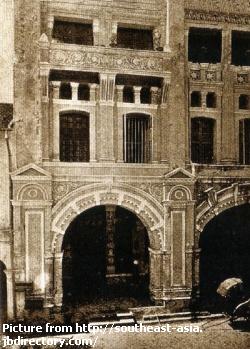 It was not until 16th December 1903 that the first local bank was founded by Cantonese Wong Ah Fook (well-known businessman in Singapore and Malaysia, with Johor street Jalan Wong Ah Fook named after him) with a paid-up capital of S$850,000. It was known as Kwong Yik Bank (literally means “Cantonese profiting bank”), but it did not last long as it collapsed a decade later due to financial difficulties, resulting in a bank run.
Lee Wah Bank was another Cantonese bank set up in 1920 to serve the Cantonese community. It was acquired by UOB in 1973, after 53 years of service.
Early Teochew Bank
Just three years later after the founding of Kwong Yik Bank, in 1906, Sze Hai Tong Banking & Insurance Company Limited was established by Ng Song Teng, Liaw Chia Heng, Tan Teck Joon and other Teochew businessmen.
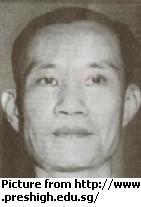
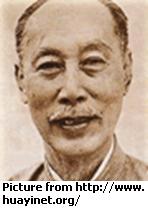 Blessed with good reputation due to its reliability during financial crisis, the Teochew-styled bank expanded into Thailand and Hong Kong in its early days. Respectable Teochew community leader Lee Wee Nam (1881–1964) (right) was once its chairman in 1932. Another Teochew leader Tan Siak Kew (1903–1977) (left), also Singapore’s first ambassador to Thailand, was Sze Hai Tong’s chairman in 1962.
The bank underwent changes in 1964, with its name changed to Four Seas Communications Bank Limited. It was acquired by OCBC in 1972, but enjoyed autonomy for more than two decades. In 1990, its name was simplified to Four Seas Bank (FSB). After 92 years in operation, the bank finally ceased operation in 1998 after its full merger with OCBC.
Emerging Hokkien Banks
Three Hokkien banks, namely Chinese Commercial Bank, Ho Hong Bank and Oversea-Chinese Bank, emerged from 1912 to 1919. In order to compete against the bigger rivals, the three banks merged to form Oversea-Chinese Bank Corporation in 1932 (see OCBC above).
Local Banks after WWII
After the Second World War, a number of local banks sprung up quickly as a war-torn Singapore started itself to pick up. With the rapid growth of the post-war economy, opportunities were aplenty.
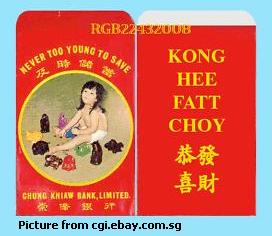 The famous Aw family (owner of Tiger Balm and Haw Par Villa) was the first to set up a bank after the war. Its Chung Khiaw Bank (CKB), opened in 1947, targeted ordinary folks and the middle-class families, and its innovative introduction of “piggy coin banks” was hugely popular during that era. It also transformed the culture of local Chinese banks, where they usually catered for a certain dialect group, to a more broad-based multiracial clientele.
Other local banks started to join in the competition, such as Overseas Union Bank (OUB) which was established in 1947, Industrial & Commercial Bank (ICB) (1953), Bank of Singapore (1954), Far Eastern Bank (FEB) (1958) and Asia Commercial Bank (1959).
Many of these local banks were later acquired by OUB in the seventies and eighties.
Stiff Competition in the Seventies
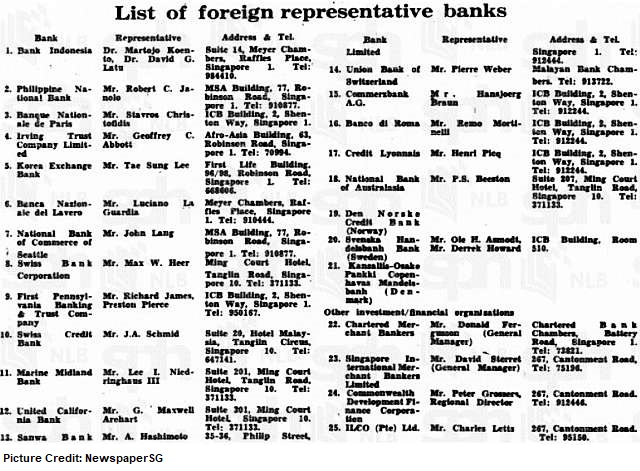
Since the early seventies, the Singapore government began to relax the rules to allow foreign banks to set up their offices, enhancing Singapore’s growing reputation as a regional financial and investment hub. The new Banking Act was passed in 1970, laying down the the strict capital and other requirements for foreign banks to establish full banking operations in Singapore.
As a result, reputable banks from various countries, such Italy (Banco di Roma), France (Credit Lyonnais), Germany (Commerzbank), Australia (National Bank of Australasia), Russia (Moscow Naroday Bank), the United States (First National Bank of Chicago) and Switzerland (Swiss National Bank, Credit Suisse, Union Bank of Switzerland), swarmed to Singapore.
Establishments and Mergers
Tat Lee Bank (TLB) was founded by Goh Tjoei Kok (1905–1994) with the co-operation of DBS in November 1973. Fujian-born Goh left China at an age of 15 for Indonesia in search of a better life. Initial venture into textile business did not work out well, but a switch to rubber trading helped build his fortune. Goh Tjoei Kok would then move to Singapore after the Second World War to set up a trading firm called Tat Lee to be involved heavily in iron and steel industry.
 In 1973, Goh Tjoei Kok realised his dream with an investment of $36 million to set up Tat Lee Bank. It was officially opened in February 1975 to be in line with the government’s promotion of Singapore as a regional and international financial hub.
Tat Lee Bank in 1998 merged with Keppel Bank to form Keppel TatLee Bank, which was later acquired by OCBC in 2001. A year later, Keppel TatLee Bank ceased its operations to be fully integrated into OCBC. Meanwhile, Keppel Bank was a diversified business owned by Keppel Corporation, rebranded from the corporation’s acquisition of Asia Commercial Bank (founded by a Chinese migrant in 1959) in 1990.
The rapid development of Singapore’s banking sector also saw the rise of Automated Teller Machines (ATMs). The machines started to appear in many parts of Singapore, providing convenience for workers to draw their salaries which were credited to their bank accounts. In 1987, the General Interbank Recurring Order (GIRO) system was introduced, and regular payments to agencies and organisations were made easier through electronic arrangements.
Published: 07 October 2011
Updated: 16 December 2017

















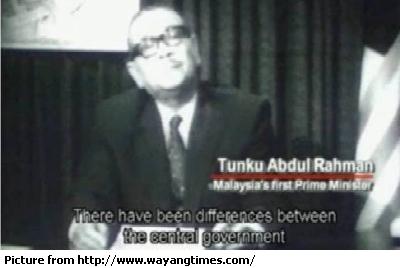
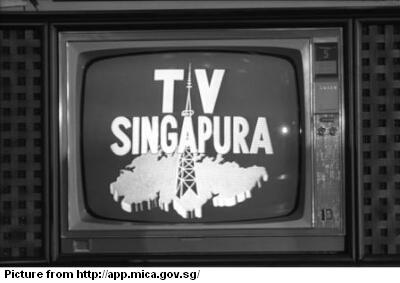 In 1965, the year of Singapore’s independence, the television station was able to screen the most defining moment of our nation as Malaysian Prime Minister Tunku Abdul Rahman announced the separation of Singapore and Malaysia.
 Thousands in Singapore cramped into various community centres to watch former Prime Minister Lee Kuan Yew on the national TV as he famously said with tears, “For me, it is a moment of anguish. All my life, my whole adult life, I have believed in merger and unity of the two territories.“
 In order to grant RTS with great autonomy so it could expand its operation and improve its efficiency, the parliament passed a bill to turn RTS into a statutory board. Hence, in 1980, the Singapore Broadcasting Corporation (SBC) was born.
 Moving ahead, the
 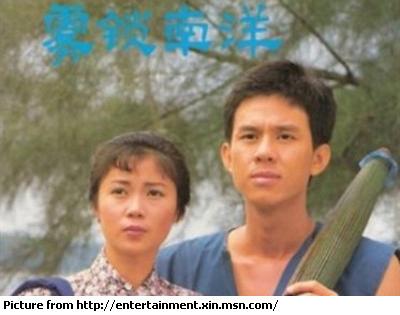 By the mid-to-late eighties, SBC was producing popular dramas with strong local flavours, such as Son of Pulau Tekong (亚答籽), The Coffee Shop (咖啡乌), Samsui Women (红头巾), Five Foot Way (五脚基), Teahouse in Chinatown (牛车水人家), The Last Applause (舞榭歌台) and Good Morning Sir! (早安老师).
 Variety shows were also hugely popular on Channel 8, enjoying high viewership from Sharp Nite (声宝之夜) (1969-1981), Live from Studio One (缤纷83) (1983–1990), Perfect Match (金童玉女一线牵) (1985–1989), to the recent City Beat (城人新杂志) series.
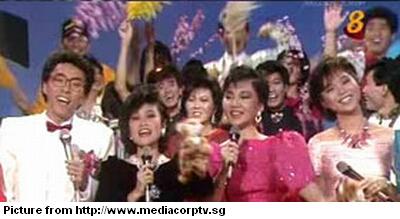 Chen Shu Cheng (陈澍承), Zhou Ru Zhu (周如珠), Zhang Yong Quan (张永权), Wang Xiang Qing (王相钦) and Huang Yu Ling (黄毓玲) were the some of the most popular variety show hosts from the late eighties to early nineties. Evergreen artiste Chen Shu Cheng has been excelling in both hosting and dramas for decades.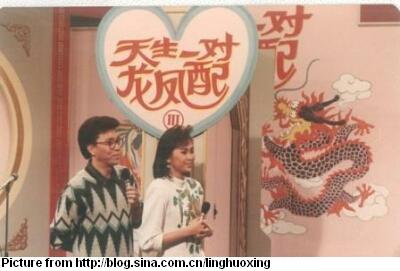
 Over at Channel 5, locally-produced English dramas had been lagging behind their Mandarin counterparts. It was not until 1994 before the first English drama, Masters of the Sea, was produced. Triple Nine followed, but it was Growing Up, lasting a total of six seasons from 1996 to 2001, that successfully attracted the most local fans.
 Channel 5 was also the prime channel for then free-to-air English Division One and Italian Serie A football, and National Basketball Association (NBA) games. Delighted football and basketball fans were glued to their TVs every week, watching the likes of Ian Rush, Marco Van Basten, Larry Bird and Magic Johnson.
 When TCS was restructured to become MediaCorp TV in 2001, the Singapore Press Holdings joined in the media broadcasting industry with two free-to-air channels: Channel U and Channel i. However, the rivalry would last only three years as SPH MediaWorks merged with MediaCorp in 2004, a move that led to the cease of operation in Channel i.














 Remember Singapore