Generations of Local Football Heroes

Football has always been the number one favourite sport in Singapore.

The oldest football association in Asia, Singapore Amateur Football Association was founded in 1892 and was the previous body of the current Football Association of Singapore (FAS), which was formed in 1952.

It was mainly made up of Europeans as the team first participated in the Malaya Cup (name changed to Malaysia Cup in 1967). Established since 1921, it is Asia’s longest-running tournament. Singapore and Selangor were the dominant forces in the tournament, sharing a total of 56 titles among them.

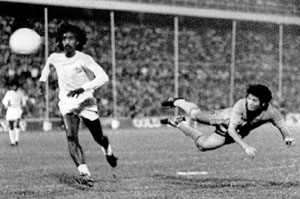
In those early days, two spectacular local Chinese footballers caught the eye of the public. “Pop” Lim Yong Liang was the first star striker who played for Singapore in the twenties. John Chia Keng Hock (1913 – 1993), nicknamed “Cannonball Chia”, was an exceptional goalpoacher who found the net regularly from the mid-thirties till WWII.

The Lions of the sixties and seventies truly represented the Singaporeans as it was made up of ethnic Malays, Chinese, Indians and a couple of Eurasians. The famous Quah family produced four national players in Kim Song, Kim Siak, Kim Swee and Kim Lye.

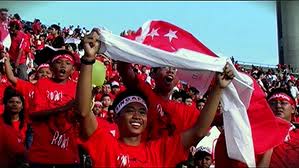
During those days, it was common to see diehard local football fans travel to Malaysia and the Jalan Besar Stadium (and later the Kallang Stadium) regularly, cheering for the Lions with the Kallang Roars or making the Kallang Waves.

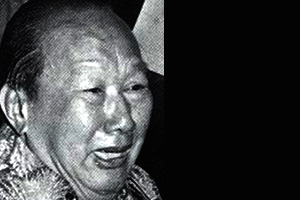
Singapore’s own legendary coach Choo Seng Quee, nicknamed Uncle Choo, engineered the Lions to Malaysia Cup triumphs in 1964 and 1977. Arguably the greatest post-war coach in Singapore football history, Uncle Choo passed away in 1983.

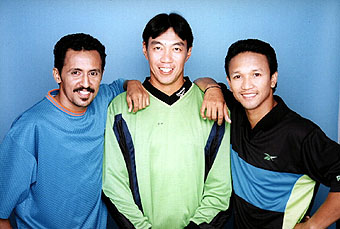
Marched into late seventies, Singapore witnessed its first modern day superstar Fandi Ahmad making his first appearance for Singapore at only 16, a national record held until 2007.
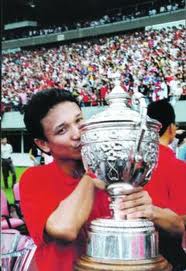
In the Malaysia Cup final in 1980, a fearless 18-year-old Fandi scored the winner to help Singapore beat Selangor 2-1 and lift the cup for the 23rd time.

After ventures in Indonesia, Holland and Malaysia, it was not until 14 years later in 1994 before Fandi would lead the Singapore team to another Malaysia Cup triumph, the last ever Malaysia Cup victory for the Lions as Singapore withdrew from the tournament for good.

The Malaysia Cup fever reached its peak in the early ninties, where the likes of David Lee (goalkeeper), Terry Patmanathan (sweeper), Borhan Abu Samah (left back), Malek Awab (right back/winger), Lim Tong Hai (center back), V. Selvaraj (midfielder), Fandi Ahmad (striker), Sundramoorthy (right winger), Lee Man Hon (left winger), “Supersub” Steven Tan (right winger), Nazri Nasir (midfielder), together with the foreign imports in Abbas Saad (striker), Alistair Edwards (striker) and Jang Jung (sweeper), became household names all over Singapore.

FAS launched the S-League in 1996 and saw emerging talents such as Indra Sahdan, Ahmad Latiff and Noh Alam Shah. However, viewership declined over the years because the league attracted lesser passionate fans as compared to the Malaysia Cup days, where rivalries were much more intense with tens of thousands of spectators packed into stadiums.

Under the Foreign Talent Scheme, FAS tried to recruit skillful footballers from countries such as Serbia, Nigeria, Brazil and China to join Singapore in order to participate in regional and global competitions, but the results are not encouraging so far. The national team is also slowly losing its identity with the fans.

I say, let’s bring the Malaysia Cup back!

Published: 14 June 2011

A month after the publication of this article, my wish has miraculously come true when the FAS announces that a team of national players mainly under 23-year-old will compete in the Malaysia Cup in 2012.

Updated: 12 July 2011

Posted in General | Tagged , , , , , , , , , , , , , , , , | 21 Comments

Top 10 ‘Haunted’ Places in Singapore

Abandoned buildings provide the best inspirations for haunted stories. Even in a tiny but highly urbanised country like Singapore, you will be surprised that there are many abandoned and empty buildings around.
Over the years, as the histories of these buildings were forgotten, haunted stories took over. It is up to each individual to believe if the stories are real or just myths.

(The listing of the ten places is not in any order)

Coloured Houses

The three famous coloured houses in Singapore are the Red, White and Green House.

1. The Red House is situated in Pasir Ris, where many chalet-goers love to explore the place for thrills.
Most Famous Ghost Story: There was a rocking armchair with a doll sitting on it in the house, and a pair of stone lions stared at whoever attempted to sneak into the compound.
Current Condition: Remains abandoned and empty.

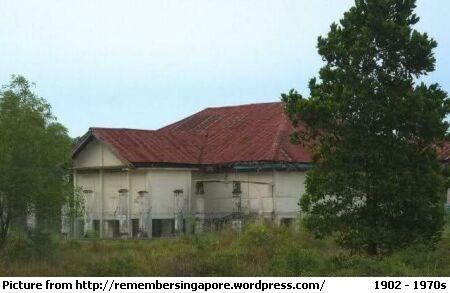
2. White House refers to Punggol’s Matilda House (although some refers to the Old Changi Hospital). It was built by Joseph Cashin in 1902 and was abandoned in the seventies.
Most Famous Ghost Story: Evil spirits had since occupied the empty house and would kill anyone who attempted to enter.
Current Condition: It is fenced up and equipped with CCTVs. New blocks of flats are built around it, and it will be turned into a clubhouse soon.

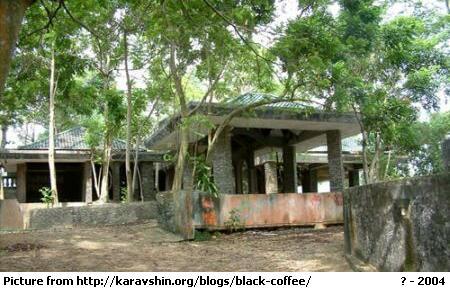
3. Hillview Mansion, located at a top of Hillview Hill, is also known as the Green House (some refers it as the Blue House).
Most Famous Ghost Story: Previous owner’s family was killed in a fire, and renovations were never quite completed because of the evil spirits lingering in the house.
Current Condition: The private mansion was demolished in 2004, leaving nothing behind except an old gate and a pile of rocks.

There is another coloured house located at Kampong Glam, though not associated with any haunting, that is known as the Yellow House (or Mansion) or Gedung Kuning. It was a former Malay palace and was built in the 1860s. The house changed hands several times, from Tengku Mahmoud (grandson of the 18th Sultan of Johor) to Haji Yusoff Haji Mohamed Noor (Malay entrepreneur and philanthropist) to finally the Singapore Government in 1999. It is now a conserved building, and is operated as a Malay restaurant.

Hospitals

4. Old Changi Hospital is perhaps the favourite place in Singapore for daring ghost-seeking youngsters. Built in 1935 as a British military hospital, it was occupied by the Japanese forces in WWII. The hospital was officially closed in 1997, as the patients were moved to the new Changi General Hospital.
Most Famous Ghost Story: Screams and shadows could be seen and heard at some of the wards, which were rumoured to be used as torture chambers by the Japanese.
Current Condition: Remains abandoned and empty.

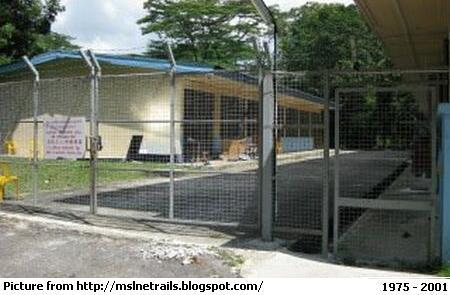
5. View Road Hospital was a little known mental hospital located in Admiralty. A subsidiary of Woodbridge Hospital, it was opened in 1975 and closed in 2001.
Most famous Ghost Story: The mental patients, when alive, were trapped in the hospital. Their spirits, likewise, were unable to escape from the building.
Current Condition: Has been converted into a foreign workers’ dormitory called View Road Lodge.

Estates

6. Neo Tiew Estate looks like a normal HDB neighbourhood except it is empty and deserted. The flats were built in 1979 and en-bloc in 2002.
Most Famous Ghost Story: Haunted by vengeful banana tree spirits, resulting in the flats being abandoned.
Current Condition: Used by the Singapore Armed Forces (SAF) in conducting urban warfare trainings.

Army Camps

7. Many Singaporeans completed their Basic Military Training (BMT) in Nee Soon Camp, an extremely old camp where its history goes all the way back to pre-WWII.
Most Famous Ghost Story: Prowling soldiers were frightened by mysterious eerie sounds as they walked past the Nee Soon Camp White House after midnight.
Current Condition: Occupied by the SAF Band.

8. Also a BMT camp, Pulau Tekong is perhaps famous for its tough trainings and ghost stories. It is rumoured (turned out to be false) that trainings are banned on Thursday nights due to the lurking of evil spirits.
Most Famous Ghost Story: The spirit of a dead recruit from Charlie Company, who died during a route march, was trapped in the bunk. An additional door had to be created to free the ghost.
Another popular one is the sightings of an old man and his young grandson who visit the bunks in the middle of the nights. The two phantoms spot those recruits who pretend to be asleep but are still awake.
Current Condition: The camp has gone through rapid modernisation in recent years.

9. Changi Commando Barracks used to house 15,400 British and Australian soldiers during WWII. It was taken over by the SAF after independence and was used as the headquarters for commandos from the seventies to eighties.
Most Famous Ghost Story: Haunted by the ghosts of the WWII Prisoners-of-war (POWs) who died of torture and starvation.
Current Condition: Remains abandoned but may be converted into a clubhouse by the Fairy Point Hotel which is currently being developed nearby.

Cemeteries

10. Bukit Brown, or commonly known as Kopi Sua (Coffee Hill) is a Chinese burial place that was opened in 1922. It was named after George Henry Brown, the first owner of the land. It was nearly cleared for development in the seventies.
Most Famous Ghost Story: Reported sightings of pontianaks hiding in the trees, and their evil laughs broke the silence of the cemetery at nights.
Current Condition: Deserted except during Qing Ming Festival. A stretch will be cleared for a new dual four-lane road by 2013.

Further Read: Singapore’s Most Enduring Ghost Stories

Published: 11 May 2011

Updated: 22 October 2012

Posted in Paranormal | Tagged , , , , , , , , , , | 130 Comments

The Sky Changes at Potong Pasir

The Singapore General Election (GE) 2011 came to an end as the ruling party People’s Action Party (PAP) extended their governance of Singapore by claiming 81 out of 87 seats in the parliament.

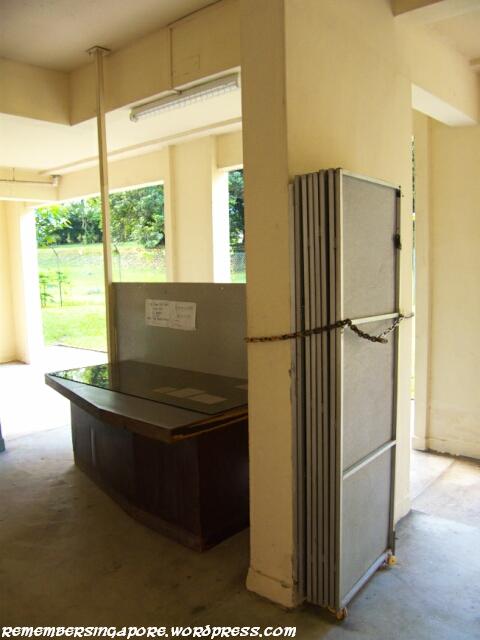
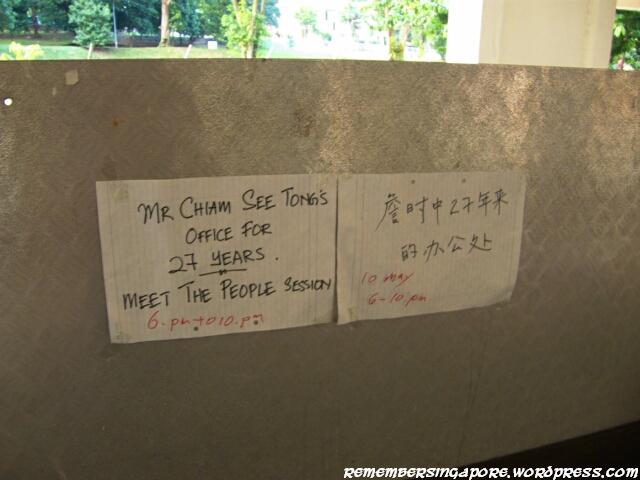
Opposition veteran Mr Chiam See Tong, aged 76, bows out of the political scene as his party lost by a narrow margin in the contest of Potong Pasir Single Member Constituency (SMC). The smallest SMC in the 2011 GE, created in 1968, was in the hands of the opposition party for 27 years since 1984.

Mr Chiam, the longest serving opposition Member of Parliament (MP) in Singapore, decided to contest in the Bishan-Toa Payoh Group Representation Constituency (GRC) in this election, but his team lost to PAP with 43% votes.

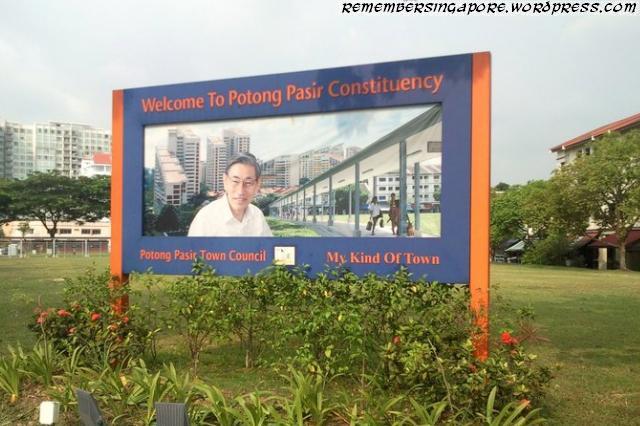
With the change of the political party-in-charge, the welcome signboard featuring Mr Chiam, situated at the entrance to Potong Pasir, may be replaced soon. Potong Pasir SMC is also likely to be dissolved in the next election and incorporated into a GRC.

The residents of Potong Pasir will not forget their popular leader of the past 27 years!

I am not actually a brave man. But I love Singapore and I love Singaporeans.
Chiam See Tong, 2011

Published: 09 May 2011

Updated: 03 June 2011

Posted in General | Tagged , , | 2 Comments

First Multi-Storey Carpark of Singapore Walks into History

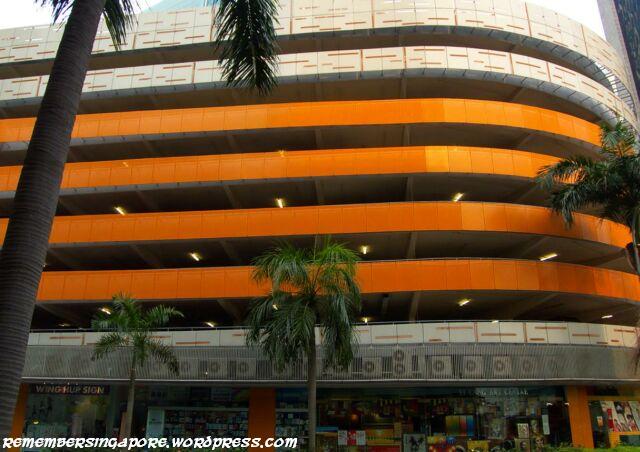
Market Street Carpark, Singapore’s first ever multi-storey carpark (MSCP) built in 1964, will be walking into history in 2014, after 50 years of service.

Providing as many as 704 carpark lots in eight storeys and charging as high as $305 per month, the bookings of its season parking have always been regularly full in the Central Business District (CBD) where a parking lot is hard to come by. Season holders have already been paying 25% more over the past five years.

The MSCP underwent a major renovation in 2006 to convert its old but popular kopitiams into air-conditioned food courts.

With the continuing rise of office rental cost, there were plans to convert the carpark into office since years ago. It is not until April 2011 that the carpark’s owner CapitaCommerical Trust (CCT) confirms that it will enter a joint venture with CapitaLand to tear down the carpark and develop the area into a 40-floor office tower in 2014.

Published: 22 April 2011

Posted in General | Tagged , | 6 Comments

Singapore’s Oldest Petrol Kiosk Winds up Business

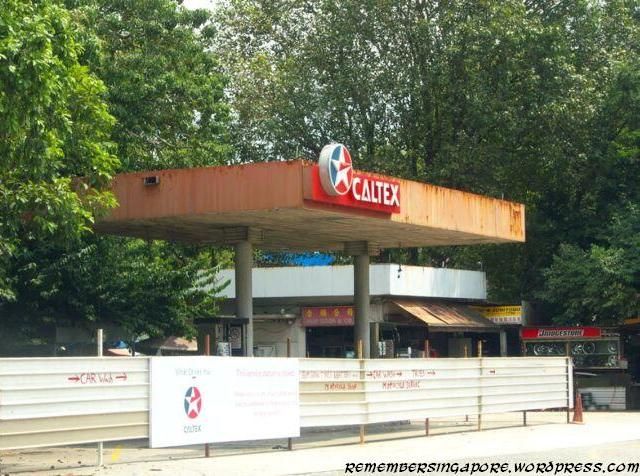
Possibly the oldest petrol station in Singapore, the Caltex petrol kiosk along Woodlands Road has wound up the business after decades of service.

Said to have started its business in the late fifties, the station looks lost in time with a shelter that badly needs a new paint job and old-styled petrol pumps. It also does not have a minimart unlike other modern petrol stations in Singapore.

In the past, this small Caltex petrol station used to serve those that travel to Malaysia using Woodlands Road. After Bukit Timah Expressway (BKE) was built to link directly to the causeway, the road has seen considerably lesser traffic in the last twenty years.

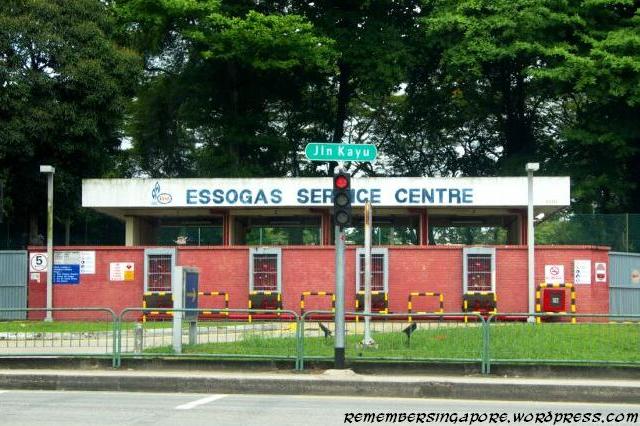
The Esso service station at Jalan Kayu, being the only petrol station in this area, is still going on strong after at least three decades. Vacuum Oil, the former body of ExxonMobil, launched its trading post in Singapore as early as 1893. It opened its first service station at Pasir Panjang in 1964, and was the first petrol company to introduce the minmart concept at its petrol station.

Singapore’s first oil refinery was set up in 1961 by Shell, which has started its business in Singapore in 1891. Caltex, on the other hand, first made its establishment here in 1933.

Published: 16 April 2011

Posted in General | Tagged , , , | 9 Comments

Interesting Singapore Road Names

This is a continuation from the previous article Old, Common Names of Places in Singapore, and their Origins.

Other than names of our pioneers, early local merchants or governors of Straits Settlements, many roads in Singapore are  also named after various items, cities or simply one reason or another.

Even Singaporeans are unaware of the existence of some of the roads!

Do you know while there is a Sunset Way at Clementi, there is also a Sunrise Way off Yio Chu Kang Road? Find out more…

Roads of Fruits

Somewhere off Upper Serangoon Road, there are two minor roads which are interestingly named after fruits: Lorong Lew Lian (罗弄榴莲) and Lorong Ong Lye (罗弄黄梨). The reason is unknown, perhaps in the past there were durian and pineapple plantations around the area. Jalan Durian can be found on Pulau Ubin. There was once a Lorong Koo Chye (罗弄韮菜) at Upper Paya Lebar, but it became defunct when Tai Seng-Ubi was developed into an industrial estate.

Elsewhere at Katong, there is a Lorong Nangka (Jackfruit in Malay), Mangis Road (Manggis is Mangosteen in Malay), Rambai Road, Duku Road, Chiku Road, Langsat Road and Rambutan Road (all tropical fruits).

At MacPherson, there is a network of “fruit-tree” roads which include Lichi Avenue (Lichi is a variant spelling of litchi, or lychee), Cedar Avenue (Cedar trees, native in Southeast Asia and Australia, produce bluish fruits that are poisonous to humans), Mulberry Avenue (Mulberry is native in subtropical regions of Asia, Africa and Americas), Angsana Avenue (common tree found in Singapore with a flat disc-shaped fruit), Kenanga Avenue (Kenanga is the Indonesian name for Ylang-Ylang, a perfume tree with black fruits) and Belimbing Avenue (Belimbing is the Indonesian name for starfruit).

Roads of Bananas

A set of connected roads near Beauty World, Upper Bukit Timah, used banana (pisang in Malay) as names. They are called Lorong Pisang Asam (sour in Malay), Lorong Pisang Batu (stone), Lorong Pisang Emas (gold), Lorong Pisang Hijau (green), Lorong Pisang Raja (king) and Lorong Pisang Udang (prawn). Jalan Pisang is located at Kampong Glam.

Roads of Nuts

At Bukit Panjang neighbourhood, a series of minor roads, drives and crescents are named after nuts, namely Almond, Cashew, Chestnut and Hazel.

Roads of Royalties

There exists a “royal” estate along Farrer Road, where the roads are named after monarch titles: King’s Road, Queen’s Road, Empress Road, Prince Road, Duke Road, Duchess Road, Prince of Wales Road, Princess of Wales Road and Coronation Road.

Prince Charles Crescent and Prince Phillip Avenue are two parallel roads along Alexandra Road, while King Albert Park is a minor road at the junction of Bukit Timah Road and Clementi Road, and King George’s Avenue is found at Jalan Besar.

King’s Road and Queen’s Road are not to be confused with King’s Avenue and Queen’s Avenue located at Sembawang. There is a Queen Street in the City but no King Street exists in Singapore. There is a Jalan Rajah (“king” in Malay) at Balestier though.

Roads of Poets

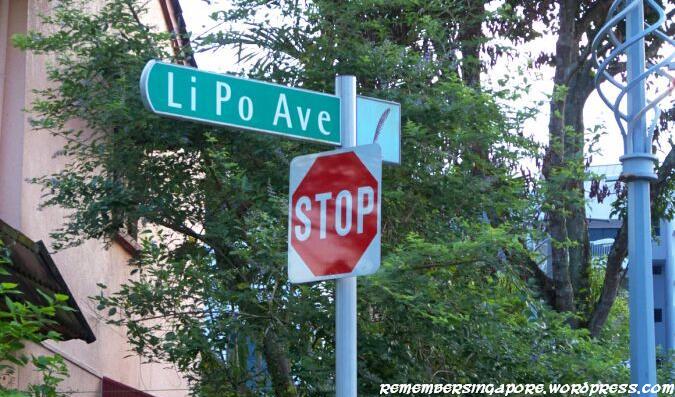
The roads at Teacher’s Estate, Yio Chu Kang Road, are all named after famous poets and philosophers. There are three roads named after Chinese poets, namely Li Po (李白) Avenue, Tu Fu (杜甫) Avenue, Tung Po (苏东坡) Avenue. Iqbal Avenue is named after Muhammad Iqbal, a Muslim poet and philosopher who lived in British India from 1877 to 1938.
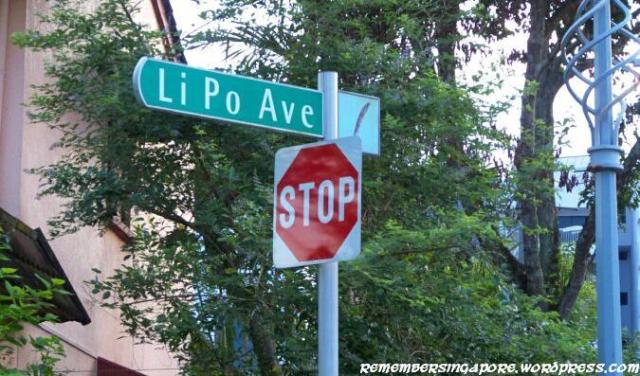
In the same estate, there are also Tagore Avenue (named after Bengali poet Rabindranath Tagore (1861-1941)), Kalidasa Avenue (refers to 4th century Sanskrit writer Kalidasa), Omar Khayyam Avenue (named after Persian poet/philosopher Omar Khayyam (1048-1131)) and Munshi Abdullah Avenue (Munshi Abdullah (1797-1854) was the Father of Modern Malay Literature). At Serenade Walk, the word serenade means a musical performance in someone’s honour.

Roads of Places

There are many roads in Singapore that are named after cities or places of other countries in the world.

Two parallel short roads called Butterworth Road and Ipoh Road (Malaysia) exist at Tanjong Katong. At Raffles Place, there is the Malacca Road, whereas Pahang Street and Johore Road (now defunct) are located in Kampong Glam. There are three roads named after Penang, namely Penang Road, Penang Lane (near Fort Canning) and Jalan Pinang (Penang) at Kampong Glam. Interestingly, Perak Road is at Little India while Trengganu Street is found in Chinatown.

In the downtown where the early Chinese resided, many streets are named after cities or provinces of China, such as China Street, Amoy (厦门) Street, Canton (广州) Street, Chin Chew (possibly referring to 泉州) Street, Hokien (福建) Street, Nankin (南京) Street  and Pekin (北京) Street (now an inner street). Shanghai (上海) Road is located off River Valley Road, and Yunnan (云南) Crescent/Drive/Walk are at Jurong West.

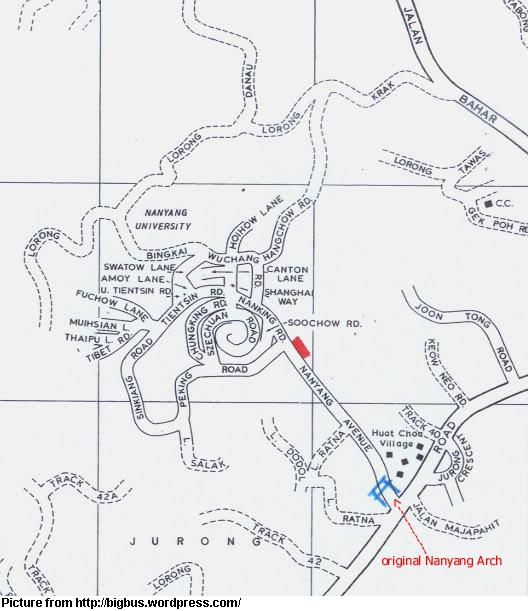
Interestingly, during the days of Nanyang University (1956-1980), many roads inside the campus were named after cities and places of China, as seen in the map above. There were the likes of Peking (北京), Sinkiang (新疆), Tibet (西藏), Fuchow (福州), Swatow (汕头), Amoy (厦门), Thaipu (大浦), Wuchang (武昌), Szechuan (四川), Chungking (重庆), Nanking (南京), Tientsin (天津) and Hangchow (杭州). All these roads were defunct after the university shut down in 1980.

A host of roads named after Burma cities, towns and landmarks can be found near the  Moulmein Flyover of CTE. On one side there are the Rangoon (capital of Burma 1948-2006) Road and Mergui (Burma’s Mergui Archipelago) Road. On the other side lie Akyab (Burmese city) Road, Ava (capital 1364-1841) Road, Bassein (city) Road, Bhamo  (city) Road, Irrawaddy (Burmese river) RoadMandalay (capital 1860-1885) Road, Martaban (Burmese town) Road, Minbu (city) Road, Pegu (city) Road, Prome (town) Road and Shan (Burmese ethic group) Road.

Near Little India, Bristol Road, Cambridge Road, Carlisle Road, Devonshire Road, Dorset Road, Durham Road, Gloucester Road, Hampshire Road, Hertford Road, Kent Road, Norfolk Road, Northumberland Road, Oxford Road, Rutland Road,  and Truro Road are all named after England counties.

Singapore roads that are named after England’s towns, cities and suburbs include Exeter Road, Oxley Road, Somerset Road and Tiverton Road.

Outside Sembawang Shipyard, which was formerly the British Naval Base, the roads were named after countries, capitals and cities in the Commonwealth of Nations. They are the Auckland (New Zealand city) Road, Bermuda (British overseas territory in North Atlantic Ocean) Road, Canada Road, Canberra (Australia’s capital) Avenue, Durban (South African city) Road, Falkland (British overseas territory in South Atlantic Ocean) Road, Fiji Road, Gibraltar (British overseas territory at south of Spain) Road, Kenya Crescent, Lagos (Nigerian port) Circle, Malta Road, Montreal (Canadian city) Road, Ottawa (Canada’s capital) Road, Pakistan Road, St. Helena (British territory in South Atlantic Ocean) Road, St. John’s (Antigua and Barbuda’s capital) Road and Wellington (New Zealand’s capital) Road.

Other than Pahang Street and Jalan Pinang mentioned earlier, Kampong Glam also consists of a number of roads named after Muslim places, such as Bali Lane, Java Road (both Indonesia islands), Baghdad (capital of Iraq) Street, Muscat (capital of Oman) Street and Kandahar (Afghanistan city) Street.

A Ceylon Road can be found along East Coast Road. Ceylon is the former name of Sri Lanka from 1948 to 1972. The name of Kadayanallur Street, which is off Maxwell Road, is derived from an Indian city. So is the nearby Banda Street.

Interestingly, the road connected to Kadayanallur Street is called Erskine Road, where Erskine is a Scottish town. Glasgow Road is in Kovan, where Glasgow is the largest city in Scotland. Ireland’s capital, province and townland are also reflected in Dublin Road, Connaught Drive and Killiney Road. French Road is near Jalan Besar Stadium.

There is also the Hongkong Street between New Bridge Road and South Bridge Road.

The famous Kwan Im Thong Hood Cho Temple stands on Waterloo Street, which was named after the Battle of Waterloo where the Duke of Wellington Arthur Wellesley claimed a famous victory over Napoleon Bonaparte. Waterloo is a municipality in Belgium.

Roads of Emotions

Residents going to the Aljunied Park will probably feel a sense of joy as the network of roads beside the park are named Happy Avenue. Indeed, it is said the area, once part of MacPherson, had a theme of contentment and virtues for happiness. One cannot say the same for the Sembawang folks with its Jalan Malu-Malu (Malu-malu is affectionately shy or modest in Malay) off Sembawang Road.

Meanwhile, people staying at Kay Poh Road will not be pleased if anyone calls them busybodies. Kay Poh Road, however, was named after Wee Kay Poh (黄继宝) who was a former apprentice at A.L. Johnston & Company in the 19th century and later became the owner of opium and liquor business.

Roads of Numbers

At Old Airport Road, a network of small roads are named according to numbers in Malay. Jalan Satu, Jalan Dua, Jalan Tiga, Jalan Empat and Jalan Lima simply means “road one” to “road five”.

Roads of No Names

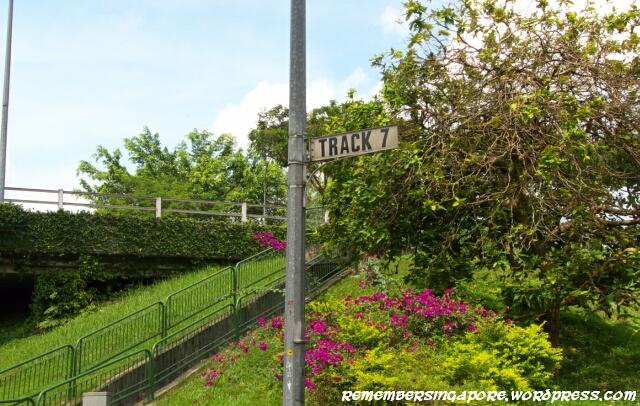
Many small roads of the early days still exist in the under-developed parts or restricted areas of Singapore. They have no official names and are simply called… tracks. They usually come with a single- or double-digit suffix.

Punggol Road has a Track 24 leading to a fishing pond, while there is a Track 14 off Old Choa Chu Kang Road that enters a Chinese cemetery. Mandai Road’s Track 7 and Track 16 are still around, but the tracks at Lim Chu Kang Road (Track 11 & 13) and Jurong Road are now defunct.
Both Punggol and Ponggol were in use since the early days. Today, the name Punggol is being used officially, whereas the name Ponggol is now only found at the small roads of Ponggol Seventeenth Avenue and Ponggol Twenty-Fourth Avenue.

Published: 11 April 2011

Updated: 17 February 2020

Posted in Cultural | Tagged , , , , , , , , , , , , , , , , , | 92 Comments

Old, Common Names of Places in Singapore, and their Origins

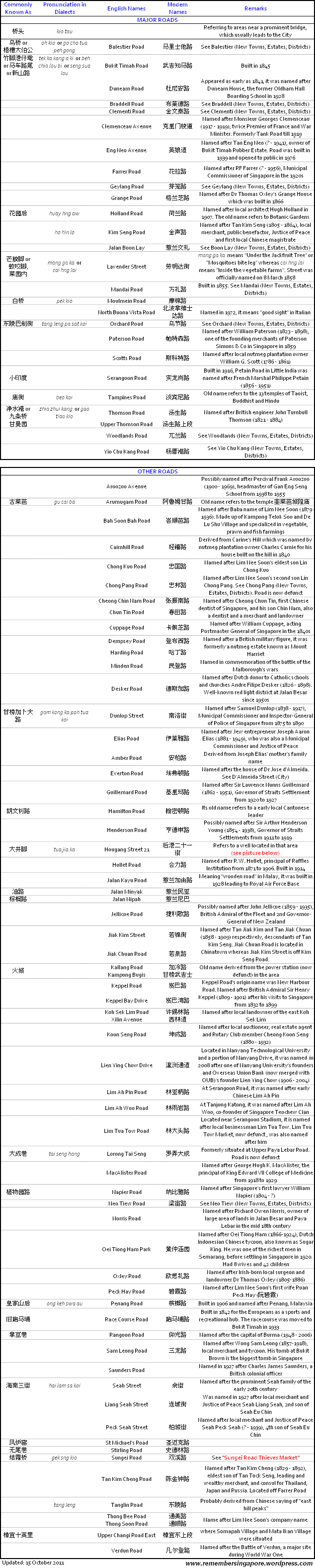
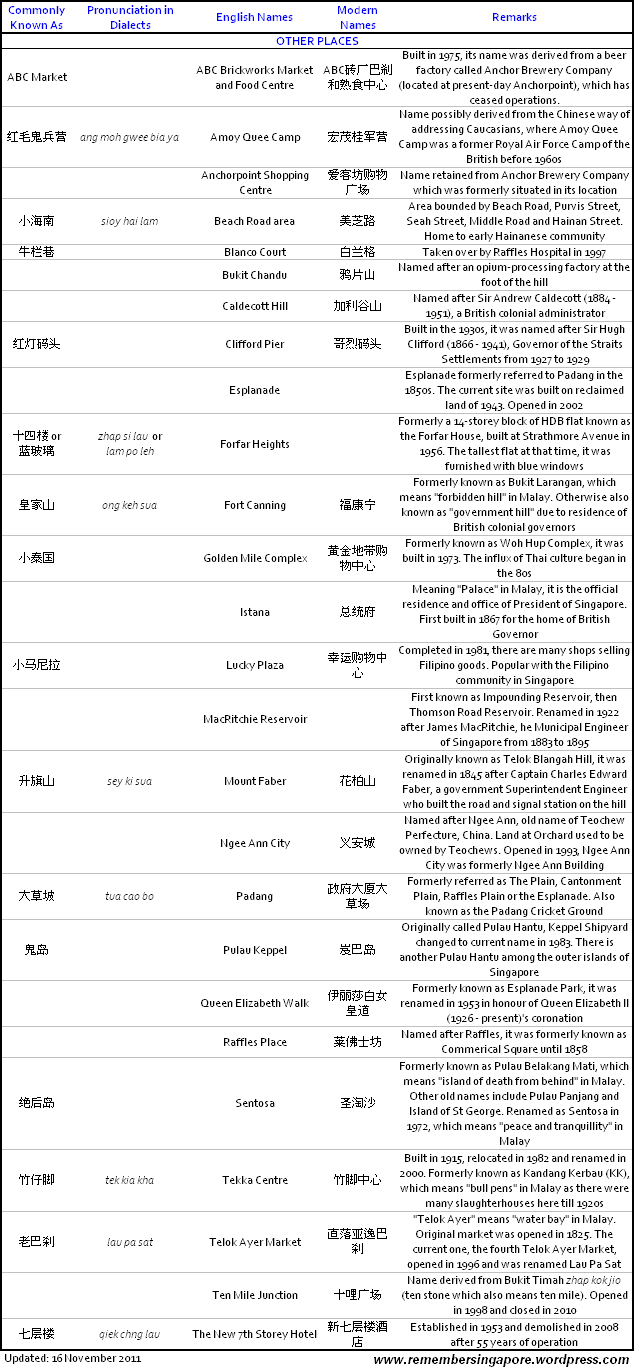
Singapore was once known as 石叻坡, where 石叻 is “Selat” (Malay term for straits) and 坡 is an old Chinese way of addressing a place. Within the country, many places in Singapore have colourful histories and some are better known by their old names. In this post, I shall attempt to compile as many old names as possible, including the origins of the names of some of the places.

City

The City or Downtown Core spans from Chinatown and Hong Lim to Tanjong Pagar and Ayer Rajah. Since 1956, there were more than 150 roads and streets built in the City. Among these, 25 roads were named after 22 prominent Chinese of the past, who had made massive contributions in the development of Singapore.

Chinatown

In the early days, majority of the Chinese community, largely the Hokkiens, Teochews and Cantonese, lived and worked at the southwestern part of the Singapore River, which came to be known as Chinatown. The existence of Singapore’s Chinatown was recorded as early as 1330 by a Yuan Dynasty explorer Wang Da Yuan (汪大渊). He also referred Singapore as Temasek (淡马锡).

Tiong Bahru

Tiong Bahru is one of the oldest estates in Singapore, being built in the thirties, and still possesses many pre-WWII buildings. There still exists an air-raid shelter at Moh Guan Terrace. It is the only estate in Singapore to have all its streets named after local Chinese pioneers.

Villages

At the peak of the plantations in the mid-19th century, Chinese settlers expanded to other parts of Singapore, growing in-demand commodities such as gambier and pepper. The head of the clan in the kangchu (lord of the river) system usually became associated with the land they owned, such as Lim Chu Kang, Choa Chu Kang and Yio Chu Kang. Chan Chu Kang (曾厝港) became Nee Soon Village after Lim Nee Soon set up rubber plantation in that region. Another village known as Low Chu Kang (刘厝港) had long vanished in the history of Singapore.

Many villages had also disappeared while the names of some villages are lucky enough to be retained to this day. Chong Pang Village, closed in 1989, was originally located closer to present-day Sembawang than Yishun, whereas Yew Tew Village lasted until 1991. Others such as Chye Kay Village and the Teochew-dominated Chia Keng Village were perhaps only remembered by the older generations.

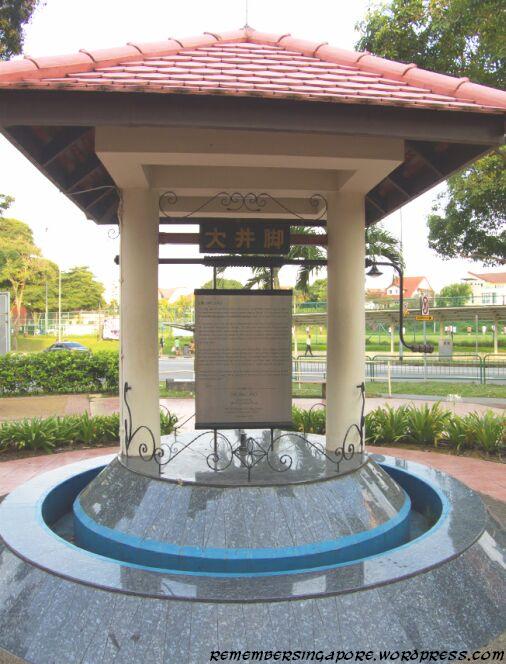
An interesting local Chinese way of naming a place was by “milestone” 石, which means li 里, a Chinese measurement of distance that is approximately equaled to half a kilometer.  However, there were confusions over li and mile, thus over time, 石 refers to mile 英里 too. Several early residential areas were named this way, such as Hougang lark kok jio (sixth milestone) 后港六条石 (now Kovan), Jurong qiek kok jio (seventh milestone) 裕廊七条石 and Changi zhap kok jio (tenth milestone) 樟宜十条石.

Bukit Panjang was commonly referred to Bukit Timah zhap kok jio (tenth milestone) 武吉知马十条石 or 武吉知马十英里, where the former Ten Mile Junction (十里广场) was situated.

New Towns/Estates/Districts

After independence, when Singaporeans started to move into the estates, different ethnicity tended to live close among themselves. This created a display of different culture at different places, such as the Malay-dominated Geylang Serai, Teochew-controlled Yio Chu Kang, Queenstown which was nicknamed “Little Hainan” and Tanjong Pagar known as “Little India”. These features slowly vanished in the late eighties after the government implemented the race quota system in the new HDB towns. Segregation of dialect groups among the Chinese also weakened due to the Speak Mandarin campaign launched in 1979 by then Prime Minister Lee Kuan Yew.

During the peak of the Mandarin campaign in the eighties and nineties, there were attempts to change the name of some places from its local or dialect versions to hanyu pinyin names. Such examples were Zheng Hua 正华 (Bukit Panjang), Zhu Jiao 竹脚 (Tekka) and Yishun 义顺 (Nee Soon). The move proved unsuccessful due to the unpopularity of the new Chinese names, thus some were reverted back to their old names.

Roads

Roads played important roles in the early development of other parts of Singapore, other than the City. Bukit Timah Road, the longest road in Singapore at 25km, was constructed in 1845, while Thomson Road and Mandai Road were laid in the 1850s.

Some of the roads vanished in history, but those that remained after decades, allowed unique tree-scape along the roads to be preserved. National Parks (NParks) has identified these roads as the Heritage Roads. The main ones are Arcadia Road, Mandai Road, Lim Chu Kang Road, Mount Pleasant Road and South Buona Vista Road.

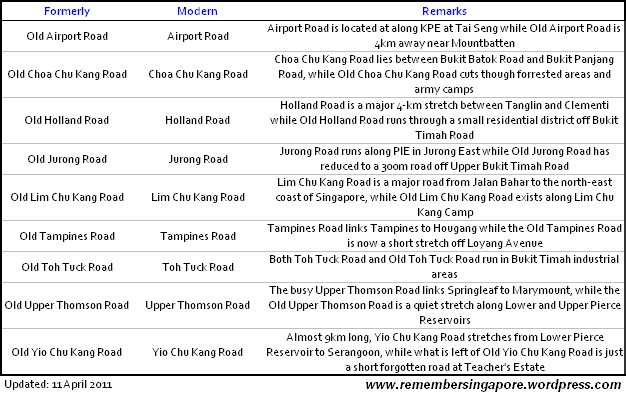
As mentioned, major roads helped to link various undeveloped parts of Singapore in the early days. As time passed by, due to poor accessibility, low traffic volume or affected by land development, some of the roads were replaced by newer versions.

A number of old major roads managed to live till this day, even though most are of little importance now. There is an Old Middle Road at the Sembawang shipyard but it has no relationship to the Middle Road in the City.

Bridges

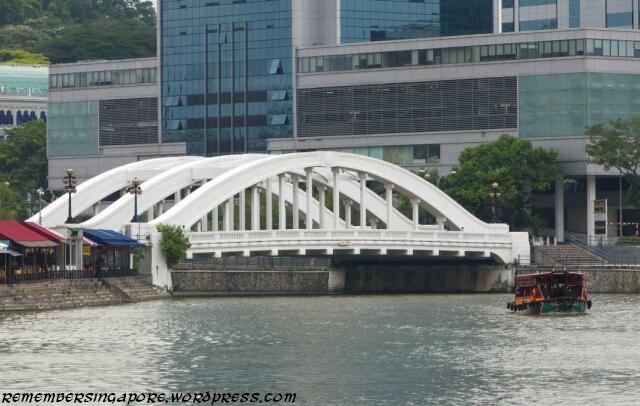
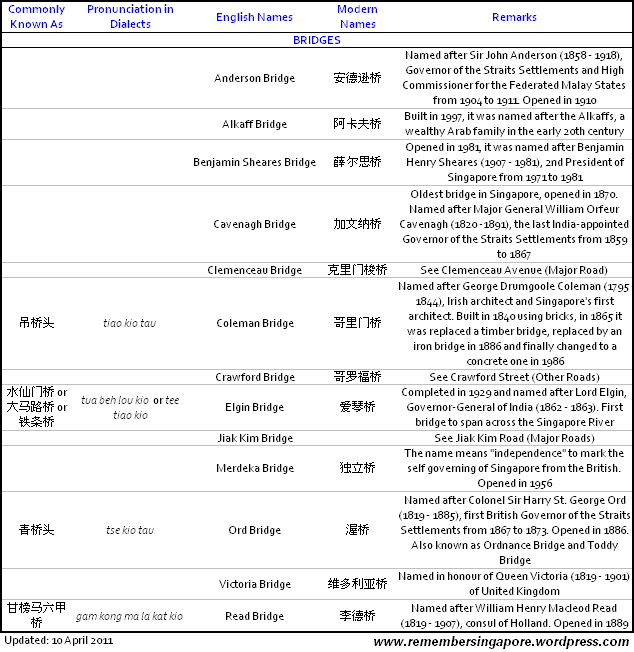
There are at least 15 pedestrian and vehicular bridges spanning over the Singapore River, the largest being the Benjamin Sheares Bridge (part of East Coast Parkway), extending over the Marina Bay. As the City area was developed the earliest by the British colonial government, the bridges built in those days were mostly named after governors, officials or other prominent Western figures. The elegant Elgin Bridge (picture below) was the first bridge to span across Singapore River.

The locals, typically the Chinese, tend to have difficulties pronouncing the names of the bridges, so they named in their own ways, usually by the colours of the bridges. The names also referred to the roads and areas around the bridges, such as Tse Kio (Green Bridge) refers to Ord Bridge, Oh Kio (Black Bridge) refers to Balestier, Pek Kio (White Bridge) refers to Moulmein and Ang Kio (Red Bridge) refers to area between Ang Mo Kio and Thomson Road.


Hospitals/Schools/Places of Worship

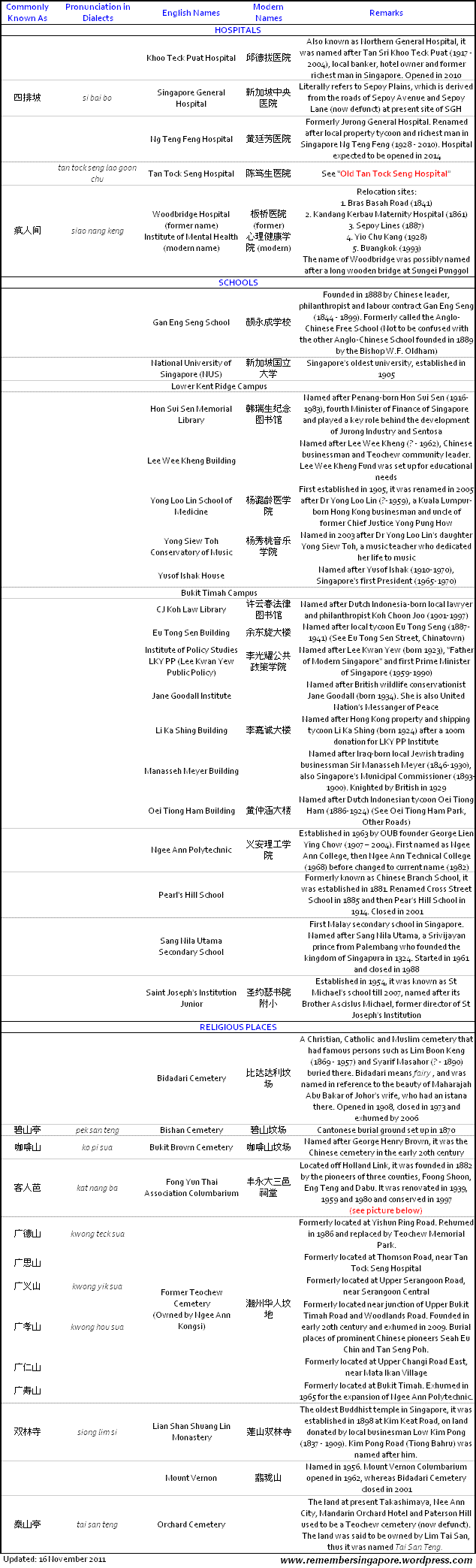
Recently there were debates on whether a general hospital should be named after a person, even though he had donated a large sum of money. Many suggested that a school, a road or a public structure should be named after someone who had contributed massively to the development of Singapore, and not just donated a large sum.

The Teochew community in Singapore, spearheaded by Ngee Ann Kongsi, was arguably the most successful Chinese community in the early days. Their burial grounds, owned by the Kongsi, covered large pieces of lands all over Singapore, but most had been acquired by the government for redevelopment purposes.


Others


For a more in-depth compilation of colloquial names with map references, read Compassvale Ancilla and Mang Kah Kar.

Published: 04 April 2011

Updated: 29 May 2013

Posted in Cultural | Tagged , , , , , , , , , | 56 Comments

End of the Road for the Golden Bridge

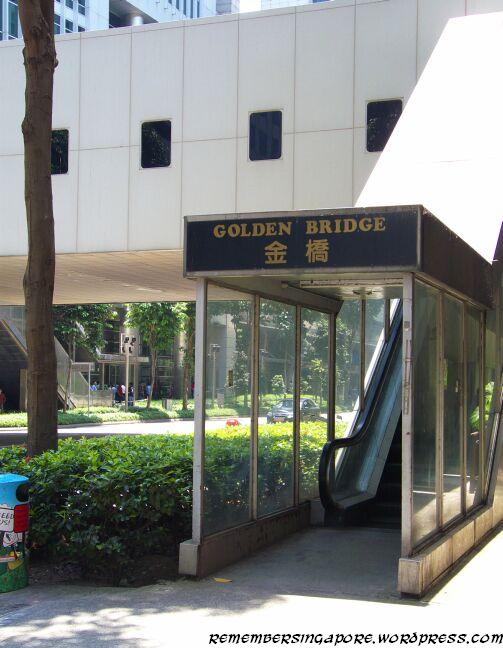
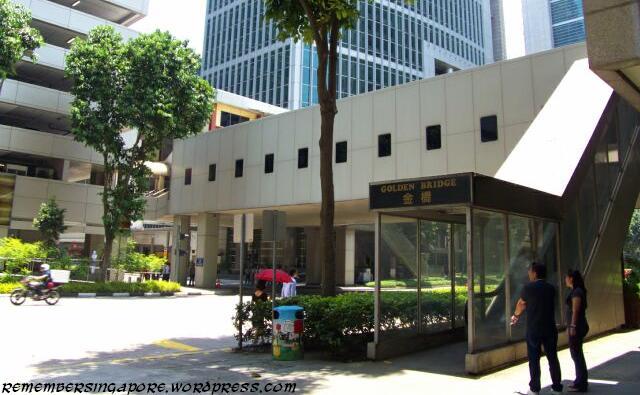
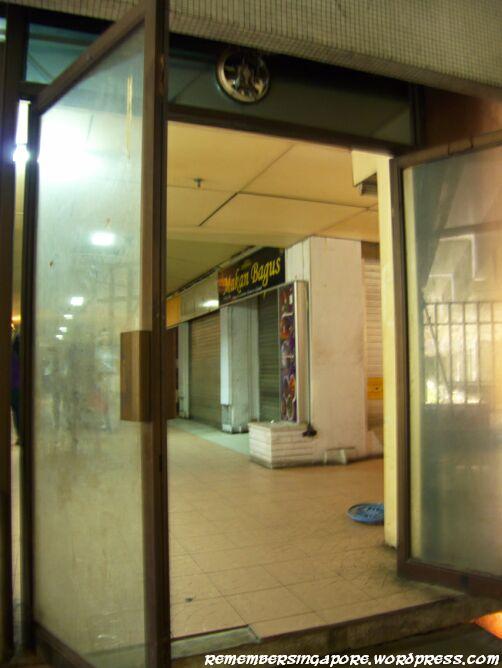
It was the end of the road for the Golden Bridge of Central Business District (CBD), as the popular makan place was officially closed on 31st March 2011.

Situated over Shenton Way, linking Singapore Exchange (SGX) Center II to the Shenton House, the Golden Bridge was a food paradise for the working professionals around the vicinity during the lunch times.

Boasting some 20 eateries, the unique bridge, one of the only two pedestrian bridges in Singapore with an inner food center, operated as early as 1973. The other similar bridge was the former Change Alley Link Bridge, now known as OUE Link, that spanned between Raffles Place and Collyer Quay.
Although the space was limited inside the bridge, the good food and relatively cheap prices attracted many food lovers. Many regular customers became friends with the food stall owners over the years.

The bridge was given a new 3-year lease in 2011. In early 2015, the Land Transport Authority (LTA) announced that the bridge would be demolished during the Chinese New Year holidays.

Published: 01 April 2011

Updated: 01 February 2015

Posted in General | Tagged , , | 6 Comments

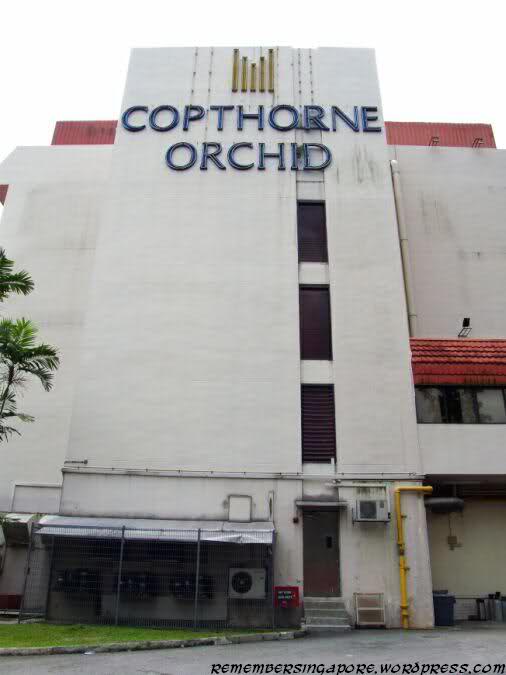
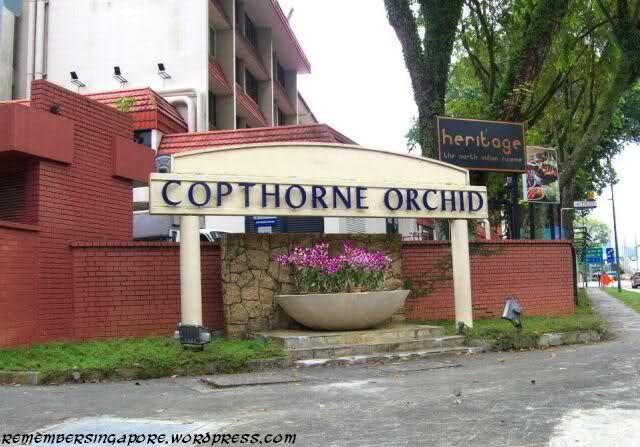
Goodbye, Copthorne Orchid Hotel

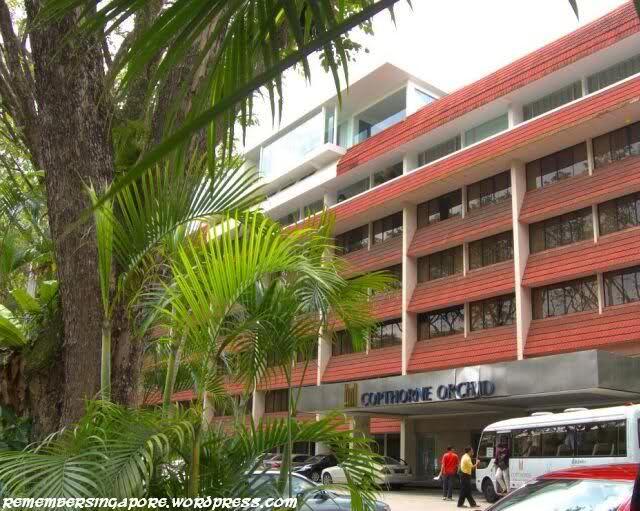
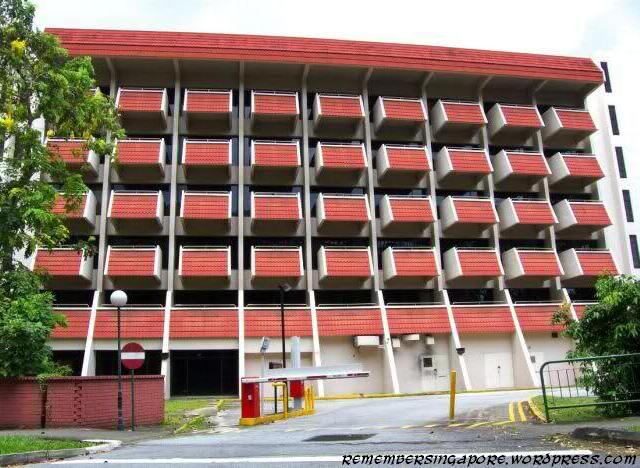
The 42-year-old iconic Copthorne Orchid Hotel along Dunearn Road (just before Whitley Road) will be walking into history on 1st April 2011. On its land covering almost 180,000 square feet, a high-end condominium of 150 units known as The Glyndebourne will be built.
The demolition of the six-storey hotel was initially planned to take place at the end of 2010, but the plans were shelved due to unfavourable property market sentiments.

The late Mr Kwek Hong Png, founder of Hong Heong Group, set up Heong Leong Company at Beach Road in 1940 with $7,000. The company expanded and diversified into different sectors over the years.

In 1972, Heong Leong entered into hospitality for the first time and took over Orchid Inn from the Pontiac Group. Orchid Inn would later become Novotel Orchid Inn and now Copthorne Orchid Hotel.

Long serving staff of Copthorne Orchid Hotel would tell you their hottest topic of the yesteryear was probably the romance of Hong Kong celebrity Chow Yun Fat and his Singaporean wife Jasmine Tan, who was once working as a receptionist at the hotel.

Other than the one at Dunearn Road, Heong Leong’s subsidiary Millennium & Copthorne Hotels (M&C) also owns Grand Copthorne Waterfront Hotel Singapore, Copthorne King’s Hotel Singapore as well as Copthorne Orchid Hotel of Penang, Malaysia.

The Glynebourne is expected to be completed by 2015.

Published: 09 March 2011

Posted in General | Tagged , , , , , , | 18 Comments

Singapore Kopitiam Culture

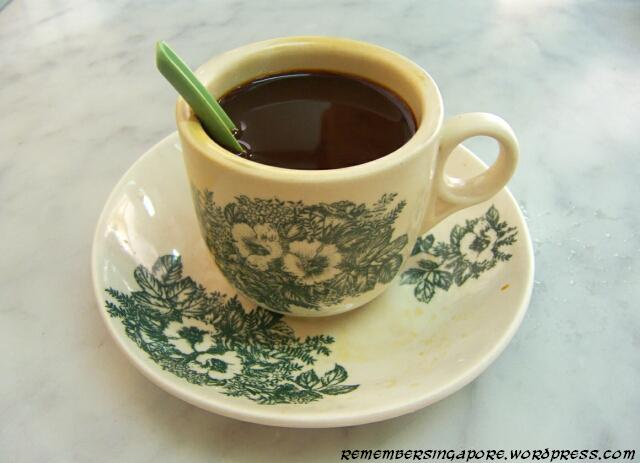
Kopitiam, literally means coffee shop (coffee in Malay and shop in Hokkien), is commonly found all over Singapore and Malaysia.  It serves as a place for common folks to eat and drink, or just gather around to chit chat or gossip about the latest news.

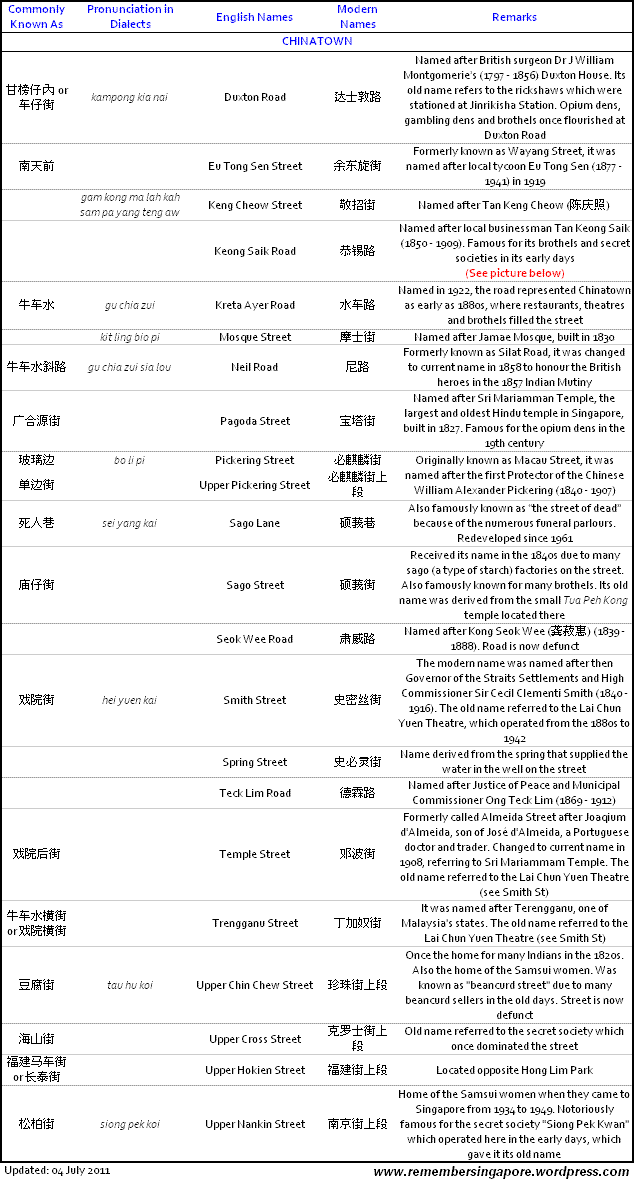
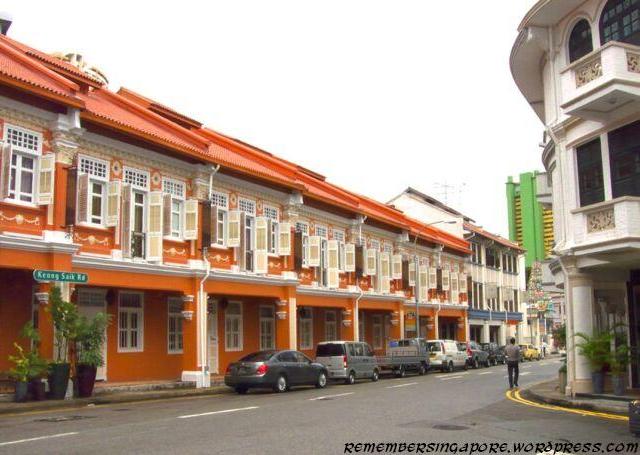
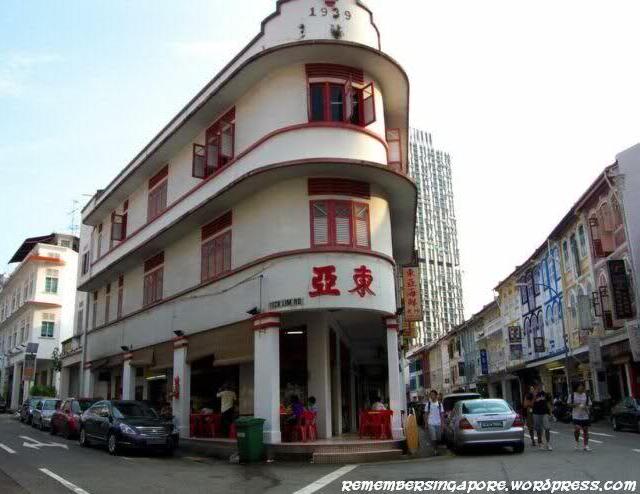
One of the oldest kopitiam in Singapore, Tong Ah Eating House is located at Keong Saik Road, a street in Chinatown that was named after Chinese businessman Tan Keong Saik in 1926 but is more well-known as a place where prostitutes and gangsters roamed the 1960s.

Selling old-styled local breakfast (half-boiled eggs, kaya toast with kopi or teh), the kopitiam, established in 1939, also serves zi char nowadays during lunch and dinner times.

The oldest Hainanese coffeeshop currently in Singapore belongs to Killiney kopitiam at Killiney Road. It started off as Kheng Hoe Heng Coffeeshop in 1919 by a Hainanese Foo-surnamed family. However, it was bought over in 1992, modernised over the years and developed into a franchise in local and oversea markets.

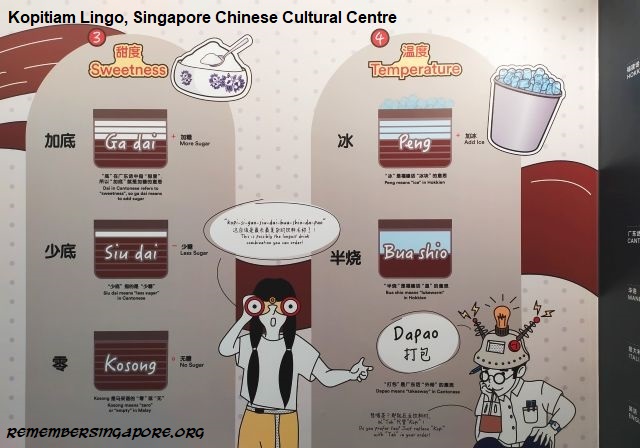
Do you know the local kopitiam lingo for ordering different types of beverages? Over the decades, the names of the drinks have evolved to become a unique mixture of Malay, Hokkien, Cantonese, Hainanese and also some Chinese and English.

Common Terms used for Beverages & Food found in a Kopitiam

Tea:
Teh – Tea with condensed milk and sugar
Teh PengTeh with ice
Teh Siew Dai (“siew dai” 少底 means less bottom in Cantonese) – Teh with less sugar
Teh Gar Dai (“gar dai” 多底 means more bottom in Cantonese) – Teh with more sugar
Teh KosongTeh without sugar
Teh O – Tea with sugar, but without milk
Teh O PengTeh O with ice
Teh O Siew DaiTeh O with less sugar
Teh O Gar DaiTeh O with more sugar
Teh O KosongTeh O without sugar
Teh C (“C” means fresh in Hainanese) – Tea with carnation milk and sugar
Teh C Peng Teh C with ice
Teh C KosongTeh C without sugar
Diao Her (“fishing” in Hokkien) – Tea with teabag
Jio Kia (“mirror” in Hokkien) – 1/3 tea, 2/3 hot water
Teh Tarik (“pulled tea” in Malay) – Foamy tea with milk (usually found at Muslim stalls)
Teh Halia – Tea with milk and ginger water (usually found at Muslim stalls)
Teh MasalaTeh Tarik with added Spices such as cinnamon, cardamom, fennel and ginger (usually found at Muslim stalls)

Coffee:
Kopi – Coffee with condensed milk
Kopi Gao – Thick kopi
Kopi Di Lo (“di lo” 直落 means all the way down in Hokkien) – Extra thick kopi
Kopi Poh – Thin kopi
Kopi Peng Kopi with ice
Kopi O – Black coffee without milk
Kopi O Siew Dai Kopi O with less sugar
Kopi O Gar DaiKopi O with more sugar
Kopi O KosongKopi O without sugar
Kopi C – Coffee with evaporated milk
Kopi C Siew DaiKopi C with less sugar
Kopi C Gar DaiKopi C with more sugar
Kopi Sua – Extra order of kopi
Kopi Tarik (“pulled coffee” in Malay) – Foamy coffee with milk (not common in Singapore)

Others:
Tak Giu (“kick ball” in Hokkien) – Milo (due to the football player image on the Milo can)
Tak Giu Peng – Milo with ice
Milo Dinosaur – Milo ice with extra scoop of Milo powder on top
Milo Godzilla – Milo Dinosaur with double scoops of Milo powder on top
Dai Kar Ho (“everyone’s good” in Cantonese) – Horlicks (phonetic name)
Lao Hor (“tiger” in Hokkien) – Tiger Beer
Ang Ji Gao (“red-tongued dog” in Hokkien) – Guinness Stout (due to the dog image on the beer can)
Kim Boon Tai (“Clementi” in Hokkien) – Home-made lemon tea (phonetic name)
Lai Kor (“underwear” in Hokkien) – Coke Light (phonetic name)
Buay Si Gor Lark (“8456” in Hokkien) – Pepsi Cola (phonetic name)
Xiao Bai Tu (“rabbit” in Mandarin) – Carrot juice
Siao – Home-made barley drink
Yuan Yang (“Mandarin ducks” in Mandarin) – Teh plus Kopi (common in Hong Kong but not very popular in Singapore)
Michael Jackson – Soya bean with grass jelly (not common in a typical local kopitiam)

Food:
Zar Tan (“bomb” in Hokkien) – Half-boiled eggs

Published: 17 February 2011

Updated: 29 August 2021

Posted in Cultural | Tagged , , , , , , , , , , , , , , , , , , , , , , , , | 17 Comments