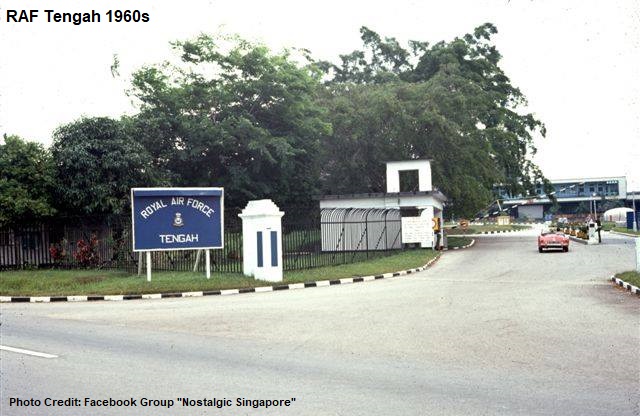
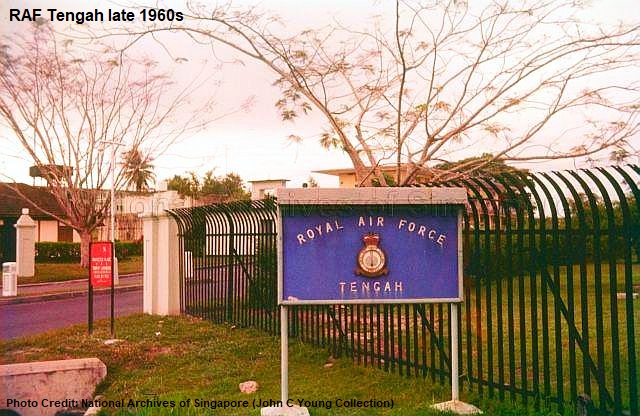
RAF Tengah was a British Royal Air Force air base built in 1939 as part of the British’s preparation for an imminent war and threat by the Japanese. The fear of invasion turned into reality on 8 February 1942, when the Japanese forces landed on Sarimbun Beach at the northwestern side of Singapore.
A day later, the Japanese captured RAF Tengah, making it the first airfield in Singapore to fall to the enemies during the Second World War. After the war, the British retook RAF Tengah, and it remained under the British’s control for more than four decades, until their withdrawal from Singapore in the early seventies.
The air base was handed over to the Singapore Air Defence Command (SADC), the predecessor to the Republic of Singapore Air Force (RSAF), on 15 September 1971, and subsequently became Tengah Air Base (TAB). SADC also took over the Sembawang and Changi Air Bases from the British at the end of 1971.
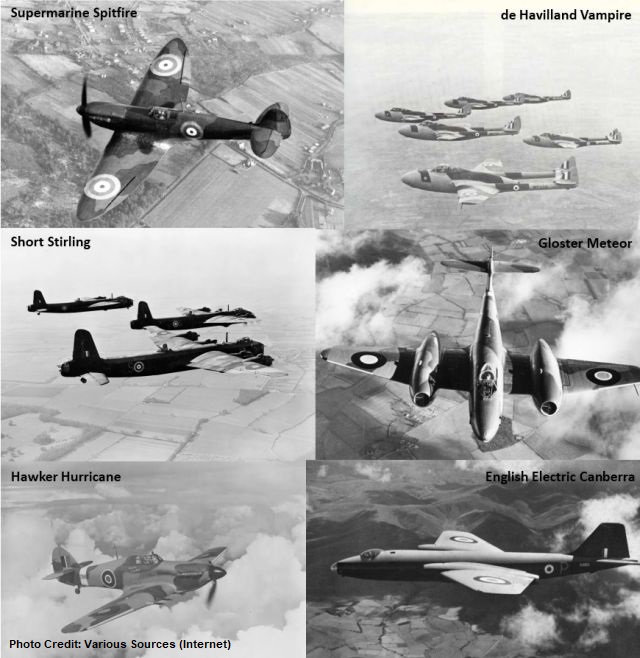
An interesting trivia of RAF Tengah is that most of its roads were named after iconic British military aircrafts that were developed and used during the Second World War. There were as many as 13 roads within the air base that were named after British military aircrafts.
The Battle Road was the only road at RAF Tengah that was not named after any aircraft. It was likely named after the Battle of Britain, as a commemoration to mark RAF’s hard-fought victory in their defense against Nazi Germany’s air force in October 1940.
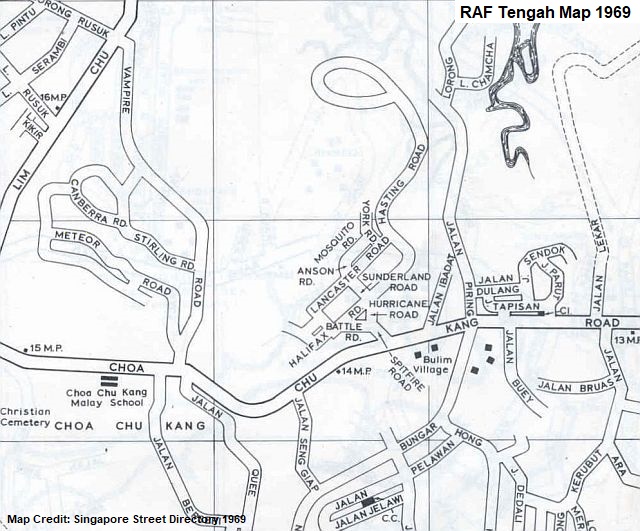
|
RAF Tengah Road Names |
Named After Famous British Military Planes |
|
|
1 |
Spitfire Road |
The Supermarine Spitfire was a British single-seat fighter plane that played a crucial role during the WWII. It was in service between 1938 and 1948. |
|
2 |
Meteor Road |
The Gloster Meteor was the first British operational jet fighter, and was the only jet plane used in combat by the Allies during the WWII. |
|
3 |
Vampire Road |
The de Havilland Vampire was a British jet fighter, the second jet plane after Gloster Meteor, that entered service during the WWII. |
|
4 |
Mosquito Road |
The de Havilland DH.98 Mosquito was a British twin-engine, multi-role combat plane used during the WWII. It entered the service in 1941. |
|
5 |
Anson Road |
Nicknamed “Faithful Annie”, the Avro Anson was a British twin-engine, multi-role plane used extensively by the Allied forces during the WWII. (Renamed Old Anson Road in the late seventies to avoid confusion with Anson Road at the city area) |
|
6 |
Hurricane Road |
The Hawker Hurricane was a British single-seat fighter plane that played a pivotal role in the Battle of Britain in 1940. |
|
7 |
Halifax Road |
The Handley Page Halifax was a British four-engine heavy bomber used during the WWII. It made its first flight in 1939. (Renamed Old Halifax Road in the seventies to avoid confusion with Halifax Road at the Kampong Java area) |
|
8 |
Stirling Road |
The Short Stirling was a British four-engine heavy bomber used in WWII. It made its first flight in 1939. (Renamed Old Stirling Road in the late seventies to avoid confusion with Stirling Road at the Queenstown area) |
|
9 |
Canberra Road |
The English Electric Canberra was developed after WWII, and was RAF’s first jet-powered bomber when it entered service in 1951. (Renamed Old Canberra Road in the late seventies to avoid confusion with Canberra Road at the Sembawang area) |
|
10 |
Lancaster Road |
The Avro Lancaster was a British four-engine heavy bomber that was heavily used, along with Handley Page Halifax, by the RAF Bomber Command during the WWII. |
|
11 |
Sunderland Road |
The Short S.25 Sunderland was a British four-engine maritime patrol and anti-submarine plane used against the German U-boats during the WWII. It played a pivotal role during the Battle of the Atlantic from 1939 to 1945. |
|
12 |
York Road |
The Avro York was a British four-engine transport plane developed during the WWII. (Renamed York Lane in the late seventies to avoid confusion with York Road at the Alexandra area) |
|
13 |
Hasting Road |
The Handley Page Hastings was a British four-engine troop carrier and transport plane, replacing Avro York in 1948. |
RAF Tengah’s roads, two decades after their handing over to Singapore, still managed to exist in the early nineties according to the newspapers archives and street directories.
But from the nineties to 2010s, Tengah Air Base saw a number of development projects that took away these roads. The likes of Hurricane Road, Lancaster Road and Sunderland Road, for instance, were expunged during the construction and extension of the Tengah Air Base’s runway.
Published: 10 November 2026
Discover more from Remember Singapore
Subscribe to get the latest posts sent to your email.